What AQI Is Too High to Walk Your Dog?
Temperature gives you feedback. Your dog pants, slows down, finds the shade. Bad air gives you nothing: a 68-degree blue-sky morning under a smoke plume feels perfect and is not. Here is the number to check instead, what it means for your specific pet, and why air quality can drag a beautiful day into the red.
Key takeaways
- The AQI is built for an average adult human. Your dog breathes faster, breathes lower to the ground, and does not get to decide when to stop.
- AQI 101 to 150 is the number that matters most, because that band is officially only a warning for "sensitive groups" and most pets are in a sensitive group.
- Above 150, treat outside as bathroom breaks only for every dog. Above 200, that applies to healthy young dogs too.
- Air quality is a primary factor in the Pet Safety Score, which means it can pull the whole score into the red on an otherwise perfect 68°F day. Hazardous air is one of only two conditions that force a hard zero.
- Ozone and smoke run on different clocks. Ozone peaks in the afternoon, so a morning walk fixes it. Wildfire smoke does not care what time it is.
Why this is a different question from "is it too hot"
Temperature has an obvious feedback loop. Your dog pants, slows down, lies in the shade, and you see all of it. Bad air has no feedback loop worth the name. A dog on a 68-degree, blue-sky morning under a smoke plume feels fine, behaves normally, and is pulling particles deep into its lungs the whole walk.
That is why air quality gets its own answer instead of being folded into the temperature one, and why we made it a primary factor in the Pet Safety Score: a primary factor can cap the total on its own. Three good readings and one dangerous one never average out to a green light. The full tiering is in our breakdown of how the Pet Safety Score is calculated.
What the AQI actually measures
The EPA's Air Quality Index is a single 0 to 500 number covering five regulated pollutants: ground-level ozone, particle pollution, carbon monoxide, sulfur dioxide and nitrogen dioxide. The number you see is the worst of those, not an average. It comes in six bands:
| AQI | EPA category | What the EPA says about people |
|---|---|---|
| 0 to 50 | Good | Little or no risk |
| 51 to 100 | Moderate | A risk for people unusually sensitive to air pollution |
| 101 to 150 | Unhealthy for Sensitive Groups | Sensitive groups may experience effects; general public less likely to |
| 151 to 200 | Unhealthy | Some of the general public may experience effects |
| 201 to 300 | Very Unhealthy | Health alert: risk is increased for everyone |
| 301 and up | Hazardous | Emergency conditions: everyone is more likely to be affected |
Read that middle row again. "Unhealthy for Sensitive Groups" catches pet owners out because the label sounds reassuring and the fine print is not. Almost no dog is in the general public here.

Why pets sit in the sensitive group by default
Three things make a dog or cat a worse candidate for polluted air than the person holding the leash.
- They breathe faster. A resting dog cycles air far more often per minute than a resting adult, and a dog on a walk is not resting. More breaths, more dose.
- They breathe lower. Heavier particles and road pollution sit near ground level. A nose at ankle height samples a dirtier layer than yours, and actively sniffs it in.
- They cannot opt out. A dog will keep chasing the ball through a coughing fit. No instinct here maps to "the air is bad today".
Veterinary sources are specific about who is worse off. Cornell's Riney Canine Health Center names brachycephalic breeds such as Bulldogs, Boston Terriers and Pugs, plus geriatric and pediatric animals, as more susceptible, and flags dogs with pre-existing heart disease or asthma as higher risk again. Researchers at Colorado State University led by veterinarian Dr. Colleen Duncan went further and built an adapted AQI specifically for pets. Their "unusually sensitive" tier covers flat-faced breeds, puppies and seniors, pregnant animals, pets with heart, lung or airway conditions, and pets on chemotherapy. The merely "sensitive" tier still includes overweight pets, pets with allergies, and pets with endocrine disorders like diabetes or hypothyroidism.
Add those two lists together and you have covered most of the dogs on your street.
What each AQI band means for a walk
Here is how we translate the EPA bands into an actual decision. The left column is the EPA's number. Everything to the right is our synthesis of the veterinary guidance above, applied to a walk rather than to a person sitting indoors.
| AQI | Healthy adult dog or cat | Sensitive pet (flat-faced, senior, puppy, heart or airway condition) |
|---|---|---|
| 0 to 50 | Normal walk, normal exercise | Normal walk, normal exercise |
| 51 to 100 | Normal walk. Skip hard sprinting and fetch at the top of the band | Normal walk, easy pace. No intense exercise |
| 101 to 150 | Walk yes, workout no. Keep it easy and moderate length | Bathroom breaks only. This band is named for exactly this pet |
| 151 to 200 | Bathroom breaks only, 10 to 15 minutes | Outside only to relieve themselves, then straight back in |
| 201 to 300 | Out and back, five minutes. Nothing optional | Out and back, as briefly as possible |
| 301 and up | Indoors. This is the hard zero. Windows shut, filtration on if you have it | |
The 101 to 150 row is the useful one, because that is where the columns disagree most. A healthy young Labrador can have an ordinary walk at AQI 130. A twelve-year-old Pug should be out for as long as it takes to pee. Same street, same air, opposite advice, which is why we grade air against your specific pet rather than publishing one number for everybody.
How the score treats it
Inside the Pet Safety Score, air quality sits in the primary tier alongside temperature and humidity. Three consequences follow from that, and they are worth spelling out:
- It can cap the score by itself. If air quality alone is at genuine risk level, the total is forced below 40 no matter how good the temperature, wind and UV readings are. A gorgeous 68-degree day can read as Risk, and it should.
- Hazardous air is one of only two hard zeros. Storm-class weather is the other. Everything else in the model degrades gradually on purpose, because cliff-edge scoring teaches people to ignore the number. Hazardous air earns the cliff.
- Sensitive pets get their own flag. If you have told us your pet has a respiratory or heart condition, or air-borne allergies, the air sensitive flag switches on and the same AQI reads more sharply for that animal.
You see the reason, not just a lower number: the contribution is recorded as a signed value, something like "air quality, minus 34", and those sum exactly to the score. You can disagree with it intelligently, which is more than most weather numbers allow.
If the air near you goes bad this week, the score tells you before the walk rather than after it, and it tells you for your dog rather than for an average adult human. Download WeatherPets and pick your pet.
Ozone and smoke are not the same problem
This is the practical detail almost nothing on page one mentions, and it changes what you should do.
Ground-level ozone is not emitted directly. As the EPA explains, it forms when pollutants from cars and industry react in sunlight and heat. That gives it a very predictable daily shape: low overnight, climbing through the morning, peaking in the afternoon, falling after sunset. An ozone alert day is therefore a scheduling problem, not a cancellation. Walk at 7am and you have largely solved it. Dr. Duncan's advice is exactly this: check the AQI in the morning and plan around it, exercising dogs when ozone levels are lower.
Particle pollution from wildfire smoke behaves nothing like that. A plume can sit over a city for days at any hour, and it does not clear at dusk. Worse, smoke is often most deceptive in the morning, when cool air keeps it pressed close to the ground. There is no good window to move to, only less time outside. Our guide to wildfire smoke and pets covers a multi-day event.
So the same AQI of 140 warrants two different plans depending on what is causing it. Check the dominant pollutant, not just the number.

Cats are not exempt, they are just quieter about it
Air quality advice is written almost entirely for dogs, because dogs are the ones being walked. That leaves two real gaps for cat owners.
The first is outdoor and indoor-outdoor cats, outside for far longer than any dog and entirely unsupervised. On a smoke day nothing works except keeping them in. The second is indoor cats, less protected than owners assume: fine particles pass around windows and doors, and a cat sleeps most of the day in a house you are also ventilating. Persians and other flat-faced breeds carry the same brachycephalic penalty their canine equivalents do.
Watch for the signs Cornell lists for dogs: coughing, gagging, a fast respiratory rate at rest, difficulty breathing, or red and watery eyes. Cats hide respiratory distress until it is advanced, so an open-mouthed breathing cat is an emergency, not a mild sign. Stuck indoors for a few days? Our weather-based enrichment ideas will help you both.
What to actually do on a bad-air day
- Check before the leash comes out, not after. The AQI is a morning decision, like checking whether it will rain.
- Find out what the pollutant is. Ozone means move the walk earlier. Smoke means shorten it.
- Cut intensity before duration. A slow twenty-minute sniff walk is a far smaller dose than ten minutes of fetch, because fetch triples the breathing rate.
- Keep windows shut and run filtration. A purifier or well-filtered HVAC helps your pets more than it helps you, because they are home all day.
- Give the energy somewhere to go. Our indoor exercise guide works as well in smoke season as in January.
- Know your escalation signs. Coughing that continues once inside, gagging, laboured or fast breathing at rest, or lethargy after exposure all warrant a call to your vet.
Frequently asked questions
What AQI is too high to walk a dog?
For a healthy adult dog, keep walks easy above AQI 100 and cut them to bathroom breaks above 150. For a sensitive pet, meaning a flat-faced breed, a puppy, a senior, or any pet with a heart or airway condition, that cutoff drops to 100 to 150. Above AQI 300 no pet should be outside beyond the time it takes to relieve itself.
Is AQI 100 safe for dogs?
For most healthy dogs, yes, for an ordinary walk. What you should drop at that level is intensity: no long fetch sessions, no running, nothing that spikes the breathing rate. For brachycephalic, senior or respiratory-compromised pets, AQI near 100 already calls for a short easy walk rather than a normal one.
Why do pets need lower AQI thresholds than people?
They breathe faster, so they take in more air per minute relative to body size; they breathe close to the ground where heavier particles and traffic pollution concentrate; and they will not self-limit. Veterinary sources at Cornell and Colorado State also classify most flat-faced, young, senior, overweight and chronically ill pets as sensitive groups, which covers a large share of household pets.
Does the Pet Safety Score use AQI?
Yes, as a primary factor. That means air quality can cap the entire score on its own and force it below 40 even when temperature, humidity, wind and UV are all fine. Hazardous air quality is one of only two conditions in the model that force a score of zero. Pets flagged as air sensitive feel a given AQI more sharply.
Is an ozone alert day different from a wildfire smoke day?
Very. Ozone forms in sunlight and heat, so it peaks in the afternoon and falls off after sunset, which makes an early morning walk an effective fix. Wildfire smoke is particle pollution that can sit over an area for days at any hour and is often worst in the cool morning air. With smoke, shorten the walk rather than moving it.
Are indoor cats safe when the AQI is high?
Safer, not safe. Fine particles pass around windows and doors, and cats spend most of the day at home breathing whatever gets in. Keep windows closed, run filtration if you have it, and watch for coughing, watery eyes, or fast breathing at rest. Open-mouthed breathing in a cat is an emergency, not a mild symptom.
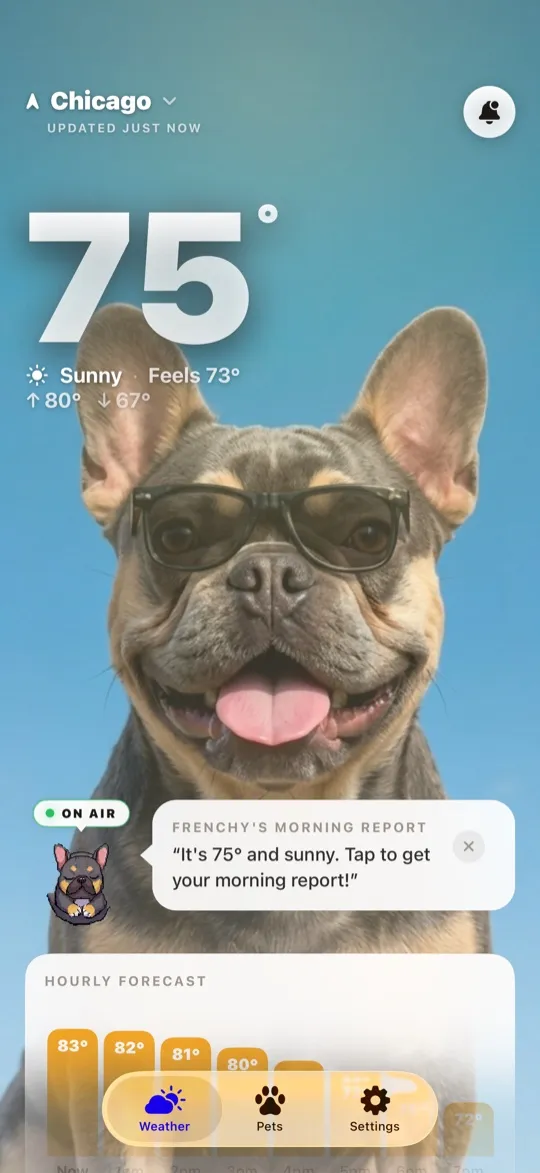
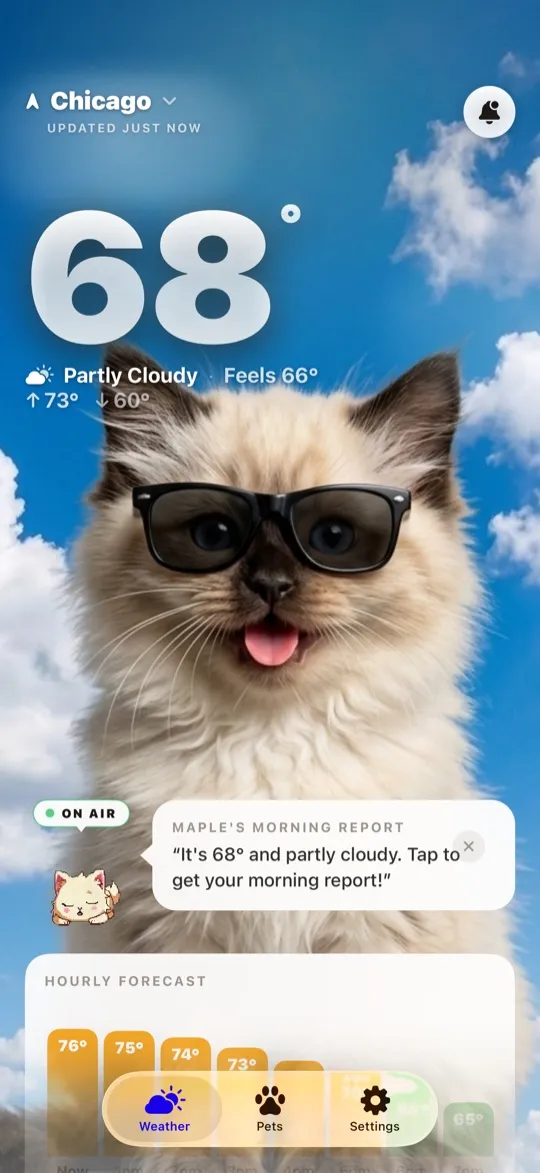
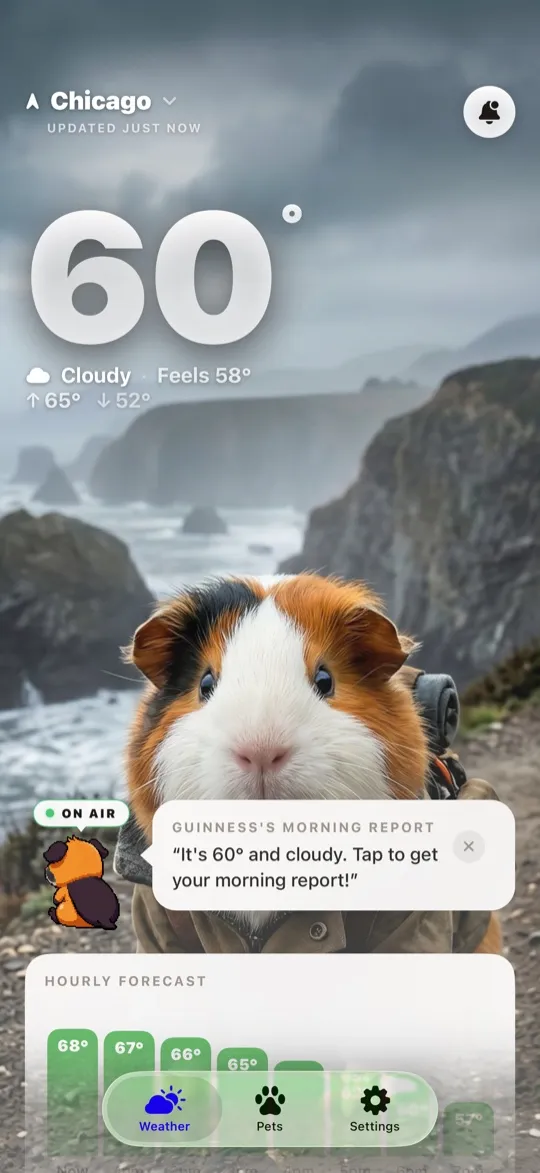
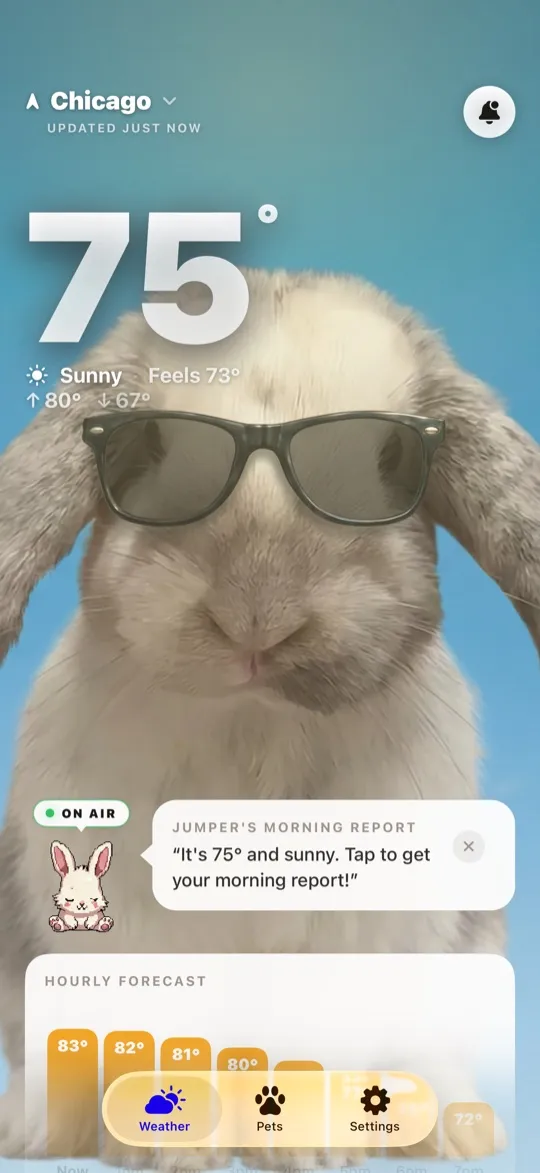
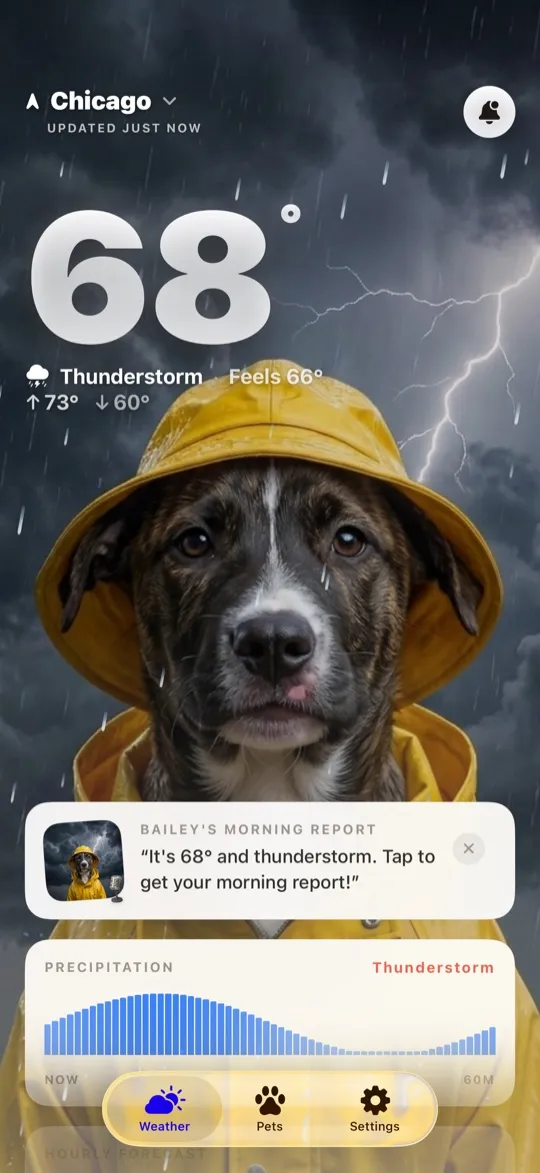
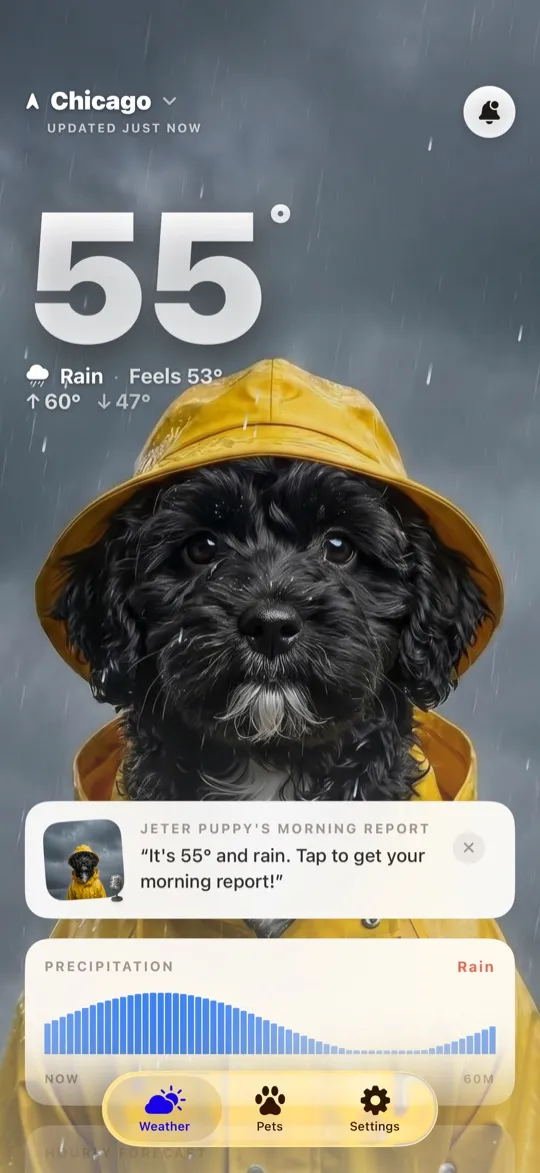
Your daily forecast, delivered by your own pet.

A note on health: This article is general information, not a substitute for professional veterinary advice. If you are worried about your pet's breathing after exposure to smoke or polluted air or any serious or emergency health concern, contact your veterinarian right away. Our guidance draws on trusted veterinary sources, including those linked above.
