Winter Shelter for Outdoor Cats: Build It Right
Most homemade cat shelters fail, and they fail in the same three ways every year: built too big, filled with the wrong thing, and put out too late. All three come from kindness, which is what makes them worth writing about. A shelter that is roomy, cosy with a fleece blanket and set out on the first freezing night is a shelter a cat will be colder inside than out.
Key takeaways
- Smaller is warmer. There is no heat source but the cat. A big air space cannot be warmed by a small animal.
- Straw, never hay, and never blankets or towels. Fabric absorbs moisture, stops insulating and then freezes.
- Entrance about 5.5 to 6 inches, roughly a cat's whisker width. Big enough for a cat, too small for a raccoon, small enough to hold heat.
- Build it in September, not December. A wary cat needs weeks to accept a new object in its territory, and it should not be learning about it during the first freeze.
- Raise it off the ground and face the door at a wall or away from the prevailing wind.
- Water freezing is usually the harder problem than shelter, and snow is not a substitute for drinking.
Why bigger is worse
This is the one that surprises people, so it is worth being blunt about the physics.
Nothing inside a cat shelter generates heat except the cat. The shelter does not warm anything, it only slows the loss of what the cat produces. So every extra cubic foot of air inside is more air the cat has to heat with its own body, and a large shelter simply ends up at the outdoor temperature with a cat sitting in it.
ASPCA Pro's guidance on winter shelter bins states it directly: heat rises, and the secret to keeping a shelter warm is a small opening and a sleeping space low and small enough that the cats' body heat stays around them.
The practical version: aim for a space that two or three cats fit into snugly. If two cats can curl up and touch the walls, you have it right. If one cat looks lost in there, it is too big. And genuinely, two cats in a correctly sized shelter are far warmer than one, because they are heating the same small volume together.
Straw. Not hay. Definitely not blankets.
This single choice does more damage than any other, because the wrong answer is the one that looks kindest.
A fleece blanket in an unheated box outdoors absorbs every bit of moisture from damp fur, breath and the air, stops insulating the moment it is damp, and then freezes into a cold slab. A towel does the same. Alley Cat Allies is equally firm about hay, which soaks up moisture and goes mouldy. Straw repels moisture, stays dry, and lets a cat burrow down into it and build a warm pocket.
Buy straw, not hay. They look similar and are sold in the same places, so say the word straw at the feed store and check the label, which may also read animal bedding. Fill the shelter generously, because the cat is meant to tunnel into it rather than lie on top, and replace it if it ever gets wet or flattened.

The build, in one afternoon
The standard method is two nested plastic storage totes. It costs very little, survives several winters and needs no tools beyond a knife.
| Part | Spec | Why it matters |
|---|---|---|
| Outer tote | Around 30 gallons, with a lid | The weatherproof shell. Alley Cat Allies uses this size |
| Inner tote | Smaller, leaving a gap all round | Creates the insulation cavity and shrinks the air space |
| Cavity fill | Straw packed between the two, all sides | The actual insulation layer |
| Floor | Styrofoam slab under the inner tote | Cold comes up from the ground harder than it comes in the sides |
| Entrance | 5.5 to 6 inches, cut through both totes | Whisker width. Holds heat, excludes raccoons and dogs |
| Door tube | A bottomless plastic flowerpot through both holes | Blocks draughts and tidies the cut edges |
| Doorway height | A few inches above the floor | Keeps rain, snow and blown straw out of the bed |
| Bedding | Straw, packed loosely, filling the inner tote | Cats burrow rather than lie on top |
| Base | Pallet, bricks or timber, a few inches up | Off frozen ground and clear of standing water |
Two options worth considering. A second small exit gives a cat an escape route if a predator blocks the door, at the cost of some warmth, and it is a genuine trade-off rather than an obvious win. And a large polystyrene shipping cooler, ideally with walls around two inches thick, works on its own if you weight the lid down, though it is more fragile than totes.
Skip anything with a heat source unless it is specifically rated for outdoor animal use. Extension leads under snow, near chewed insulation and next to straw are a fire you do not want to have started.
Where you put it matters as much as how you build it
- Raise it. A few inches on a pallet or bricks keeps it off frozen ground and above puddles and drifting snow.
- Point the door away from the prevailing wind. A north-facing doorway in a north wind vents the shelter all winter.
- Face it at a wall or a fence, with just enough gap for a cat. ASPCA Pro suggests this specifically to keep dogs out, and it doubles as a wind break.
- Choose somewhere quiet and hidden. Cats will not use a shelter in a spot they feel exposed, however good the build.
- Two shelters beat one big one if you are feeding several cats, because it gives a bullied cat somewhere else to go.
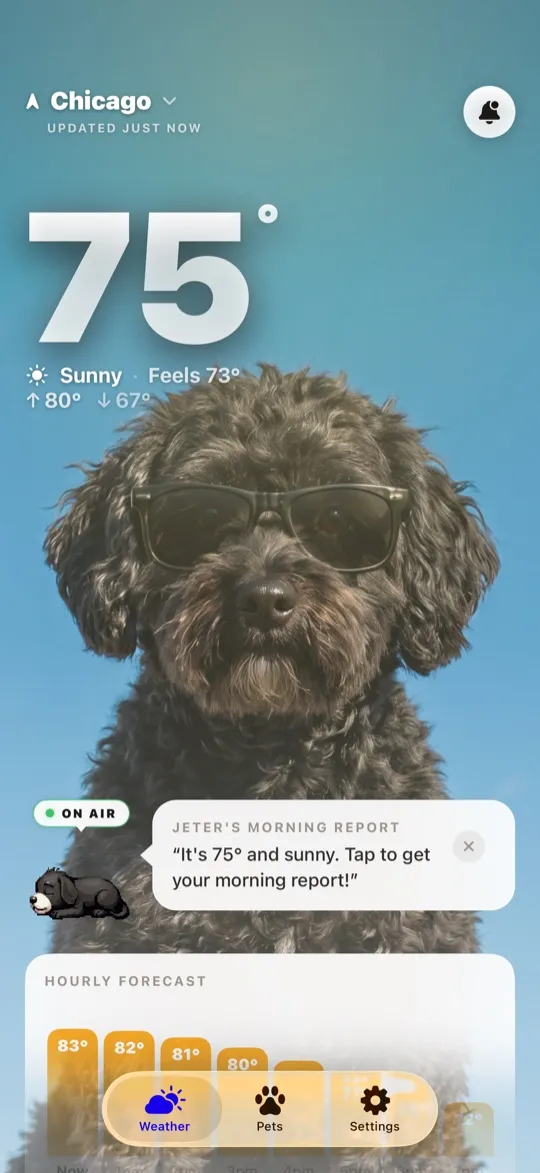
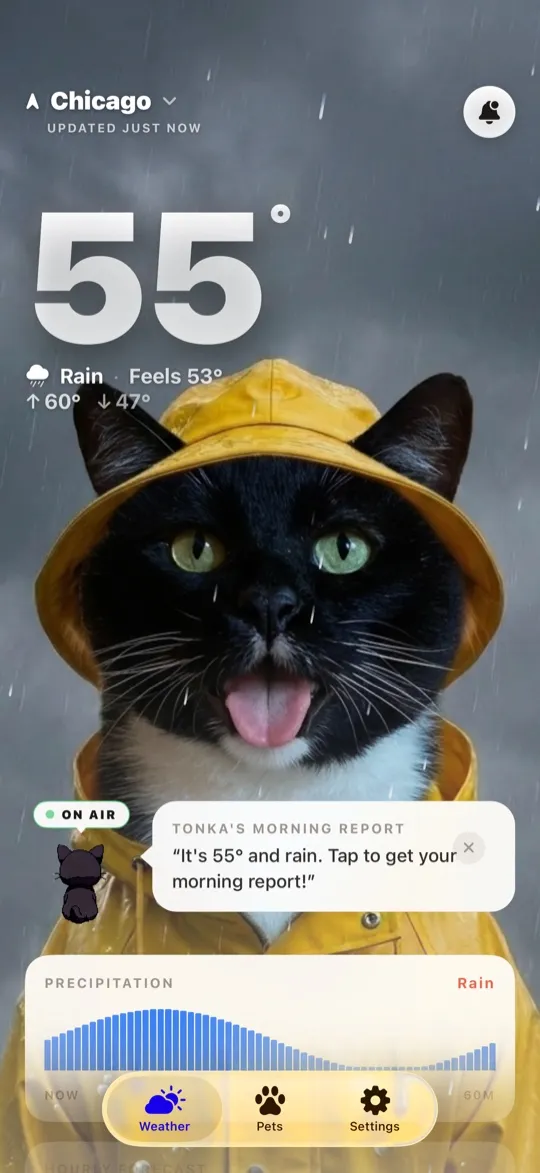
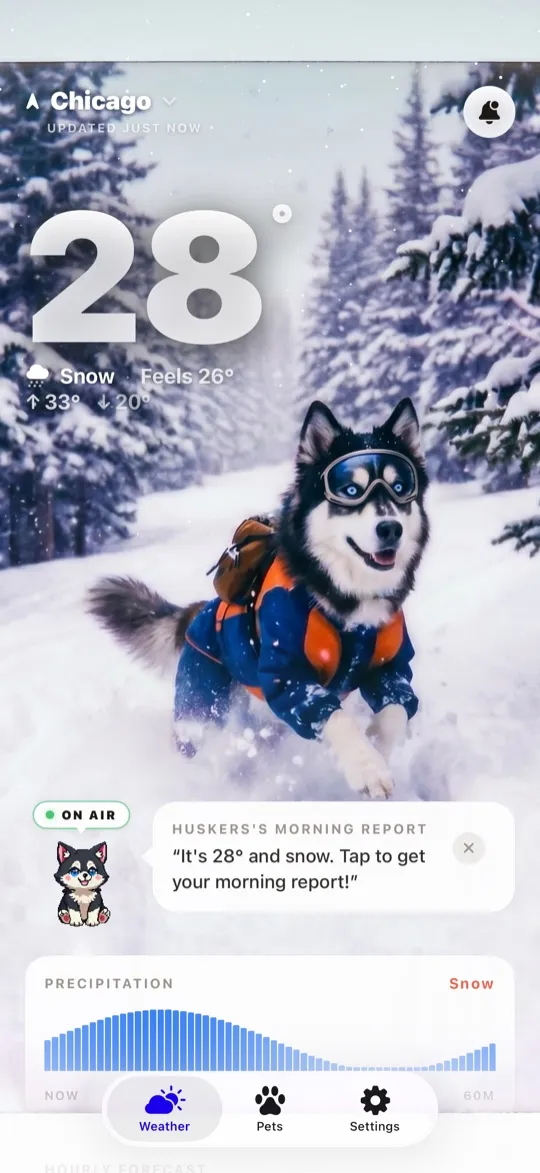
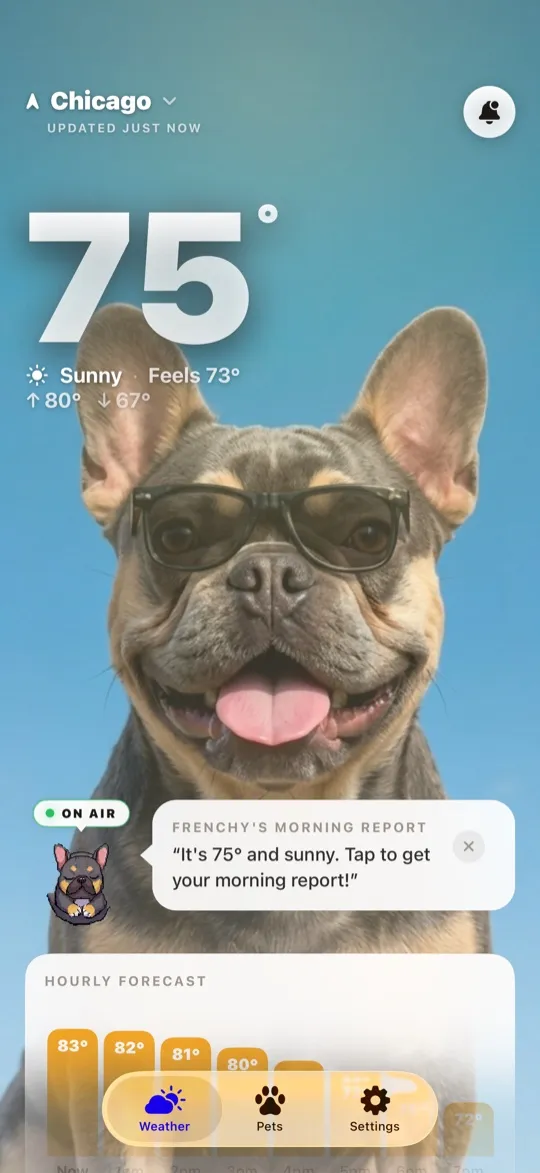
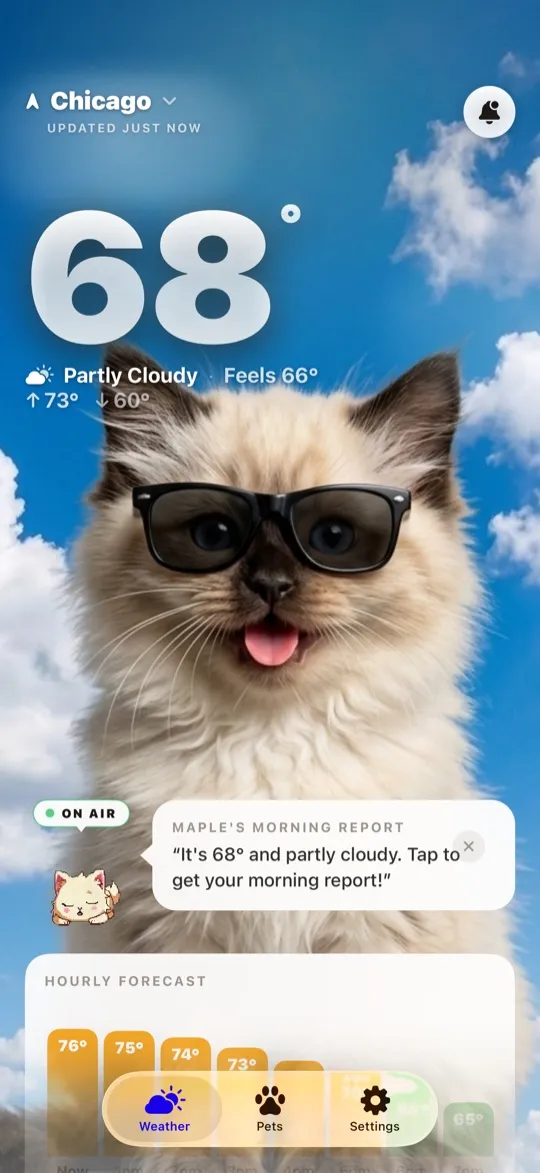
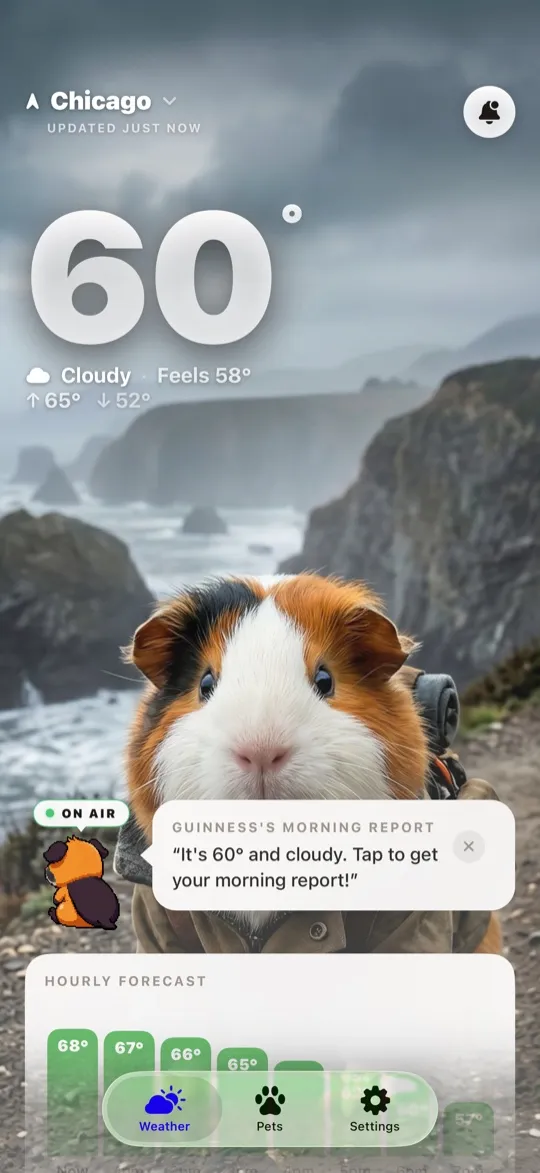
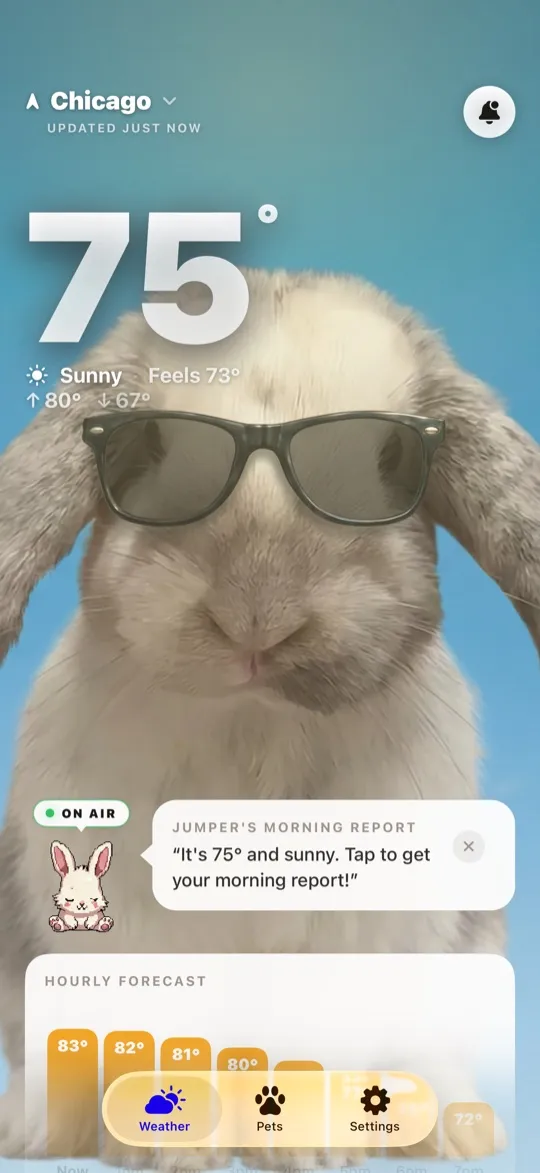
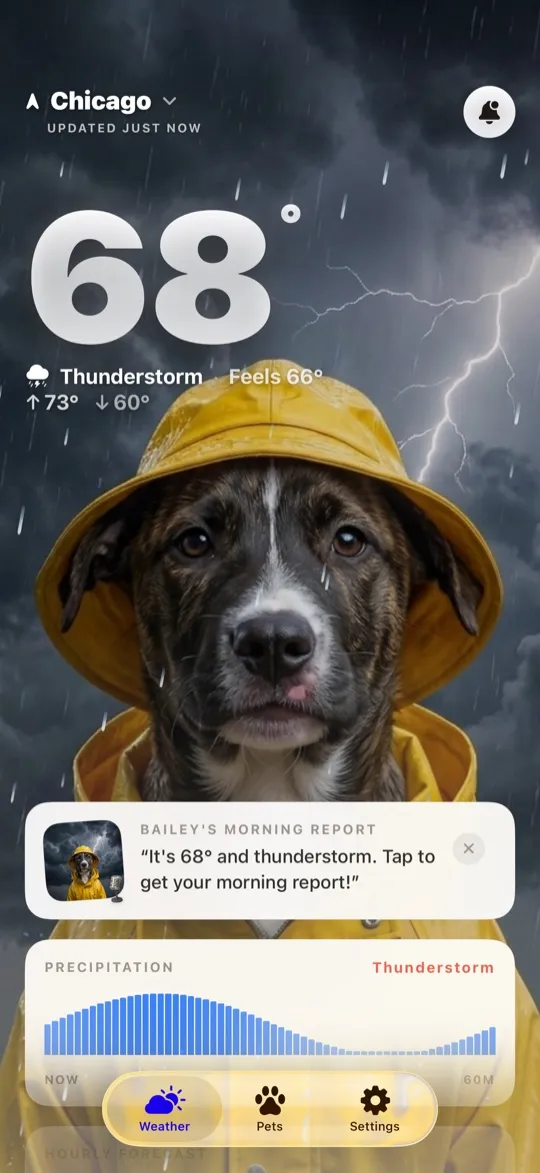
The reason to build now rather than later is that the first hard freeze rarely announces itself a week out. Knowing the overnight low a few days ahead is the difference between topping up straw in daylight and doing it in the dark at 20 degrees, and WeatherPets keeps the ten-day forecast and an evening report on your home screen. Download WeatherPets.
Water is the harder problem
Shelter gets all the attention, and then the cats are dehydrated anyway, because everything they can drink has turned solid. Cats do not get meaningful water from snow, and eating it costs them body heat.
- Deep and wide beats shallow. A deeper column of water takes longer to freeze through than a thin puddle in a saucer.
- Put bowls in sun and out of wind, which can buy a surprising amount of the day.
- Feed at the same time daily. Cats learn the schedule and eat before it freezes. Wet food freezes fast, so dry food is the reliable winter option, with wet as a bonus at feeding time.
- Feed more overall. Staying warm outdoors burns significantly more energy than the same cat needs in summer.
- A heated outdoor bowl solves it properly, if you can run power to the spot safely.
- Plastic over metal. Metal bowls get painfully cold and tongues can stick to them.

When a shelter is not enough
A good shelter keeps a healthy adult cat through an ordinary winter. It is not a substitute for indoors when the animal is compromised.
Kittens, very old cats, thin cats, wet cats and anything sick or injured lose heat far faster than a healthy adult, and the ASPCA's cold weather guidance is worth reading alongside the AVMA's own cold weather animal safety advice for the warning signs. Shivering that stops, lethargy, and cold ears and paws are all reasons to get an animal somewhere warm and call for help. Our guide to frostbite in dogs and cats covers what damage looks like and what not to do about it.
Two other winter hazards that catch community cats specifically. Cats climb into warm car engines, so bang on the hood before starting in cold weather. And antifreeze is sweet, lethal in tiny amounts, and spilled on driveways everywhere in winter.
If it is your own cat
All of the above still applies to an indoor-outdoor cat, with one addition: winter is the season to make indoors more interesting, so that going out is a choice rather than boredom. Our notes on keeping an indoor cat entertained in bad weather cover the practical version. And if you are wondering where the line is for your own animal, the Humane Society's outdoor cats FAQ is a level-headed overview of the wider question.
Build the box in September. Fill it with straw. Make it too small. The cats will sort out the rest.
Frequently asked questions
How big should an outdoor cat shelter be?
Smaller than instinct suggests. There is no furnace inside a cat shelter, so the only heat available is the cat's own body heat, and a large air space cannot be warmed by it. ASPCA Pro puts it directly: heat rises, and the secret to a warm shelter is a small opening and a sleeping space low and small enough that the cats' body heat stays around them. A space that snugly fits two or three cats outperforms a roomy one every time.
What should you put in an outdoor cat shelter for bedding?
Straw, and only straw. Not hay, which soaks up moisture and goes mouldy, and not blankets or towels, which absorb moisture, lose all insulating value when damp, and then freeze. Alley Cat Allies is explicit about the straw and hay distinction. Straw repels moisture, so a cat can burrow into it and stay dry, which is the entire point. Ask for straw or animal bedding at a feed store, and look for untreated bales.
How big should the entrance to a cat shelter be?
About five and a half to six inches across, roughly the width of a cat's whiskers, according to ASPCA Pro. That size does two jobs at once. It keeps heat in, because a big doorway vents the shelter every time the wind blows, and it keeps larger animals out, because raccoons and dogs cannot get through an opening sized for a cat. Raise the opening a few inches above the floor so rain and snow do not blow in.
When should you build a winter shelter for outdoor cats?
Early autumn, well before the first freeze. A shelter that appears in a cat's territory in December is a strange new object arriving in the middle of a crisis, and a wary community cat may take weeks to trust it. Put it out in September or October and the cats investigate it in mild weather, get used to it, and are already using it when the temperature drops. The build takes an afternoon. The acceptance takes longer.
Do outdoor cats need water in winter, and how do you stop it freezing?
Yes, and water is usually the harder problem than shelter, because dehydration in freezing weather is common. Snow is not a substitute. Use deep, wide bowls rather than shallow ones, since a deeper column of water freezes more slowly, place them in sun and out of wind, and refresh them at the same time each day so the cats learn when to come. A heated outdoor bowl solves it properly if you can run power safely to the spot.
Your daily forecast, delivered by your own pet.



A note on health: This article is general information, not a substitute for professional veterinary advice. If a cat is shivering, lethargic, injured, or you suspect hypothermia, frostbite or antifreeze poisoning, contact a veterinarian or an emergency clinic right away. Kittens, seniors and sick or injured cats need indoor warmth rather than an outdoor shelter. Our guidance draws on trusted veterinary and welfare sources, including those linked above.
