Ozone and Dogs: The Air Alert You Can Forecast
You have been trained to check the air quality index by wildfire smoke, which is fair enough, because smoke is impossible to miss. Ground-level ozone is the pollutant that gets no such warning. It has no smell, no haze and no orange sky, and it peaks on the clear, hot, gorgeous afternoons when the park is busiest. The good news is that it is also the one pollutant you can see coming in an ordinary weather forecast.
Key takeaways
- Ozone is not blown in from somewhere else. It is manufactured on the spot out of traffic exhaust and sunlight, which is why it peaks on the days that look most beautiful.
- That also makes it the one pollutant you can predict from an ordinary weather forecast: hot, sunny, light wind.
- Ozone levels typically peak in the afternoon to early evening, so the AQI you glanced at over breakfast describes a different day.
- The risk multiplier is not how close your dog is to the ground. It is how hard they are breathing, which is why a fetch session is worse than a stroll.
- Flat-faced dogs, seniors, puppies and any dog with a heart or airway condition feel a given number more sharply.
Smoke arrives. Ozone gets built.
Most owners have learned to check the air quality index, and almost all of that learning came from wildfire smoke. Smoke is easy: you can see it, you can smell it, the sky goes orange, and everyone tells each other to keep the dogs in.
Ground-level ozone is the opposite in every way. There is nothing to see and nothing to smell at typical outdoor levels. The sky is a perfect blue. It is 88 degrees and gorgeous and the park is full.
The reason for that difference is worth understanding, because everything practical follows from it. Smoke is a primary pollutant: it is emitted somewhere and the wind carries it to you. Ozone is a secondary pollutant. Nobody emits it. The EPA describes it as a product of chemical reactions between nitrogen oxides and volatile organic compounds, from cars, power plants and industry, cooking together in the presence of sunlight.
Sunlight is the ingredient that matters. Ozone is not delivered to your neighbourhood. It is assembled there, during the day, out of yesterday's traffic and today's sun.
Which is exactly why you can forecast it
This is the useful part, and it is the thing generic "check the AQI" advice never gets to. Because ozone is cooked rather than delivered, its recipe is a weather forecast. Heat, strong sunshine and stagnant air with light wind are the conditions that make it, and it accumulates through the day rather than appearing all at once.
So the practical difference between the two pollutants looks like this.
| Wildfire smoke (fine particles) | Ground-level ozone | |
|---|---|---|
| Where it comes from | Emitted elsewhere, carried in by wind | Built locally out of exhaust plus sunlight |
| Can you tell by looking? | Yes. Haze, smell, colored sky | No. The worst days look like the nicest days |
| Daily pattern | Follows the plume. Can be bad at any hour | Builds through the day, typically peaking afternoon to early evening |
| Weather that makes it worse | Wind from the fire, temperature inversions | Hot, sunny, stagnant, light wind |
| How you should check | Look outside, then check the current AQI | Check the temperature and sun in the forecast, then the next-day AQI forecast |
| Best walk slot | Whenever the plume has cleared | Early morning, before the day has had time to build any |
Air quality forecasters issue next-day predictions in the afternoon, and you can read both the current number and the forecast at AirNow, which publishes the AQI categories the whole system runs on. But the honest shortcut is simpler: on a hot, still, cloudless summer afternoon in or near a city, assume ozone is elevated whether or not you have looked it up.
What it actually does to a dog
Ozone is an irritant gas. In people the EPA lists coughing, a sore or scratchy throat, airway inflammation and difficulty breathing deeply, along with aggravation of asthma and other lung disease. Dogs have the same basic respiratory equipment, and the veterinary guidance tracks the human guidance closely.
Cornell's Riney Canine Health Center, writing about dog safety during poor air quality alerts, names the dogs who feel it first: brachycephalic (short-muzzled) breeds such as Bulldogs, Boston Terriers and Pugs, geriatric and very young animals, and any dog with an existing heart or lung condition. The signs they list are irritation of the throat, nose and eyes, coughing or gagging, a fast respiratory rate even at rest, and difficulty breathing. Their exercise advice is blunt: skip running and hiking until the air improves, and keep it to bathroom breaks.
If your dog is already on the flat-faced list, this stacks with a problem you know about. Our guide to why flat-faced breeds struggle in heat covers the airway side, and an ozone day is, almost by definition, also a hot day.
The multiplier is exertion, not height
There is a popular line that dogs get a worse dose of air pollution because their noses are close to the ground. For heavy settled dust and road grime, that argument has something to it. For ozone specifically it is the weaker explanation, and leaning on it points owners at the wrong lever.
The stronger explanation is simple physiology. The dose of any inhaled irritant is concentration multiplied by how much air you move, and a dog at a dead sprint after a ball is moving vastly more air per minute than the same dog ambling on a lead. The EPA's own at-risk list makes the same point from the human side by naming people who are active outdoors as a distinct vulnerable group, alongside children and people with asthma. Being outside is one thing. Working hard outside is another.
Which gives you a much better tool than cancelling the day. On a moderate ozone afternoon you do not necessarily need to keep your dog indoors. You need to take the intensity out: a sniffy lead walk instead of the ball launcher, the flat route instead of the hill, and the mental-enrichment version of tiring them out instead of the aerobic one.
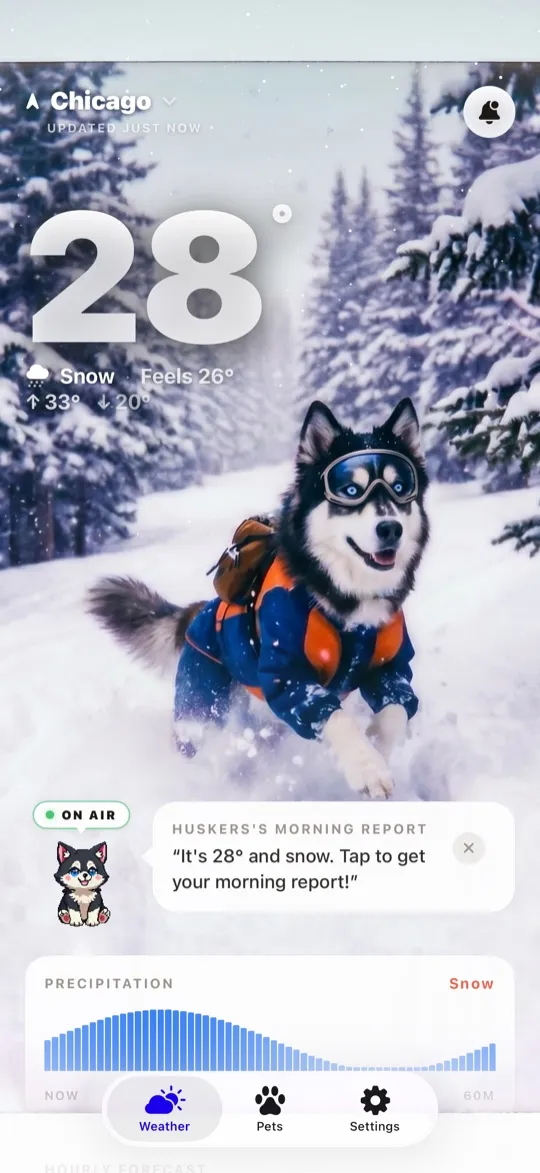
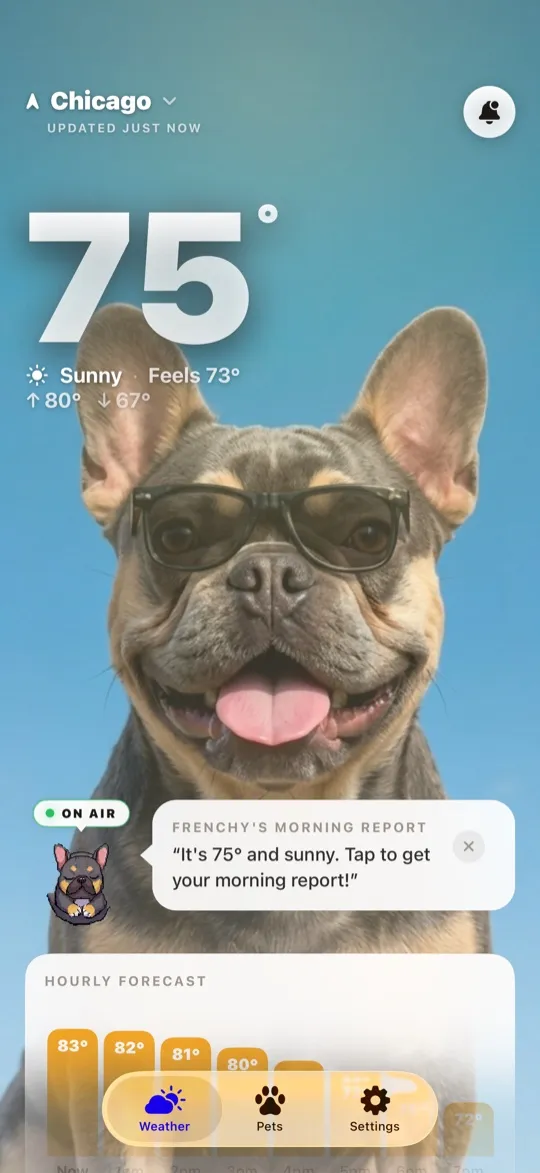
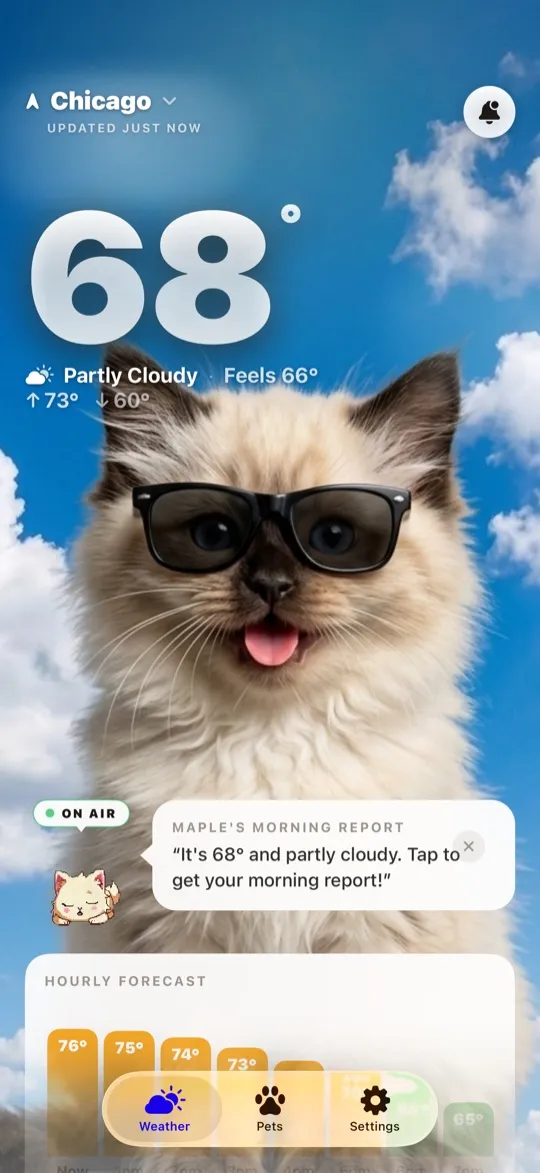
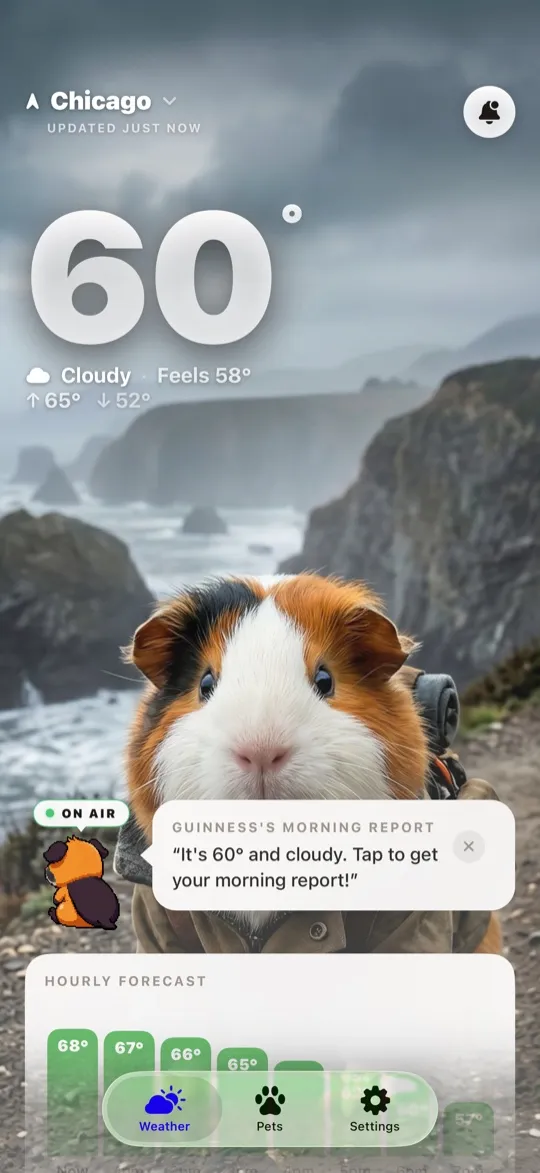
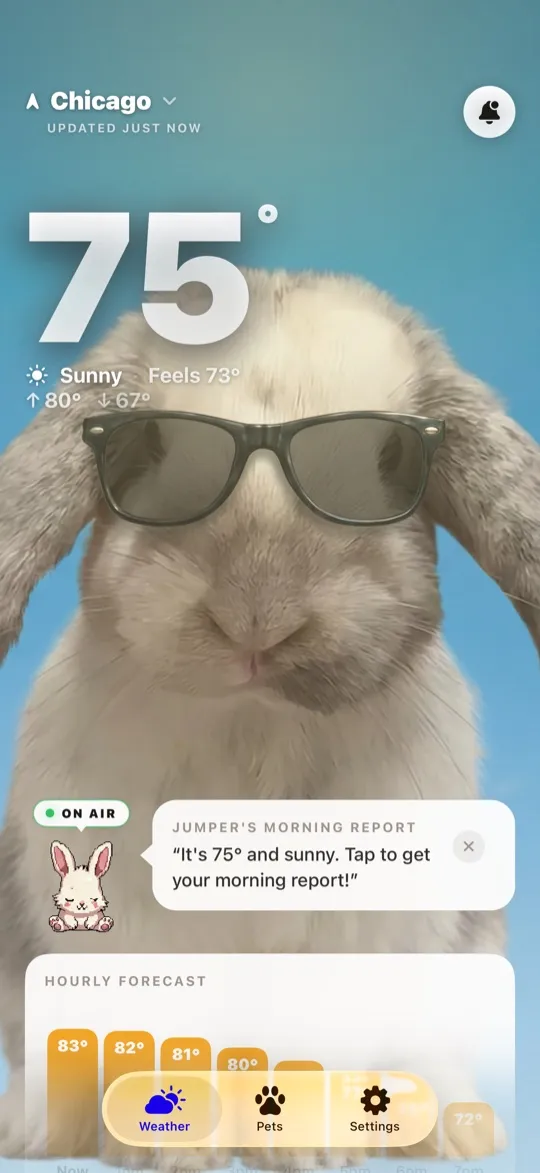
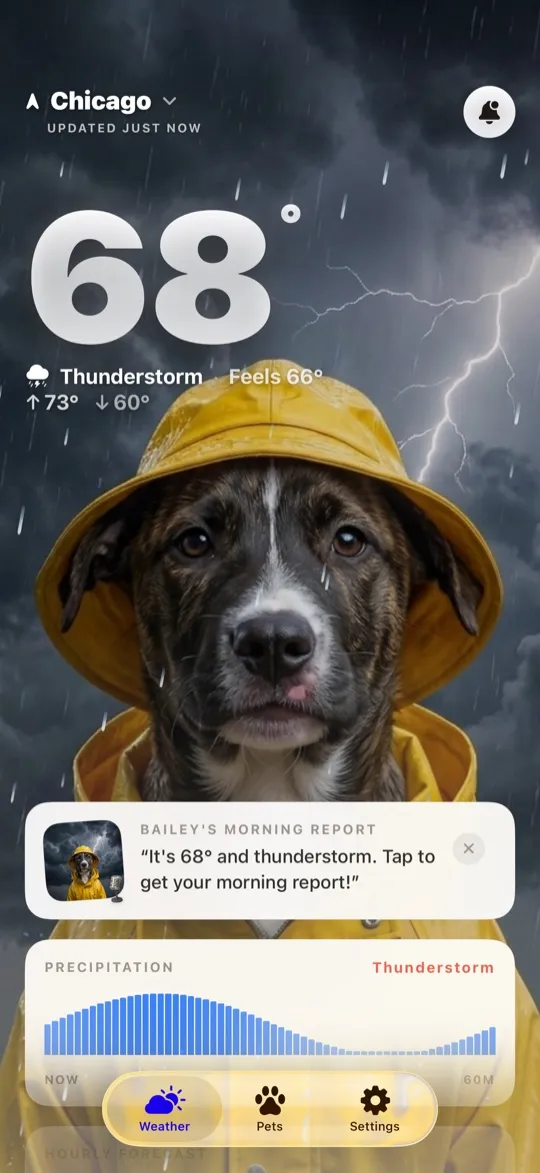
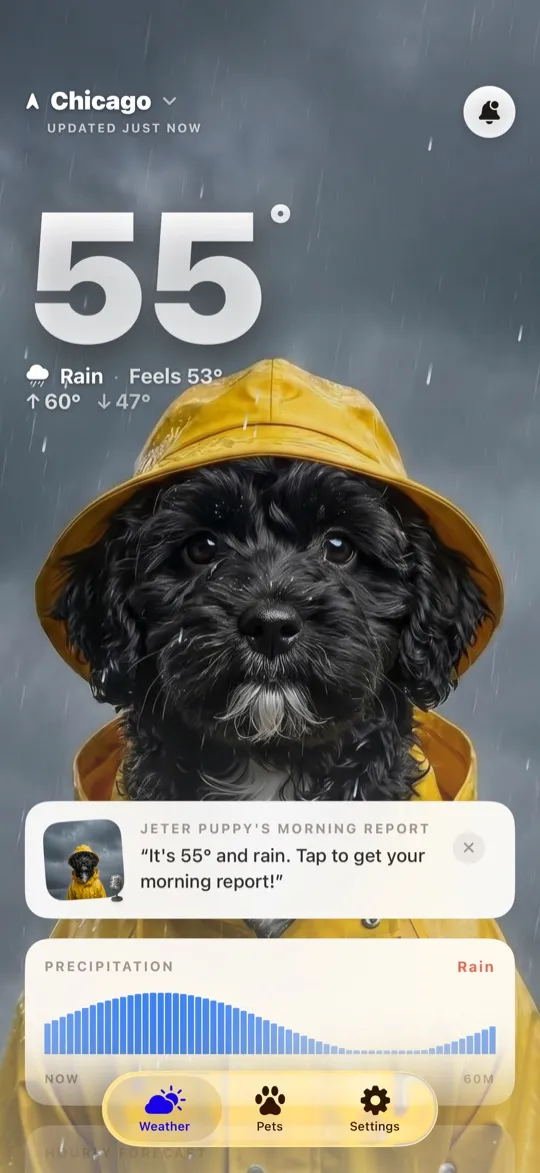
Knowing tomorrow's high, the cloud cover and the wind is most of an ozone forecast, and WeatherPets keeps all three on your home screen next to your own dog. Download WeatherPets and pick your pet.
What to do at each AQI band
The AQI categories are the same whatever the pollutant behind them, so this table works for an ozone day and a smoke day alike. The difference is when you check, not how you read it.
| AQI | Category | The walk |
|---|---|---|
| 0 to 50 | Good | Normal. Run, fetch, hike, whatever you had planned |
| 51 to 100 | Moderate | Normal for a healthy dog. Ease off hard exercise for flat-faced, senior or airway-compromised dogs |
| 101 to 150 | Unhealthy for Sensitive Groups | Sensitive dogs go short and slow. Everyone else drops the intensity, keeps the sniffing |
| 151 to 200 | Unhealthy | Short lead walks only. No fetch, no running, no long hikes for any dog |
| 201 and up | Very Unhealthy or Hazardous | Bathroom breaks only, then back inside |
Two things worth adding. Sensitive dogs are not a small minority: between flat-faced breeds, seniors and dogs with heart or airway conditions, a large share of the dogs in any given park belong in the orange row. And because ozone builds through the day, a moderate morning and an unhealthy afternoon are the same day, which is why the morning walk is so often the whole solution.

Where this differs from smoke advice
If you have read our guide to wildfire smoke and pets, most of the response is the same once the number is bad. The difference is entirely in the detection.
With smoke, your eyes are a decent instrument and the advice to check the current AQI works, because the plume is either here or it is not. The American Kennel Club's smoke guidance and PetMD on smoke inhalation in dogs and cats both start from the assumption that you already know something is wrong.
With ozone, nothing tells you. There is no plume, no smell, no colour. The only warning you get is the weather itself, which is why an ozone day is the one air quality event that belongs in a weather habit rather than an emergency habit. Our guide to planning dog walks around the forecast is the same discipline applied to heat, and the two problems share a solution: go early.
Reading your own week
Scan the coming days for the combination: highs well up, clear sun, and little wind. Those are your candidate ozone afternoons, and in a city they usually deliver. On those days, move the real exercise to the morning and let the late walk be a gentle one. On everything else, carry on as normal.
It is a small habit, and it happens to solve the heat problem at the same time, because the hour that dodges the ozone peak is also the hour that dodges the hot pavement. For once, two hazards want you to do the same thing.
Frequently asked questions
What AQI is too high to walk a dog?
Below 100 is fine for a healthy dog. From 101 to 150, sensitive dogs (flat-faced breeds, seniors, puppies, and dogs with heart or airway conditions) should go short and slow, and everyone else should drop the intensity. From 151 to 200, keep it to short lead walks with no running or fetch for any dog. Above 200, bathroom breaks only.
When is ozone worst during the day?
Ozone levels typically peak in the afternoon to early evening. It is built during the day by sunlight acting on traffic emissions, so it accumulates from mid-morning onward rather than being present at a constant level. That is why the number you check at breakfast can be misleading, and why the early morning walk is usually the cleanest air of the day.
Can you smell or see ozone outdoors?
No, not at typical outdoor levels. This is the main practical difference between ozone and wildfire smoke. Smoke announces itself with haze, smell and a discolored sky, so people know to check. An ozone day looks like a beautiful clear summer afternoon, which is exactly the weather that produces it.
Are dogs more affected by air pollution because they are closer to the ground?
For heavy settled dust there is something to that argument, but for ozone it is the weaker explanation. Ozone is a gas, and the factor that actually drives the dose is how much air an animal moves. A dog sprinting after a ball breathes far more than one walking on a lead, which is why reducing the intensity of the exercise matters more than the height of the nose.
Which dogs are most at risk on poor air quality days?
Cornell's Riney Canine Health Center names brachycephalic (short-muzzled) breeds such as Bulldogs, Boston Terriers and Pugs, along with geriatric and very young animals, and any dog with an existing heart or lung condition. Signs to watch for are coughing or gagging, irritated eyes and nose, a fast breathing rate even at rest, and any difficulty breathing.
Your daily forecast, delivered by your own pet.

A note on health: This article is general information, not a substitute for professional veterinary advice. If your dog is coughing, breathing fast at rest, or struggling to breathe, or you have any serious or emergency health concern, contact your veterinarian right away. Our guidance draws on trusted veterinary and government sources, including those linked above.
