Feels Like Temperature and Pets: Why It Misleads
Your weather app shows two temperatures and you trust the second one. Fair enough: it is usually the better number. But "feels like" is not a general statement about the outdoors. It is a model of one specific human body, and the specification is written down. Once you read it, you can see exactly where it stops describing your pet.
Key takeaways
- The heat index is a model of a 5 foot 7 inch, 147 pound person in trousers and a short sleeved shirt, walking at 3.1 mph in the shade, with a 5 knot breeze. Sweating rate is an explicit input.
- Dogs and cats barely sweat. The index models the right hazard through a mechanism they do not have.
- Wind chill was rebuilt in 2001 from sensors on human cheeks and foreheads, and computes wind at 5 feet, adult face height. Your dog's face is at 18 inches, under a coat.
- The heat index is undefined below about 80°F, so a 75°F morning at 90% humidity shows no warning at all and is genuinely hard on a dog.
- Where feels like and the Pet Safety Score disagree, it is almost always one of four cases: low temperature with high humidity, sun, a coat, or the ground.
What is actually inside "feels like"
There is no single feels like formula. There are two, they cover different halves of the year, and neither was designed with an animal in mind.
Above about 80°F you are looking at the heat index, which traces to Steadman's 1979 biometeorological work and reached forecasters through a regression published by the National Weather Service. That technical note is unusually candid, because it lists every assumption the model makes. The ones worth your attention:
| Assumption | Assumed value | Your pet |
|---|---|---|
| Dimensions of a human | 5'7", 147 pounds | Anywhere from 4 to 150 pounds |
| Clothing cover | 84%, trousers and short sleeves | 100% fur, and coat type varies enormously |
| Core temperature | 98.6°F | Roughly 101 to 102.5°F in dogs and cats |
| Activity | Walking outdoors at 3.1 mph | Sprinting, then lying down, then sprinting |
| Effective wind | 5 knots | Whatever is happening at knee height |
| Sweating rate | Uniform, not dripping | Effectively zero across the body |
| Location | Shade | Frequently not shade |
That last row is the one the National Weather Service itself flags loudest: heat index values are computed for shady locations, and full sun can add a substantial amount on top. The NWS heat index page is explicit about it.
Below freezing you are looking at wind chill, which is a completely different animal. The current formula came out of human trials in 2001: twelve volunteers walked on a treadmill at 3 mph inside a chilled wind tunnel with thermal transducers glued to their cheeks, foreheads, noses and chins. The NWS explains the resulting model: it converts wind measured at the standard 33 foot anemometer height down to 5 feet, the typical height of an adult human face, assumes night conditions with no solar heating, and drops humidity entirely because it moved the answer by less than a degree.
Read those two paragraphs back and the problem states itself. One number models sweat. The other models a bare face at chest height in the dark. Neither is a claim about a dog.
Where the heat index breaks for pets
Three specific failures, in rough order of how often they matter.
The cooling mechanism is wrong. The heat index exists because humidity blocks sweat evaporation. Dogs sweat only from their paw pads, which is negligible. They shed heat by panting, which is also evaporative cooling, just relocated to the tongue and airway. So humidity does hurt them, and above roughly 60% relative humidity panting starts to fail for the same physical reason sweating does. The direction of the heat index is right. Its magnitude was calibrated on the wrong organ. Our guide to humidity and dog breathing goes deeper into the physiology.
The floor is in the wrong place. The regression is not valid below a heat index of about 80°F, as NOAA's Weather Prediction Center spells out, so weather apps simply hide it. A 75°F morning at 90% humidity therefore displays as "75" with nothing next to it, and that morning is real work for a flat-faced dog. This is the single most common blind spot, because it looks like a nice day on the screen.
Shade is assumed and rarely present. The person in the model is walking in shade. Your dog is on a sidewalk in the sun, six inches off a surface that is radiating heat upward. That surface is a separate hazard entirely, which is why we estimate ground temperature as its own factor rather than folding it into an air number.

Where wind chill breaks for pets
Wind chill is the more interesting failure, because it errs in both directions depending on the animal.
- It is too harsh for a well insulated dog. The formula describes bare human facial skin. A double coated husky is carrying a purpose-built windbreak, and the same 15°F reading that would hurt your face is a pleasant afternoon for them. Our wind chill guide for dogs works through what the number does and does not transfer.
- It is too kind to a thin coated or small dog. A greyhound has little coat and little insulating fat, and a small dog has more surface area per pound to lose heat from. Same number, much worse day.
- It ignores sun, and sun is real in winter. The formula assumes no solar heating because it was calibrated at night. A dark coated dog on a still, sunny 25°F afternoon is genuinely warmer than the number says.
- It ignores humidity, and wet fur is a catastrophe. Dropping humidity was defensible for a dry human face. It is not defensible for an animal whose entire insulation strategy is trapped air in fur, which water destroys. A wet dog at 35°F in a breeze is in far more trouble than any wind chill chart implies.
Two dogs, one leash each, standing on the same corner. The weather app has one number for them. That is the problem in a sentence.
This is the whole reason the Pet Safety Score exists: it grades the same weather separately for your specific animal, breed, age, coat and build included, and shows you which factor is pulling the number down. Download WeatherPets and pick your pet.
The four cases where we disagree with your weather app
Most of the time the score and the feels like number agree, which is the point. They diverge in four situations, and they are worth knowing by name.
| Conditions | What "feels like" says | What the score does | Why |
|---|---|---|---|
| 75°F, 90% humidity, overcast | Nothing. Shows 75°F | Marks it down, hard, for a flat-faced or senior dog | Heat index is undefined here, but panting is already struggling |
| 80°F, 30% humidity, UV 10, clear | Around 80°F, so "fine" | Caps the outing on ground temperature alone | Asphalt is near 132°F. The air is not the hazard |
| 20°F, 20 mph wind, husky | Feels like 3°F, alarming | Reads far better than the human number | Double coat is doing exactly what it evolved to do |
| 35°F, drizzle, 15 mph wind, thin coat | Feels like around 27°F, unremarkable | Marks it down sharply | Wet fur loses its insulation; wind chill excludes humidity |
Note that the third row goes the other way. An honest model has to be willing to say a day is better than the human number suggests, or it is just an anxiety generator. A score that only ever warns you gets ignored by February.
The rule of thumb, if you want no app at all
Add the air temperature in Fahrenheit to the relative humidity as a percentage. If the sum reaches 150, skip outdoor exercise. An 80°F day at 70% humidity is there. So is 85°F at 65%, and so is 90°F at 60%.
It is crude. It ignores sun, wind, coat, breed and the ground completely. But it catches the case the heat index structurally cannot, which is the warm humid morning below the index floor, and you can do it in your head. Pair it with the American Veterinary Medical Association's warm weather guidance and you have most of what a summer needs.

What we score instead
The Pet Safety Score does not start from a feels like number at all. It starts from a comfort curve built for your specific animal, then layers factors in explicit tiers. Temperature, humidity and air quality are primary, meaning any one of them at genuine risk drags the total below 40 no matter how good the rest looks. UV and wind are secondary and lower the ceiling instead of subtracting points, which stops an ordinary sunny afternoon from being treated as an emergency. For dogs, estimated ground temperature moves the score directly.
Breed matters because the evidence says it should. The largest study of heat related illness in UK dogs, Hall, Carter and O'Neill (2020), found risk varying by many multiples across breeds, with flat-faced and heavy-coated dogs carrying far more of it. Any model that hands every dog the same number is throwing that away.
And every factor is recorded as a signed contribution that sums exactly to the score, so you can see whether today's problem is the humidity, the air, or the pavement. Which is the actual question. "Feels like 94" tells you a day is bad. It does not tell you whether to walk at dawn, cut the distance, or stay on the grass, and those are three different fixes.
Frequently asked questions
Is feels like temperature accurate for dogs?
Not really, and the reason is structural rather than a matter of precision. Both feels like numbers are models of a specific human body. The heat index assumes a 5 foot 7 inch, 147 pound person in trousers and a short sleeved shirt, walking at 3.1 mph in the shade and sweating. Wind chill was derived from human faces in a wind tunnel. A dog matches none of those assumptions, so the number can be perfectly correct for you and misleading for the animal on the other end of the leash.
Why is the heat index wrong for dogs?
Because sweating rate is one of its input parameters, and dogs barely sweat. They lose heat by panting instead. Humidity still hurts them, arguably more than it hurts us, because panting is also evaporative cooling and it stalls when the air is already saturated. The heat index models the right hazard through the wrong mechanism, so the direction is right and the magnitude is not.
Does wind chill apply to dogs?
Only loosely. The National Weather Service formula was rebuilt in 2001 from volunteers in a chilled wind tunnel with sensors on their cheeks, forehead, nose and chin, and it converts wind measured at 33 feet down to 5 feet, the height of an adult face. A dog's face is closer to 18 inches, where wind speeds are lower, and the rest of the animal is under a coat. A double coated husky and a thin coated greyhound get the same wind chill number and are having completely different afternoons.
Why does my weather app show no feels like temperature at 75 degrees?
Because the heat index regression is not valid below roughly 80 degrees Fahrenheit, so most apps simply display the plain temperature instead. That is a real blind spot for pet owners: a 75 degree morning at 90 percent humidity is genuinely difficult for a dog, and your app has nothing to say about it. The temperature plus humidity rule of thumb still catches it.
What does the Pet Safety Score use instead of feels like?
It starts from a comfort curve built for your specific pet, then applies temperature, humidity and air quality as primary factors that can cap the total on their own. UV and wind are secondary and lower the ceiling rather than subtracting points. For dogs, estimated ground temperature moves the score directly. Every factor is a signed contribution and they sum exactly to the final number.
Is there a simple rule I can use without an app?
Yes. Add the air temperature in Fahrenheit to the relative humidity as a percentage. If the total reaches 150, skip outdoor exercise. An 80 degree day at 70 percent humidity is already there, and so is an 85 degree day at 65 percent. It is crude, it ignores sun and wind entirely, and it is still better than reading a feels like number that was built for a person.
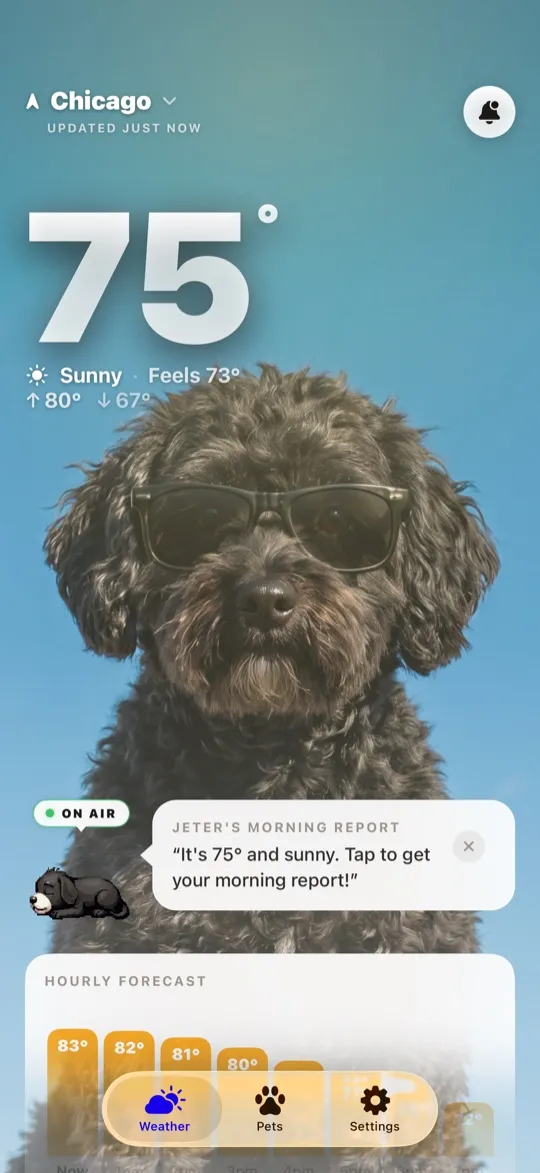
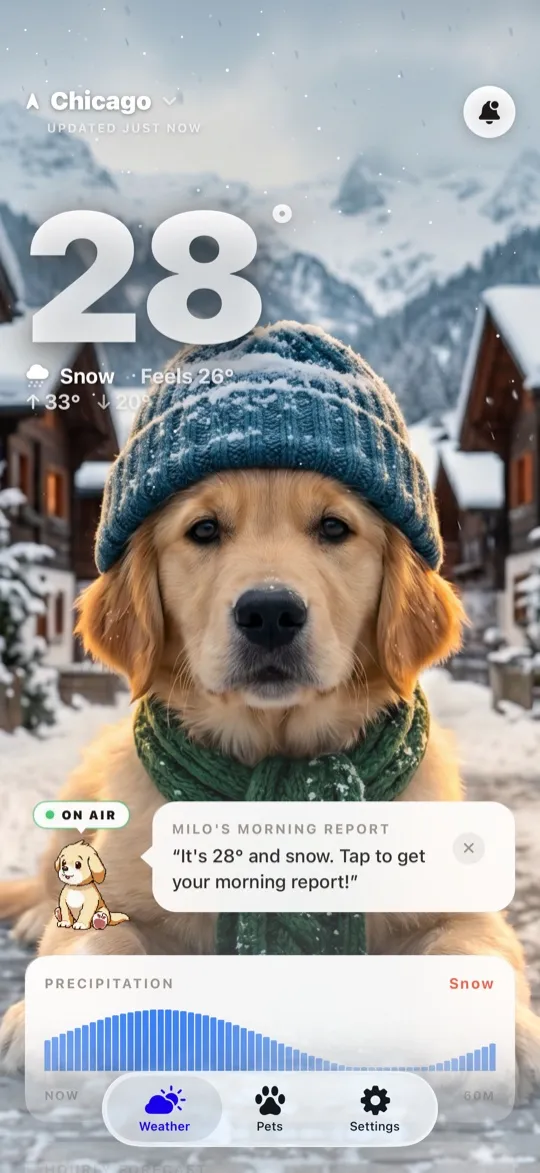
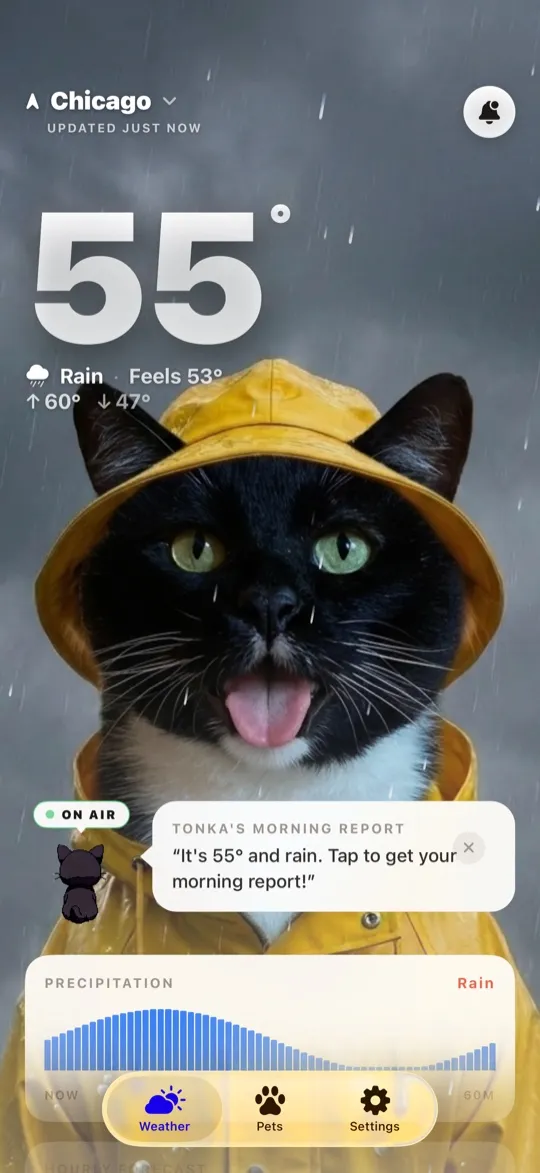
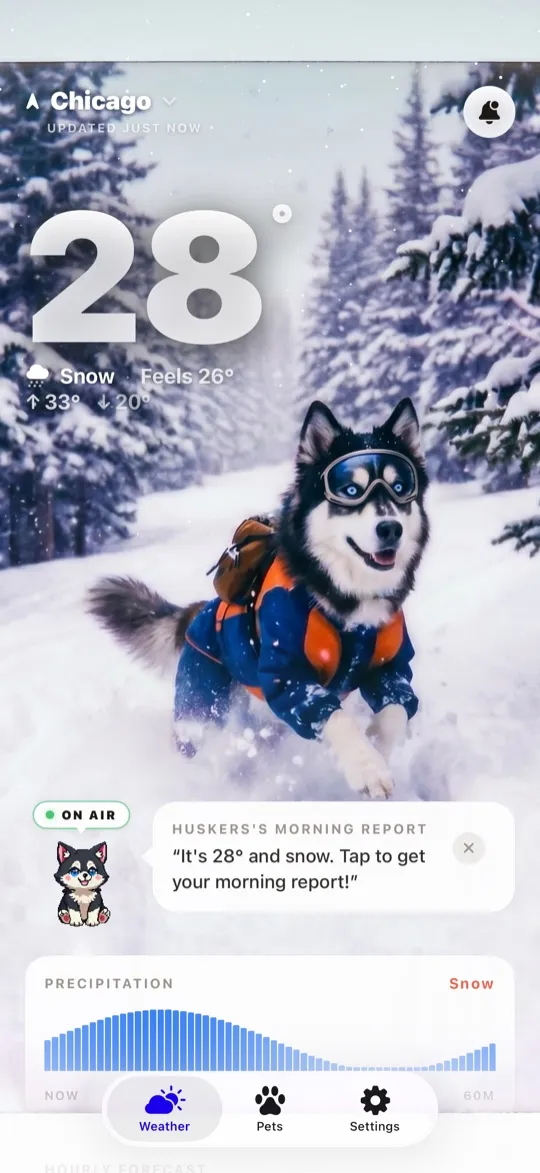
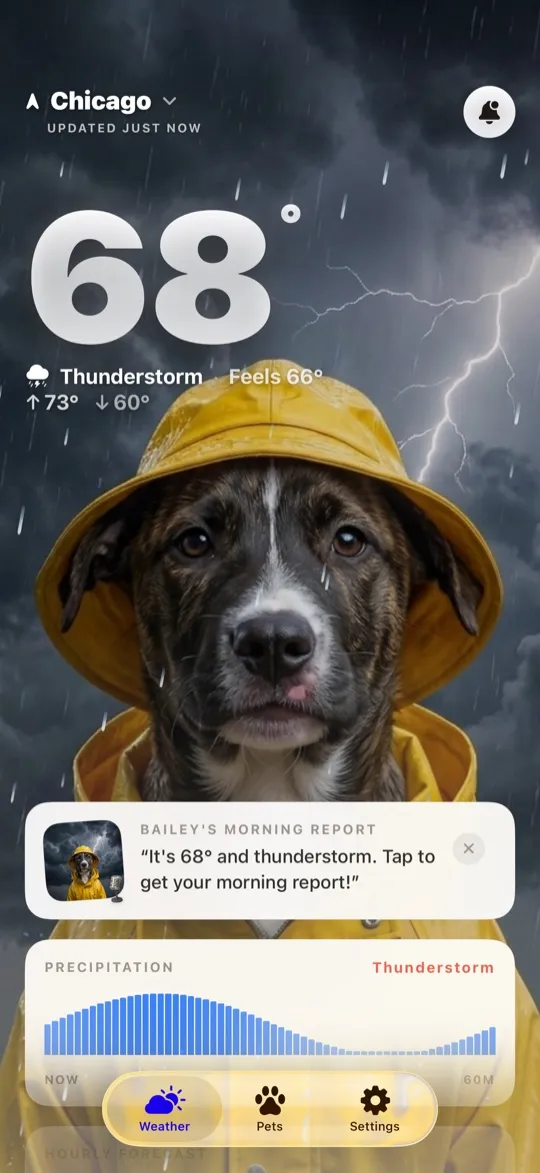
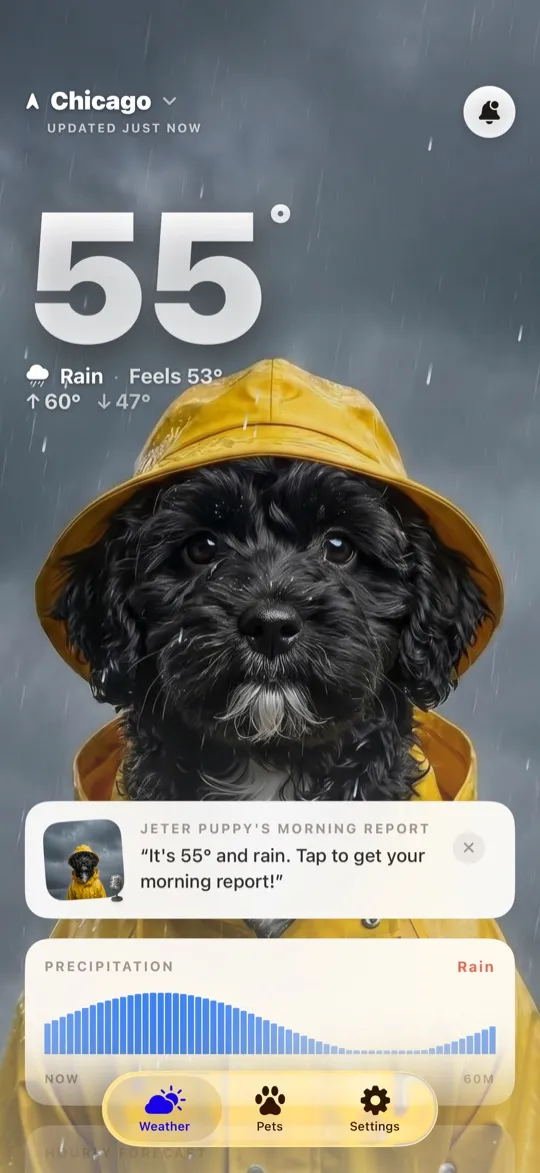
Your daily forecast, delivered by your own pet.
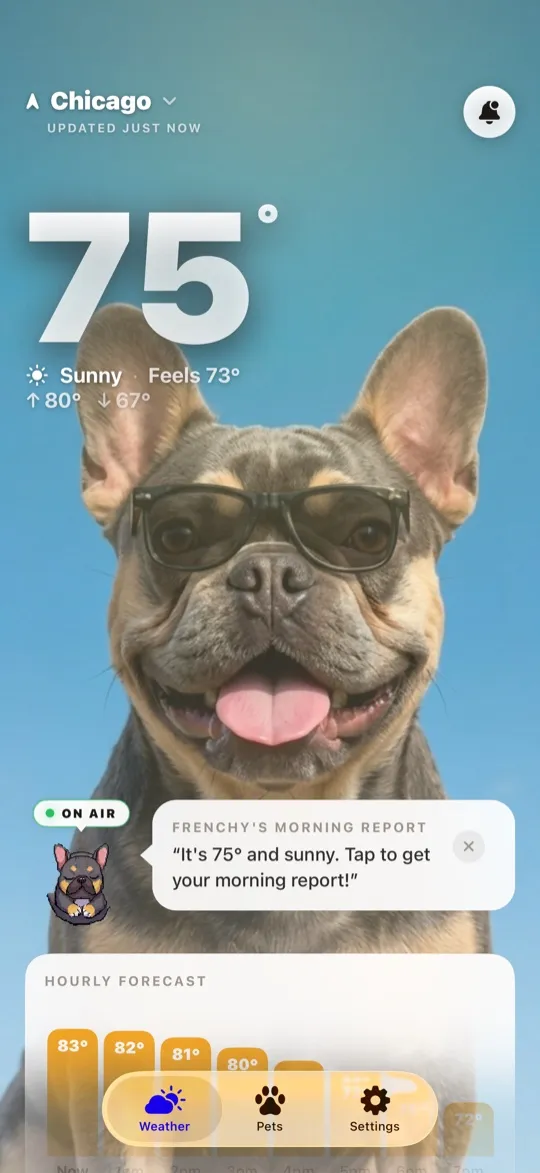
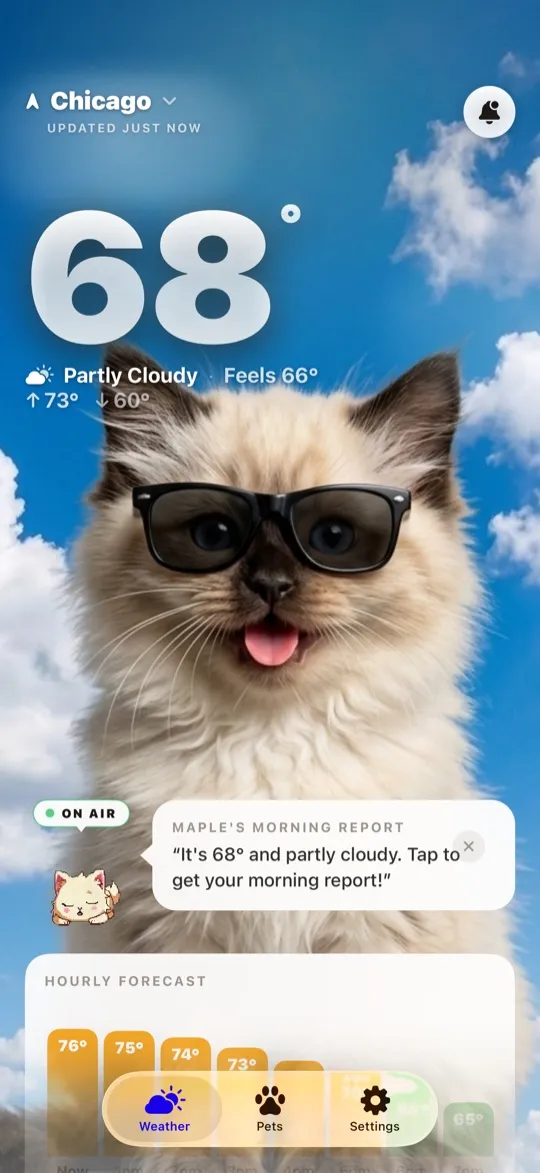
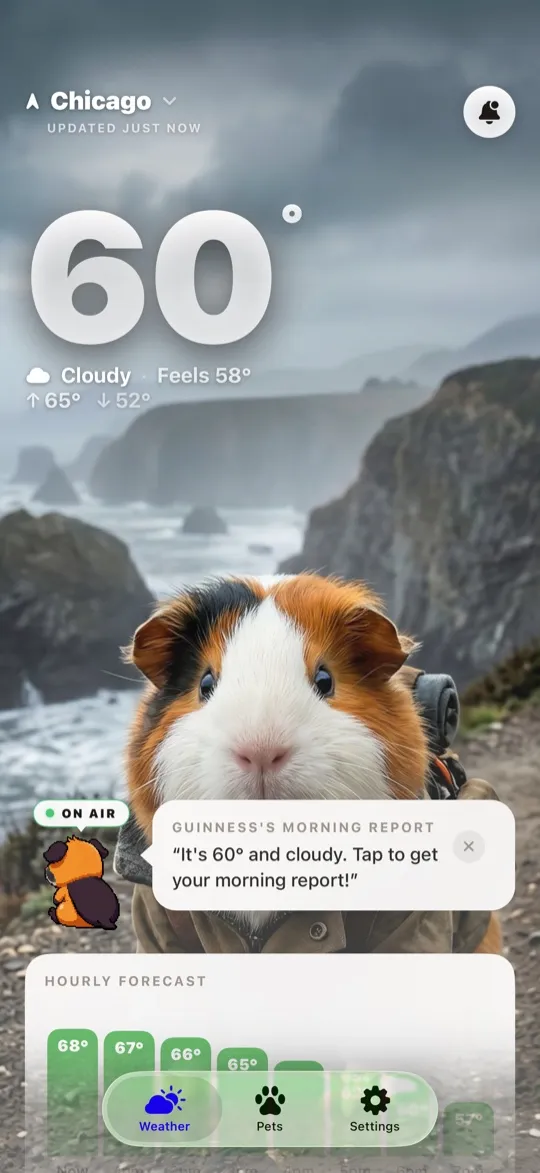
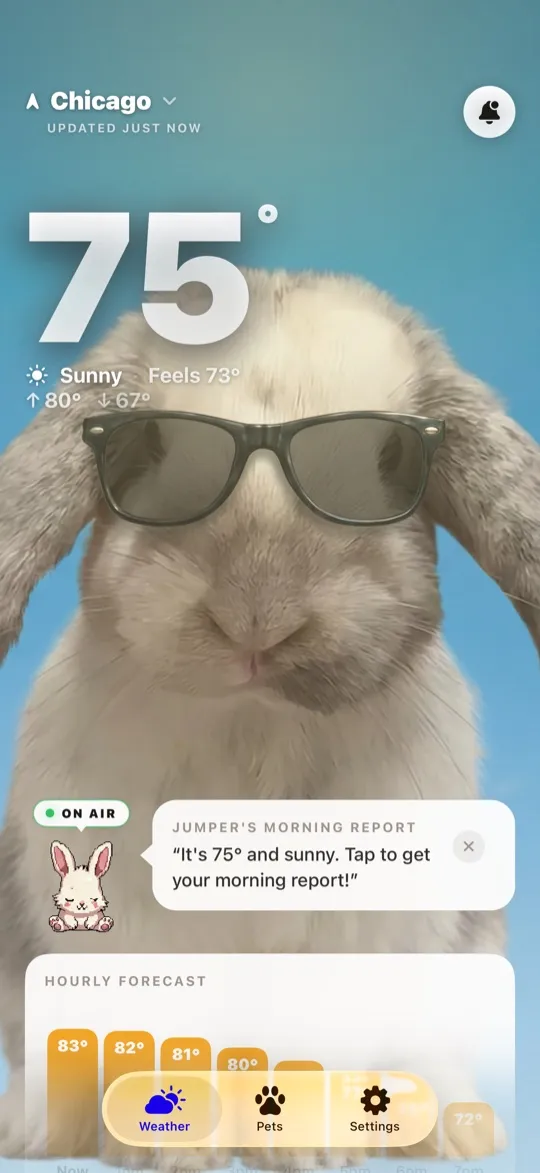

A note on health: This article is general information, not a substitute for professional veterinary advice. If you are worried that your pet is overheating or too cold, or about any serious or emergency health concern, contact your veterinarian right away. Our guidance draws on trusted veterinary sources, including those linked above.
