Catio Weather Design: Sun, Shade, Wind and Winter
Search for catio plans and you get a hundred build guides. Mesh gauge, shelf spacing, how to bolt it to the siding. Almost none mention the two decisions that determine whether your cat uses the thing: which way it faces, and what temperature you are designing for. Those are weather questions, and they have real answers.
Key takeaways
- You are building for a much warmer animal than yourself. A cat's thermoneutral zone runs roughly 86 to 101F. Humans sit around 64 to 72F.
- That inverts the usual design instinct. For most of the year in most climates the job is capturing sun and blocking wind, not providing shade.
- Face it south if you can. A south-facing catio with a roof overhang takes the low winter sun and rejects the high summer sun, for free, forever.
- Cats do not need sun for vitamin D. They cannot make it in their skin and get it from food, so a UV-filtering roof panel costs them nothing.
- The top end is still real. A small glazed box in full sun runs hotter than the air, so deep shade, cross-ventilation and an open door indoors are not optional.
You are designing for a warmer animal than you are
Start here, because it changes everything downstream. The thermoneutral zone is the band of ambient temperature across which an animal holds its body temperature steady without spending extra energy warming up or cooling down. For cats it is remarkably high. The 2022 ISFM and AAFP feline environment guidelines put it at 30 to 38C, or 86 to 100F, and say wards for cats should be kept warmer than the rest of a veterinary hospital for that reason.
Set that against the rest of the household. Writing for the American Veterinary Society of Animal Behavior, one veterinarian puts the feline range at 86 to 101F, dogs at 68 to 95F and humans at 64 to 72F, then adds the line that ought to be printed on every catio plan: in their Bay Area climate, cats hit their ideal outdoor temperature on about eight days a year.
None of that means a cat at 70F is suffering. It means they are spending a little energy to stay comfortable, and that given the choice they move toward warmth with a determination anyone who has lost an armchair to a sunbeam will recognise. So the brief for most of the year is not "keep the cat cool". It is "somewhere warm, dry and out of the wind, with an easy way out".
| Outside | What your cat is doing | What the catio has to provide |
|---|---|---|
| Below 45F | Well under the comfort band, losing heat steadily | Wind block, a raised perch off the cold ground, a dry roofed corner, door open indoors |
| 45F to 70F | Still below the band. Actively hunting sun | Direct sun on at least one perch, sheltered from the prevailing wind |
| 70F to 85F | Approaching comfortable. Peak catio weather | Both options available, sun and shade, so the cat can pick |
| Above 85F | Top of the band and climbing out of it | Deep shade at every hour, cross-ventilation, shaded water, an easy way back inside |
Which way it faces does most of the work
The highest-value decision costs nothing and you only make it once. In the northern hemisphere, face the catio south.
The reason is the one that governs passive solar design in houses. The sun sits low in the winter sky and high in the summer one, so a south-facing opening with an overhang above it lets winter sun reach the back wall while that same overhang shades the space all summer. The Department of Energy's consumer guide to passive solar design gives two numbers worth stealing: face the opening within 30 degrees of true south, and check that nothing shades it between 9am and 3pm in winter. The physics does not care that your building is six feet long and contains a cat.
The other orientations are not disasters, but they are trade-offs worth knowing before you dig post holes:
- East. The strong second choice. Morning sun to warm it early, then shade through the hottest part of the afternoon.
- West. The one to avoid. Late afternoon sun arrives when the structure and the ground beneath it are already at their warmest, so a west-facing catio is coldest when the cat wants warmth and hottest when they do not.
- North. Cool and even. Useful in a hot climate, close to useless in a cold one.
If the only wall you have is the wrong one, the fix is a perch rather than a rebuild: put a shelf where the sun lands, at whatever hour it lands, and your cat will find it within a day.
Wind is the variable nobody designs for
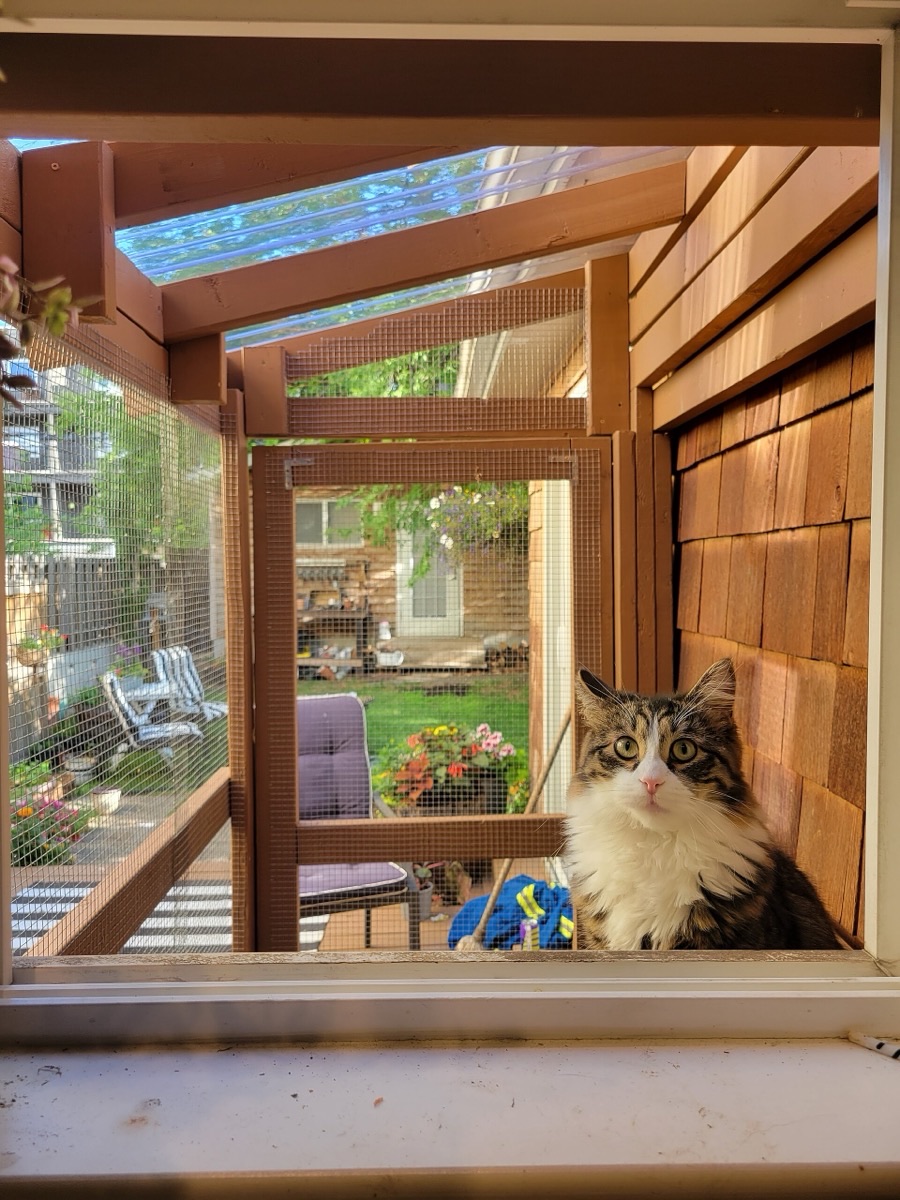
Mesh is transparent to wind, which is the quiet problem with the standard four-sided wire box. A cat on an exposed perch loses the still layer of warm air held in their coat, and the effective temperature drops well below what the thermometer says. Cats solve this by refusing to come out, which owners read as the cat not liking the catio.
Three cheap fixes cover most of it. Solid-panel the side facing your prevailing wind, usually west or northwest, rather than meshing all four. Put one perch in a corner with solid walls on two sides. And add a clear panel that clips on for winter and comes off in June, which turns a three-season structure into a four-season one.
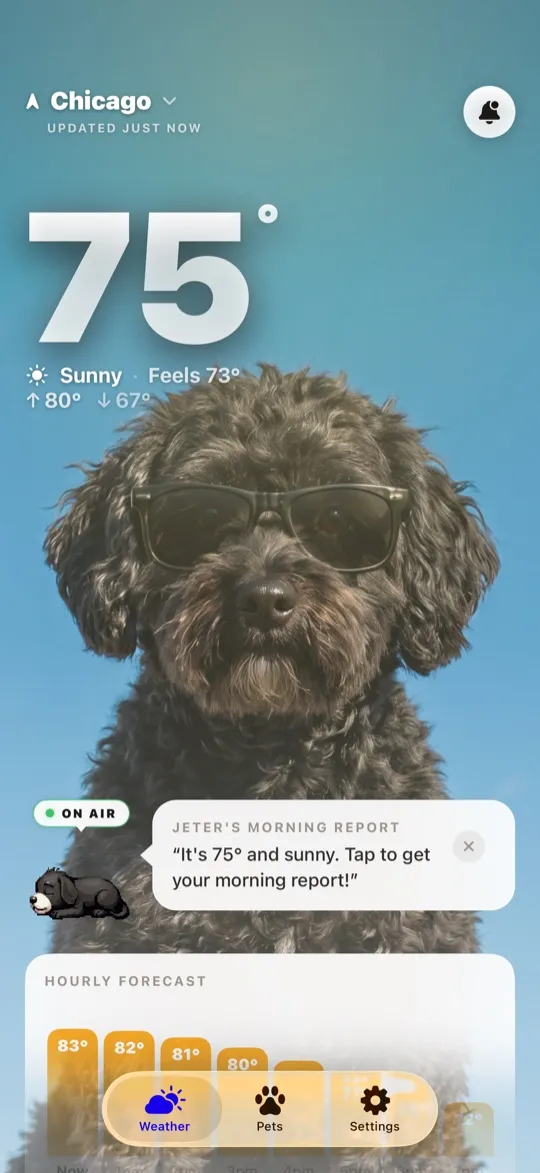
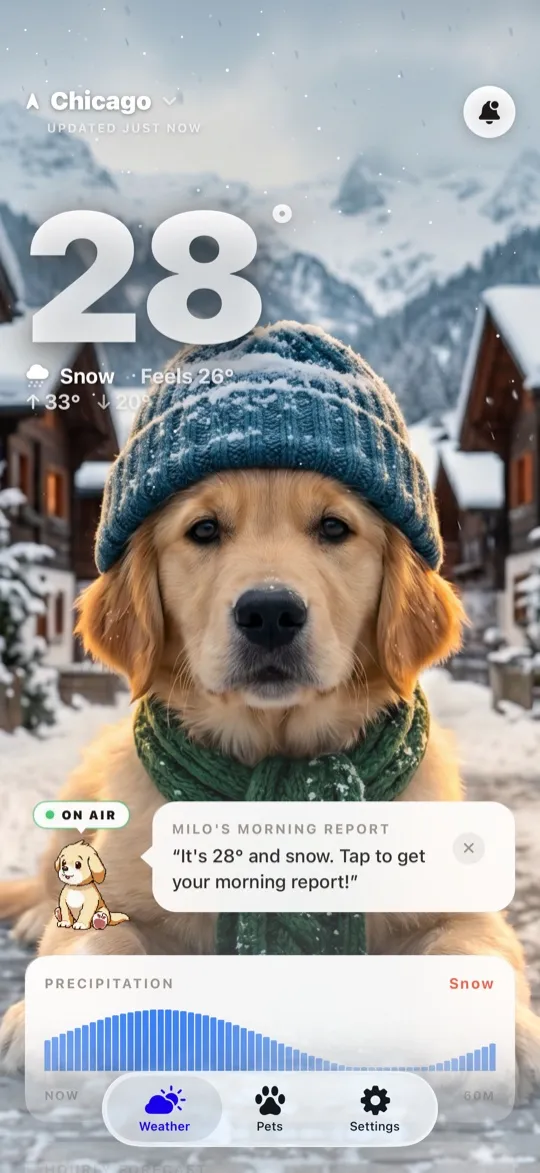
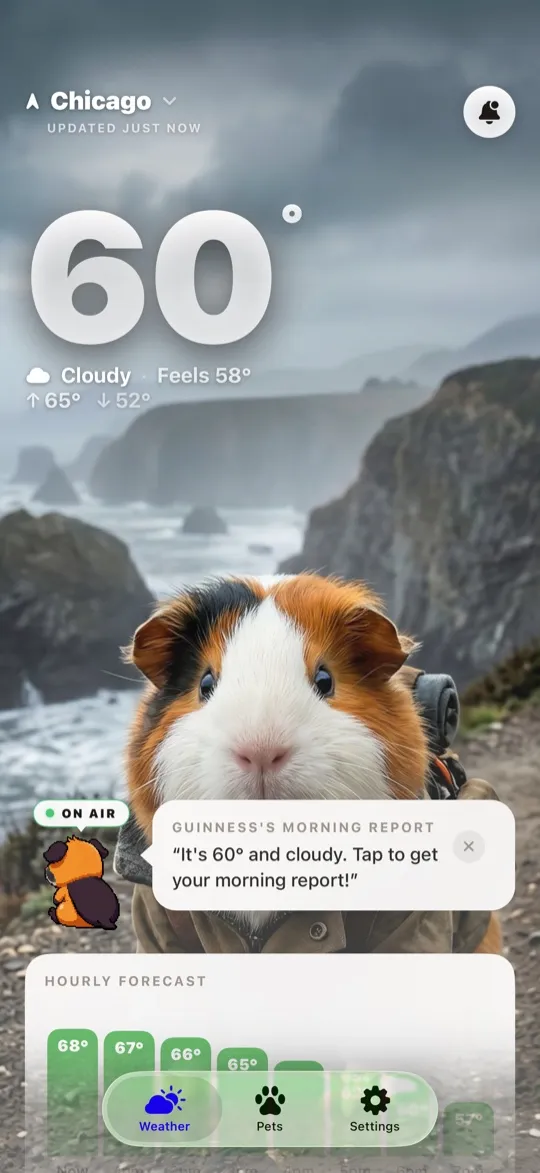
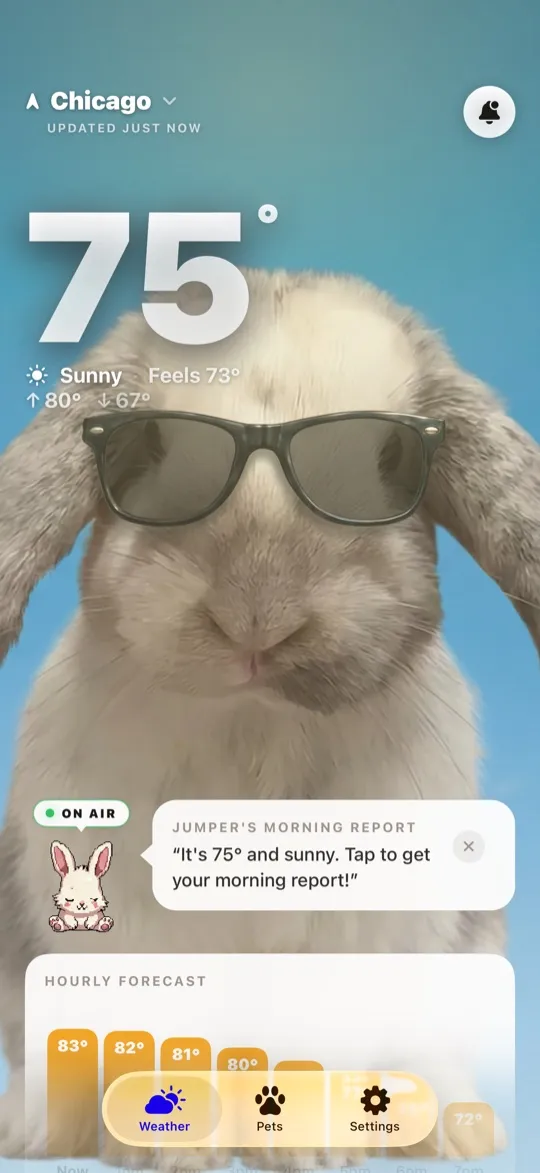
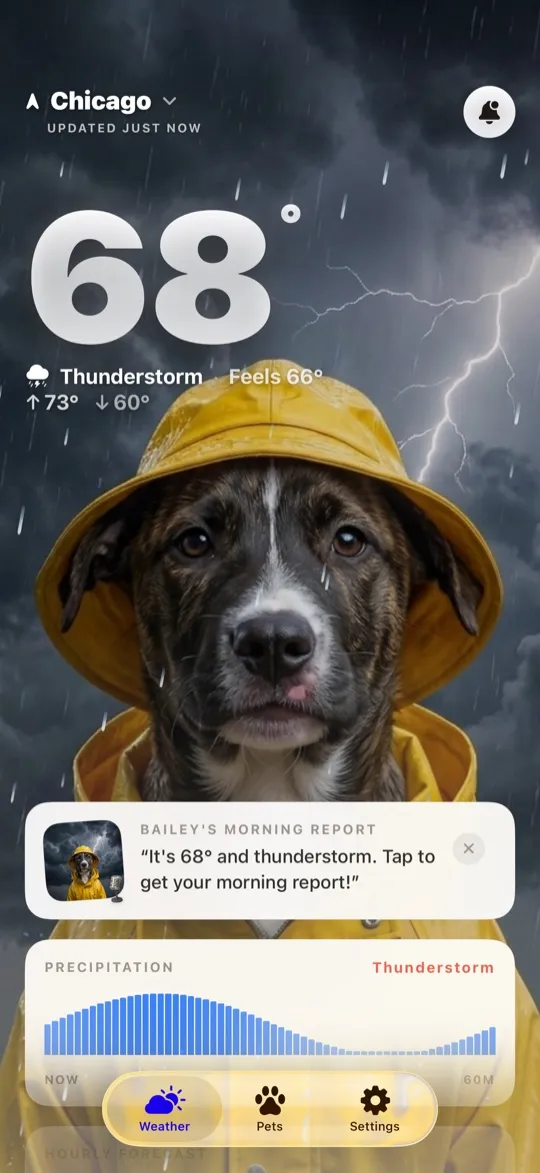
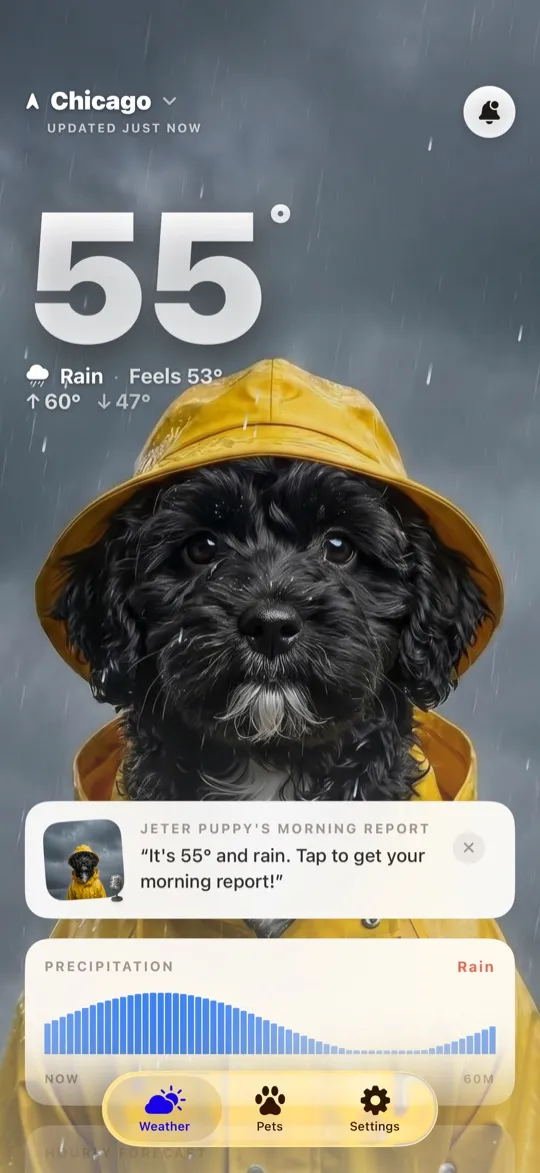
The reason to know your prevailing wind and your sun hours is that a catio is a decision you make once. WeatherPets keeps the day's conditions on your home screen with your own pet delivering them, which is a low-effort way to learn what your garden actually does across a year before you commit. Meet your WeatherPet on the App Store.
The roof has three jobs
A roof over part of the catio is the highest-return upgrade after orientation, and it does more than keep rain off.
- Dry perches. A wet cat is a cold cat, and a soaked shelf is out of service for a day after the rain stops. Slope the roof so water runs off the back rather than down the mesh.
- A dry patch of ground. Cats sit on the floor more than plans assume. A section that stays dry gives them somewhere to be after rain.
- Selective light. Solid roofing gives shelter and takes the sun away with it. Translucent polycarbonate gives shelter, light and warmth at once, usually the better trade for a partial roof.
That last one raises a question people worry about unnecessarily: most polycarbonate glazing filters out nearly all ultraviolet, so does a covered perch cheat your cat of vitamin D? No. Unlike humans, cats and dogs cannot synthesize vitamin D3 through skin sun exposure and depend on getting it from their diet. Your cat is sunbathing for the heat, and a UV-filtering panel delivers all the heat and light while cutting the sunburn risk on thin-furred ears and noses.
Most people land on roughly half and half: a roofed, part-glazed section at one end for weather and warmth, open mesh over the other for air and the view.
The top end is still real
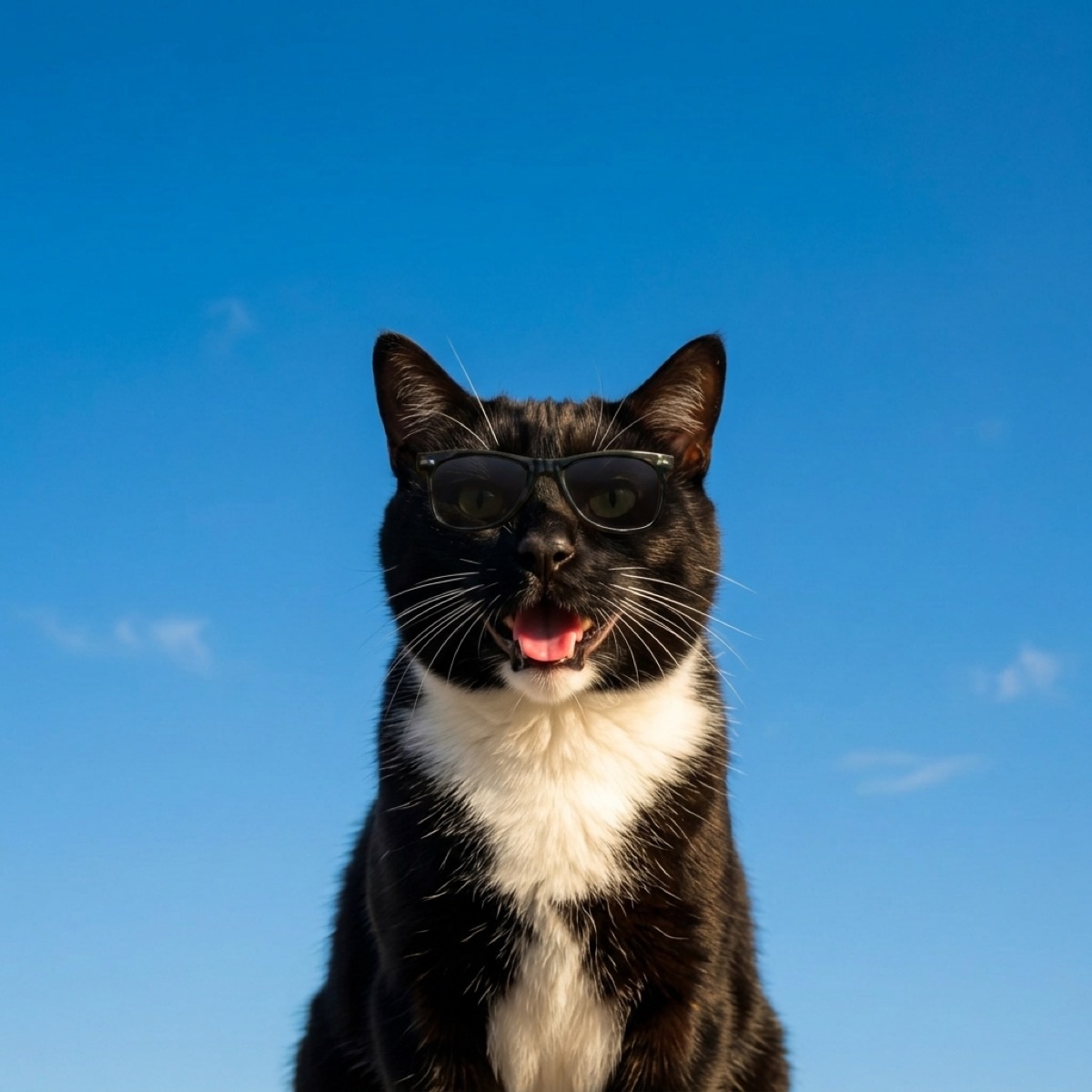
All of the above argues for warmth, so it needs a firm limit attached. A small enclosed structure in direct sun runs hotter than the air around it, and a cat who cannot leave it is in trouble in a way an indoor cat never is.
The ASPCA's hot weather guidance lists heavy panting or difficulty breathing, drooling, weakness, stupor and collapse among the signs of overheating, and singles out flat-faced animals such as Persians as less able to cool themselves by panting. Older, overweight and heart or lung compromised cats belong in the same early-exit group. Our guide to heatstroke in cats covers those signs in more detail.
Four rules keep the top end safe:
- Shade at every hour, not on average. Check at 8am, noon and 5pm on a sunny day. Noon shade is easy; 5pm is the one that is missing.
- Ventilation on two sides. Mesh on one wall and solid on three gives you an oven with a window. Air has to be able to cross.
- Water in the shade. A bowl in the sun is warm within an hour, unappealing soon after.
- The door stays open. Every rule above is a backstop. The real safety mechanism is a cat who can walk back indoors whenever they want.
If the forecast is genuinely hot, the answer is the same as for any pet: bring the day indoors. Our guide to keeping cats cool in summer has the indoor version, and there are plenty of weather-based enrichment ideas for days the catio is closed.
Winter is when a good one earns its keep
Most people quietly retire the catio in November, which is a shame, because a sheltered perch in winter sun is one of the warmest spots on the property. Cold air, strong low sun and no wind is close to ideal for a cat, and it is a combination that only happens outdoors.
Winter needs little: the wind panel on, a perch well clear of frozen ground, a dry covered corner, and something insulating on the perch, since bare wood pulls heat out of a cat by conduction. Watch older cats especially, because cold and stiffness compound; our piece on senior cats and cold weather covers what that looks like.
The one rule that outranks the rest, in every season: the cat decides. A catio is a good idea precisely because it is a room with the door open, and every design choice on this page is about widening the range of days your cat chooses to walk through it.
Frequently asked questions
Which direction should a catio face?
South, in the northern hemisphere. A south-facing catio with a roof overhang takes the low winter sun deep inside, which is exactly when your cat wants heat, while the same overhang blocks the high summer sun. That is standard passive solar design, and it works on a six foot box for the same reason it works on a house. East is the good second choice: morning sun, then shade through the hottest hours. West is the one to avoid, because it collects late afternoon sun when the structure is already at its warmest.
What temperature is comfortable for a cat in a catio?
Higher than most people assume. The thermoneutral zone for cats, the range where they hold their temperature without spending extra energy, runs roughly 86 to 101F. Humans sit nearer 64 to 72F. So for most of the year your cat is below their comfort band rather than above it, and the design job is capturing warmth and blocking wind far more often than providing shade. Shade still matters, but only across a narrow band at the top of the year.
Can a catio be used in winter?
Yes, and it is often the season a well-built one earns its keep, because winter sun on a sheltered perch is genuinely warm. What it needs is a wind block on the prevailing side, at least one perch raised well off the cold ground, a dry roofed section, and an unobstructed way back into the house at all times. The rule that matters most is that the cat chooses. A warm spot only works if leaving it is easy, so never build a catio the cat can be shut out in.
Do cats need sunlight for vitamin D?
No, and this one is worth knowing before you spend money on roofing. Unlike people, cats and dogs cannot synthesize meaningful vitamin D through their skin from sun exposure and get it from their diet instead. So a polycarbonate roof panel that filters out most of the ultraviolet costs your cat nothing nutritionally. Cats sunbathe for warmth, not for vitamin D, and a UV-filtering panel still delivers the heat and the light while cutting the sunburn risk on thin-furred ears and noses.
How hot is too hot for a catio?
A small enclosed structure in direct sun runs well above air temperature, so design against that failure mode rather than memorising a number. Provide deep shade at every hour, cross-ventilation on two sides rather than one, water that is itself shaded, and an open door back into the cooler house. Watch for heavy panting, drooling, weakness or stumbling, which the ASPCA lists among signs of overheating, and take flat-faced breeds such as Persians out earlier than the rest.
Your daily forecast, delivered by your own pet.

A note on health: This article is general information, not a substitute for professional veterinary advice. If your cat shows signs of overheating, is weak or unsteady, or you have any serious or emergency health concern, contact your veterinarian or an emergency animal hospital right away. Our guidance draws on trusted veterinary and government sources, including those linked above.
