Fall Allergies in Dogs: Why the Itch Starts in August
Your dog does not sneeze in the fall. Your dog chews a paw at two in the morning. That is the confusing part about seasonal allergies in dogs: the exact same ragweed pollen that has you reaching for tissues shows up on a dog as raw feet, hot ears, and a licking habit you cannot interrupt. It starts in August, not October, and how bad any given day gets is set almost entirely by the weather that week. Here is what is actually blooming, how to read a pollen count like a dog owner, and the routine that takes the load off your dog's skin before it becomes a vet visit.
Key takeaways
- Dogs itch, they do not sneeze. Environmental allergy in dogs lands in the skin, mostly paws, ears, belly and face.
- Ragweed starts in August. It peaks around mid-September and does not stop until the first hard frost.
- This is common. Atopic dermatitis may affect 10 to 15% of dogs, and 40 to 75% of those cases follow a season.
- Warm, dry, breezy mornings are the worst walks. Ragweed pollen counts run highest in the morning.
- A damp wipe-down after every walk is the single highest-value habit, because it removes pollen before the skin reacts to it.
- The season is getting longer. The freeze-free season across 198 US cities has grown by an average of 21 days since 1970.
Why your dog's fall allergies look nothing like yours
People are respiratory allergics. Pollen hits the lining of the nose and eyes, and you get the sneeze, the drip, the itchy eyes. Dogs run the same immune reaction through a different door. The allergen contacts the skin, the immune system fires, and the result is inflammation and relentless itch.
The clinical name is atopic dermatitis, and it is not a rare diagnosis. Cornell's Riney Canine Health Center describes it as a reaction to environmental allergens including pollens, molds, dust mites and dander that may affect as much as 10 to 15% of the dog population. Most affected dogs start showing signs between 6 months and 3 years old. And critically for anyone reading this in August: the itch has a seasonal component in 40 to 75% of cases, which is exactly what you would expect if pollen is the trigger.
That seasonal share is the whole reason fall matters. A dog who is fine in July and miserable in September is not being dramatic. That dog is telling you which weeks the air changed.
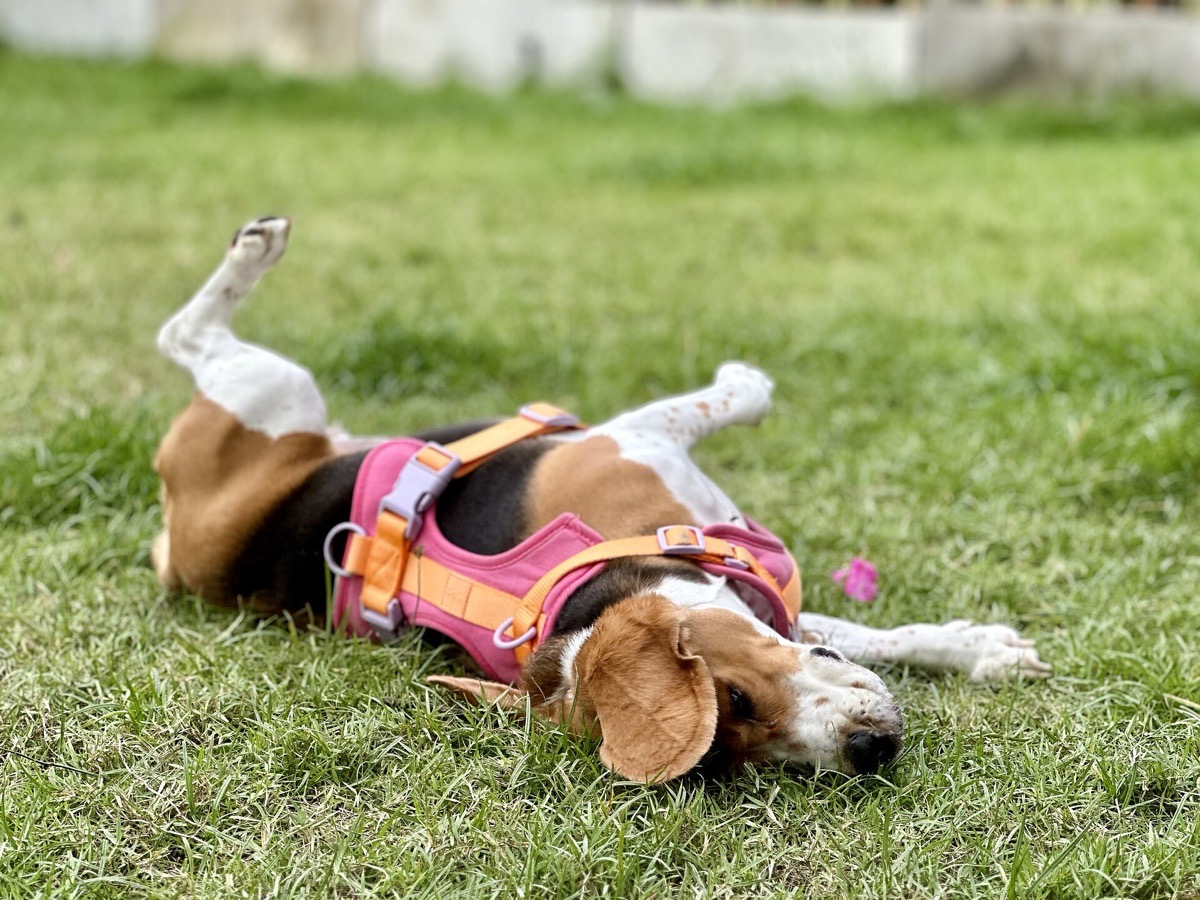
The plant doing it, and the plant that gets blamed
Ragweed is the main event. The Asthma and Allergy Foundation of America counts seventeen ragweed species growing in North America, and a single plant can release up to a billion pollen grains. It is a scruffy, unremarkable weed with lacy leaves and green flower spikes that nobody would look at twice, growing in exactly the places dogs love: roadside verges, vacant lots, field edges, the scrappy end of the park.
The pollen is wind-borne, which is the point. Ragweed does not need insects, so it makes an enormous volume of extremely fine powder and lets the breeze do the rest. AAFA notes that warm weather, humidity and breezes after sunrise help release it, and cites a study finding ragweed pollen up to seven times higher in warmer urban areas thanks to the heat island effect. City dogs are not spared. Often the opposite.
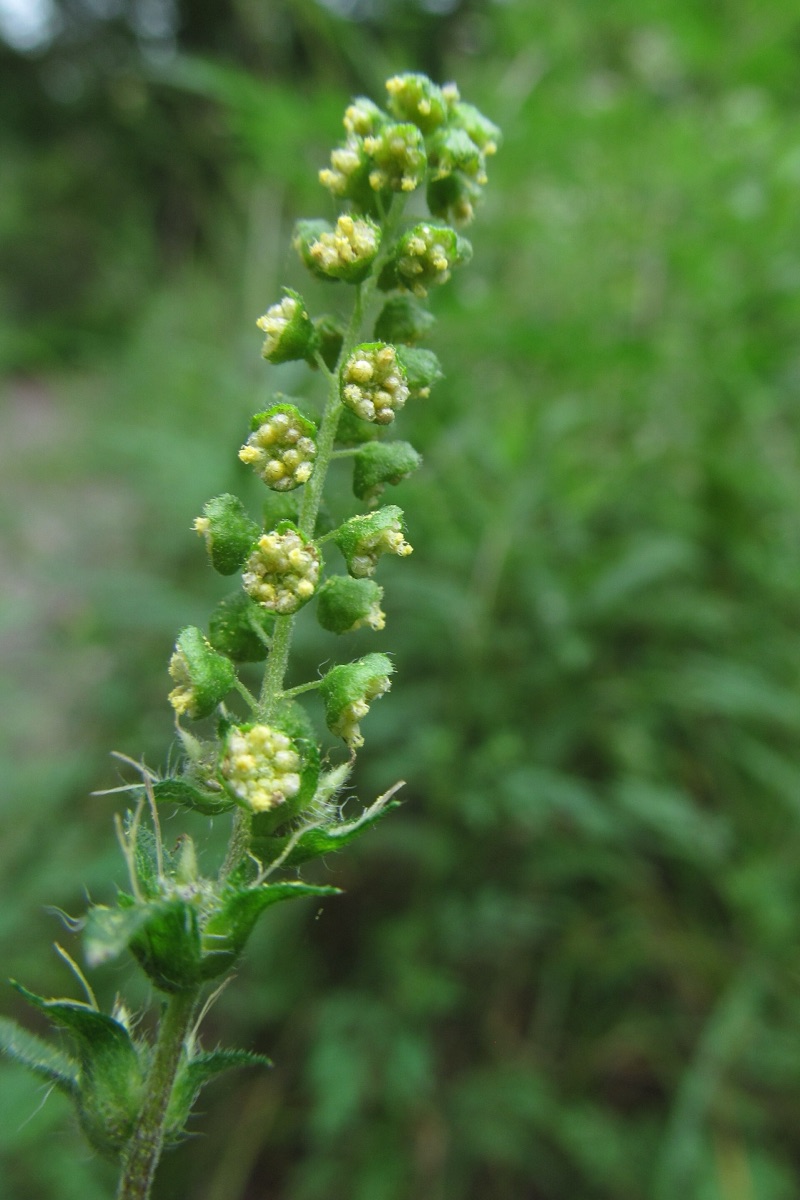
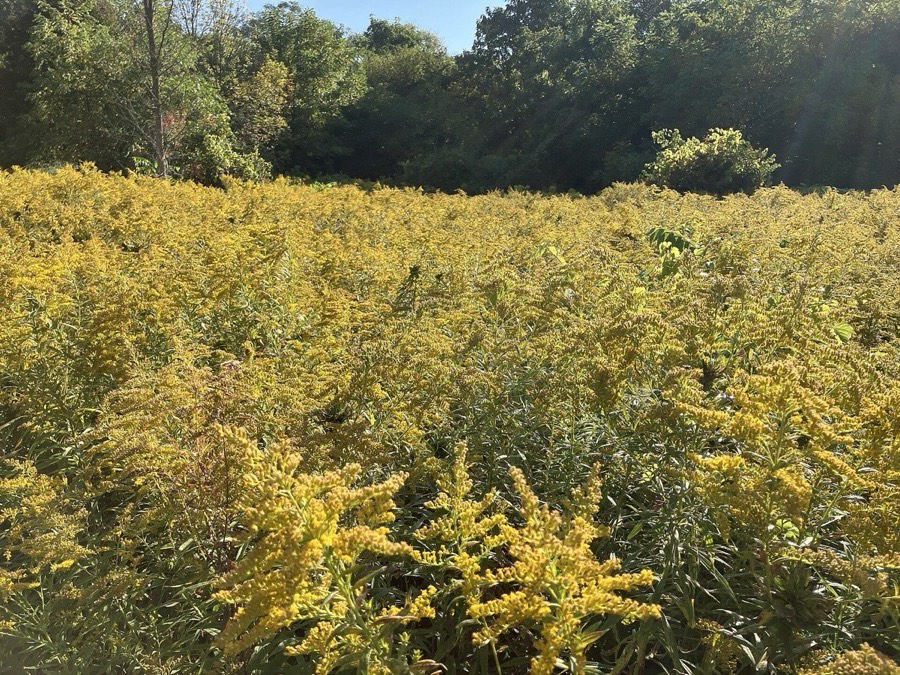
Goldenrod, meanwhile, takes the blame every single year and is almost entirely innocent. It blooms at the same time, it is bright yellow, it is impossible to miss, and it is insect-pollinated. Its pollen is heavy and sticky by design, because it needs to ride on a bee, not the wind. Very little of it ends up airborne. If you are pulling weeds to help your dog, pull the ugly green one and leave the pretty yellow one for the pollinators.
The fall allergy calendar, week by week
The American College of Allergy, Asthma and Immunology puts ragweed bloom from August into November, peaking in mid-September. AAFA gives any single location a 6 to 10 week season. Use the table as a planning tool, then adjust it to your own frost date.
| Phase | Roughly when | What is in the air | What to do about it |
|---|---|---|---|
| Opening | First three weeks of August | Ragweed begins releasing. Counts low to moderate. Grass pollen tailing off. | Start the wipe-down habit now, while it is still easy. If your dog needed medication last fall, book the vet this week rather than in September. |
| Ramp | Late August into early September | Counts climbing fast on warm, dry, windy days. | Move walks later in the day. Wash bedding weekly. Watch the paws, they go first. |
| Peak | Around mid-September | Highest ragweed counts of the year in most of the US. | Assume every dry morning is a bad one. This is when untreated dogs develop secondary ear and skin infections. |
| Long tail | October | Ragweed declining, but mold spores rising off wet leaf litter and damp lawns. | Do not let your dog dig in leaf piles. Rake wet leaves off the yard rather than letting them mat down. |
| Over | First hard frost | Ragweed dead. Indoor allergens, dust mites and dander take over. | Deep clean bedding and soft furnishings. A dog who stays itchy through November is telling you the trigger was never only pollen. |
One caveat on that last row, and it is the reason this season keeps creeping. Ragweed dies at the first hard frost, which the National Weather Service defines as 28 degrees Fahrenheit or below for a sustained stretch, cold enough to kill vegetation outright. That date is moving later. Climate Central's 2026 analysis of 198 US cities found the freeze-free season lengthened in 87% of them, by an average of 21 days since 1970. Three extra weeks of growing season is three extra weeks of pollen for your dog to walk through.
How to read a pollen count like a dog owner
Most weather apps will show you a pollen number. Very few tell you what it means. Ragweed is a weed pollen, so these are the thresholds that matter, as published by the St. Louis County Pollen and Mold Center, a certified National Allergy Bureau counting station. Counts are grains per cubic meter of air.
| Weed pollen count | Level | What it means for an allergic dog |
|---|---|---|
| 0 to 9 | Low | Normal walks. A good day to do the long one. |
| 10 to 49 | Moderate | Sensitive dogs start reacting. Wipe down afterward without fail. |
| 50 to 499 | High | Shorten the grassy portion, favor pavement, wipe down and check ears the same evening. |
| 500 or more | Very high | Pavement only, keep it brief, save the enrichment for indoors. Windows shut. |
Then layer the weather on top, because the count is a measurement of yesterday's conditions and the forecast tells you about tomorrow's.
- Warm, dry and breezy is the worst combination. Warmth and humidity after sunrise trigger release, and wind carries it. A 78 degree breezy morning will out-pollen a 90 degree still one.
- Mornings beat evenings, and not in a good way. ACAAI states plainly that during ragweed season, pollen levels are highest in the morning. If your dog reacts badly, flip the long walk to late afternoon or evening.
- Rain buys you a few hours, not a day. Rain washes pollen out of the air, but ACAAI notes counts can soar after rainfall. The warm breezy morning after a storm is often worse than the day before it.
- Wind after a dry spell is the spike. Nothing has knocked the pollen down and the breeze has plenty to lift.
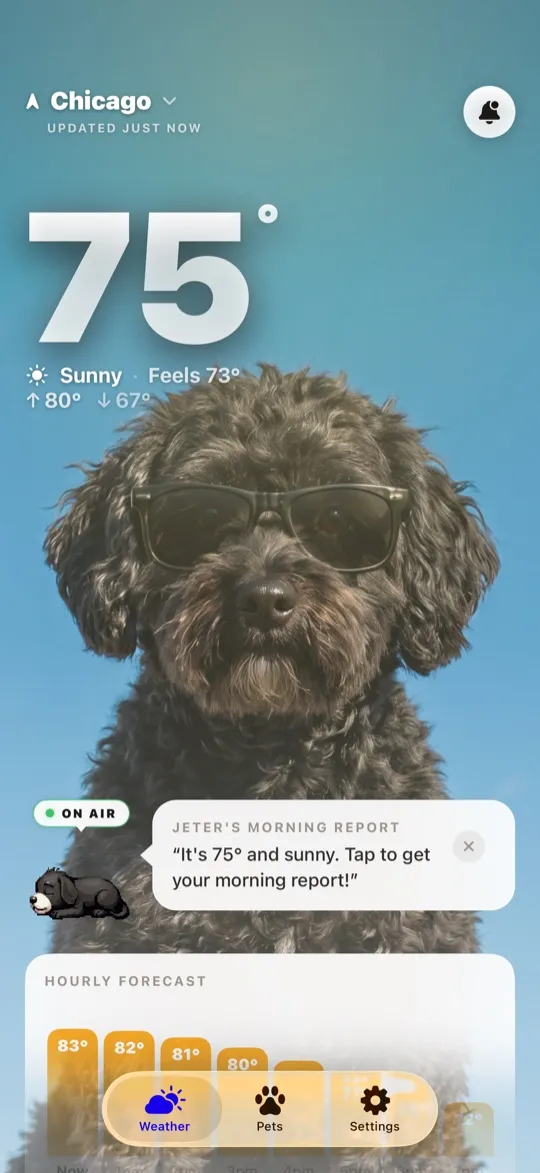
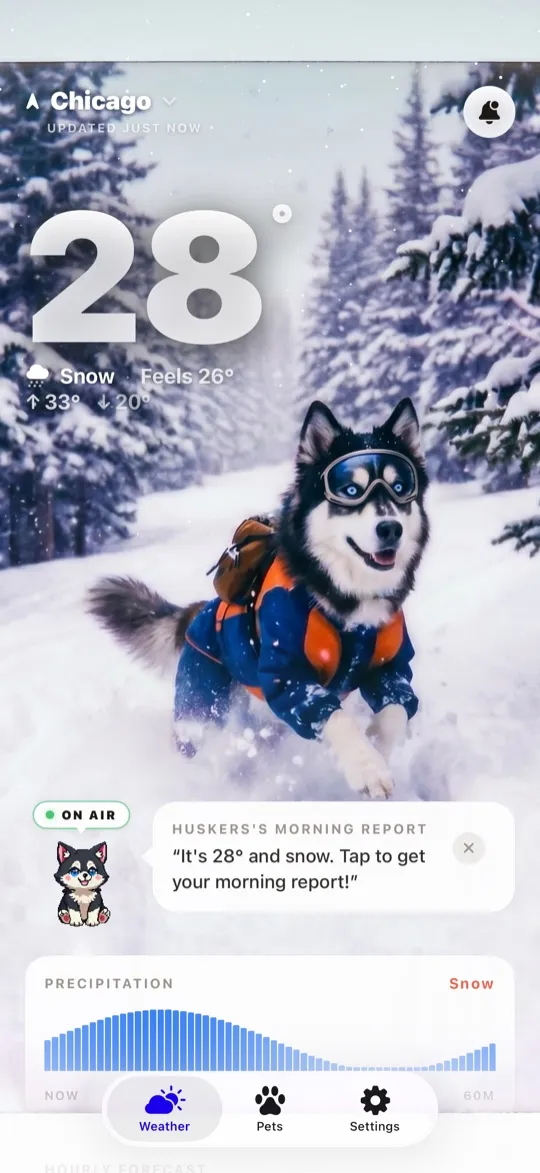
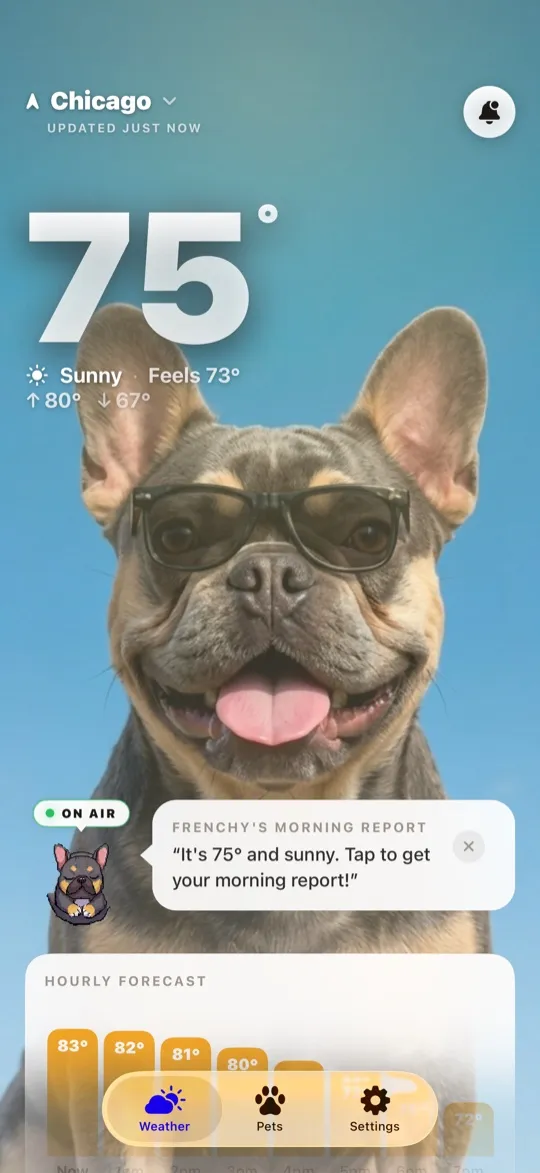
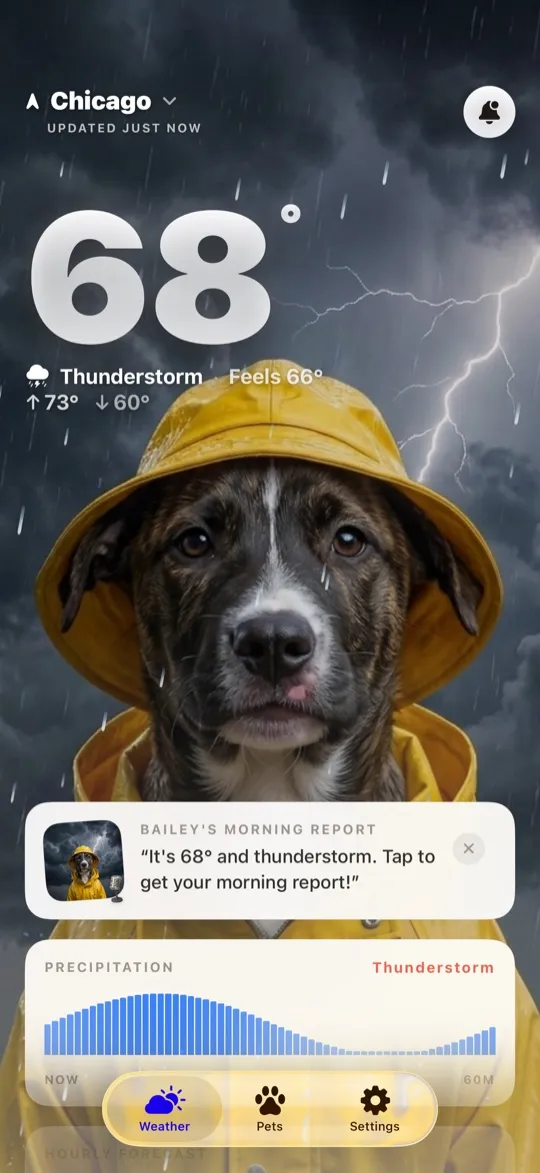
This is the sort of thing that is genuinely easier to plan than to react to. WeatherPets puts the next ten days in front of you every morning, narrated by your own pet, so you can see the warm dry stretch building and shift the long walk before your dog's feet pay for it. Download WeatherPets and pick your pet.
What it actually looks like on your dog
The American Kennel Club lists the paws and ears as the most commonly affected areas, followed by the wrists, ankles, muzzle, underarms, groin, around the eyes and between the toes. Note what those places have in common: thin skin, sparse fur, and direct contact with grass. Here is the translation from symptom to cause.
- Paw licking and chewing. The classic first sign, and often the only one for weeks. Look for rust-colored staining on white fur, which is saliva, not dirt. It means the licking has been going on longer than you noticed.
- Ears. Head shaking, scratching at the ear base, a yeasty smell, and infections that clear on drops and then come straight back in three weeks. Recurrent ear infections in a young dog are an allergy sign until proven otherwise.
- Face rubbing. Dragging the muzzle along the carpet or sofa after a walk. Watch for it within an hour of coming inside.
- Belly, armpits and groin. Pink to red skin, sometimes a rash of small bumps. Flip your dog over once a week in season and actually look.
- Scooting. Frequently blamed on worms, frequently allergic inflammation around the tail base and anal glands.
- Hot spots. A patch of skin that goes from fine to raw and weeping within a day, usually because the dog found one itchy spot and worked it.
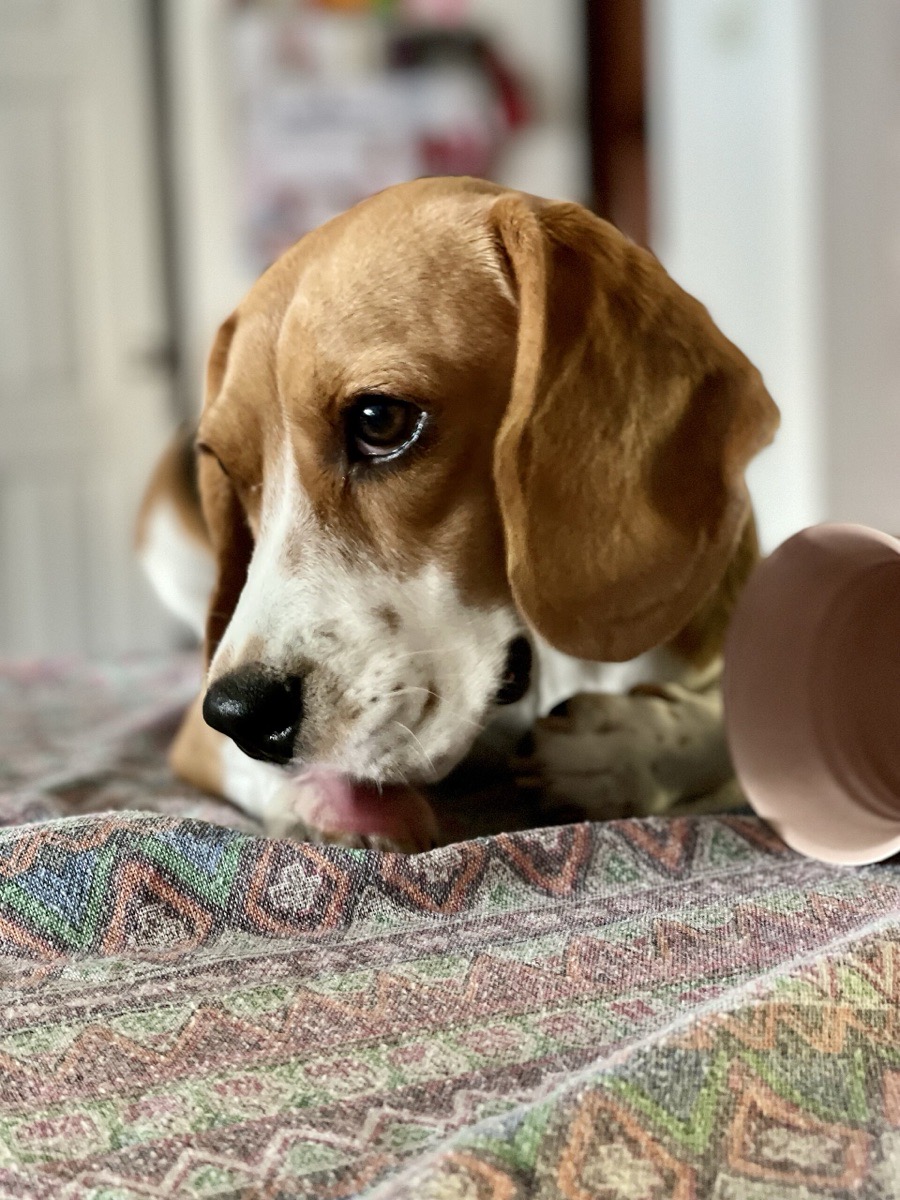
When it is not pollen
Three things imitate fall allergies well enough to waste a month of your time. Fleas are the big one, because flea populations are still going strong in early autumn and a single bite can set off flea allergy dermatitis in a sensitized dog, typically over the lower back and tail base. Food allergy looks nearly identical on the skin but does not care what month it is, so a dog who itches in February too is not purely seasonal. And secondary infections, the bacterial and yeast overgrowth that follow weeks of licking, become their own itch engine. Cornell lists flea and tick preventatives and management of secondary infections as parts of the standard treatment plan for exactly this reason. If the itch does not respond to allergy treatment, the infection is usually why.
The daily routine that lowers the dose
You cannot make ragweed go away. You can dramatically cut how much of it sits on your dog's skin, and dose matters. Six habits, in order of how much they buy you.
- Wipe down after every single walk. A damp cloth or a fragrance-free pet wipe over paws, between the toes, up the legs, across the belly and around the muzzle. Dry the feet properly afterward, including the webbing. This takes ninety seconds and removes the allergen before the skin has time to react to it.
- Move the walk. Late afternoon or evening beats morning during ragweed season. Pavement and mown parks beat long grass and field edges.
- Rinse more, bathe less. Plain water paw soaks can be daily. Full shampoo baths should stay at one to two a week at most, with a soothing product such as a colloidal oatmeal or a vet-recommended medicated shampoo. Over-bathing strips the skin barrier, which is already the weak link in an atopic dog.
- Wash bedding weekly, hot. Bedding is where a week of pollen accumulates and gets pressed back into the skin for eight hours a night.
- Windows closed on high-count days, at home and in the car. The open back window on a breezy drive is a pollen delivery system.
- Do not mow with the dog outside, and do not let them nose through the clippings or leaf piles afterward.
One more from the human side that applies here. ACAAI's own advice to allergy sufferers includes washing your hands after contact with pets that have been outside. Your dog is a very effective pollen mop, which means this season is quietly a two-way problem in most households.
What your vet can actually do
If the routine above is not enough, and for a genuinely atopic dog it usually is not, there is a real toolkit. Cornell's list of treatments for canine atopic dermatitis covers topical shampoos, rinses and medicated wipes, oral medications including corticosteroids, cyclosporine, oclacitinib and antihistamines, and injectable lokivetmab given every 4 to 8 weeks.
In practice most owners meet two of those by brand name. Oclacitinib is a daily tablet that starts reducing itch quickly. Lokivetmab is an injection that targets a specific itch signal and lasts roughly a month at a time. Which one suits your dog is a conversation about their other health conditions and whether they get recurrent skin and ear infections, not a question with one right answer.
The thing worth knowing is that only one option treats the cause rather than the symptom. AKC describes allergen immunotherapy, the allergy shots or drops built from your dog's specific test results, as the only treatment that addresses the underlying problem. Cornell notes that testing may cost a few hundred dollars and that immunotherapy is usually effective, while being honest that it can be cost prohibitive and that some dogs do not respond. It is a long game, measured in months, and it is the right call for a dog whose season is getting worse each year.
Timing is the free advantage. Human allergists routinely tell patients to start medication about two weeks before symptoms are expected. The same logic applies to your dog. Getting ahead of mid-September costs less medication and less skin damage than chasing a flare in October.
Cats, and the rest of the household
Cats get this too, under the name feline atopic skin syndrome, and the MSD Veterinary Manual describes it as allergic skin disease driven by environmental allergens including pollens, molds and dust mites. It presents differently and is easy to miss, because cats do their itching in private. Look for overgrooming, symmetrical thinning of fur along the belly or flanks, scabby bumps along the back, and chewing at the base of the tail. An indoor cat is not immune, since pollen comes in on clothes, on open windows and on the dog.

Conditions matter more for pets than the forecast alone shows. The Pet Safety Score in WeatherPets combines temperature, humidity, air quality, UV, wind, and more into one 0 to 100 read tuned to your specific pet. Meet your WeatherPet on the App Store.
The short version
Ragweed is up right now, it will peak in about a month, and it will not quit until you get a real freeze. Your dog will tell you about it with their feet long before anything else. Wipe them down after every walk, walk later in the day when the counts are up, look at the belly and the ears once a week, and if the licking has already started, get in front of it now rather than in the middle of September. The season is the same length as always for the plant. It is entirely up to you how much of it lands on your dog.
Your daily forecast, delivered by your own pet.







Frequently asked questions
When does ragweed season start and end?
Ragweed typically begins releasing pollen in August, peaks around mid-September and runs into November in much of the country, according to the American College of Allergy, Asthma and Immunology. The Asthma and Allergy Foundation of America puts the length of a single location's season at 6 to 10 weeks. It ends at the first hard frost, which the National Weather Service defines as 28 degrees Fahrenheit or below for a sustained period, cold enough to kill the plant outright.
Why does my dog get itchy in the fall?
Because dogs react to inhaled and contacted allergens through their skin rather than their nose. Cornell's Riney Canine Health Center describes atopic dermatitis as a reaction to environmental allergens including pollens and molds, affecting as much as 10 to 15% of dogs, with a seasonal pattern in 40 to 75% of cases. In fall the trigger is usually ragweed pollen, and secondarily mold spores from damp leaves.
What are the signs of fall allergies in dogs?
Itching is the headline sign. The American Kennel Club lists the paws and ears as the most commonly affected areas, along with the wrists, ankles, muzzle, underarms, groin, around the eyes and between the toes. In practice that looks like paw licking, head shaking and repeat ear infections, face rubbing on carpet, belly redness, and scooting. Sneezing and watery eyes happen but are far less common than in people.
Can I give my dog Benadryl for fall allergies?
Ask your vet before you do. Antihistamines appear on Cornell's list of oral treatments for canine atopic dermatitis, but they help only a minority of allergic dogs and rarely control moderate itching on their own. Dosing is weight-based, and combination products that include a decongestant such as pseudoephedrine are dangerous for dogs. Your vet can confirm the right product and dose, and can rule out a secondary skin infection that no antihistamine will fix.
Does rain help my dog's pollen allergies?
Temporarily. Rain washes pollen out of the air, which is why a wet afternoon is usually a comfortable walk. But the American College of Allergy, Asthma and Immunology notes that counts can soar after rainfall, so the warm breezy morning that follows a storm is often worse than the day before it. Treat the day after rain as a high-exposure day, not a safe one.
Do fall allergies in dogs go away on their own?
The season ends, but the allergy does not. Atopic dermatitis is a lifelong condition, and Cornell notes that itching which starts as seasonal can progress to year-round as a dog becomes sensitized to more allergens. Most dogs are diagnosed between 6 months and 3 years old. The goal is control rather than cure, and starting treatment before peak season usually takes less medication than chasing a flare after it starts.
A note on health: This article is general information, not a substitute for professional veterinary advice. If your dog's skin is broken, infected or not improving, or you are facing any serious or emergency health concern, contact your veterinarian. Never start a medication without your vet's guidance. Our guidance draws on trusted veterinary and scientific sources, including those linked above.
