When Are Ticks Active?
Most of us treat ticks like a summer thing. Preventive goes on in May, comes off in September, and the rest of the year we stop thinking about it. That model was never quite right, and it is getting less right every year. Ticks do not follow a calendar. They follow a thermometer and a humidity reading, which means your weather forecast tells you more about today's tick risk than the month on the wall does. Here are the actual numbers.
Key takeaways
- About 40F is the switch. Ticks shift from sheltering to actively hunting once temperatures climb near and above 40 degrees.
- Peak risk is mild and muggy, not hot. Roughly 60F to 80F with high humidity is prime questing weather.
- Hot and dry pushes them into the shade. Above the mid 80s the risk moves to woods, edges, and tall grass rather than disappearing.
- Fall is a peak season, not the off season. Adult blacklegged ticks are busy right when most owners stop the preventive.
- You have 24 to 48 hours. That attachment window before Lyme transmission is why a same-day tick check works.
Ticks run on temperature, not on the calendar
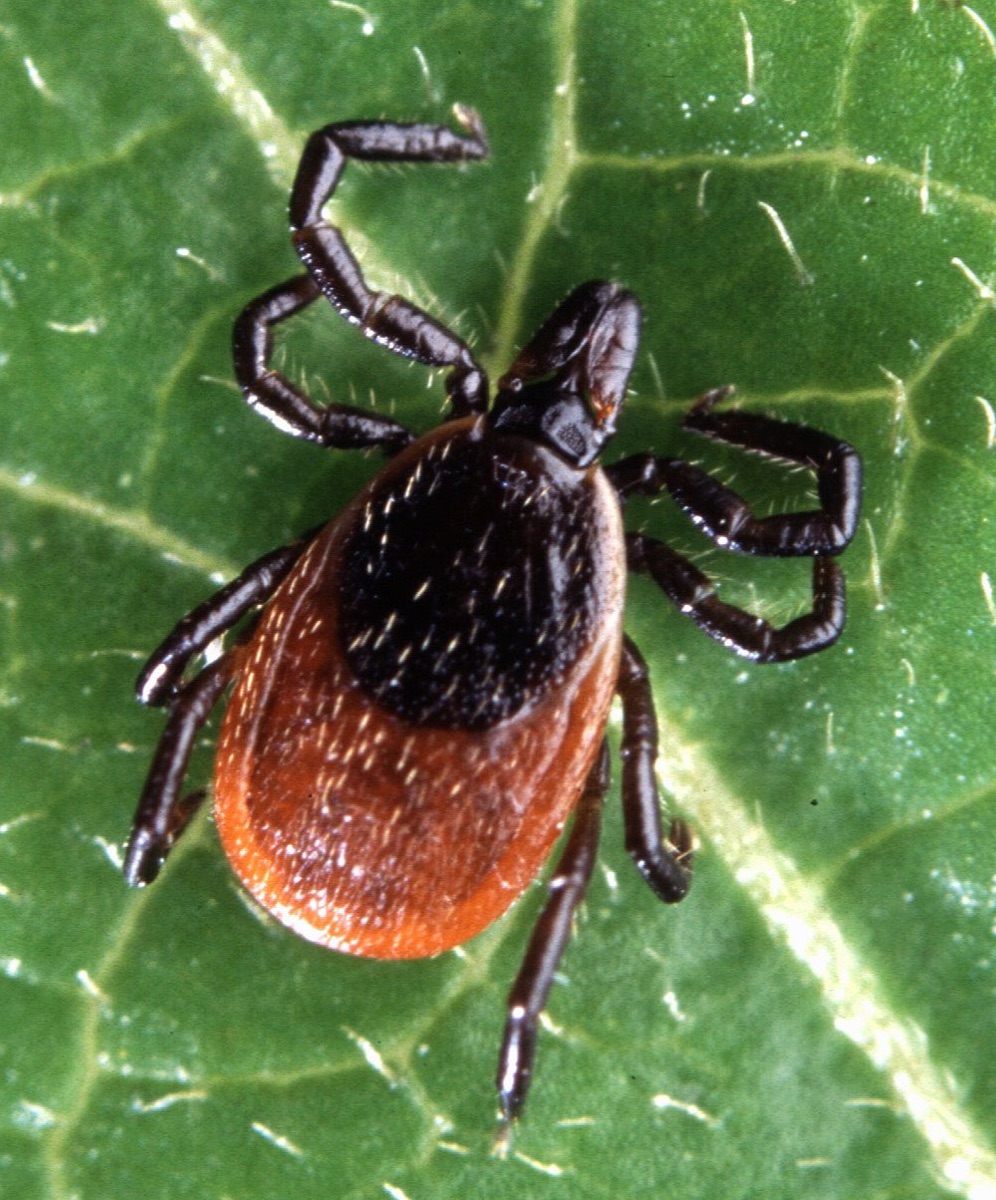
A tick sitting in the leaf litter is not deciding whether it is July. It is responding to whether conditions are survivable enough to climb a grass stem, extend its front legs, and wait for something warm to brush past. That behavior is called questing, and it has thresholds.
The widely used figure is 40F. Below roughly that mark, most species stay tucked into leaf litter and go quiet. Above it, they start hunting. Species differ: lone star and American dog ticks tend to shut down below 40 degrees, while blacklegged ticks (the deer ticks that spread Lyme disease) can keep working in cooler conditions, especially when humidity is high. Activity climbs through the 40s and 50s and hits its peak in mild, damp weather. Then, counterintuitively, it falls off in genuine heat: hot dry air dehydrates ticks, so they retreat deeper into shade and leaf litter rather than sitting exposed on a sunny lawn.
| Conditions | What ticks are doing | What it means for your dog |
|---|---|---|
| Below freezing, frozen ground | Sheltering in leaf litter, largely inactive | Lowest risk of the year, but not zero |
| Around 35F to 40F | Blacklegged ticks begin questing on milder days | Winter thaws restart the risk clock |
| 40F to 55F | Activity switches on for most species | Preventive should already be running |
| 60F to 80F, humid | Peak questing across species | Highest risk. Daily checks after every walk |
| Above 85F, dry | Retreat into shade, leaf litter, tall grass | Risk concentrates in woods and shaded edges |
| Cool, damp fall days | Adult blacklegged ticks actively questing | A peak season that most owners miss |
Humidity matters as much as the temperature
Ticks lose water easily and cannot drink their way out of it, so humidity governs how long they can sit out in the open waiting. That is why they concentrate in shaded, moist microhabitats: leaf litter, tall grass, brushy edges, the boundary where a mown lawn meets woods. It is also why a damp, overcast 65 degree day can be a far worse tick day than a blazing dry 90 degree one, even though only one of those feels like peak summer.
For a dog, this reshapes where the risk actually is. The exposed middle of a sunny field in August is relatively low risk. The shaded trail edge you cut through to get there is not. If your dog is a nose-in-the-underbrush type, they are spending their walk in exactly the microclimate ticks prefer.
Why the season keeps getting longer
If tick season feels like it now runs most of the year, that matches what parasite researchers are tracking. The Companion Animal Parasite Council's 2026 forecast points to climate shifts, changing wildlife densities, and expanding vector habitat as forces reshaping where and when risk shows up, and it explicitly calls for year-round prevention rather than a seasonal approach. CAPC notes its forecasts have exceeded 94 percent accuracy against real diagnostic results.
The map is moving too. The 2026 forecast projects notable Lyme expansion into Ohio, Kentucky, West Virginia, and parts of Tennessee and North Carolina, with continued westward spread through North Dakota, eastern Montana, and northern South Dakota. Lone star ticks are pushing north into the Upper Midwest and New England, carrying ehrlichiosis with them. Auburn University's veterinary college summarizes the same forecast as a shift to year-round threat.
The practical translation for owners is blunt: if you live somewhere that "does not really have ticks," that assessment may be a few years out of date, and your vet is the best source on what has changed locally.
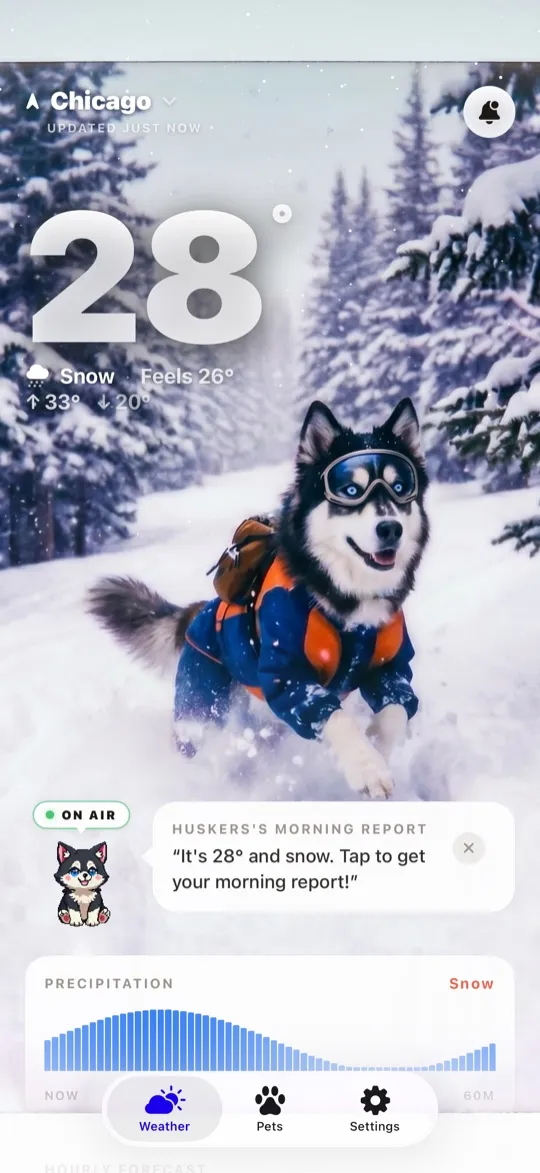
Tick risk tracks the same two numbers you already check every morning: temperature and humidity. WeatherPets puts both in your pet's daily report, so a mild damp week reads as a tick-check week instead of just a nice one. Download WeatherPets and pick your pet.
Fall is the trap
The single most common gap is not summer carelessness. It is the September shutdown, where the preventive gets packed away with the pool floats. Adult blacklegged ticks are highly active in fall, questing hard before winter, and they are working through exactly the cool damp conditions that autumn delivers. A dog that was protected all summer can pick up its highest-risk bite in October.
Winter is not a full stop either. Ticks overwinter in leaf litter and resume activity on mild days, so a January thaw above 40 degrees is a live tick day. Brown dog ticks complicate it further by surviving and reproducing indoors, entirely independent of the weather outside. That combination is why Cornell's Riney Canine Health Center advises year-round tick control even for vaccinated dogs.
The tick check that actually works
Here is the number that makes everything else worth doing. Cornell states that after a tick carrying Lyme bacteria attaches, it takes at least 24 to 48 hours before transmission occurs. A tick you find and remove tonight, after this afternoon's walk, is usually a tick that never had time to infect your dog. Daily checks are not busywork. They are the intervention.
Run your fingers slowly against the coat, feeling for small bumps, and check the places ticks prefer:
- In and around the ears, including inside the flap
- Around the eyes and lips, and under the chin
- Between the toes and in the webbing of the paws
- Under the collar, which is easy to skip
- Armpits and groin, where the skin is thin and warm
- Under the tail and around the anus
To remove one, grasp it with fine tweezers or a tick tool as close to the skin as you can, then pull straight up with steady pressure. Do not twist, jerk, or squeeze the body, and skip the folk remedies involving matches or petroleum jelly. Check that the mouthparts came out, clean the site, and note the date on your phone. If your dog develops signs in the following months, that date is genuinely useful information for your vet.
Worth remembering: ticks ride in on dogs and then look for people. Checking your dog protects your household too.
Prevention: what to use
Cornell recommends a layered approach: year-round tick control with a collar, topical, or chewable, routine checks with prompt removal, avoiding tall grass and wooded areas where practical, and a conversation with your vet about whether the Lyme vaccine fits your dog's risk. The American Veterinary Medical Association's guidance on external parasites makes the same core point: prevention is a veterinary conversation, not a shelf decision.
Broadly, the three formats trade off like this:
- Oral chewables are prescription products given monthly or, for some, every three months. They are convenient, unaffected by swimming or baths, and easy to dose accurately. Discuss them with your vet if your dog has a seizure history.
- Topical spot-ons are applied to the skin between the shoulder blades. Some repel as well as kill, but bathing and swimming can affect them, and they need drying time away from small children and other pets.
- Collars can last many months and are low effort, which makes consistency easy. Fit matters, and they need checking for skin irritation.
The honest answer to "which is best" is the one your dog tolerates, that covers the species in your area, and that you will actually keep on schedule all twelve months. Consistency beats product choice. Ask your vet what is circulating locally, because the right coverage in coastal Maine is not the right coverage in central Texas.
Signs of tick-borne illness in dogs
Per Cornell, the common signs of Lyme disease in dogs are fever, lameness that can shift from leg to leg, lethargy, reduced appetite, swollen and painful joints, and swollen lymph nodes. The hard part is the lag: symptoms often do not appear until two to five months after the bite, long after anyone remembers pulling a tick off. A serious complication called Lyme nephritis affects the kidneys and can bring vomiting, extreme lethargy, and increased thirst and urination.
Anaplasmosis and ehrlichiosis, also tick-borne, can look similar with fever, lethargy, and joint pain. Because the presentation is vague and delayed, mention any known tick exposure when you call your vet. It changes what they test for. The AVMA's overview of Lyme disease in dogs is a good primer to read before that appointment.
Frequently asked questions
What temperature are ticks active at?
Around 40F is the widely used tipping point where ticks shift from sheltering to actively questing for a host. Activity rises through the 40s and 50s and peaks roughly between 60F and 80F when humidity is high. Above the mid 80s in dry air, many ticks retreat into shaded leaf litter and tall grass to avoid drying out, so risk moves into the cool damp edges rather than disappearing. Blacklegged ticks, the species that spreads Lyme disease, can stay active in cooler conditions than most people expect.
When does tick season start and end?
There is no reliable calendar answer anymore, which is why veterinary groups have moved to year-round advice. Ticks respond to conditions, not dates, so a mild winter week above 40F can produce active ticks in January, and fall is one of the busiest periods of the year as adult blacklegged ticks quest ahead of winter. The Companion Animal Parasite Council recommends year-round preventive use rather than a seasonal on and off approach.
How long does a tick have to be attached to give my dog Lyme disease?
Cornell University's Riney Canine Health Center states that after a tick carrying the Lyme bacteria attaches, it takes at least 24 to 48 hours before transmission occurs. That delay is the entire reason a daily tick check works so well: a tick found and removed the same evening usually has not been attached long enough to pass the infection on.
What are the signs of Lyme disease in dogs?
According to Cornell, common signs include fever, lameness that may shift between legs, lethargy, decreased appetite, joint swelling and pain, and swollen lymph nodes. The difficult part is timing: symptoms often do not appear until two to five months after the bite, so the tick is long gone by then. A more serious complication called Lyme nephritis affects the kidneys and can cause vomiting, extreme lethargy, and increased thirst and urination. Contact your veterinarian if you see any of these.
Do I need tick prevention in winter?
In most of the country, yes. Ticks do not die off in winter, they shelter in leaf litter and become active again whenever conditions allow, which includes ordinary winter thaws. Brown dog ticks can also survive indoors year-round. Both Cornell and the Companion Animal Parasite Council recommend keeping tick preventives running year-round rather than stopping in fall, and stopping in fall is the single most common gap owners have.
Conditions matter more for pets than the forecast alone shows. The Pet Safety Score in WeatherPets combines temperature, humidity, air quality, UV, wind, and more into one 0 to 100 read tuned to your specific pet. Meet your WeatherPet on the App Store.
Your daily forecast, delivered by your own pet.










A note on health: This article is general information, not a substitute for professional veterinary advice. If you are worried about a tick bite, a possible tick-borne illness, or any serious or emergency health concern, contact your veterinarian right away, and talk to them before starting or changing any preventive product. Our guidance draws on trusted veterinary sources, including those linked above.