Pet Safety Score
Every weather app can tell you it is 88 degrees. None of them can tell you whether that is fine for your dog. That gap is the whole reason the Pet Safety Score exists: one number, from 0 to 100, that answers the question you are actually asking when you glance out the window. Is it okay to take them out right now? Here is exactly how it is built, why it is different for your pet than for the dog next door, and how to read it.
Key takeaways
- One number, one question. 0 to 100, with a plain verdict: Great, Good, Caution, or Risk.
- It is your pet's score, not a generic one. Species, size, coat, flat-faced breeds, age, weight, and health conditions all move the bands.
- Every point is explained. Each factor is a signed contribution, and they add up exactly to the score. No black box.
- Graduated, not cliffs. Only storm-class weather and hazardous air force a hard zero. Everything else tapers.
- It runs on your phone. Deterministic engines, live weather and air data, and health answers that never leave the device.
What you actually see
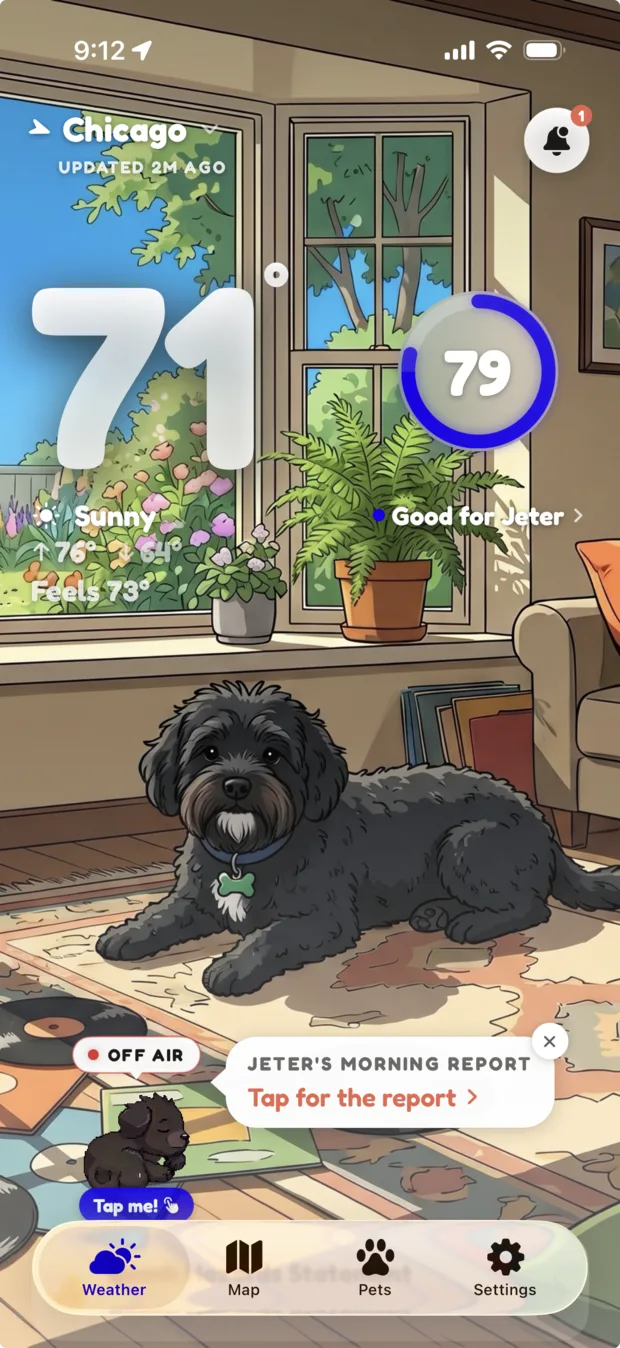
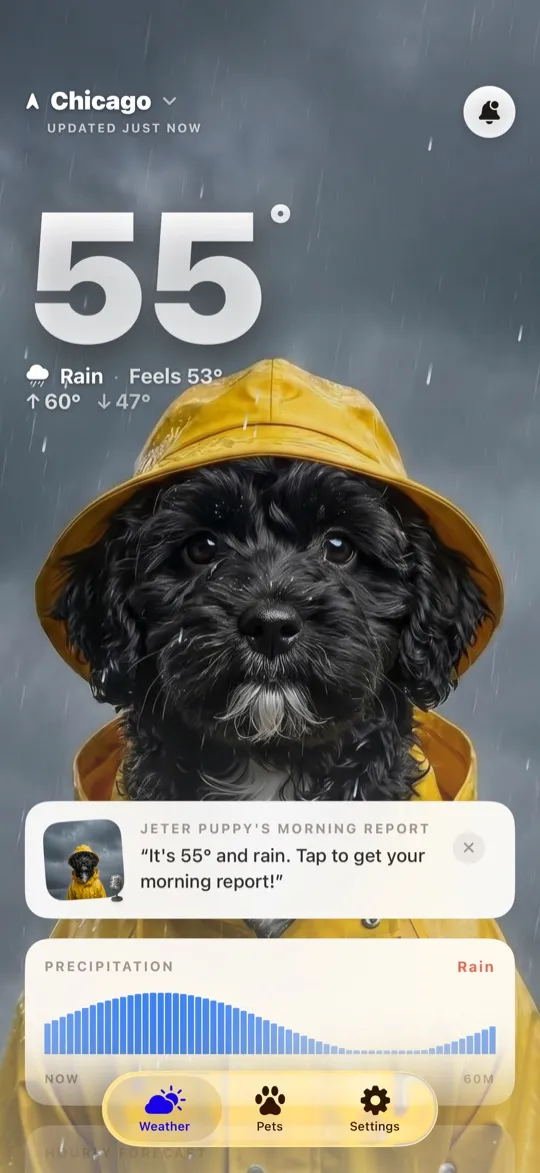
On the home screen the score is a ring next to the temperature, with your pet's name attached to the verdict. That is the glance version: a 79 and a "Good for Jeter" tells you everything you need for a normal Tuesday morning. Tap it and you get the full picture, including what is helping, what is hurting, and when the good windows are.
How the score is built
The engine scores every forecast hour, then blends the current window into the "right now" number. The model is a comfort curve with graduated penalties, deliberately not a table of hard thresholds.
The base comes from a temperature comfort curve. Inside your pet's ideal feels-like band, the hour sits at 100. As conditions move toward that pet's hard cold or heat limit, the base tapers down, reaches a floor, and only decays toward 0 well past the limit. This matters more than it sounds: a temperature sitting exactly at the limit reads as "quick potty break," not "blizzard." Cliff-edge scoring produces the nonsense where 4pm is a 60 and 5pm is a 0, which teaches people to ignore the number entirely.
Then penalties get subtracted, each one graduated rather than binary:
| Factor | How it is applied | Why |
|---|---|---|
| Humidity | The veterinary "150 rule," scaled by temperature | Panting cools by evaporation, so mugginess only bites when there is real heat to shed |
| Precipitation and fog | Graduated by intensity | Wet coats lose heat faster and visibility drops |
| Snow | Graduated, lighter for thick-coated pets | A husky and a whippet do not experience the same snow |
| Darkness | A soft penalty only | After sunset is exactly when you should walk on hot days, so it should not be punished hard |
| UV | Graduated by index | Thin-coated, light-skinned, and shaved pets burn |
| Wind gusts | Graduated by gust speed | Wind strips warmth from small and thin-coated pets |
| Air quality | Graduated by AQI, amplified for air-sensitive pets | Respiratory and heart conditions change the safe threshold |
| Pollen | Graduated, weighted for allergy-flagged pets | Allergy flare-ups are a real reason to shorten a walk |
Everything is clamped to the 0 to 100 range. The design choice we are proudest of is that every point is recorded as a signed contribution, something like "minus 18, humidity," and those contributions sum exactly to the final score. The app shows you that arithmetic. The number is explained rather than asserted, which means you can disagree with it intelligently.
Why your dog's score is not your neighbor's dog's score
The same 82 degrees can be Great for a young husky and Risk for a senior pug. A single generic "walk score" cannot express that, and pretending otherwise is how pet weather advice gets useless.
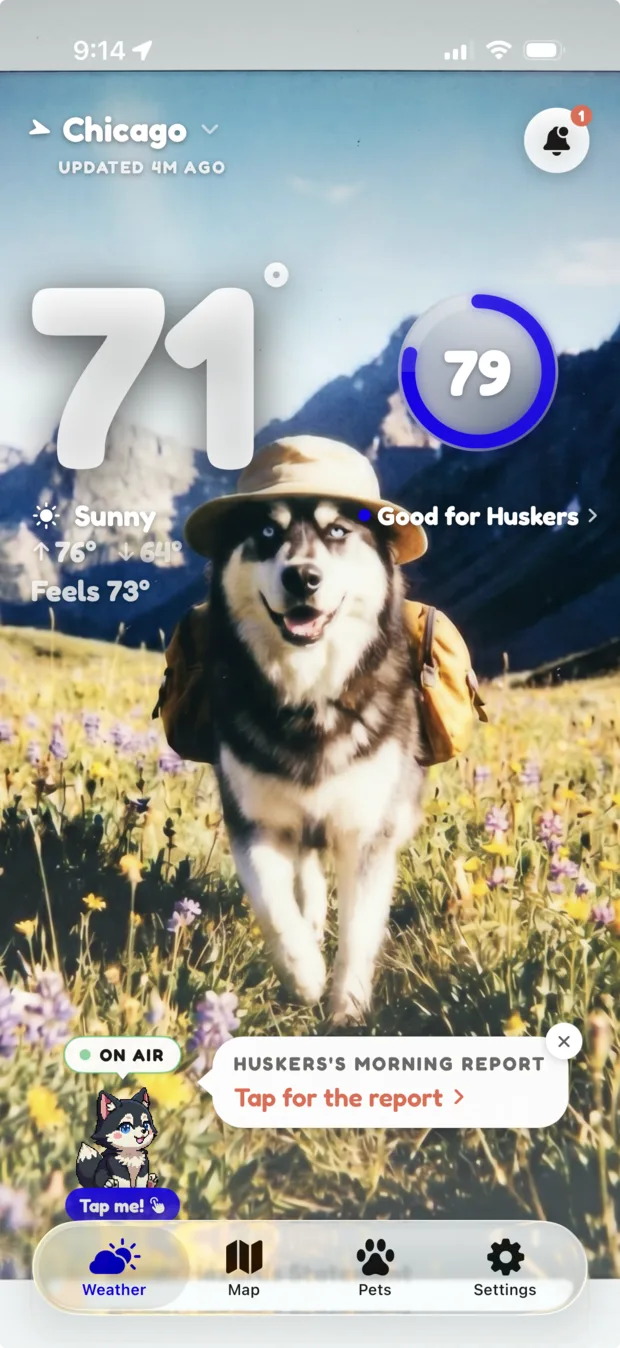
So the score runs against a comfort profile built per pet, derived from three sources. First, species baselines. Second, an optional photo analysis that classifies size, coat type, and flat-faced breeds. Third, the onboarding questionnaire: life stage, weight, indoor versus outdoor lifestyle, storm anxiety, allergies, and health conditions. Those inputs shift the comfort bands and can switch on flags like air sensitive (respiratory, heart, or air-allergic pets feel a given AQI more sharply) and pavement sensitive (a paw-burn guard).
Storm anxiety is handled differently on purpose. It never changes the number, because it is a behavioral issue rather than a weather-safety one. Instead it surfaces a calming-space tip when thunderstorms show up in the day's forecast. If your dog panics in storms, our guide to calming thunderstorm anxiety in dogs goes deeper.
If you have ever stood in a doorway wondering whether it is too hot, too muggy, or too smoky for your dog, this is the number you have been doing in your head. Meet your WeatherPet on the App Store.
The only two hard zeros
Storm-class weather and hazardous air quality are the sole conditions that force a genuine zero. That is intentional. Earlier versions dropped to zero at more thresholds, and the result was a score that jumped around and lost people's trust. Now neighboring hours get neighboring scores, and a zero means something specific: do not go out.
The air quality case matters more every year. Wildfire smoke can turn an otherwise perfect 68 degree day into a stay-inside day, and pets with respiratory conditions feel it well before a healthy human does. We covered the details in wildfire smoke and pets, and the EPA's AQI basics explain the scale the score reads from.
What you get beyond the number
The score is the headline, but the same evaluation produces the parts you actually act on:
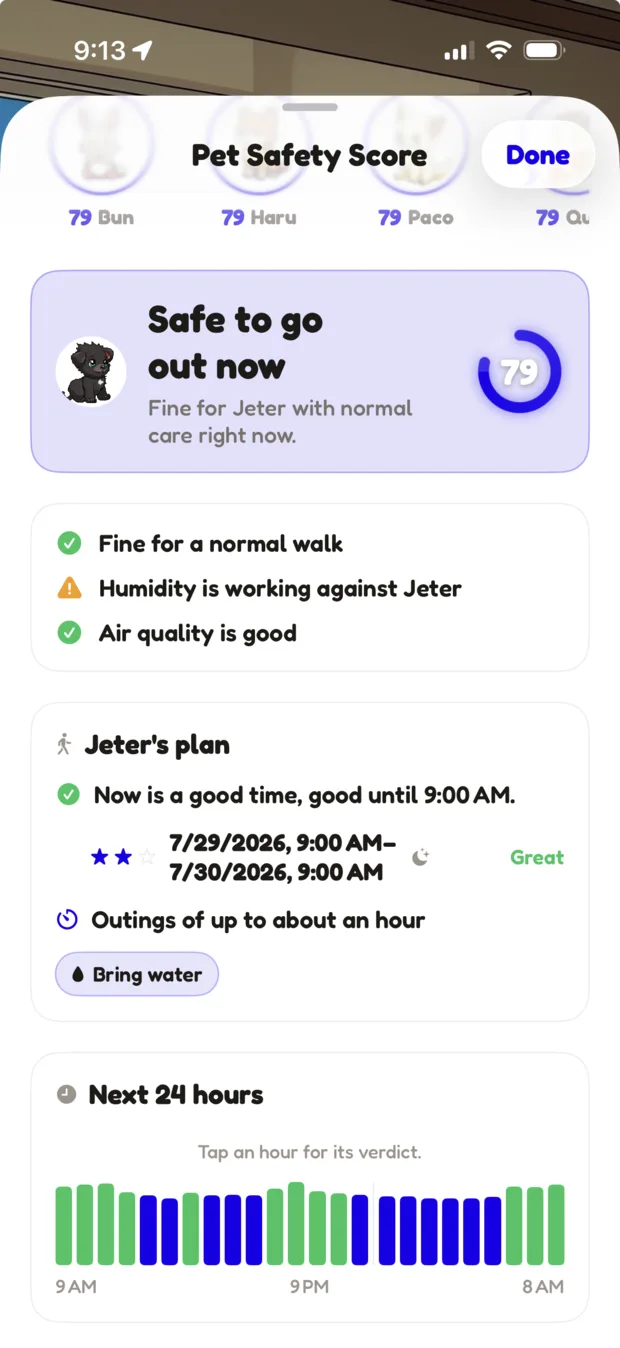
- Best and worst walk windows for the next 24 hours, so you can move the walk instead of cancelling it.
- A recommended session length and specific precautions, like bringing water.
- Estimated ground and pavement temperature, with a sun and shade split. Air temperature is not paw temperature, which is the whole point of the seven-second pavement test.
- Morning, afternoon, and evening grades plus a tomorrow outlook, for planning further than the next hour.
When today genuinely has no good window, the app says so and names the reason with its number, something like "feels like 88 degrees at the worst of it," then offers tomorrow's first good window. A refusal without a reason is just an app being unhelpful.
Safety-first aggregation, and honest gaps
One severity scale runs through the entire feature: Great, Good, Caution, Risk, plus an explicit "no data" state. It is ordered, so combining readings returns the worst one. That is exactly what safety-first aggregation should do. A single dangerous metric caps the whole score, and in a multi-pet household the pack is flagged by its most at-risk member. If you have a husky and a senior flat-faced dog, the household warning follows the dog who is actually at risk.
Missing readings are never fabricated into a 0 or a 100. They are excluded, and a missing primary factor like air quality caps the score below Great rather than reading optimistically. Uncertainty is treated as a mild reason for caution, which is the honest way to handle a gap.
Where the numbers come from
The thresholds are centralized and carry their citations, and the in-app methodology sheet links to them. The main anchors are the American Veterinary Medical Association's warm-weather guidance and its cold-weather animal safety guidance, the EPA's air quality index guidance, the American Kennel Club on heat stroke in dogs, and the National Weather Service heat index, alongside veterinary review. If you want to check our work, the sources are right there.
Weather data is live from WeatherKit, air quality comes from AirNow with a fallback provider, and pollen is layered on top. The scoring engines themselves are deterministic: the same forecast plus the same pet profile always produce the same output, with no model call at evaluation time. That is why the arithmetic can be shown at all.
Your pet's health data stays on your phone
The health questionnaire answers, the ones about conditions, allergies, and life stage, live in local storage on your device and are deliberately excluded from cloud sync. They shape the score locally and never leave the phone. That was a design decision, not an oversight, and it is documented in our privacy policy.
How to read your score
A quick translation for daily use:
- Great. Go, and go as long as you both want.
- Good. Normal walk, normal care. Check the precautions chip; it often just says bring water.
- Caution. Shorten it, move it, or pick shade. Open the detail sheet and look at what is driving the drop, because the fix is usually specific.
- Risk. Keep it to a quick bathroom break and use the suggested window later. This is not the day for the long loop.
One habit worth building: when the score drops, look at which factor pulled it down. Humidity, air quality, and pavement heat all call for different responses, and the breakdown tells you which one you are dealing with. If it is heat, our safe walking temperature guide and heatstroke warning signs are the follow-ups. If it is cold, start with how cold is too cold for dogs.
Frequently asked questions
What is the Pet Safety Score?
It is a 0 to 100 number in WeatherPets that answers one question: is it okay for your pet to be outside right now? It comes with a plain verdict (Great, Good, Caution, or Risk) and a breakdown of every factor moving it. The score is calculated for your specific pet rather than for a generic dog, so the same weather produces different numbers for a husky and a senior flat-faced pug.
How is the Pet Safety Score calculated?
Every forecast hour starts on a temperature comfort curve. Inside your pet's ideal feels-like band the hour sits at 100, then tapers as it approaches that pet's cold or heat limits. Graduated penalties are subtracted for humidity, precipitation, snow, fog, darkness, UV, wind gusts, air quality, and pollen. Each penalty is recorded as a signed contribution, and the contributions add up exactly to the final score, so the app shows you the arithmetic instead of asking you to trust a number.
Why does my dog have a different score than my friend's dog?
The score runs against a comfort profile built for each pet from three inputs: species baselines, an optional photo analysis that picks up size, coat type, and flat-faced breeds, and your onboarding answers about age, weight, indoor or outdoor lifestyle, allergies, and health conditions. Those shift the comfort bands and can switch on sensitivity flags, so an air-sensitive pet feels a given air quality reading more than a healthy young dog does.
Can the Pet Safety Score hit zero?
Only two conditions force a genuine zero: storm-class weather and hazardous air quality. Everything else is graduated, which was a deliberate recalibration so that neighboring hours get neighboring scores instead of falling off a cliff. A temperature sitting right at your pet's limit reads as a quick potty break rather than a blizzard.
Is my pet's health information private?
Yes. The health questionnaire answers are stored locally on your device and are deliberately excluded from cloud sync, so your pet's health details never leave your phone. The scoring engines are deterministic and run on-device: the same forecast and the same pet profile always produce the same result, with no model call at evaluation time.
What happens when air quality or another reading is missing?
Missing data is never invented as a 0 or a 100. The reading is excluded, and if a primary factor such as air quality is unavailable, the score is capped below Great rather than reading optimistically. Honest uncertainty is treated as a reason for mild caution, not as good news.
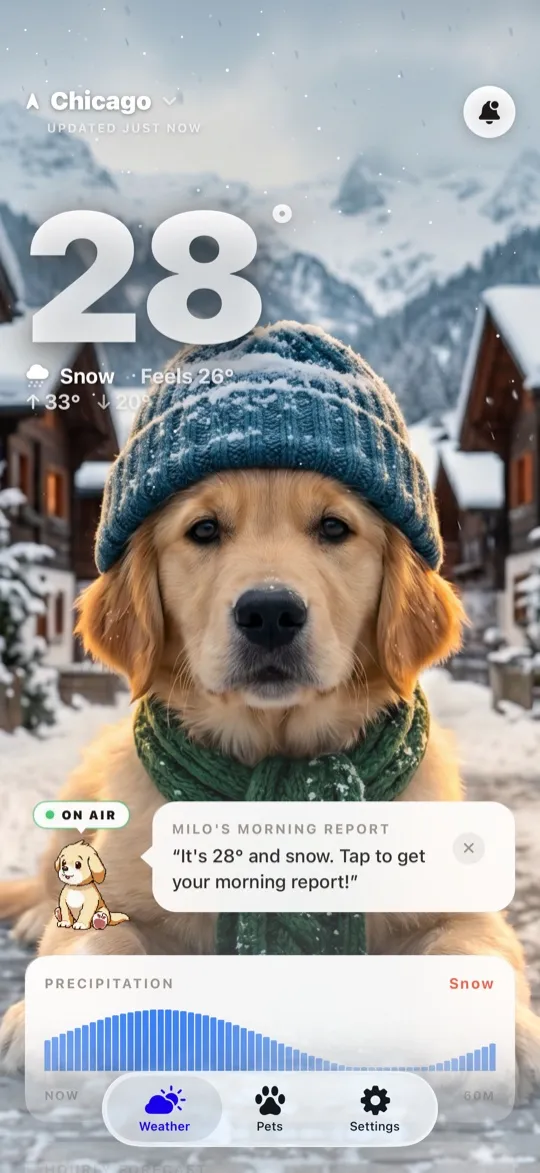
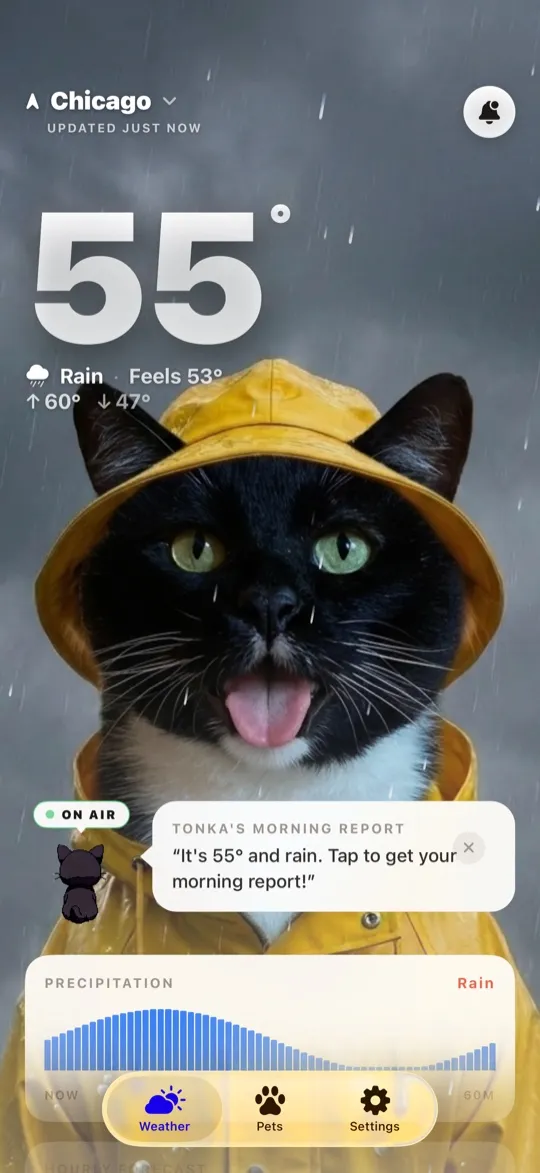
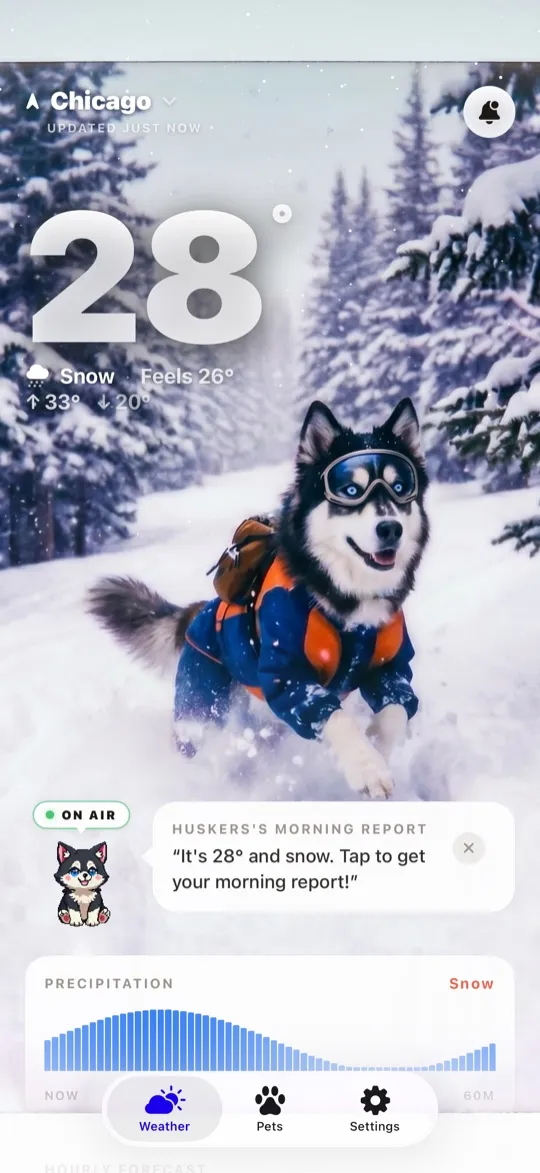
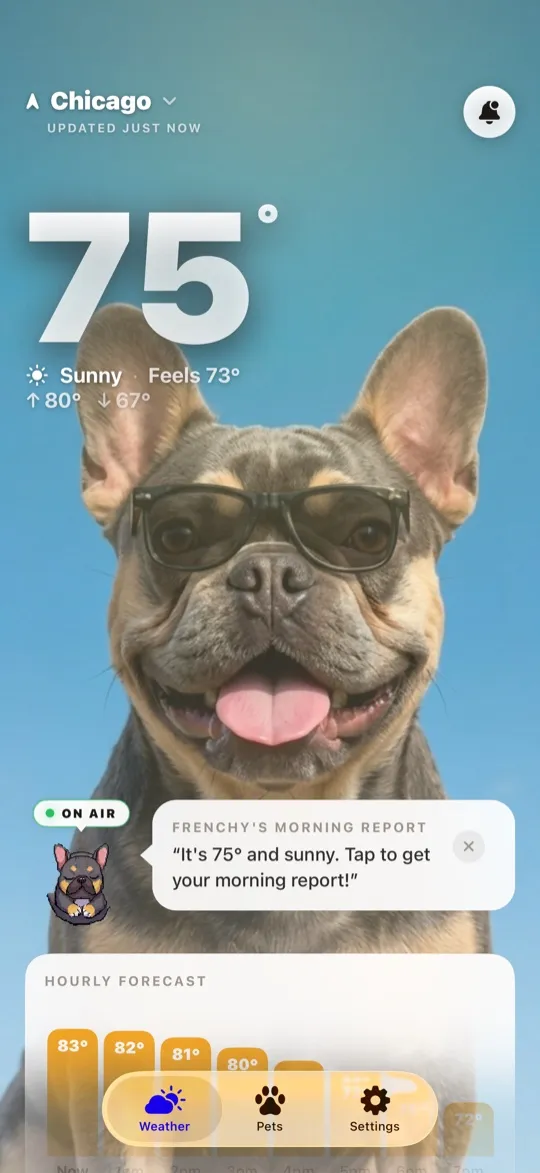
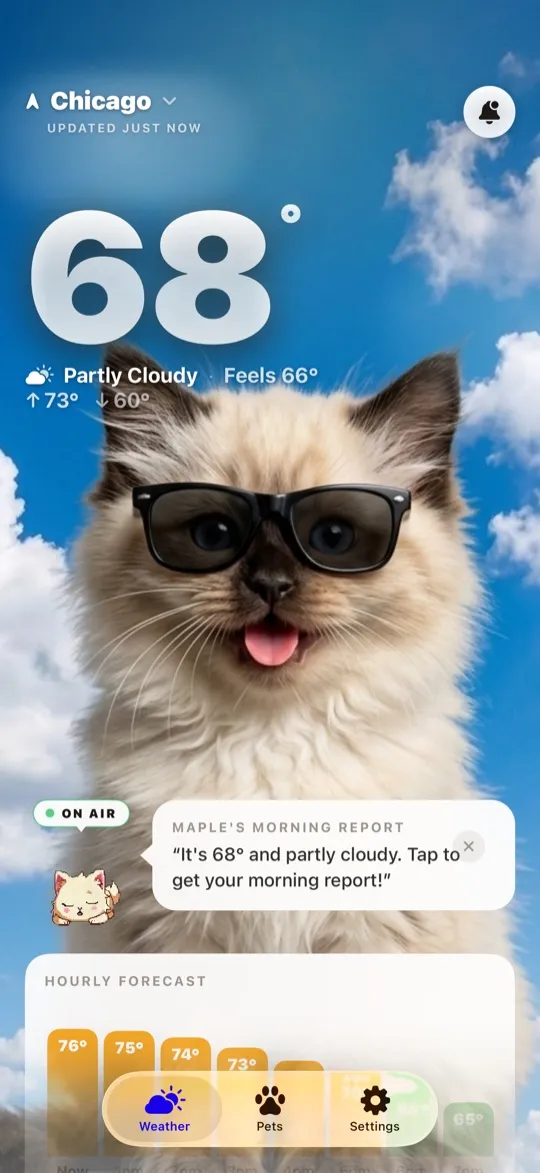
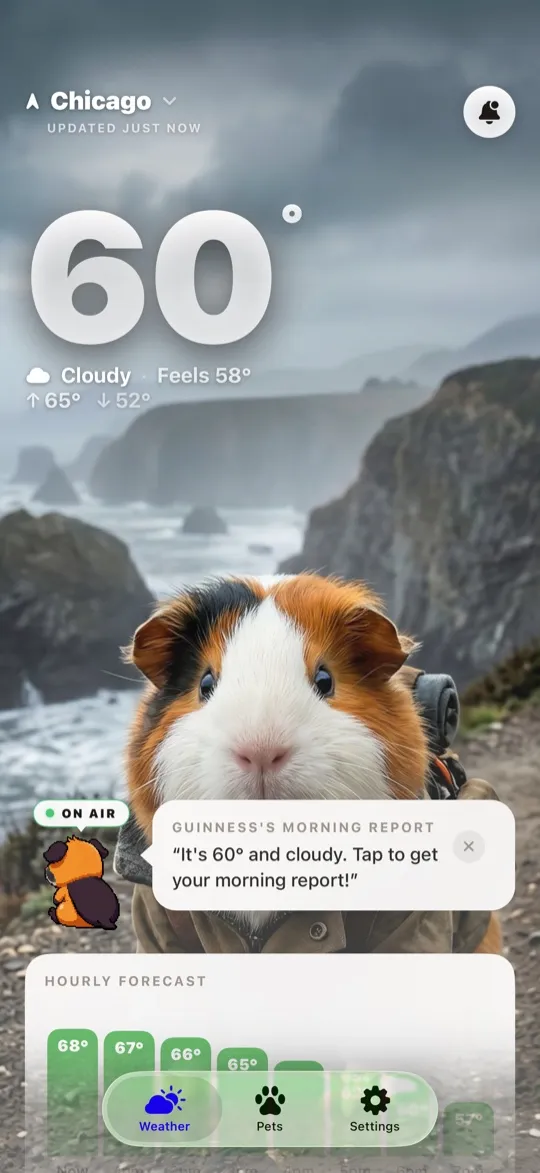
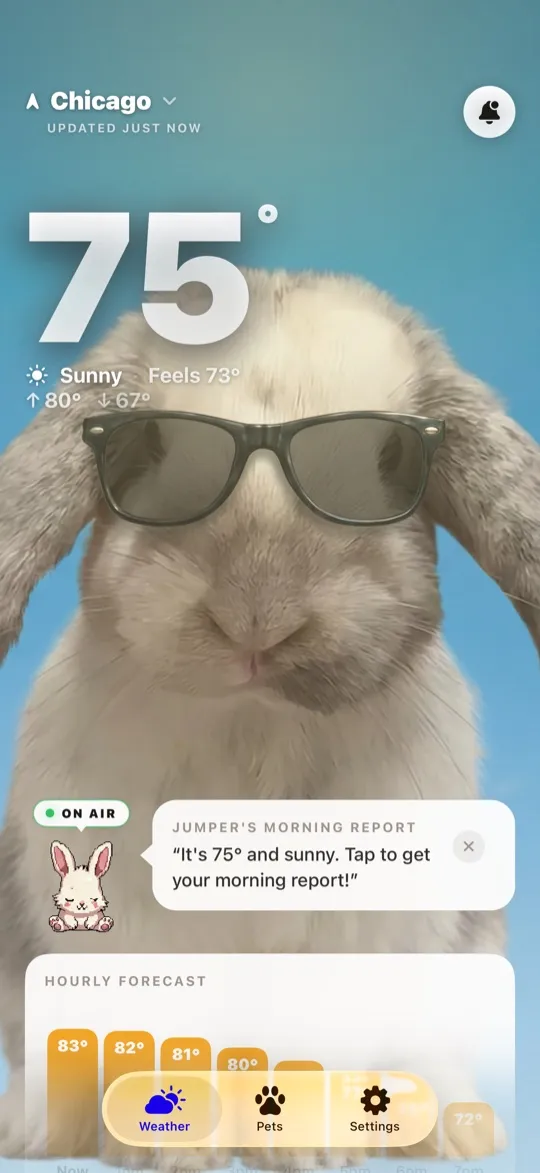
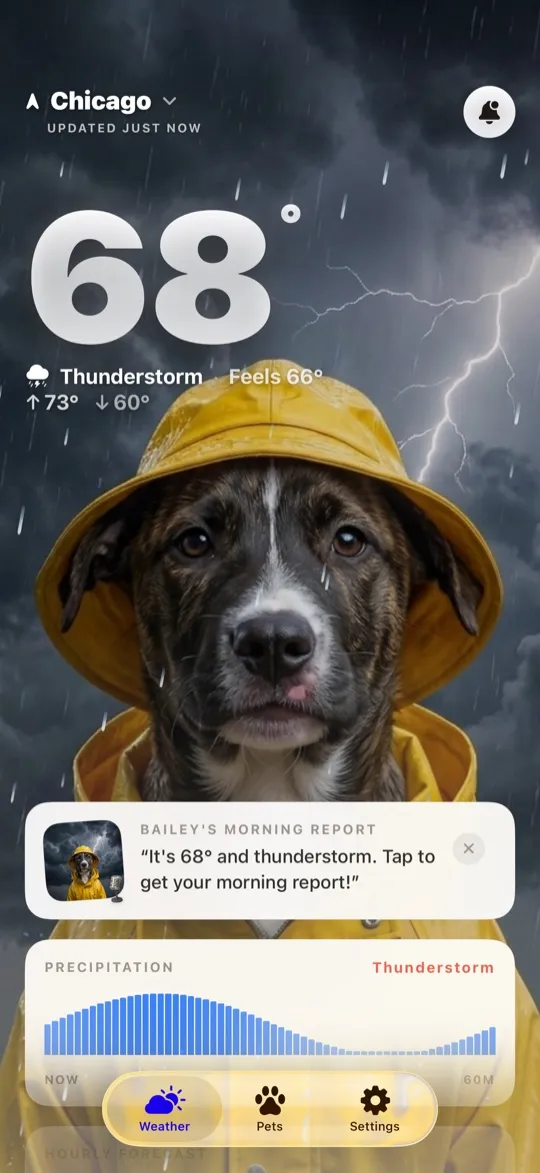
Your daily forecast, delivered by your own pet.

A note on health: The Pet Safety Score is a planning tool built on published veterinary and environmental guidance, not veterinary advice, and it cannot account for everything about an individual animal. Always use your own judgment, and if you are worried your pet is overheating, struggling to breathe, or facing any serious or emergency health concern, contact your veterinarian right away. Our guidance draws on trusted sources, including those linked above.