Why Humidity Makes Hot Days More Dangerous for Dogs
Two days can read the same on the thermometer and feel completely different to your dog. The difference is usually humidity, and it matters more than most owners realize. On a sticky day, the way dogs cool themselves starts to fail, and the risk climbs fast. Here is what is happening inside your dog, and how to plan around it.
Dogs do not sweat their way cool
People dump heat by sweating across nearly the whole body. Dogs cannot. They have only a few sweat glands in their paw pads, so their main cooling system is panting. When a dog pants, it moves air rapidly over the moist surfaces of the tongue, mouth, and upper airway. Water evaporates off those surfaces, and that evaporation carries heat away. It is the same principle that makes you feel cold stepping out of a pool.
That system works beautifully in dry air. The catch is that evaporation only happens efficiently when the surrounding air can still absorb more moisture. Once the air is already saturated, the whole process stalls.
Why humidity is the hidden danger
Here is the part that surprises people: a humid 85 degree day can be more dangerous than a dry 95 degree day. When humidity is high, the air is already full of water vapor, so the moisture in your dog's mouth and airway has nowhere to evaporate to. Panting keeps going, but it stops removing much heat. Your dog can be working hard to cool down and getting almost nothing back for the effort.
This is the same logic behind the human heat index from the National Weather Service, which combines temperature and relative humidity into one "feels like" number precisely because humidity blunts evaporative cooling. Dogs do not have an official heat index, but the principle is identical, and arguably it hits them harder because panting is their only real lever.
The dogs most at risk
Humidity is dangerous for every dog, but some start from behind:
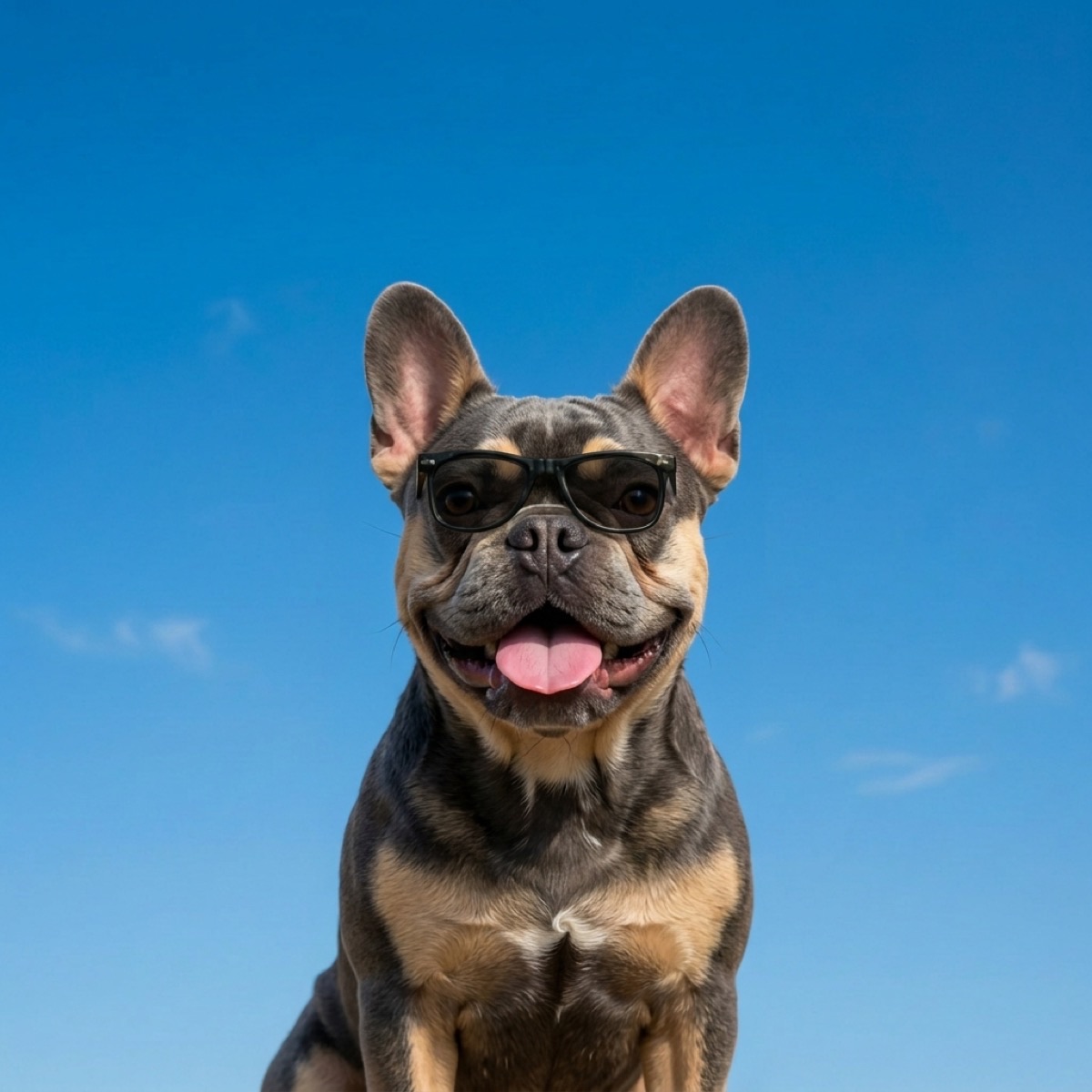
- Flat-faced (brachycephalic) breeds like French bulldogs, pugs, and boxers. Their compressed airways make panting far less efficient even in good conditions, so humid heat closes the gap to crisis quickly.
- Thick double-coated breeds built for cold, who trap heat against the body.
- Seniors, puppies, and overweight dogs, who regulate temperature less effectively.
- Dogs with heart or respiratory conditions, who have less reserve to spare.
The American Veterinary Medical Association notes in its warm weather safety guidance that these dogs, along with any animal left in heat without shade or water, are at the highest risk of heat injury.
Know the warning signs
Heatstroke can move from "a little uncomfortable" to a true emergency in minutes. On a humid day, watch for:
- Heavy, frantic, or noisy panting that does not settle
- Thick, ropey drool or a very red tongue and gums
- Wobbliness, confusion, or weakness
- Vomiting or diarrhea
- Collapse
If you see the serious signs, move your dog to shade or air conditioning, offer small amounts of cool water, wet the body with cool (not ice cold) water, and call your vet right away. Our full guide to dog heatstroke warning signs walks through the response step by step.
How to plan around a sticky day
- Walk early or late. Dawn and after sunset are coolest, and humidity often eases slightly once the sun is down.
- Cut the intensity. A humid day is not the day for a long run or hard fetch. Keep it short and shaded.
- Bring water everywhere. Hydration supports cooling. See our tips on keeping your dog hydrated in summer.
- Use cooling tools. A wet cooling vest, a shaded breeze, or a cool mat to lie on all help your dog shed heat without relying on panting alone.
- Never leave a dog in a parked car, even briefly, even with windows cracked.
Let the forecast warn you first
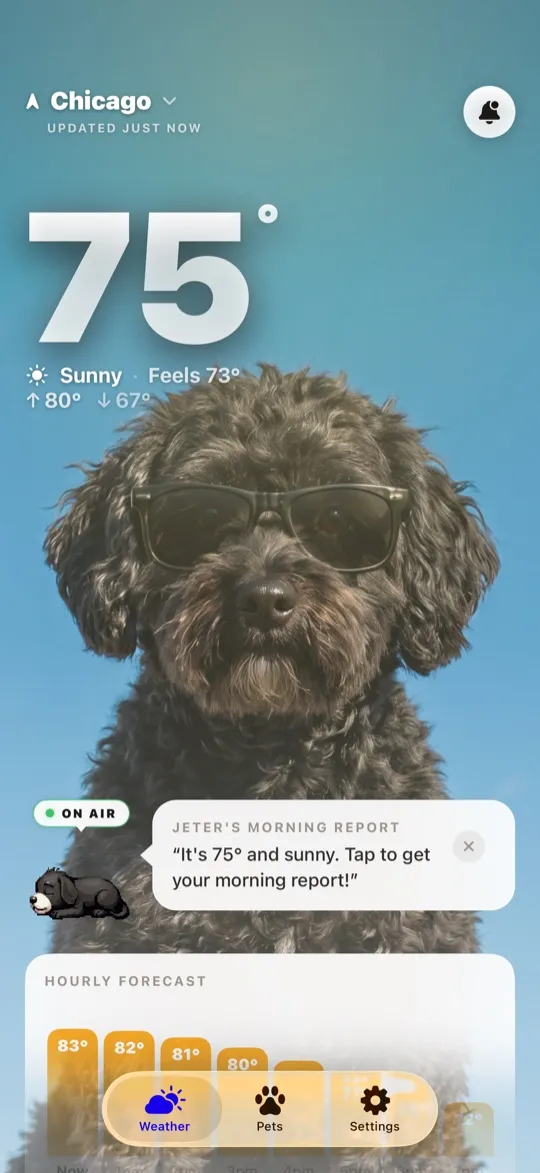
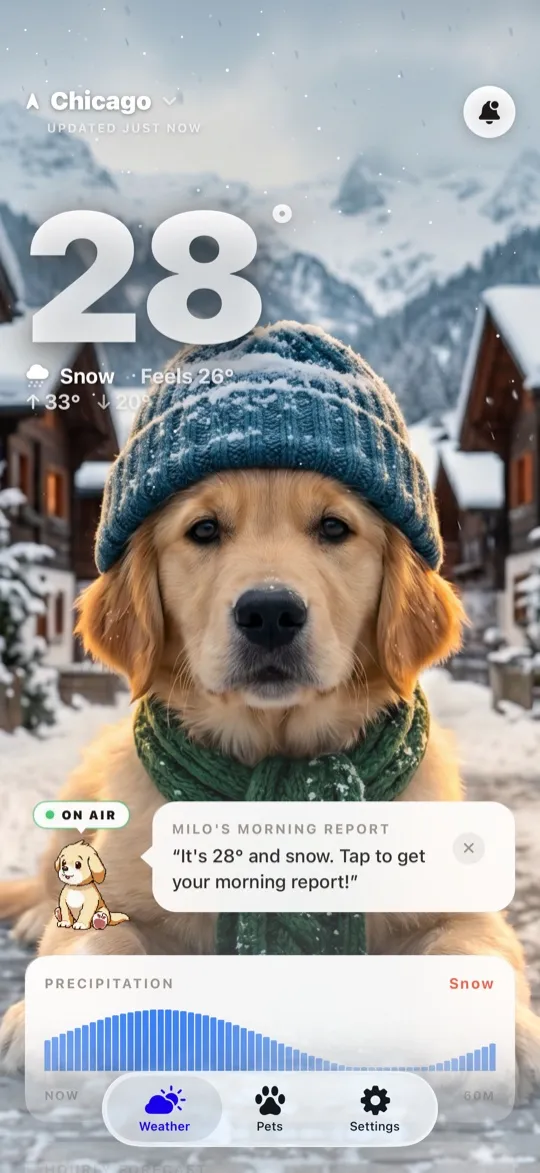
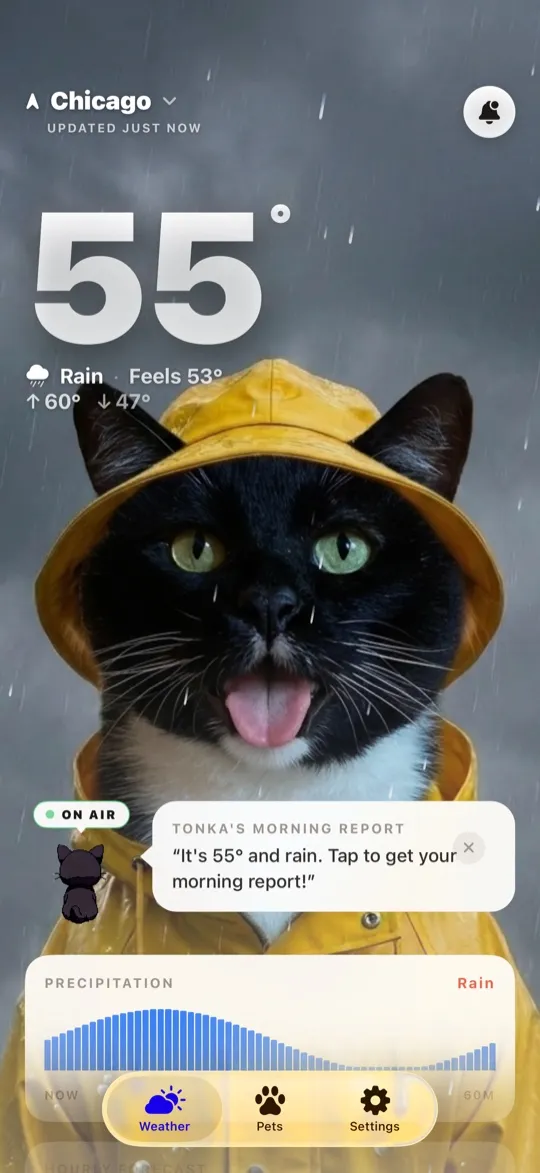
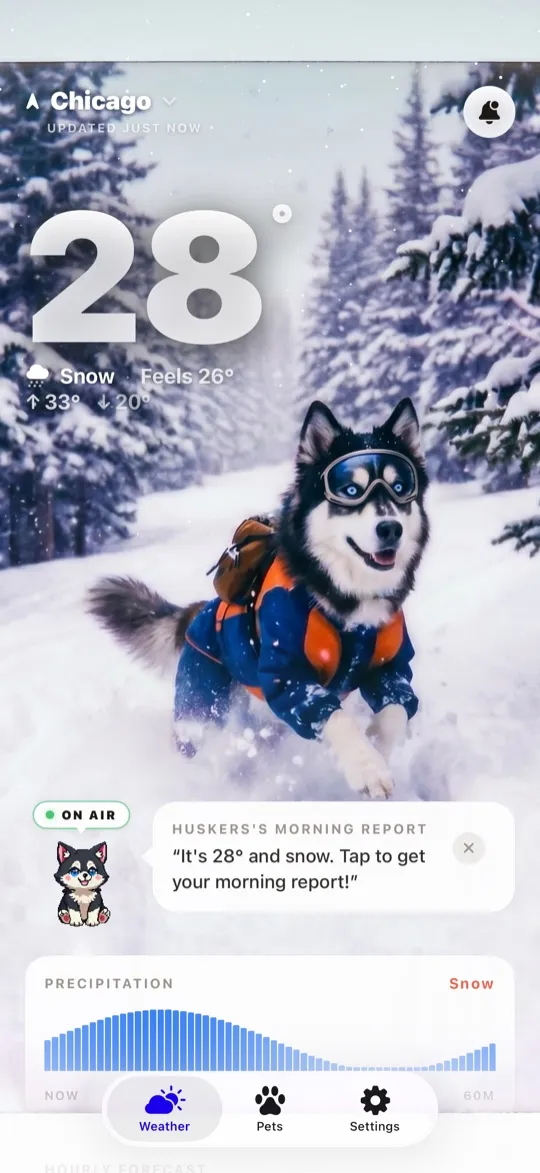
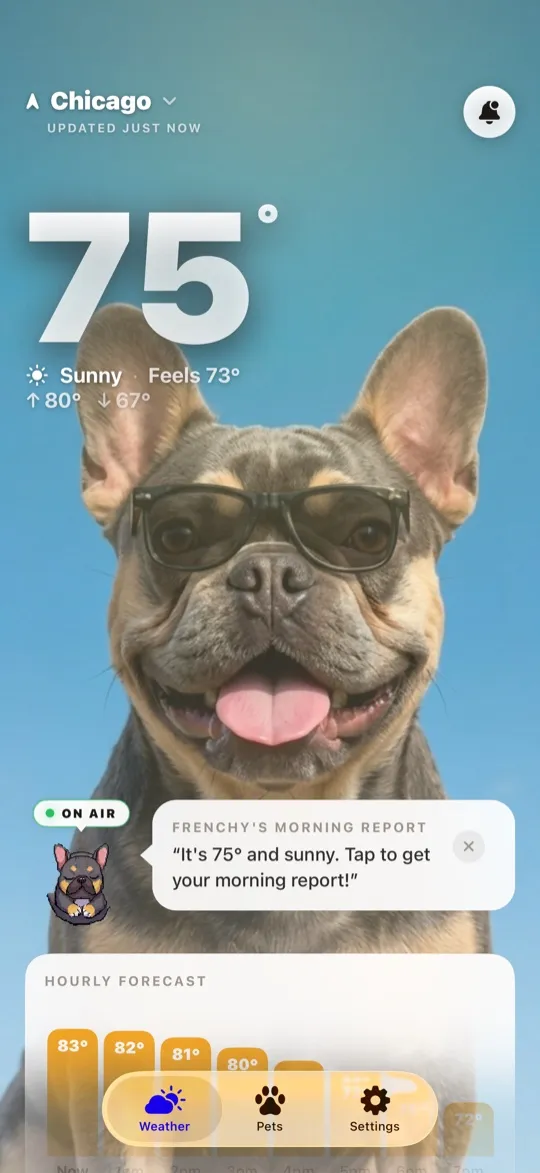
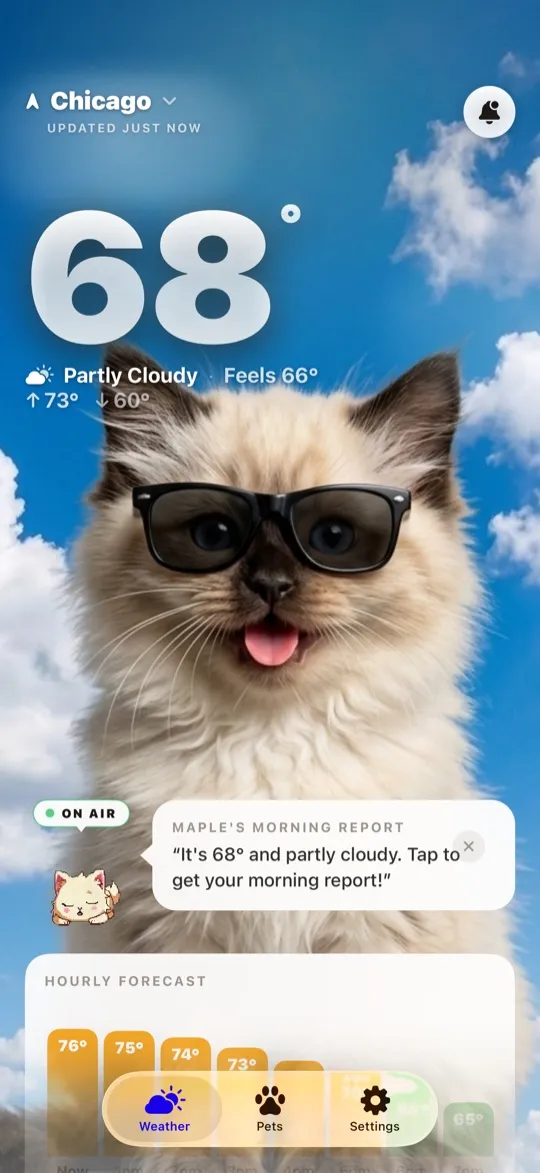
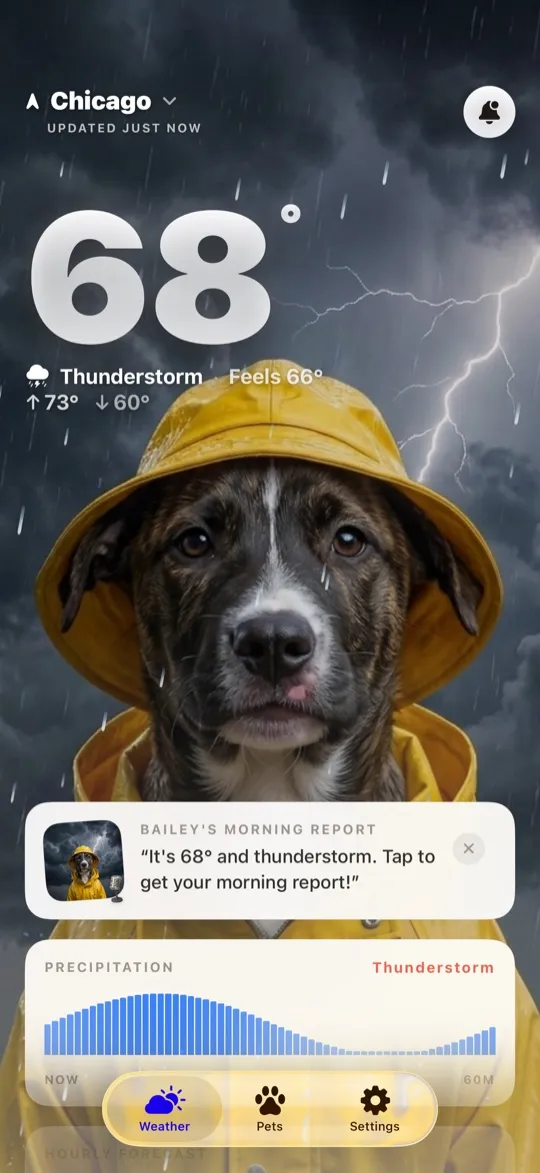
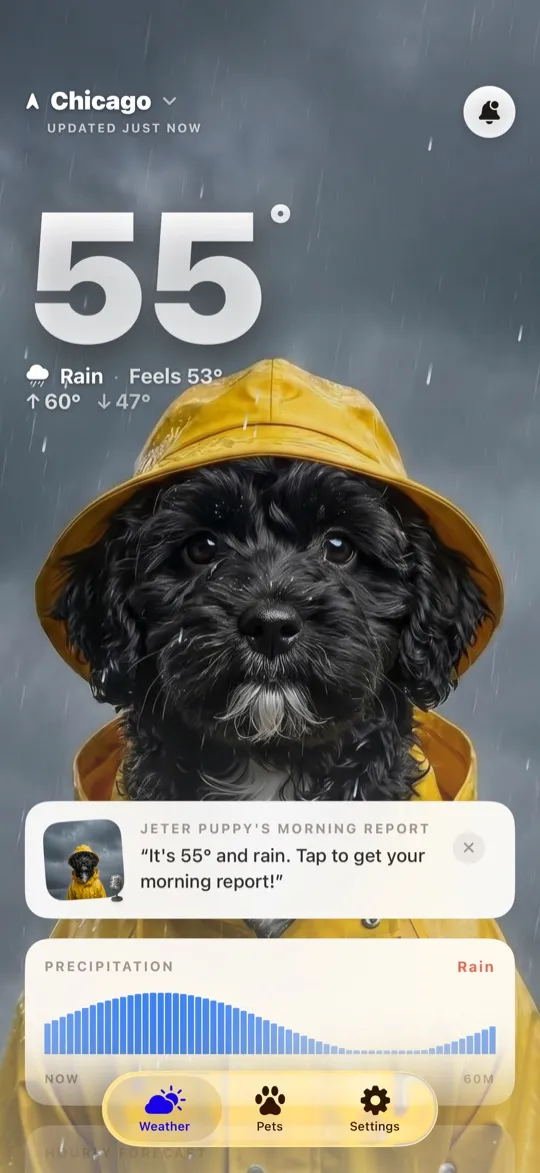
The trick is to check the conditions, not just the temperature, before you head out. A glance at the humidity and the day's high tells you whether it is a long-walk morning or a keep-it-short one. With WeatherPets, your own dog delivers the day's forecast and a Live Activity that tracks conditions in real time, which turns "is it too sticky out there?" into a quick, genuinely fun check before the leash comes off.
Gear that helps: on humid days, a soak-and-go cooling vest gives evaporation a hand when the air will not. See our full picks in the best dog cooling vests.
WeatherPets is an Amazon Associate and may earn from qualifying purchases, at no extra cost to you.
Frequently asked questions
Why does my dog pant more when it's humid?
Panting cools a dog by evaporating moisture off the tongue, mouth, and upper airway, and humid air is already so full of water vapor that the evaporation stalls. Your dog keeps panting, and often pants harder, but the effort stops removing much heat, so they work more and cool less.
Is humidity dangerous for dogs?
Yes. A humid 85 degree day can be more dangerous than a dry 95 degree day, because humidity blunts panting, which is a dog's main cooling system. Flat-faced breeds, thick double-coated breeds, seniors, puppies, overweight dogs, and dogs with heart or respiratory conditions are at the highest risk.
What is the heat index and does it apply to dogs?
The heat index is the National Weather Service's "feels like" number, which combines temperature and relative humidity because humidity blunts evaporative cooling. Dogs do not have an official heat index, but the principle is identical, and it arguably hits them harder because panting is their only real cooling lever.
What are the signs of heatstroke in dogs on a humid day?
Watch for heavy, frantic, or noisy panting that does not settle, thick ropey drool, a very red tongue and gums, wobbliness, confusion, vomiting, or collapse. If you see the serious signs, move your dog to shade or air conditioning, wet the body with cool (not ice cold) water, and call your vet right away; our guide to dog heatstroke warning signs walks through the response step by step.
Your daily forecast, delivered by your own pet.