Wildfire Smoke and Pets: When the Air Outside Isn't Safe
When smoke rolls in, the sky turns that eerie orange, your throat gets scratchy, and the advice for people is everywhere: stay inside, limit exertion. Your pets need the same protection, and they are counting on you to make the call, because they will happily chase a ball through air they should not be breathing.
How smoke affects pets
Wildfire smoke is loaded with fine particles that travel deep into the lungs, and animal lungs are not built any tougher than ours. The American Veterinary Medical Association's guidance on wildfire smoke and animals warns that smoke can irritate your pet's eyes and respiratory tract, and that pets with heart or lung disease are especially at risk. The AVMA's core advice is simple: if the smoke is bad enough that you are staying indoors, your animals should be indoors too, with outdoor exercise cut back until the air clears.
Dogs and cats cannot tell you their chest feels tight. They just get quieter, sleep more, and push through activity anyway if you offer it. That is why the decision has to come from you, and from the numbers.
Reading the AQI like a pet owner
The Air Quality Index turns pollution levels into one number from 0 to 500, explained on AirNow's AQI basics page. There are no official veterinary AQI cutoffs, but treating your pet like a member of a sensitive group is the safe play. A practical translation:
- 0 to 50 (Good): normal walks, no changes.
- 51 to 100 (Moderate): fine for most pets; consider shorter outings for smoke-sensitive animals.
- 101 to 150 (Unhealthy for Sensitive Groups): shorten walks and skip fetch, especially for high-risk pets.
- 151 to 200 (Unhealthy): bathroom breaks and brief leash walks only, no running or play outside.
- 201 and up (Very Unhealthy to Hazardous): outdoor time is potty breaks, period. Everyone stays in.
You can pull the current reading for your zip code on AirNow or straight from your phone's weather app. Smoke levels can swing wildly within a single day as the wind shifts, so check before each outing rather than once in the morning. And do not judge by eye alone: fine particles can sit at unhealthy levels while the sky still looks merely hazy.
Pets at the highest risk
Some animals have far less margin when the air turns bad:
- Flat-faced (brachycephalic) breeds like French bulldogs, Pugs, and Persian cats already work harder to breathe on a good day. Smoke narrows that margin further; our French bulldog care guide covers why these airways struggle.
- Pets with heart or lung conditions, including asthma in cats, which is more common than many owners realize.
- Senior pets and very young animals.
- Birds, whose highly efficient respiratory systems make them extremely vulnerable. On smoke days, birds should never be outside, and keep them away from drafty windows too.
Keeping the indoor air clean
Bringing everyone inside only helps if the inside air stays better than the outside air:
- Keep windows and doors closed, and set AC systems to recirculate instead of pulling in outside air.
- Run a HEPA air purifier in the room where your pets spend the most time.
- Skip anything that adds particles indoors: candles, frying, fireplace fires, even heavy vacuuming.
- Give cats and dogs calm indoor outlets so cabin fever does not build. Puzzle feeders, sniff games, and window-free play sessions go a long way; our indoor cat enrichment guide works just as well on smoke days as rainy ones.
Signs of smoke irritation
Watch for coughing or gagging, red or watery eyes, nasal discharge, noisy or fast breathing, unusual fatigue or weakness, reduced appetite, and disorientation. In birds, watch for tail bobbing, open-mouth breathing, or puffed, lethargic behavior. Mild eye and throat irritation often clears within a day or two once the air improves, but anything involving the lungs deserves a lower threshold for concern.
Call your veterinarian if breathing looks labored, if your pet is open-mouth breathing (always urgent in cats), if coughing persists, or if a high-risk pet simply seems off during a smoke event. Difficulty breathing is an emergency, not a wait-and-see situation. Smoke also stacks badly with heat and humidity, which already tax a dog's airway; we explain that mechanism in our guide to humidity and dog breathing.
The habit that makes this easy
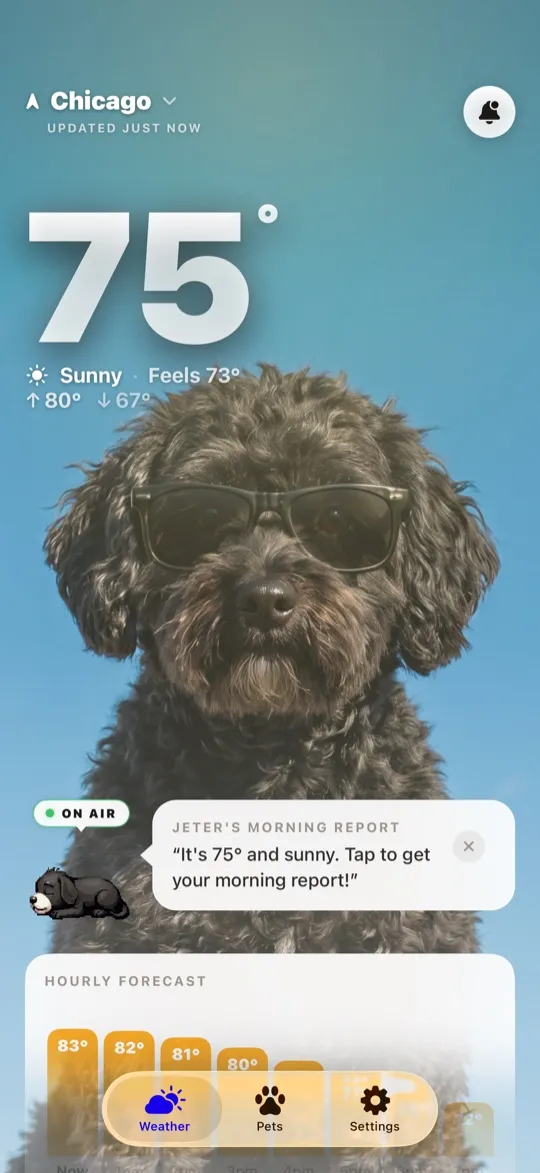
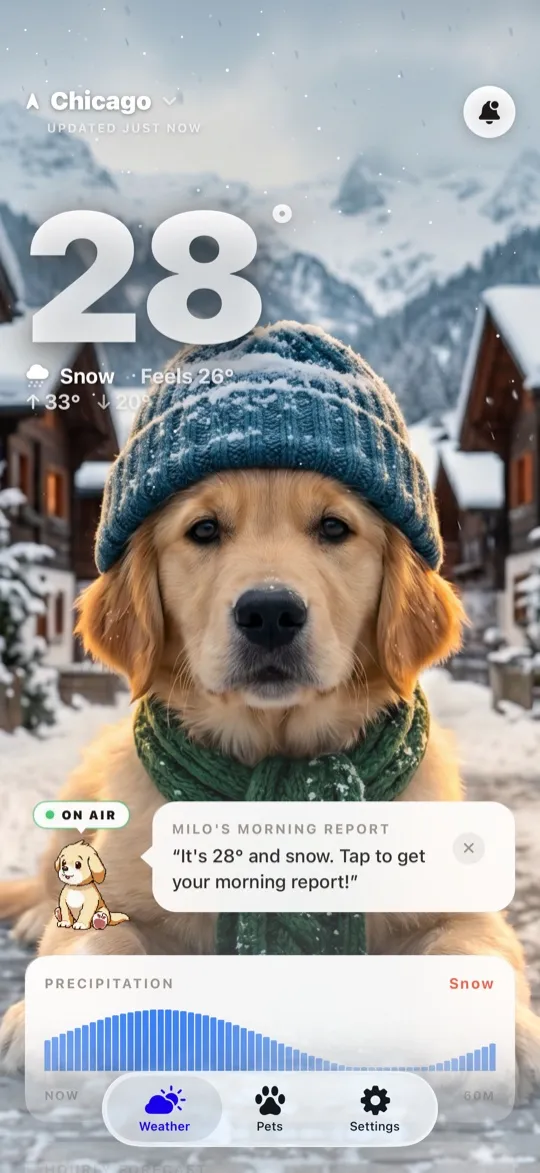
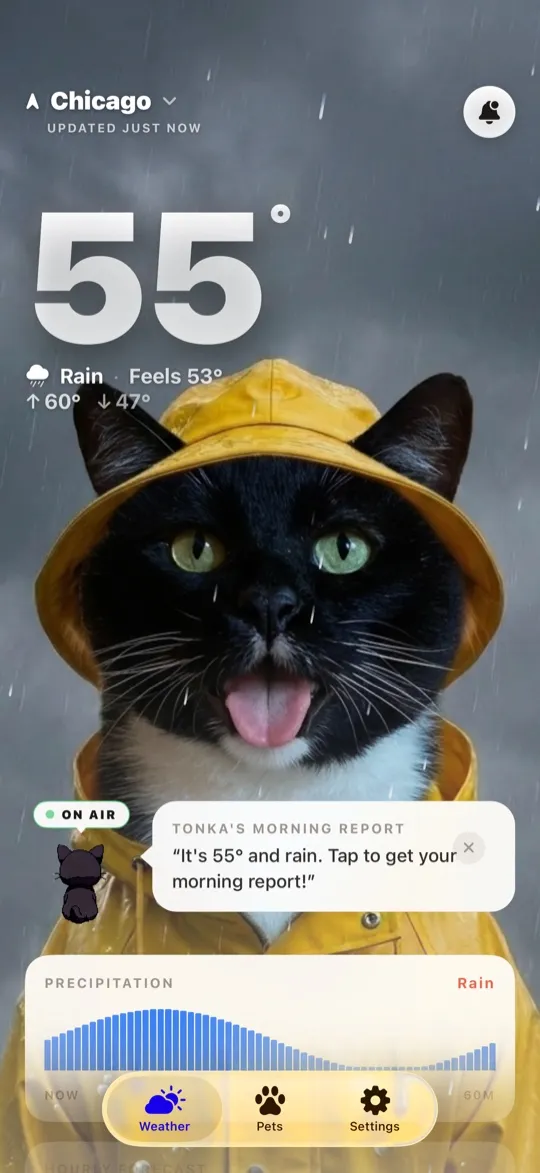
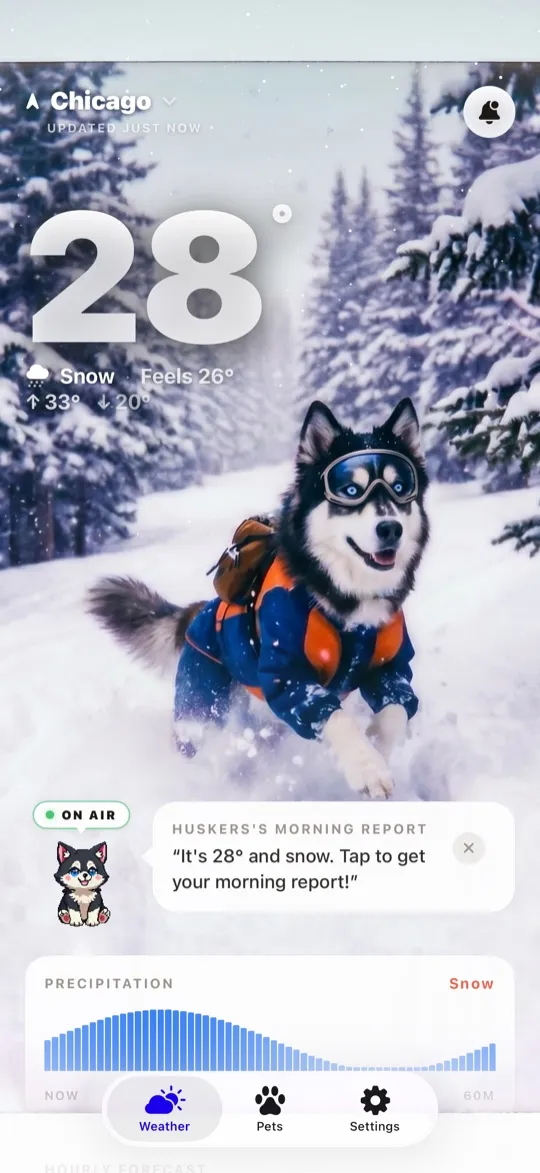
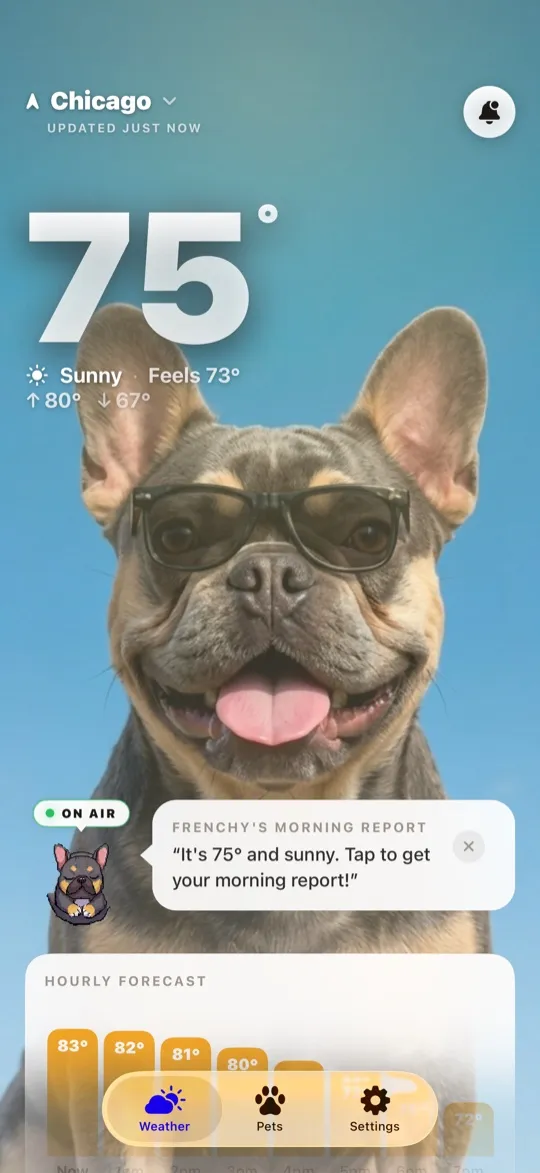
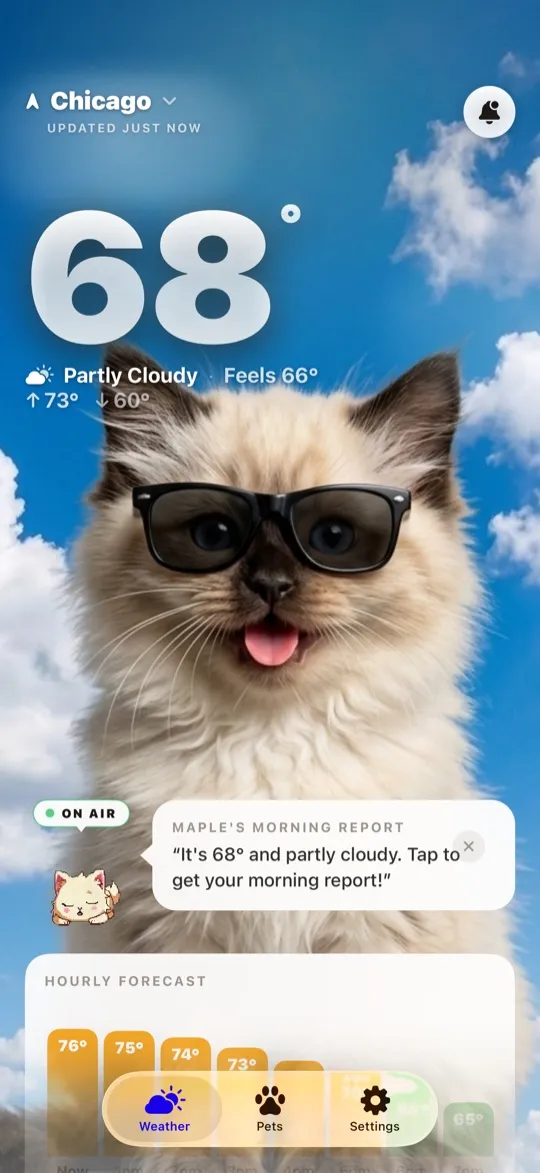
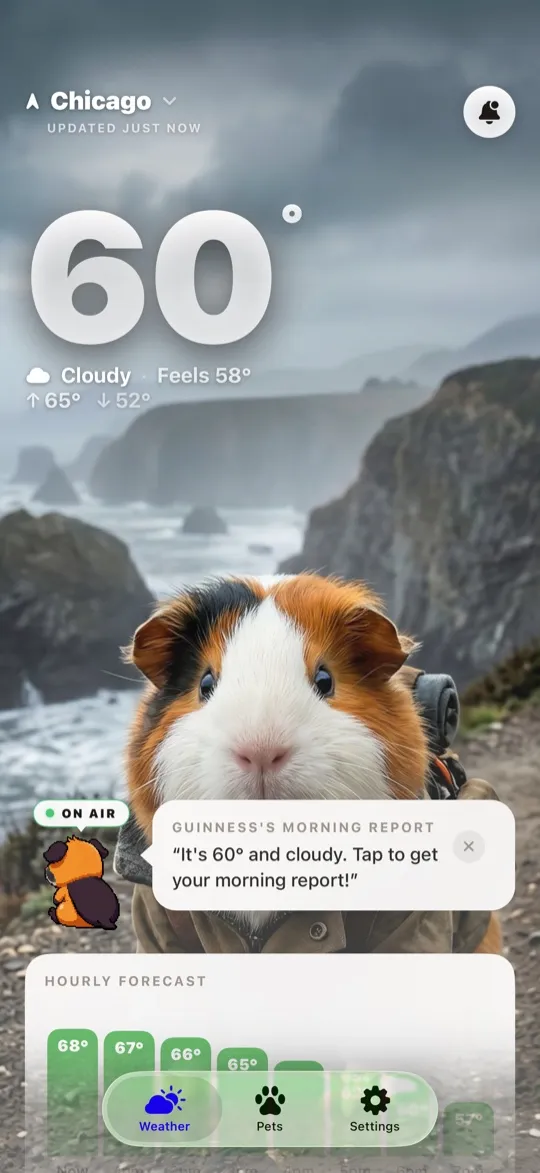
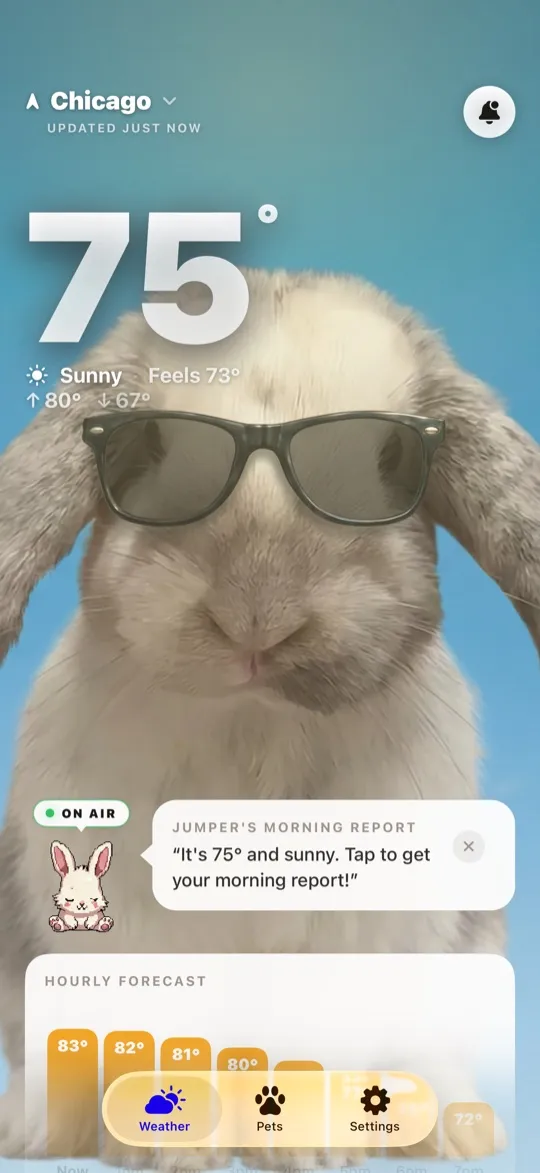
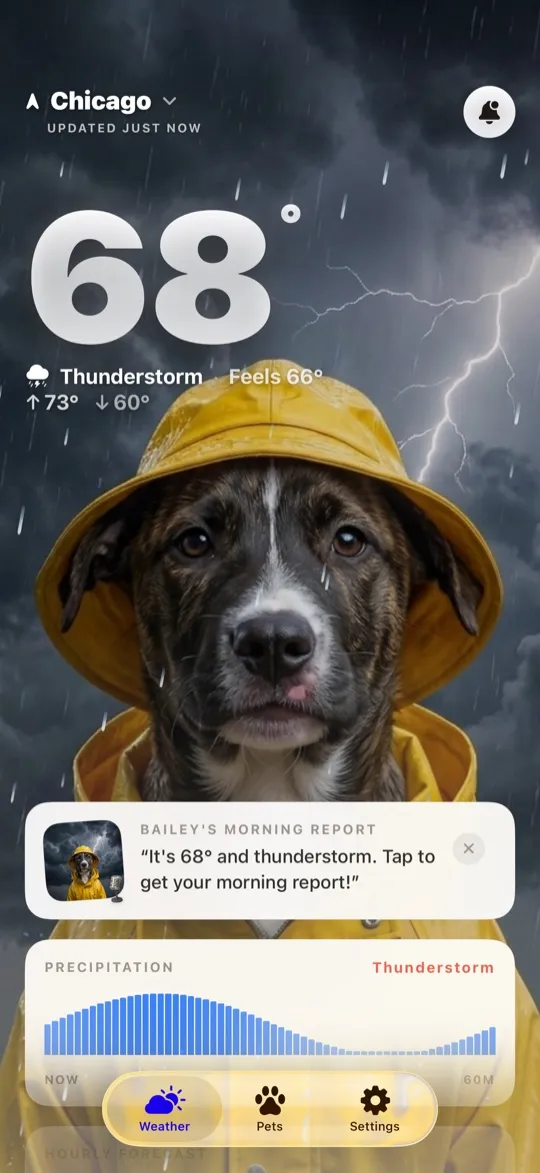
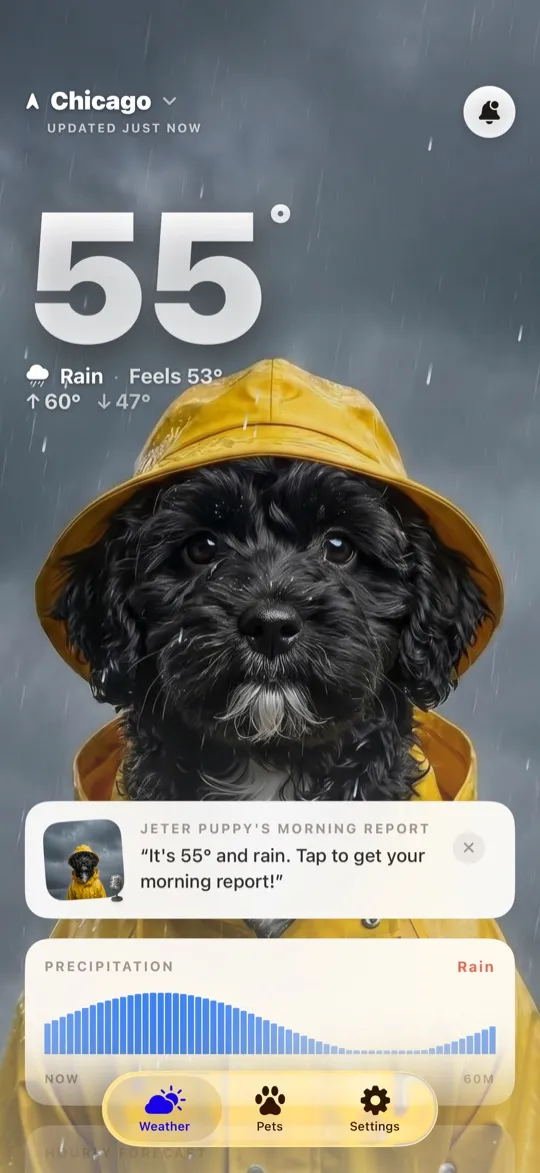
Smoke season rewards a quick daily check: AQI first, then the walk plan. WeatherPets makes the check part of the fun, with your own pet delivering the morning conditions and a Live Activity tracking things in real time, so "should we go out right now?" gets answered before the leash comes off the hook.
Smoke events end. Lungs heal slowly. When the sky looks wrong, keep the adventures short, the windows shut, and the ball games indoors until the numbers say otherwise.
Your daily forecast, delivered by your own pet.