How Cold Is Too Cold for Your Dog?
Your dog wants to go out. The thermometer says it is freezing. Is that a quick potty break or a genuinely bad idea? The honest answer is that it depends on your specific dog, but there are real numbers that help you decide.
The rough temperature thresholds
Let's start with a simple mental map. These are general guideposts, not hard laws, and we'll get into why your dog might be the exception in a minute.
- Above 45F: Most healthy dogs are comfortable. A normal walk is fine.
- 32F to 45F: Still okay for most dogs, but small, thin-coated, young, or senior dogs start to feel it. Keep an eye on them.
- 20F to 32F: This is where cold-sensitive dogs can get into trouble. Shorten sessions and add a coat if your dog needs one.
- Below 20F: Potentially dangerous for any dog. Frostbite and hypothermia become real risks, so keep outings brief and purposeful.
The American Kennel Club notes that dogs can be at risk of frostbite once temperatures fall below freezing, and that a dog can start developing frostbite in as little as 30 minutes in harsh conditions. Their full breakdown of the danger zones is worth a read in the AKC guide to hypothermia and cold tolerance in dogs. A handy gut check from the same guidance: if it feels too cold for you out there, it is probably too cold for your dog too.
Why the same temperature means different things to different dogs
Two dogs can stand in the same yard at the same temperature and have completely different experiences. Here is what shifts the line.
Coat type. A double-coated northern breed is built for snow. A thin-coated dog has far less insulation and feels the cold much faster. The AVMA's cold weather animal safety guidance points out that long-haired, thick-coated dogs tend to tolerate cold better, while short-haired dogs have less protection from the chill.
Size and build. Small dogs lose body heat faster, and short-legged dogs sit closer to the cold ground, so their bellies chill quickly on snow or ice.
Age and health. Puppies and senior dogs regulate their temperature less efficiently, and conditions like diabetes, heart disease, or arthritis can make cold harder to handle. When in doubt, treat these dogs as more cold-sensitive than the average.
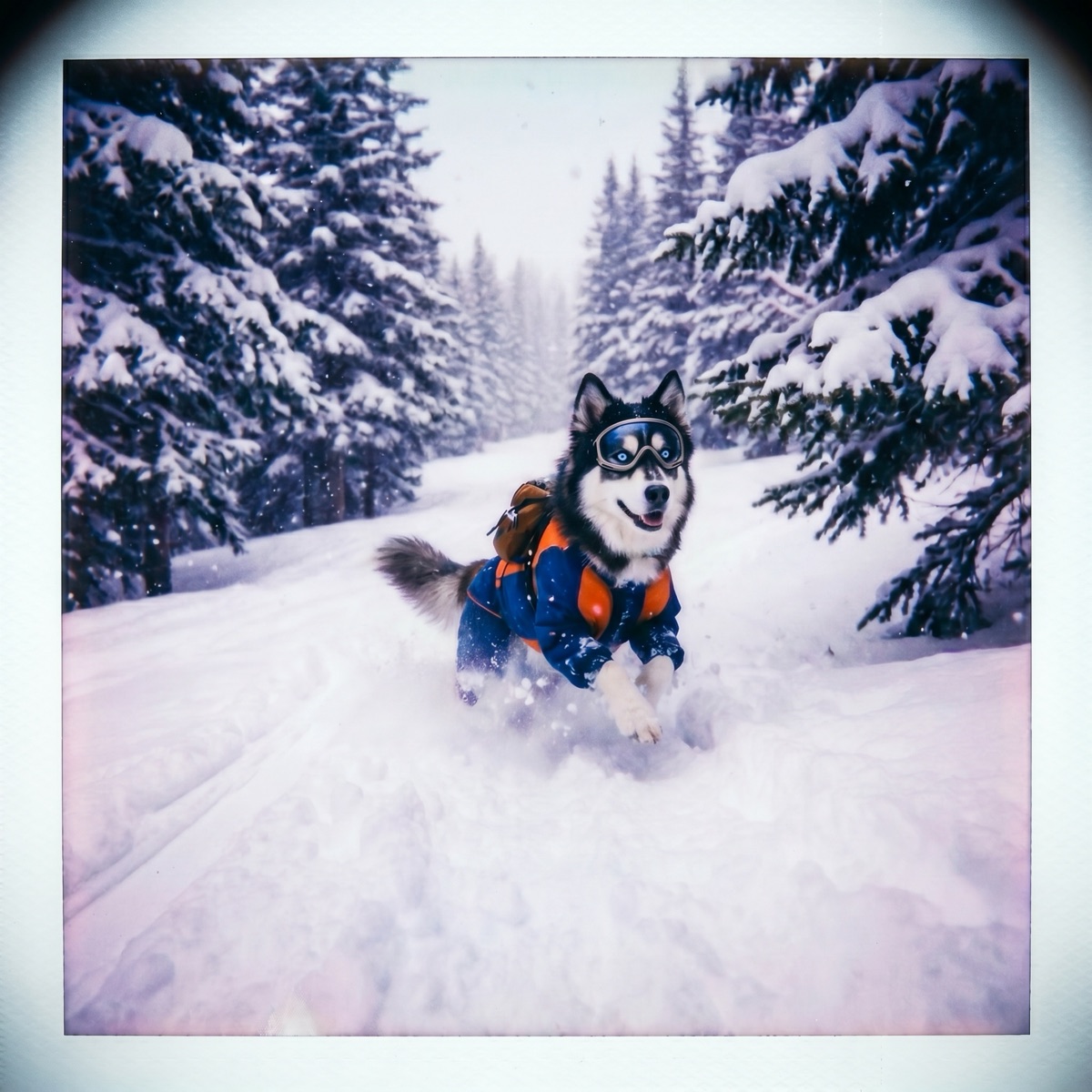
Wind chill and wet make it feel far colder
The number on the forecast is just the air temperature. What your dog actually feels can be a lot colder. Wind strips away the thin layer of warm air around the body, so a breezy 30F day can feel closer to 20F or below. Rain, wet snow, or a damp coat make it worse, because a wet dog loses heat far faster than a dry one. A drizzly 35F walk can chill a dog more than a still, dry 25F one.
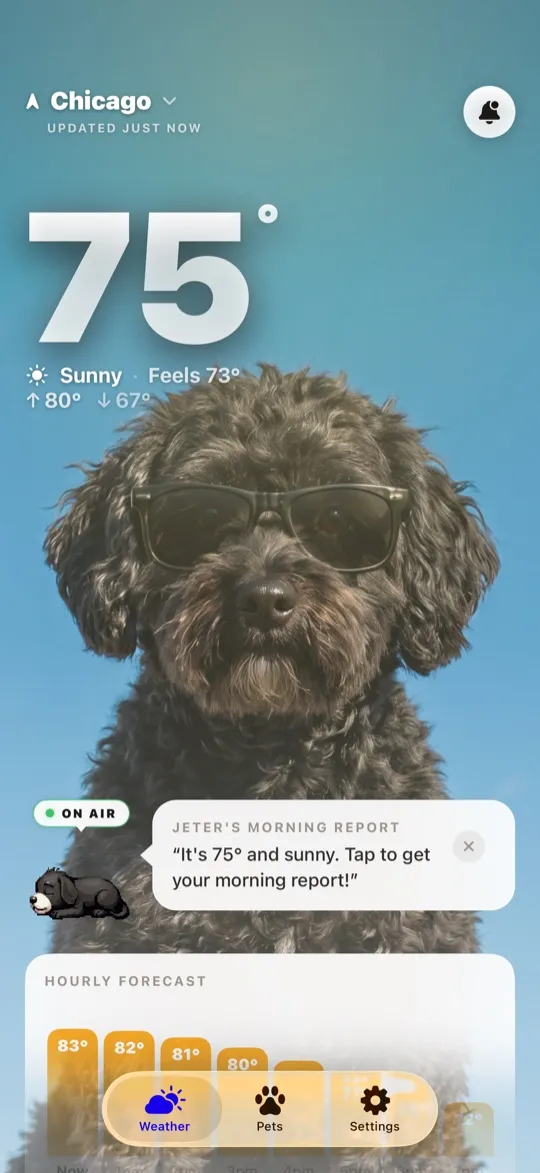
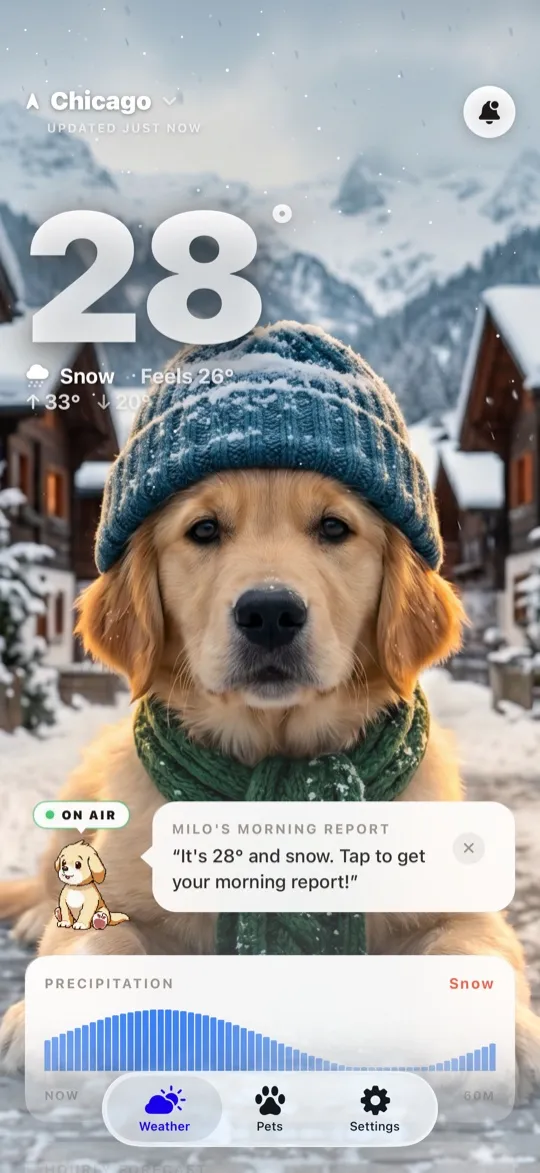
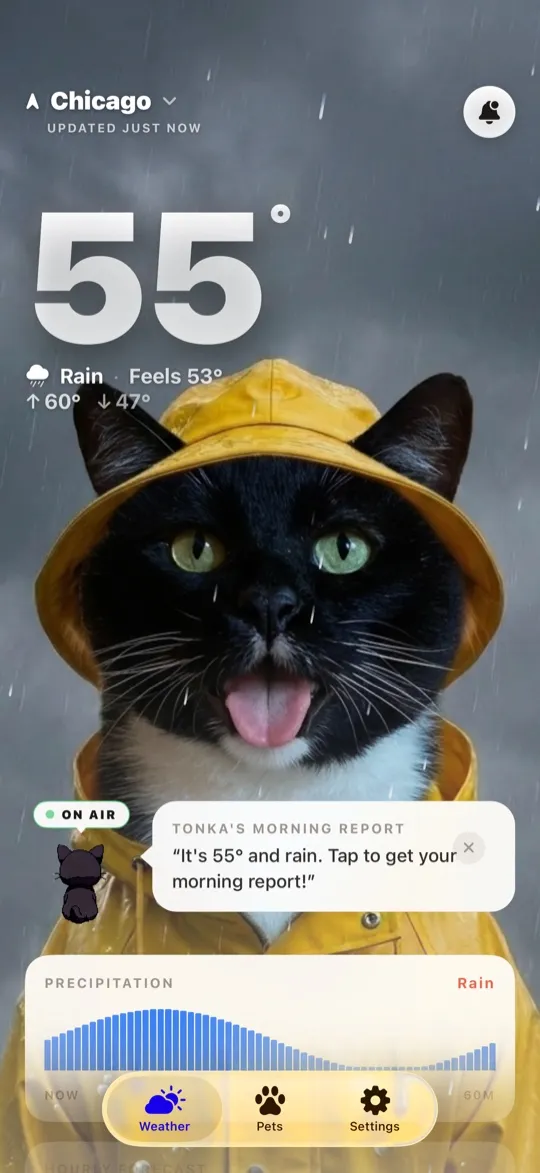
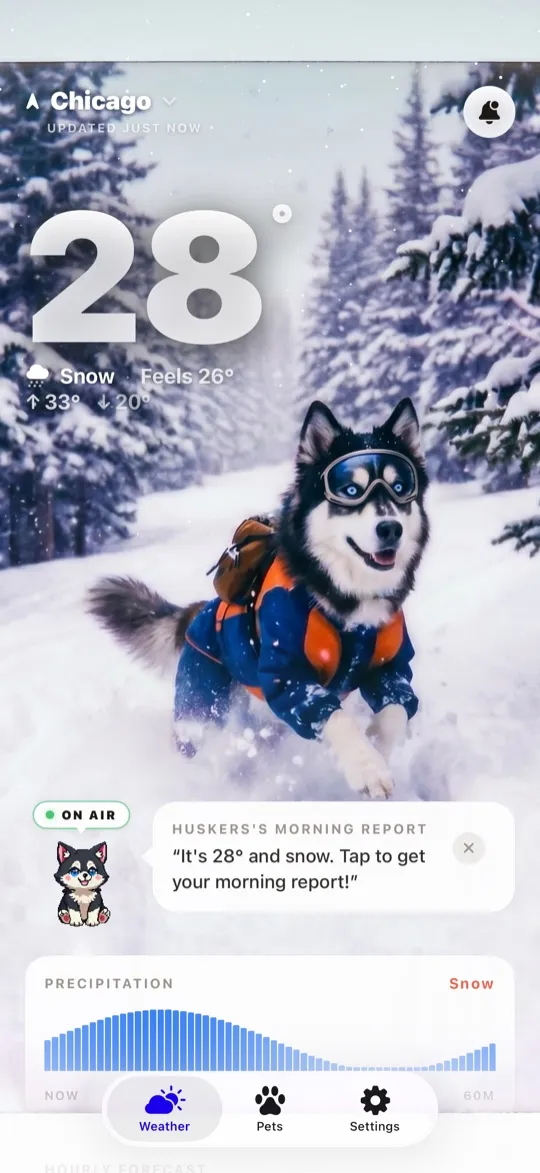
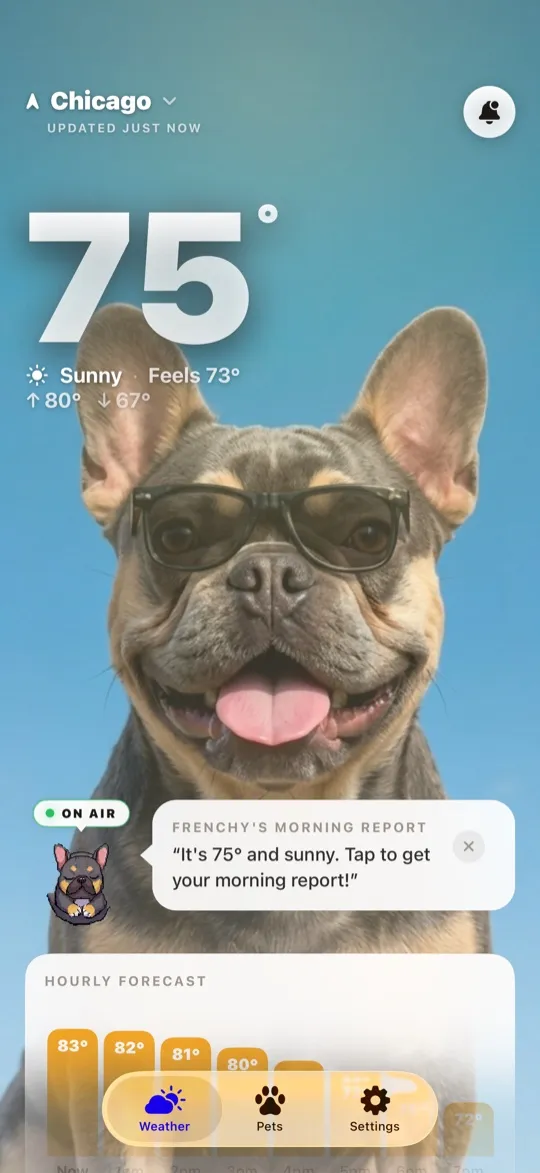
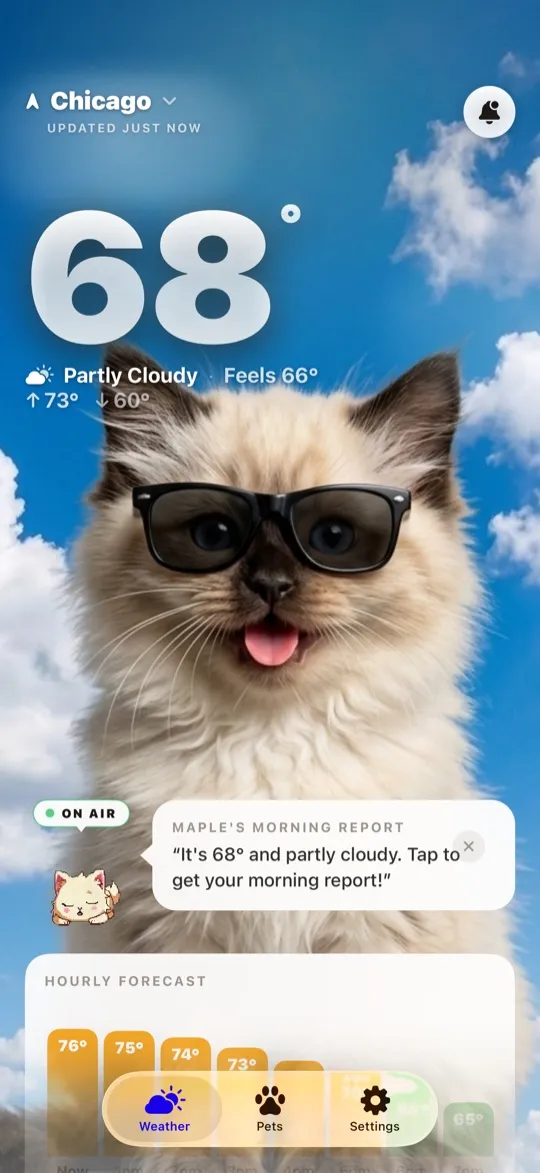
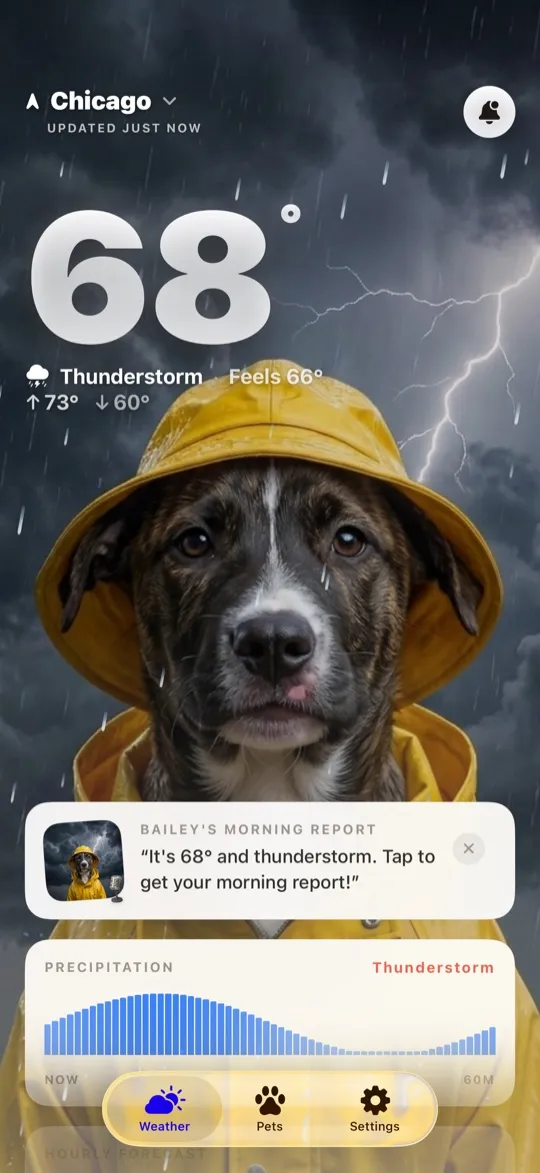
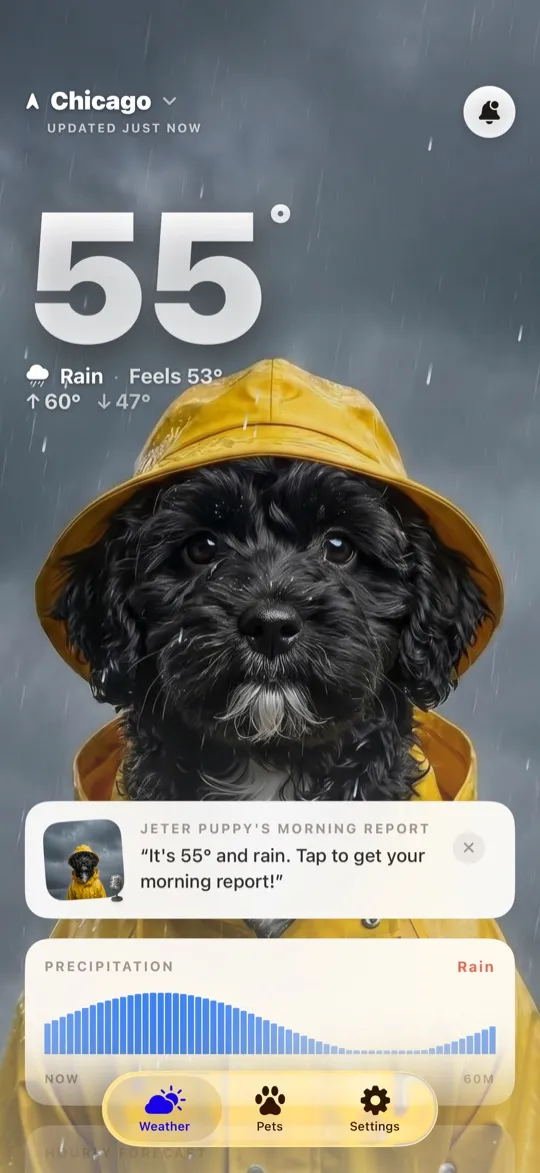
This is exactly why we built WeatherPets to surface the feels-like temperature and wind chill, not just the raw air temperature. When your pet delivers the morning forecast, you see what the day actually feels like, so you can judge the cold honestly instead of getting fooled by a number that looks fine on paper.
Signs your dog is too cold
Your dog will tell you, you just have to watch. Cut the outing short if you notice any of these:
- Shivering or trembling, the most obvious tell.
- Lifting or favoring paws off cold or icy ground.
- Whining, anxiety, or asking to go back inside.
- Slowing down, hunching, or moving stiffly.
- Tucking the tail and curling up to conserve heat.
If your dog seems weak, very lethargic, or stops shivering while still clearly cold, get them warm and call your vet. Those can be signs of hypothermia, which is an emergency.
Gear and smart habits that help
A few simple moves make cold weather a lot safer:
- Coats and sweaters. For thin-coated, small, young, or senior dogs, a snug, warm coat genuinely helps. Keep a dry spare so you are not putting a damp one back on.
- Booties. They protect paws from ice, frozen ground, and de-icing salts. Many dogs need a few sessions to get used to them, so start indoors.
- Wipe down after walks. Clean paws, legs, and belly to remove salt, antifreeze, and other chemicals your dog might lick off.
- Shorten sessions. In very cold weather, swap one long walk for a couple of quick ones. Frequent, short, and dry beats long and frozen.
None of this means your dog has to stay cooped up all winter. It just means you read the real conditions, match the outing to your specific dog, and head back in before they get miserable. Get that right and cold-weather walks stay fun for both of you.
Gear that helps: a warm insulated dog coat and a set of booties make cold days safer for small, senior, and thin-coated dogs. See our picks for the best dog winter coats and the best dog booties.
WeatherPets is an Amazon Associate and may earn from qualifying purchases, at no extra cost to you.
Frequently asked questions
How cold is too cold to walk a dog?
Below 20F is potentially dangerous for any dog, so keep outings brief and purposeful. Between 20F and 32F, cold-sensitive dogs can get into trouble (shorten sessions and add a coat if needed), from 32F to 45F most dogs are okay but small, thin-coated, young, and senior dogs start to feel it, and above 45F most healthy dogs are comfortable.
Do dogs need a coat in winter?
Some do. Thin-coated, small, young, and senior dogs genuinely benefit from a snug, warm coat in cold weather, while double-coated northern breeds are built for snow and usually do not need one. Booties also help by protecting paws from ice, frozen ground, and de-icing salts.
How can I tell if my dog is too cold on a walk?
Shivering is the most obvious tell, along with lifting paws off cold ground, whining or asking to go back inside, slowing down, hunching, moving stiffly, or tucking the tail and curling up. If your dog seems weak, very lethargic, or stops shivering while still clearly cold, get them warm and call your vet, since those can be signs of hypothermia.
Can dogs get frostbite?
Yes. Dogs can be at risk of frostbite once temperatures fall below freezing, and in harsh conditions it can start developing in as little as 30 minutes. Our guide to frostbite in dogs and cats covers the signs, first aid, and prevention in detail.
Checking for a specific city? Our live city weather pages show current conditions and a dog-walk verdict computed from these same temperature bands.
Your daily forecast, delivered by your own pet.