Ice Melt and Dog Paws: Salt Safety Every Winter Walker Needs
The same salt that keeps you from wiping out on the sidewalk is quietly rough on your dog. It stings paw pads, dries and cracks them, and it is genuinely toxic when your dog licks it off later. The good news: a two-minute routine solves most of it.
Why road salt hurts paws
Most ice melts are chloride salts: sodium chloride (plain rock salt), calcium chloride, magnesium chloride, or potassium chloride. They work by pulling moisture out of the air and generating heat as they dissolve, which is exactly what makes them harsh on skin. On a paw pad, that means chemical irritation and dryness. Sharp salt crystals also wedge between toes, where they grind against sensitive skin with every step.
The result is a dog that suddenly limps mid-walk, lifts a paw at a street corner, or chews at its feet the moment you get home. Left alone, irritated pads can dry out, crack, and become genuinely painful. If your dog's pads look red or raw after salty walks, that is not tough-dog stoicism territory. It needs attention.
Licking it off is the bigger danger
Here is the part many owners miss: the paws are only half the problem. Whatever salt clings to feet, legs, and belly gets licked off during the post-walk cleanup your dog gives itself. According to the AKC's guide to ice and snow melt safety, the chloride salts in common de-icers are toxic to dogs when ingested. Small amounts cause drooling, vomiting, and diarrhea. Larger amounts of sodium-based melts can push blood sodium dangerously high, and calcium chloride is especially irritating to the mouth and gut.
Dogs also sample salty slush directly, either by drinking from melt puddles or eating snow along a treated path. Discourage both, and bring water on longer winter walks so your dog is not tempted.

The post-walk rinse routine
This is the highest-value habit of the whole winter. The ASPCA's cold weather safety tips recommend wiping down or washing your pet's feet, legs, and belly after every winter walk to remove salt, antifreeze, and other chemicals before your dog can lick them off. Make it automatic:
- Keep supplies at the door. A shallow bowl of lukewarm water and a towel, or a stack of pet wipes, right where you come in.
- Rinse or wipe every paw. Get between the toes and around the central pad, where crystals hide.
- Do the belly and legs too, especially on short-legged or long-haired dogs that plow through slush.
- Dry thoroughly, then take ten seconds to check pads for redness, cracks, or embedded grit.
Booties and paw balm
If your routes are heavily salted, prevention beats cleanup. Booties are the gold standard: a full physical barrier against salt, ice shards, and frozen pavement. Most dogs walk like they are on the moon for the first few sessions, so practice indoors with treats before the real thing. Our roundup of the best dog booties for winter covers fits that actually stay on.
If your dog flatly refuses boots, a paw balm or wax applied before the walk creates a thin protective layer between pad and pavement, and it helps heal dry, cracked pads overnight. Balm is less protection than a boot, but far better than bare pads on a salted street. Keeping the fur between the toes trimmed also gives ice and salt fewer places to cling.
Pet-safe ice melt at home
You cannot control what the city spreads, but you can control your own driveway. Look for de-icers labeled pet-safe, which typically swap the harshest chlorides for gentler ingredients like urea or propylene glycol blends. They are easier on paws, though no product is truly safe to eat in quantity, so store the bag where your dog cannot raid it and sweep up excess granules once the ice is gone. Plain sand or kitty litter adds traction with zero chemicals if you just need grip.
One more winter chemical: antifreeze
While you are watching the ground, watch for the telltale bright green puddle. Automotive antifreeze contains ethylene glycol, which tastes sweet and is lethal to dogs in very small amounts. As VCA Animal Hospitals explains in its guide to ethylene glycol poisoning, even a few tablespoons can cause fatal kidney failure, and treatment only works if it starts within hours. If you even suspect a lick, call your vet immediately. Do not wait for symptoms.
The bottom line
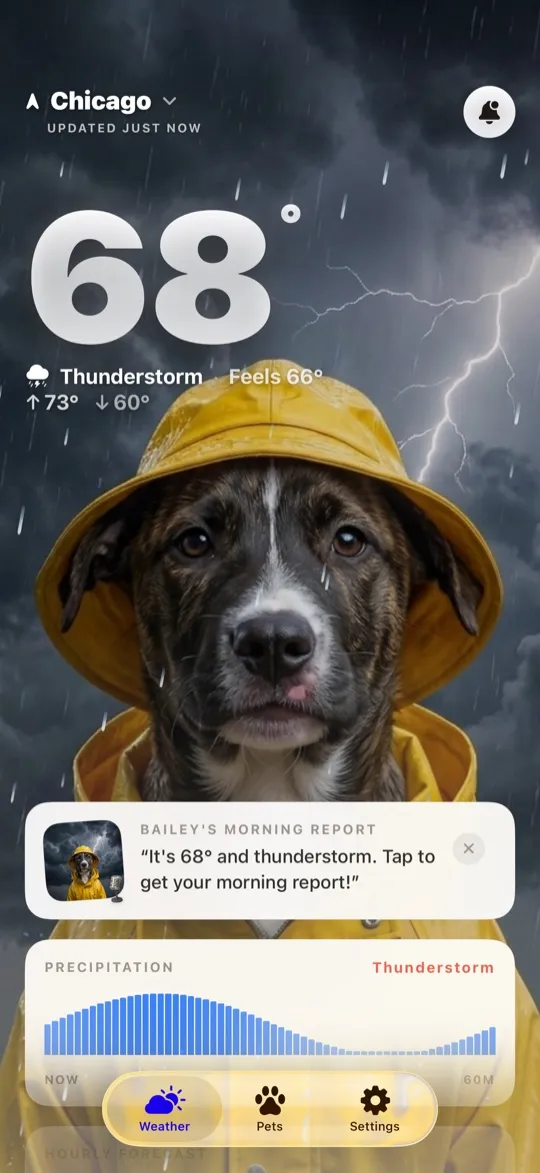
Salt season does not have to mean sore paws. Protect before the walk with boots or balm, rinse and wipe after, keep your own pavement pet-safe, and treat green puddles as an emergency. Timing helps too: walking after fresh snow but before the salt trucks pass is far gentler on feet, and shifting outings around conditions is easier when you plan ahead. We built WeatherPets so your own pet hands you the morning forecast, which makes checking before you leash up weirdly fun. For more on timing, see our guide to adjusting your walk schedule by weather, and know how cold is too cold for your dog before you head out.
Your daily forecast, delivered by your own pet.