Hot Pavement and Your Dog's Paws: The 7-Second Test
You feel the heat through your shoes. Your dog feels it with bare skin. On a bright summer afternoon, the sidewalk can be hot enough to blister paw pads in under a minute, and most of us never think to check. Here is the quick test that takes seven seconds and could save your pup a painful, avoidable injury.
Why the ground is so much hotter than the air
Here is the part that surprises people: the temperature on your weather app is measured in the shade, about four to six feet off the ground. The pavement your dog actually walks on is a completely different number. Dark asphalt and concrete soak up sunlight all day and radiate it right back, so the surface runs far hotter than the air above it.
How much hotter? According to the American Kennel Club's guide to protecting paws from hot pavement, when the air temperature is 86 degrees, asphalt can reach 135 degrees. That is hot enough to cause burns, and it happens on a day that feels merely warm to you. A sunny 77-degree afternoon can push pavement past 120 degrees. The air feels pleasant. The ground does not.
The 7-second test (do this before every summer walk)
You do not need a thermometer. You need the back of your hand. Press it flat against the pavement and hold it there. The rule is simple: if you cannot keep it down comfortably for seven seconds, it is too hot for your dog's paws, so turn around or find another route.
Why the back of the hand? It is more sensitive than your palm, so it gives you an honest read. Some sources use a slightly longer hold, and the AKC suggests roughly ten seconds with your hand or even a bare foot, so treat seven seconds as the cautious cutoff. If you are wincing, your dog would be too. Do the test at the spot and time you actually plan to walk, because shade, surface color, and the hour all change the answer.

When to walk, and when to wait
Timing solves most of the problem. The pavement is coolest early in the morning and well after sunset, once the surface has had hours to shed its heat. Midday and early afternoon are the danger zone, even if the air does not feel extreme.
The American Veterinary Medical Association's warm weather pet safety guidance recommends walking, running, and hiking during the cooler hours of the day and avoiding exercise during the hottest parts. A good habit: aim for before 8 a.m. or after 8 p.m. in summer, and on a true scorcher, keep outings short and shady. Remember that pavement holds its heat, so a sidewalk can still be hot at 6 p.m. even as the air starts to cool.
What burned paw pads look like
Paw pad burns are easy to miss because dogs rarely yelp about them. Check the pads after any warm-weather walk and watch for:
- Limping, or refusing to walk and sitting down mid-walk
- Licking or chewing at the feet more than usual
- Pads that look darker than normal, red, or visibly blistered
- Missing patches of pad or raw, peeling skin
- Lifting paws off the ground or hesitating to step on hard surfaces
If you spot any of these, stop walking on hot surfaces right away. Mild redness usually settles with a few days of cool, soft ground, but blisters, raw skin, or limping that lasts deserve a call to your vet.
Booties, balms, and protection that actually helps
If your dog walks on hot pavement regularly, a few tools make a real difference. The AVMA specifically suggests protective booties or sticking to grass on hot days. Options worth trying:
- Dog booties. The most reliable barrier. Size them properly and let your dog practice indoors first, since most pups walk like cartoon characters the first few minutes.
- Paw wax or balm. A protective layer that helps against rough, warm surfaces and keeps pads from drying and cracking. It is a supplement, not a substitute for avoiding scorching ground.
- Timing and routes. Honestly the cheapest and best protection of all. A cool hour beats any gadget.
Pick a cooler route
You can dodge most hot-pavement risk just by changing where you walk. Grass stays dramatically cooler than asphalt because it does not absorb and store heat the same way, so steer toward lawns, dirt paths, and shaded trails. Hug the shady side of the street, use tree-lined blocks, and skip wide-open parking lots and metal surfaces like sewer grates, which get blistering. On a brutal day, a short sniff around the yard on grass beats a long walk on baking concrete.
What to do if the pads are already burned
If you suspect a burn, get your dog off the hot surface and somewhere cool right away. Gently rinse the paws with cool (not ice-cold) water to bring the temperature down, and pat them dry. Keep your dog from licking the area, since that slows healing. Stick to soft, cool ground for the next several days and watch for swelling or signs of infection. For anything beyond mild redness, blisters, raw or peeling skin, or a dog that keeps limping, call your veterinarian. Burns can be more serious than they look, and a vet can manage pain and prevent infection.
Let the forecast plan your walk
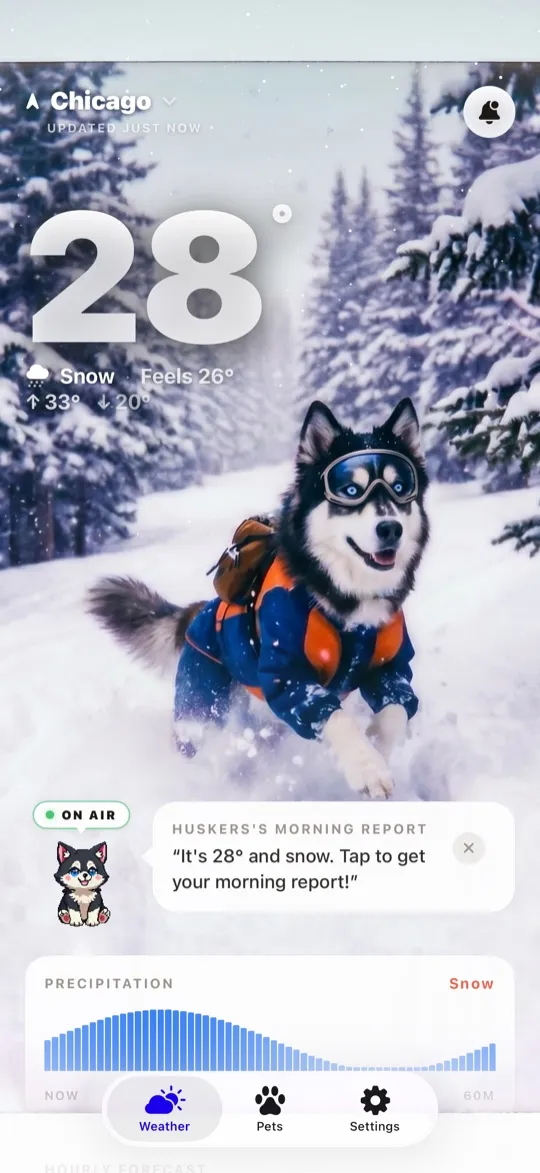
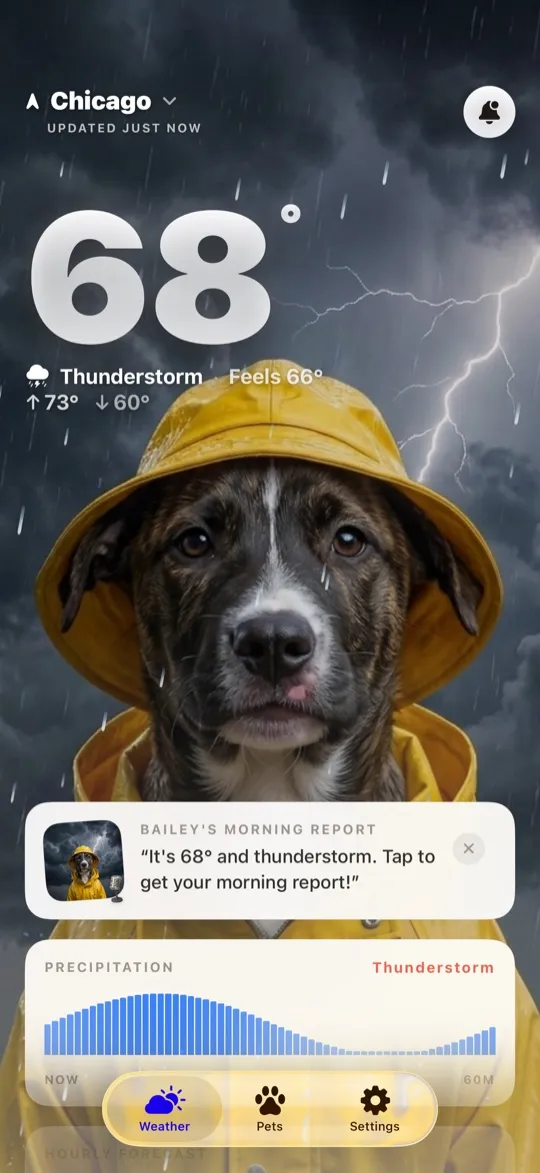
Almost all of this comes down to timing, and timing comes down to knowing the day before it happens. This is where WeatherPets quietly helps: your pet surfaces the day's high right on your home screen, and a Live Activity tracks conditions in real time, so you can spot a cooler window and plan the walk around the heat instead of guessing. The seven-second test is still your final check at the curb. The forecast just helps you avoid needing it.
Gear that helps: a set of well-fitted dog booties shields paws from scorching pavement and rough ground. See our tested picks in the best dog booties for snow, ice, and salt (they work just as well in summer heat).
WeatherPets is an Amazon Associate and may earn from qualifying purchases, at no extra cost to you.
Frequently asked questions
What is the 7-second pavement test?
Press the back of your hand flat against the pavement and hold it there: if you cannot keep it down comfortably for seven seconds, the surface is too hot for your dog's paws. The back of the hand is more sensitive than the palm, so it gives an honest read, and you should test at the spot and time you actually plan to walk.
How hot does pavement get compared to the air?
Far hotter. When the air temperature is 86 degrees, asphalt can reach 135 degrees, hot enough to cause burns, and even a sunny 77-degree afternoon can push pavement past 120 degrees. That is because dark asphalt and concrete soak up sunlight all day, while your weather app measures the air in the shade, several feet off the ground.
What time of day is safest to walk a dog in summer?
Early morning and well after sunset, once the pavement has had hours to shed its heat: a good habit is before 8 a.m. or after 8 p.m. Pavement holds its heat, so a sidewalk can still be hot at 6 p.m. even as the air cools. For more on timing, see our guide to planning dog walks around the weather.
How do I know if my dog's paws are burned?
Watch for limping or refusing to walk, licking or chewing at the feet, pads that look darker than normal, red, or blistered, missing patches of pad, or hesitating to step on hard surfaces. Mild redness usually settles with a few days on cool, soft ground, but blisters, raw skin, or limping that lasts deserve a call to your vet.
Your daily forecast, delivered by your own pet.