Can Pets Get Sunburned? UV Safety for Dogs and Cats
Short answer: yes. Fur is decent sunscreen, but every dog and cat has thin spots, and some pets have barely any coverage at all. Ear tips, noses, and pink bellies burn just like your shoulders do, and repeated burns raise real skin cancer risk. Here is who is vulnerable and what actually helps.
Which pets burn
UV risk is mostly about pigment and coat density. The pets who burn easiest:
- White or light-coated pets with pink skin. Less melanin means less natural UV protection, in fur and in the skin underneath.
- Thin or short coats. Breeds with fine, sparse hair let more UV through to the skin.
- Hairless breeds. Chinese Cresteds, Xoloitzcuintlis, and Sphynx cats are essentially all exposed skin and need sun protection any time they are out in strong light.
- Recently shaved or clipped pets. A summer shave-down removes the coat's built-in UV filter, which is one reason vets usually advise against shaving double-coated dogs.
- Sun worshippers. Any cat that spends hours flat on a windowsill or patio in direct sun concentrates exposure on the same few spots, usually the ears and nose.
Even on thick-coated pets, the ear tips, nose bridge, eyelids, lips, belly, and groin have little or no fur. Dogs that sunbathe on their backs toast their bellies. According to the AKC's guide to dog sunscreen, dogs with white or thin coats, light-pigmented noses and eyelids, and hairless breeds are the ones who benefit most from sun protection.
What pet sunburn looks like
It looks a lot like yours: pink or red skin that is tender when touched, warm to the touch, sometimes with dry, cracked, or curling edges on the ears. Your pet may flinch when you pet the area, scratch at it, or shake their head if the ear tips are burned. With stronger burns you can see blistering, crusting, and hair loss over the affected patch. Repeat burns leave skin thickened, scaly, and rough. If a sore or scab on a sun-exposed spot does not heal within a couple of weeks, get it checked. That is a classic early warning sign of skin cancer, not just a stubborn scrape.
The skin cancer connection
Sunburn is not just a comfort problem. Chronic UV exposure drives squamous cell carcinoma, one of the most common skin cancers in pets, and it targets exactly the spots that burn. In cats, the Cornell Feline Health Center notes that white or light-colored cats are especially vulnerable, with tumors typically appearing on the ears, nose, and eyelids after years of sun exposure. Their overview of squamous cell cancer in cats is sobering reading for anyone with a white cat who loves the sun. The practical takeaway: protecting a pale pet from burns today is genuinely protecting them from surgery later.
Pet-safe sunscreen rules
Never grab your own sunscreen from the beach bag. Pets lick whatever you put on them, and two common human sunscreen ingredients are toxic when ingested:
- Zinc oxide is off-limits. Repeated ingestion damages red blood cells and can cause anemia in dogs, as VCA's guide to zinc poisoning in pets explains.
- Skip salicylates (octisalate and friends). They are related to aspirin and are a particular problem for cats.
- Buy a sunscreen formulated for pets, and for cats specifically check the label says cat-safe, since feline livers process chemicals differently.
- Apply to the thin spots: ear tips, nose bridge, belly, and any pink patch, then distract your pet for a few minutes so it soaks in before the licking starts.
- Reapply after swimming and every few hours outdoors, same as you would for a kid.
For hairless breeds, a lightweight UV shirt covers more skin more reliably than lotion ever will.
Shade, timing, and the UV index
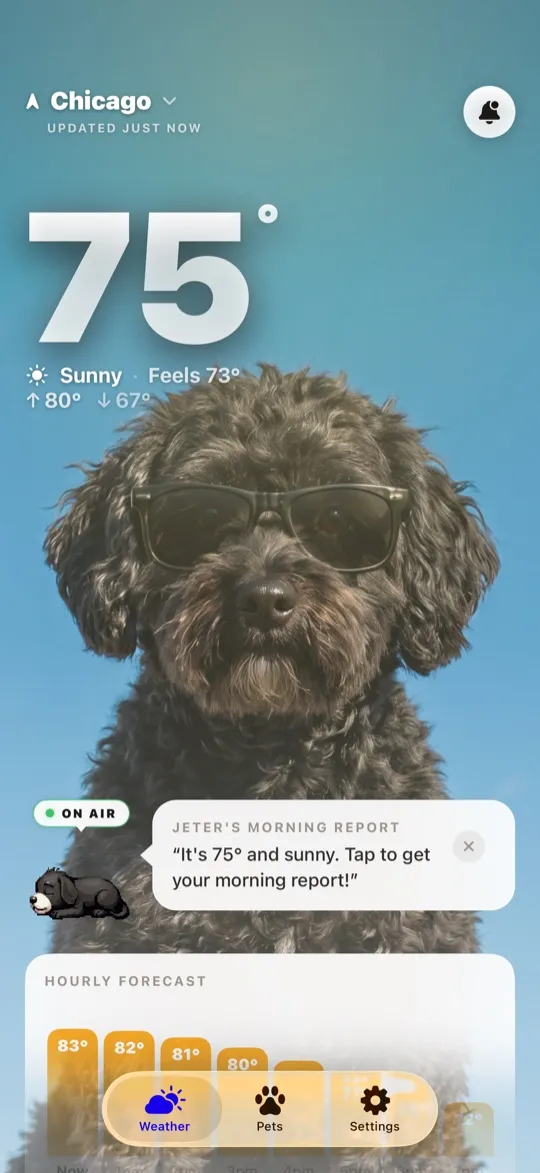
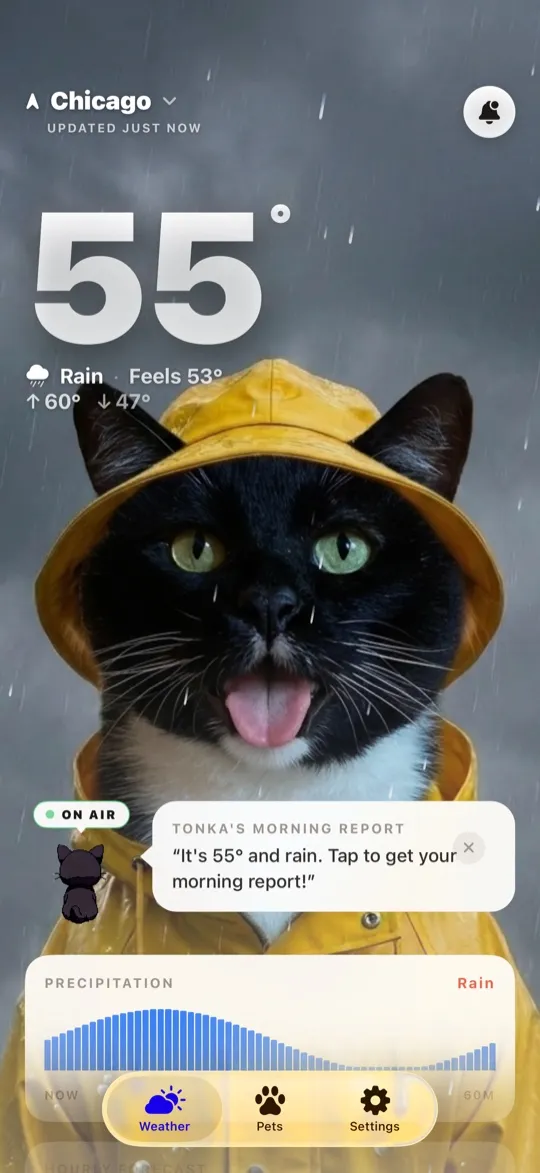
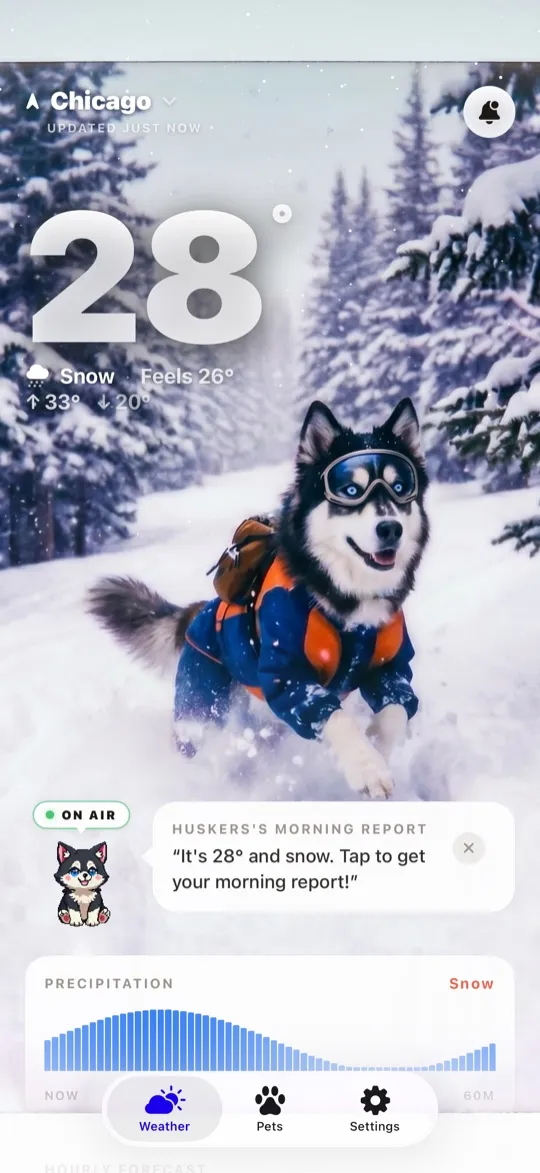
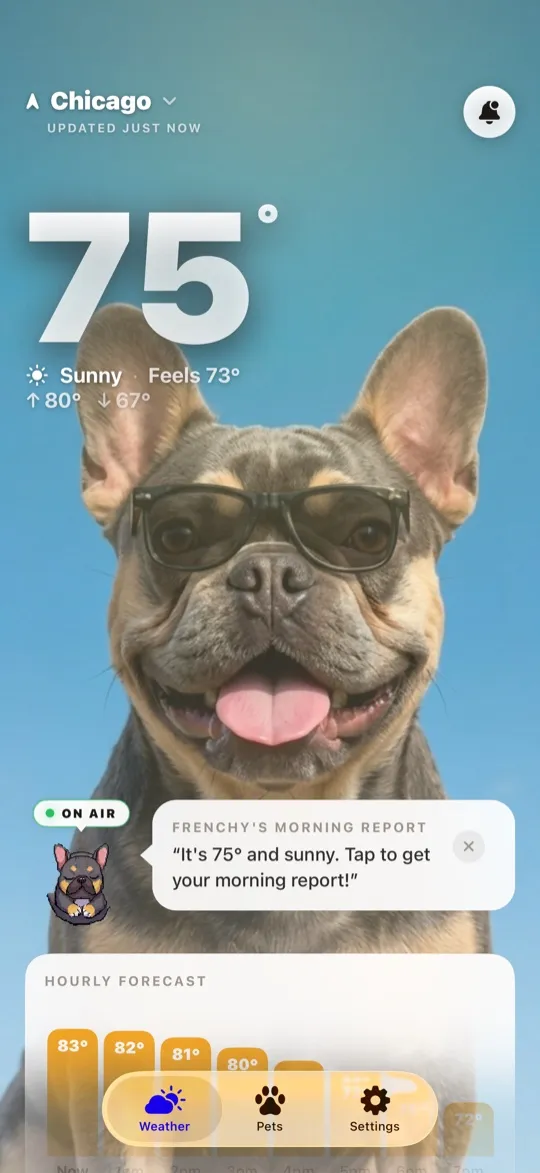
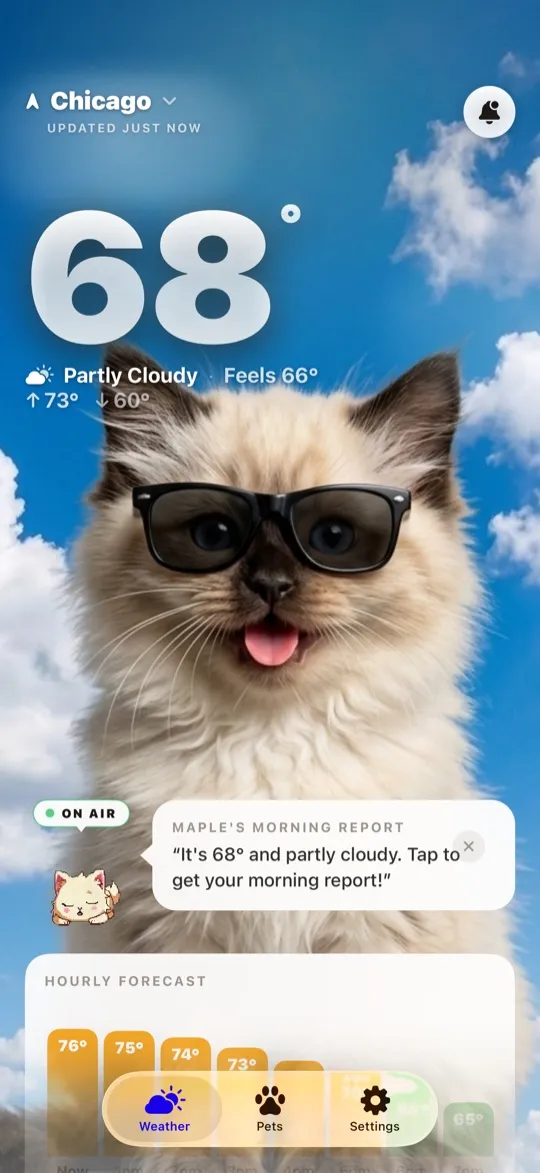
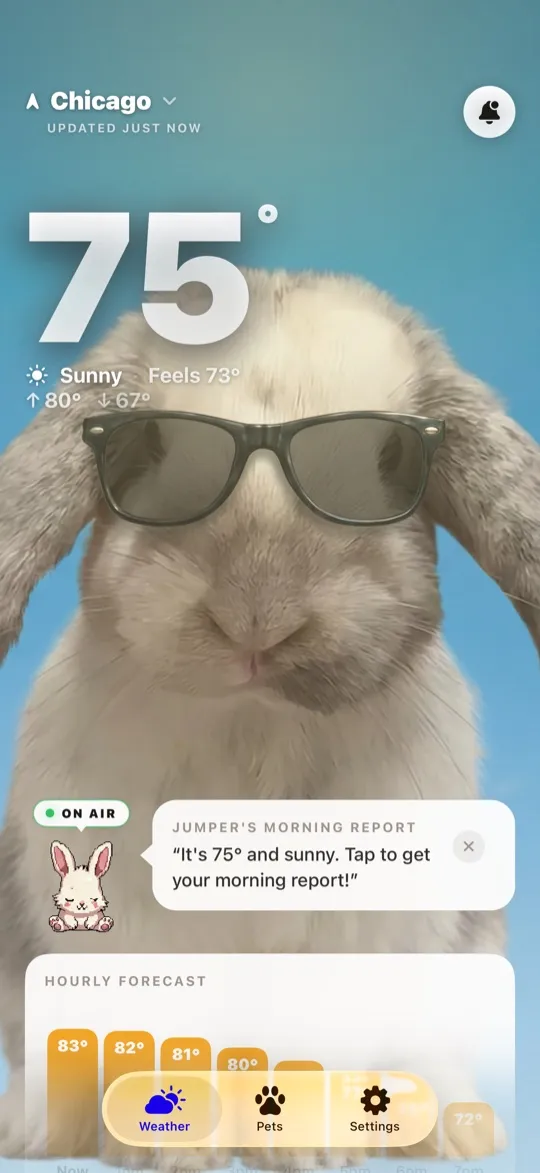
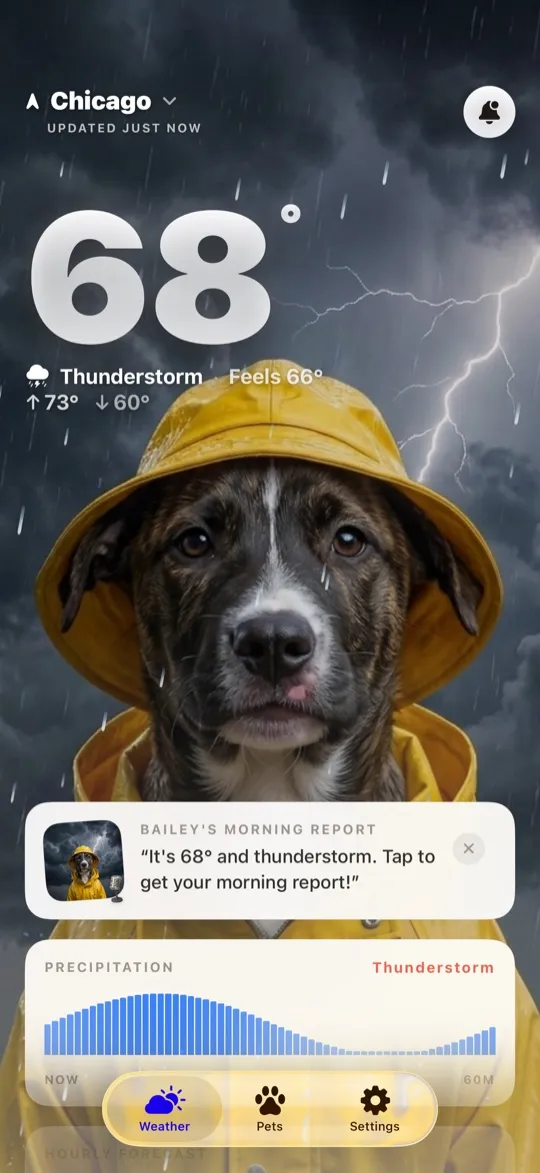
Sunscreen is the backup plan. The primary plan is managing exposure. UV peaks between roughly 10 a.m. and 4 p.m., so schedule long outdoor sessions for morning and evening, make sure the yard has real shade at all hours, and remember that UV bounces: sand, water, and concrete all reflect it up at bellies. Indoor sun counts too. Window glass blocks some UV but not all of it, so a white cat that spends every afternoon in the same sunny window is still collecting exposure on those ears. On bright days, check the UV index the way you check the temperature. WeatherPets makes that easy: your own pet delivers the day's conditions each morning, so a scorcher of a UV day never sneaks up on you.
Sunburned anyway? Move them out of the sun, apply cool compresses, and call your vet if the skin blisters or your pet seems painful. And keep building good summer habits with our summer dog care checklist, our guide to cats and hot weather, and a shaded, airflow-friendly spot to lounge like an elevated dog bed.
Your daily forecast, delivered by your own pet.