French Bulldogs and Heat: A Hot-Weather Survival Guide
Frenchies are one of the most popular breeds in America, and one of the least equipped for a heat wave. That adorable flat face comes with an airway that struggles to do the one job a dog's face has in summer: cooling. Here is why heat is a different kind of serious for a French bulldog, and how to get yours through the hot months safely.
Key takeaways
- The low 80s Fahrenheit is the practical ceiling for outdoor activity, and humidity pulls that number down further.
- A Frenchie is always in the higher-risk column, so read one band hotter than the forecast suggests.
- Their normal is snorty, which hides the warning signs. Louder and raspier than baseline is the tell.
- Blue or grey gums are a now emergency, not a wait-and-see.
- Keeping a Frenchie lean measurably improves heat tolerance, because extra weight squeezes an already tight airway.
- Never a parked car, not for a minute. A dog whose cooling barely keeps up at rest has no margin at all.
Why flat faces overheat so fast
Dogs cool off by panting: moving air rapidly over the tongue and airway to dump heat through evaporation. A French bulldog is a brachycephalic (short-headed) breed, and everything about that compressed skull works against panting. Narrow nostrils, a long soft palate crowding a shortened airway, and often a narrow windpipe mean a Frenchie moves less air with far more effort than a long-nosed dog. VCA Animal Hospitals' overview of brachycephalic airway syndrome explains how these anatomical quirks stack up, and why they make heat and exercise dangerous for flat-faced breeds.
The American Kennel Club's French bulldog breed profile says it plainly: Frenchies are prone to heat exhaustion and should not exercise in hot or humid weather. This is not a footnote about the breed; it is one of the defining facts of living with one.
The ceiling is lower than you think
Temperatures a lab would consider a pleasant afternoon can be genuinely risky for a Frenchie. Once you get into the low 80s Fahrenheit, treat outdoor activity as a calculated risk; add humidity and the danger arrives even earlier, because humid air cripples the evaporative cooling that panting depends on. We covered that mechanism in why humidity makes hot days more dangerous for dogs, and no breed proves the point like a French bulldog. On genuinely hot days, the right amount of midday outdoor exercise is none.
| Temperature | A French bulldog | Add humidity above 60% |
|---|---|---|
| Below 68°F (20°C) | Walk as normal | Fine, keep the pace easy |
| 68–77°F (20–25°C) | Caution, watch the breathing | Shorten it and stay in shade |
| 77–82°F (25–28°C) | Risky, potty breaks only | Treat as the band below |
| 82–89°F (28–32°C) | Dangerous, stay in | Indoors with air conditioning |
| 90°F+ (32°C+) | Dangerous, no outdoor exercise | Indoors with air conditioning |
These are the higher-risk bands from our dog walking temperature guide, and a French bulldog sits in that column permanently. A flat-faced dog does not get the average-dog row on any day of the year. For the wider picture across every flat-faced breed, see why flat-faced breeds carry the most heat risk.
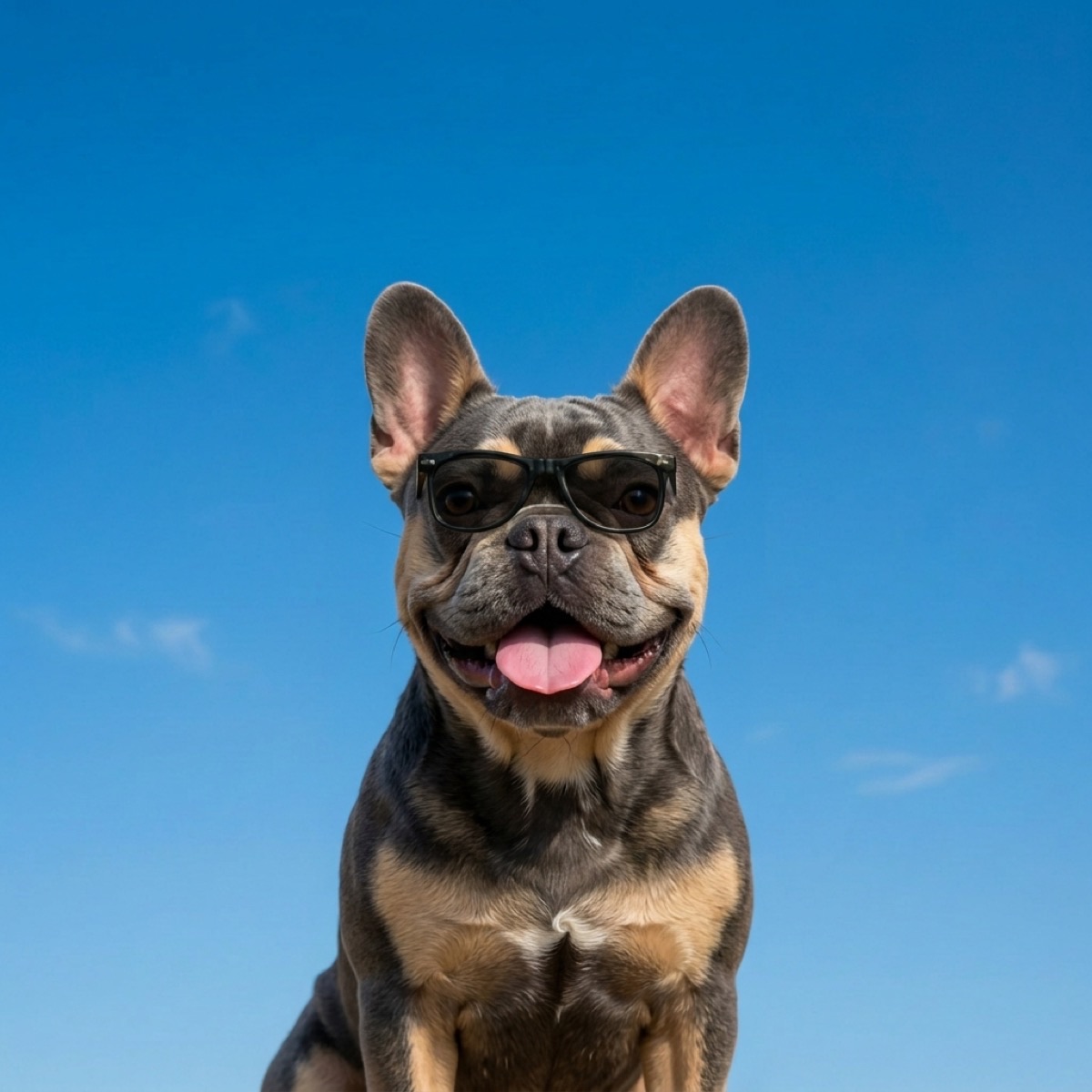
Know the flat-face warning signs
Frenchies always sound a little snorty, which makes it dangerously easy to miss the shift from "normal Frenchie noises" to "airway in trouble." Watch for:
- Breathing that gets loud and raspy, louder than their usual baseline, especially with the mouth wide open and neck extended
- Frantic, nonstop panting that does not settle with rest
- Gums or tongue turning bright red, then bluish or gray (blue means the body is not getting oxygen: this is a now emergency)
- Thick, ropey drool, staggering, collapse, vomiting
If you see the serious signs, move to shade or AC, wet the belly and paws with cool (not ice-cold) water, and get to a vet immediately. Heatstroke moves fast in this breed. Learn the full progression in our guide to dog heatstroke warning signs.
Time the walks, check the pavement
Summer with a Frenchie is a scheduling exercise. Walk at dawn and after sunset, keep sessions short and sniffy rather than long and athletic, and always carry water. Check pavement with the back of your hand for seven seconds before committing those low-riding paws and belly to it; a Frenchie's undercarriage rides close to that radiating asphalt. And build in rest: a flat-faced dog needs longer to recover from exertion than their enthusiasm suggests.
Cooling gear earns its keep
For a breed this heat-limited, cooling gear is less of a gadget and more of a seatbelt. A soaked evaporative cooling vest helps with the (short, shaded) outings, and a cooling mat gives your Frenchie a cool landing pad indoors. Air conditioning is the real MVP: on hot days a Frenchie belongs in it, full stop.
Cars are a hard no
Every dog is at risk in a parked car; a brachycephalic dog is at extreme risk. The AVMA's warm weather pet safety guidance notes that the inside of a car can climb to lethal temperatures within minutes, even with the windows cracked, even on a mild day. With a dog whose cooling system barely keeps up at rest, there is no safe version of "I'll just be a minute." Never leave a Frenchie in a parked car.
A quick word on BOAS
Brachycephalic obstructive airway syndrome (BOAS) is the formal name for the airway package many Frenchies carry, and it exists on a spectrum. If your dog snores loudly, tires fast, gags, or struggles in mild warmth, ask your vet for an airway assessment. Two things measurably improve a Frenchie's heat tolerance: keeping them lean (extra weight squeezes an already tight airway) and, for more affected dogs, surgical correction of the nostrils or soft palate. A Frenchie that breathes better lives a bigger, safer summer.
Plan the day around the number
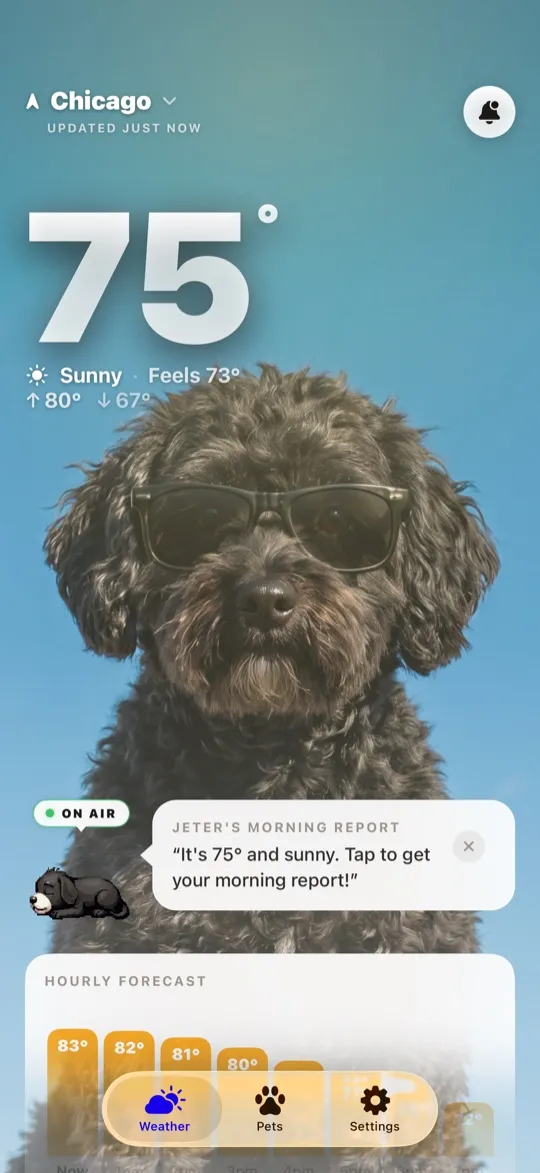
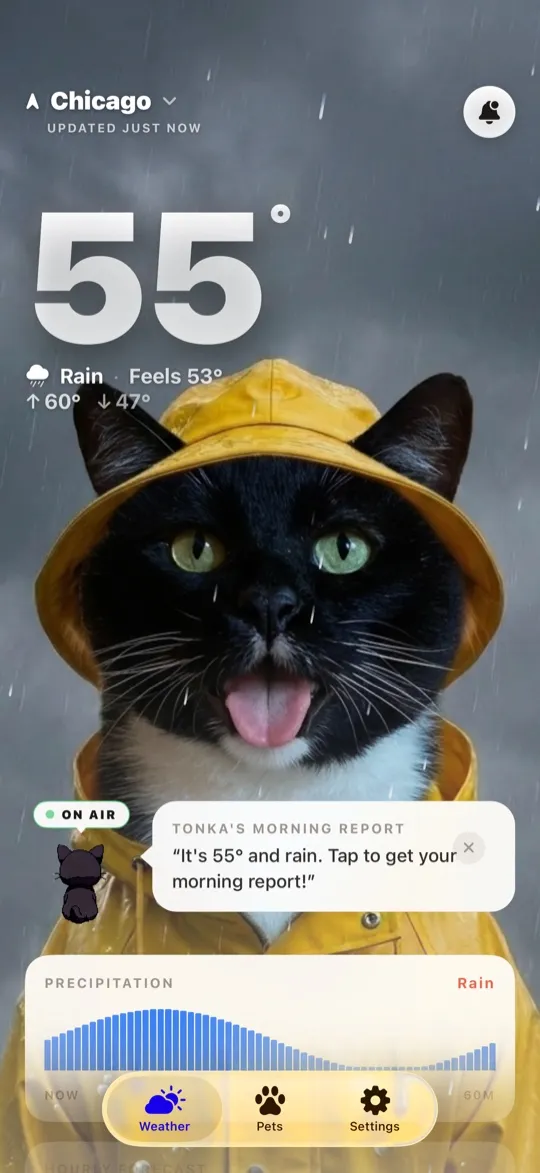
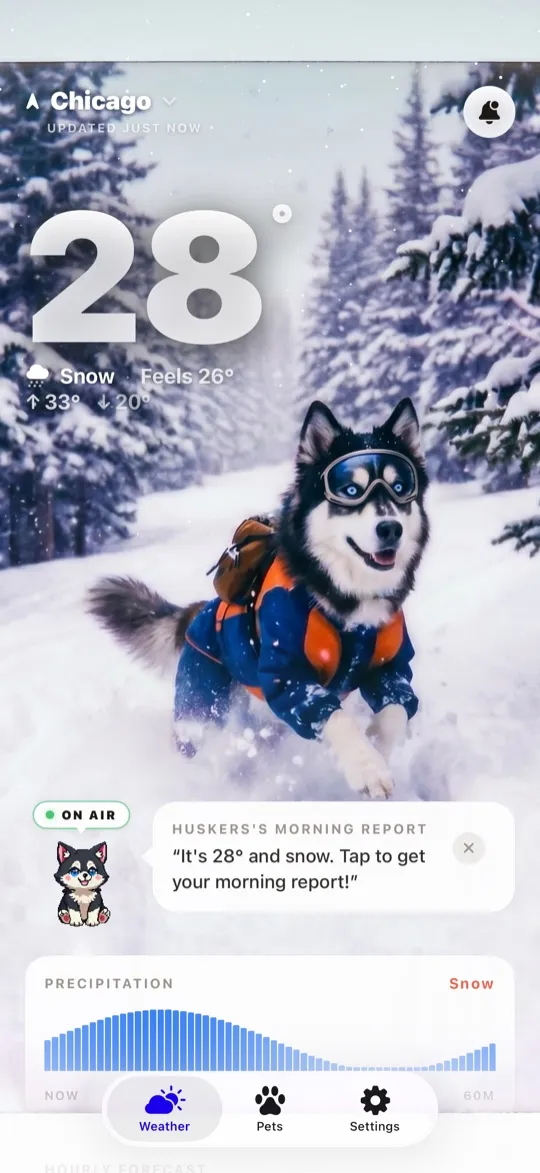
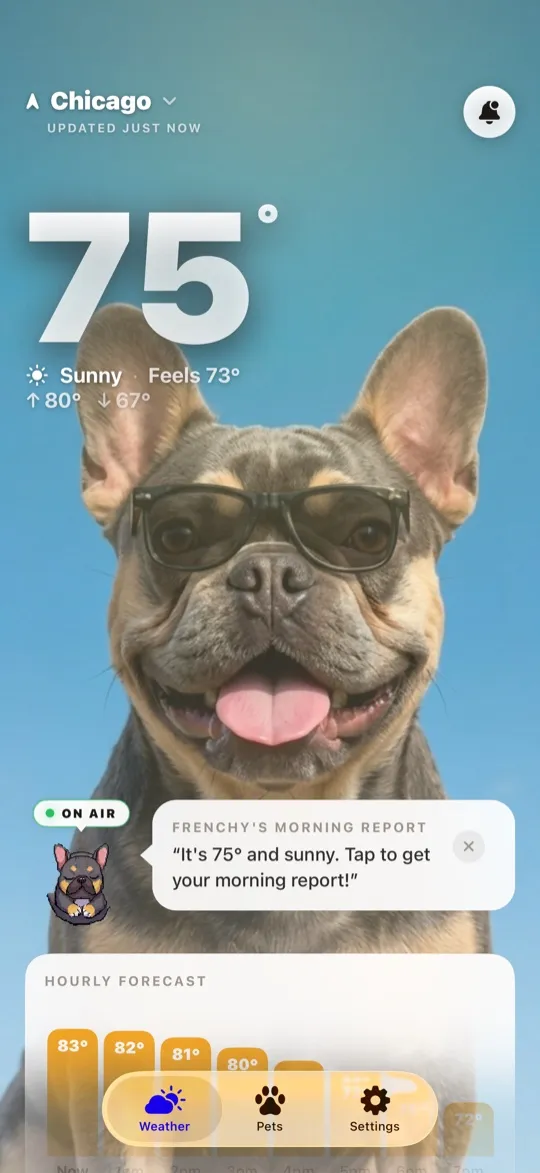
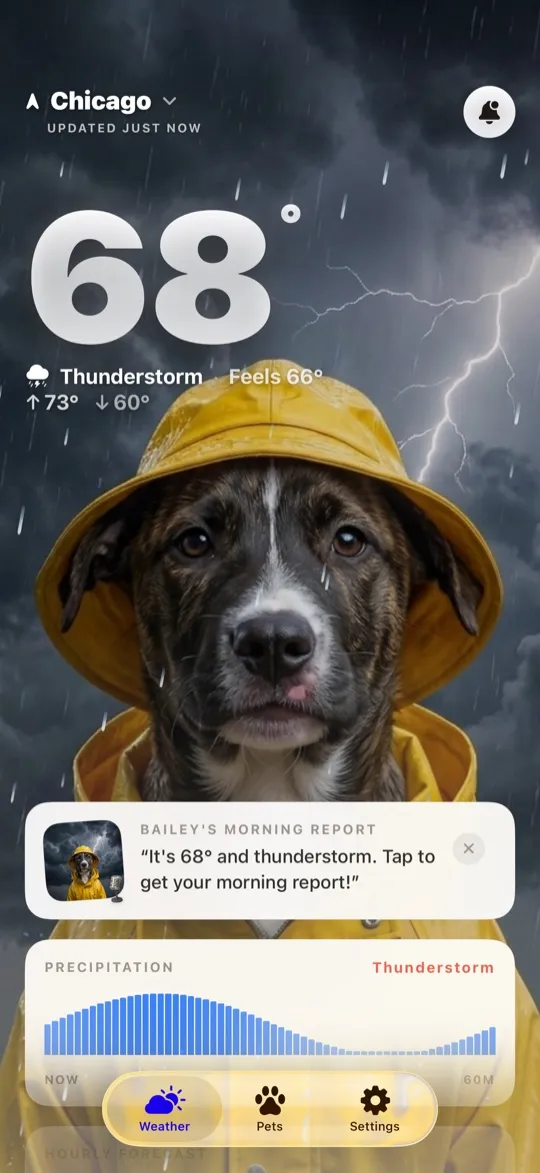
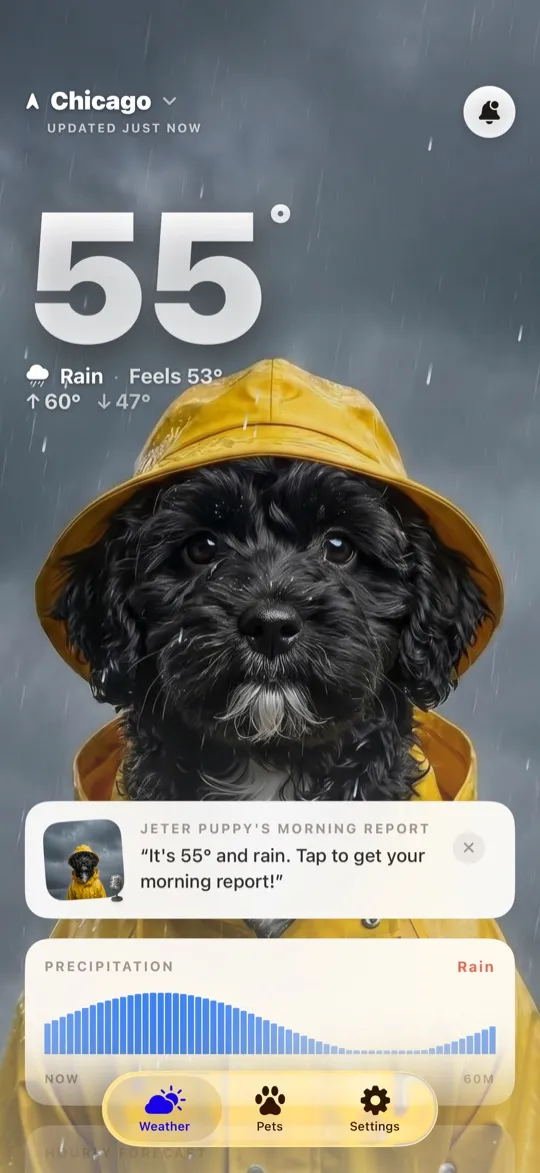
With a French bulldog, the difference between a great day and an ER visit is often just checking the forecast before you clip the leash. WeatherPets makes that check automatic: your own pet reports the day's high each morning and a Live Activity tracks conditions in real time, so you will know whether today is a sunrise-stroll day or an all-AC day before your Frenchie has even finished snoring.
Frequently asked questions
What temperature is too hot for a French bulldog?
Treat the low 80s Fahrenheit as the ceiling for any outdoor activity, and the high 70s once humidity climbs above about 60%. A Frenchie belongs in the higher-risk column of any dog walking temperature chart, permanently, so read one band hotter than the forecast suggests. Above the mid 80s the right amount of outdoor exercise is none.
Why do French bulldogs overheat so easily?
Because panting is how a dog sheds heat, and a flat face makes panting inefficient. Narrow nostrils, a long soft palate crowding a shortened airway and often a narrow windpipe mean a Frenchie moves less air with far more effort than a long-nosed dog. VCA Animal Hospitals describes this as brachycephalic airway syndrome. The American Kennel Club states plainly that Frenchies are prone to heat exhaustion and should not exercise in hot or humid weather.
What are the signs a French bulldog is overheating?
Breathing that is louder and raspier than their usual baseline, especially with the mouth wide open and the neck extended. Then frantic nonstop panting that does not settle with rest, thick ropey drool, staggering, vomiting, and gums or tongue turning bright red. Blue or grey gums mean the body is not getting oxygen and that is an immediate emergency. The difficulty is that a Frenchie always sounds a bit snorty, so judge against their normal, not against a Labrador's.
Can French bulldogs live in hot climates?
Yes, many do, but the summer looks different. Walks move to dawn and after sunset, sessions get short and sniffy rather than athletic, air conditioning stops being a luxury, and midday outdoor exercise comes off the table entirely. Owners in hot climates generally organise the day around the forecast rather than the other way round.
Does BOAS surgery improve heat tolerance?
It can, for more affected dogs. Brachycephalic obstructive airway syndrome sits on a spectrum, and surgical correction of the nostrils or soft palate measurably improves airflow for dogs at the severe end. The other lever, available to every owner, is keeping the dog lean, since extra weight squeezes an already tight airway. If your Frenchie snores loudly, tires fast, gags, or struggles in mild warmth, ask your vet for an airway assessment.
Heat is the factor that turns an ordinary day dangerous fastest, and it rarely announces itself. The Pet Safety Score in WeatherPets folds temperature, humidity, UV, and estimated pavement heat into one 0 to 100 read for your specific pet, so you know before you open the door. Meet your WeatherPet on the App Store.
Your daily forecast, delivered by your own pet.


A note on health: This article is general information, not a substitute for professional veterinary advice. If you are worried about your flat-faced dog's breathing or overheating, or about any serious or emergency health concern, contact your veterinarian right away. Our guidance draws on trusted veterinary sources, including those linked above.
