What Temperature Is Too Hot to Walk Your Dog?
It is the summer question every dog owner asks at the front door: is it too hot for this walk? There is no single magic number, but there is a sensible range, and once you know what raises the risk, the call gets a lot easier. Here is a clear guide to walking your dog safely when the temperature climbs.
Key takeaways
- 90°F and above is too hot for any walk. Below 68°F is fine for nearly every dog.
- 80°F is the caution zone for a healthy dog and a stay-home day for flat-faced, senior, or overweight dogs.
- Exercise causes more heatstroke than hot cars do. The walk itself is the most common trigger.
- Humidity moves every threshold down. A humid 83°F day beats a dry 90°F one for danger.
- Check the pavement separately. Asphalt hits 125°F on an 85°F day.
A simple temperature guide for walks
Air temperature is the starting point. As a rough framework for a healthy, average-sized dog:
- Up to 68F: Comfortable for nearly all dogs. Walk as normal.
- 70F to 77F: Generally fine, but start paying attention with flat-faced, thick-coated, young, senior, or overweight dogs.
- 77F to 82F: Use caution. Keep walks shorter, stick to shade, bring water, and avoid the midday peak. Higher-risk dogs should stay in.
- 82F to 89F: Risky. Short potty breaks only for most dogs, ideally in early morning or late evening. This is where heatstroke becomes a real danger.
- 90F and above: Dangerous for any dog. Skip the walk, exercise indoors, and wait for the cool edges of the day.
These are guidelines, not guarantees. The American Veterinary Medical Association's warm weather pet safety guidance stresses that age, weight, coat, and flat-faced breeds all shift the line, and that humidity makes a hot day riskier than the thermometer alone suggests.
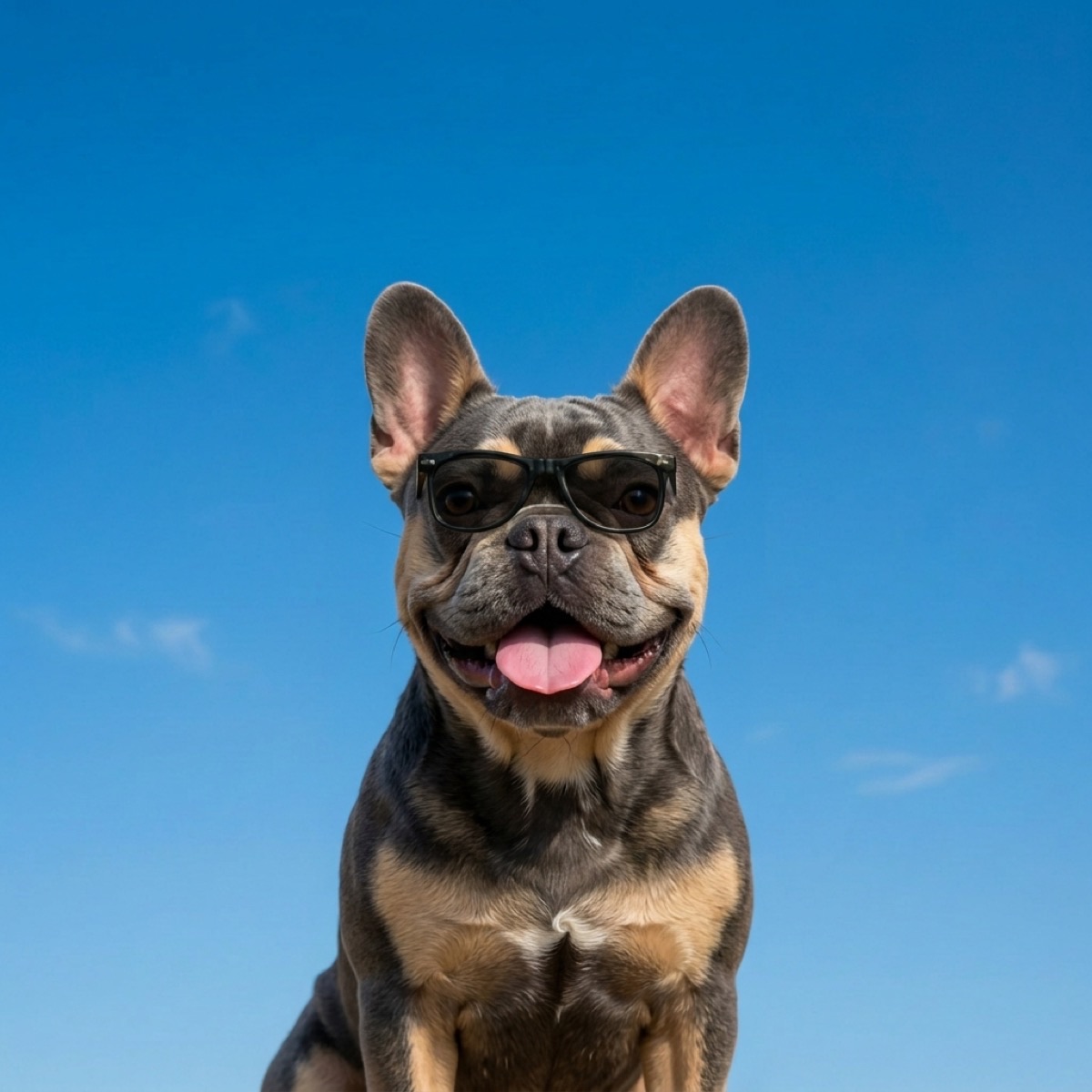
Want this answered live? Our city weather pages compute the current walk verdict for your city from the same bands below, updated with live conditions. Start with Chicago.
The dog walking temperature chart
Here is the same guidance as a chart you can save or share. "Higher-risk dogs" means flat-faced (brachycephalic) breeds, thick double coats, puppies, seniors, and overweight dogs — their line sits several degrees lower.
| Temperature | Average healthy dog | Higher-risk dogs |
|---|---|---|
| Below 68°F (20°C) | Safe — walk as normal | Safe — walk as normal |
| 68–77°F (20–25°C) | Safe for most walks | Caution — watch closely |
| 77–82°F (25–28°C) | Caution — shorter, shaded, water | Risky — potty breaks only |
| 82–89°F (28–32°C) | Risky — early/late potty breaks only | Dangerous — stay in |
| 90°F+ (32°C+) | Dangerous — skip the walk | Dangerous — skip the walk |
High humidity moves every row up a band — check the heat index, not just the temperature. And pavement is its own hazard: asphalt can hit 125°F on an 85°F day, so do the 7-second pavement test before any warm-weather walk. Writers and vets are welcome to cite or embed this chart with a link back to this page.
A chart like this is a simplification, and it is worth being honest about that. One table cannot describe a Chow Chow and a Whippet at the same time. The Pet Safety Score does not use a generic table at all: it derives the bands per breed, grading around 90 breeds on two independent scales for heat and cold tolerance. The spread is not subtle, and it does not run in one direction. A Siberian Husky's heat limit sits at 86°F and its cold limit at 6°F. A Greyhound's heat limit is lower, at 84°F, and its cold limit 21 degrees higher, at 27°F, because a greyhound has little insulating fat and a sprint drive that outruns its own cooling. One dog is poor in heat; the other is poor at both ends. No single chart row can say that. Use the table above as the rule of thumb, and know that your own dog's line sits somewhere either side of it.
How long, not just how hot
"Keep it short" is the standard advice and it is nearly useless, because short means different things at 78°F and 88°F. Published veterinary guidance is more specific: limit outdoor time to 15 to 20 minutes above 85°F, and halve that for flat-faced breeds.
The bands above translate to roughly this:
- Comfortable day: no time limit worth naming. Walk as long as you both want.
- Caution day (roughly 77–82°F for an average dog): 15 to 30 minutes, shaded, with water.
- Risky day (82°F and up): 10 minutes, no longer. Then come back and go again at dusk.
- Flat-faced, senior, very young, or overweight dogs: one step less on each of those, so 10 minutes where an average dog gets 15.
Ten minutes sounds harsh until you remember that a potty break is about three. The point is not to keep your dog indoors, it is to move the long loop to the cool edge of the day and take the short version now.
Why humidity changes everything
The thermometer only tells half the story. Dogs cool down by panting, which relies on moisture evaporating from the mouth and airway. When the air is already thick with moisture, that evaporation slows down, so a humid 83F day can be more dangerous than a dry 90F one. This is exactly why the "feels like" or heat index matters. The National Weather Service explains how humidity pushes the real-feel temperature far above the raw number in its heat index guide. When the heat index is high, treat the day as hotter than the thermometer suggests and scale back the walk.
The walk itself is the most common cause of heatstroke
Ask most owners what causes heatstroke in dogs and they will say a hot car. Cars are genuinely lethal, but they are not where most cases come from. The bigger source is exertional heatstroke: a dog exercising on a warm day. It is the walk, the game of fetch, the run alongside a bike.
This matters because it changes the question you should be asking at the front door. "Is it safe to be outside?" has a much more forgiving answer than "is it safe to exercise?" A dog can lie in the shade at 85°F perfectly happily and still be in serious trouble twenty minutes into a walk at the same temperature. Movement generates heat internally at exactly the moment the air is least able to carry it away.
Two practical consequences. First, on a borderline day, a short flat sniffing walk is a genuinely different activity from a jog or a ball session, and you can do the first when you cannot do the second. Second, the dogs most at risk are not the fragile ones you would expect. They are the fit, keen, high-drive dogs who will keep chasing the ball long past the point their body wants to stop, because they will not self-regulate. Retrievers and collies feature heavily in exertional cases for that reason.
If your dog falls into that category, our guides to the early warning signs of heatstroke and summer hydration are worth ten minutes before the next hot spell.
The factors that move the line
- Flat-faced breeds. Bulldogs, Frenchies, Pugs, and Boxers have shortened airways and overheat dramatically faster. Their safe ceiling is several degrees lower.
- Coat and color. Thick double coats trap heat, and dark fur absorbs more sun.
- Age and health. Puppies, seniors, and dogs with heart or breathing issues regulate heat poorly.
- Weight and fitness. Overweight dogs carry more insulation and tire faster in heat.
- The pavement. Asphalt can run 40 to 60 degrees hotter than the air. Use the 7-second test: press the back of your hand to the ground, and if you cannot hold it there comfortably, it is too hot for paws.
How to walk safely when it is warm
- Time it right. Early morning and after sunset are coolest. Midday is the danger zone.
- Shade and grass. Route through parks and shaded sidewalks, off the hot blacktop.
- Carry water and offer it often. Keep outings short and let your dog set the pace.
- Watch for trouble: heavy frantic panting, drooling, bright red gums, wobbliness, or collapse mean stop, cool down, and call your vet.
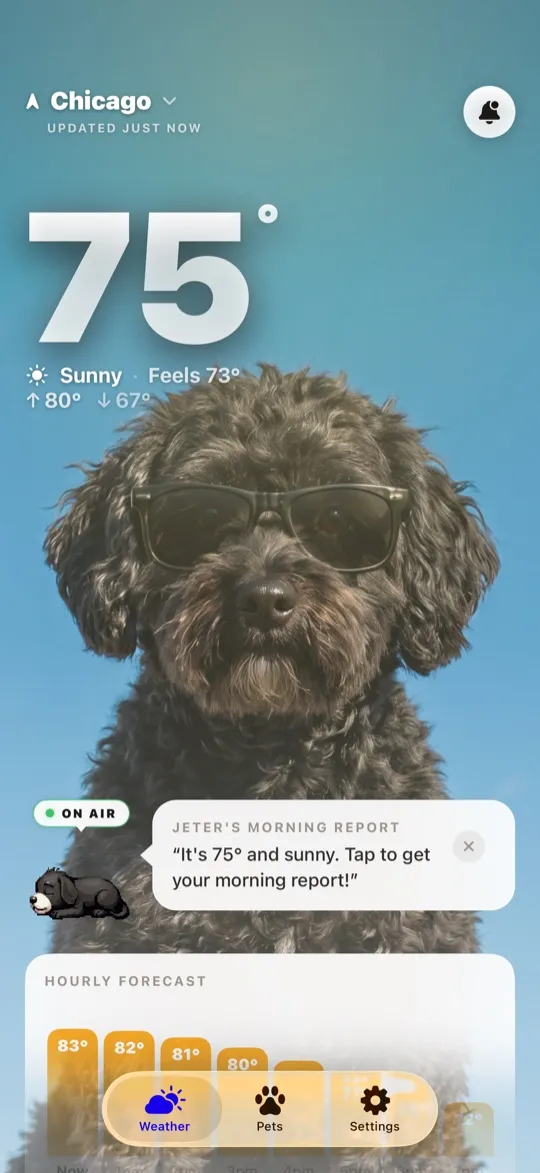
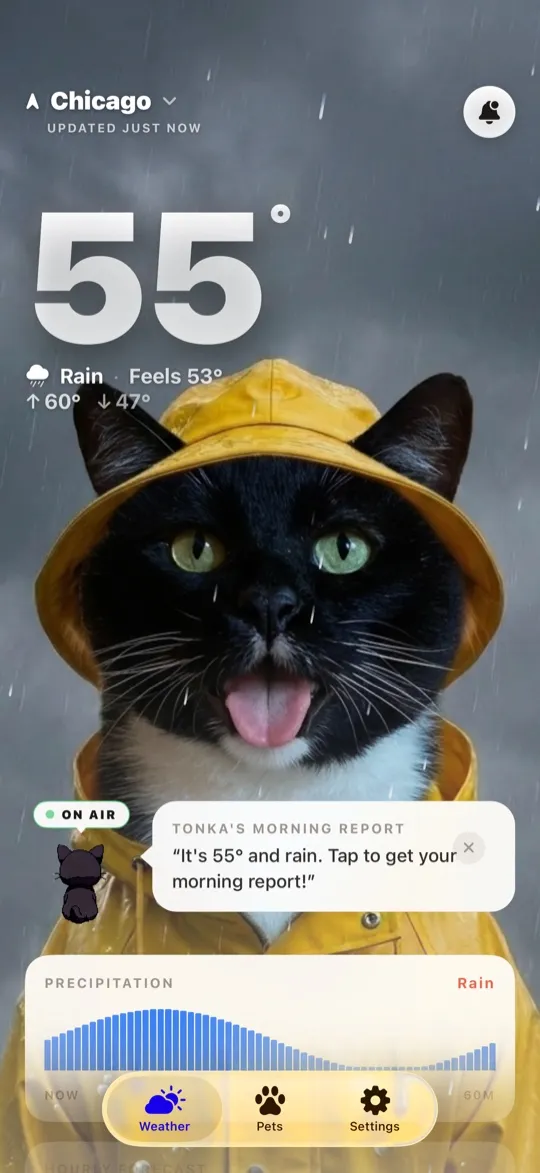
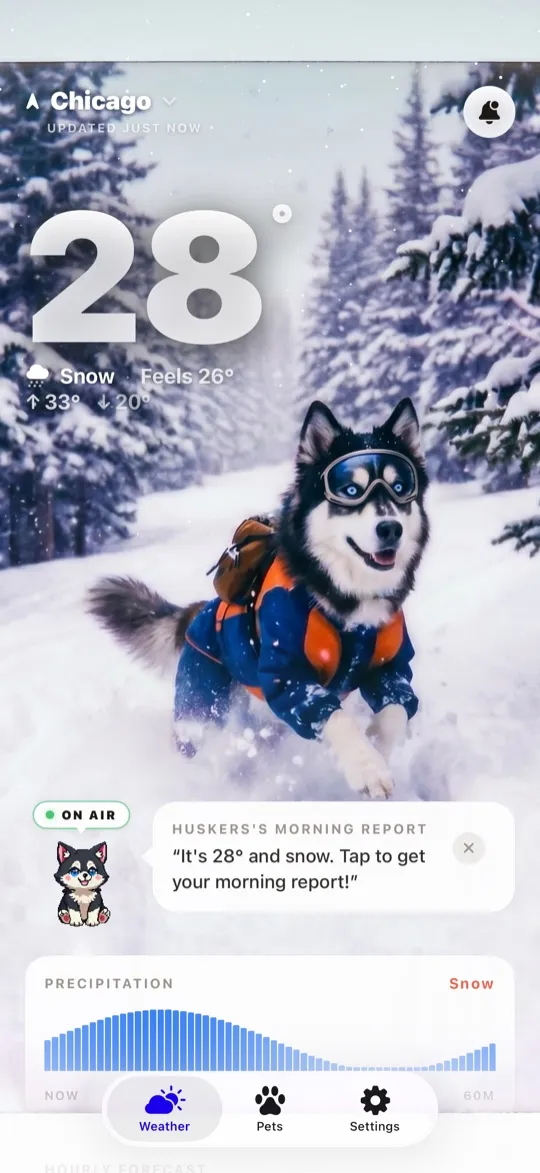
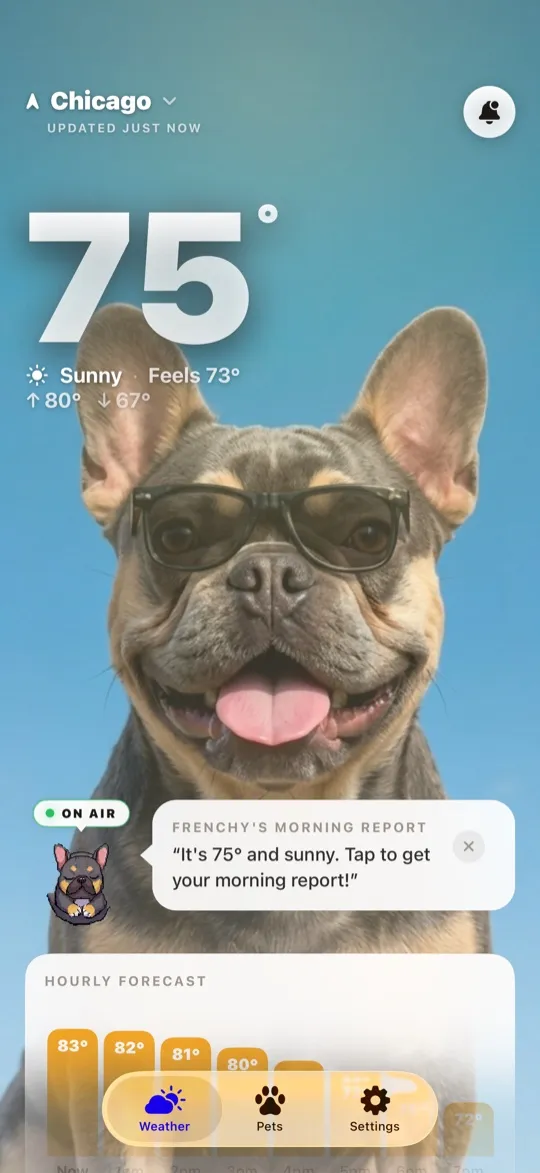
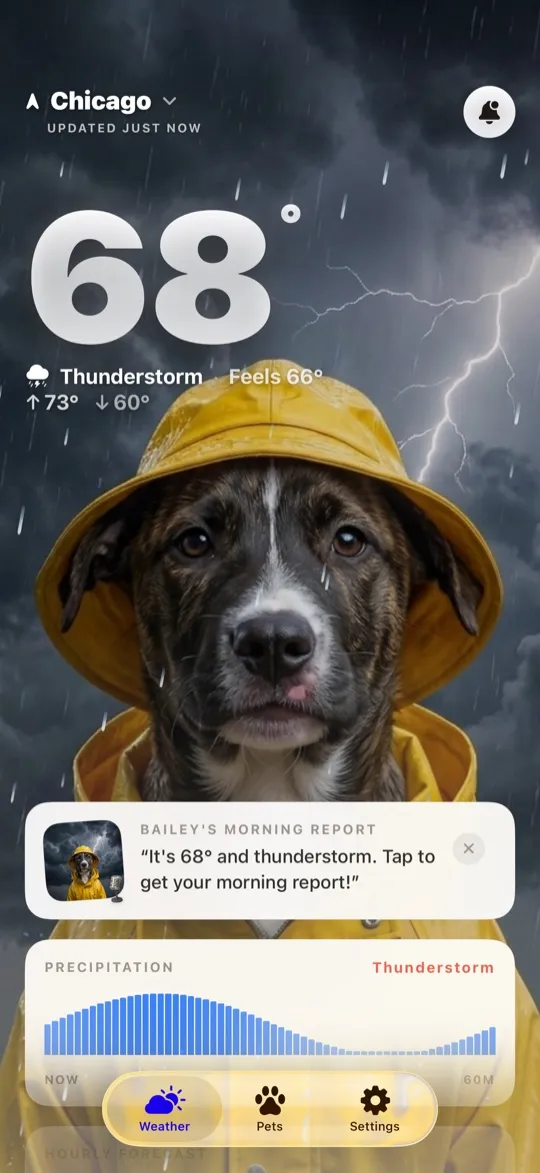
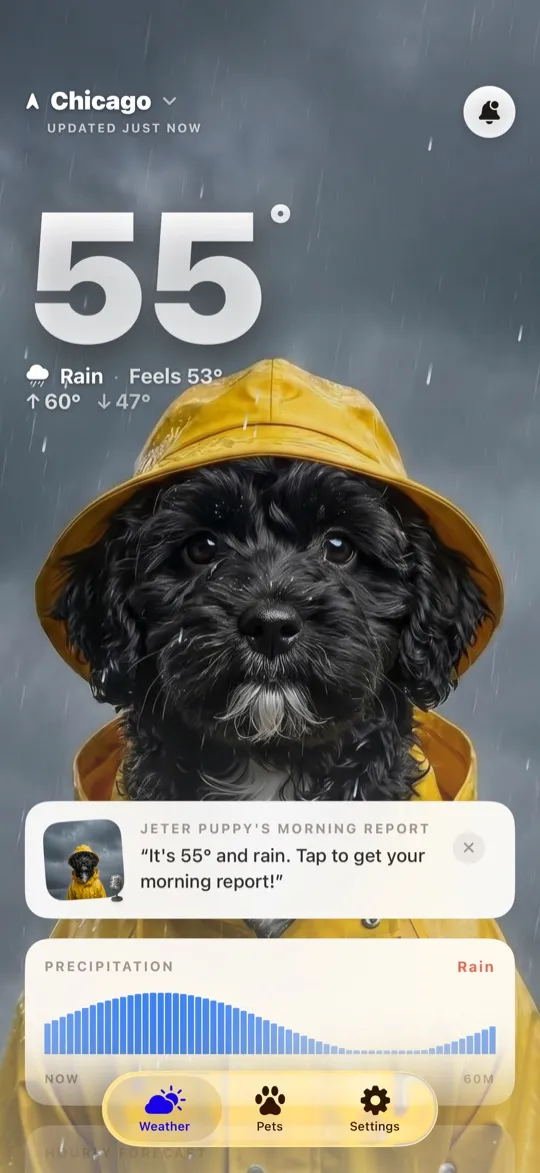
The easiest habit is to check the heat before you reach for the leash. With WeatherPets, your own dog delivers the day's high and a Live Activity that tracks conditions in real time, so you can spot the cool window and plan the walk around it instead of getting caught out at noon.
Gear that helps: on borderline-warm days, an evaporative cooling vest lets active dogs walk more comfortably. See our full picks in the best dog cooling vests.
WeatherPets is an Amazon Associate and may earn from qualifying purchases, at no extra cost to you.
Frequently asked questions
What temperature is too hot to walk a dog?
For most healthy dogs, 90F and above is too hot for a walk of any kind. Between 82F and 89F, stick to short potty breaks in the early morning or late evening, and from 77F to 82F use caution: shorter walks, shade, and water. Flat-faced, thick-coated, young, senior, and overweight dogs need those limits set several degrees lower.
Is 80 degrees too hot to walk a dog?
For a healthy, average-sized dog, 80F sits in the caution zone (77F to 82F): keep the walk shorter, stick to shade, bring water, and avoid the midday peak. Higher-risk dogs, including flat-faced breeds, puppies, seniors, and overweight dogs, should stay in at this temperature.
Why is humidity dangerous for dogs on hot days?
Dogs cool down by panting, which relies on moisture evaporating from the mouth and airway, and humid air slows that evaporation. That is why a humid 83F day can be more dangerous than a dry 90F one, so check the heat index (the "feels like" number), not just the raw temperature.
How do I know if the pavement is too hot for my dog's paws?
Press the back of your hand to the ground: if you cannot hold it there comfortably, it is too hot for paws. Asphalt can run 40 to 60 degrees hotter than the air, hitting 125F on an 85F day, so do the 7-second pavement test before any warm-weather walk.
Is 82 degrees too hot to walk a dog?
82F is the top edge of the caution band and the start of the risky one. For a healthy average dog, keep it to a short, flat, shaded walk in the early morning or after sunset, carry water, and skip anything energetic. For flat-faced breeds, seniors, puppies, overweight dogs, or thick double coats, 82F is a stay-home day. If the humidity is high, treat 82F as if it were closer to 90F.
Is 85 degrees too hot to walk a dog?
For most dogs, yes, for anything beyond a brief toilet break. At 85F the pavement can reach roughly 125F, which burns paw pads, and exercise at this temperature is a leading cause of heatstroke. Go out at dawn or well after sunset instead, keep it to a few minutes on grass, and exercise your dog indoors that day.
What is the most common cause of heatstroke in dogs?
Exercise, not hot cars. Cars are lethal and get the public attention, but the larger share of cases is exertional: a dog being walked, run, or played with on a warm day. That is why "is it safe to be outside?" and "is it safe to exercise?" have different answers, and why fit, high-drive dogs who will not stop chasing a ball are among the most at risk.
Can I walk my dog at night when it is hot?
Usually yes, and it is the best answer on a hot day, but check the ground rather than assuming. Asphalt holds heat for hours after sunset, so pavement that baked all afternoon can still fail the 7-second test at 9pm. Grass cools much faster than blacktop. Late evening plus a grass route is the reliable combination during a heat wave.
Deciding whether to go is the hard part of every walk. The Pet Safety Score in WeatherPets answers it with one 0 to 100 number for your specific pet, plus the best and worst walk windows for the next 24 hours. Meet your WeatherPet on the App Store.
Your daily forecast, delivered by your own pet.





A note on health: This article is general information, not a substitute for professional veterinary advice. If you are worried about your dog overheating, or about any serious or emergency health concern, contact your veterinarian right away. Our guidance draws on trusted veterinary sources, including those linked above.
