Walking Your Dog in the Dark: Visibility Rules
Nothing about your evening walk changes in September except the light, and that turns out to be the thing that matters. Here is what a driver can genuinely see, how many seconds that buys you, and the two weather conditions that quietly cancel most of the gear people buy for this.
Key takeaways
- Roughly three out of four US pedestrian deaths happen in the dark, while only about a quarter of travel does. The dark is not a small adjustment to the risk.
- Visibility is best measured in seconds, not feet. At 35 mph a driver covers about 51 feet every second, so 300 feet of warning is about six seconds and 100 feet is under two.
- Rain ruins reflective gear. Retroreflection sends light back to its source, and a film of water refracts it away instead. Wet nights are LED nights.
- IIHS found that on unlit roads at night, pedestrian automatic braking showed no measurable crash reduction. Do not outsource this to the car.
- From now through late October, sunset slides earlier by about a minute a day. The walk does not move but the daylight does.
The number that reframes this
Pedestrian safety statistics are lopsided in a way that surprises most people. In the National Highway Traffic Safety Administration's Traffic Safety Facts on pedestrians, the great majority of pedestrian fatalities occur in dark lighting conditions, roughly three quarters, with daylight, dawn and dusk splitting the remainder. Set that against the fact that only about a quarter of vehicle travel happens after dark and the gap is stark.
That is a statement about people, not dogs, and your dog is not in those figures. But you are on the other end of the leash, and a dog is a second body in the road that a driver has to detect, on a lead that can put it several feet further into the traffic lane than you are.
None of this is an argument against night walks. In summer the after-dark walk is often the safest one, because it is the only time the pavement has cooled enough to be comfortable. It is an argument for treating darkness as a condition you gear up for, the way you would gear up for rain.
Think in seconds, not feet
Gear gets sold on distance. "Visible from 300 feet" sounds excellent right up until you convert it into the only unit that decides anything, which is how long the driver has to notice, decide and act.
A vehicle covers about 1.47 feet per second for every mile per hour of speed. That gives you this:
| Driver speed | Feet per second | Seen at 100 ft | Seen at 200 ft | Seen at 300 ft |
|---|---|---|---|---|
| 25 mph | 37 | 2.7 sec | 5.4 sec | 8.2 sec |
| 35 mph | 51 | 1.9 sec | 3.9 sec | 5.8 sec |
| 45 mph | 66 | 1.5 sec | 3.0 sec | 4.5 sec |
Ordinary human reaction time to an unexpected hazard runs somewhere around one and a half seconds before the brake is even touched, and then the car still has to stop. Read the bolded cells again. Being spotted at 100 feet on a 35 mph road means the driver's reaction time has consumed essentially the whole margin.
So the goal is not "visible." The goal is visible absurdly early, and that is why active light beats passive reflection, and why two lights beat one.
Reflective and LED do different jobs
These get sold as alternatives. They are not. They fail in opposite circumstances, which is the entire argument for wearing both.
| Retroreflective | Active LED | |
|---|---|---|
| How it works | Bounces incoming light straight back at its source | Emits its own light in all directions |
| Needs a headlight? | Yes. Dead without one | No |
| Works from an angle? | Poorly. It is aimed back at the light | Yes |
| In rain | Badly degraded | Largely unaffected |
| Seen by a cyclist or a jogger | Rarely | Yes |
| Fails when | Wet, dirty, angled, or facing an unlit approach | The battery dies |
The rain row is the one worth internalising. Retroreflective material relies on returning light along the exact path it arrived, and a water film on the surface refracts that light off in other directions. A rain-soaked reflective strip is a fraction of its dry self, at precisely the moment when the road is also throwing glare at every driver on it. Our rain walk guide covers the rest of the wet-weather problem, but for visibility the rule is simple: if it is raining, the LED is doing all the work.
Practical placement matters too. Put reflective material where it moves: legs, harness straps, the bottom of the leash. Human vision detects motion long before it identifies shape, and a bobbing light reads unmistakably as a living thing rather than a mailbox.
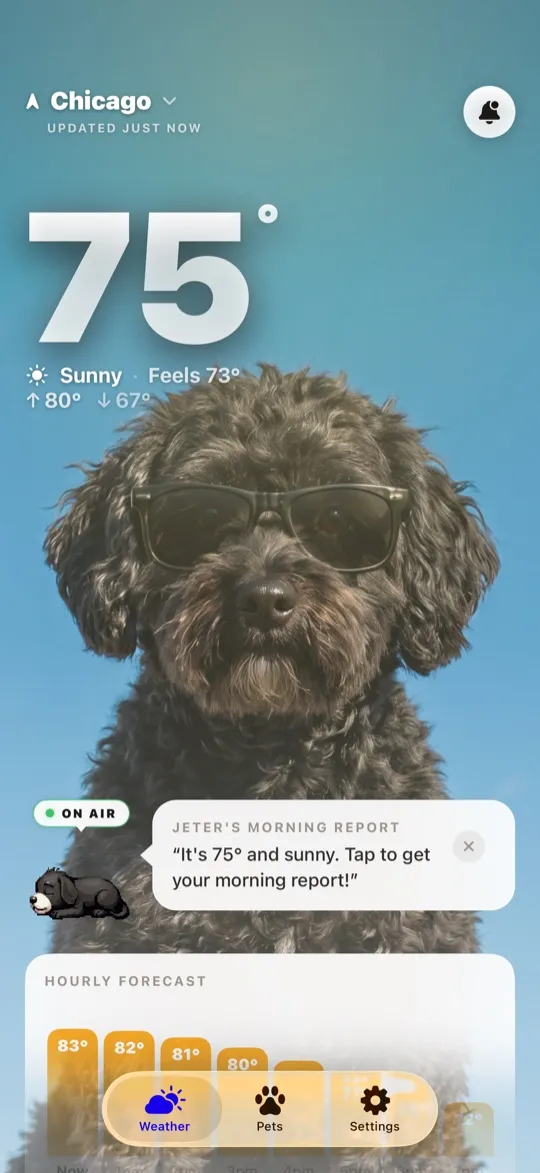
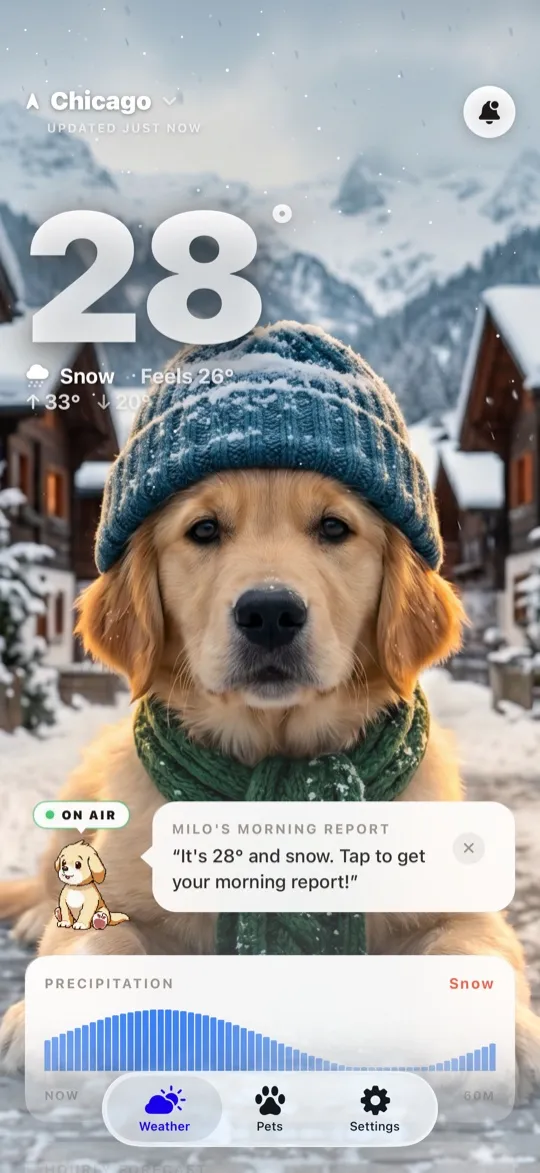
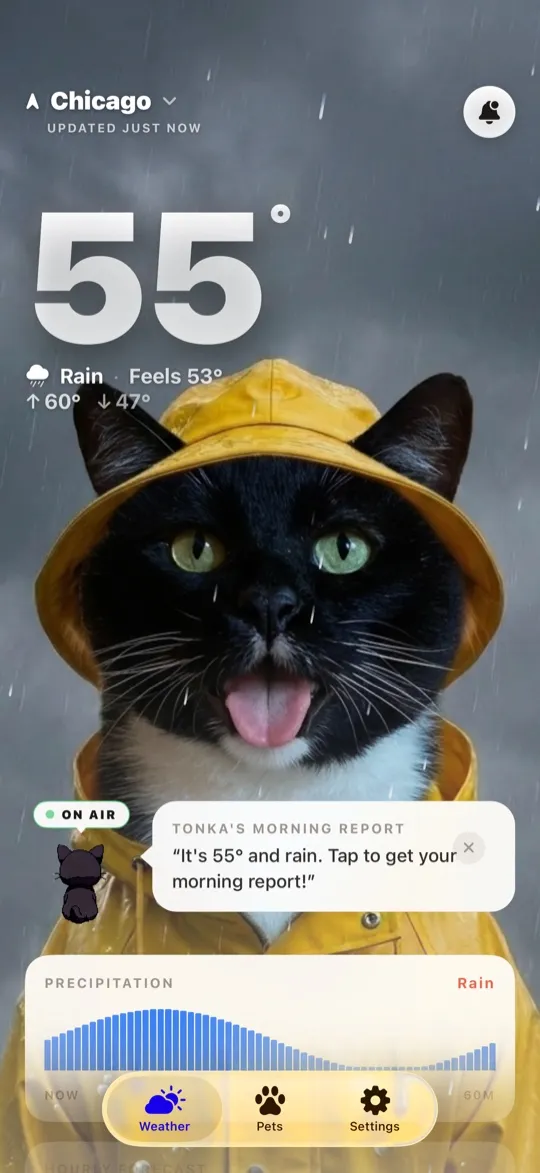
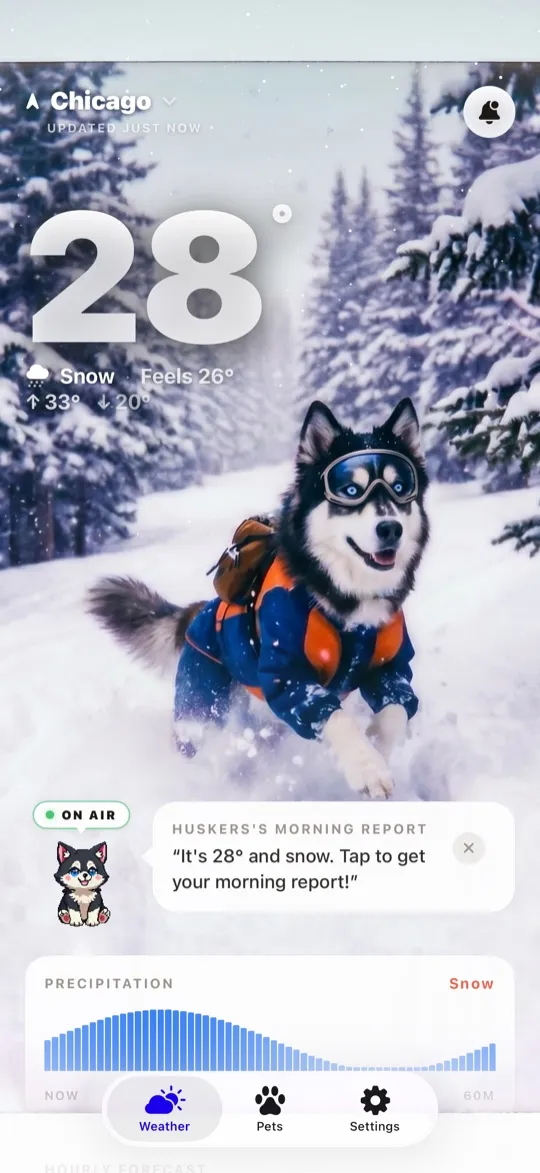
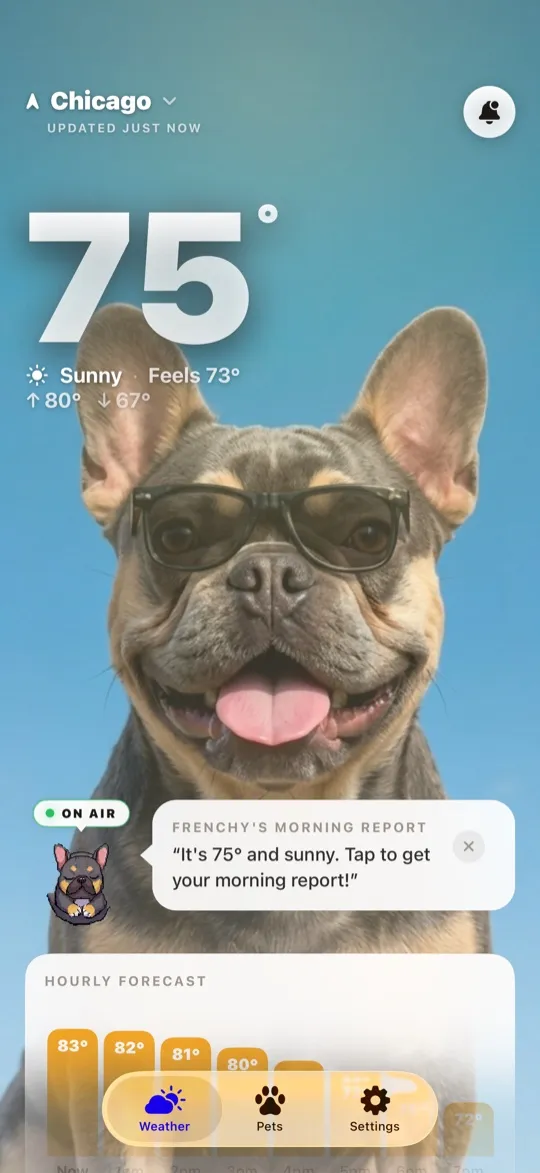
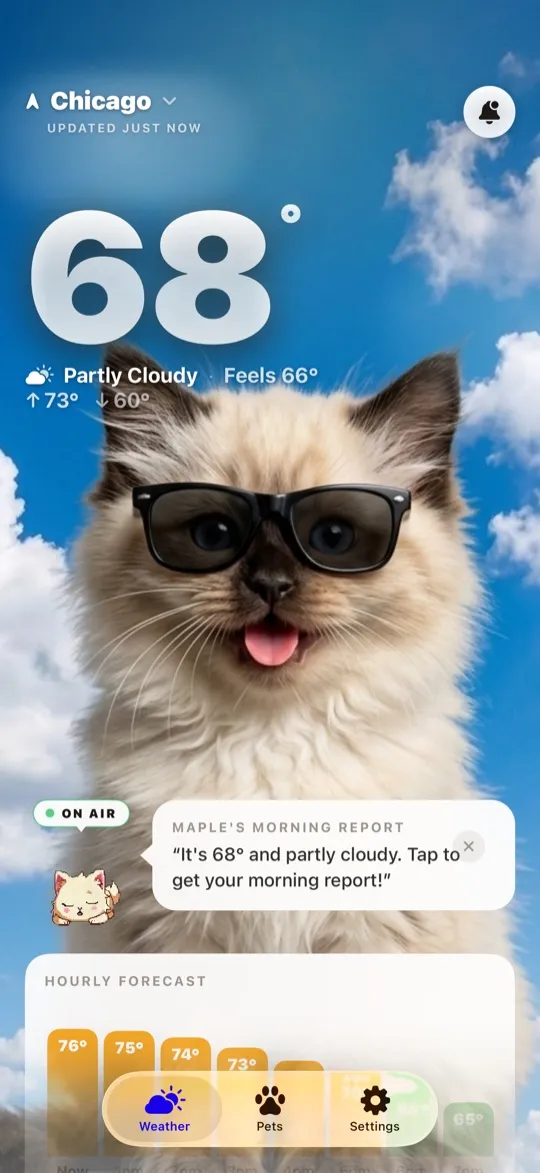
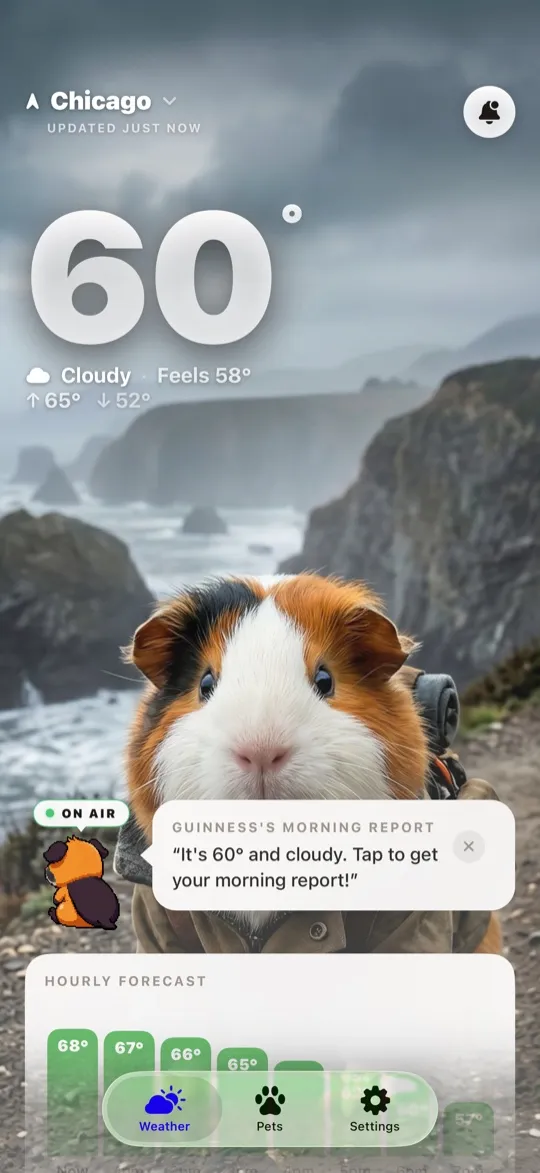
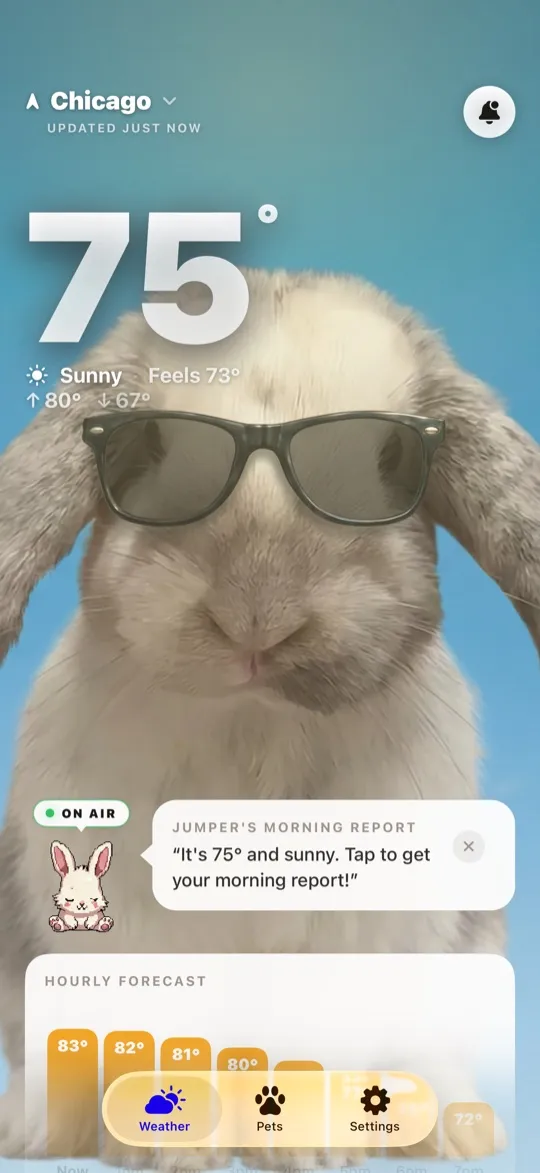
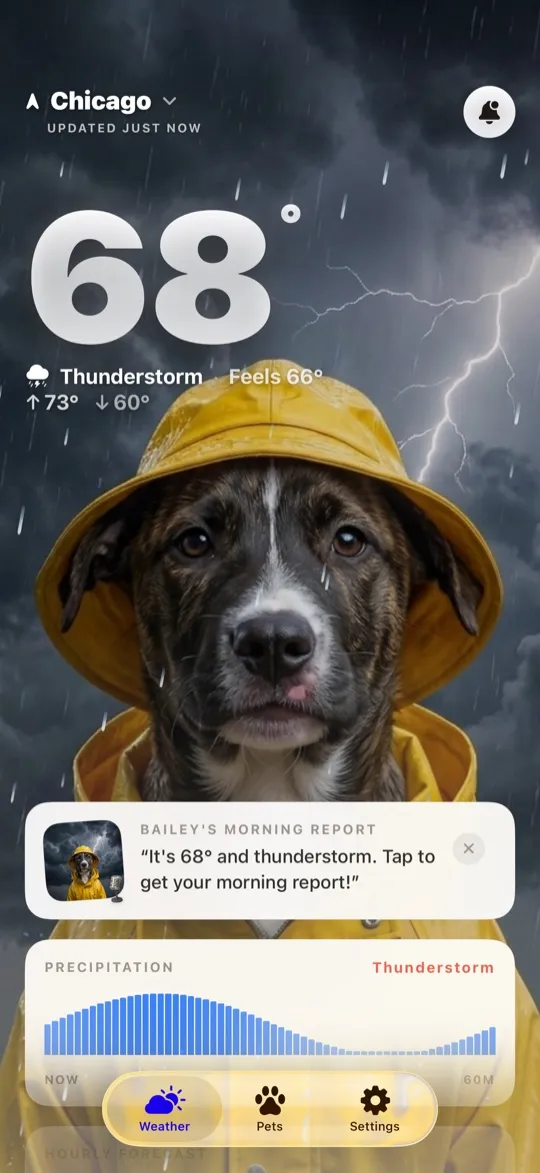
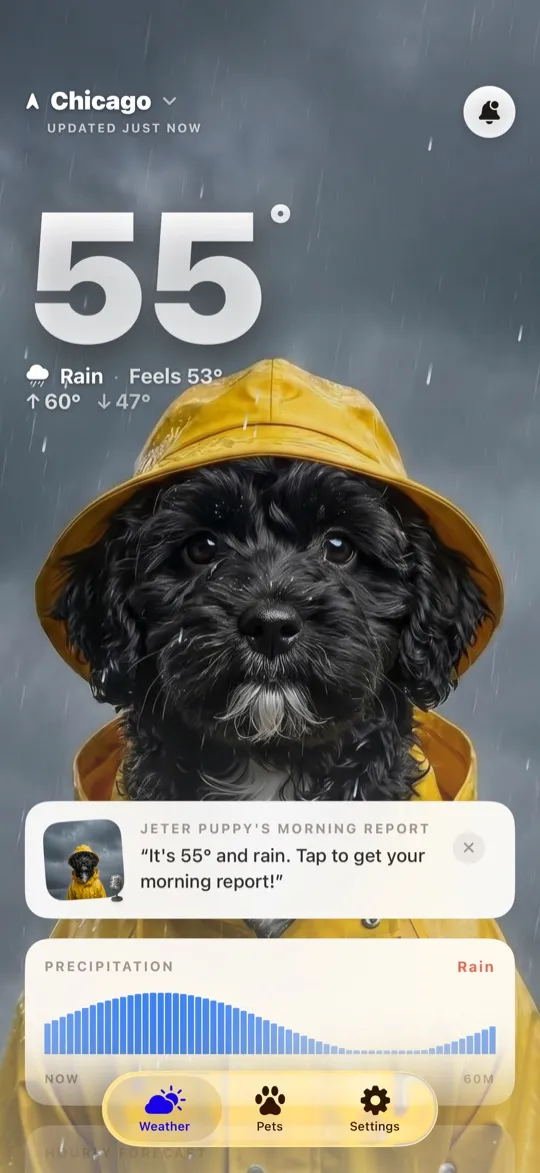
The evening walk is a scheduling problem before it is a gear problem, and sunset moves faster than anyone plans for. WeatherPets shows you the day's conditions and the hours worth walking, delivered by your own pet. Download WeatherPets and pick your pet.
Do not rely on the car's technology
Pedestrian automatic emergency braking is now common, and it genuinely works in daylight. At night on an unlit road, the picture changes sharply. The Insurance Institute for Highway Safety reports that when researchers isolated pedestrian crashes occurring at night on roads without streetlights, there was no difference in crash risk between vehicles that had the feature and vehicles that did not.
Their conclusion was that systems performing better in the dark would deliver a much larger benefit. Until they do, the sensor you are relying on is a person's eyes, and the only input you control is how much light you give them.
The three weather conditions that make it worse
Rain. Beyond killing your reflectives, wet asphalt behaves like a mirror. Headlight beams scatter and bounce, oncoming glare goes up, and lane markings vanish. Drivers see less and are working harder. Add distance from the kerb and shorten the walk.
Fog. Fog scatters light back at its source, which is why high beams make it worse rather than better, and it also swallows an LED at surprisingly short range. Fog is the one night condition where the honest answer is often to skip the road route entirely and stay somewhere with no traffic.
Cold and ice. A dark winter evening stacks two problems. Braking distances go up on a cold or icy surface, so the seconds you calculated above get longer for the driver. And you are in gloves and layers with less feel on the leash and slower reactions of your own. The American Veterinary Medical Association's cold weather guidance and the ASPCA's winter safety tips both cover the paw and antifreeze side of the same walk.
The clock is the thing that changes
Nothing about your route gets more dangerous in autumn. What happens is that your unchanged 7pm walk quietly relocates from daylight into darkness while you are not paying attention.
Through September and October in the middle latitudes, sunset moves earlier by roughly a minute per day. That is about half an hour a month, and then the clocks change and take another hour in a single night. A walk that was comfortably lit in late August is in deep twilight by early October and fully dark by November, and at no point did it feel like a decision.
Two habits fix this. Check the sunset time rather than the wall clock, and put the visibility gear on the leash hook rather than in a drawer, so it is on the dog by default from September onward instead of when you remember. The same forward-planning habit that makes weather-based walk scheduling work applies here.
The short version
- Light on both of you. An LED collar or harness light on the dog, and something on you as well. The dog is lower and further into the road.
- Reflective as the backup layer, on moving parts, and assume it is offline in rain.
- Short leash near roads. A retractable at full extension can put your dog well into a traffic lane before you can react.
- Walk facing traffic where there is no sidewalk, with the dog on the side away from the road.
- Carry a real torch, aimed at the ground. It shows you glass, ice and wildlife, and it makes you unmistakable.
- Assume you have not been seen until a car has visibly slowed. Every fatality statistic on this page belongs to somebody who assumed otherwise.
Frequently asked questions
Is it safe to walk a dog in the dark?
It is routine and millions of people do it, but the risk profile is genuinely different. Roughly three out of four US pedestrian fatalities occur in dark conditions, even though only about a quarter of travel happens after dark. The fix is not to stop walking, it is to be seen much earlier than you think you need to be: active light on both of you, a short leash, and a route with sidewalks.
Is reflective or LED better for a night dog walk?
Use both, because they fail in different situations. Reflective material is passive: it only lights up when a headlight hits it, so it does nothing for a driver approaching from an angle and very little in rain, which scatters the returning light. An active LED emits its own light and is visible from any direction and in weather. Reflective is your backup, LED is your primary.
Does rain make reflective gear less effective?
Yes, substantially. Retroreflective fabric works by bouncing light straight back toward its source, and a film of water on the surface refracts that light away instead. Wet roads also scatter headlight beams and throw glare at drivers. On a rainy night, treat your reflective strips as close to decorative and rely on active lights.
Will a car's automatic emergency braking see my dog at night?
Do not count on it. IIHS research found that when they looked only at pedestrian crashes at night on roads without streetlights, there was no measurable difference in crash risk between vehicles with pedestrian automatic braking and vehicles without it. The technology works considerably better in daylight. On an unlit road, your own lights are the system.
What color should a dog wear at night?
Colour matters far less than light. In genuine darkness a driver's colour vision is minimal, so a bright orange coat is only marginally better than a black one until a headlight reaches it. What matters is an active light source and retroreflective material positioned where it moves, such as on the legs and harness, because motion is what human vision picks out first.
How early does it get dark for the evening walk?
Faster than most people plan for. Through September and October in the middle latitudes, sunset moves earlier by roughly a minute a day, so a walk that was comfortably in daylight in late August is happening in twilight six weeks later and in full dark after the clocks change. The useful habit is to check the sunset time rather than the clock.
Your daily forecast, delivered by your own pet.

A note on health: This article is general information, not a substitute for professional veterinary advice. If your dog is injured on a walk, or you have any serious or emergency health concern, contact your veterinarian right away. Our guidance draws on trusted veterinary sources, including those linked above.
