Walking Your Dog in the Rain: Gear, Safety, and Your Sanity
Your dog does not check the radar before deciding it is time to go out. Rain or not, the energy has to go somewhere, and for most dogs a wet walk beats a skipped one. Here is how to do rainy walks safely, comfortably, and without turning your hallway into a swamp afterward.
Key takeaways
- Ordinary rain is fine for healthy adult dogs. The AKC's advice is to keep the routine rather than skip it.
- Cold rain is the real problem. Wet fur loses most of its insulation, so 45F drizzle chills far faster than a dry 45F day.
- Thunder is a hard stop. If you can hear it, you are close enough to be struck.
- Visibility, not water, is the biggest hazard. Reflective gear on both ends of the leash.
- Dry between the toes. Damp fur between the pads is where irritation and yeast start.
Is it safe to walk a dog in the rain?
Usually, yes. Healthy adult dogs handle ordinary rain just fine, and plenty of them love it. The American Kennel Club's advice on rainy and snowy walks is to keep the routine going in bad weather rather than abandoning it, because the exercise and mental stimulation matter more than dry fur.
The caveat is cold rain. Wet fur loses most of its insulating power, so a 45 F drizzle chills a dog much faster than a dry 45 F day. Small dogs, short-coated breeds, seniors, and puppies get cold quickest, so on cold, wet days keep their outings short, put a jacket on them, and dry them off promptly when you get home. If your dog starts shivering or hunching mid-walk, head back.
| Conditions | Healthy adult dog | Small, thin-coated, senior or puppy |
|---|---|---|
| Light rain, mild | Go, normal walk | Go, jacket optional |
| Steady rain, mild | Go, dry off after | Jacket on, keep it shorter |
| Cold rain near 45°F (7°C) | Shorter walk, dry promptly | Brief only, jacket, dry immediately |
| Heavy downpour or flooded streets | Skip it, go indoors | Skip it |
| Thunder audible | Do not go out | Do not go out |
Check for thunder first
One hard rule before any rainy walk: make sure it is just rain. If thunder is in the forecast, wait it out. The National Weather Service's lightning safety guidance is blunt: if you can hear thunder, you are close enough to be struck, and no open sidewalk or park is a safe place to be. Your dog is even more motivated than you to skip that walk; many dogs hear the storm long before you do. A quick glance at the radar before you leash up saves you from being caught in the open half a mile from home.
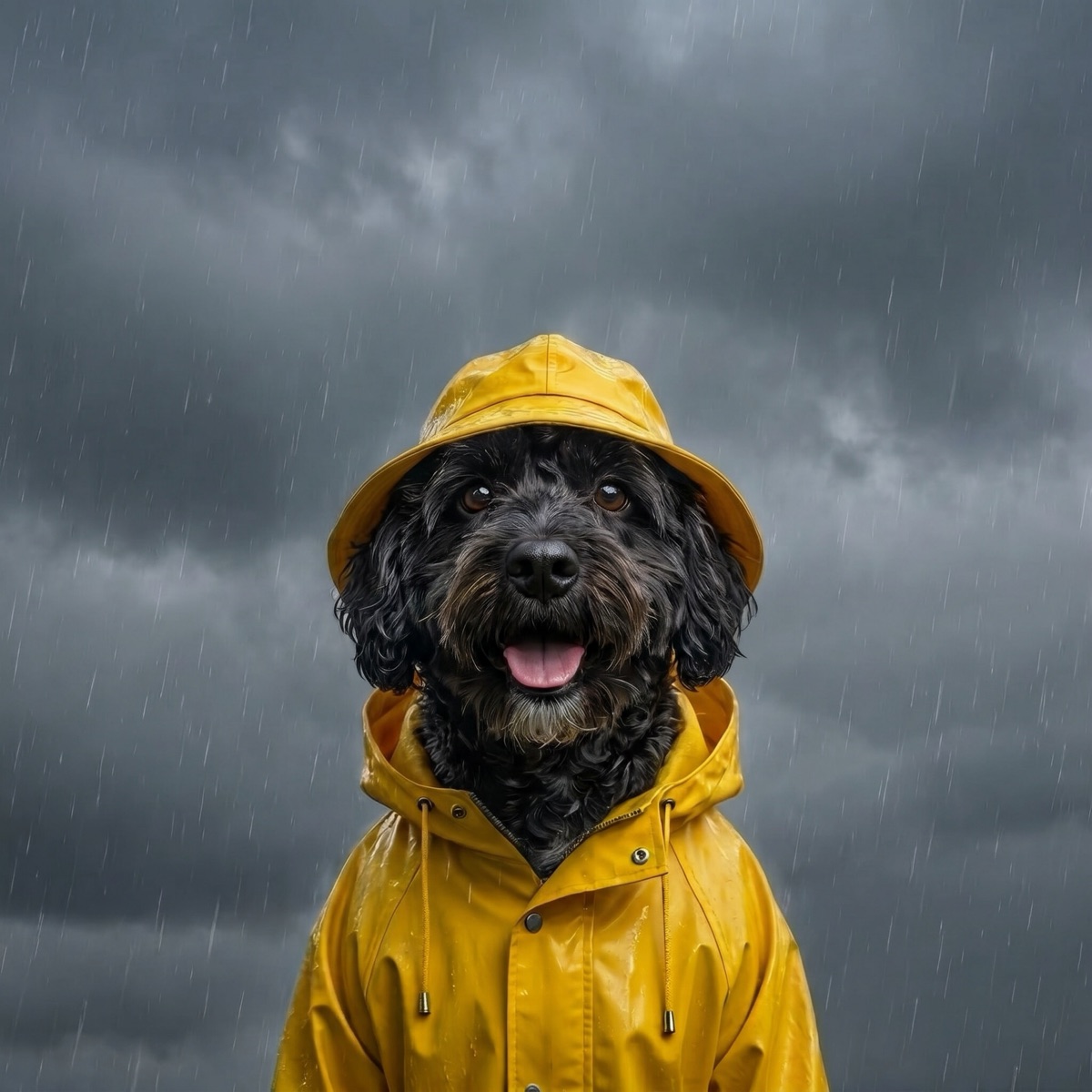
Visibility is the real hazard
The biggest danger on a rainy walk is not the water, it is drivers who cannot see you. Rain, fog on windshields, and early dusk stack together badly. Stack the odds back in your favor:
- Put reflective gear on both ends of the leash: a reflective jacket or collar for the dog, something bright or reflective for you.
- Add a small clip-on LED light to the harness for dusk and evening walks.
- Cross at corners and assume every car has not seen you.
- Skip roads with no sidewalk on heavy-rain days and stick to quieter streets or park loops.
Gear that makes rain walks pleasant
A good rain jacket is the single biggest upgrade, especially for thin-coated dogs and anyone who despises the wet-dog drying ritual. Look for coverage over the back and chest, a fit that does not restrict the shoulders, and reflective trim. We tested and ranked our favorites in the best dog rain jackets.
Beyond the jacket: a waterproof leash or one that dries fast beats soggy leather, and a towel staged by the door beats dripping through the house while you look for one.
Paw care after a wet walk
Wet pavement softens paw pads, and puddles collect grit, road oil, and lawn chemicals. When you get home, rinse or wipe paws and dry well between the toes, since damp fur between pads is where irritation and yeast like to start. The AKC's paw-cleaning guide covers the quick version: a shallow bowl of water, a soft towel, and thirty seconds of attention per paw. While you are down there, check for cuts or debris the puddles were hiding.
Then dry the rest of the dog, ears and armpits included. A damp undercoat that stays wet for hours is a fast track to hot spots and that unmistakable wet-dog smell settling into your couch.
When to call it and stay inside
Downpours, thunder, flooded streets, or a dog who genuinely hates rain: some days the walk is not worth it. Have an indoor backup ready so the energy still gets spent. Ten minutes of tug, a stuffed puzzle feeder, hide-and-seek with treats, or hallway fetch will take the edge off until the sky clears. If your dog turns into a maniac the moment the rain stops, that post-storm sprint is a real thing; we wrote about it in zoomies and weather.
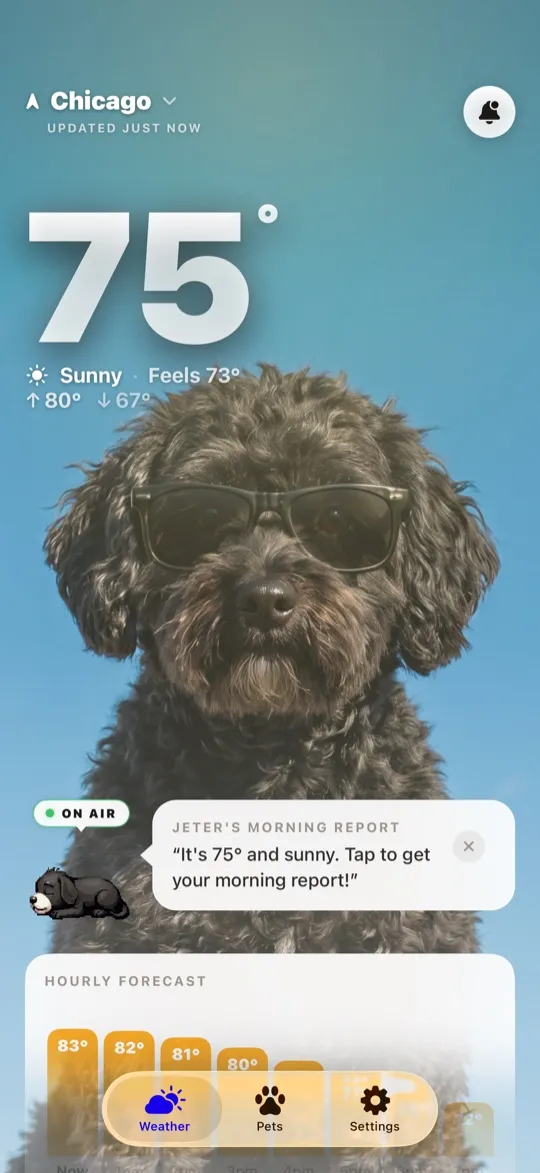
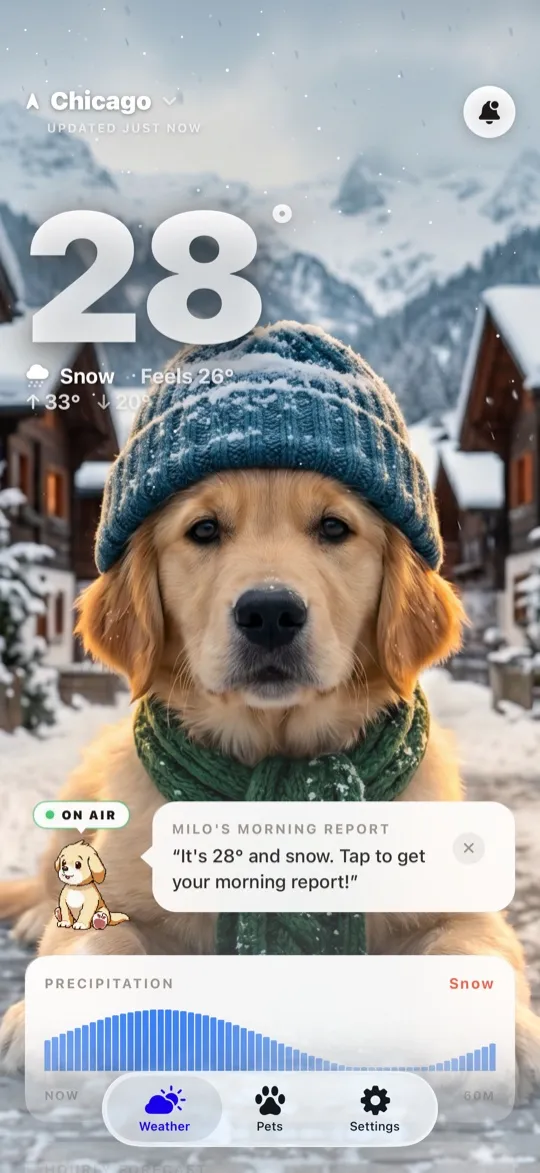
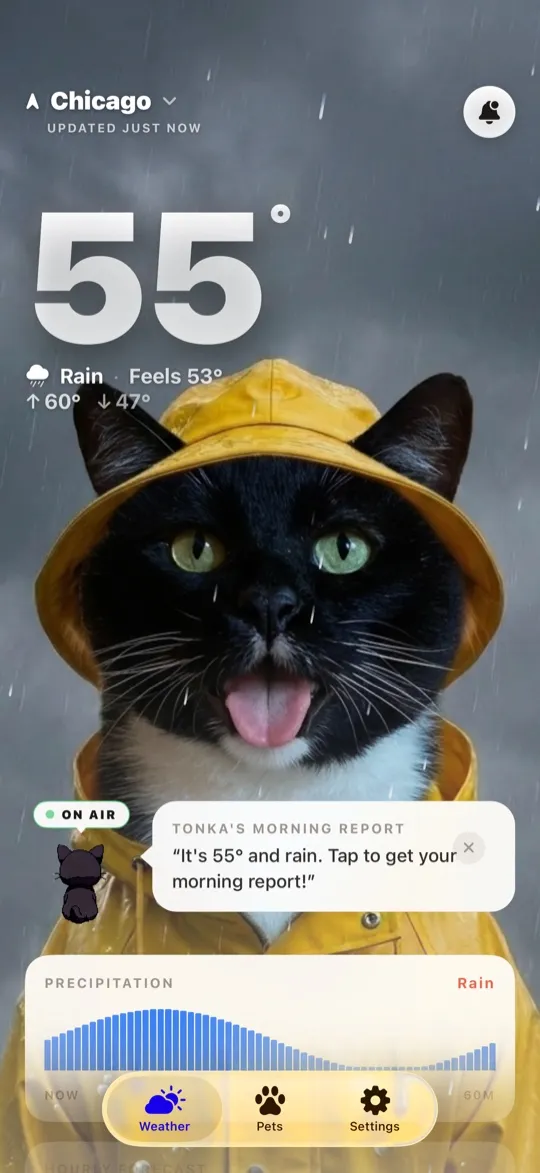
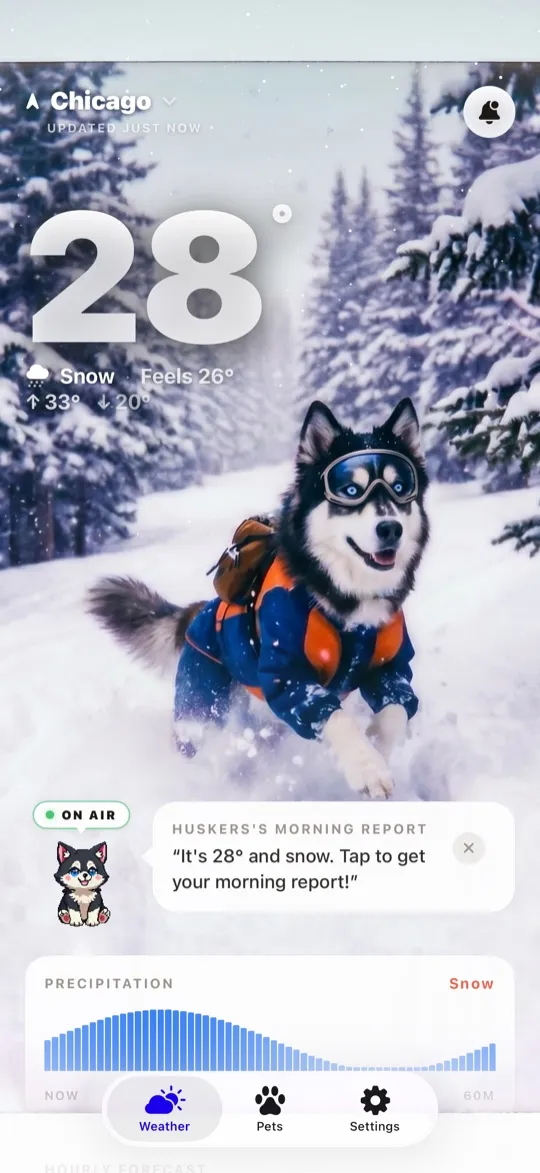
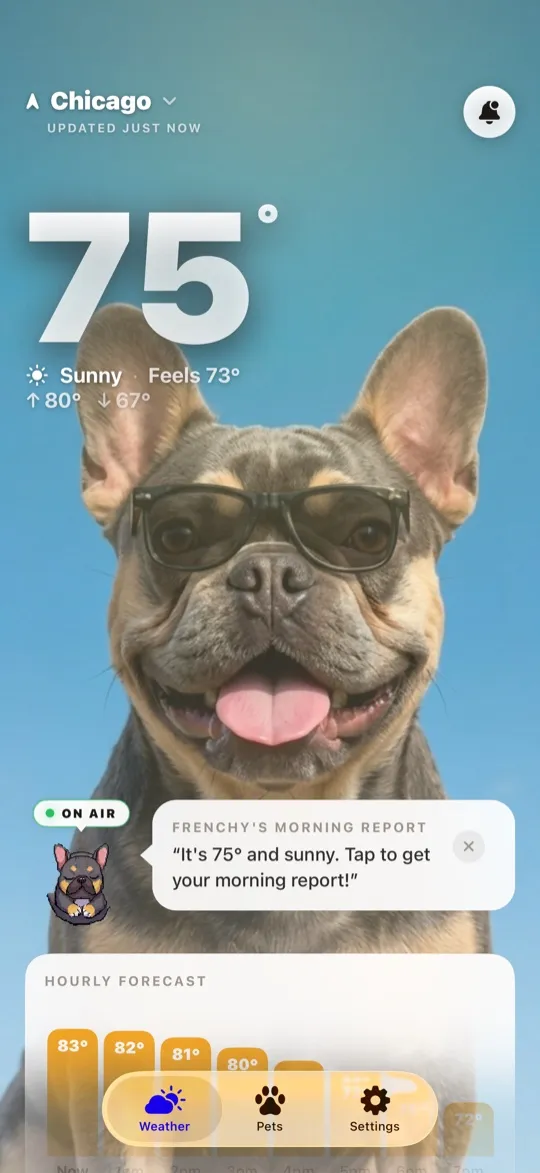
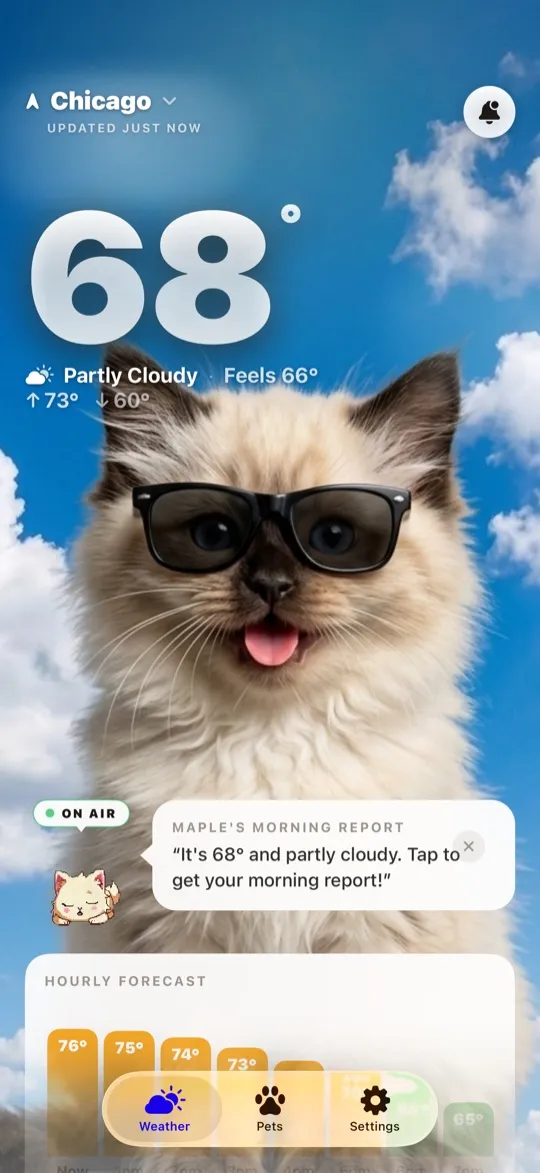
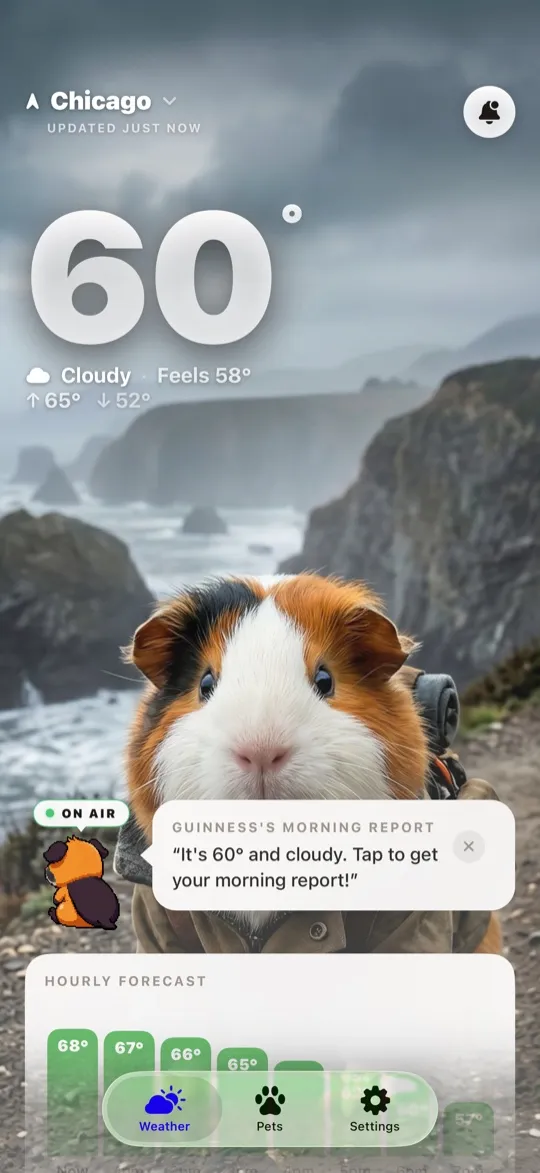
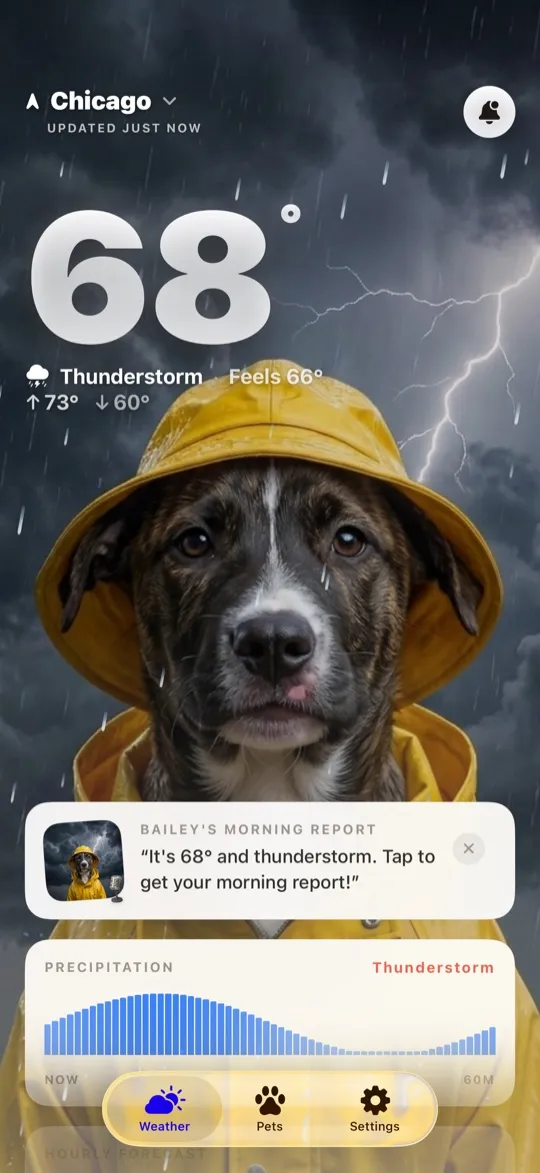
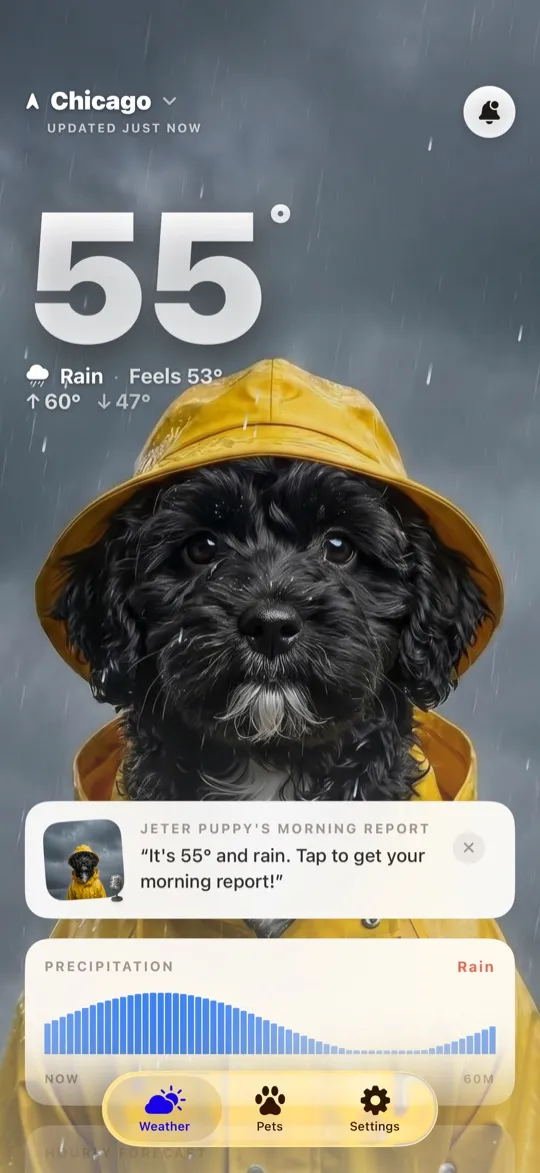
The trick to all of this is knowing what the next few hours actually look like, not just "rain today." That is where a pet-first forecast helps: WeatherPets has your own dog present the morning report, and the 10-day and hourly view make it easy to spot the dry window worth waiting for. We keep a full guide to adjusting your walk schedule around the weather if you want to build the habit properly.
Rain is not the enemy. Unpreparedness is. With a jacket, a towel by the door, and a two-second thunder check, a rainy walk becomes just another walk, and honestly, sometimes the best one of the week.
Frequently asked questions
Is it safe to walk a dog in the rain?
Usually yes. Healthy adult dogs handle ordinary rain fine, and the American Kennel Club's advice is to keep the routine going in bad weather because the exercise and mental stimulation matter more than dry fur. The real caveat is cold rain: wet fur loses most of its insulating power, so a 45 degree drizzle chills a dog far faster than a dry 45 degree day. Small dogs, short-coated breeds, seniors and puppies get cold quickest.
Should I walk my dog if there is thunder?
No. This is the one hard rule. The National Weather Service's guidance is blunt: if you can hear thunder, you are close enough to be struck, and no open sidewalk or park is a safe place to be. Check the radar before you leash up rather than getting caught half a mile from home. Your dog will likely hear the storm before you do anyway.
Do dogs need a raincoat?
Not all of them, but it is the single biggest comfort upgrade for thin-coated dogs, small dogs, and anyone who dreads the drying ritual. Look for coverage over the back and chest, a fit that does not restrict the shoulders, and reflective trim. Thick double-coated breeds usually shrug rain off on mild days and need one mainly when it is cold as well as wet.
How do I clean my dog's paws after a rainy walk?
Wet pavement softens paw pads and puddles collect grit, road oil and lawn chemicals, so rinse or wipe the paws and then dry carefully between the toes. The AKC's paw-cleaning guide describes the quick version: a shallow bowl of water, a soft towel, and about thirty seconds per paw. Check for cuts or debris while you are down there, then dry the rest of the dog including ears and armpits.
What if my dog refuses to walk in the rain?
Do not force it. Some dogs genuinely hate rain, and a miserable walk is not worth the argument. Have an indoor backup so the energy still gets spent: ten minutes of tug, a stuffed puzzle feeder, hide-and-seek with treats, or hallway fetch. Then watch for the post-rain sprint, because plenty of dogs make up for it the moment the sky clears.
Deciding whether to go is the hard part of every walk. The Pet Safety Score in WeatherPets answers it with one 0 to 100 number for your specific pet, plus the best and worst walk windows for the next 24 hours. Meet your WeatherPet on the App Store.
Your daily forecast, delivered by your own pet.