How to Check a Pet Food Recall in Two Minutes
Search this question and you get a list of last month’s recalls, which is exactly as useful as last month’s weather. What you actually want is a procedure: the two official places to look, the one number on the bag that decides everything, and the habit that means that number still exists when a notice lands. Here is the version that does not go stale.
Key takeaways
- Two sources, not one: the FDA animal and veterinary recalls list and the AVMA pet food recall page. Check both.
- Match on brand, exact product, size and lot code. Recalls are usually limited to specific varieties, sizes and production runs.
- Lot codes have no standard format. You cannot decode one, only read it accurately, so photograph it the day you open the bag.
- The FDA says store dry food below 80°F and in its original bag. Decanting into a tub throws away the lot code.
- In 85 of our 100 cities the hottest month already averages above that 80°F limit outdoors, before you account for a closed garage.
The quick answer
Two minutes, two sources, one number off the bag.
- Find the lot code on your bag or can, and photograph it.
- Open the FDA's animal and veterinary recalls and withdrawals list. It is searchable by brand, product, reason and company.
- Cross-check the AVMA's animal health hub, whose recalls and alerts tracker follows the same announcements.
- Match on brand, exact product, size and lot code. Three out of four is not a match.
That is the whole procedure and it does not go stale, which is why to bookmark this rather than a list of current recalls. Everything below is the detail that makes those four steps work, including the storage half that decides whether the lot code still exists when you need it.
The two official sources
Almost everything that ranks for this question is a roundup of whatever was recalled last month. Useful for a week, useless after that, and it will not answer the question you have, which is about the bag in your kitchen.
The durable answers are two:
- FDA. The primary source. Its animal and veterinary recalls list is the official record, newest first, filterable by brand, product, reason and company, with an archive and a spreadsheet export. It marks recalls "terminated" once all reasonable efforts to remove the product have been made, which tells you whether one is still live.
- AVMA. The veterinary profession's tracker of the same announcements. Worth a second look because a recall occasionally surfaces in one place before the other.
Check both. Fifteen extra seconds, and the failure mode of checking one is silent.
One clarification, because it changes how alarmed to be: a recall is a company action to remove a product from the market, and the FDA describes three types. A voluntary recall for a labelling error and one for confirmed contamination are both "a recall". Read the stated reason, not just the listing.
Reading a lot number
This is where most two-minute checks fail, because there is no standard format. The FDA's own page on saving your pet food lot number puts it plainly: a lot number can be a long or short string of numbers and letters, it does not have a set number of characters, it is not in one particular spot on the package, and it may or may not be labelled "LOT" at all. You cannot decode one. You can only find it and read it accurately.
| Format | Where to look | What to record |
|---|---|---|
| Dry food bag | Printed or ink-jetted on the back or the bottom gusset, often near the best-by date | The full code, the best-by date, and the bag size |
| Canned food | Stamped or embossed on the bottom or the lid rim | The full stamp, including any letters |
| Treats and pouches | On the back seam or the crimp at the top | The code and the UPC barcode number |
The FDA's advice on where to look matches the table: bottom or side of a bag or pouch, or a few inches from the top, and usually the bottom of a can. AAFCO's guide to reading a pet food label covers the rest. Three rules save the whole exercise:
- Photograph it the day you open the bag. This is the FDA's own suggestion, which it calls the least messy option. Recall announcements arrive weeks later, by which time the bag may be gone or the ink rubbed off.
- Record the size too. Recalls are frequently limited to one bag size or one production run, so "the same brand" tells you almost nothing.
- Do not guess an ambiguous character. Zero and the letter O, one and the letter I. If it is not legible, call the manufacturer rather than deciding you are fine.
Heat and storage: the weather half nobody mentions
The FDA's tips for safe handling of pet food and treats give two instructions that matter here. Store dry pet food in a cool, dry place at a temperature below 80°F. And store it in its original bag, top folded down tightly, rather than tipping it into a bin.
Most people break both, and the second one is the reason a recall check fails. The original bag is where the lot code lives. Decant the food into a plastic tub and you have thrown away the only piece of information a recall notice can be matched against. If you prefer the tub, the fix is free: put the whole bag inside it.
Tufts' veterinary nutrition team makes the same point in its guide to storing pet food: the original bag gives you quick access to the manufacturer, exact product, UPC code, lot number and best-by date in the event of a recall. It also notes that heat and humidity turn fats rancid and give mould and bacteria the conditions they want.
The 80°F line is where our own data comes in, because the usual storage spots are a garage, a porch or a utility room, none of them climate controlled. We checked the hottest month's average high for the 100 cities in our climate dataset:
| Cities out of 100 | Condition |
|---|---|
| 85 | Hottest month averages above the FDA's 80°F storage limit |
| 61 | Hottest month averages above 85°F |
| 37 | Hottest month averages above 90°F |
| 46 | Spend four months or more of the year above 80°F |
| 15 | Never average above 80°F in any month |
Those are outdoor air temperatures in the shade, and an enclosed garage in the sun runs hotter still. In most of these cities a bag of kibble in the garage is above the FDA's limit for a good part of the year, not occasionally. If the storage spot is not somewhere you would happily sit for an afternoon, it is not somewhere to keep food.
Heat does not cause a recall. It degrades fats and makes an already-marginal bag worse faster, which is a separate problem from contamination and worth solving anyway. And a bag stored somewhere hot and damp is exactly the bag whose printed lot code goes illegible. If you are moving things around for the summer anyway, our heat wave pet survival guide is the wider checklist.
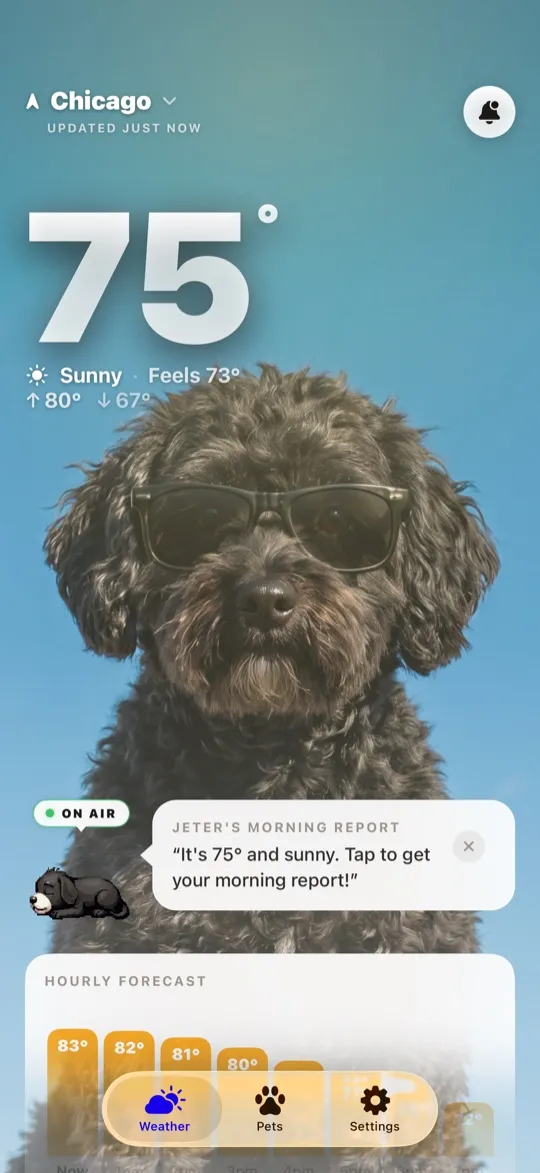
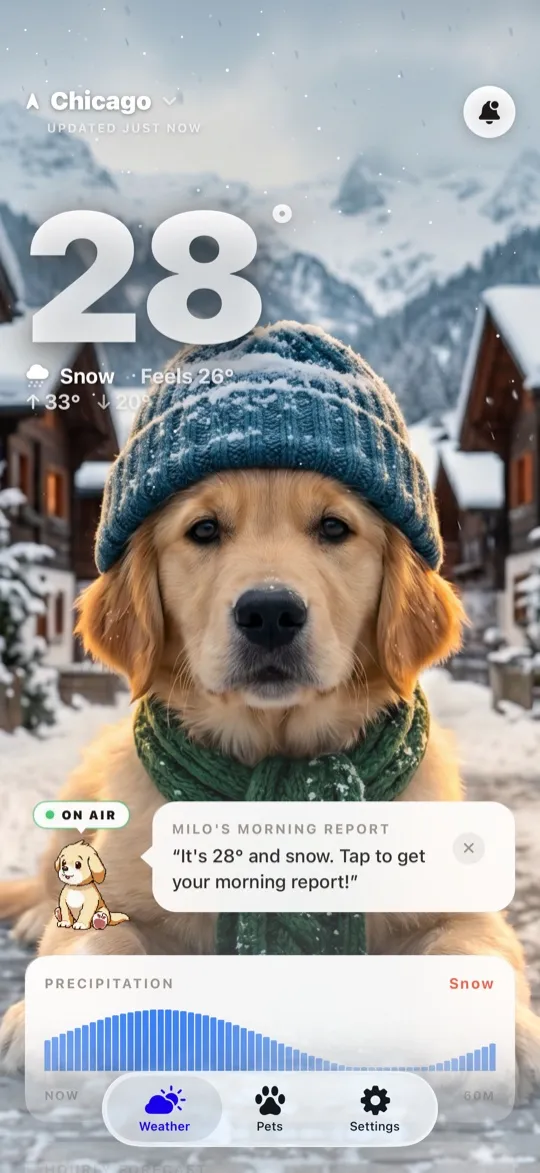
If your food lives in the garage, the day to move it is the first genuinely hot week, which the forecast gives you several days of warning about. WeatherPets puts the week ahead on your home screen with your own pet delivering it. Meet your WeatherPet on the App Store.
The two minute check, step by step
- Get the bag, not the bin. Photograph the front label, the lot code and the best-by date.
- Search the FDA list by brand. If nothing appears, that is a genuine negative for the official record.
- If your brand appears, read the product description carefully. A recall almost always names a specific variety, size and lot range. Different flavour, size or lot means not recalled.
- Check the AVMA page for the same brand. Fifteen seconds, and it catches the case where one source is ahead of the other.
- If it is ambiguous, call the number on the bag. Manufacturers staff a line for exactly this, and they can resolve a lot code faster than you can.
Do it once a season rather than every time a headline appears, and once immediately whenever you open a new bag from a new production run. That cadence catches nearly everything without turning your kitchen into a compliance department. If you would rather not remember, the FDA lets you subscribe to its recall announcements by email, which turns the whole thing into an alert you can ignore until it matters.
What to do after a match
If your lot matches, act in this order:
- Stop feeding it and put it somewhere the animals cannot reach. Do not bin it yet.
- Keep the packaging and the lot code. This is the evidence, for the refund process and for any report you make.
- Call your vet if your pet has eaten it and is showing anything unusual. Take the notice and the bag, because the stated reason tells your vet what to look for. The same logic applies to what to do when your dog eats something it should not have: bring the thing itself.
- Follow the notice's own instructions for return or disposal, which vary by recall.
- Report it. The FDA takes consumer reports through its how to report a pet food complaint process, and those reports are part of how problems get found in the first place.
- Wash everything. Bowls, scoop, container, hands. Contamination recalls frequently involve organisms that transfer to people.
And one thing not to do: do not switch abruptly to whatever is in the cupboard if you can help it. A sudden diet change on top of everything else is its own problem, and worth mentioning when you call the vet.
Keeping a few days of an alternative food in the house solves several problems at once, including the one where a storm takes the shops offline. Rotating a few days of pet food into your storm kit handles both, and our power outage pet care plan covers the rest of that pantry.
Frequently asked questions
Where is the official pet food recall list?
The FDA maintains the official record on its animal and veterinary recalls and withdrawals page, newest first and searchable by brand, product, reason and company, with an archive and a spreadsheet export. The AVMA keeps a parallel tracker of the same announcements, worth checking as a second source. Everything else, including news roundups and retailer notices, is downstream of those two.
How do I check if my dog food was recalled?
Get the bag rather than the container, find the lot code and the best-by date, then search the FDA recalls list for your brand and read the product description carefully. A recall almost always names a specific variety, bag size and lot range, so a different size or lot of the same brand is not a match. Cross-check the AVMA page, and if the code is ambiguous, ring the number on the bag.
What should I do if my pet ate recalled food?
Stop feeding it, keep the packaging and the lot code rather than binning them, and call your veterinarian if your pet is showing anything unusual, taking the notice with you so they know what it was recalled for. Follow the notice for return or disposal, report it to the FDA through its pet food complaint process, and wash bowls, scoops and hands, because contamination recalls often involve organisms that transfer to people.
Can I decode a pet food lot number?
No, and that is worth knowing before you try. The FDA says a lot number has no set number of characters, sits in no particular spot on the package, and may not even be labelled "LOT". The useful skill is finding it and recording it accurately: the bottom or side of a bag, usually the base of a can. Photograph it rather than trusting your handwriting.
Does storing pet food in the garage matter?
It does, for two reasons. The FDA says to keep dry pet food in a cool, dry place below 80 degrees Fahrenheit, and in most climates a closed garage is above that for months at a time. Second, garages are where people decant food into bins, which throws away the bag carrying the lot code. Keep the bag, and put the bag inside the bin if you like the bin.
Your daily forecast, delivered by your own pet.

A note on health: This article is general information, not a substitute for professional veterinary advice. If you are worried about anything your pet has eaten or any serious or emergency health concern, contact your veterinarian right away. Our guidance draws on trusted veterinary and government sources, including those linked above.
