Dog Ate a Mushroom in the Yard? What to Do Now
A yard that has been empty all summer can produce a dozen mushrooms overnight, two days after a soaking rain. Most are harmless. A few are among the most poisonous things on earth, and they smell faintly of fish, which is exactly why your dog went for one. Here is the timeline that decides the outcome, and what to do in the hours when your dog still looks completely fine.
Key takeaways
- Mushrooms are the fruiting body of a fungus that is already living in your lawn. Rain plus cooling ground is the trigger, and they can appear overnight.
- You cannot identify a safe mushroom by looking at it, and neither can your vet. Treat every ingestion as toxic until proven otherwise.
- The most dangerous ones smell fishy, which is exactly why dogs seek them out.
- Amatoxin poisoning has a false recovery phase. Your dog gets sick, then appears to improve, while the liver is failing underneath. This is what kills.
- Do not wait for symptoms. Call your vet the moment you suspect it, and bring a specimen in a paper bag, not plastic.
Why they appear right after rain
A mushroom is not a plant that grows over weeks. It is the fruiting body of a fungus whose real organism, a fine web of threads called mycelium, has been living in your soil, mulch or lawn thatch all along, quietly eating dead wood and organic matter.
That fungus fruits when two conditions land together: enough water, and a temperature drop. A soaking rain followed by cool nights is precisely the signal, which is why a yard that has looked empty all summer can produce a dozen mushrooms overnight in late August or September. They do not grow in slowly. They push up fully formed, usually within 24 to 72 hours of the rain.
This is genuinely useful information, because it turns an unpredictable hazard into a forecastable one. Rain in the forecast means a yard check two days later. That is the whole protocol, and it is far more effective than trying to remember to look.
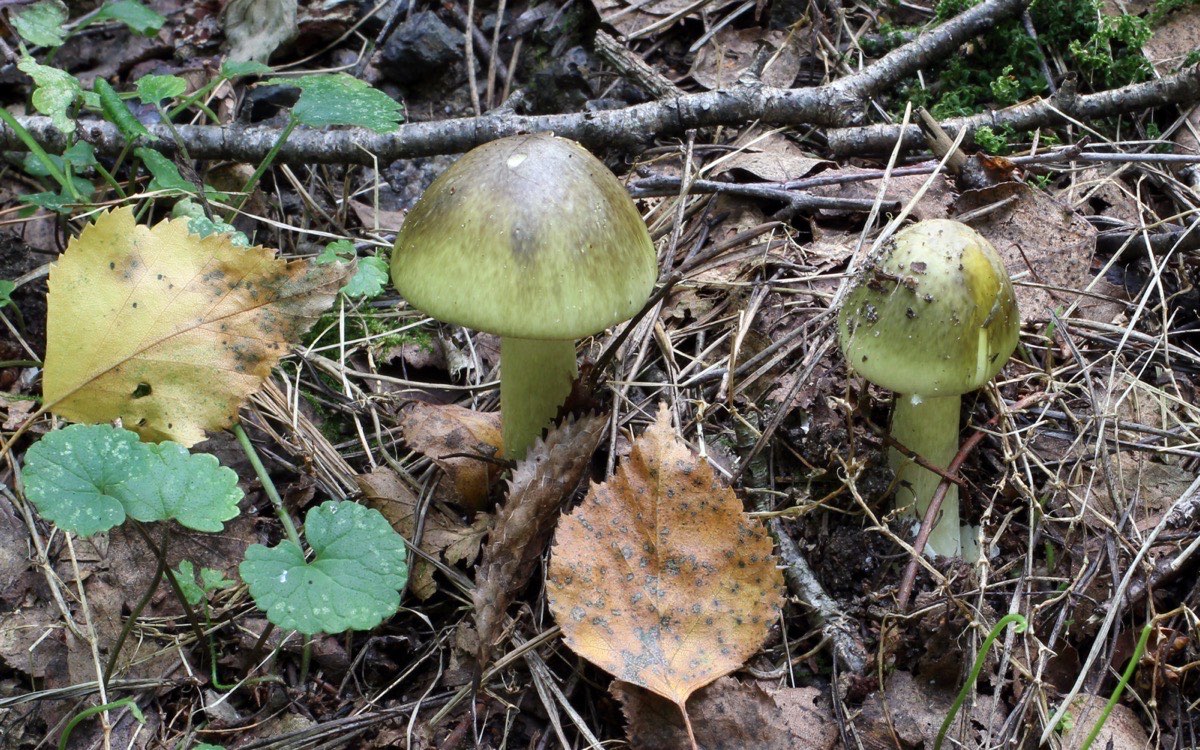
The ones that actually matter
The reassuring line you will read is that the large majority of wild mushrooms are not dangerous. That is true and it is also useless, because the small minority that are dangerous include some of the most toxic organisms on earth, and they grow in ordinary suburban yards.
The North American Mycological Association, which runs the volunteer network that identifies specimens for poisoning cases, names the species that turn up repeatedly in dog poisonings:
- Amanita phalloides (the death cap) and Amanita ocreata (western destroying angel), the amatoxin producers. These cause acute liver failure.
- Galerina marginata, Conocybe filaris and Lepiota subincarnata, small brown mushrooms that also contain amatoxins. Galerina grows on wood, including landscape mulch.
- Inocybe and Clitocybe species, which contain muscarine.
- Amanita muscaria and Amanita pantherinoides, containing ibotenic acid and muscimol, which produce a deep coma-like sleep.
- Scleroderma species, the pigskin puffballs, which NAMA notes are lethal specifically to dogs.
And here is the detail that explains why dogs are over-represented in mushroom poisoning cases. NAMA states that dogs are particularly attracted to several of these, including the death cap and the Inocybe species, because of their fishy odor. This is not a dog eating something at random. The most dangerous mushrooms in the yard are the ones that smell most like food.
Four toxin groups, four different clocks
Onset time is the single most misleading thing about mushroom poisoning, because fast symptoms usually mean a better outcome and slow symptoms often mean a worse one. That is the reverse of how we instinctively judge an emergency.
| Toxin group | Onset | What you see | The real danger |
|---|---|---|---|
| Gastrointestinal irritants | 15 minutes to 6 hours | Vomiting, diarrhoea, drooling, belly pain | Dehydration. Usually the least severe group |
| Neurotoxic (muscarine, muscimol) | 30 minutes to 6 hours | Weakness, disorientation, tremors, staggering, coma-like sleep | Dramatic but often survivable with supportive care |
| Hepatotoxic (amatoxins) | 6 to 24 hours | Severe GI signs, then apparent recovery, then jaundice and collapse | Acute liver failure. The delay is the danger |
| Nephrotoxic | 12 hours to a week or more | Increased thirst and urination, vomiting, lethargy | Kidney failure, often diagnosed late |
Onset times here follow VCA Animal Hospitals' clinical summary. Read the amatoxin row twice, because it contains the thing that gets dogs killed.
The false recovery
Amatoxin poisoning follows a pattern that is almost designed to fool an owner.
- Hours 0 to 6: nothing. The dog is completely normal. Any owner watching for a reaction concludes nothing happened.
- Hours 6 to 24: severe vomiting and diarrhoea, often with belly pain. This looks like a bad stomach upset, and plenty of dogs have bad stomach upsets.
- The next day: the dog appears to get better. The vomiting stops. Everyone relaxes. VCA describes it plainly: some pets appear to improve for a while, but the underlying liver failure progresses.
- Days two to four: jaundice, weakness, lethargy, bleeding problems, sometimes coma. By now the liver damage is extensive.
The window where treatment does the most good is the first one, the one where the dog looks completely fine. That is why the advice from every veterinary toxicology source is the same and sounds excessive until you understand the timeline: do not wait to see whether your dog gets sick. Early decontamination dramatically improves the odds, and it has to happen before there is anything to see.

What to do if your dog eats a mushroom
- Get whatever is left out of their mouth and look around for the rest of it.
- Call your vet or an animal poison control line immediately. The ASPCA Animal Poison Control Center operates 24 hours. Do this before you start searching the internet for identification, because the clock started when they swallowed.
- Collect a specimen properly. Take one or two intact mushrooms from the same spot, including the base of the stem, which is often buried and carries features needed for identification. Put them in a paper bag, never plastic, because plastic traps moisture and the specimen turns to mush within hours. Refrigerate it. If your dog vomited, save that too.
- Photograph the growing site before you pick, showing the cap, the underside and what it was growing on or near. Growing on wood, on soil, or under a particular tree species are all identifying details.
- Do not induce vomiting unless a vet tells you to. With a neurotoxic mushroom, a dog that is already staggering or sedated can inhale the vomit.
- Do not give food, milk or home remedies. They do not neutralise anything and can complicate the decontamination your vet is about to attempt. PetMD's vet-reviewed overview of mushroom poisoning walks through what treatment actually involves.
- Tell the vet the timeline honestly, including "I am not sure, it might have been this morning." An uncertain time still shapes treatment.
One more thing worth knowing: NAMA specifically warns that the administration of atropine can worsen outcomes in Amanita muscaria and Amanita pantherinoides cases. That is a veterinary decision, not yours, but it is a good illustration of why identification genuinely changes treatment and why saving the specimen matters.
The simplest habit here is to tie the yard check to the rain rather than to the calendar, and to check two days after the soaking rather than during it. Download WeatherPets and pick your pet.
A yard protocol that actually works
You cannot eradicate the fungus, because the mycelium lives underground and removing mushrooms is like picking apples off a tree. What you can do is remove the fruiting bodies faster than your dog finds them.
- Sweep the yard two days after any real rain. Wear gloves, pull mushrooms out including the base, and bin them in a sealed bag rather than composting them.
- Check the wet corners first. Shaded beds, the north side of the house, under decks, around irrigation heads, and anywhere the lawn stays damp.
- Watch your mulch. Wood mulch is fungal food, and Galerina marginata, an amatoxin producer, grows on decaying wood. Fresh mulch beds are a common fruiting site.
- Deal with buried wood. Old tree stumps and buried roots feed long-lived fungal colonies that fruit every wet season in the same spot.
- Improve drainage and reduce shade where you can. Dethatching, aerating and cutting back dense shrubs all reduce how often the ground stays wet enough to fruit.
- Leash up in mushroom season on walks too. Woodland trails, park edges and lawns under oaks are where death caps grow, since Amanita phalloides associates with tree roots, particularly oaks.
If your dog is a committed eater of things it finds, a solid "leave it" is worth more than any amount of yard management. It is also the same skill that protects them from blue-green algae and from picking up foxtails, so the training pays for itself three times over.
Frequently asked questions
My dog ate a mushroom in the yard. What do I do?
Call your vet or an animal poison control line straight away, before symptoms appear. Collect one or two intact mushrooms from the same spot, including the buried base of the stem, in a paper bag rather than plastic, and refrigerate them. Photograph where they were growing. Do not induce vomiting unless a veterinary professional tells you to.
How long after eating a toxic mushroom will a dog get sick?
It depends entirely on the toxin. Gastrointestinal irritants act in 15 minutes to 6 hours and neurotoxic species in 30 minutes to 6 hours. Amatoxins, the deadly ones, take 6 to 24 hours to produce any symptoms at all, and kidney-damaging species can take 12 hours to a week. A dog that is fine after an hour has not been cleared.
Why do mushrooms appear in my yard after it rains?
The fungus already lives in your soil or mulch as an underground network called mycelium. Mushrooms are its fruiting bodies, produced when moisture and a drop in temperature arrive together. That is why they appear suddenly, usually within 24 to 72 hours of a soaking rain, and why late summer and autumn are the busiest season.
Can I tell if a mushroom is poisonous by looking at it?
No, and neither can your vet. Identification of the dangerous species often depends on the base of the stem, spore colour and what the mushroom was growing on, and several deadly species look like unremarkable brown mushrooms. There is no reliable folk test. Treat any ingestion as potentially toxic.
Why do dogs eat mushrooms at all?
Smell. The North American Mycological Association reports that dogs are particularly drawn to several of the most dangerous species, including the death cap and Inocybe species, because they have a fishy odor. Unfortunately, the mushrooms that appeal to dogs are disproportionately the ones that can kill them.
Are mushrooms in the lawn dangerous to cats too?
Yes, but cats rarely eat them. NAMA notes cats seldom consume mushrooms, with some attraction to dried specimens of Amanita muscaria and Amanita pantherinoides. The risk is far lower than for dogs, though the toxins are just as dangerous if a cat does eat one.
Your daily forecast, delivered by your own pet.


A note on health: This article is general information, not a substitute for professional veterinary advice. If you are worried about a mushroom your dog may have eaten or any serious or emergency health concern, contact your veterinarian right away. Our guidance draws on trusted veterinary sources, including those linked above.
