Foxtails and Dogs: Signs, Removal, and Peak Season
Most summer hazards announce themselves. Foxtails do not. Your dog trots through a patch of dry roadside grass, you get home, everything looks fine. Three days later there is a swollen toe, or a head tilt, or a sneezing fit that starts out of nowhere and will not stop. Grass awns are the one common outdoor hazard that can enter a perfectly healthy dog, keep moving, and end in surgery. And the window when they are dangerous is set by the weather, not by the calendar. Here is how to read the grass, catch an awn early, and know exactly when tweezers are fine and when they absolutely are not.
Key takeaways
- The barbs are one-way. An awn can move forward through tissue and physically cannot back out.
- Green grass is not the problem. Awns turn dangerous when the plant cures and goes straw-colored.
- The ear canal is the most common landing site, at 51% of cases in a review of 182 grass awn patients.
- Paws, eyes and nose cover most of the rest. Cats are rarely affected, and when they are it is almost always the eye.
- A one-minute check after every dry-grass walk catches most awns while they are still loose in the coat.
- Once skin, ear, nose or eye is involved, it is a vet job. Pulling on an embedded awn snaps it and leaves the tip behind.
What a foxtail actually is
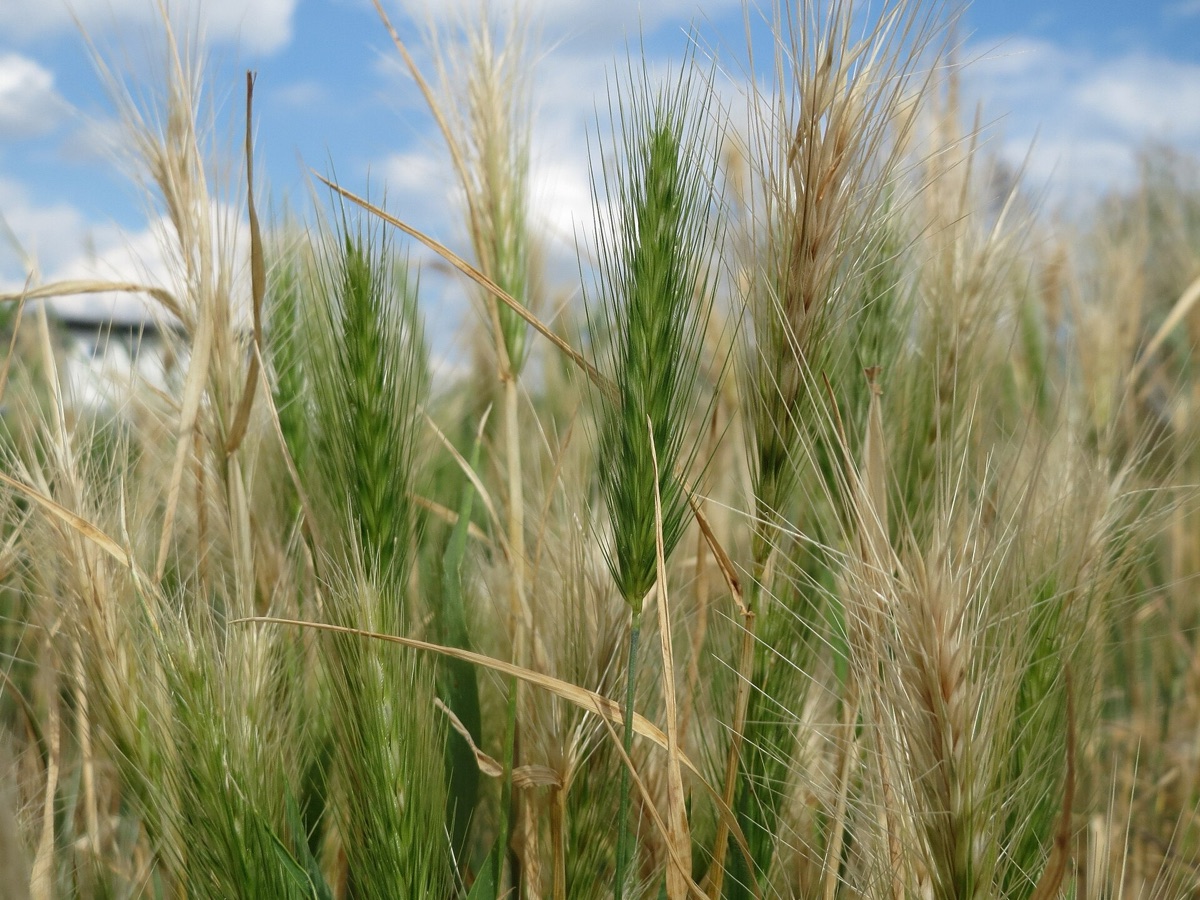
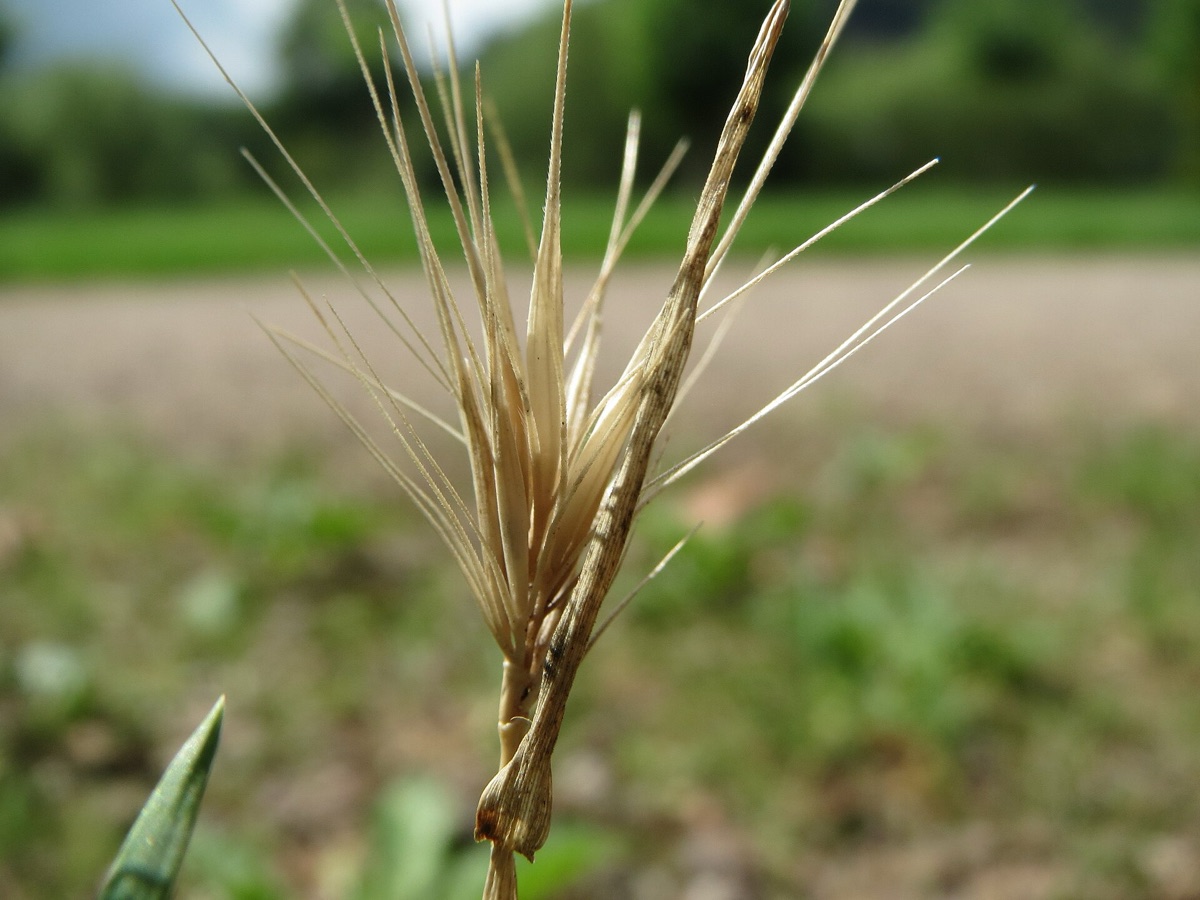
"Foxtail" is not one plant. It is a shape: a narrow seed spike with long stiff bristles, called awns, fanning backward from it. The American Kennel Club's guide to foxtails groups foxtail grasses, Canada wild rye and cheatgrass together for exactly this reason: from a dog's point of view they are the same object.
That object is a very good machine. The seed sits at the sharp end, and the awns carry microscopic barbs that all point backward. Brush against it and the seed goes in tip first. Every movement of the surrounding muscle then ratchets it further forward, because the barbs grip on the way back and slide on the way in. The plant evolved this to drill seeds into soil. It works just as well on a dog, and it does not stop at the skin.
None of this is new. The US Forest Service's species review of foxtail barley notes that the sharp-pointed joints of the spike "stick in the nose and mouth of grazing animals, often penetrating the flesh." Ranchers have known this grass for a century. Dog owners are just the ones who find it in an ear.
The four grasses worth recognizing
Most writing on this subject comes out of California, where the problem is worst. But foxtail barley alone occurs throughout the United States apart from the South Atlantic and Gulf states, and the Midwest has its own version in wild rye. Learn these four shapes and you have covered nearly all of it.
| Grass | Where you find it | What to look for | When it cures |
|---|---|---|---|
| Foxtail barley (Hordeum jubatum) | Roadsides, ditches, pastures and disturbed ground across most of the country, including moist and salty ground | Under 2 feet tall with a soft feathery bottlebrush head 1 to 4 inches long | Flowers and sets seed May into late July, then shatters |
| Wall barley or hare barley (Hordeum murinum) | Sidewalk cracks, vacant lots, park edges and trail margins, heavily in California and Nevada | Stiffer and flatter than foxtail barley, with awns up to an inch long | Late spring through summer |
| Cheatgrass or downy brome (Bromus tectorum) | Rangeland and open trail across the Great Basin and Intermountain West | Fine nodding heads, often purple-tinged, that fade to pale tan | Earliest of the group, frequently by the start of summer |
| Canada and Virginia wild rye (Elymus species) | Food plots, CRP fields and prairie plantings, especially through the Midwest | Upright wheat-like heads with long straight bristles | Late summer into fall, which is why bird dogs get hit in hunting season |
Identification details for the barleys come from UC Statewide IPM's weed gallery, which is worth a look purely to train your eye. If you can name the grass at the end of your street, you have done most of the prevention already.
Green is fine. Cured is the problem
This is the part almost every foxtail article skips, and it is the part that tells you when to worry.
A growing seed head is soft, flexible and still attached to the plant. Your dog can walk through a field of it and nothing happens. The hazard appears when the plant finishes seeding and cures. PetMD's foxtail guide describes the progression: green and soft early, then golden brown and rigid, most dangerous once dry. Curing does three things at once. The awn hardens into something closer to a needle. The seed head turns brittle and shatters into individual darts at the lightest touch. And the plant stops standing upright and starts leaning into the path.
What drives curing is weather. Grass cures when the rain stops and the heat arrives, which is why the season runs early in the dry West and later in the cool, wet Northwest, and why a drought year moves everything forward. So do not run this off a calendar. Run it off the verge outside your door. The week that green strip turns straw-colored is the week your walks need to change.
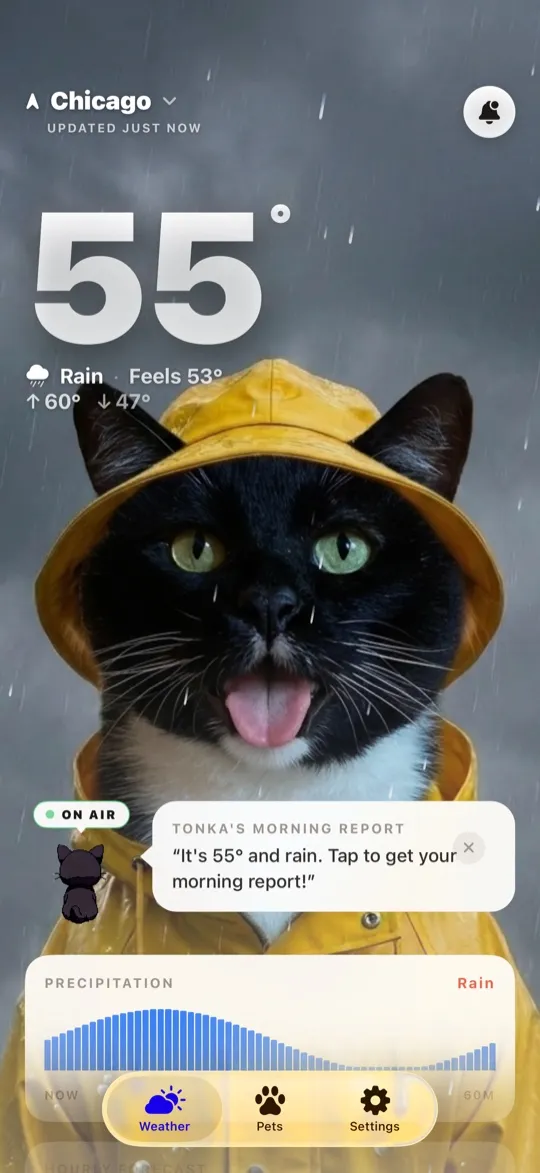
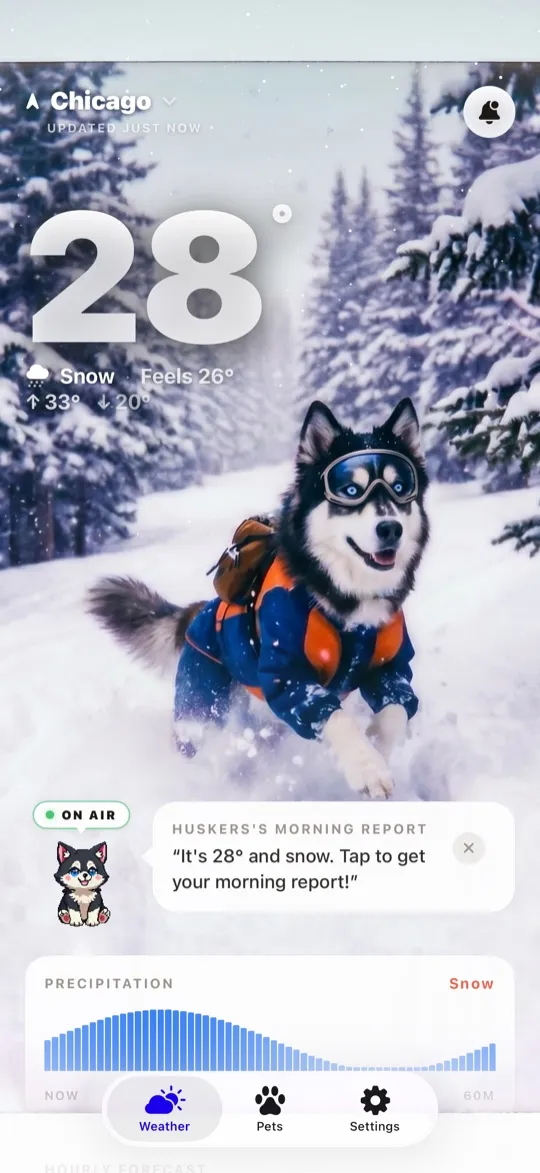
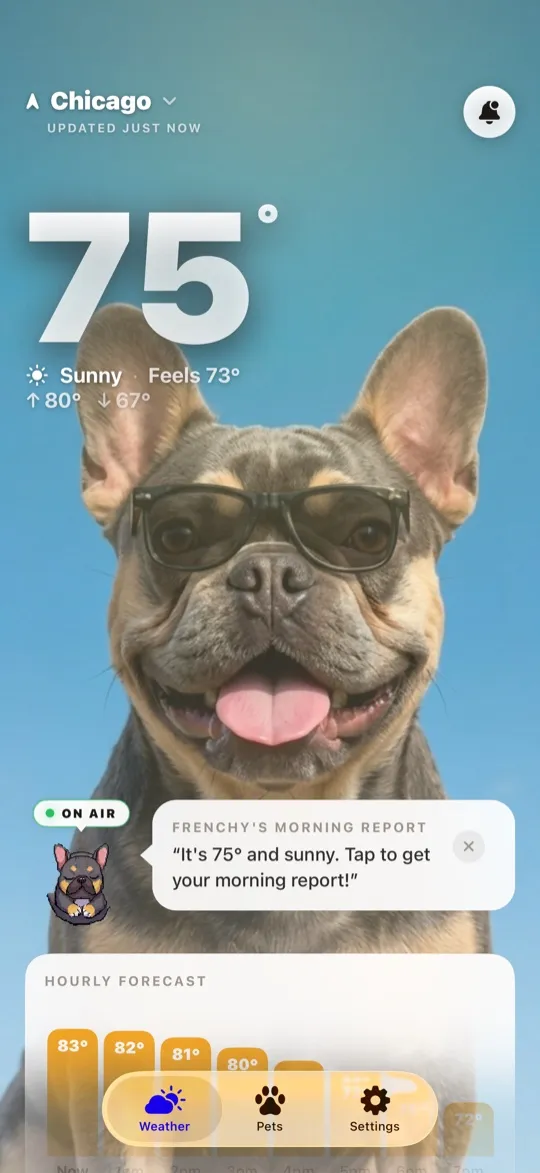
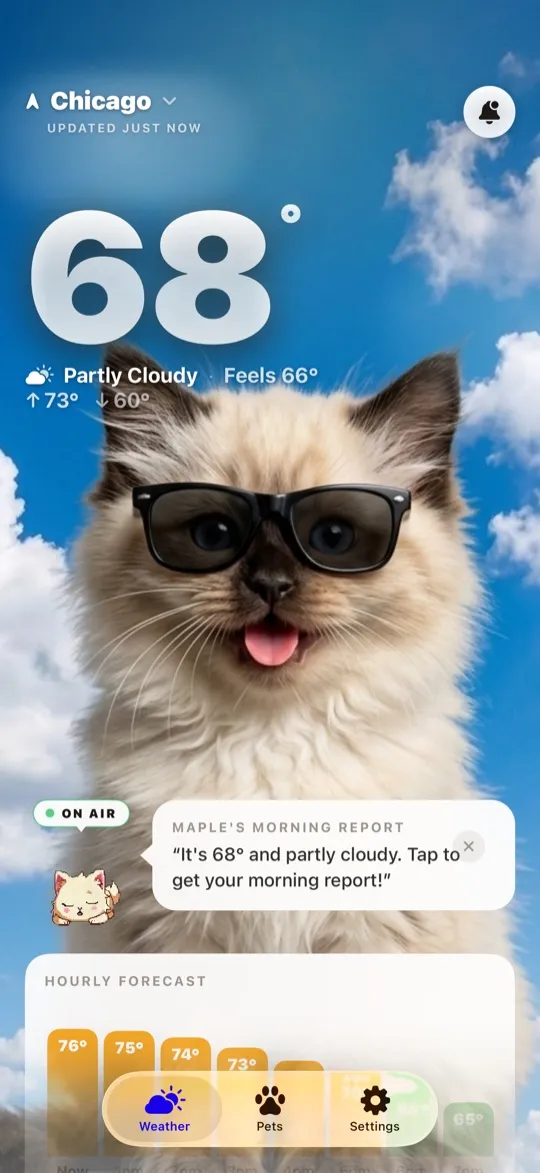
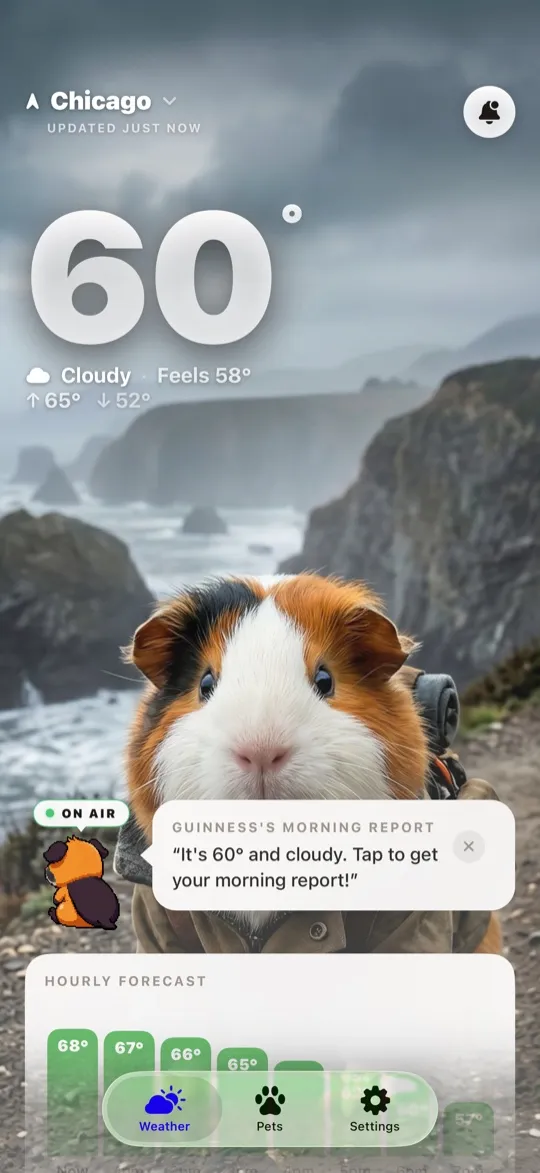
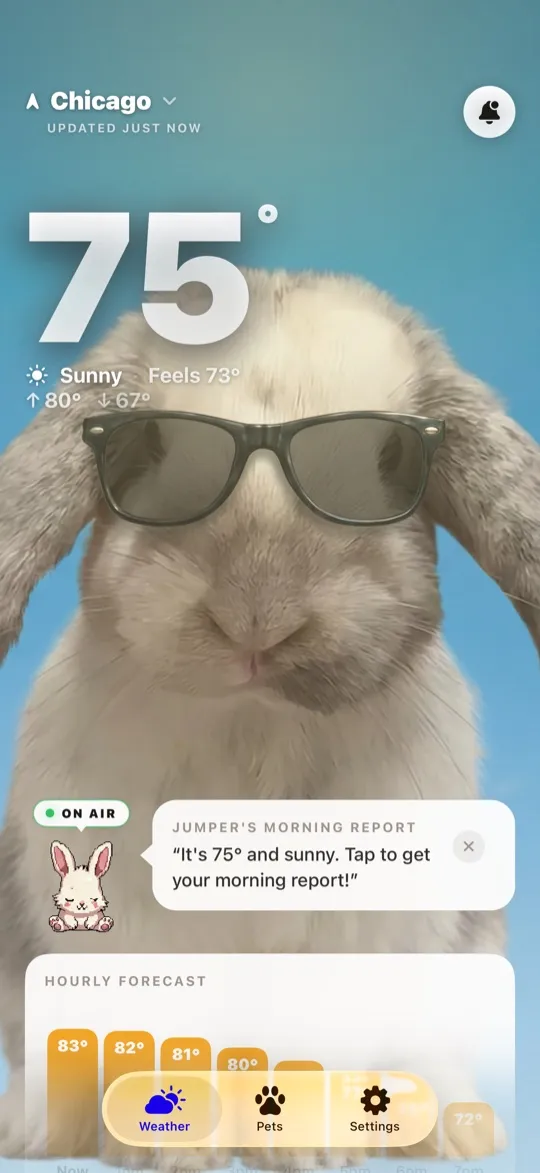
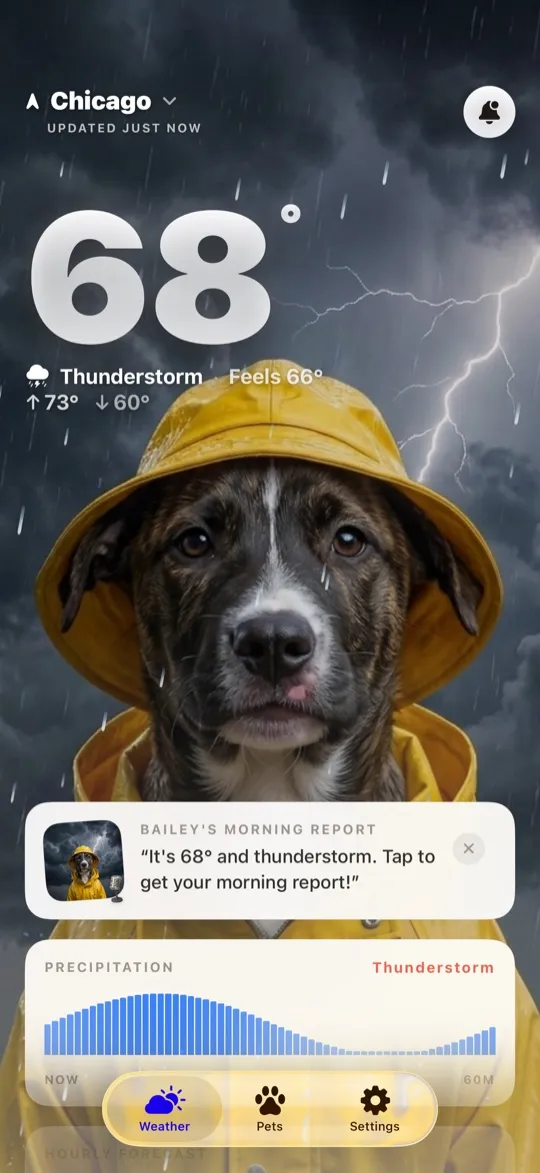
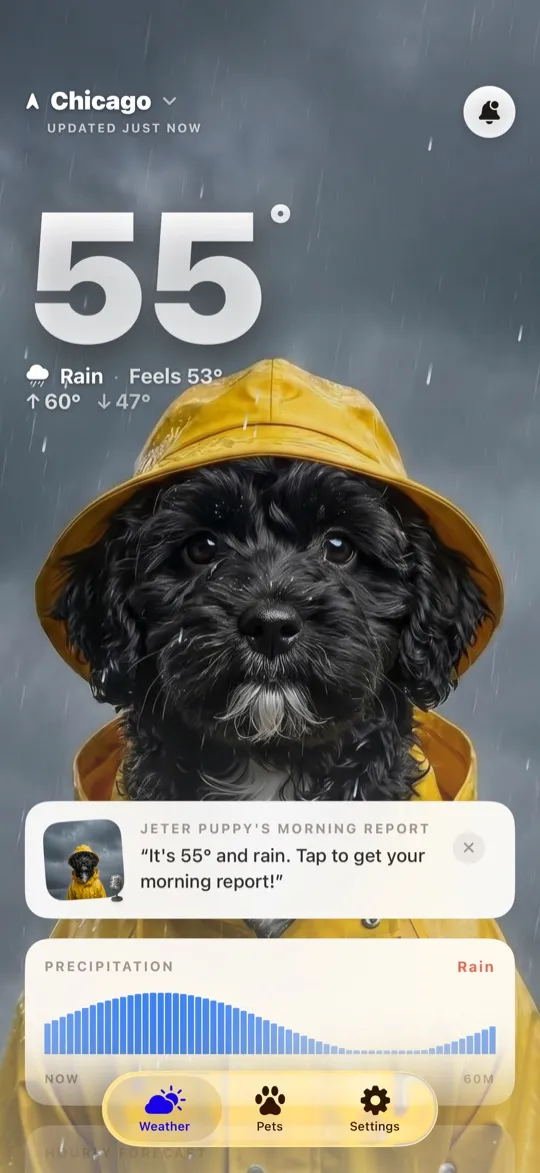
Which means you can see it coming instead of discovering it on a trail. WeatherPets puts the next ten days in front of you every morning, narrated by your own pet, so a hot rainless stretch is something you watch build. Download WeatherPets and pick your pet.
Where they end up, and what each one looks like
We have good data on this. A Journal of the American Veterinary Medical Association review of 182 grass awn cases seen at one veterinary hospital in a single year found those cases made up 61% of every foreign-body case that year. Grass awns were not one item on a long list of things dogs get stuck in them. Grass awns were the list.
The same review found the external ear canal was by far the most common site, at 51%, followed by the webbing between the toes, the eye, the nose, the lower back and the chest cavity. Use the table below as a symptom-to-site translator.
| Where it lands | What you will see | What to do |
|---|---|---|
| Ear canal (most common) | Sudden violent head shaking, tilting to one side, pawing at the ear, yelping when the ear is touched | Vet the same day. Do not probe the canal, you will push it deeper |
| Between the toes | Licking one foot obsessively, limping, a red swollen bump in the web, sometimes a small weeping hole | Vet the same day if the skin is broken or the toe is swollen |
| Eye | Squinting, an eye held shut or glued closed, redness, thick discharge, rubbing the face on the carpet | Emergency. Go now, and do not try to flush it out |
| Nose | Explosive bursts of sneezing that begin abruptly, pawing at the muzzle, sometimes a spot of blood | Emergency. Retrieval nearly always needs sedation |
| Mouth or throat | Gagging, retching, a cough that will not settle, repeated swallowing, turning down food | Vet the same day |
| Under the skin (armpit, groin, flank) | A soft lump or a draining tract that clears on antibiotics and then comes straight back | Vet, and say the word foxtail out loud so it gets looked for |
| Inhaled into the chest | Cough, fever and lethargy weeks later with no visible wound anywhere | Vet. Imaging is needed, and history matters more than the exam |
That last row is the one that catches people out. A 2023 systematic review in Animals on ultrasound detection of migrating grass awns pulled together 46 papers describing awns recovered from the chest, the retroperitoneum, the abdomen, the tissue around the eye and the urogenital tract. It also notes that inhaled awns cause respiratory problems mostly in spring and summer, and that young hunting and working dogs turn up disproportionately.
The one-minute check after every walk
This is the whole ballgame. An awn resting in the coat takes two seconds to remove. The same awn twelve hours later is a vet bill. Run this head to tail after any walk through dry grass.
- Ears first. Lift each flap and look into the opening, not just at the fur. Run a thumb around the base.
- Eyes and muzzle. Both eyes open equally wide? Any wetness in a corner that was not there this morning?
- Nose and mouth. A quick look, then lift the lips. Awns lodge in the gum line and under the tongue.
- Armpits and groin. Thin skin, sparse fur, dead center of where grass sweeps a running dog. The most missed spots on this list.
- Every paw, one at a time. Spread the toes and look into all four webs. Feel for a lump. This is where the paw check you already do in summer pays off twice.
- Comb the coat backward. Against the lie of the fur, especially feathered legs, tails and bellies. A fine comb finds awns your hand slides past.
If you find one, what is safe to do yourself
The rule is short. Loose means tweezers. Embedded means vet.
If the awn is in the coat, tangled in feathering, or resting between the toes without having broken skin, take blunt-tipped tweezers, grip it at the base rather than by the bristles, and pull straight out in one motion. Do not twist. Twisting snaps the shaft and leaves the seed behind.
If it has entered anywhere at all, stop. That means broken or swollen skin, the ear canal, up the nose, or anywhere near the eye. Pulling on an embedded awn usually breaks it, and the buried fragment carries on migrating while the visible problem looks solved. No digging with tweezers, no cotton swabs, no flushing the ear with anything.
And do not be talked out of it by a dog that shakes its head hard for ten minutes and then seems fine. The awn may just have moved past the sensitive part of the canal. Sudden onset plus sudden resolution still earns a look.
What the vet visit costs, and why speed pays
Early cases are cheap and boring. Late cases are neither. Cost estimates published by Embrace Pet Insurance give the spread: diagnosis from around $50 for an obvious isolated case, to roughly $200 to $500 for straightforward migration, up to $1,500 or more where extensive imaging is needed. Treatment runs from about $20 to $200 for a simple extraction to over $5,000 where surgical exploration of the chest is involved.
Note where that jump happens. It is not about how deep the awn went, it is about how long it had. It is the same pattern as what a heatstroke bill actually looks like: the expensive version of a summer problem is the delayed version.

Which dogs collect the most
Coat and behavior matter more than size. In that JAVMA review, Springer Spaniels, Golden Retrievers, Brittany Spaniels and Airedale Terriers turned up more often than their share of the hospital population, while German Shepherds, Miniature Poodles and Dachshunds turned up less. The pattern is not subtle: feathered, long-coated dogs bred to hunt through cover, versus smoother coats and dogs that stay on the path.
That does not make a short-coated dog safe, it just means the awns are easier to see and fall out sooner. If you own a spaniel, a setter, a doodle or anything with feathered legs and a low-slung belly, the comb-through above is not optional in dry-grass season.
Cats are a footnote with one sharp exception. Only 8 of the 182 animals in that review were cats, but 7 of those 8 involved the eye. An outdoor cat squinting during foxtail season deserves the same urgency as a dog with a nose full of grass.
Prevention that actually works
You cannot make foxtails disappear. Four habits remove most of the exposure.
- Change the route, not the walk. Once the verges cure, move to pavement, mown parks, beaches or wooded trails. The margin of a dirt track is the highest-yield foxtail zone there is.
- Mow before it seeds, not after. Cutting your own grass while it is still green removes the seed heads before they form. Mowing a cured stand mostly spreads darts around the lawn.
- Trim the collection points. Keep the fur between the toes, around the ear openings and along the belly short through the season. Less to catch, easier to check.
- Gear up only for real exposure. Booties for a dog that works fields, a mesh hood for one that pushes face-first through cover. Overkill for a sidewalk dog, genuinely useful for a hunting one.
The timing helps here. Awns are a dry-season hazard, so they overlap almost exactly with the weeks you are already planning walks around the heat. Early morning on pavement solves both at once, which is a rare thing in dog ownership.
Conditions matter more for pets than the forecast alone shows. The Pet Safety Score in WeatherPets combines temperature, humidity, air quality, UV, wind, and more into one 0 to 100 read tuned to your specific pet. Meet your WeatherPet on the App Store.
Your daily forecast, delivered by your own pet.

Frequently asked questions
What does a foxtail look like?
A foxtail is the seed head of certain grasses, shaped like a narrow spike with long bristles, called awns, fanning back from it. Foxtail barley looks like a soft feathery bottlebrush 1 to 4 inches long on a plant under 2 feet tall. Wall barley is stiffer and flatter. Cheatgrass heads nod and are finer. All of them are green and harmless while growing, then dry to a pale straw color and break apart into individual barbed darts, which is the dangerous stage.
When is foxtail season for dogs?
The American Kennel Club puts the broad risk window at roughly May through December across North America, and the US Forest Service records foxtail barley flowering and setting seed from May into late July. But the calendar is a rough guide. The real trigger is the grass curing, so the season starts when a stretch of hot, dry weather turns green verges straw-colored and it ends when winter rain or snow flattens the plants.
Can I remove a foxtail from my dog myself?
Only if it is loose. If the awn is sitting in the coat or resting between the toes and has not broken skin, grip it at its base with blunt tweezers and pull straight out in one motion without twisting. If it has entered the skin, the ear canal, the nose or the eye, stop and call your vet. Pulling on an embedded awn usually snaps it, and the buried fragment keeps migrating while the visible problem appears solved.
What happens if a foxtail is not removed?
It keeps moving. The barbs point backward, so the awn can only travel forward through tissue, and it carries bacteria with it. That produces abscesses and draining tracts that heal on antibiotics and then return, and in the worst cases awns reach the chest or abdomen. A 2023 systematic review in Animals catalogued migrating awns recovered from the chest, the retroperitoneum, the abdomen, the tissue around the eye and the urogenital tract.
How much does foxtail removal cost at the vet?
It depends almost entirely on how early you catch it. Cost estimates published by Embrace Pet Insurance run from about $50 for an obvious, isolated case up to $200 to $500 for straightforward migration, and $1,500 or more where extensive imaging is needed. Treatment ranges from $20 to $200 for an uncomplicated extraction to over $5,000 for cases needing surgical exploration of the chest.
Do foxtails affect cats?
Yes, but far less often, and the pattern is different. In a Journal of the American Veterinary Medical Association review of 182 grass awn cases, only 8 were cats, and 7 of those 8 involved the eye. If an outdoor cat is suddenly squinting or holding an eye shut during dry-grass season, treat it as urgent.
A note on health: This article is general information, not a substitute for professional veterinary advice. If you think your pet has a foxtail lodged anywhere, or you are facing any serious or emergency health concern, contact your veterinarian or an emergency clinic right away. Our guidance draws on trusted veterinary and scientific sources, including those linked above.
