Storm Desensitization for Dogs: An 8-Week Plan
Storm fear does not fade with age. Left alone it usually gets worse, because every storm is another rehearsal. The good news is that the one intervention with real evidence behind it costs nothing but ten minutes a day. The catch is that almost everyone starts it at the wrong time of year, which is why so many people conclude it does not work.
Key takeaways
- Do this in the quiet season. One real storm mid-programme is an uncontrolled exposure that can undo weeks of work. Veterinary guidance says to restrict it to non-storm months, which is why late summer is the moment to start.
- Two things happen at once: desensitization (volume so low it causes no fear) and counterconditioning (something wonderful appears the instant the sound does).
- Recordings only carry the sound. Your dog is also reading wind, light, ozone, static and falling pressure, which is why many react before the first clap.
- Sessions are about 10 minutes. Progress is measured in whether your dog stays relaxed, not in weeks elapsed.
- Never push through a reaction. The moment your dog notices and tenses, you have gone too far and the session is already doing harm.
- A panicking dog cannot learn. If yours panics, medication is often what makes the training possible.
Why storms are the hardest fear to treat
Fireworks are loud. Storms are loud, and dark, and windy, and electric, and they smell different, and the air pressure drops for an hour beforehand.
That is the whole problem. Today's Veterinary Practice lists the contextual cues dogs pick up on: darkening skies, gusts of wind, the scent of ozone, barometric pressure changes, and rain alone. It also states the uncomfortable conclusion plainly, that systematic desensitization might not work for every storm-phobic dog largely because it may not be possible to replicate all of those cues.
This is why the owner whose dog starts shaking forty minutes before anything is audible is not imagining it, and it is why a playlist of thunder sounds on a phone speaker so often does nothing. You are treating one channel of a six-channel event, through a speaker that cannot even reproduce the part carrying the most information, which is the low-frequency rumble you feel more than hear.
None of that makes the work pointless. It makes it partial, and it means you should measure success as a meaningful reduction in fear rather than a cure. Our overview of why dogs fear thunderstorms covers the underlying picture.
The two halves, properly defined
People use these words interchangeably. They are different jobs and you need both.
Desensitization is presenting the frightening thing at an intensity so low it produces no fear at all, then raising it in steps small enough that fear never appears. If your dog notices and tenses, the level was too high. That is the entire skill.
Counterconditioning is changing what the sound means. Thunder currently predicts terror. You are going to make it predict roast chicken. The American Veterinary Society of Animal Behavior describes the practical form: play the storm sound at the lowest volume while the dog works on a high-value edible such as a stuffed Kong, in sessions of around ten minutes, raising the volume only after several calm sessions.
The order matters and it is the mistake most people make. The sound comes first, then the food. Sound predicts chicken. If the chicken is already there and the sound arrives, or if the food appears whenever your dog looks worried, you have taught something else entirely.
Flooding, meaning cranking the volume to prove there is nothing to fear, is the opposite of this and it makes dogs worse. AVSAB is explicit that any sign of increased tension means re-evaluating the intensity.
The precondition nobody mentions
You cannot run this programme during storm season.
The whole method rests on every exposure staying below the level that frightens your dog. A real storm halfway through week three is a maximum-intensity exposure you did not choose, and it can undo the ladder you have spent a month climbing. Today's Veterinary Practice recommends restricting this work to non-storm seasons for exactly that reason.
For most of the United States that means autumn and winter. Which makes the end of summer the moment to start: eight weeks from late August lands you in late October, with a full quiet season left to consolidate, and spring arriving with the work already banked. Starting in April, which is when everyone actually thinks about it, is starting at the worst possible time.
The eight-week plan
Weeks are a rough frame, not a schedule. Your dog sets the pace. If a level is not solidly relaxed after several sessions, stay there. Repeating a week is normal and costs nothing.
| Week | What you play | What you do | Move on when |
|---|---|---|---|
| 1 | Nothing. Silent sessions | Build the food ritual: stuffed Kong or lickmat in the chosen safe spot, same time daily, 10 minutes | Your dog goes to the spot expectantly |
| 2 | Storm audio at a volume you can barely hear | Sound starts, then food appears. Sound stops, food is removed | Three calm sessions, no ear flicks or freezing |
| 3 | One small step up | Same ritual. Watch the ears and the body, not the volume dial | Three calm sessions |
| 4 | Conversation volume | Add distance: sit slightly further away, be less involved | Your dog eats normally throughout |
| 5 | Same volume, new context | Move to a different room, then a different time of day | Calm in two rooms |
| 6 | Louder, with variation | Add irregular claps rather than steady rumble. Unpredictability is the hard part | Startle recovers within seconds |
| 7 | Sound plus one extra cue | Dim the lights, or add a fan for wind, or run storm video | Calm with two cues stacked |
| 8 | Realistic volume, cues stacked | Shorter, less frequent sessions. You are maintaining now | Ongoing: a session or two a week keeps it |
Three practical notes. Use a real speaker rather than a phone, because the low frequencies are the part that matters. Use a food your dog gets at no other time, so the association is clean. And if you skip several days, drop back a level rather than resuming where you left off.
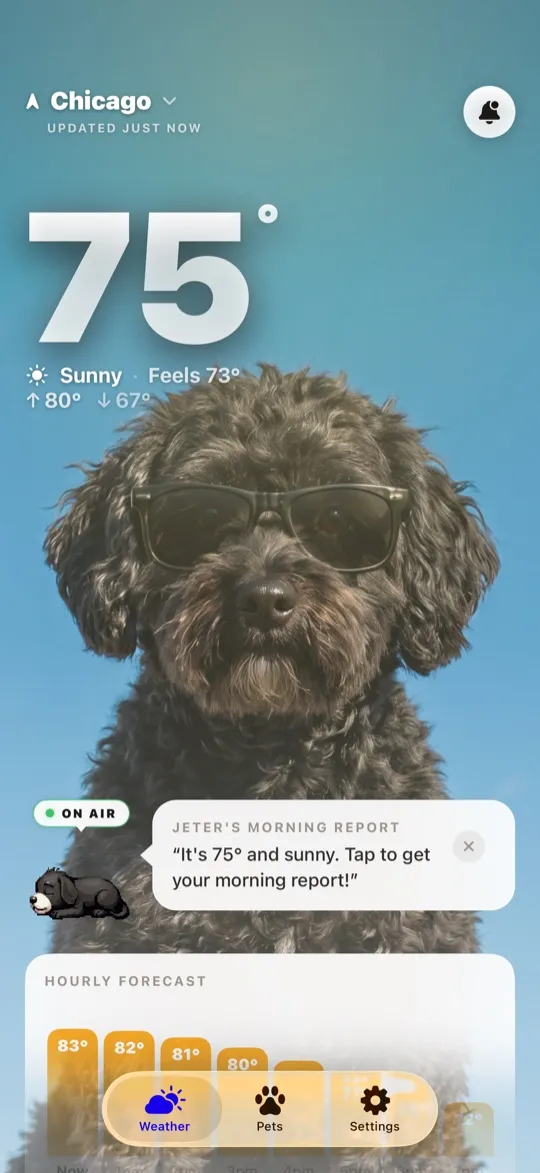
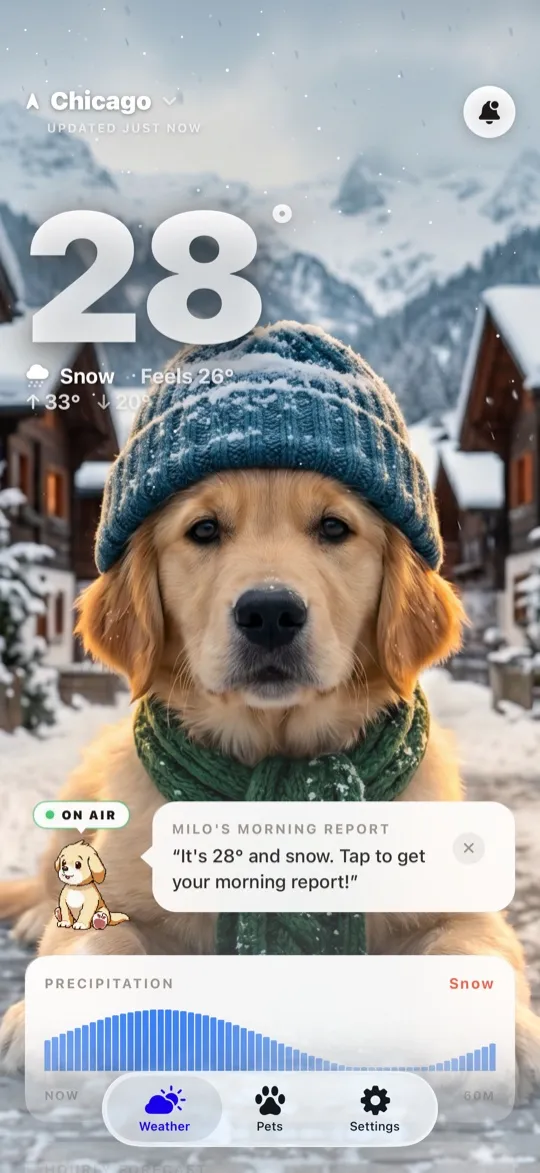
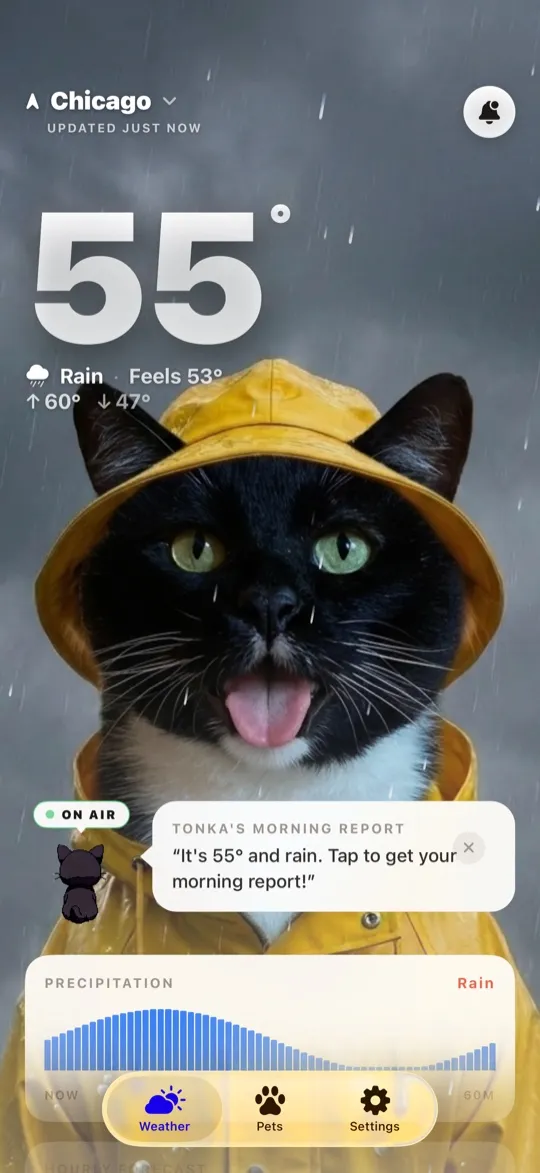
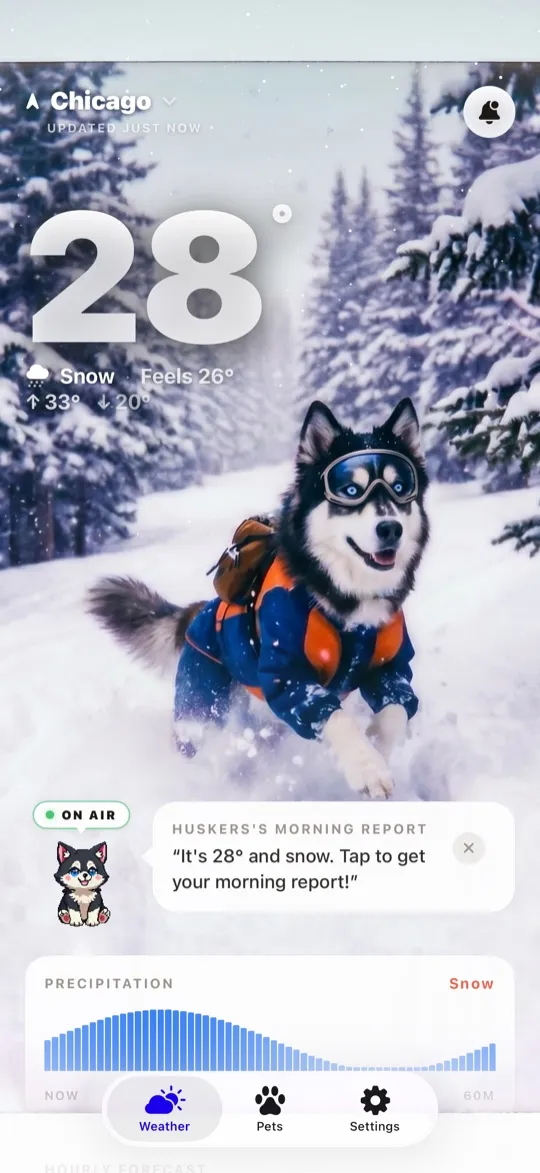
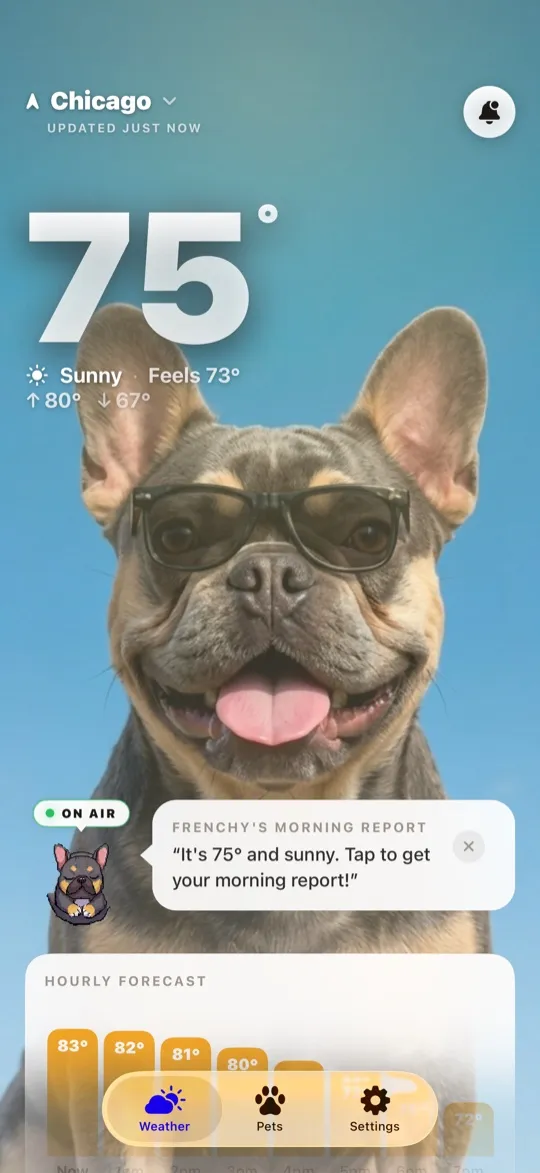
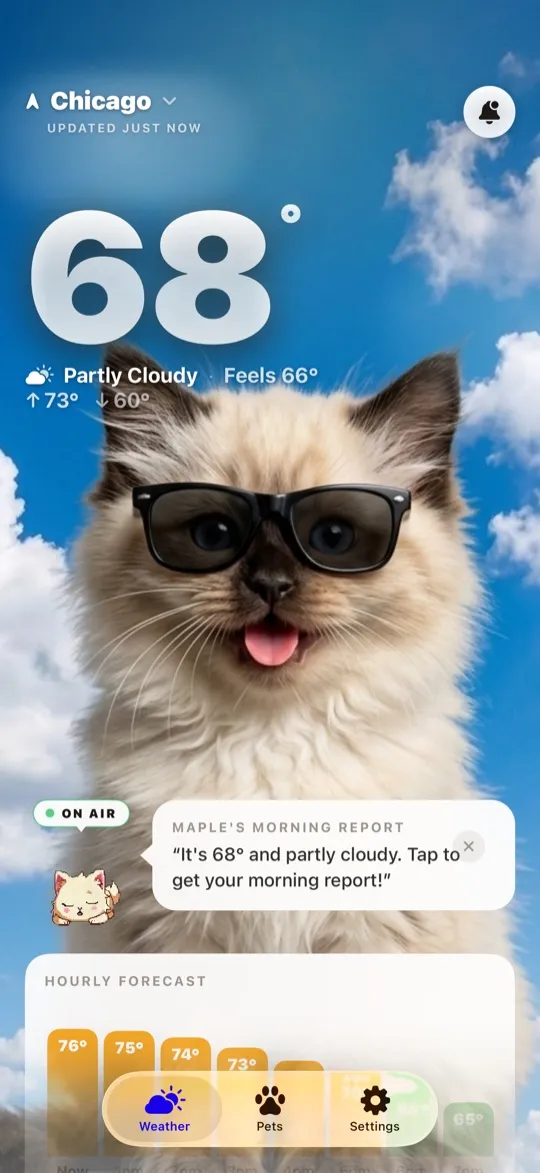
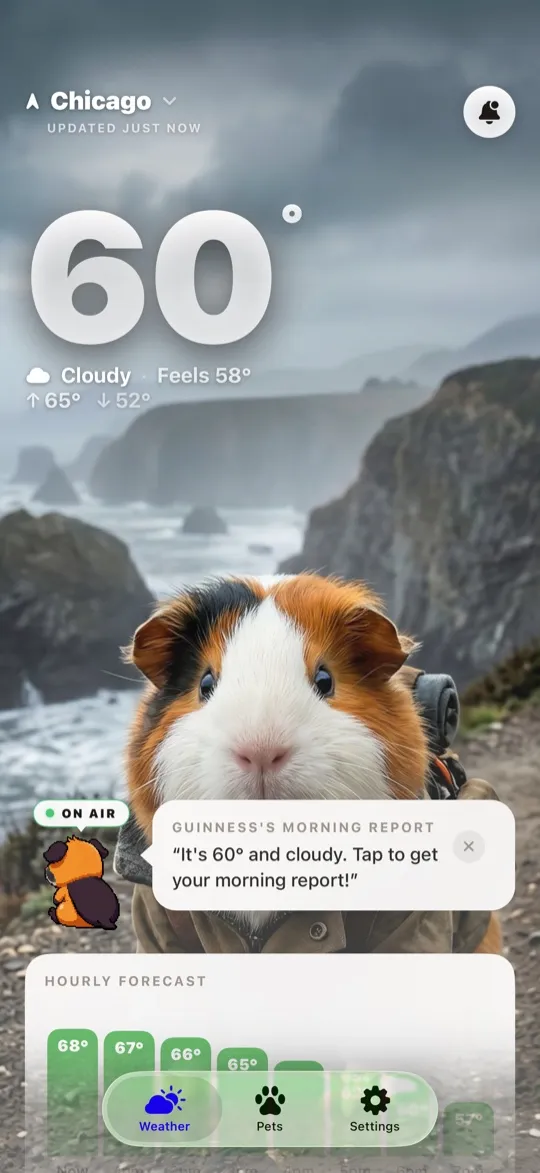
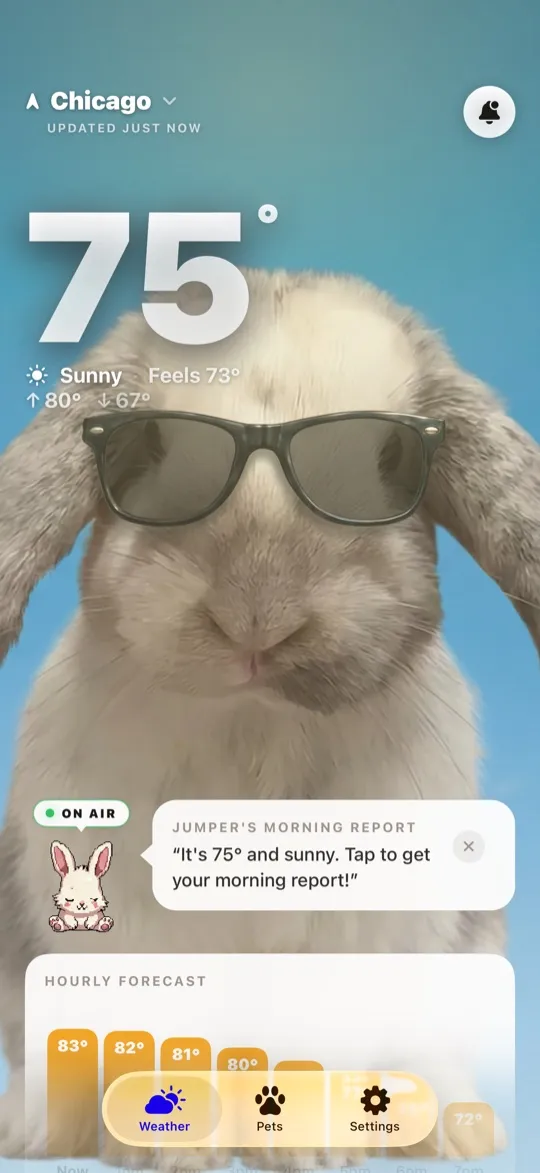
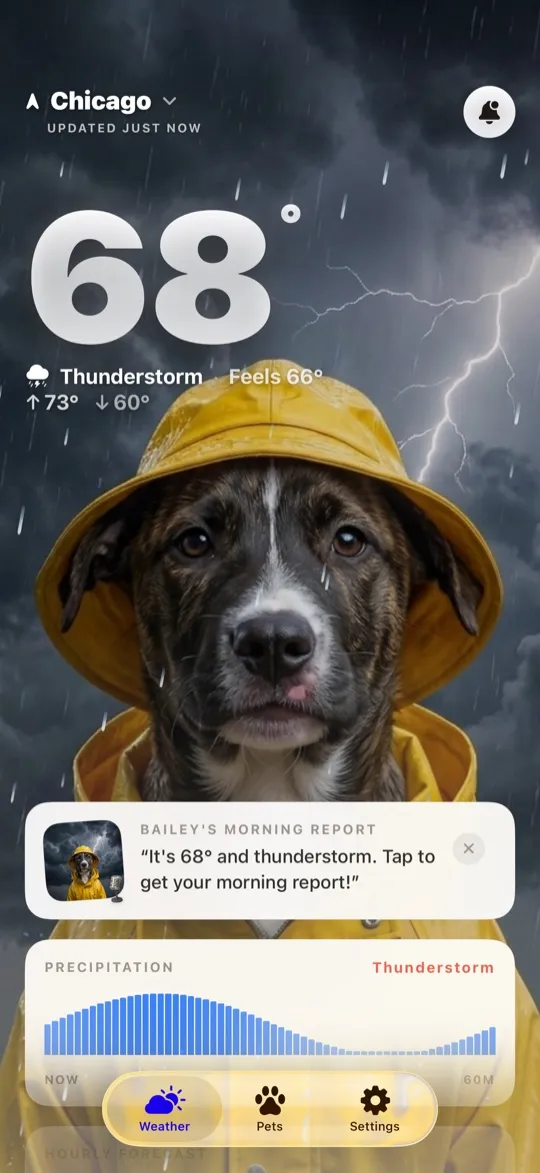
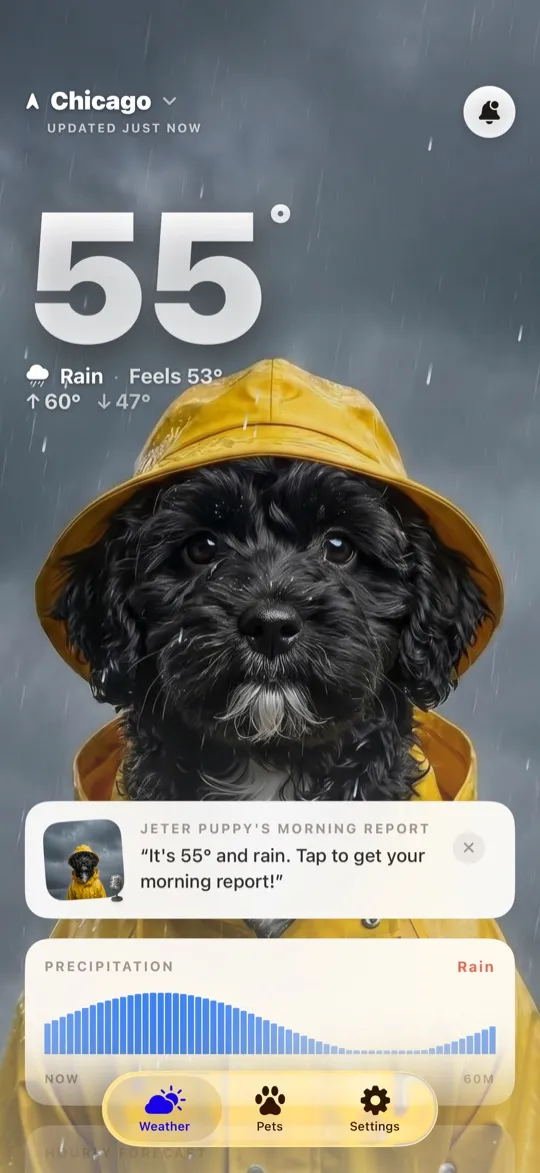
The other half of the work is not being ambushed. Knowing a storm is coming lets you set up the safe space, get the medication in early enough to work, and skip that day's session, and WeatherPets puts the storm in your morning report and tracks it with a Live Activity as it arrives. Your pet is waiting, get WeatherPets.
Does it actually work?
Here is the honest state of the evidence.
Desensitization with counterconditioning is the most evidence-supported behavioural approach to noise fears, and it is what veterinary behaviour services actually use. A controlled trial of a standardized four-week programme for a different canine fear, fear of veterinary handling, found lower fear scores and improved posture in the trained group, with 86.7% of owners reporting reduced fear. That is a different trigger, but it is a clean demonstration that a structured home programme moves the needle.
For storms specifically the picture is more mixed, for the multi-sensory reason above, and the published results generally combine behaviour work with medication rather than testing the training alone. So: strong method, real limits, and the sensible expectation is a dog that copes rather than a dog that does not notice.
Programmes run by a board certified veterinary behaviourist do better, largely because the steps get adjusted to the individual dog in real time. If your dog is at the severe end, that referral is worth more than any article.
What to do during an actual storm
Training is the long game. Storms happen meanwhile, and how you handle them either supports the work or undermines it.
- Let your dog choose the spot, then improve it. Bathrooms and closets are popular because they are interior, windowless and acoustically dead. Blackout curtains, a blanket over the crate and white noise all help. Never shut a dog into a space they cannot leave.
- Comfort is fine. You cannot reinforce an emotion the way you reinforce a behaviour. If your dog comes to you, calm contact helps. Forcing a hiding dog out does not.
- Never punish panic. A destroyed door frame is fear, not disobedience, and the dog will not connect a telling-off to the chewing.
- Pressure wraps help some dogs and are harmless to try. See our honest look at whether anxiety wraps work.
- Get ahead of it. Situational medication has to be given before the fear starts, which means acting on the forecast rather than the first clap. Our storm season prep guide has the full routine.
When to involve your vet
Sooner than most people do. A dog in full panic is not learning, so for severe cases the medication is not an alternative to training, it is what makes training possible.
Veterinary practice typically pairs a fast-acting situational drug used on storm days with a daily baseline medication that supports learning over weeks to months, and VCA's guidance on treating storm and firework fear walks through the options. Two hard rules: never give a dog human anti-anxiety medication, and if a previously mild fear has escalated quickly, get a physical exam, because pain and cognitive decline both show up as new noise sensitivity in older dogs.
Frequently asked questions
Can you actually desensitize a dog to thunderstorms?
Partly, and it is still the best behavioural option available. Desensitization paired with counterconditioning is the most evidence-supported non-drug approach to noise fears. The honest limit is that recordings reproduce the sound and none of the other cues, and Today's Veterinary Practice notes that systematic desensitization may not work for every storm-phobic dog because it is not possible to replicate all the contextual cues. Most owners get a meaningful reduction in fear rather than a cure.
Why do storm sound recordings not work for my dog?
Because your dog is not only afraid of the noise. Dogs respond to darkening skies, wind, rain, the smell of ozone, static charge and falling barometric pressure, which is why so many react before the first thunderclap. A speaker delivers one channel of a multi-sensory event, and most home speakers cannot produce the low-frequency rumble that carries the most information. Recordings are still the right starting point, but expect to add other cues later and expect the transfer to real storms to be partial.
When is the best time of year to start storm desensitization?
The quiet season, which for most of the United States means autumn and winter. The training only works if every exposure stays below the level that frightens your dog, and one real storm mid-programme delivers an overwhelming uncontrolled exposure that can undo weeks of work. Veterinary guidance specifically recommends restricting this work to non-storm seasons. Starting in late summer or early autumn means you arrive at spring with the work already done.
Should I comfort my dog during a thunderstorm?
Yes. You cannot reinforce an emotion the way you reinforce a behaviour, and the old advice about coddling making fear worse does not hold up. If your dog seeks you out, calm contact is fine and often helps. What does not help is forcing a hiding dog out into the open, or punishing panic. Let them choose their spot, make that spot as insulated as you can, and stay unremarkable.
Does my dog need medication for storm phobia?
Some do, and it is not a failure. For a genuinely panicking dog, medication is often what makes training possible, because a dog in full panic is not learning anything. Veterinary practice typically pairs a fast-acting situational medication for the storms themselves with a daily baseline medication that supports learning over weeks to months. This is a conversation for your veterinarian or a veterinary behaviourist, and human anti-anxiety drugs should never be given to a dog.
Your daily forecast, delivered by your own pet.

A note on health: This article is general information, not a substitute for professional veterinary advice. Behaviour medication must be prescribed and monitored by a veterinarian, and never give a dog medication intended for people. If your dog panics, injures itself, or a mild fear has escalated quickly, contact your veterinarian or ask for a referral to a veterinary behaviourist. Our guidance draws on trusted veterinary sources, including those linked above.
