The US Cities With the Most Unsafe Dog-Walking Months
Every list of the hottest cities for dogs ranks the weather and forgets the dog. So we ran the numbers properly: 70 US cities, 30 years of NOAA climate normals, and the actual temperature limits of twelve breeds. The city you live in matters. Your dog's breed matters more.
Key takeaways
- We scored 840 city-months (70 US cities across 12 months) of NOAA 1991-2020 climate normals against the breed temperature limits inside the Pet Safety Score.
- Phoenix is the hardest city in America for a dog, losing six months a year for a Labrador and seven for a Greyhound.
- The breed changes the answer more than the city does. A Greyhound loses 32.9% of the year nationally; a Labrador loses 14.9%.
- Cold is a breed problem, not a geography problem. Only 3 cities reach a Labrador's cold limit, but 32 cities reach a Greyhound's.
- Five cities never restrict any of the twelve breeds we tested: San Diego, San Francisco, Seattle, Portland and San Jose.
What we actually measured
Every "hottest cities for dogs" list ranks cities by temperature. That is a list about weather, not about dogs: it never asks whether the heat actually crosses the line for the animal on the end of your leash.
So we ran the question properly. We took the NOAA 1991-2020 US Climate Normals, the official 30-year monthly averages published by the National Centers for Environmental Information, for the 70 US cities in our city-forecast dataset. That gives an average daily high and an average daily low for each city in each month: 840 city-months in total. Then we compared each of those months against the actual heat and cold limits the Pet Safety Score uses for twelve common breeds.
A month is counted as restricted if the average day in it crosses a limit:
- Heat-restricted: the month's average daily high is at or above that breed's heat limit. The middle of a normal day in that month is off the table.
- Cold-restricted: the month's average daily low is at or below that breed's cold limit. The coldest part of a normal day in that month is off the table.
Those are the same figures your local National Weather Service office publishes for its own stations, such as the NWS Chicago monthly and yearly normals, so you can check any city in this study against the primary record yourself.
Two caveats before the numbers. A restricted month does not mean no walks: it means the walk moves to dawn or after dark and the default midday hour is gone. And these are normals, a smoothed 30-year average, so they understate the extremes. A heat wave is not in this data.
The national picture: the breed matters more than the map
Run all twelve breeds across all 840 city-months and the spread is enormous. Here is the share of the American year each breed loses, along with the limits that produced it.
| Breed | Heat limit | Cold limit | Restricted city-months | Share of the year | Cities with none |
|---|---|---|---|---|---|
| Greyhound | 84°F | 27°F | 276 | 32.9% | 5 |
| English Bulldog | 83°F | 25°F | 272 | 32.4% | 5 |
| Great Dane | 85°F | 25°F | 232 | 27.6% | 7 |
| Chow Chow | 83°F | 12°F | 212 | 25.2% | 10 |
| French Bulldog | 86°F | 25°F | 210 | 25.0% | 7 |
| Pug | 86°F | 25°F | 210 | 25.0% | 7 |
| Bernese Mountain Dog | 83°F | 6°F | 209 | 24.9% | 12 |
| Chihuahua | 90°F | 27°F | 172 | 20.5% | 12 |
| Golden Retriever | 86°F | 12°F | 150 | 17.9% | 22 |
| Siberian Husky | 86°F | 6°F | 147 | 17.5% | 25 |
| Labrador Retriever | 88°F | 12°F | 125 | 14.9% | 25 |
| Beagle | 90°F | 20°F | 117 | 13.9% | 23 |
A Greyhound loses more than twice as much of the American year as a Beagle. Same country, same 840 months. If you have wondered why a neighbour walks their dog at noon in July and you cannot, that gap is the answer, and neither of you is being careless.
The cities that lose the most months
Here are the hardest US cities for a Labrador Retriever, our baseline dog. Every restricted month on this list is a heat month, and the pattern is exactly where you would guess: the desert Southwest, the Gulf Coast, and central Florida.
| City | Restricted months | Which months |
|---|---|---|
| Phoenix, Arizona | 6 | May through October |
| El Paso, Texas | 5 | May through September |
| Las Vegas, Nevada | 5 | May through September |
| Tucson, Arizona | 5 | May through September |
| Tampa, Florida | 5 | May through September |
| Orlando, Florida | 5 | May through September |
| Houston, Texas | 4 | June through September |
| San Antonio, Texas | 4 | June through September |
| Dallas, Texas | 4 | June through September |
| Austin, Texas | 4 | June through September |
Phoenix is in a category of its own. Half the year, the average day is already past a Labrador's heat limit before you add the sun on the pavement, and pavement is where the real injury happens. Asphalt in full sun runs roughly 40 to 60 degrees hotter than the air, which is the entire reason for the seven-second pavement test.
Why the Greyhound tops the list, and what that reveals
Most people would guess the Bulldog or the Husky. The Greyhound wins because it is the only common breed genuinely poor at both ends: little insulating fat, a thin single coat, high muscle mass, and a sprint drive that outruns its own cooling. Denver is the cleanest illustration in the dataset:
| Denver, Colorado | Labrador Retriever | Greyhound |
|---|---|---|
| Heat-restricted months | 1 (July) | 2 (July, August) |
| Cold-restricted months | 0 | 4 (November through February) |
| Total restricted months | 1 | 6 |
One dog loses a twelfth of the year in Denver. The other loses half of it. Denver's January average low is 18.7°F, comfortably below a Greyhound's 27°F cold limit and comfortably above a Labrador's 12°F one. The city did not change. The dog did.
Honolulu produces the widest spread of any city we measured: eight restricted months for a Chow Chow, and zero for a Chihuahua. Honolulu is never cold and never extreme, it is just relentlessly, mildly warm, with average highs at or above 83°F for eight straight months. That is nothing at all to a small short-coated dog and most of the year to a thick-coated northern breed.
Cold is a breed problem, not a geography problem
This was the finding that surprised us most, and it is the one that flips how you should read every "coldest cities for dogs" article. Watch what happens to the number of affected cities as you raise the cold limit from a hardy breed to a delicate one:
| Cold limit | Example breed | US cities affected | Restricted city-months |
|---|---|---|---|
| 12°F | Labrador Retriever | 3 of 70 | 3 |
| 20°F | Beagle | 15 of 70 | 34 |
| 25°F | French Bulldog | 26 of 70 | 63 |
| 27°F | Greyhound | 32 of 70 | 89 |
Move the limit fifteen degrees and the problem goes from three cities to nearly half the country. Only Minneapolis, Anchorage and Madison have any month whose average low reaches a Labrador's limit, which means for most sturdy dogs in most American cities, winter simply is not a walking constraint. For a Greyhound, an Italian Greyhound or a Chihuahua, winter is the bigger half of the year's problem. Both of those statements are true at once, which is why a single "cold hardy" rating for a whole city is useless. Our guides to how cold is too cold for your dog and what the feels-like number means go deeper on the individual thresholds.
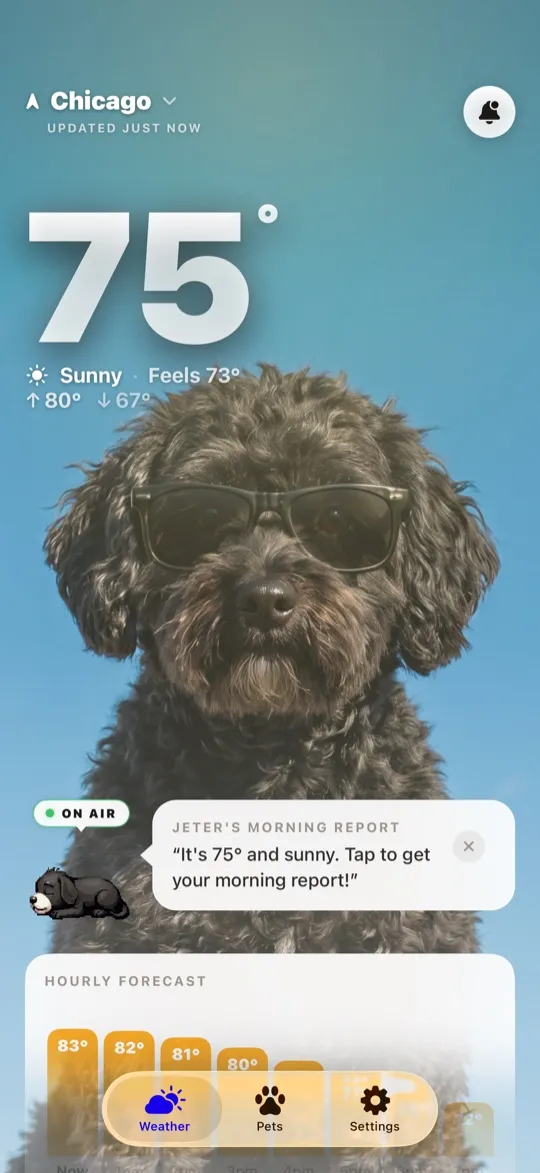
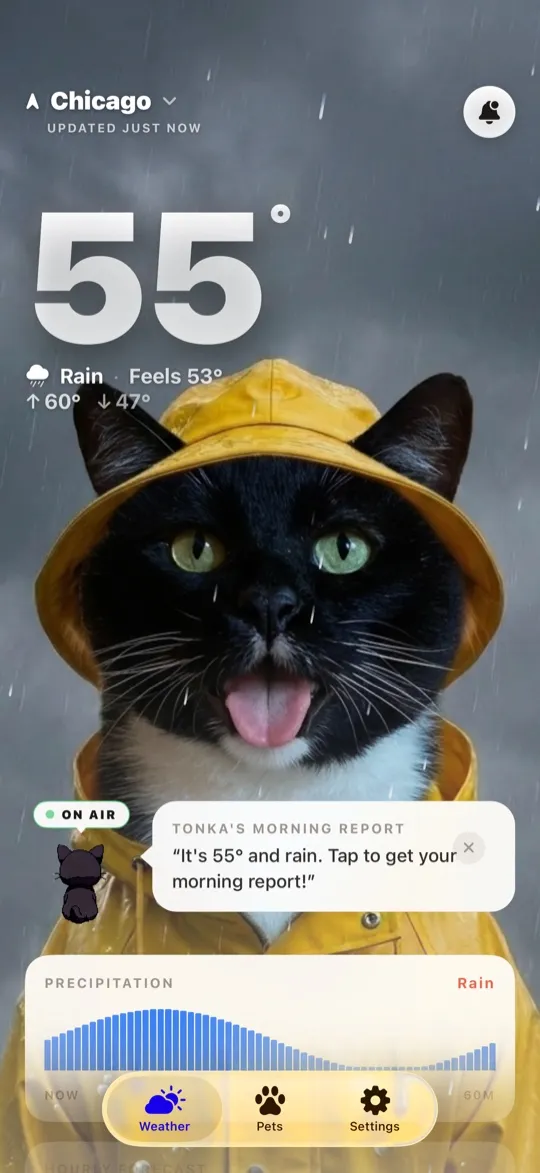
This is the calculation WeatherPets runs for your own dog, in your own city, for the next hour rather than the average month. Meet your WeatherPet on the App Store.
The five cities that never restrict anything
Out of 70 cities and twelve breeds, exactly five cities produced zero restricted months for every single breed we tested.
| City | Warmest month average high | Coldest month average low |
|---|---|---|
| San Francisco, California | 70.2°F | 46.6°F |
| San Diego, California | 77.3°F | 49.8°F |
| Seattle, Washington | 77.6°F | 37.1°F |
| San Jose, California | 81.4°F | 41.7°F |
| Portland, Oregon | 82.3°F | 36.2°F |
All five are coastal West, and all five run the same trick: a large body of cold water next door, damping both ends of the year. Note that Seattle and Portland are not warm cities, they are narrow ones. Their whole annual range fits inside every breed's comfort band, which is a different quality from being mild in summer.
What this study cannot tell you
A data study that hides its limitations is just an opinion with numbers attached, so here are ours, plainly.
- Normals are averages, not days. Phoenix in April is unrestricted here and still produces dangerous afternoons.
- Humidity is not in this table. It is in the Pet Safety Score, and it matters enormously, because panting is evaporative cooling and stops working well above roughly 60% humidity. A humid 82°F day can be more dangerous than a dry 95°F one, which is why Houston's four months are harder in practice than Phoenix's six look on paper. Our guide to humidity and dog breathing covers the mechanism.
- Breed is a starting point, not the whole dog. Age, weight, coat condition and heart or airway disease all move the limits. A senior Labrador is not a Labrador on this table.
- We used one limit per breed. Real dogs vary within a breed, and we grade one step stricter than published odds ratios imply, because published limits describe the outer bound of safety rather than a target.
The heat grades themselves are anchored to the largest published study of canine heat-related illness, Hall, Carter and O'Neill (2020) in Scientific Reports, which analysed 905,543 dogs under UK veterinary care and reported odds of heat-related illness relative to a Labrador. That is why the Labrador is our baseline here, and why the Chow Chow and Bulldog sit where they do. The full breakdown of how the score weighs everything else lives in how the Pet Safety Score is calculated.
How to actually use this
If your city ranks high here, the useful response is not to feel bad about where you live. It is to plan the year differently:
- Know your own count. Find your breed's row in the national table. Above 25% means roughly a quarter of your year needs a moved walk: a scheduling problem you solve once, not one you re-litigate every morning.
- Move the walk, do not cancel it. In restricted months the good window is usually before 8am or after sunset. The walk-scheduling guide covers how to find it.
- Check pavement, not air. In every heat-restricted month on this list, the ground crosses the burn threshold hours before the air feels extreme.
- Bring the heat basics. Water, shade and a hard stop on midday exertion do most of the work. The AVMA's warm weather pet safety guidance is the short version worth re-reading each spring.
- Build the indoor half. A dog losing five months of normal walks needs somewhere for that energy to go.
And if you are choosing a dog rather than a city, the tables above are worth a long look. A Greyhound in Denver and a Beagle in Denver live in two different climates.
Frequently asked questions
What is the hardest US city to walk a dog in?
Phoenix, Arizona. Using NOAA 1991-2020 climate normals, six months of the Phoenix year (May through October) have an average daily high at or above a Labrador Retriever's 88°F heat limit. For a Greyhound it is seven months, April through October. No other US city in our 70-city dataset reaches six.
How did you decide a month was unsafe?
A month counts as heat-restricted when its NOAA 30-year average daily high is at or above the breed's heat limit, and cold-restricted when its average daily low is at or below the breed's cold limit. Those limits come from the breed comfort bands inside the WeatherPets Pet Safety Score. It flags the average day in that month, not every day.
Which dog breed loses the most walking days?
The Greyhound, at 32.9% of all 840 city-months we scored. It is the only common breed that is poor at both ends of the range: thin coat, almost no insulating fat, and high muscle mass. The English Bulldog is a close second at 32.4%, but almost entirely from the heat side.
Which US cities are easiest on dogs year round?
San Francisco, San Diego, Seattle, San Jose and Portland. These five produced zero restricted months for all twelve breeds we tested. All are coastal West cities where a cold ocean compresses the annual temperature range rather than simply making summers mild.
Does this account for humidity or heat index?
No. This study uses dry-bulb air temperature from the NOAA normals only, because humidity normals are not part of the same published monthly product. Humidity is part of the live Pet Safety Score, and it matters a great deal: above roughly 60% humidity a dog's panting stops shedding heat efficiently, so humid Gulf Coast cities are harder in practice than these counts suggest.
Is a restricted month a month with no walks?
No. It means the middle of the average day crosses your dog's limit, so the walk needs to move to early morning or after dark rather than be cancelled. Most restricted months still have a good two to three hour window at each end of the day.
Your daily forecast, delivered by your own pet.

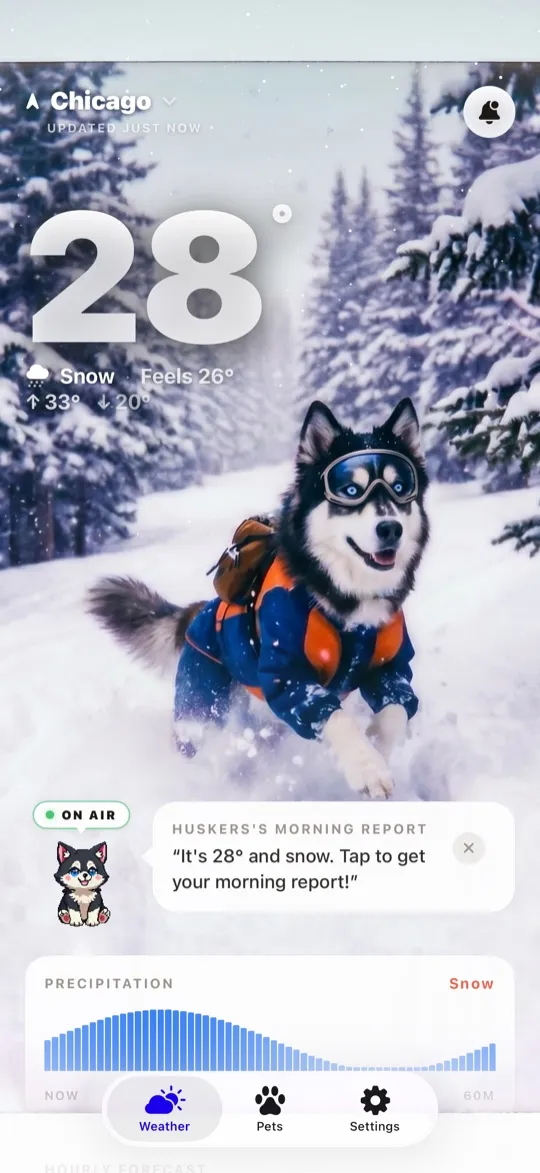




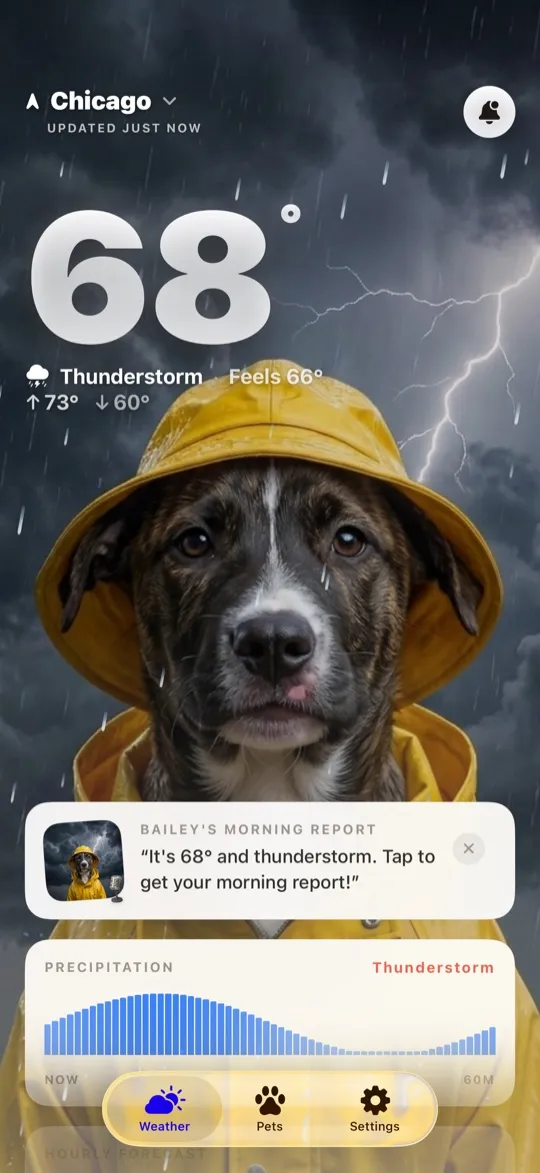
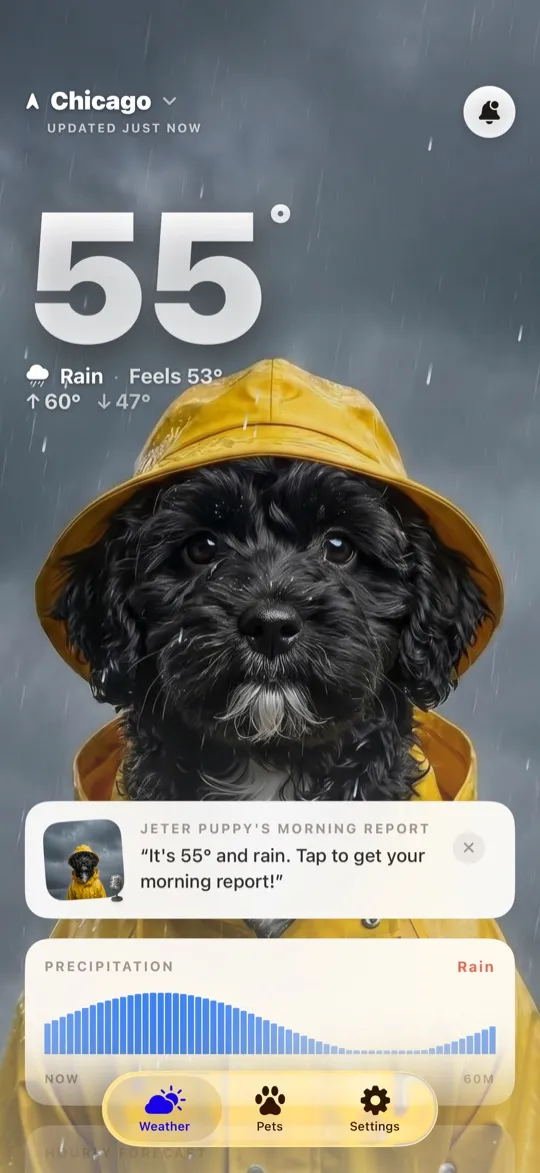

A note on health: This article is general information, not a substitute for professional veterinary advice. If you are worried about whether it is too hot or too cold for your own dog or any serious or emergency health concern, contact your veterinarian right away. Our guidance draws on trusted veterinary sources, including those linked above.
