Thermostat Settings for Cats: How Cold Is Too Cold Indoors
Search this question and you get a number: 70°F, usually, sometimes 65. Not wrong, exactly, but it answers a question nobody asked. No thermostat setting you would tolerate is actually warm enough for a cat, and once you know that, the whole problem changes shape.
Key takeaways
- A cat's thermoneutral zone is 86 to 100°F. Your house is not going to get there, and it should not. That gap is normal, not neglect.
- 68 to 72°F is a sensible setting for a healthy adult cat, with roughly 65°F as the floor. Add 4 to 6 degrees for seniors, kittens, hairless and thin cats.
- The right question is not the thermostat, it is the choices. A warm box the cat can leave beats two degrees on the whole house.
- Setback safety keys off the outdoor low, not the setback size. Above 40°F, set back freely. Below 25°F, vulnerable cats should not get one.
- Your thermostat reads the wall at five feet. Your cat lives on the floor, where it is colder.
Quick answer
For a healthy adult cat with a normal coat, set the thermostat somewhere in 68 to 72°F and treat 65°F as the floor you do not go below as a standing setting.
For a senior or arthritic cat, a kitten, a hairless breed, or a thin or unwell cat, move the whole band up by four to six degrees and stop trying to solve it with the thermostat alone.
Below 60°F a normal adult cat is coping rather than comfortable. Past that we are using our own rule rather than a clinical one: sustained 50s is too cold to leave a senior, hairless, very young or thin cat without a heat source, and the 40s is too cold for any cat without one.
Why 70°F is a compromise, not a comfort zone
Here is the number that reframes everything. The thermoneutral zone is the ambient range in which an animal spends no extra energy keeping warm or cooling down. For a domestic cat, peer-reviewed work on feline welfare puts it at 30 to 38°C, which is 86 to 100°F.
Read that against your thermostat. The same paper notes most cats in homes and laboratories live at around 22°C, roughly 72°F, and concludes that "thermal discomfort may be a common experience for many cats, despite being an issue that is relatively easy to remedy."
Veterinary Ireland Journal makes it vivid: humans are comfortable around 18 to 25°C and dogs around 20 to 30°C, so a normal room temperature feels to a cat roughly the way 8°C would feel to us. Chilly. Not dangerous, but never quite right.
Two things follow, and the second is the useful one.
First, you are not going to fix this with the thermostat. Heating a house to 86°F is unaffordable and unnecessary, because cats solve this behaviourally.
Second, every warm spot your cat picks is data. The radiator, the laptop, the square of afternoon sun, your lap: that is a cat closing a 15 degree gap on its own. The paper's recommendation is exactly this, to provide "warm bedding, resting areas, boxes, or heating elements" so a cat can behaviourally thermoregulate.

The band by cat type, and where the vulnerable ones sit
Nobody publishes an official feline thermostat chart, so this is our synthesis, built from the sources cited here and our own judgement, since no source publishes a per-cat band. The floor column is the lowest standing setting we would be comfortable with; the last column is where the thermostat stops being the right tool.
| Cat | Everyday setting | Floor | Needs a dedicated warm spot |
|---|---|---|---|
| Healthy adult, medium or long coat | 68 to 72°F | 65°F | Nice to have |
| Healthy adult, short coat | 70 to 72°F | 66°F | Nice to have |
| Senior (10+) or arthritic | 72 to 75°F | 70°F | Yes |
| Kitten under 4 months | 75 to 78°F | 72°F | Yes |
| Hairless or very thin coat | 75 to 78°F | 72°F | Yes |
| Underweight, recovering or unwell | 74 to 78°F | 72°F | Yes |
The pattern is simple. A cat keeps warm with coat, body mass and movement. Remove any one and the room does more of the work.
Seniors lose on all three at once, which is why cold shows up as stiffness before shivering. We went into that in senior cats and cold, the arthritis nobody notices.
Signs a cat is cold indoors
Cats are much worse than dogs at broadcasting discomfort, and shivering is not a reliable sign of cold in either, so posture and location tell you long before symptoms do.
- The tight curl. Nose to tail, paws folded under, tail wrapped around. A warm cat sprawls and shows its belly; a cool one makes itself into a sphere, the shape with the least surface area.
- Relocation. A cat that has moved to the radiator or your keyboard has told you the room is cool. A cat that suddenly wants your lap in November is not being affectionate at you specifically.
- Cool ear tips and paw pads, the thinnest and least insulated parts.
- Sleeping more and eating less, or eating more with no weight gain. Either can be a cold house and can also be several other things.
- Shivering, lethargy, or a body that feels cold rather than just cool extremities. That is past discomfort. The Merck Veterinary Manual puts a cat's normal temperature at about 101.5 to 102°F and treats a cold, weak or unresponsive animal as an emergency. Call your vet.
One winter behaviour is the dangerous version of all this. A cat that cannot find warmth indoors will find it outdoors, and the Cornell Feline Health Center warns about cats climbing into wheel wells and engine bays for the residual heat, recommending you bang on the hood before starting the car. If your indoor cat has started trying to get out in January, treat it as a heating problem first.
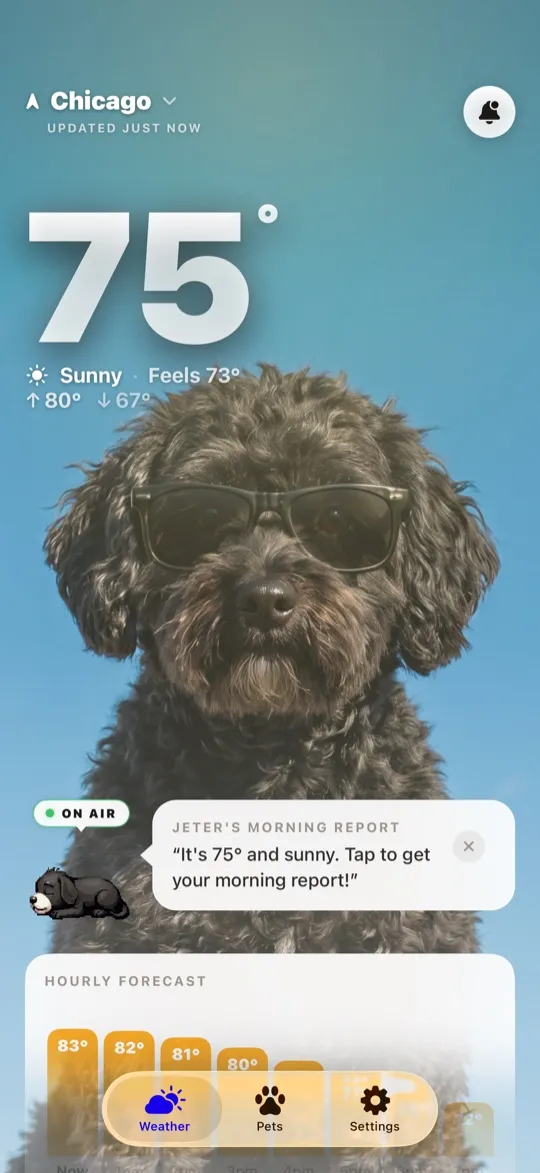
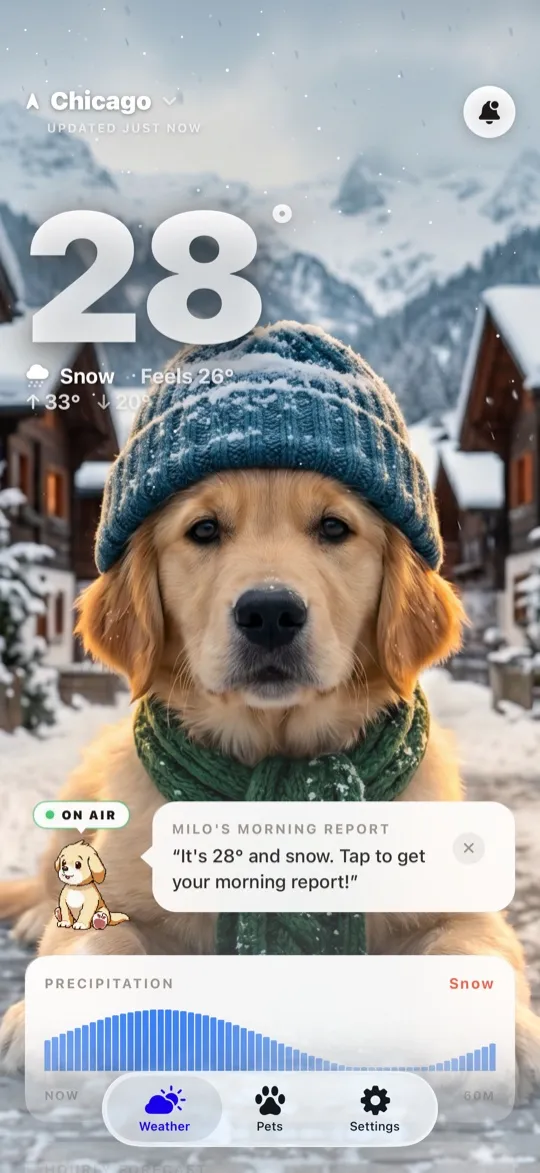
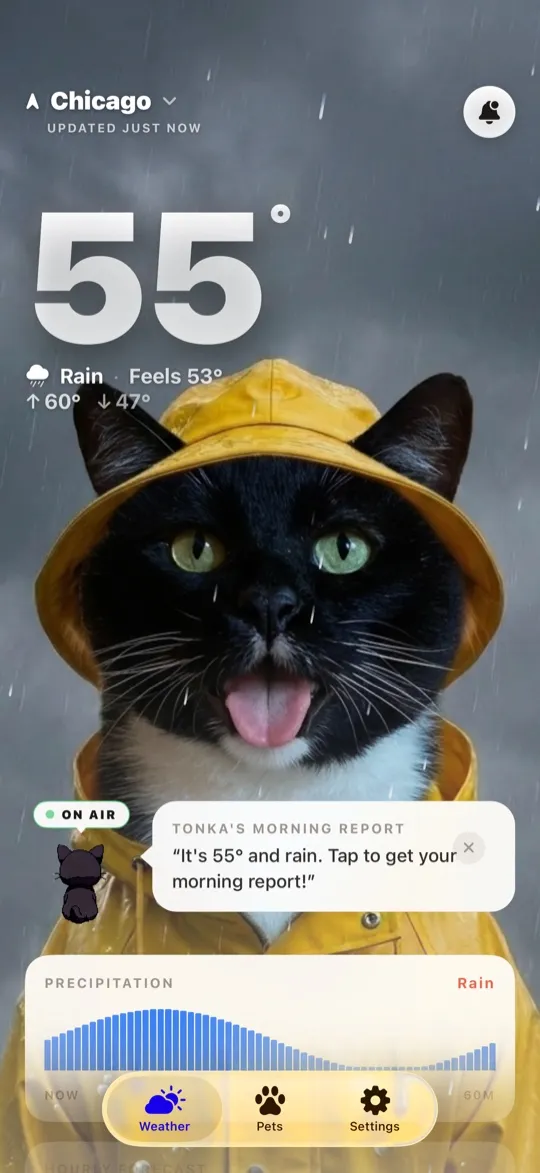
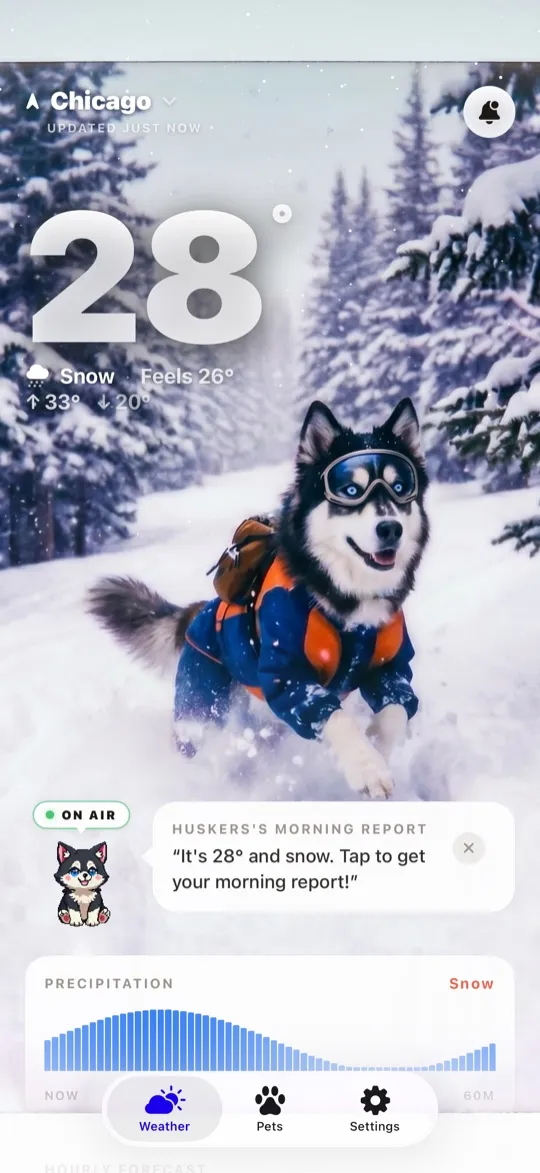
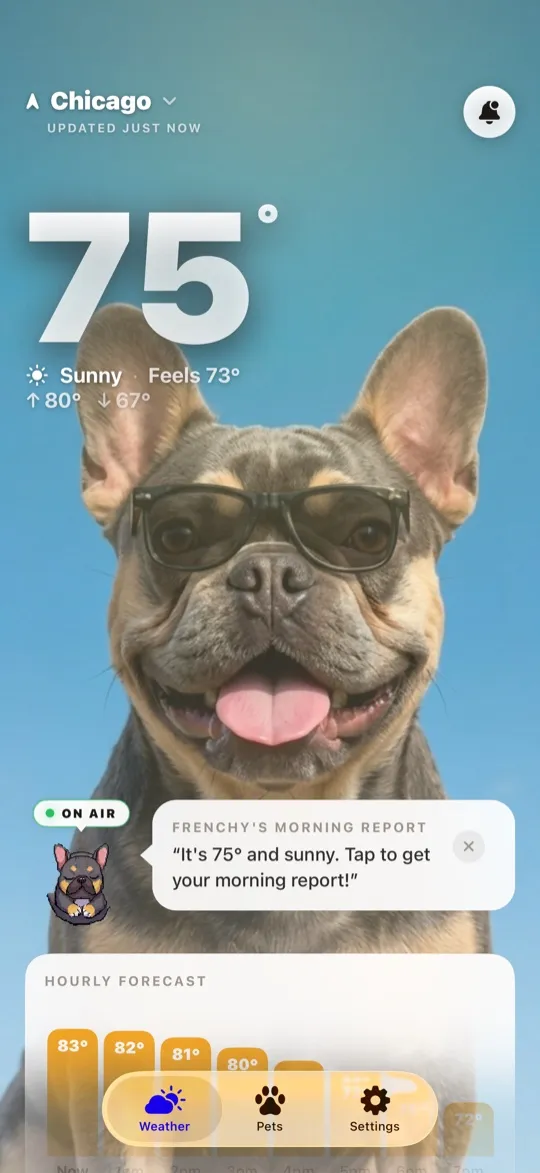
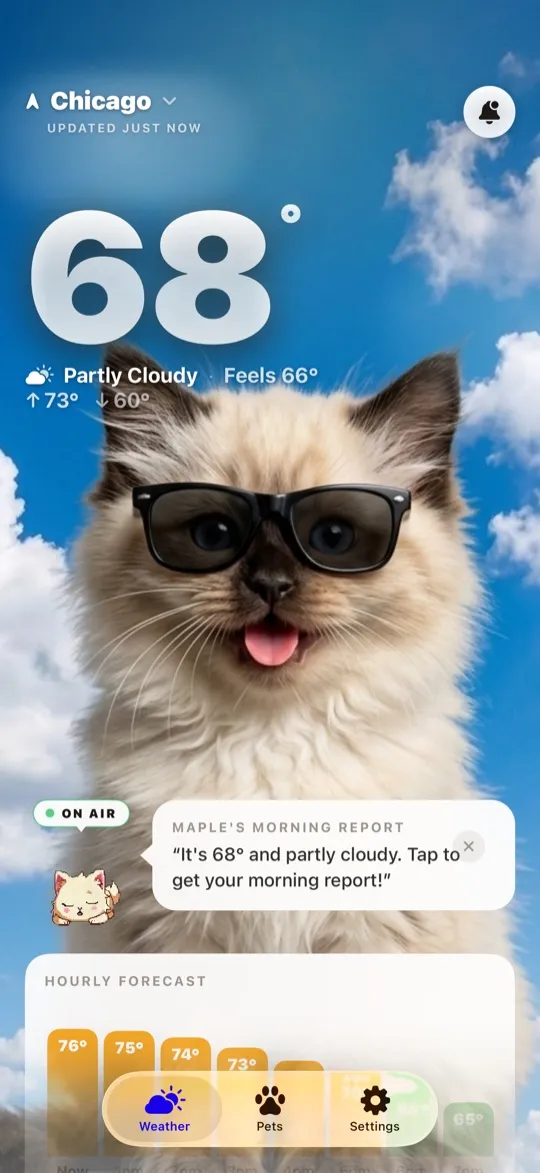
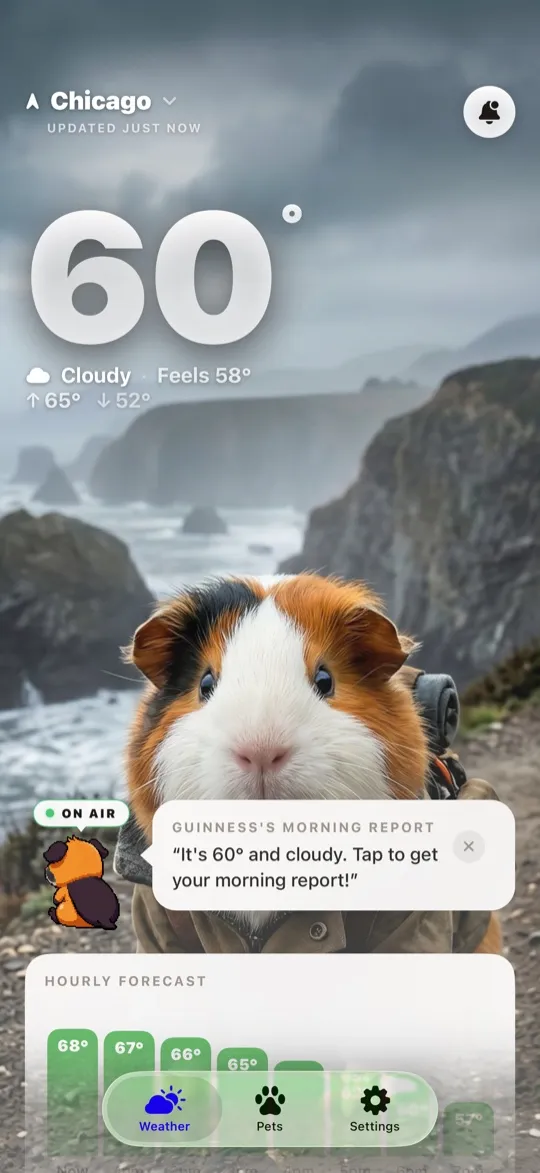
The thermostat question is really a forecast question: the low outside decides how hard your house has to work. WeatherPets puts tonight's low and the 10 day trend in front of you, delivered by your own cat, and the Pet Safety Score grades cold for your specific cat rather than a generic one. See how the Pet Safety Score works, or get WeatherPets free on the App Store.
Away from home: setbacks, schedules and outages
Turning the heat down while you are out or asleep is normal and sensible. Owners ask whether it is fair on the cat, and the honest answer is that the setback size matters less than the outdoor low underneath it.
Two bits of physics explain why. A scheduled setback assumes the system recovers on time, and on a very cold night the house sheds heat faster than the schedule expects, so the real indoor low undershoots the setpoint. And your thermostat is mounted about five feet up a wall while your cat sleeps on the floor, where cold air pools and a cold slab pulls heat out by conduction. The display is the most optimistic reading in the room.
So key the decision to the forecast low. The ladder below is our own rule of thumb rather than a veterinary standard, and it errs warm for the cats with least margin:
- Outdoor low above 40°F: a normal 7 to 10 degree setback is fine for any healthy adult cat.
- Outdoor low 25 to 40°F: keep it to about 5 degrees if your cat is senior, arthritic, hairless, very young, thin or unwell.
- Outdoor low below 25°F: no setback for those cats. Hold the daytime setting.
- Outdoor low below 10°F: hold the setting for everyone, and check where the cat actually sleeps. A bed against an exterior wall or on a bare floor is colder than the room average.
Power cuts catch people out, and there the worry is duration rather than the number. An hour at 55°F is a non event. A weekend is not. Ready.gov's outage guidance is best read in a normal week. Our power outage pet plan goes further; the short version is one room, door closed, blankets and a covered box off the floor, the cat and you in it. Never a fuel burning heater in a closed room. The American Veterinary Medical Association's cold weather guidance covers the wider winter hazards.
If any cat you feed lives outside, none of this applies and the shelter is the whole answer. We covered it in building winter shelter for outdoor cats.
Warm spots that cost nothing
Given a 15 degree gap between room and ideal, the cheapest fix is not heat, it is choice. Each of these lets the cat pick its own temperature.
- A covered box. A cardboard box on its side with a fleece inside, in a draught free corner, off the floor if you can. Enclosure traps the cat's own body heat, which is why cats pick boxes over open beds in winter.
- Move the bed into the sun. Track where the afternoon patch lands and put the bed there. It moves with the season.
- Get it off the floor. Height is warmer, and a shelf or windowsill perch breaks contact with a cold surface.
- Two options, not one. A warm spot and a cooler one, so the cat regulates instead of being stuck. This matters most with any heated bed: the cat must always be able to leave it.
None of that requires believing your house is too cold. It accepts that 72°F is a compromise between you and an animal whose comfort zone starts at 86, and the compromise gets easier if the cat has somewhere to go.
Frequently asked questions
What temperature should I keep the house for my cat?
For a healthy adult cat with a normal coat, 68 to 72°F is a sensible everyday setting and around 65°F is a reasonable floor. Push the whole band up by 4 to 6 degrees for a senior or arthritic cat, a kitten, a hairless breed or an underweight cat. None of those numbers reach a cat's actual thermoneutral zone, which research puts at 86 to 100°F, so the more useful move is giving your cat warm places to choose rather than heating the whole house harder.
Do cats get cold at 60F indoors?
A healthy, well fed adult cat with a normal coat will cope with 60°F without coming to harm, but it is below comfortable and you will see it in the behaviour: curling up tightly, tucking the paws away, and camping on any warm surface it can find. For a senior, arthritic, hairless, very young or underweight cat, 60°F is genuinely too cold to leave as the standing setting. If you cannot heat higher, add a heated bed or a covered box rather than accepting the room temperature.
How do I know my cat is cold?
Look for posture before you look for shivering, which is not a reliable sign. A cold cat curls nose to tail into a tight ball with the paws tucked under, sits hunched rather than stretched out, and relocates to heat: a radiator, a sunny patch, the top of a router, your laptop, or your lap. Cool ear tips and paw pads, sleeping more than usual and a reduced appetite are the next tier. Shivering, lethargy and a cat that feels cold through the body are reasons to call your vet.
Is it safe to turn the heat down while I am at work?
Usually, and how far depends on the outdoor low rather than on the setback itself. When the forecast low stays above 40°F, a normal 7 to 10 degree daytime setback is fine for a healthy adult cat. Between about 25 and 40°F, keep the setback to around 5 degrees if your cat is a senior, hairless, very young or thin. Below 25°F, skip the setback for those cats: the house loses heat faster than a scheduled system recovers, and the floor where your cat sleeps runs colder than the thermostat on the wall reads.
How cold does the house have to get before it is dangerous?
There is no published clinical threshold for indoor room temperature, so this is our own practical rule rather than a veterinary standard. We treat sustained indoor temperatures in the 50s as too cold for a senior, hairless, very young or underweight cat with no heat source, and the 40s as too cold for any cat without one. Duration matters as much as the number: an hour at 55°F during a power cut is very different from a weekend. A cat that feels cold through the body, is shivering or is unusually still needs a vet, not another blanket.
Your daily forecast, delivered by your own pet.


A note on health: This article is general information, not a substitute for professional veterinary advice. The temperature bands here are practical guidance, not a clinical standard, and a cat with a health condition may need something different. If your cat is shivering, lethargic, cold through the body, or has any serious or emergency health concern, contact your veterinarian right away. Our guidance draws on trusted veterinary, university and government sources.
