Dog Shivering on a Walk: The Signal to Turn Back
Your dog shivers halfway round the usual loop. Most advice online treats that as a symptom to look up, which is the wrong category entirely. It is not a symptom. It is a route decision, and it arrives at the exact moment you are furthest from the front door.
Key takeaways
- Shivering is a cost signal, not a diagnosis. It means your dog has stopped coasting on insulation and started spending energy to stay warm.
- The Merck Veterinary Manual is blunt about this: shivering is not a reliable sign of hypothermia in pets. So do not diagnose from it, and never take its absence as reassurance.
- Decide at the halfway point, not at the shiver. On an out-and-back route, an early signal at the turnaround means the whole return leg happens on a dog who is already losing.
- Wind and wet move the line further than temperature does. A damp coat in a breeze costs more than another five degrees on the thermometer.
- The genuinely worrying signs are different and worse: weakness, confusion, shallow breathing or collapse. Those are a call to the vet, not a shorter walk.
What a shiver actually is
Shivering is involuntary muscle activity whose entire purpose is to make heat. A comfortably insulated dog does not need to do it. When the shiver starts, passive insulation has stopped being enough and your dog has switched to burning fuel to hold their core temperature steady. That reframes the whole thing: the shiver is not the alarm at the end of a long decline, it is the receipt for a bill that has just started being charged. Which makes it the ideal moment to act, because nothing has gone wrong yet.
Now the part that most articles get wrong. The Merck Veterinary Manual's emergency guidance states directly that shivering is not a reliable sign of hypothermia, and lists the signs that are: slow pulse, shallow breathing, confusion, collapse or unconsciousness. Meanwhile the American Kennel Club describes shivering and curling up for warmth as among the first signs of mild hypothermia.
Those two are not in conflict once you separate the questions. Shivering is an excellent early cue that a dog is cold, and a poor test of whether a dog is in danger. The consequence cuts both ways, and the second half catches people out: a dog who stops shivering has not necessarily improved. Treat the shiver as a prompt to act, never as the instrument you measure with.
The turn back math
Here is the practical problem with waiting for a shiver. Most walks are out and back, or a loop, so the moment you notice is usually the moment you are furthest from home. A shiver at the turnaround does not buy you a short trip indoors. It buys you the whole return leg on a dog already spending energy to stay warm, and spending more of it as they tire.
So the useful rule is not "turn back when the dog shivers". It is make the call at roughly 40 percent of the route, using what you can see at that point.
If your dog is showing any early signal at 40 percent, turn there. If they are entirely relaxed, carry on and check again. This is the same reasoning as a turnaround time on a hike, and it exists for the same reason: the decision has to be made while you still have margin, not once you have used it.
| What you see | What it means | What to do |
|---|---|---|
| Lifting one paw, then another. Walking on tiptoe | Cold ground, usually before the body is cold at all | Get off the wet or frozen surface. Grass and dirt beat pavement |
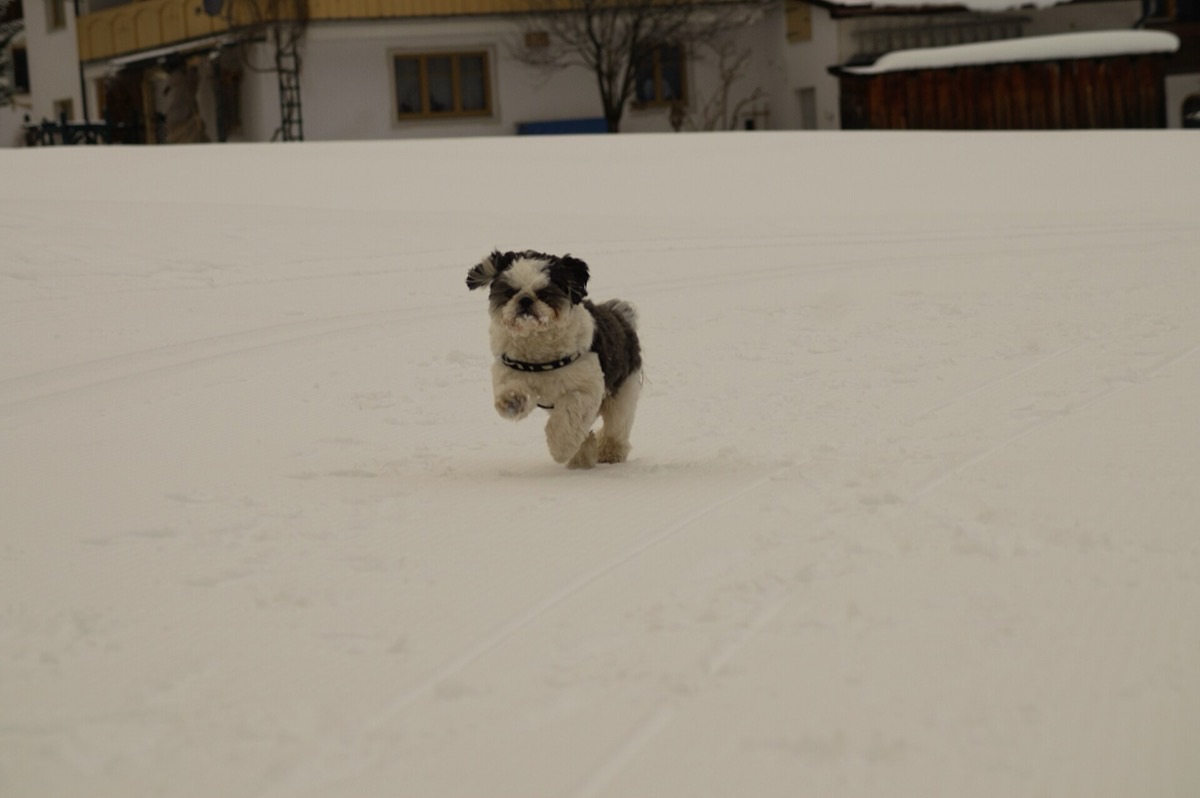
| Slowing, lagging, tail tucked, ears back | The earliest behavioural signals, before any shiver | Turn now if you are near the halfway point |
| Turning to face home, or stopping and refusing to go on | Your dog has already made the decision | Take the hint. This is the clearest signal you will get |
| Shivering | Active heat production has started | Turn for home. Shorten the route, pick up the pace, add a coat next time |
| Weakness, confusion, stumbling, shallow breathing | Not a walk problem any more | Stop, get warm, contact a vet or emergency clinic now |
The signals that arrive before the shiver
By the time a dog shivers, they have usually been telling you for several minutes in a quieter language. The AVMA's cold weather guidance names the set: whining, shivering, anxiety, slowing down or stopping, weakness, and hunting for somewhere warm to burrow. Only one of those is a shiver.
In practice the earliest ones are postural and easy to miss because they look like ordinary dog behaviour:
- The pace drops. A dog who normally pulls starts walking beside you, then slightly behind.
- The tail tucks and the body narrows. Dogs reduce their exposed surface area for the same reason we cross our arms.
- Paw lifting. Almost always about the ground rather than the air, and often fixable by moving onto grass.
- They turn toward home. The single most reliable signal on this page, and the one owners most often overrule.
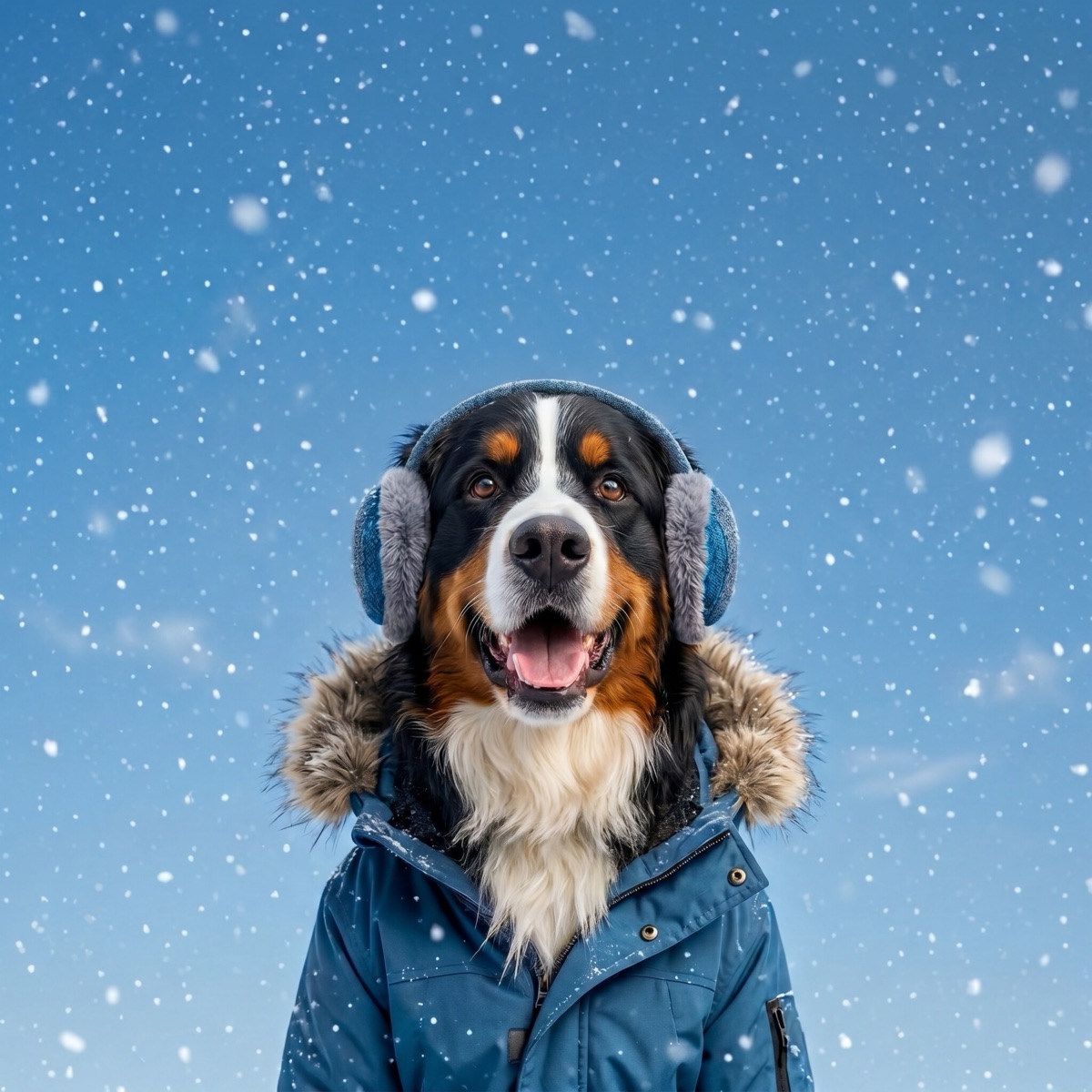
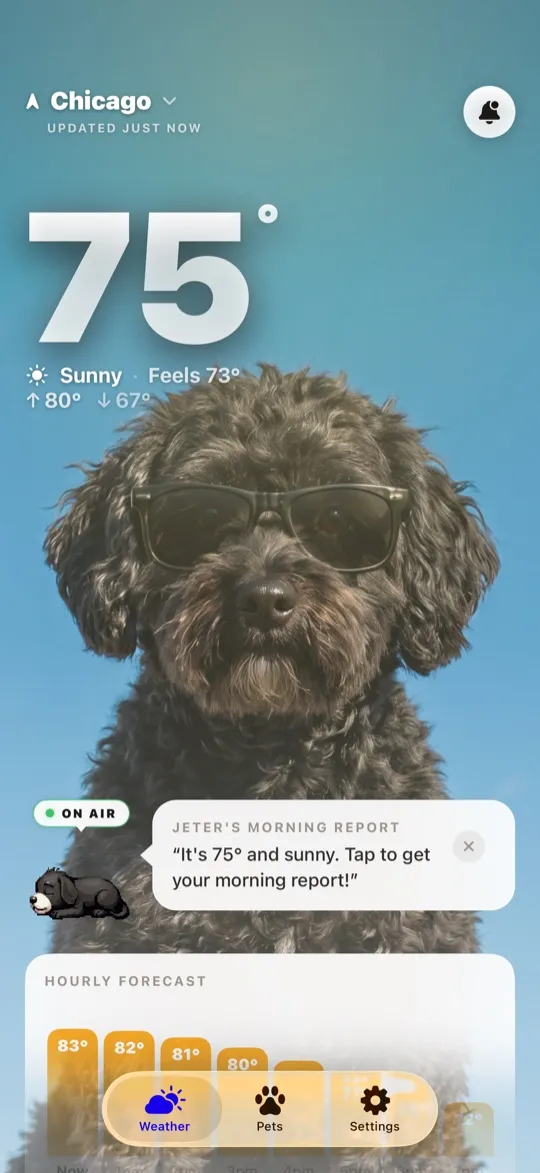
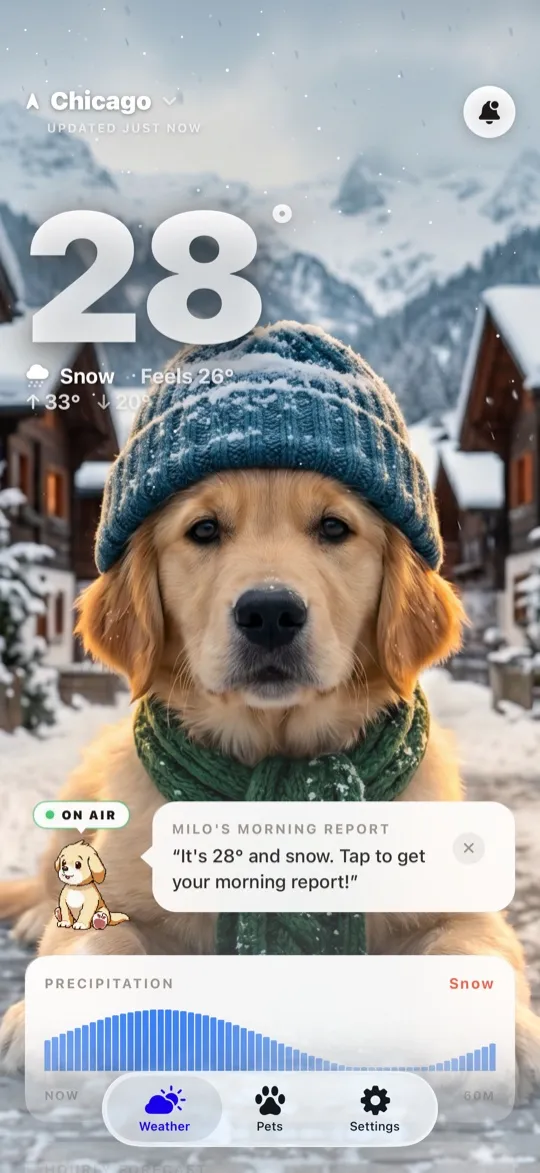
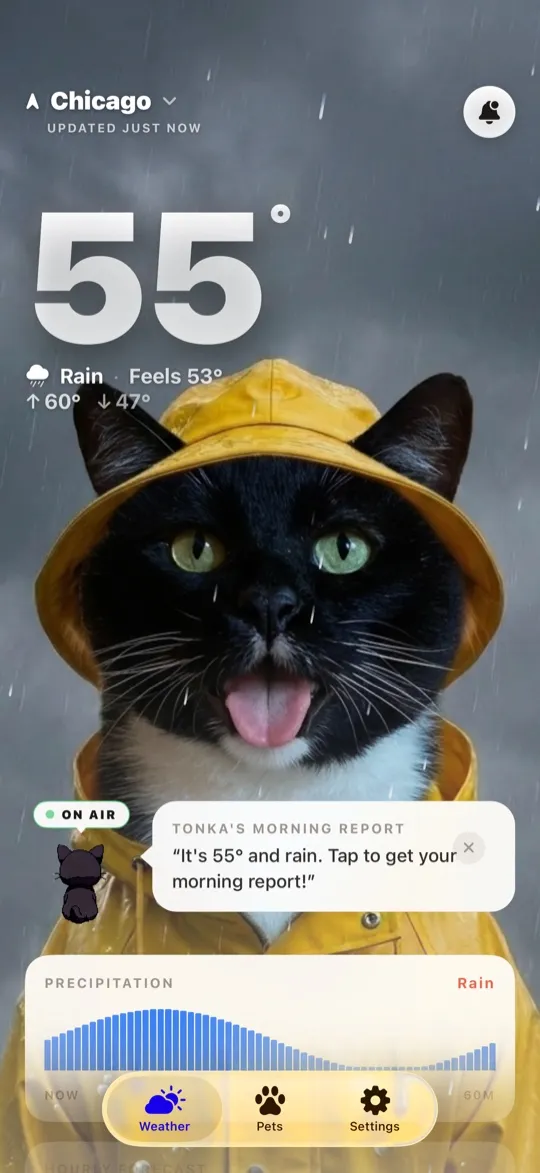
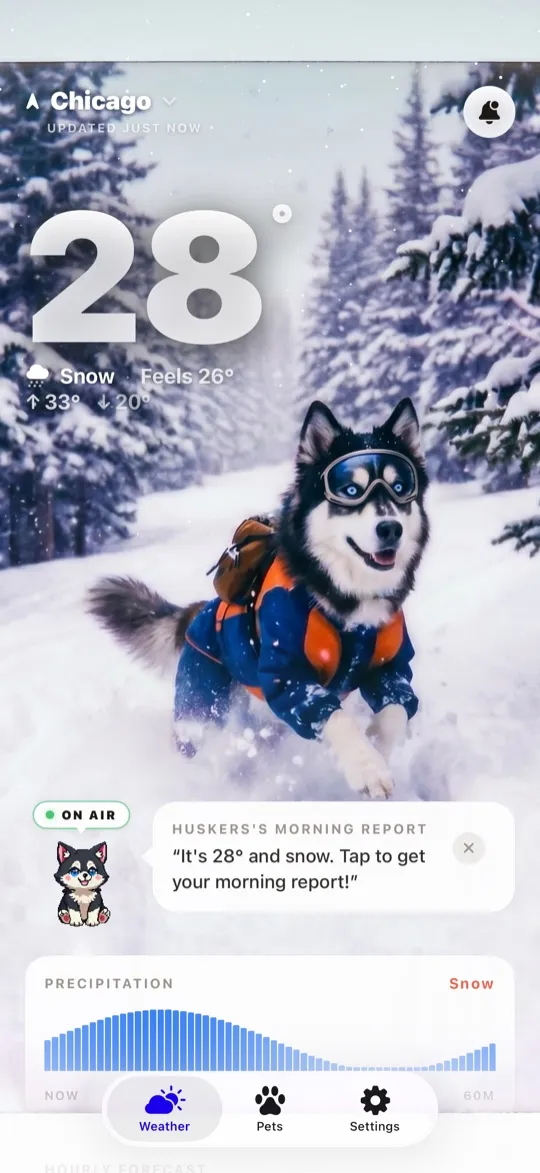
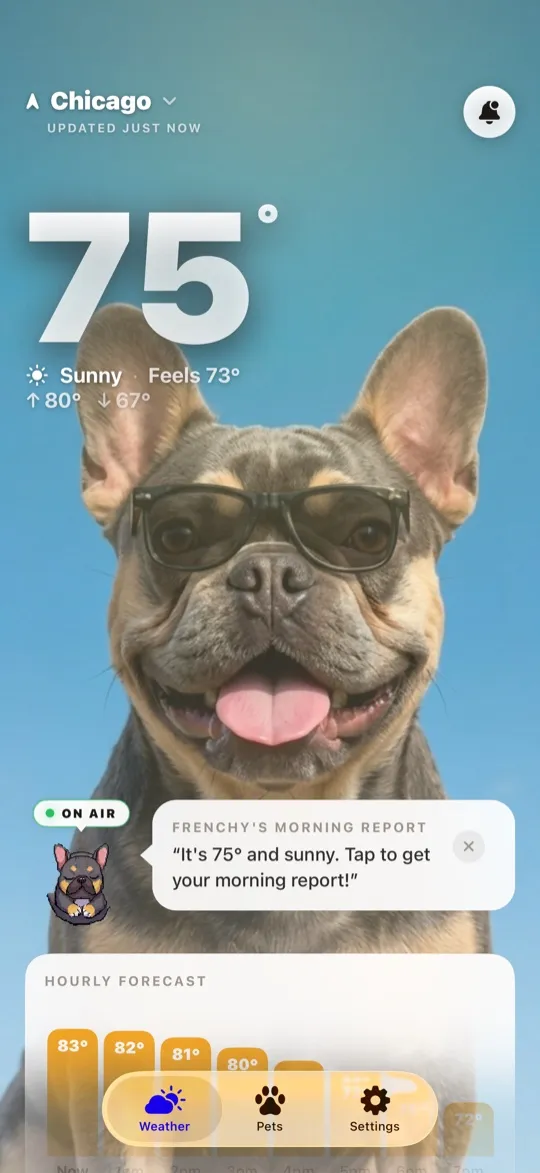
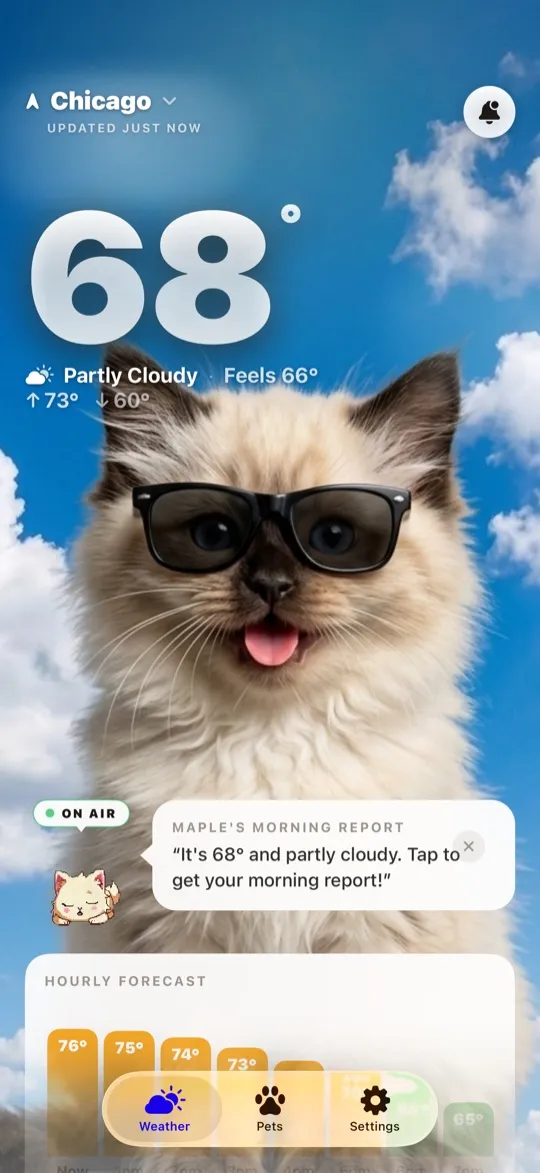
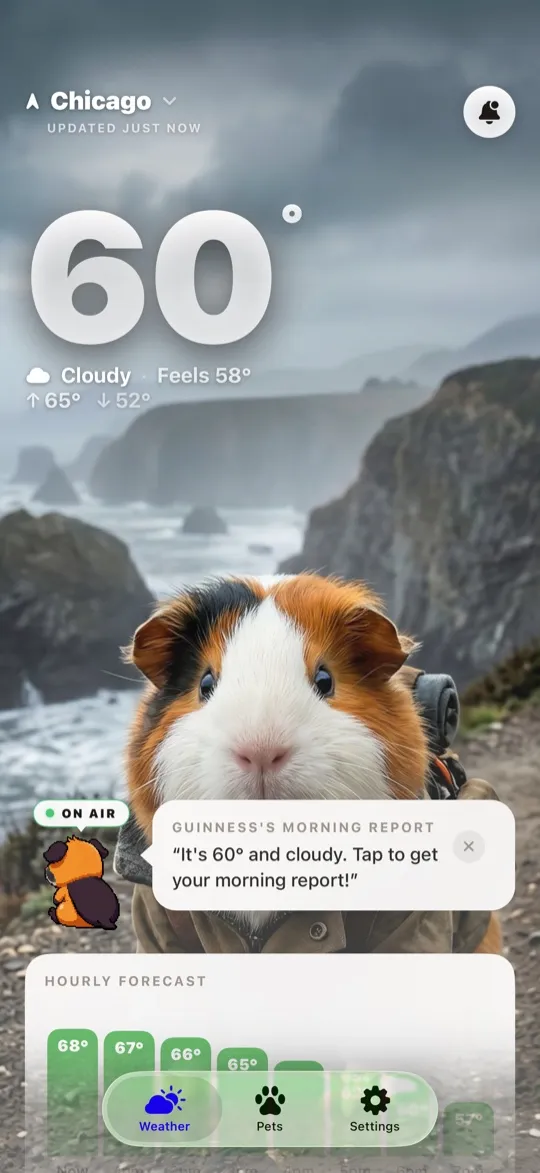
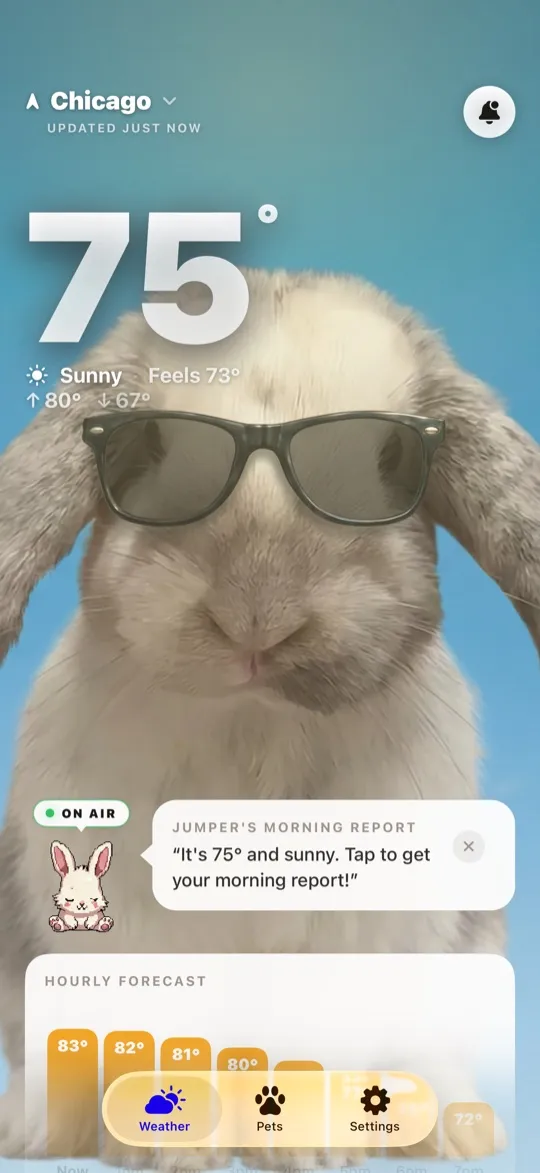
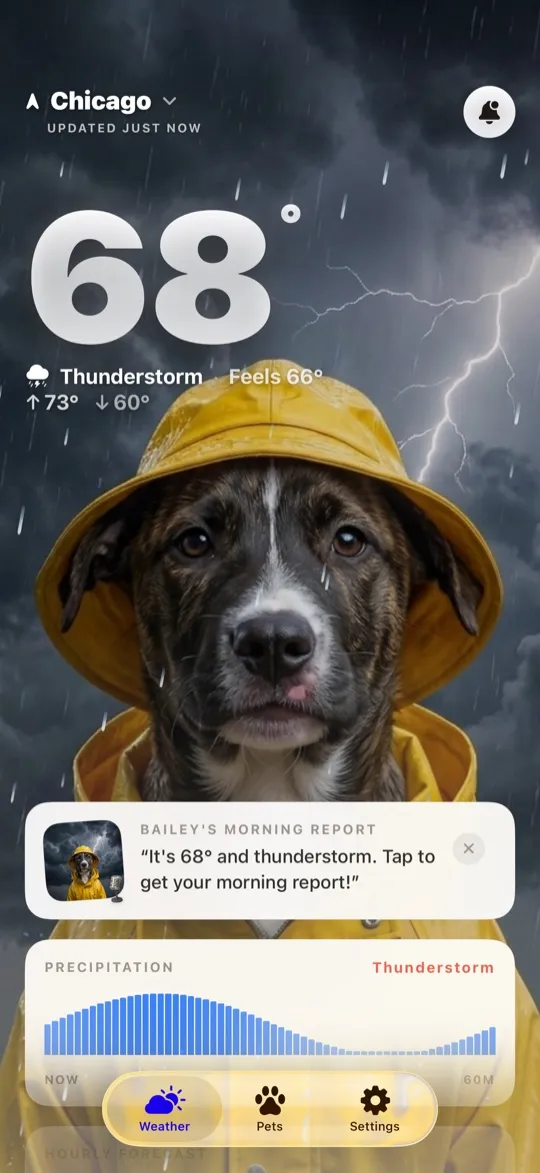
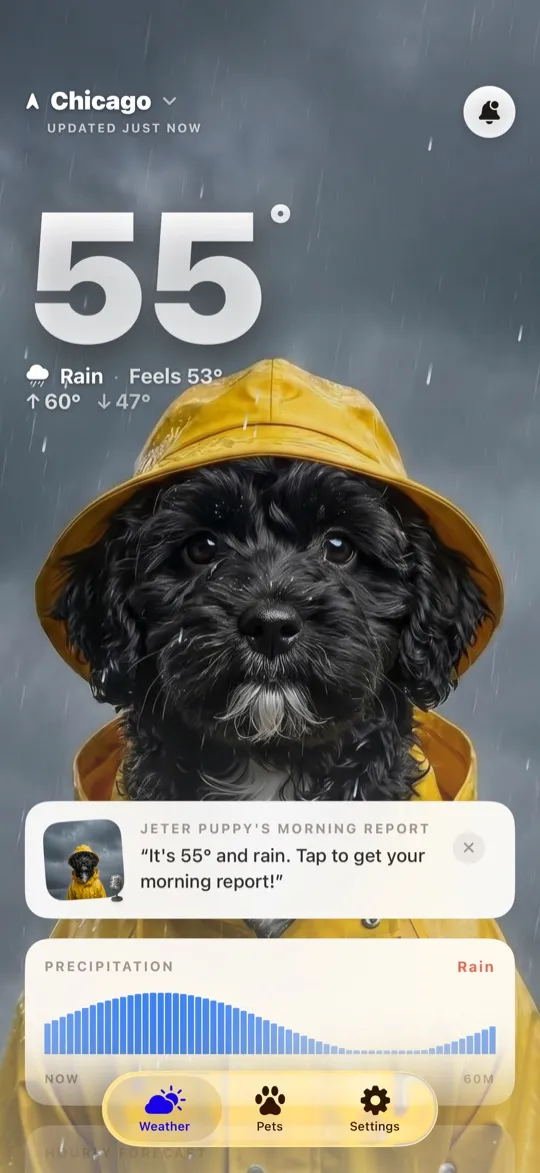
Most of this is easier to avoid than to read in real time, and the avoidable version is a scheduling decision made indoors. WeatherPets puts the day's conditions on your home screen with your own pet delivering them, so you can see what the wind is doing before you commit to the long loop. Download WeatherPets and pick your pet.
What moves the line
There is no temperature at which dogs start shivering, which is why every "how cold is too cold" chart comes with caveats. Four variables do most of the work, and only one of them is the number on the forecast.
- Wind. Insulation works by holding a layer of still warm air against the skin. Wind strips that layer out, and a coat that is fine at 40F in calm air is not fine at 40F in a stiff breeze. Our guide to wind chill and dogs covers how far that shifts things.
- Wet. Wet fur does not insulate, and evaporation actively removes heat. This is why a drizzle at 45F outperforms a dry 35F for making a dog miserable, and why the walk home after a swim is the one that produces the shiver.
- Size and coat. Small bodies have more surface area per unit of mass, so they lose heat faster. A single-coated or short-coated breed has less to lose it through. Both are why the terrier is shivering while the retriever is delighted.
- Age and condition. Puppies regulate poorly, and older dogs lose muscle mass, which is both insulation and the tissue that does the shivering. Our piece on senior dogs and temperature goes into why the same walk gets harder every winter.
The one that surprises people is pace. A trotting dog generates a great deal of heat, and the shiver often appears the moment that stops: at a crossing, on the doorstep, in the car. If your dog shivers every time you stop to chat, the problem is the standing still. Our guide to how cold is too cold for your dog has the thresholds by size and coat type.
When a shiver is not about cold at all
Dogs shiver for reasons that have nothing to do with weather, and knowing the difference saves both worry and complacency. Fear and excitement produce it, which is why a shivering dog at the vet's office is usually a nervous one. So do pain and nausea.
Two questions separate them most of the time. Does the context fit? Cold shivering starts outdoors, in cold or wet or wind, and gets worse the longer it goes on. Does it stop? A cold dog who is brought inside, dried off and warmed up typically settles within ten to fifteen minutes and then behaves entirely normally.
Shivering that carries on in a warm room, starts for no environmental reason, or arrives with vomiting, a hunched back, reluctance to be touched or a refusal to eat is a different conversation and belongs with your vet rather than on a blog.
The fixes, in order of how much they help
Almost none of this needs equipment, which is fortunate, because the equipment is the part people buy first and use last.
- Dry the dog before the walk, and again after. The ASPCA recommends towelling a pet off as soon as they come in, and washing and drying feet and belly to clear salt and grit. A damp dog is a cold dog for the next hour.
- Shorten and repeat. Three ten-minute outings beat one thirty-minute one in genuine cold, because the dog never gets far from warmth and never gets the chance to run the deficit down.
- Keep moving. Cold days are not the day for the long amble where you stand still at a lamp post for six minutes.
- Then, the coat. The ASPCA suggests a coat or sweater with coverage from the base of the tail to the belly for short-haired dogs, and it matters most for small, thin, old and single-coated dogs. Our winter coat comparison covers what actually fits.
And the boring one that outranks all of them: if the ground is frozen or salted, watch the feet as closely as the body. Frostbite is a separate risk with a separate signal set, and our guide to frostbite in dogs and cats covers the extremities that go first.
None of this makes a shivering dog an emergency. It makes it a decision, taken at the right point in the route rather than the convenient one.
Frequently asked questions
Should I stop the walk if my dog is shivering?
Turn for home, yes. You do not need to panic, but you also should not push on. Shivering means your dog has stopped coasting on insulation and started burning energy to hold their temperature, and that is a process that gets more expensive the longer it runs. The mistake is treating the shiver as a thing to note and walk past. Treat it as the moment the route changes, especially if you are at the far end of an out-and-back walk with the same distance still to cover.
Is shivering a sign of hypothermia in dogs?
Not reliably, and this is where a lot of internet advice goes wrong. The Merck Veterinary Manual states plainly that shivering is not a reliable sign of hypothermia in pets, and lists slow pulse, shallow breathing, confusion, collapse and unconsciousness as the signs that actually matter. The practical consequence runs in both directions: a shivering dog is usually just cold rather than in danger, and a dog who has stopped shivering has not necessarily improved. Never use the absence of a shiver as reassurance.
Why does my dog shiver after a walk but not during it?
Because movement was doing the work. A trotting dog generates a lot of heat, and the shiver appears when that stops: at the lights, on the doorstep, or in the car on the way home. A damp coat makes it worse, because evaporation keeps pulling heat away after the exercise has ended. It is normal, and it usually settles within ten to fifteen minutes once the dog is dry, warm and indoors. If it does not settle in that window, that is worth a call to your vet.
Which dogs start shivering soonest?
Small dogs, thin dogs, short or single-coated breeds, puppies and seniors, roughly in that order. Small bodies have more surface area for every unit of mass, so they shed heat faster than a large dog in the same air. Wet fur and wind both cut through insulation and move the threshold several degrees in the wrong direction. A senior dog with arthritis is a special case, because stiffness and cold reinforce each other and the dog slows down exactly when they most need the heat that movement provides.
When is a shivering dog an emergency?
When the shivering comes with signs that are not about temperature control at all. Merck lists slow pulse, shallow breathing, confusion, collapse or unconsciousness, and any of those means stop and contact a vet or an emergency clinic now rather than finishing the walk. The same applies to shivering that starts for no environmental reason, keeps going in a warm room, or arrives with vomiting, a hunched posture or a refusal to be touched, because shivering is also how dogs show pain, nausea and fear.
Your daily forecast, delivered by your own pet.

A note on health: This article is general information, not a substitute for professional veterinary advice. If your dog is weak, confused, breathing shallowly or collapses, or you have any serious or emergency health concern, contact your veterinarian or an emergency animal hospital right away. Our guidance draws on trusted veterinary and government sources, including those linked above.
