Fall Water Temperature: When Dog Swims Turn Risky
September is the month the lake lies to you. The afternoon is 75F, the light is beautiful, your dog has swum here twenty times since June, and the water is now fifteen degrees colder than the last time you checked. Nothing about the scene looks different. Almost everything about it is.
Key takeaways
- Water lags air by weeks. The NWS warns that warm air creates a false sense of security while the water stays cold, which is exactly the autumn trap.
- Below 70F deserves caution, and 50 to 60F is the maximum cold shock band. Those thresholds are human, and that is precisely why they matter.
- The most dangerous person at an autumn swim is usually the owner. Your dog can often exit water you could not survive entering.
- Limber tail is real and seasonal. A Labrador cohort found 9.7 per cent cumulative incidence, with swimming, working status and higher latitude all raising the odds.
- Check the water, not the forecast. Then halve the session and dry the dog properly the moment they are out.
Why the water is colder than the day
Water has a large heat capacity, so it warms slowly in spring and cools slowly in autumn. What that means in practice is that a body of water is always running a few weeks behind the air above it. In May that works in your favour and everyone complains the lake is freezing. In September it works against you silently, because the air has stayed pleasant and nobody re-checks an assumption that has been true all summer.
The National Weather Service's cold water safety guidance puts the warning plainly: warm air temperatures create a false sense of security, and many areas of the country have warm days while the water stays cold. It also makes a point that surprises most people, which is that cold shock can be just as severe and dangerous from water at 50 to 60F as it is from water at 35F.
That second fact is the one that reframes autumn. There is no comfortable middle band where cold water stops mattering. The risk does not switch on somewhere near freezing; it is fully present at temperatures a September lake reaches easily.
| Water temperature | What happens to a person | What it means for the swim |
|---|---|---|
| Above 77F | Normal summer swimming | Ordinary rules. Watch for the usual things instead |
| 70F to 77F | Breathing starts to be affected | Fine for most dogs. Shorten sessions for small or lean ones |
| 60F to 70F | Breath control gets progressively harder | Short dips only. Treat any rescue as off the table for you |
| 50F to 60F | Total loss of breath control. Maximum cold shock | No swimming. Keep the retrieve on land |
| Below 40F | Painfully cold, severe stress | Stay away from the edge entirely, especially with ice later in the year |
Those bands come from the National Center for Cold Water Safety's temperature guide, which treats anything below 70F with caution and defines 50 to 60F as the point of total loss of breathing control.
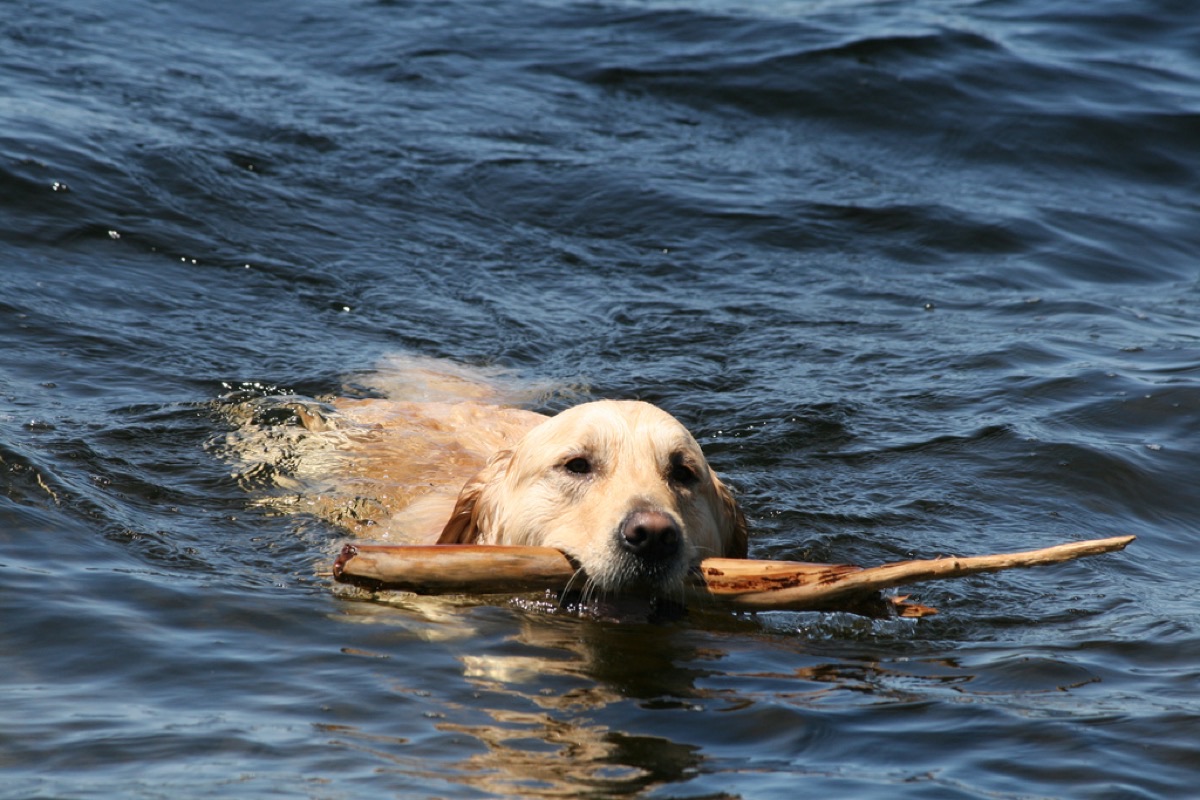
The numbers are about you, and that is the point
Everything in that table describes human physiology, and a fair question is why a dog owner should care about the temperature at which a person loses breath control.
Because the way an autumn swim actually turns into a disaster is almost never the dog drowning unassisted. It is the owner going in. A dog who gets into difficulty in cold water is a scene that produces an immediate, unthinking response from the person on the bank, and the person on the bank is the one whose breathing stops working at 55F.
So make the decision in advance, on dry land, while it is still abstract: you are not going in. Then arrange the session so you never have to test that. Keep the throw close to shore, use a long line if your dog will chase anything at any distance, and pick water with an easy exit rather than a steep or slick bank. Our piece on whether dogs can actually swim covers why the assumption that every dog is a competent swimmer causes trouble in its own right.
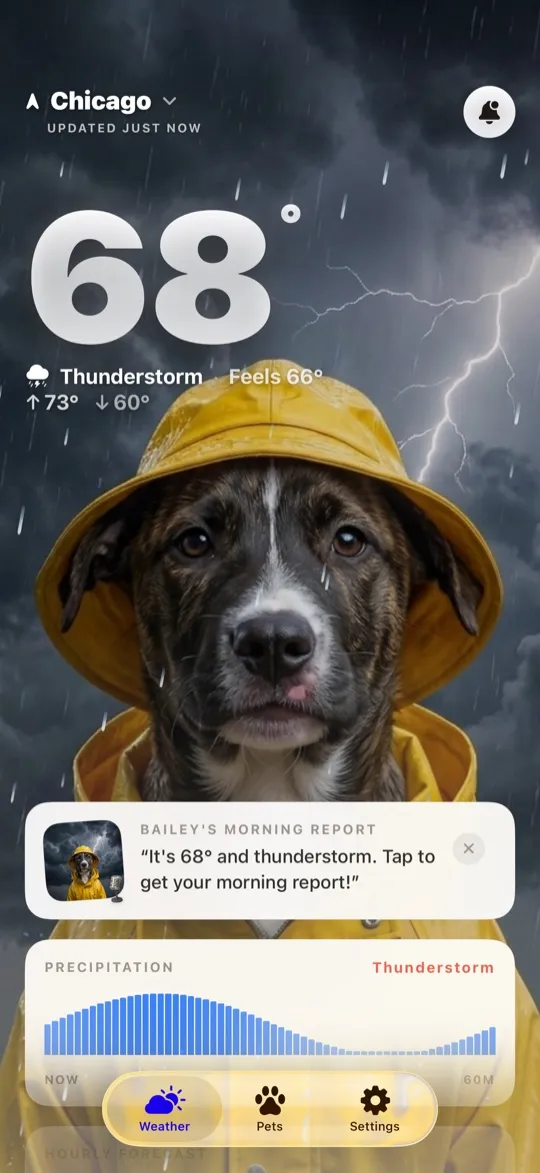
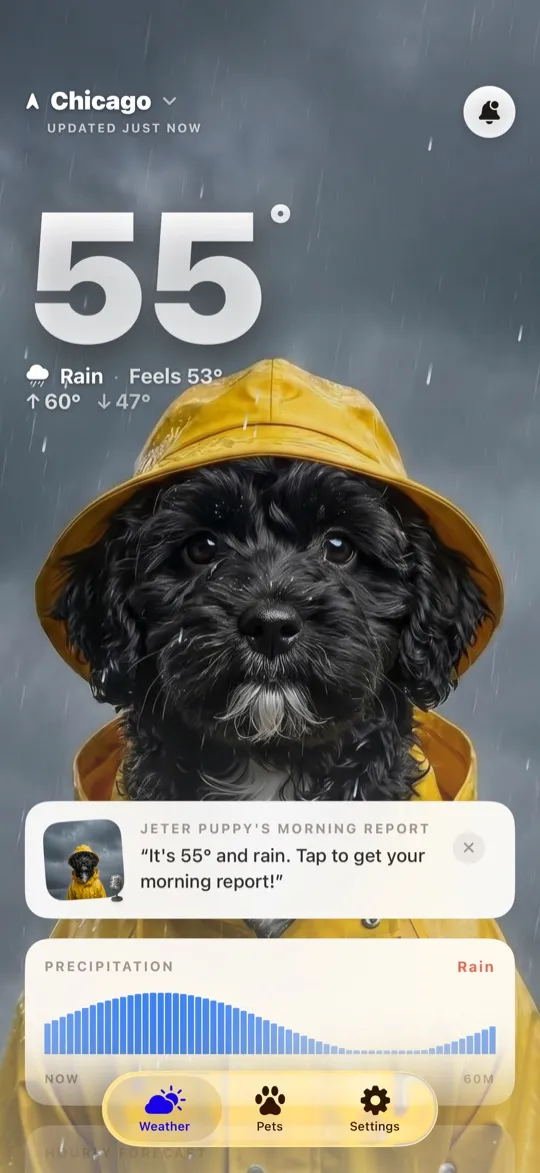
The whole trap here is that the air tells you one story and the water tells you another. WeatherPets keeps the day's conditions on your home screen with your own pet delivering them, so a warm afternoon in October reads as what it is, a warm afternoon in October. Meet your WeatherPet on the App Store.
The autumn injury nobody sees coming
There is a specific condition that turns up after cold water swims and catches owners completely off guard, because the dog seems perfectly fine at the time. Limber tail, also known as swimmer's tail, cold water tail or acute caudal myopathy, leaves the tail hanging limp and clearly painful, usually within twenty four hours of hard swimming or cold exposure. VCA's description of acute caudal myopathy and the AKC's guide to swimmer's tail both cover what it looks like.
What makes it worth a section is the data. A Veterinary Record study following a Labrador retriever cohort found a cumulative incidence of 9.7 per cent, far higher than earlier estimates. Swimming dogs had roughly 4.7 times the odds of non-swimmers, working dogs about 5.1 times the odds of household pets, and, most relevant here, higher latitude showed up as a previously unidentified risk factor, at about 1.47 times the odds per unit of latitude. Colder places, more limber tail.
One finding deserves emphasis because it complicates the folk version: around a quarter of affected dogs had never swum at all. So this is not purely a swimming injury. Cold and hard exertion each contribute, which means a long, cold, wet retrieve session on land in November belongs in the same risk category.
It typically resolves on its own within a couple of weeks. It is also painful, so it warrants a call to your vet rather than a wait and see, both for comfort and to rule out the other things a suddenly limp tail can mean.

How to run an autumn swim well
- Measure the water, not the air. A cheap pool or aquarium thermometer on a string settles the argument in thirty seconds. Local buoy and lake data online works too. Guessing does not.
- Cut the session hard. Whatever felt normal in August, take a large fraction off it. Repeated short entries with movement in between beat one long swim.
- Know which dogs cool fastest. Small, lean, short coated, young and elderly dogs lose heat quickest, the same list that governs cold air. A lean, powerful retriever with no fat reserve is more exposed than owners assume.
- Dry immediately and thoroughly. Wet fur does not insulate, and evaporation keeps stripping heat long after the swim. This is the single highest value thing you do afterwards.
- Walk home, do not drive straight home. Movement generates heat. A wet dog sitting still in a car cools down rather than warming up.
- Watch the next day. A limp tail, reluctance to sit, or shivering that will not settle are all worth a call.
Two other autumn water notes worth carrying. Blue green algae blooms do not politely end in September, and our guide to blue green algae and dogs covers what to look for. And if the shivering starts on the way home rather than in the water, our piece on shivering as a turn back signal explains why that is worth acting on.
None of this means the swimming season has to end on the first of September. It means the season stops being governed by how the day feels and starts being governed by a number you have to go and check.
Frequently asked questions
How cold is too cold for a dog to swim?
There is no single number, but the useful anchors come from cold water safety guidance rather than pet advice. The National Center for Cold Water Safety treats anything below 70F with caution and describes 50 to 60F as the band of maximum cold shock for people. For a dog, treat water below about 60F as short dips only for a fit, well insulated dog, and not at all for a small, lean, short coated, very young or elderly one. Check the water rather than the air, and cut the session far shorter than you would in July.
Why is autumn water more dangerous than the air suggests?
Because water changes temperature far more slowly than air does, so a lake in late September is still cooling from a season behind. The National Weather Service warns that warm air temperatures create a false sense of security, and points out that many places have warm days while the water stays cold. The result is a 75F afternoon over 58F water, which reads like a summer day and behaves like a much colder one.
What is limber tail and is it linked to cold water?
Limber tail, also called swimmer's tail or acute caudal myopathy, leaves the tail hanging limp and painful, usually within a day of hard swimming or cold water exposure. A Veterinary Record study of Labradors found a cumulative incidence of 9.7 per cent, with swimming and working status both raising the odds several fold, and higher latitude showing up as a risk factor too. Notably about a quarter of affected dogs had never swum, so cold and exertion both matter. It usually resolves, but see your vet: it is painful, and it is worth ruling out anything else.
Should I worry more about my dog or myself?
Yourself, honestly, and that is the part almost no pet article says. The cold water numbers that describe loss of breathing control are human physiology, and the common way an autumn swim turns into a tragedy is an owner going in after a dog. Your dog can usually get themselves out of water you cannot survive entering. Decide before you throw anything that you will not follow it in, and keep the retrieve close to shore where you never have to make that choice.
How do I warm a dog up after a cold swim?
Get them out, get them dry and get them moving. Towel them thoroughly rather than letting them air dry, because wet fur does not insulate and evaporation keeps pulling heat away long after the swim ends. A brisk walk back generates heat far better than sitting in a car. Watch for shivering that does not settle within ten to fifteen minutes indoors, and for a limp tail over the next day, and call your vet if either shows up.
Your daily forecast, delivered by your own pet.


A note on health: This article is general information, not a substitute for professional veterinary advice. If your dog has a limp or painful tail, will not settle after a cold swim, or you have any serious or emergency health concern, contact your veterinarian or an emergency animal hospital right away. Our guidance draws on trusted veterinary and government sources, including those linked above.
