Drying a Dog After a Rain Walk: Hot Spots and Ears
Almost everyone dries their dog wrong after a wet walk, and not because they are careless. It is because the part of the coat you can feel is not the part that matters. The water that causes problems is sitting somewhere your towel never reaches, and how long it stays there has less to do with your technique than with the weather waiting on the other side of the door.
Key takeaways
- The topcoat drying is not the job. The undercoat is, and a double-coated dog can feel dry on the surface while holding water against the skin for hours.
- Hot spots move fast. Cornell's guidance is that once a sore is more than 24 hours old, infection is likely and it becomes a vet visit.
- Mats are the worst offender. A matted patch holds water directly against skin, which is why brushing counts as a drying step rather than a grooming one.
- Ears are a separate job from the coat, especially on drop-eared dogs.
- The risk is set by the weather after the walk, not during it. A cool humid afternoon keeps a dog damp for hours; a warm breezy one dries them in twenty minutes.
The bit everyone skips
Here is the honest version of what most of us do. Dog comes in soaked. Towel over the back, a scrub at the head, a wipe of each foot, and done. The dog looks dry, shakes once more, and goes to lie on something.
That routine dries the topcoat. On a short-coated dog it is genuinely most of the job. On anything with a double coat or long hair it barely counts, because the topcoat is designed to shed water and the undercoat is designed to hold air, which means it also holds water. Push your fingers down to the skin on a Golden or a Shepherd twenty minutes after a rain walk and you will usually find it still wet down there.
Warm, damp skin under an insulating layer is a good description of an incubator, and that is exactly what the conditions for a hot spot are.
What a hot spot actually is, and how fast it happens
Hot spots (acute moist dermatitis, or pyotraumatic dermatitis) are painful bacterial infections of the surface layers of skin. Cornell's Riney Canine Health Center notes they are most common in dogs with long or thick coats, naming Newfoundlands, German Shepherds and Golden Retrievers, and that a dog swimming, wading or simply out in warm rain is prone to one if the coat does not dry fully.
Two details from that guidance change how urgently you should treat this.
First, the mechanism is a loop rather than a single event. Damp skin gets itchy, the dog licks or chews the spot, the trauma breaks the surface, the bacteria already present get in, and it becomes more itchy. A dog can take a patch of skin from normal to raw in a single afternoon of unsupervised licking.
Second, and this is the number to remember: if a sore is more than 24 hours old, infection is likely and it needs veterinary attention rather than home management. That is a startlingly short window, and it is the reason drying properly on the day matters more than any product you could buy.
Cornell also flags matted fur specifically: any matted area holds moisture next to the skin. So a mat is not a cosmetic problem on a rainy week. It is a small sealed pocket of wet skin.
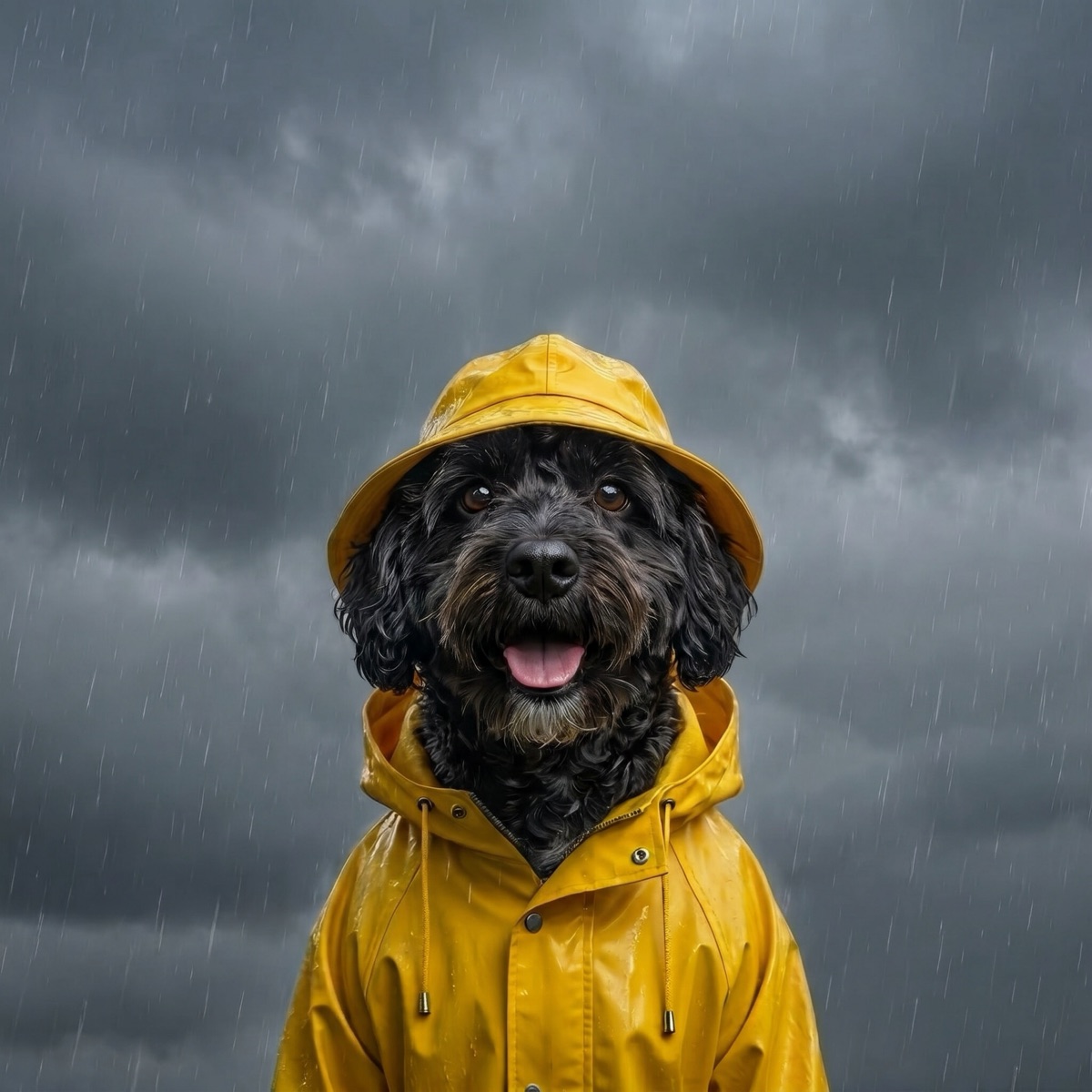
The weather after the walk is the variable
This is the part that generic advice misses entirely, and it is the reason two identical rain walks can produce completely different outcomes.
Getting wet is not the hazard. Staying wet is. How long your dog stays damp after you have done your bit with the towel depends on the air they are drying into: temperature, humidity and moving air. Which produces a genuinely useful risk scale.
| Conditions after the walk | How long the coat stays damp | How hard to work at drying |
|---|---|---|
| Warm, breezy, low humidity | Short. Often under half an hour | Towel and a brush-out is usually enough |
| Warm and humid, still air | Long, and this is the worst case | Full routine. Warmth plus trapped damp is the exact hot spot recipe |
| Cool and damp, no sun | Long | Full routine, and watch for a dog that stays cold and stiff too |
| Cold and dry, indoor heating on | Moderate | Towel, brush, then let the dry indoor air finish it |
The counterintuitive row is the second one. Owners worry most about cold rain, because a cold wet dog looks miserable and a warm wet dog looks fine. But warmth plus moisture plus still air is what bacteria want. A muggy summer downpour is more likely to produce a hot spot than a freezing January one, which is precisely backwards from how most people rank the two.
The routine, in order
Order matters here, because doing these in the wrong sequence means redoing them.
- Let them shake. Ideally somewhere you do not mind. A dog shake removes a remarkable amount of water in about a second, and it is free.
- Squeeze, do not rub. Press the towel and squeeze water out of the coat rather than scrubbing back and forth. Rubbing a long coat creates the tangles you are about to have to brush out, and rubbing already-irritated skin starts the itch loop yourself.
- Get to the skin on the thick bits. Chest, neck ruff, the trousers at the back of the thighs, the tail base and under the collar. These hold the most water and are where hot spots most often turn up.
- Brush while damp. This is the step people skip and it is the highest-value one. Brushing separates the wet undercoat so air can get to it, and it finds mats while they are still small. On a double coat, an undercoat rake does more than any towel.
- Do the ears separately. See below.
- Feet last. Between the toes and under the paw. Damp interdigital skin is its own irritation problem, and it is also where road grit and salt end up.
- Give them somewhere warm and airy. Not a closed crate with a thick damp blanket, which is a drying cabinet in reverse.
If you use a dryer, keep it on a low or cool setting and keep it moving. Dogs burn easily and the point is airflow, not heat.
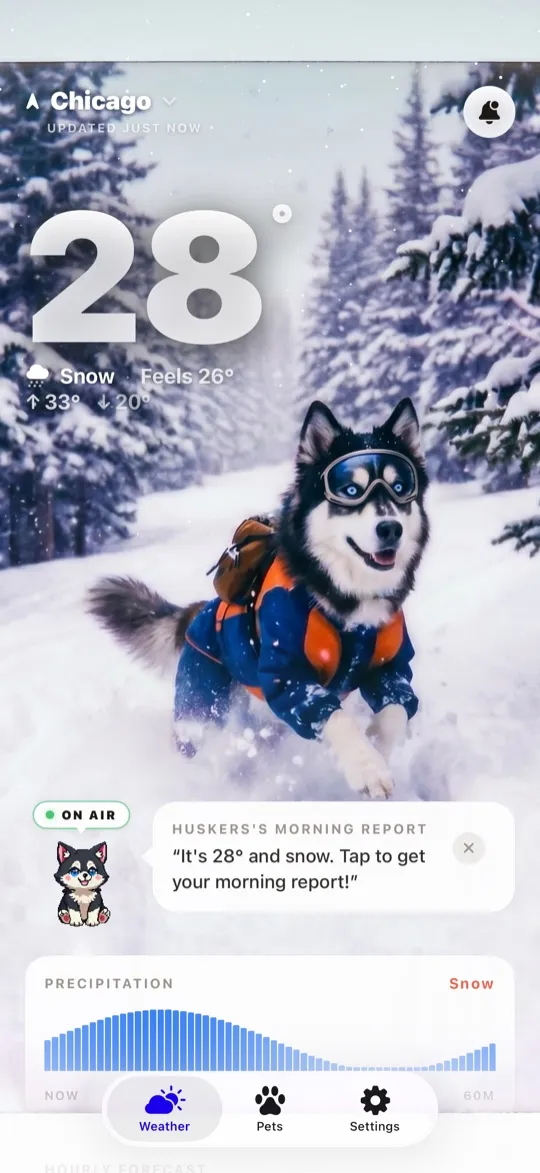
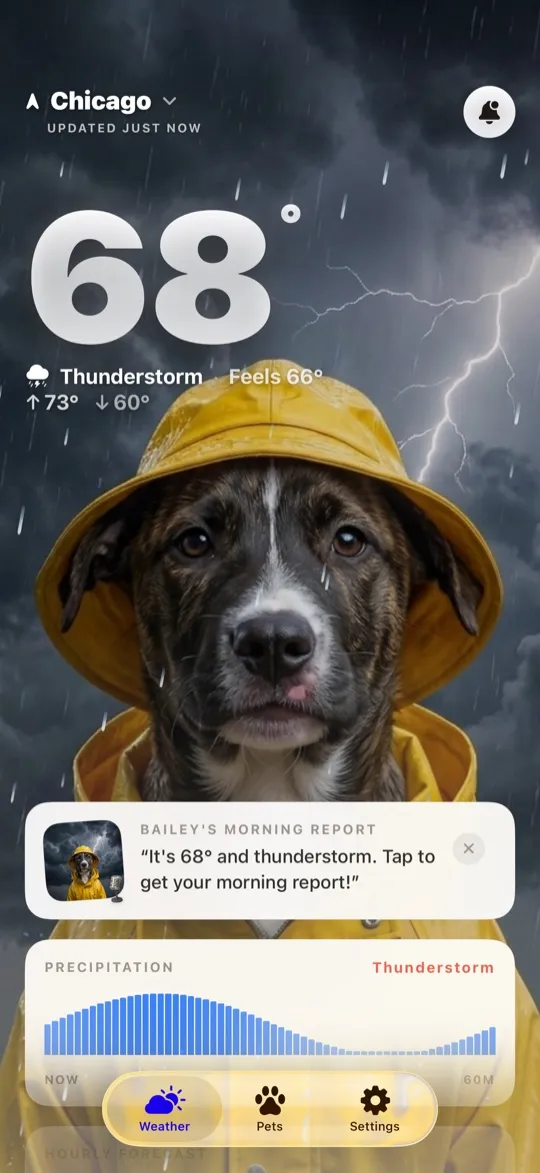
Whether the rain walk needs the full routine or just a towel comes down to the temperature and humidity waiting at home, which WeatherPets shows you for the day ahead, delivered by your own dog. Meet your WeatherPet on the App Store.
Ears: a different job entirely
Ear infections are among the most common problems in dogs, and moisture is one of the main setups for them. VCA's guide to otitis externa covers what an outer ear infection involves, and the American Kennel Club's prevention guidance is direct about the cause: trapped moisture is a breeding ground for bacteria and yeast, and drop-eared dogs that swim are the highest-risk group because the ear flap seals the canal.
The rules are short:
- Dry the ear flap and the visible outer part with a soft towel or cotton pad. That is all the manual drying you should do.
- Never push anything into the canal. No cotton buds. You will pack debris further down and can damage the eardrum.
- Lift the flap and let air get to it for a few minutes afterwards. On a floppy-eared dog this is most of the benefit.
- If your dog gets recurrent infections, ask your vet about a drying ear solution and about trimming the hair around the canal opening for airflow. Both are standard advice and neither should be improvised.
- Signs worth a call: head shaking, scratching at the ear, redness, discharge, or an unusual smell.
Some dogs are simply built for this problem. PetMD's list of breeds prone to ear infections is worth a look if yours is a spaniel, a hound or a retriever, because those owners should treat ear drying as routine rather than occasional.
What to check over the next two days
Because the window is short, a quick look the day after a soaking is worth more than anything you buy. You are checking for:
- A patch the dog keeps returning to lick or chew, which is usually the first sign and comes before anything is visible.
- Skin that looks red, moist or angry, often with the hair stuck down over it.
- Head shaking or an ear that smells different.
- Any small area that feels warmer than the skin around it.
If you find a raw spot, do not let it run. Given that a sore older than a day is likely already infected, same-day advice from your vet is the right call, and in the meantime stopping the licking is the most useful thing you can do.
Prevention starts before the walk
Two things reduce how much of this you have to do at all. A well-brushed coat with no mats dries dramatically faster than a matted one, so the grooming you do on dry days is really rain preparation. Our guide to shedding and coat care covers the undercoat side of that, and it matters most in the seasons when the coat is changing.
The other is simply getting less water into the coat in the first place. A decent shell keeps the back and flanks dry, which removes the largest and slowest-drying area from the problem entirely. We compared options in our roundup of dog rain jackets, and our guide to walking your dog in the rain covers the rest of the trip.
None of this is a reason to skip the walk. Rain walks are good, dogs mostly enjoy them, and the fix takes five minutes at the door.
Frequently asked questions
How do I dry my dog properly after a rain walk?
Let them shake first, then squeeze the towel through the coat rather than rubbing, which prevents tangles and avoids irritating the skin. Work down to the skin on the thick areas: chest, neck ruff, the back of the thighs, the tail base and under the collar. Then brush while still damp to separate the undercoat so air can reach it. Do the ears separately, the feet last, and let them dry somewhere warm with moving air.
Can a dog get a hot spot from rain?
Yes. Cornell notes that a dog swimming, wading or simply out in warm rain is prone to a hot spot if a thick coat does not dry fully. The problem is not getting wet, it is staying wet: damp skin under an insulating undercoat gets itchy, the dog licks or chews it, and the broken skin becomes infected. Long-coated and double-coated breeds are most at risk.
How quickly do hot spots develop on dogs?
Very quickly, which is why same-day drying matters. A dog can take a patch of skin from normal to raw in a single afternoon of licking. Cornell's guidance is that once a sore is more than 24 hours old, infection is likely and it needs veterinary attention rather than home treatment, so check your dog the day after a soaking rather than waiting to see if it settles.
Should I dry inside my dog's ears?
Dry the ear flap and the visible outer part only, with a soft towel or cotton pad. Never push cotton buds or anything else into the ear canal, because you can pack debris deeper and damage the eardrum. Lifting the flap and letting air circulate for a few minutes does most of the work on a drop-eared dog. If your dog gets repeat infections, ask your vet about a drying solution rather than improvising one.
Is cold rain or warm rain worse for a dog's skin?
Warm rain is worse for skin, which surprises most owners. Warmth plus trapped moisture plus still air is what bacteria need, so a muggy summer downpour is more likely to produce a hot spot than a freezing winter one. Cold wet weather brings its own problems, but for skin specifically the humid warm day that keeps a coat damp for hours is the higher risk.
Your daily forecast, delivered by your own pet.









A note on health: This article is general information, not a substitute for professional veterinary advice. If your dog has a raw, painful or spreading skin sore, or a painful ear, or you have any serious or emergency health concern, contact your veterinarian right away. Our guidance draws on trusted veterinary sources, including those linked above.
