Dog Refuses to Go Out in the Rain? Why, and Fixes
You open the door, your dog takes one look, and reverses. Not scared exactly, just absolutely finished with the idea. Then they hold it for nine hours out of sheer principle. The standard advice is to make them go anyway, which is both the most common approach and the one most likely to make next week worse.
Key takeaways
- It is rarely about being wet. Rain is loud on hard surfaces, it rearranges the scent world a dog navigates by, and it changes how the ground feels underfoot.
- A sudden change in an easygoing dog is a health question first. Damp cold makes sore joints worse, and reluctance to move is how that often shows up.
- Forcing it teaches the wrong lesson. Clinical guidance on canine fear is consistent that punishment raises anxiety. The door starts predicting something bad.
- Shrink the ask before you train anything. A covered toilet patch solves this outright for a lot of dogs.
- Use the gaps. Most rainy days are not uniformly rainy, and a twenty minute break in the radar is usually all you need.
Rule out the boring explanation first
Before any of the behaviour work, one check. If this is new in a dog who never used to care, do not start with training. Reluctance to move is one of the main ways discomfort shows up in dogs, and it looks a great deal like an opinion about the weather. VCA's list of arthritis signs in dogs includes loss of stamina, being slower on walks or cutting them short, difficulty getting up and down, and walking slowly beside or behind you. Read that list again with a rainy doorway in mind and the overlap is uncomfortable.
The tell is usually breadth. A dog objecting to rain objects at the door and is fine once out, or fine on dry days. A dog objecting to their own body is slower on stairs too, slower to rise, and reluctant on cold mornings whether or not it is raining. Whether cold and damp genuinely worsen stiffness is a more interesting question than the folk answer suggests, and we went through the actual evidence in our piece on barometric pressure and dog arthritis. Either way, if the breadth fits, that is a vet conversation rather than a treat pouch.
What rain actually does to a dog
Assuming it is genuinely the weather, it helps to understand what you are asking them to walk into, because it is a bigger sensory change for them than it is for you.
- It is loud. Rain on a roof, a car bonnet, a metal bin lid or an umbrella is a lot of high frequency noise, and dogs hear a wider range than we do and considerably better at the top end. The Whole Dog Journal's rundown of sounds dogs hate is a good reminder of how much of the everyday soundscape lands harder on them.
- It rearranges the smells. A dog reads the world through scent, and rain changes that map: it lifts some odours, flattens others and washes trails off hard surfaces. Nothing is dangerous about it, but the familiar route stops smelling familiar.
- The ground changes. Cold wet pavement, puddles that are hard to judge in flat light, and slick metal covers. Plenty of dogs who tolerate rain on their back object strongly to standing water on their feet.
- Water on the face and ears. Very few dogs enjoy this, and it is the part an umbrella held over them does not fix, because now there is also an umbrella.
None of that is unreasonable. It is a different place with the same street name.
Why forcing it backfires
The instinct is to clip the lead on and march out, on the theory that the dog will learn it is survivable. Sometimes that works. More often it teaches a different lesson: the door is where the bad thing happens and nothing I do changes it.
Clinical guidance on fear and noise reactivity in dogs is blunt on this point. Writing in Today's Veterinary Practice, the authors note that punishment only serves to increase a pet's anxiety and fear, and recommend building positive associations instead. Research into scoring sound sensitivity in dogs catalogues how broad the response set is, from restlessness and panting to trembling, hiding and refusing to move. A dog planting their feet is on that list, not off it.
The practical cost is that dragging works less well each time you use it, while every alternative on this page works better each time you use it.
| What you are seeing | Most likely cause | First thing to try |
|---|---|---|
| New refusal in an older dog | Discomfort, worse in damp cold | Vet check before any training |
| Fine once out, hates the doorway | The noise and the transition | Covered patch, and pay at the threshold |
| Walks fine, will not toilet | Wet ground underfoot | Dry square of ground, go out with them |
| Freezing, trembling, hiding | Genuine fear, often noise led | Desensitisation below threshold, no pushing |
| Only in heavy rain or wind | Intensity, not rain itself | Use the gaps in the radar |
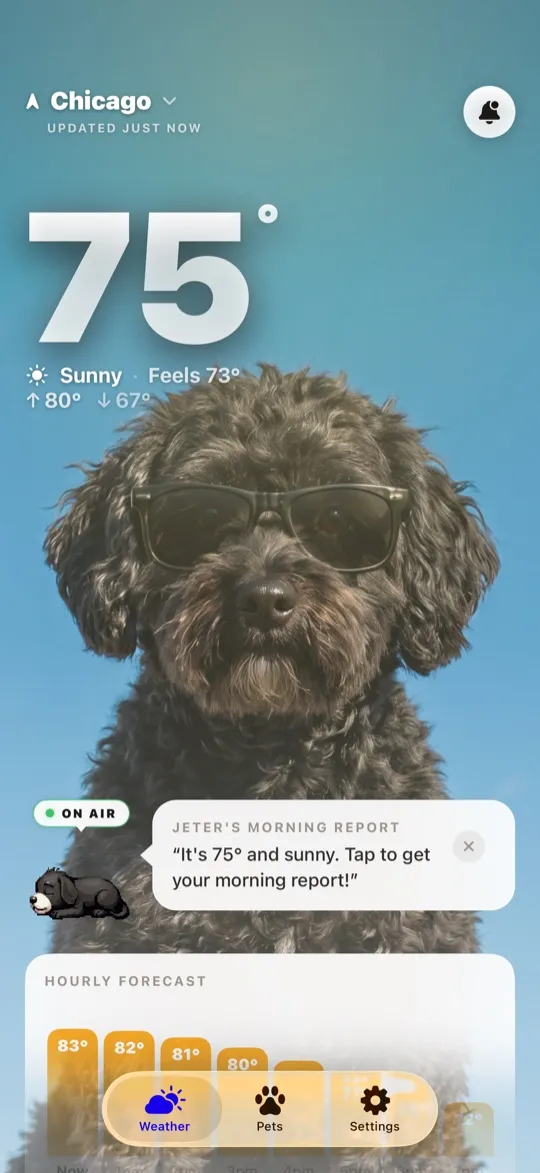
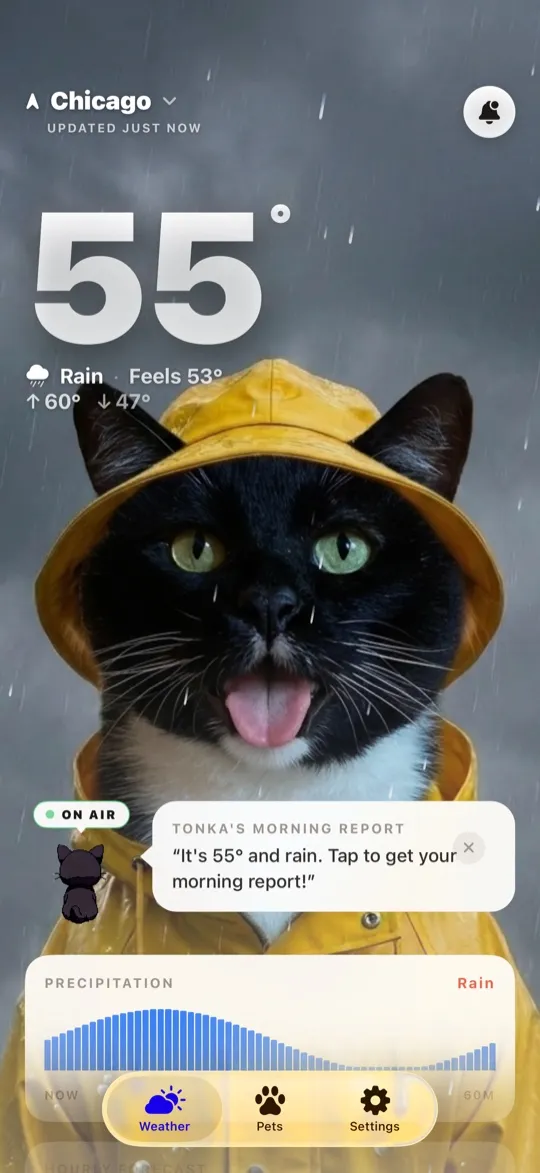
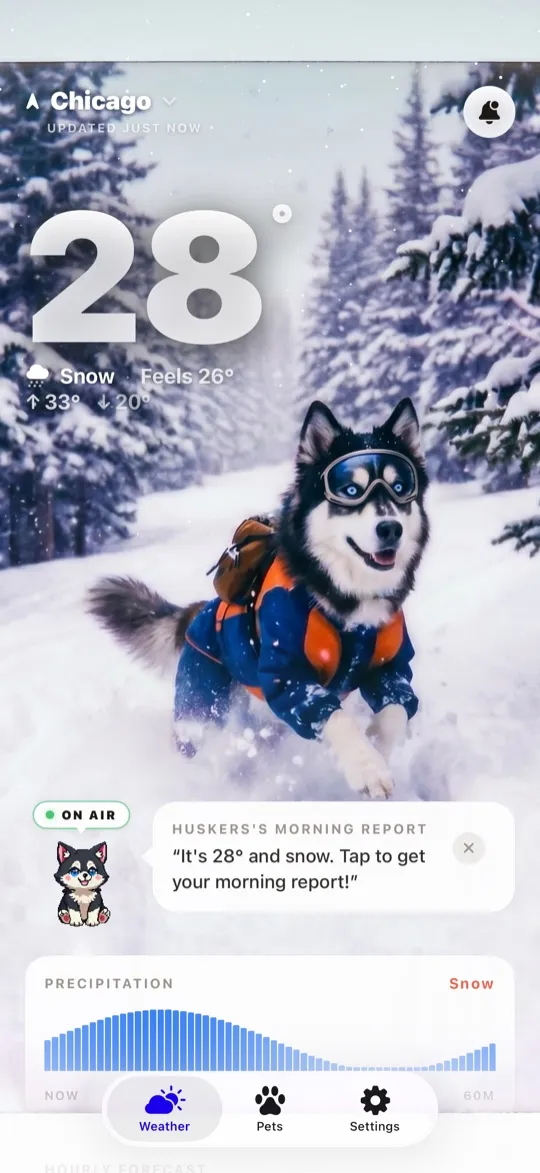
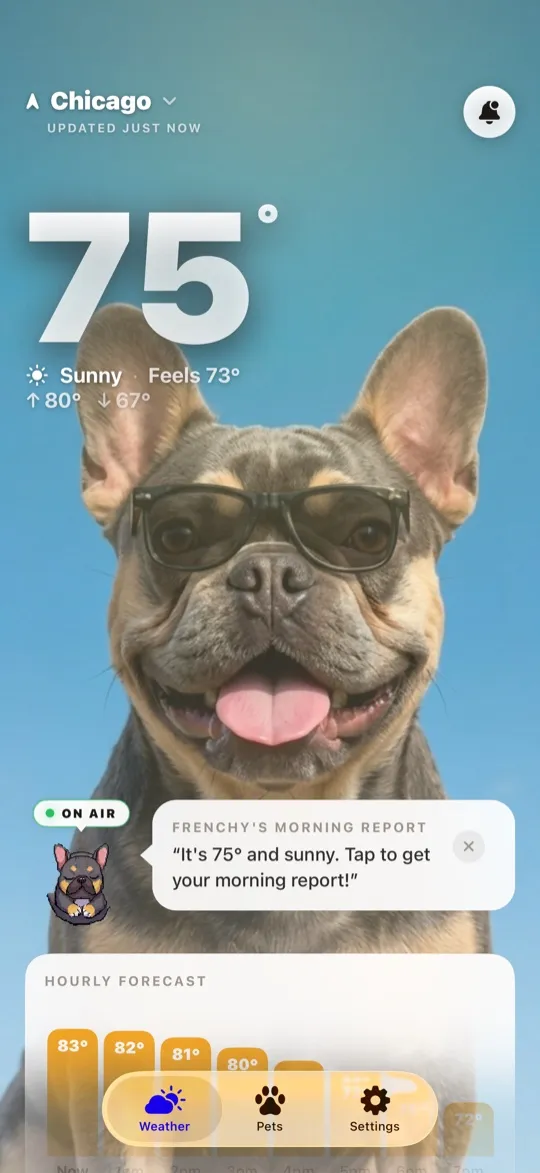
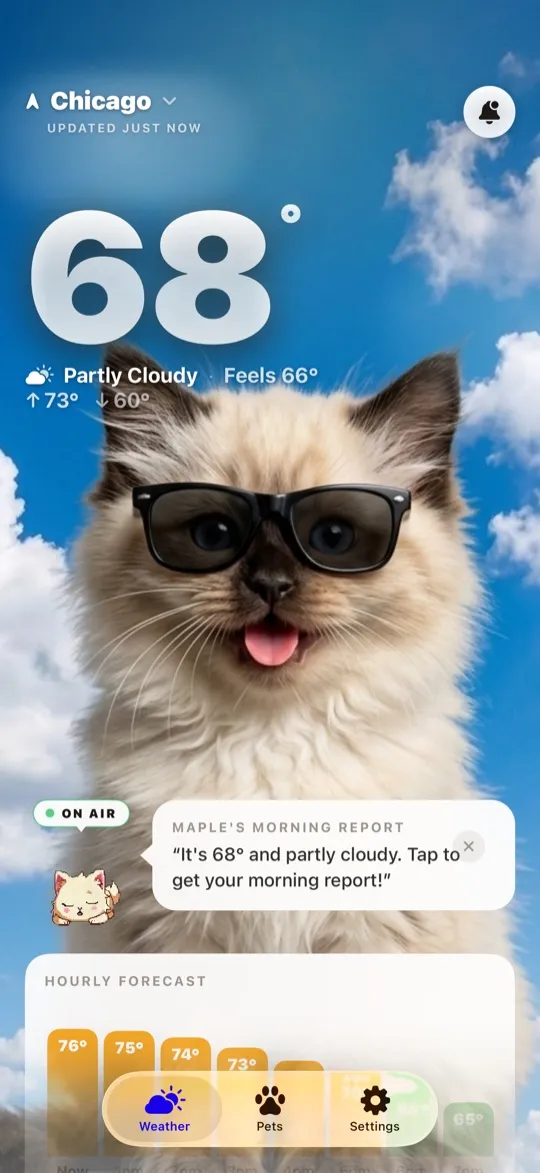
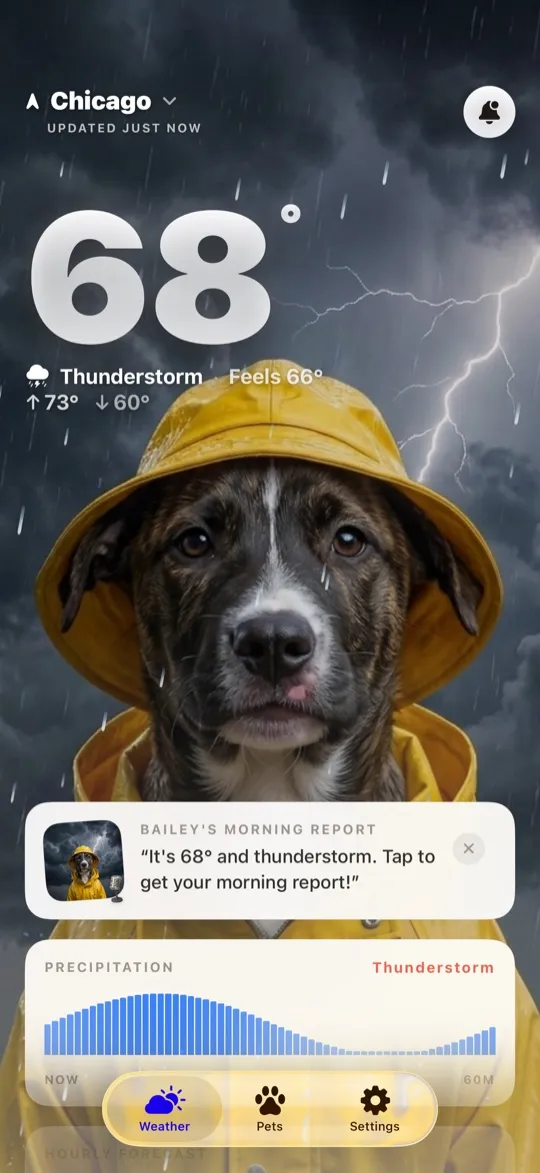
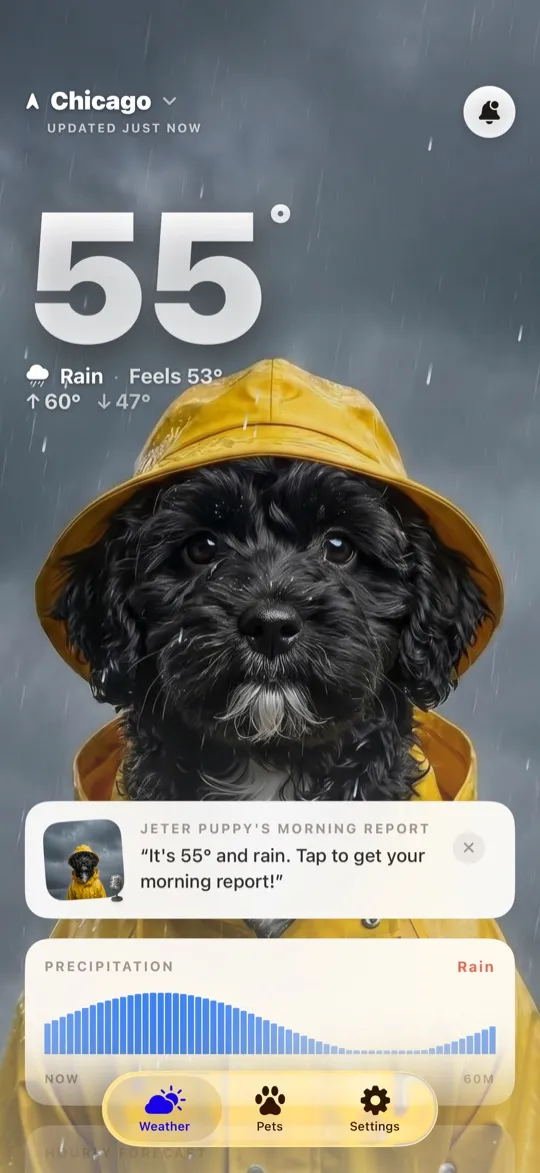
That last row is the one most people never try, because it needs information rather than willpower. Almost no rainy day rains continuously, and a twenty minute gap is a whole walk. WeatherPets puts the day's conditions on your home screen with your own pet delivering them, so you can time the outing for the break instead of negotiating with a dog in a downpour. Download WeatherPets and pick your pet.
The plan that works
In order, cheapest and most effective first.
- Build a covered toilet spot. A porch, an overhang, a corner of a shed, a tarpaulin over a corner of the yard. For a large share of dogs this ends the problem the same day, because the objection was never rain in the abstract, it was standing in it.
- Use the gaps. Check the radar and go in the lull. Two well timed short outings beat one soggy argument.
- Shrink the outing. On genuinely wet days the goal is a toilet trip, not a walk. Do the exercise indoors instead; our guide to indoor exercise for dogs has options that tire a dog out properly.
- Pay at the threshold. Reward the dog for stepping out, in the doorway, immediately, not when you get home. The behaviour you want to build is crossing the line.
- Desensitise properly if it is fear. Today's Veterinary Practice describes short daily sessions of roughly five to ten minutes, starting with the least frightening version of the trigger and building gradually while pairing it with something the dog loves. Rain audible through an open door, then the porch, then three steps, then a short loop. Never move up while the dog is worried at the current step.
- Dry them properly afterwards. The ASPCA recommends towelling a pet off as soon as they come in and drying feet and belly, and part of the association you are building is that coming home is pleasant. Our guide to drying a dog after a rain walk covers doing it without creating a different problem.
The gear question
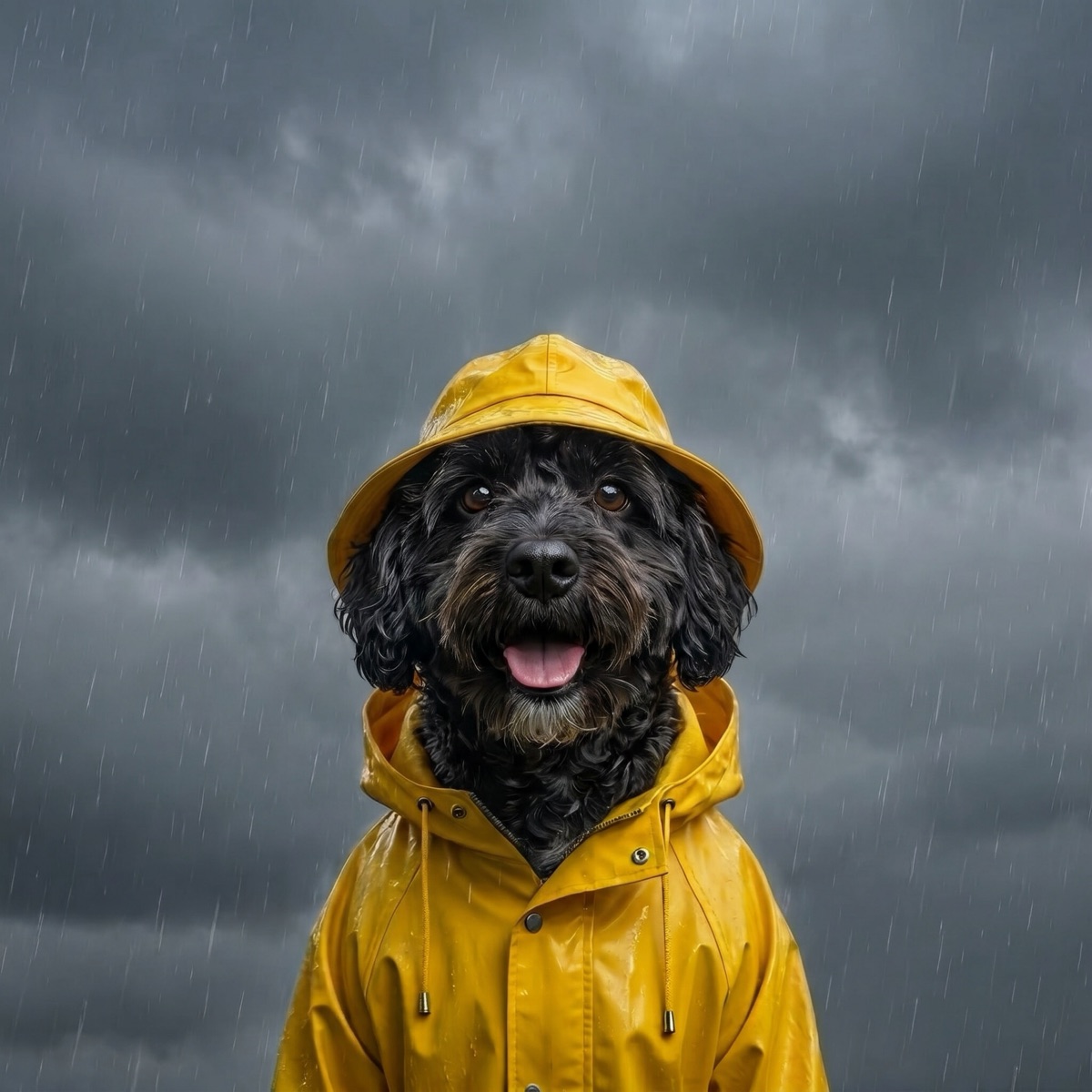
A raincoat is the first purchase most people make and it is genuinely a mixed bag. For a short coated dog whose main objection is being cold and wet, it can transform the walk. For a dog unsettled by the rain itself, clipping an unfamiliar, slightly crackly garment onto them at the exact moment they are already uncertain adds a second novel thing rather than removing the first.
If you want to try one, make it boring first. Put it on indoors on dry days, feed them in it, take it off. Once it is unremarkable, use it in rain. Our rain jacket comparison covers fit and coverage, which matter more than the branding does.
Two other things worth knowing. Some dogs object to the noise of a hood far more than to rain on their head, so try one without. And a coat that keeps the back dry while the legs and belly soak does less than people expect, which is why coverage is the spec to look at.
When it is bigger than rain
If the refusal comes with trembling, hiding, drooling or panic rather than reluctance, you are probably looking at noise sensitivity rather than a preference, and rain is just the mild end of a spectrum that runs up through wind and thunder. That is worth treating on its own terms, and our guides to thunderstorm anxiety in dogs and walking your dog in the rain both go deeper. A dog who is genuinely frightened rather than merely unimpressed deserves a conversation with your vet or a qualified behaviourist, because the earlier that work starts the better it goes.
For everyone else, the summary is short. Make the outside smaller, make it drier, make it shorter, pay well, and go when it is not actually raining. The dog is not being difficult. They just have a much better reason than you thought.
Frequently asked questions
Why does my dog suddenly refuse to go out in the rain?
If it is genuinely sudden in a dog who never minded before, treat it as a health question first and a weather question second. Pain makes dogs reluctant to move, and damp cold makes stiff joints worse, so an older dog who starts refusing wet walks may be telling you about their hips rather than the weather. Once that is ruled out, the usual causes are sensory: rain is loud on hard surfaces, it changes the scent landscape they navigate by, and wet paws on cold ground is a texture many dogs dislike.
Is it cruel to force a dog out in the rain?
Dragging them out is not cruel so much as counterproductive, which is the more useful framing. Every time the door predicts something unpleasant that happens regardless of what the dog does, the door itself gets worse. Clinical guidance on fear in dogs is consistent that punishment increases anxiety rather than reducing it. Dogs do need to toilet, so the answer is not never going out; it is making the outing short, predictable and worth their while.
How do I train a dog to like the rain?
Work below the level that worries them and pay well. Start indoors with the door open and rain audible, reward calm, and build up in small steps to the porch, then a few steps out, then a short walk. Behaviour specialists recommend short daily sessions of about five to ten minutes rather than one long push, pairing the trigger with something the dog genuinely loves. The rule that matters most is not to jump ahead: if the dog freezes or backs off, the last step was too big.
Does a raincoat help or make it worse?
Both, depending on the dog. For a short coated dog who mainly objects to being cold and wet, a coat can change the whole experience. For a dog who is unsettled by the rain itself, strapping an unfamiliar crackling garment on them at the door adds a second new thing to the moment they were already unsure about. If you want to try one, introduce it indoors on dry days first until it is boring, and only then use it in rain.
What if my dog will not toilet in the rain at all?
Reduce the ask rather than winning the argument. A covered patch, a porch, a corner under an overhang or even a temporary sheltered spot removes most of the objection for most dogs, and many who refuse a rainy walk will happily use a dry square of ground. Go out with them rather than sending them out, keep it brief and reward immediately outside rather than back indoors, so the good thing happens in the place you want them to return to.
Your daily forecast, delivered by your own pet.




A note on health: This article is general information, not a substitute for professional veterinary advice. If your dog's reluctance is new, comes with signs of pain, or involves genuine panic, contact your veterinarian or a qualified veterinary behaviourist. Our guidance draws on trusted veterinary sources, including those linked above.
