The First Cold Snap: Why Dogs Feel It Hardest
There is a morning every autumn where the temperature drops about fifteen degrees overnight and your dog acts like a different animal. Slower, hunched, keen to turn around. Then in January, at a temperature ten degrees lower, the same dog is fine. That is not your imagination, and it is not the dog being dramatic.
Key takeaways
- Cold tolerance is acquired, not fixed. The first cold snap arrives before the dog has finished adjusting, so the same number is genuinely harder in October than in January.
- The coat is a process, not a switch. Merck describes shedding in early spring and early fall, and the cold weather coat as longer and finer to conserve heat. That takes weeks.
- Treat the first cold week as colder than it reads. Roughly one size up on gear and one notch down on distance, then taper the compensation as the month goes on.
- Wet plus wind beats cold on its own. A 40F drizzle in a breeze asks more of a dog than a still, dry 30F, which is why autumn punches above its weight.
- A thick early coat is not a forecast. It is a response to weather that already happened. Your dog is a thermometer, not a groundhog.
The gap between the weather and the dog
Two separate things have to catch up when the season turns, and neither of them happens overnight.
The first is the coat. The Merck Veterinary Manual's description of canine skin is worth reading closely here. It notes that dogs normally shed in early spring and early fall, that they may also shed in response to changes in temperature or amount of sunlight, and that the cold weather coat of many dogs is longer and finer to facilitate heat conservation, while the warm weather coat has shorter, thicker hairs and fewer secondary hairs so air moves through it easily. Two different pieces of equipment for two different jobs. Merck also lists what drives hair growth: nutrition, hormones, and change of season.
The important word in all of that is change. A seasonal coat transition is a process that runs over weeks, and it is responding to a signal rather than racing a cold front. So when a hard cold morning shows up in the first week of October, it lands on a dog who is still, mechanically, wearing summer kit.
The second is everything else: the general physiological adjustment to living in cold, which also takes repeated exposure over weeks. Neither the coat nor the adjustment has any way of knowing that this particular Tuesday is going to be brutal.
Put those together and you get the effect every owner notices and almost no article explains. The hardest cold day of the year for your dog is rarely the coldest one. It is the first properly cold one.
What it looks like on the walk
The signals are the ordinary cold ones, just arriving at a temperature that surprises you. The AVMA's cold weather guidance lists the set to watch for: whining, shivering, anxiety, slowing down or stopping, weakness, and looking for warm places to burrow.
What makes the autumn version distinctive is the mismatch. You look at the phone, see a number you would call mild, and conclude the dog is being difficult. Our guide to shivering on a walk covers why that particular signal is worth acting on rather than walking past, and it applies with extra force in October, when you are least expecting it.
| When | Where your dog is | What to do about it |
|---|---|---|
| First cold snap | Summer coat, no adjustment. Maximum gap | Treat the forecast as several degrees colder. Coat on, distance down, keep moving |
| 2 to 3 weeks in | Coat changing, exposure accumulating | Start easing off the compensation. Watch the dog rather than the calendar |
| Deep winter | Full cold weather coat, adjusted | Normal winter rules. Cold is now about absolute limits, not the gap |
| First warm spell after | Winter coat, mild air. Gap runs the other way | Watch for overheating on a 55F day. Same lag, opposite direction |
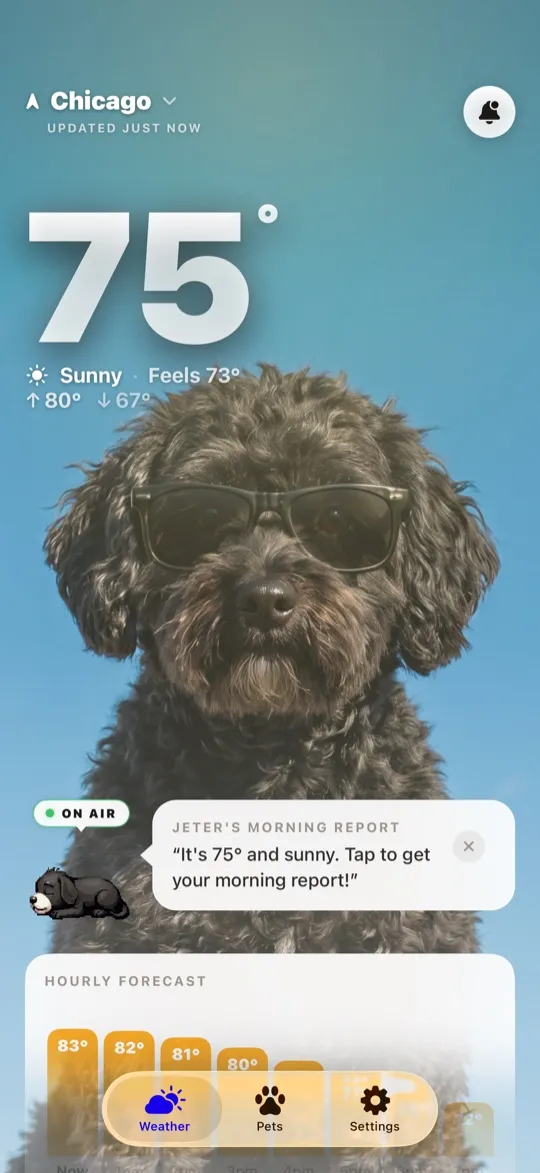
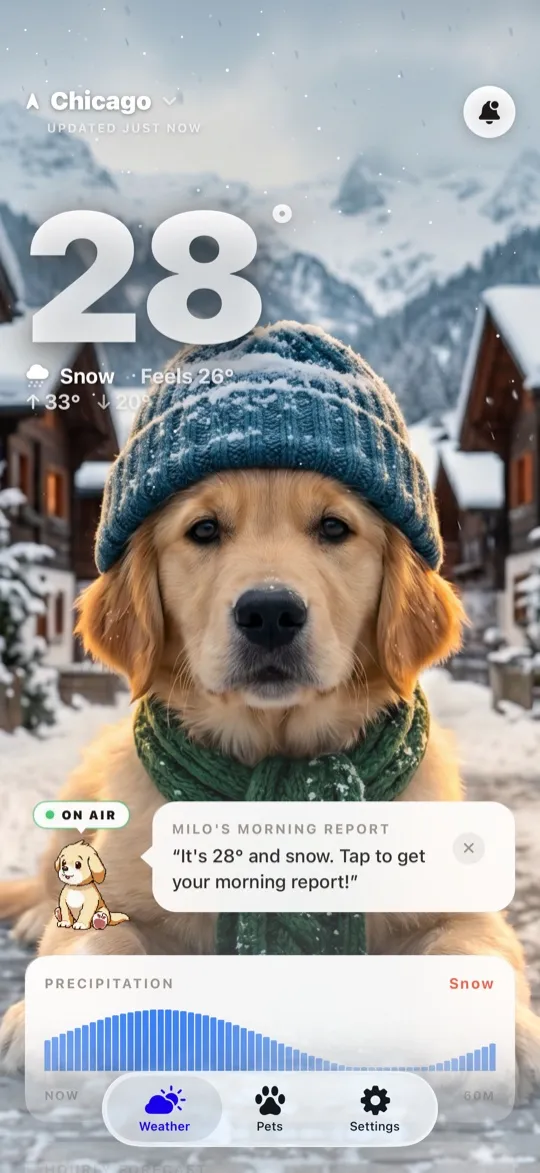
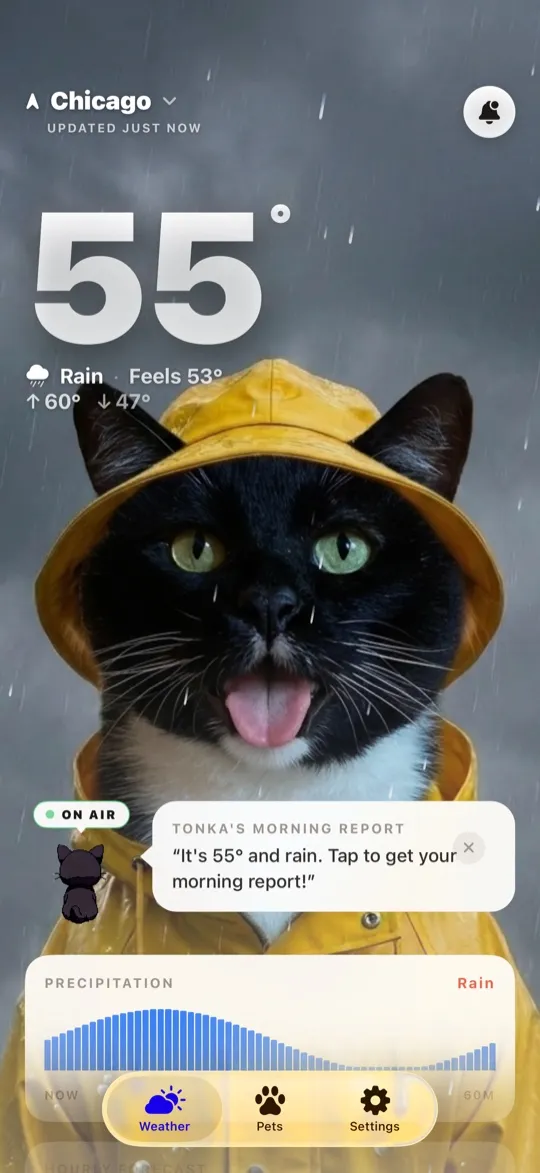
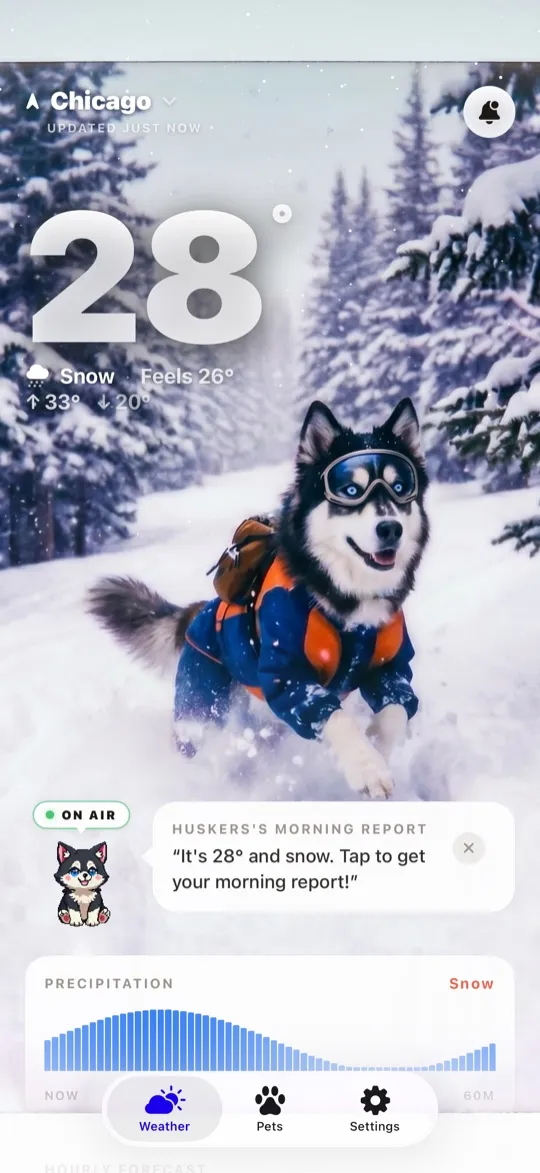
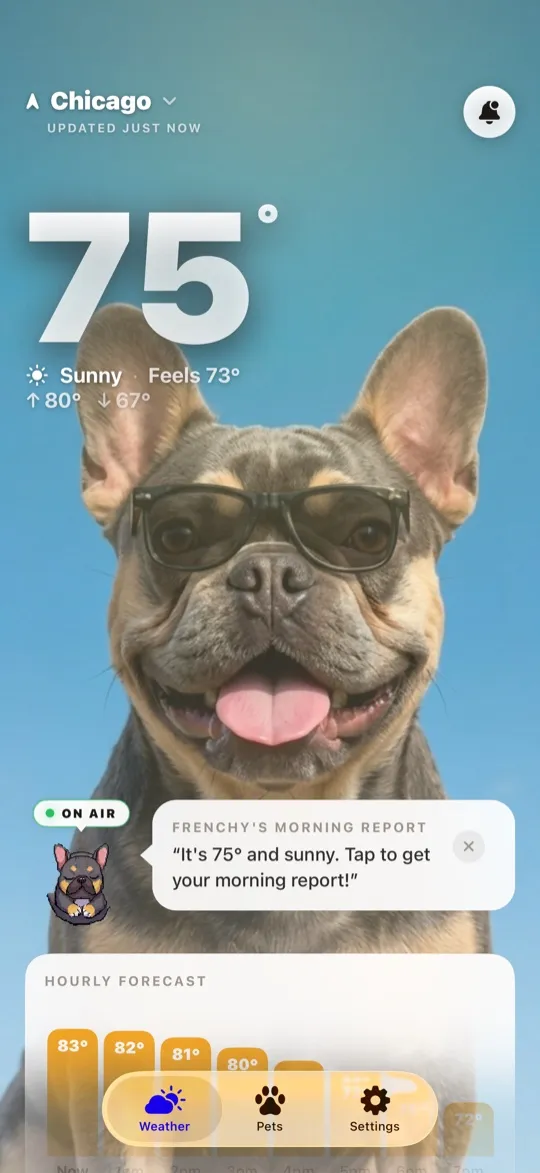
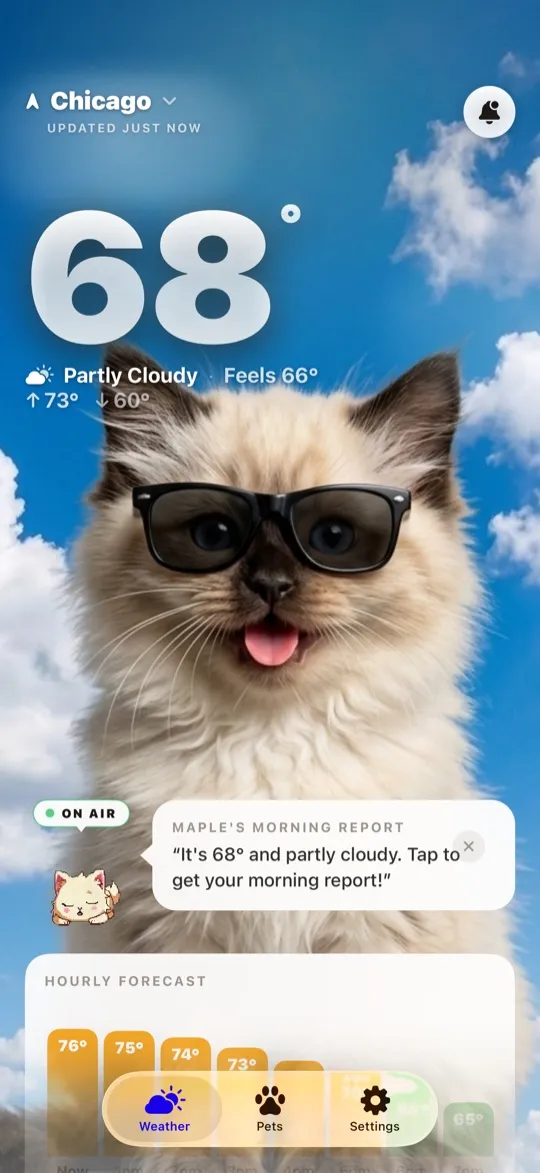
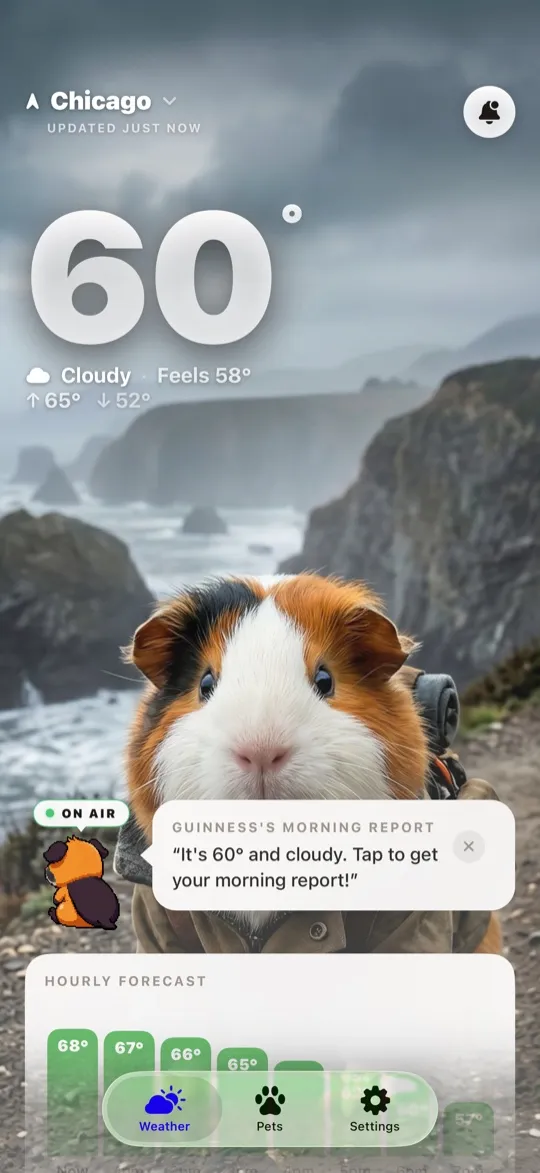
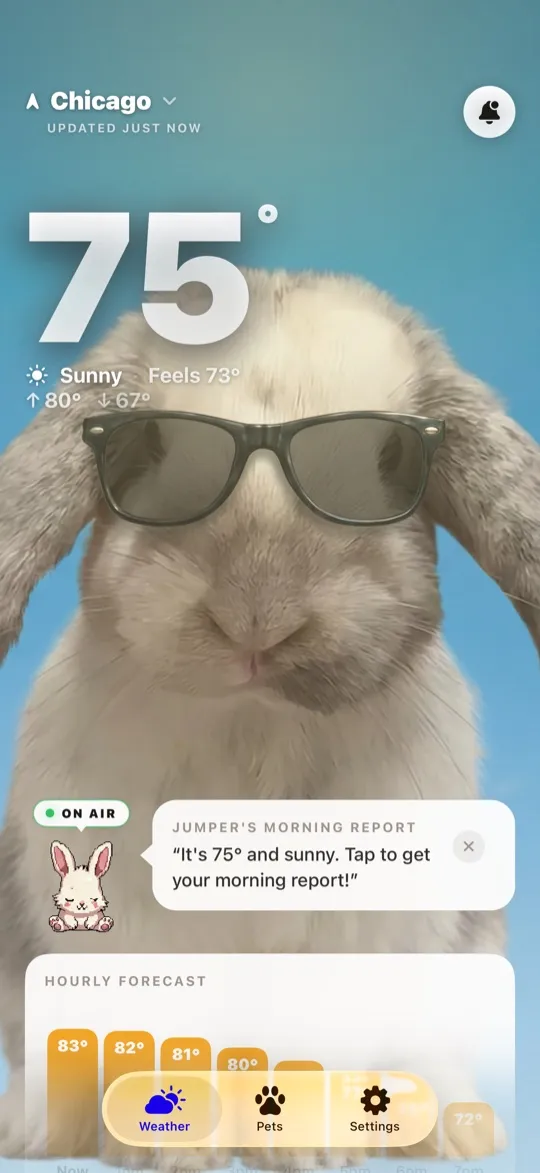
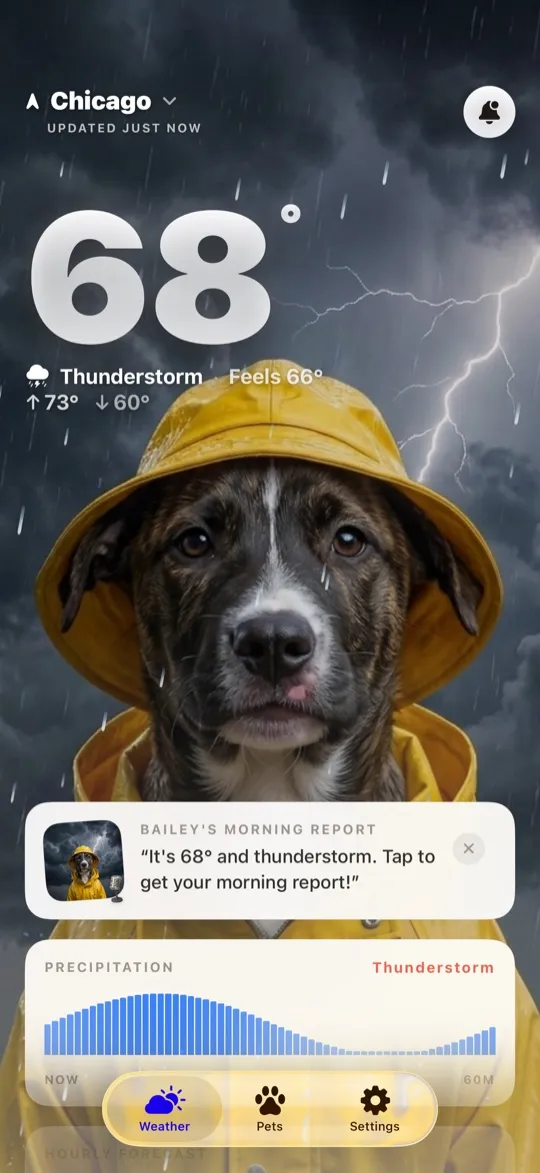
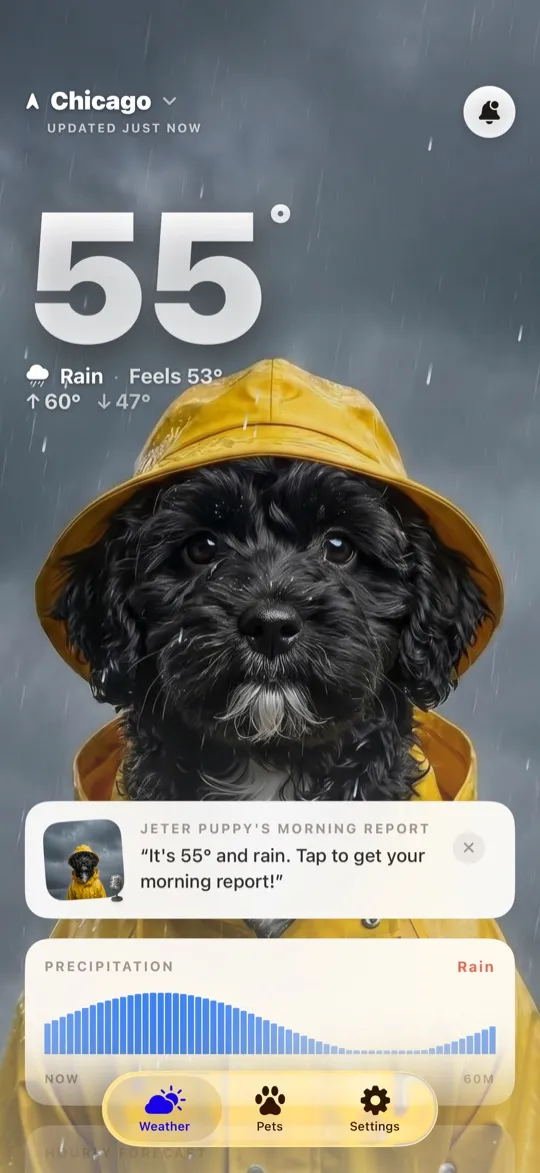
The whole problem here is that the first cold morning does not announce itself, it just turns up. WeatherPets puts the day's conditions on your home screen with your own pet delivering them, so the fifteen degree drop is something you know about before you are standing in it in a t-shirt. Download WeatherPets and pick your pet.
Who feels the gap most
Every dog goes through this, but the size of the gap varies enormously, and it stacks with the usual cold risk factors described by the American Kennel Club, which flags small dogs, seniors, puppies and short coated dogs as losing heat fastest.
- Single coated and short haired breeds. There is less undercoat to grow, so there is less seasonal upgrade coming. For these dogs the gap never really closes and the coat is doing the work all winter.
- Double coated breeds. The biggest seasonal swing, which means the biggest gap early. A husky in October is a genuinely less cold hardy animal than the same husky in January.
- Recently groomed dogs. A short summer clip in late September is the most common self-inflicted version of this problem.
- Seniors. Less muscle to generate heat and often stiffer in the cold. Our piece on senior dogs and temperature covers why each winter gets harder.
- Dogs who moved recently. A dog who spent the summer somewhere warm and arrived in a colder place in October gets no run up at all.
What actually helps
The fix is not complicated, and most of it is about timing rather than equipment.
- Add a layer for the first cold week specifically. The ASPCA suggests a coat or sweater with coverage from the base of the tail to the belly for short haired dogs. In autumn a coat is standing in for an undercoat that has not arrived yet, which is why dogs who need nothing in February may want something in October. Our winter coat comparison covers fit.
- Shorten and repeat. Two short outings beat one long one while the gap is widest. It also gives you a controlled way to see how the dog is actually coping.
- Keep them dry. This is the highest value item on the list and the one most often skipped. The ASPCA recommends towelling a dog off as soon as they come in, and washing and drying feet and belly. A damp dog in autumn stays cold for an hour after the walk.
- Do not clip in early autumn. If your dog has a seasonal groom, get it done in summer or wait until the coat has settled.
- Let the acclimation happen. Consistent, moderate exposure over several weeks is the thing that closes the gap. Skipping every cold day entirely means arriving at real winter with no adjustment at all.
The myth worth killing
Every autumn someone points at a thick early coat and predicts a hard winter. It is a lovely piece of folklore and it has the causation backwards. Coat growth responds to the season that is happening, not the one that is coming, and Merck's list of what drives it, nutrition, hormones and change of season, contains nothing that could possibly know about February.
A dog who has grown a heavy coat early has had a cold early autumn. That is all it tells you. We went through the same territory in our piece on whether dogs can sense weather coming, and the honest answer is the same: dogs are excellent at detecting what is happening now and no good at all beyond that.
Which is the useful note to end on. The first cold snap is a real, physical disadvantage that your dog carries for a few weeks each year. Give them the layer and the shorter route for that window, then let them adapt, and by the time the genuinely cold weather arrives they will be equipped for it. Our guide to how cold is too cold for your dog has the thresholds for when that is.
Frequently asked questions
Why does my dog seem colder in October than in January?
Because the coat and the acclimation both lag the calendar. The Merck Veterinary Manual describes dogs shedding in early spring and early fall and notes the cold weather coat is longer and finer to conserve heat, which is a change that takes weeks rather than a night. A 40F morning in early October lands on a dog still carrying a summer coat and still adjusted to summer. By January the same dog has the full coat and weeks of exposure behind them, so the same number feels very different.
How long does it take a dog to adjust to cold weather?
Expect a few weeks rather than a few days, and expect the coat and the behaviour to move at different speeds. The practical version is that the gap is widest at the first real cold snap of the season and narrows steadily through late autumn. That is why the useful rule is to treat the first cold week of the year as if it were several degrees colder than the forecast says, then gradually stop compensating as the month goes on.
Should I put a coat on my dog in autumn?
For the first cold snap, more often than people think, and especially for small, thin, short coated, very young or elderly dogs. The reasoning is timing rather than temperature: a coat is standing in for the undercoat your dog has not finished growing. If your dog normally manages winter without one, you can usually retire it once they have been through two or three weeks of consistently cold weather and the coat has caught up.
Is it the temperature or the wet that makes autumn walks worse?
Usually the wet, and then the wind. Autumn specialises in combining a moderate temperature with rain and breeze, which is a harsher combination than a colder dry day. Wet fur stops insulating and evaporation actively pulls heat away, and wind strips out the layer of warm air the coat is holding. A 40F drizzle in a breeze is a bigger ask than a still, dry 30F, which is exactly why the thermometer alone is a poor guide in October.
Does an early cold snap mean a hard winter?
No, and it is worth saying because the folk version of this is everywhere. A thick coat arriving early is a response to conditions that have already happened, not a forecast of conditions to come. Merck lists nutrition, hormones and change of season as what drives hair growth. Your dog is a very good thermometer and a very poor forecaster.
Your daily forecast, delivered by your own pet.

A note on health: This article is general information, not a substitute for professional veterinary advice. If your dog is shivering persistently, seems weak or confused, or you have any serious or emergency health concern, contact your veterinarian or an emergency animal hospital right away. Our guidance draws on trusted veterinary and government sources, including those linked above.
