The Muggiest Cities for Dogs, by NOAA Normals
Humidity rankings for cities are easy to find. Every one of them is written for people. A dog cools by a completely different mechanism than you do, so the list that matters to a dog owner is not the same list, and it turns out the hottest cities in America are mostly not on it.
Key takeaways
- Miami is the muggiest city in America for a dog. Its average summer day warms only 13°F above its average night, the tightest gap of any hot US city we hold normals for.
- Phoenix and Las Vegas do not appear in the top 20 despite having the hottest nights in the country, because their day-to-night swing is enormous. That is what dry air looks like.
- 31 of the 43 hot cities never get properly cool overnight. Their average summer low sits above 68°F, so the coolest hour already starts in the caution band.
- The swing is a proxy for humidity, not a measurement, and we say where it breaks.
- In a top-20 city the fix is not an earlier walk. It is a shorter one.
Quick answer
Ranked by how little the air cools off overnight, the muggiest large US cities for a dog are Miami, Honolulu, Tampa, New Orleans, Virginia Beach and Houston. All six average less than a 17°F swing between the daytime high and the overnight low across June, July and August.
Phoenix, Las Vegas and Tucson have hotter nights than any of them and are nowhere near the list. That is the whole point of ranking it this way. A dog does not experience 100°F in Tucson and 90°F in Miami as a 10 degree difference in its favour, because the mechanism it uses to cool itself works far better in one place than the other.
Fair warning: this is not a dew point ranking and will not match one exactly. Philadelphia at 12 and Virginia Beach at 5 sit higher here than a humidity list would put them, because we measure how little the air lets go of heat overnight rather than how much water it holds. For a dog those are close cousins.
How we ranked the cities
Scope note: of our 100 cities, 70 US ones carry the full monthly NOAA normals this method needs, and the heat filter below narrows that to 43.
Our city dataset carries NOAA 1991-2020 Climate Normals, the official 30 year averages published by the NOAA National Centers for Environmental Information. Seventy US cities in it hold full monthly normals for average daily high and low. That is the raw material.
Here is the honest part, up front. Those normals do not include dew point or relative humidity. We did not have a humidity column and we did not invent one. We used the diurnal temperature range instead: the gap between the average daily high and the average daily low.
That gap is a well understood proxy for atmospheric moisture. Water vapour absorbs outgoing infrared radiation, so a humid night loses heat slowly and the temperature barely falls. Dry air lets the day's heat escape and the temperature drops hard after sunset. A desert swings 30°F overnight. A swamp swings 13°F.
So the method is two steps, both repeatable:
- Qualify on heat. Keep only cities whose average summer daily high is 85°F or above. Humidity is a comfort question until it is hot, and then it becomes a safety question. That filter leaves 43 of the 70.
- Rank on the swing. Sort those 43 by average June to August diurnal range, smallest first. Smallest swing equals muggiest.
The proxy has one known failure mode worth naming: a coastal city held down by a marine layer shows a narrow swing without high dew points. San Francisco is the obvious case. The 85°F filter removes almost all of those, because marine-cooled cities never get hot enough to qualify.
A ranking tells you what your city does on an average summer day. It cannot tell you about Thursday. The Pet Safety Score reads the actual forecast hour by hour and weights humidity for your specific dog rather than a generic one. See how the Pet Safety Score works, or get it free on the App Store.
The top 20 muggiest cities for dogs
Summer means June, July and August. The swing column is the ranking column: smaller is muggier. Values are rounded to a tenth of a degree, and where two cities tie at that precision the warmer summer night ranks first.
| # | City | Day-to-night swing | Avg summer night | Avg summer day |
|---|---|---|---|---|
| 1 | Miami, Florida | 13.0°F | 77.2°F | 90.2°F |
| 2 | Honolulu, Hawaii | 13.1°F | 74.8°F | 87.9°F |
| 3 | Tampa, Florida | 14.6°F | 76.3°F | 90.9°F |
| 4 | New Orleans, Louisiana | 15.0°F | 75.9°F | 90.9°F |
| 5 | Virginia Beach, Virginia | 16.3°F | 70.8°F | 87.2°F |
| 6 | Houston, Texas | 16.4°F | 76.1°F | 92.5°F |
| 7 | Washington, D.C. | 17.2°F | 70.3°F | 87.5°F |
| 8 | Charleston, South Carolina | 17.5°F | 72.4°F | 89.9°F |
| 9 | Atlanta, Georgia | 18.2°F | 70.6°F | 88.7°F |
| 10 | Savannah, Georgia | 18.3°F | 72.6°F | 90.9°F |
| 11 | Louisville, Kentucky | 18.5°F | 69.2°F | 87.7°F |
| 12 | Philadelphia, Pennsylvania | 18.5°F | 67.1°F | 85.6°F |
| 13 | Orlando, Florida | 18.6°F | 72.8°F | 91.5°F |
| 14 | Baton Rouge, Louisiana | 18.7°F | 72.9°F | 91.5°F |
| 15 | Memphis, Tennessee | 18.7°F | 72.2°F | 90.9°F |
| 16 | St. Louis, Missouri | 18.7°F | 69.2°F | 87.9°F |
| 17 | Jacksonville, Florida | 18.9°F | 71.9°F | 90.8°F |
| 18 | Dallas, Texas | 19.3°F | 76.3°F | 95.6°F |
| 19 | Birmingham, Alabama | 19.3°F | 70.6°F | 89.9°F |
| 20 | San Antonio, Texas | 20.3°F | 74.1°F | 94.4°F |
Two things there are worth staring at. Miami's average summer day is 90.2°F, unremarkable by American standards, and Dallas runs five degrees hotter. Miami still ranks first, because its nights refuse to cool.
And the fourth column matters most. Our score treats roughly 68°F as the top of the comfortable band for an average dog. Thirty-one of these 43 cities have an average summer night above that line. In Miami, Tampa, Houston, Dallas, New Orleans, Las Vegas and Phoenix it does not fall below 75°F. The 5am you were planning to walk in starts in the caution band and goes up from there.
Why Houston beats Phoenix for dog risk
Side by side, the raw numbers say Phoenix should win comfortably: 105.3°F summer days and 82.2°F nights, against Houston's 92.5°F and 76.1°F. Phoenix is hotter by 13 degrees in the day and 6 at night.
Now the mechanism. A dog has almost no useful sweat glands. It sheds heat by panting, which is evaporative cooling: water leaves the tongue and airway, and the phase change carries heat away. That depends on the air accepting more water vapour. Close to saturation, the dog keeps panting and stops cooling.
The National Weather Service quantifies the same physics for people in its heat index guidance: 96°F at 65% relative humidity feels like 121°F, and full sunshine can add another 15°F. Dry heat barely moves the index. A dog runs the same equation with worse equipment.
So the honest comparison is not "Houston is more dangerous than Phoenix." Phoenix in July is one of the most hostile places in the country for an animal. The real difference is which one fools people. Phoenix announces itself; nobody reads 105°F and decides to take it easy. Houston reads 92°F on the phone, the owner files that under "warm", and the dog goes out into conditions where its only cooling system is running at a fraction of capacity.
One piece of arithmetic is worth carrying for exactly this. Board-certified emergency and critical care vet Dr Justine Lee puts it as a rule of 150: if air temperature in °F plus humidity in percent adds up to more than 150, it is too hot for your dog. An 80°F Houston morning at 75% humidity is already past it. A 100°F Phoenix morning at 20% humidity is not. Our piece on humidity and dog breathing covers the mechanism underneath it.
The driest large cities
The other end of the same table. These are hot cities where the air lets go of its heat at night, and where evaporative cooling still works.
| City | Day-to-night swing | Avg summer night | Avg summer day |
|---|---|---|---|
| Reno, Nevada | 32.8°F | 57.4°F | 90.2°F |
| Sacramento, California | 32.6°F | 58.2°F | 90.8°F |
| Denver, Colorado | 29.8°F | 57.2°F | 86.9°F |
| Boise, Idaho | 29.3°F | 58.9°F | 88.3°F |
| Fresno, California | 28.2°F | 67.0°F | 95.2°F |
| Tucson, Arizona | 25.8°F | 74.2°F | 100.0°F |
Reno and Sacramento reach 90°F afternoons and still hand you a dawn near 58°F: cool air, cool ground, a dog whose panting works properly.
Do not read this as a safety ranking. Tucson averages a 100°F day and its 74.2°F night is warmer than Atlanta's. A wide swing is an opportunity, not an all clear. It says a safe window probably exists at dawn. It says nothing kind about 4pm.
What to do if you live in one
The standard advice for hot cities is "walk early." In a top-20 muggy city that is half wrong, because there is no cool part of the day to move into. Miami's 5am is 77°F. What actually changes the risk:
- Shorten before you reschedule. If the coolest hour is still 76°F, walking earlier buys a couple of degrees. Cutting a 40 minute walk to 15 buys far more, because heat load builds with time under load.
- Check the ground. The American Kennel Club cites 135°F asphalt on an 86°F day and suggests ten seconds of hand contact. Our seven-second version is the stricter house rule.
- Treat panting that does not settle as the alarm. The Merck Veterinary Manual lists rapid panting, drooling, hot skin, uncoordinated movement and collapse as heat stroke signs, and calls it an emergency.
- Move the exercise indoors, not just the timing. Sniff games, stairs, training work. A mentally tired dog is as settled as a physically tired one.
- Know your breed's real margin. The American Kennel Club's heatstroke guidance and the veterinary literature agree that flat-faced breeds have far less thermal headroom, because the airway doing the cooling is the compromised one.
One more thing. Your street is not the airport where the normals were measured. The EPA's work on urban heat islands finds daytime air in built-up areas running roughly 1 to 7°F above nearby outlying areas. A city ranking is a starting point, not a reading of your block. For the month by month version, see the cities with the most unsafe dog-walking months.
A note on what this ranking is not
It is a climatology, not a forecast. Thirty year averages, and no individual day is obliged to resemble them. A dry front can hand New Orleans a lovely 68°F August morning.
What it is good for is setting your default. In the top 20, assume from June to September that there is no safe long-walk window and your job is finding the least bad short one. In Reno, assume a good window exists. Then check the actual day.
Frequently asked questions
Which US city is the most humid in summer?
By the measure that matters to a dog, Miami. Across June, July and August its average day warms only 13°F above its average night, the smallest gap of any hot city in our dataset. Humid air holds heat overnight, so a small day-to-night swing is the fingerprint of a muggy climate. Tampa, New Orleans and Houston follow close behind.
Is humid heat worse for dogs than dry heat?
Per degree, yes, and the reason is mechanical. A dog sheds heat mainly by panting, which is evaporative cooling: it works by moving water off the tongue and airway into the air. Air that is already close to saturated cannot accept much more, so the panting continues while the cooling quietly stops. Dry heat is dangerous too, but it is dangerous in a way the thermometer reports honestly.
What cities have the fewest safe summer walk hours?
The ones where the overnight low never reaches a dog's comfortable range. Of the 43 hot cities we ranked, 31 have an average summer night above 68°F, the point where our score stops treating conditions as comfortable for an average dog. In Miami, Tampa, Houston, Dallas, New Orleans, Las Vegas and Phoenix it does not drop below 75°F at all, so the coolest moment of a typical day already sits in the caution band.
How did you calculate this ranking?
From NOAA 1991-2020 Climate Normals stored in our own city dataset. We took the 70 US cities carrying full monthly normals, kept the 43 whose summer daily high averages 85°F or more, and ranked those by average summer diurnal range: the gap between the average daily high and low. Every number can be recomputed from published NOAA normals.
Does a small day-to-night swing really mean humidity?
It is a strong proxy rather than a direct measurement. Water vapour absorbs outgoing infrared radiation, so humid nights cool slowly and the daily swing compresses. The proxy has one known failure: a coastal city cooled by a marine layer can show a narrow swing without high dew points. Filtering to cities that average 85°F or hotter removes most of those, because the genuinely marine-cooled places never get that hot.
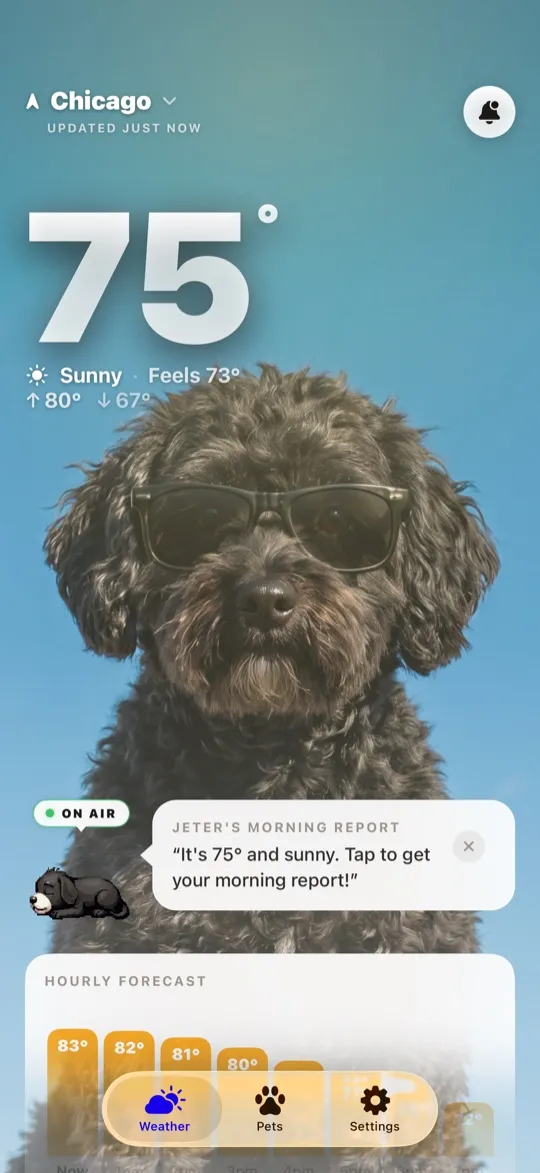
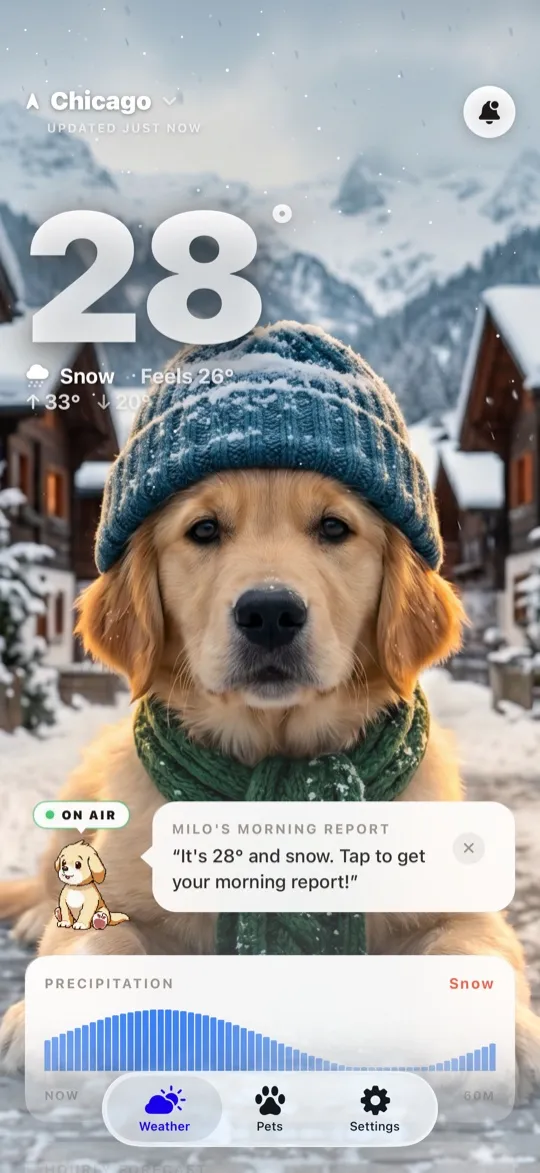
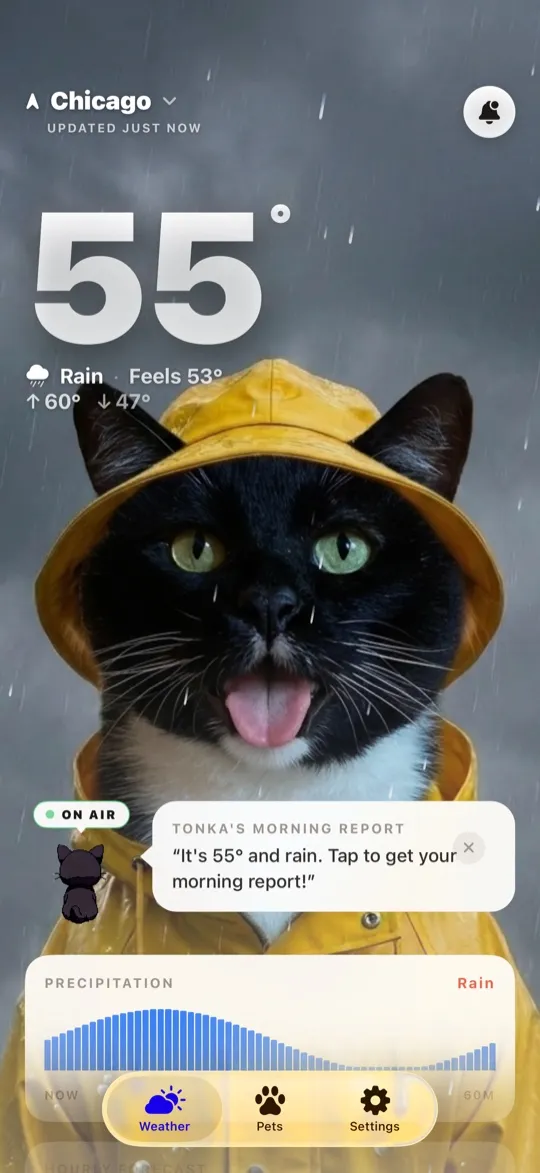
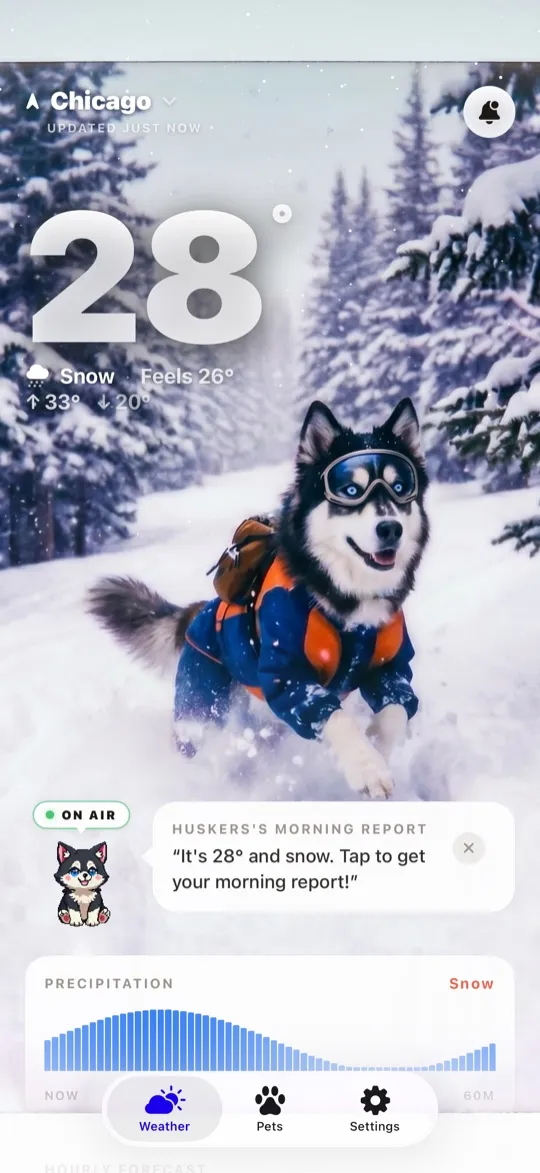
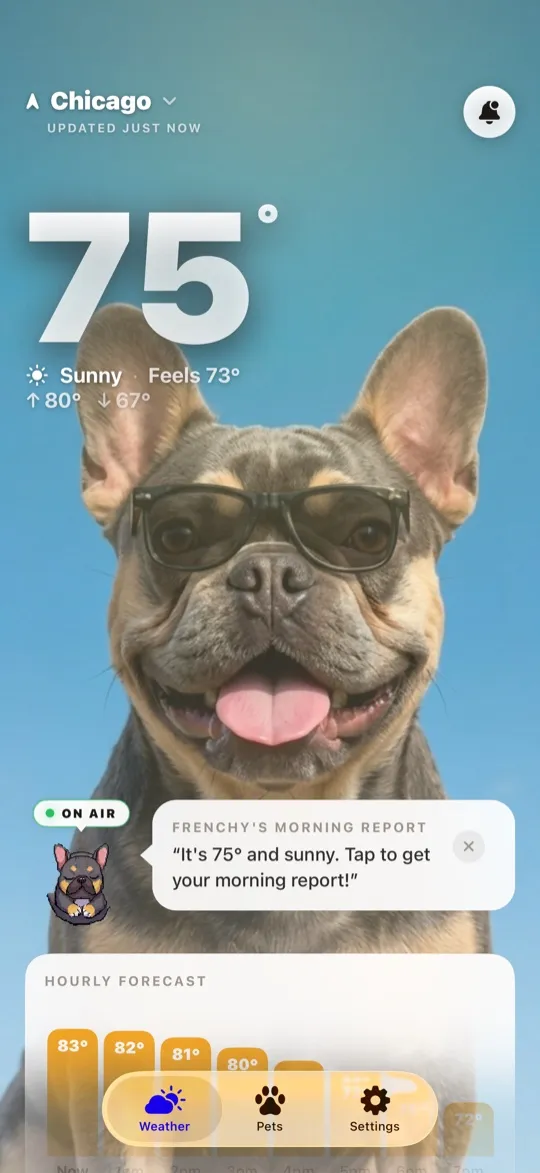
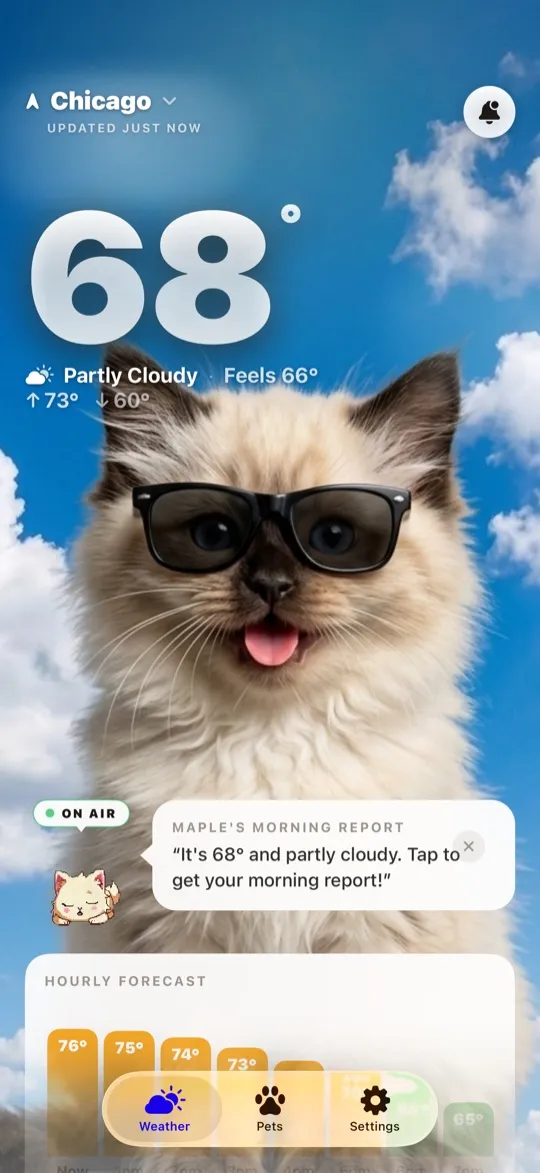
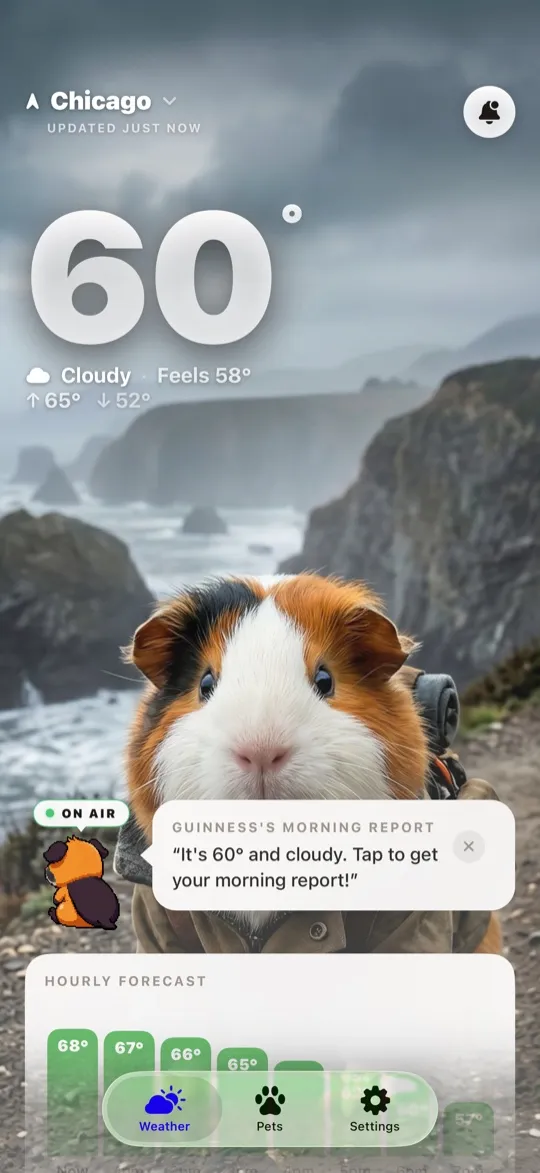
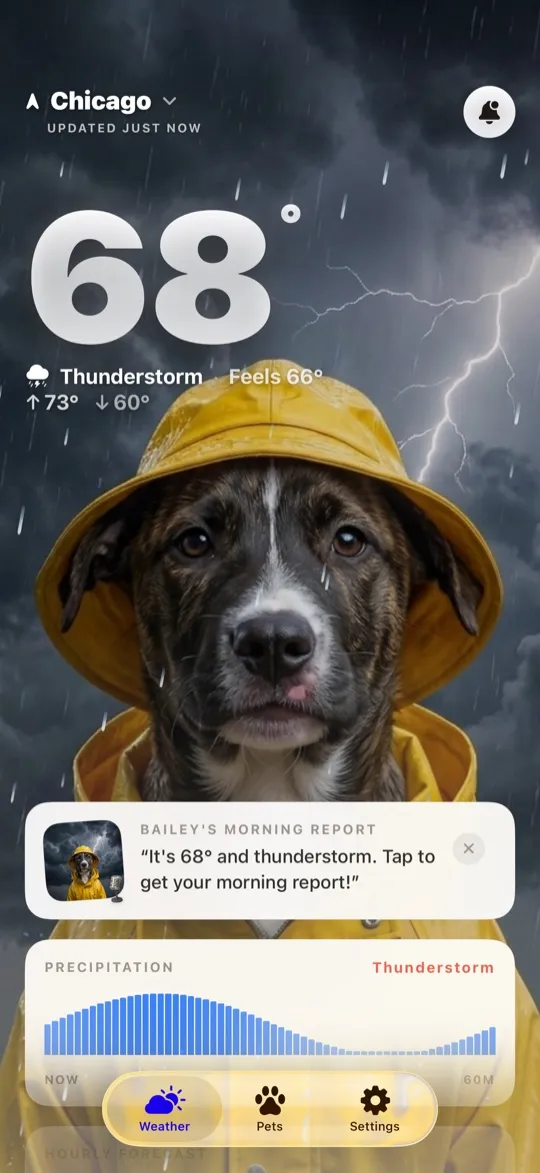
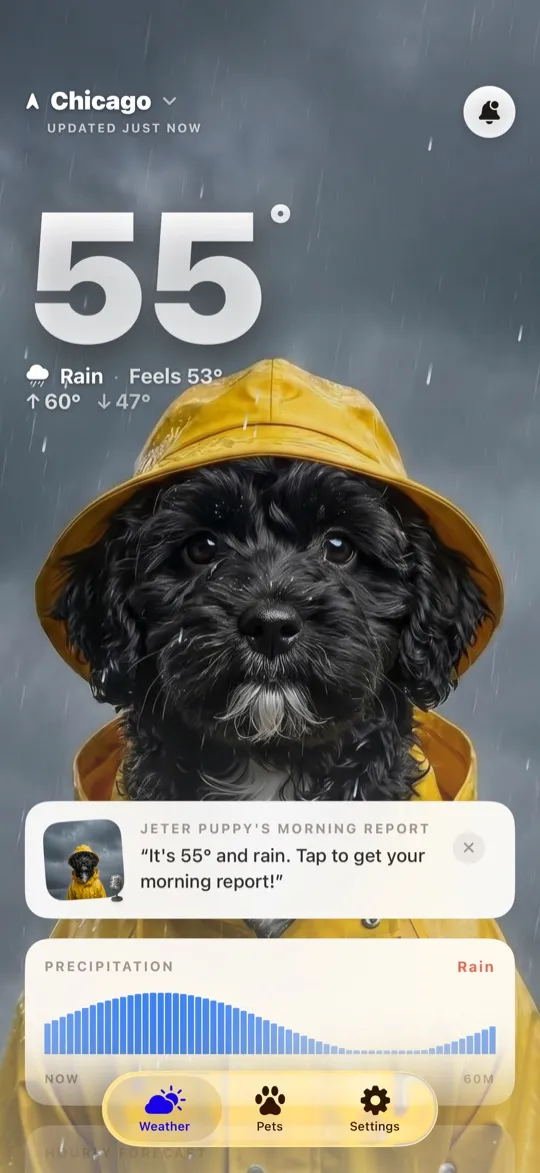
Your daily forecast, delivered by your own pet.


A note on health: This article is general information, not a substitute for professional veterinary advice. If you are worried about your dog overheating or any serious or emergency health concern, contact your veterinarian right away. Our guidance draws on trusted veterinary and government sources, including those linked above.
