Record Cold vs Average Cold: Which to Plan For
Every winter pet guide is written against the average. Average low, typical January, what your city is normally like. That is a reasonable way to plan a walk schedule and a terrible way to plan a shelter, because the night that kills an outdoor cat is never the average night. We went through the climate data behind our 100 city pages to work out how big that difference actually is, and the answer is bigger than we expected.
Key takeaways
- Across the 70 United States cities in our dataset, the all-time record low sits a median of 42.5°F below the average low of that city's coldest month.
- 29 of those cities have an average coldest-month low above freezing. 28 of the 29 have still recorded a sub-freezing temperature, and 24 have been below 20°F.
- Austin has recorded minus 2°F. San Antonio has hit zero. Houston has been down to 5°F. None of those cities own winter gear.
- The practical rule: plan your routine around the average, and your equipment around the record.
- The animals that pay for the gap are the ones in arrangements nobody rechecks: outdoor cats, garage dogs, hutch rabbits, and any water bowl left outside.
The gap between normal and possible
Two numbers describe cold in any city. The first is the average low for its coldest month, which is what the phrase "winters here are mild" actually means. The second is the lowest temperature ever recorded there, which is what the city is capable of.
Both numbers live in the dataset behind our city weather pages. The averages are NOAA 1991 to 2020 United States Climate Normals for each city's official reporting station. The records are the all-time observed minimum for that station, which in several cities reaches back to the 1870s. Putting them side by side across 70 American cities gives you a map of how far a place can fall below its own normal.
The median gap is 42.5°F. Not the maximum. The median. Sixty-two of the seventy cities have a gap of at least 30 degrees.
| City | Average low, coldest month | All-time record low | Gap |
|---|---|---|---|
| Spokane, Washington | 24.3°F | -30°F | 54.3°F |
| Salt Lake City, Utah | 24.2°F | -30°F | 54.2°F |
| Boise, Idaho | 25.4°F | -28°F | 53.4°F |
| Louisville, Kentucky | 27.8°F | -22°F | 49.8°F |
| Minneapolis, Minnesota | 8.8°F | -41°F | 49.8°F |
| Dallas, Texas | 37.9°F | -10°F | 47.9°F |
| Denver, Colorado | 18.4°F | -29°F | 47.4°F |
| Nashville, Tennessee | 30.1°F | -17°F | 47.1°F |
Minneapolis being able to reach minus 41 is not news to anyone in Minneapolis. The interesting rows are Dallas and Nashville, where the average January night is a mild freeze and the record is deep into negative numbers.
The cities where this actually bites
A large gap does not automatically mean danger. Minneapolis has a 49 degree gap and also has an entire population that owns coats, knows what a frozen pipe is, and does not leave animals outside in January. Preparation tracks expectation.
The risk concentrates where expectation is lowest. So we filtered for the cities whose average coldest-month low is above freezing, meaning a typical winter night there never freezes at all. There are 29 of them in the dataset. 28 have recorded a sub-freezing temperature anyway, and 24 have been below 20°F.
| City | Average low, coldest month | All-time record low | Date of record |
|---|---|---|---|
| Austin, Texas | 41.8°F | -2°F | January 31, 1949 |
| San Antonio, Texas | 41.0°F | 0°F | January 31, 1949 |
| Baton Rouge, Louisiana | 41.6°F | 2°F | February, records since 1892 |
| Savannah, Georgia | 40.0°F | 3°F | January 1985 Arctic outbreak |
| Houston, Texas | 46.1°F | 5°F | January 18, 1930 |
| Jacksonville, Florida | 42.4°F | 7°F | January 21, 1985 |
| New Orleans, Louisiana | 46.1°F | 11°F | December 23, 1989 |
| Tampa, Florida | 52.8°F | 18°F | December 13, 1962 |
| Miami, Florida | 61.0°F | 27°F | February 3, 1917 |
Read the Houston row slowly. The typical coldest night of a Houston year is 46°F, which is jacket weather. The city has been to 5°F. That is a 41 degree fall below normal, in a place where almost nobody owns a dog coat, outdoor water bowls are never heated, and a lot of animals live perfectly happily in a garage or on a covered porch year round.
This is the actual finding, and it is the opposite of the intuitive one. The dangerous cold is not in the cold cities. It is in the mild ones, because mild cities are full of arrangements that have never been tested.
Why the average is the wrong number for equipment
The reason this matters for animals rather than just for pipes is that cold tolerance is not a slope, it is a cliff.
A shelter that holds an animal at a comfortable temperature on a 45°F night is doing very little work. The same shelter on a 15°F night is being asked for something structurally different: real insulation, a wind break, dry bedding deep enough to nest in, and a water source that is not a block of ice. Those are not upgrades of the same thing. They are a different thing.
The American Veterinary Medical Association's cold weather guidance is blunt about the general case: no pet should be left outside for long periods in below-freezing weather, and cold tolerance varies by coat, body fat, activity level and health rather than by species. The ASPCA's cold weather safety tips add the detail people skip, which is that an outdoor shelter needs to be small enough for body heat to actually warm it and raised off the ground, not simply large and covered.
And the air temperature is only the start of it. The National Weather Service wind chill chart exists because moving air strips heat far faster than still air at the same reading, which is why our wind chill guide for dogs treats wind as a separate planning input rather than a footnote. A record cold night usually arrives on a wind.
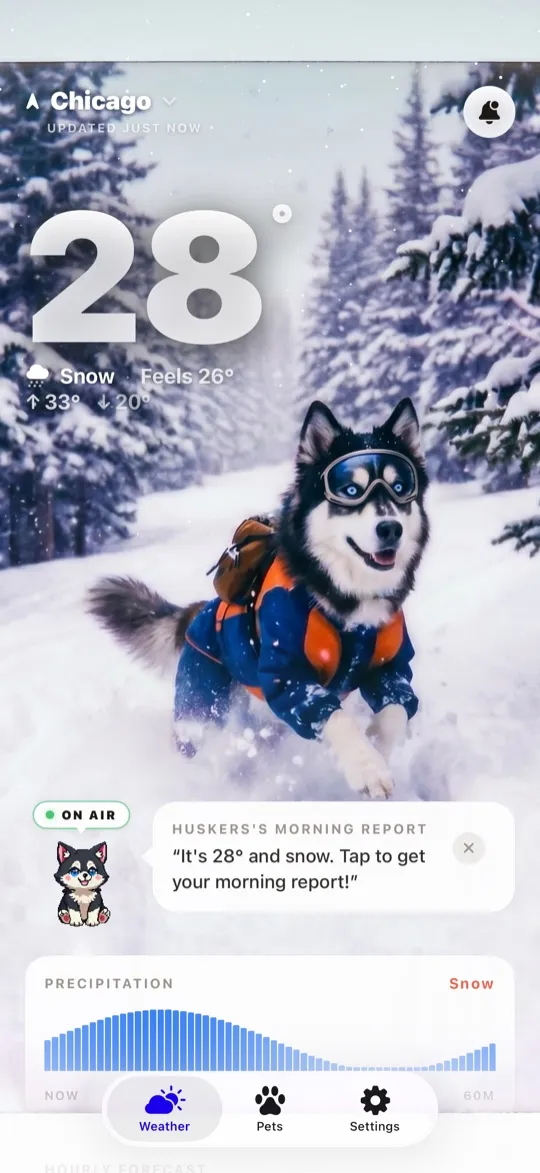
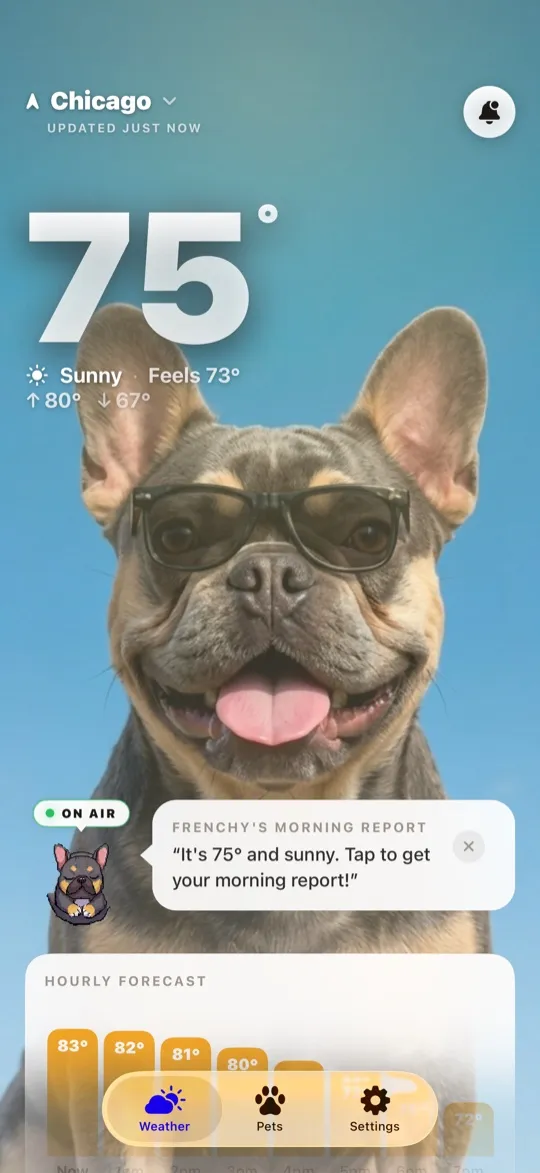
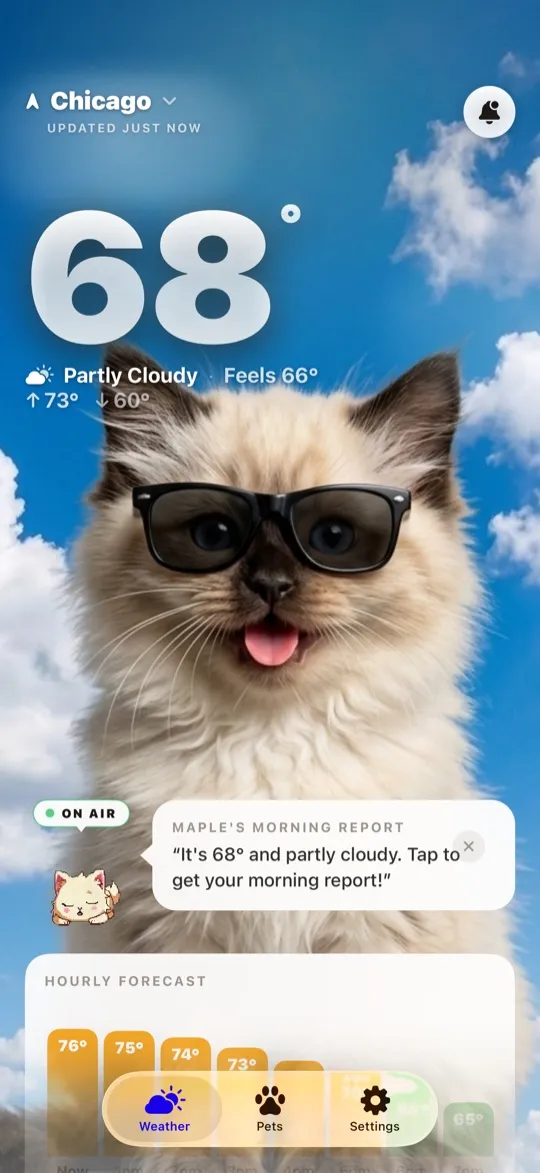
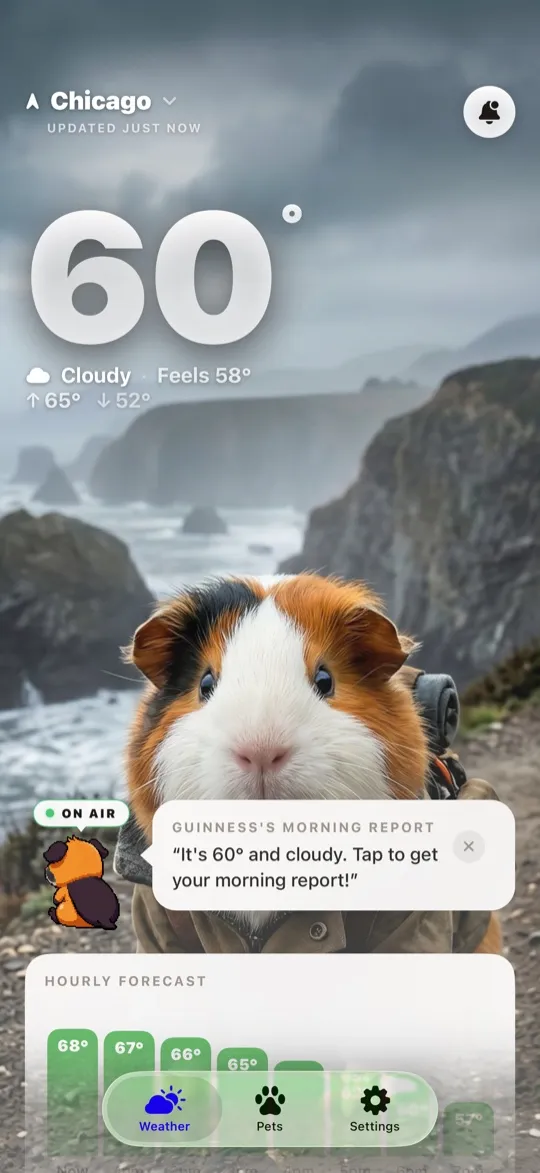
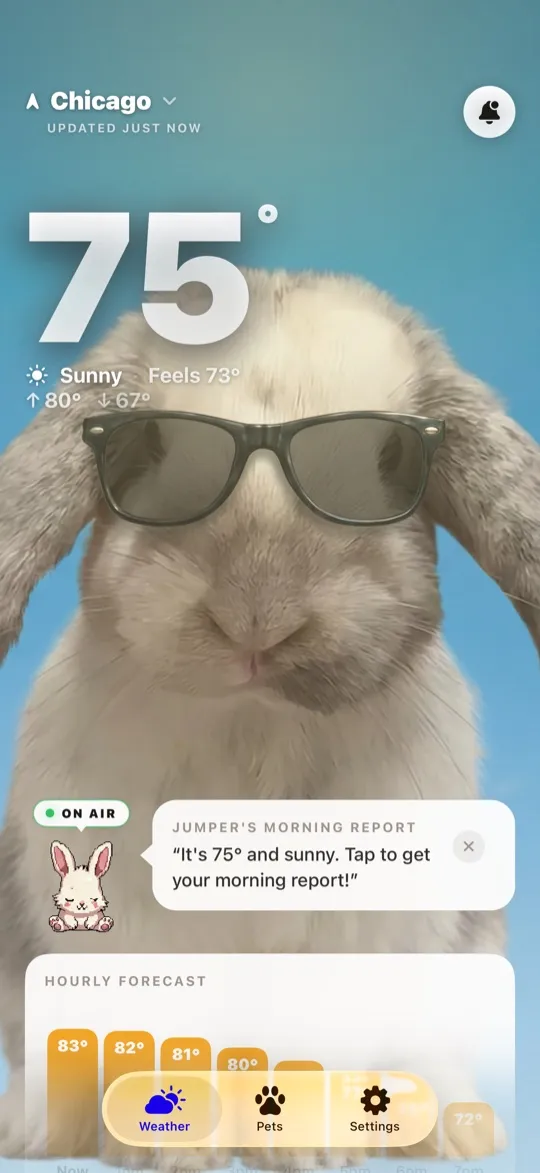
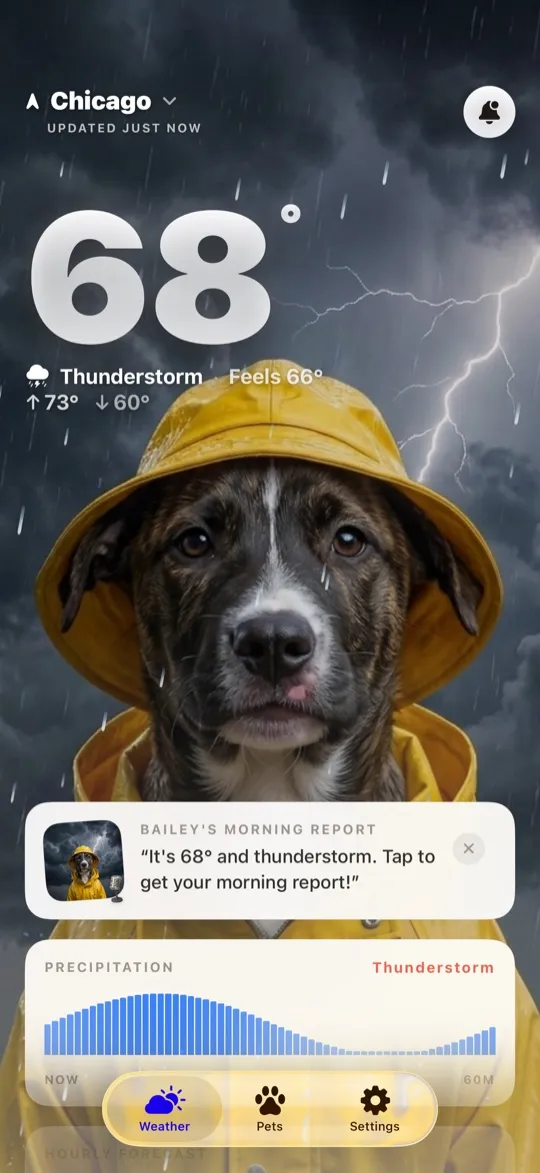
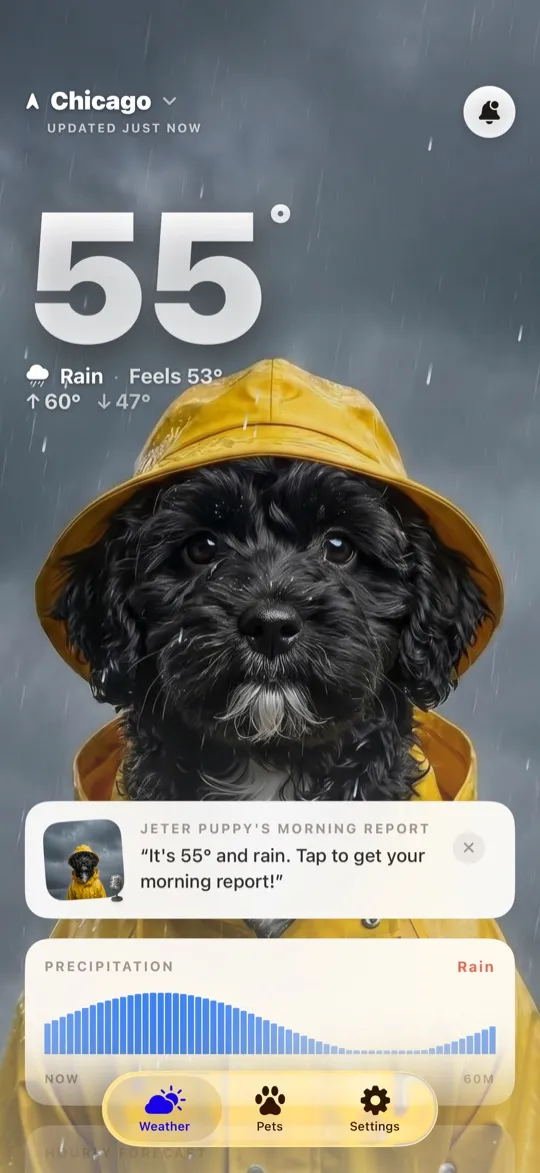
Cold records are broken by forecast, not by surprise, which means the useful version of this is knowing several days out that an unusual night is coming. WeatherPets tracks the days ahead and has your own pet tell you when the numbers move. Meet your WeatherPet on the App Store.
Plan the routine to the average, the kit to the record
This is the whole article in one sentence, and it resolves the tension neatly. You should not walk your dog as though every night is the record. You should own equipment as though one night will be.
| Decision | Plan it against | Why |
|---|---|---|
| Daily walk length and timing | The average | This is the number that describes most nights. Building a routine around a once-a-decade event is how you end up not walking the dog |
| Coat, booties, indoor exercise plan | The average | Everyday comfort gear. Sized to normal winter, used most days |
| Outdoor or garage shelter | The record | It has to hold on the worst night, not the median one. That is the only night it matters |
| Water that lives outside | The record | A bowl that never froze in ten years will freeze solid on the eleventh, and dehydration makes cold worse |
| The "where does everyone go" plan | The record | Which animals come indoors, and where do they actually fit, decided before the night arrives rather than at 11pm |
| Backup heat and power | The record | Record cold and grid failure arrive together more often than either arrives alone |
That last row is worth sitting with. The nights that break records are the nights that break grids, which is why our power outage plan for pets is really a cold snap plan wearing a different hat.

Who actually pays for the gap
Four groups, and they are all defined by having a setup that was fine last year.
- Outdoor and community cats. The biggest one. A colony that has wintered comfortably in a mild city for years is running on shelters built for 45°F nights. Our guide to building an outdoor cat shelter properly covers what changes when the real number arrives, and it is mostly insulation, size and straw rather than blankets.
- Dogs living in a garage, porch or outbuilding. An uninsulated garage tracks the outside air with a delay. It is not a warm room, it is a slow room.
- Rabbits and guinea pigs in a hutch. Small bodies lose heat fastest, and a hutch sized for a mild winter has nowhere near enough bedding depth for a hard one.
- Any animal on a water bowl outside. Frozen water is a faster problem than cold air, because a dehydrated animal regulates temperature worse.
Notice what these have in common. None of them is neglect. All of them are reasonable arrangements calibrated to a normal year, which is exactly the calibration a record night defeats.
How to read your own city
Three numbers, five minutes, once per autumn.
- Find your average low for the coldest month. This is your routine number. It tells you what kind of winter you are actually running.
- Find your all-time record low. This is your equipment number. If you are in a mild city, expect it to be startling.
- Subtract. If the gap is 30 degrees or more, which it is for 62 of the 70 American cities we hold data for, then anything outdoors needs to be rated well below what this winter will probably ask of it.
Then do the thing nobody does, which is walk outside and look at the arrangements with the record number in your head rather than the average one. The hutch, the porch, the water bowl, the gap under the shed door. It reads differently.
For the everyday half of the job, our guide to safe cold temperatures for dogs covers where the thresholds sit by size and coat, and why the first cold snap hits hardest explains why the same reading feels worse in November than in February. Both are about the average. This one is about the other night.
Frequently asked questions
Should I plan for average cold or record cold?
Plan your daily routine around the average and your equipment around the record. The average tells you what most winter nights look like, which is what your walk schedule should be built on. The record tells you what your setup has to survive on the one night a decade that goes wrong, which is what your shelter, water and backup heat have to be rated for. Buying gear to the average is how pets get caught out.
How much colder is a record low than an average low?
Much more than people expect. Across the 70 United States cities in our dataset, the all-time record low sits a median of 42.5 degrees Fahrenheit below the average low of that city's coldest month. The gap runs from about 15 degrees in Honolulu to more than 54 degrees in Spokane, and 62 of the 70 cities have a gap of at least 30 degrees.
Do warm cities really get freezing weather?
Almost all of them do. Of the 29 cities in our dataset whose average coldest-month low is above freezing, meaning a typical winter night there never freezes at all, 28 have recorded a temperature below freezing and 24 have been below 20 degrees Fahrenheit. Austin has recorded minus 2 degrees, San Antonio has hit zero, and Houston has been down to 5.
Which pets are most at risk when a cold record is approached?
The ones whose arrangements were built for an average winter and never revisited: outdoor and community cats, dogs kept in a garage, porch or unheated outbuilding, rabbits and guinea pigs in a hutch, and any pet whose water sits outside. These setups are usually fine for the typical cold night in that city, which is exactly why nobody rechecks them before an unusual one.
Where do these temperature numbers come from?
The average monthly highs and lows are NOAA 1991 to 2020 United States Climate Normals for each city's official reporting station. The record lows are the all-time observed minimum for that station's period of record, which for several cities reaches back into the 1870s and 1880s. Both are stored per city in the dataset behind our city weather pages.
Your daily forecast, delivered by your own pet.

A note on health: This article is general information, not a substitute for professional veterinary advice. If you are worried that a pet is hypothermic or frostbitten, or you have any serious or emergency health concern, contact your veterinarian right away. Our guidance draws on trusted veterinary and government sources, including those linked above.
