Guinea Pigs and Rabbits: Safe Temperature Ranges
Cats and dogs get most of the weather-safety attention, but if you share your home with a guinea pig or a rabbit, you are caring for an animal that handles heat far worse than either of them. A warm afternoon that barely bothers your dog can put a small pet in real danger. Here is what a safe temperature actually looks like, and how to keep your little one comfortable.
Key takeaways
- Guinea pigs: 65°F to 75°F. Above roughly 85°F risks heatstroke.
- Rabbits: above 77°F is dangerous. They cannot sweat or pant to cool down.
- Body temperature is a different number: a healthy guinea pig runs 99.5°F to 103.1°F, a rabbit 101.5°F to 104.2°F.
- Heat kills far more small pets than cold does, which is the opposite of what most owners assume.
- Open-mouth breathing is an emergency, not normal behaviour, in either species.
- Set up before the heat arrives. Frozen bottle, tile, fan and shade in the morning, not at 2pm.
Guinea pig body temperature vs room temperature
"Guinea pig temperature" means two different things, and arriving looking for one and finding the other is a common frustration. Both numbers matter, so here is each of them up front.
Body temperature is how warm the animal is inside. The Merck Veterinary Manual puts a healthy guinea pig at 99.5°F to 103.1°F (37.5°C to 39.5°C). For rabbits, the House Rabbit Society gives 101.5°F to 104.2°F. Both species naturally run warmer than people do, so a number in the low 100s is not a fever. It is taken rectally with a digital thermometer, and a reading outside the range is a reason to call a vet rather than to wait and see.
Room temperature is the air around the cage, and it is the number you actually control. It sits far lower than most owners expect: 65°F to 75°F for a guinea pig. The rest of this guide is about that second number, because it is the one that causes the emergencies.
Why small pets are so much more sensitive
Guinea pigs and rabbits did not evolve to shed heat the way bigger animals do. They cannot sweat effectively, and they cannot pant the way a dog does to cool off. A rabbit relies mostly on blood flow to its large ears to dump excess heat, and a guinea pig has almost no good way to cool down at all. That means heat builds up fast and there is very little they can do about it on their own.
This is the part that surprises a lot of new owners: for both species, heat is the bigger killer, not cold. A bunny or a piggy can usually tolerate a cool room far better than a hot one. So while it is worth thinking about winter, the temperature you really need to watch in the warm months is the day's high.
The ideal range for guinea pigs
Guinea pigs are comfortable in a narrow band. According to the Merck Veterinary Manual, the recommended environmental temperature for guinea pigs is roughly 65 to 75 degrees Fahrenheit, and temperatures above about 85 degrees can cause heatstroke. That is a smaller margin of safety than most people expect. A guinea pig living in a room that feels merely "a bit warm" to you may already be edging toward trouble.
Because the range is so tight, the goal is to keep the cage in a stable, moderate spot in your home and to actively cool things down before a heat wave arrives, not after.

The ideal range for rabbits
Rabbits tend to start struggling once the air pushes past the mid 70s. The House Rabbit Society notes that temperatures above 77 degrees Fahrenheit are dangerous for rabbits, and explains why: rabbits do not sweat like we do and cannot pant like a dog, so they rely on those big ears to shed heat. Long-haired, overweight, very young, and senior rabbits are at even higher risk, so give them extra margin.
A practical trick the House Rabbit Society recommends is gently misting your rabbit's ears. Keeping the ears cool helps cool the whole rabbit, since that is where the heat exchange happens.
Small pet temperature chart
The single most useful thing to know is how much narrower these bands are than a dog's. A day you would describe as pleasant is already the top of a rabbit's safe range.
| Temperature | Guinea pig | Rabbit | Average dog, for scale |
|---|---|---|---|
| Below 60°F (16°C) | Too cold, respiratory risk | Tolerated if dry and draught free | Comfortable |
| 60–65°F (16–18°C) | Cool edge, add bedding | Comfortable | Comfortable |
| 65–75°F (18–24°C) | Ideal | Ideal | Comfortable |
| 75–77°F (24–25°C) | Upper limit, start cooling | Upper limit, start cooling | Fine for most walks |
| 77–85°F (25–29°C) | Risky, act now | Dangerous | Caution |
| 85°F+ (29°C+) | Heatstroke risk | Emergency | Risky |
Notice the overlap: at 80°F a dog is in the caution band and merely needs a shorter walk, while a rabbit at the same temperature is in genuine danger indoors. If you keep both, the dog's comfort is not a useful proxy for the rabbit's. Our dog walking temperature guide covers the canine side of that table.
Warning signs of overheating
Small pets hide discomfort well, so learn the early signals. Watch for:
- Lethargy or reluctance to move. A normally busy piggy or bunny going still and flat is often the first clue.
- Rapid, shallow breathing or panting. Open-mouth breathing in a guinea pig or rabbit is a red flag, not normal behavior.
- Reddened, very warm ears, especially in rabbits.
- Drooling or slobbering in guinea pigs, which can signal serious heat stress.
- Stretching out flat on the cage floor trying to find anything cool.
If you spot these signs, cool your pet down gradually and call a vet right away. Heatstroke in small pets can turn fatal quickly, and it is always worth a professional check even after the animal seems to recover.
How to keep them cool
You do not need fancy gear. A few simple moves make a big difference:
- Shade and out of direct sun. Keep cages and hutches away from windows that catch direct sunlight, and never leave a hutch sitting in the open sun. Sun through glass or on a wire cage heats the space far faster than the room around it.
- Airflow. An oscillating fan moving air across the room (not blasting directly on the pet) helps. Air conditioning is the gold standard on the hottest days.
- Frozen water bottles wrapped in a cloth. Freeze a plastic bottle of water, wrap it in a thin towel, and set it in the cage. Your pet can lean against it to cool off and move away when it wants to.
- Ceramic tiles. A ceramic or marble tile stays cool to the touch and gives a guinea pig or rabbit a chilled surface to stretch out on.
- Fresh, cool water, always available. Adding an ice cube to the bowl can encourage drinking on a hot day.
A quick word on winter
Cold matters less than heat for these animals, but it is not nothing. Guinea pigs in particular do best staying above roughly 60 degrees, and a chilly, drafty spot can leave them prone to respiratory trouble. Keep cages off cold floors and away from drafts, give plenty of cozy bedding to burrow into, and bring outdoor hutch pets inside or into a sheltered space when temperatures drop. The same rule applies in both seasons: a stable, moderate indoor spot is almost always the safest home.
Plan around the day's high
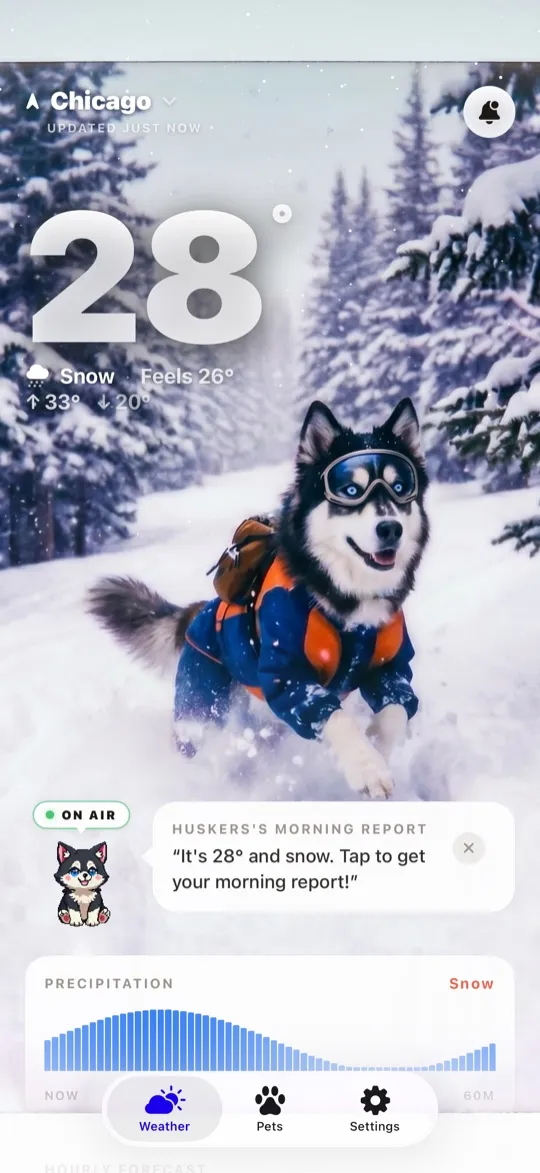
The single most useful habit is simply knowing how hot it is going to get before it gets there. If you can see that today tops out at 88 degrees, you can set up the frozen bottle, pull the cage away from the window, and get the fan going in the morning instead of scrambling at 2 p.m. This is where a glance at WeatherPets helps: your pet delivers the day's forecast and high in character, so the heads-up you need to protect a temperature-sensitive small pet is the same cheerful check-in you already enjoy. Lead with the care, and let the forecast make it easy.
Frequently asked questions
What is a normal body temperature for a guinea pig?
A healthy guinea pig runs between 99.5 and 103.1 degrees Fahrenheit (37.5 to 39.5 Celsius), according to the Merck Veterinary Manual. That is the internal body temperature, taken rectally with a digital thermometer, and it is a completely different number from the 65 to 75 degree room temperature they need to live in. A reading outside that band is a reason to call a vet rather than wait and see.
What is a normal body temperature for a rabbit?
The House Rabbit Society puts a healthy rabbit between 101.5 and 104.2 degrees Fahrenheit. Rabbits run warmer than people, so a number in the low 100s is not a fever on its own. As with guinea pigs this is the internal body temperature, not the room temperature, which should stay below 77 degrees.
What temperature is too hot for a guinea pig?
The Merck Veterinary Manual puts the recommended environmental range for guinea pigs at roughly 65 to 75 degrees Fahrenheit, with temperatures above about 85 degrees able to cause heatstroke. In practice, start actively cooling the room once you pass 75 degrees rather than waiting for 85, because guinea pigs have almost no effective way to shed heat on their own.
What temperature is too hot for a rabbit?
The House Rabbit Society treats anything above 77 degrees Fahrenheit as dangerous. Rabbits cannot sweat and cannot pant like a dog, so they rely on blood flow through their large ears to dump heat. Long-haired, overweight, very young and senior rabbits have even less margin, so give them a few degrees of extra caution.
Is heat or cold more dangerous for guinea pigs and rabbits?
Heat, by a wide margin, which surprises most new owners. Both species tolerate a cool room far better than a hot one. Cold is not irrelevant, and guinea pigs in particular do best staying above roughly 60 degrees and out of draughts, but the temperature that actually kills small pets is the summer high.
What are the first signs a guinea pig or rabbit is overheating?
Lethargy and stillness usually come first: a normally busy animal going flat and quiet. Then rapid shallow breathing, or open-mouth breathing, which is never normal in either species. Rabbits show reddened, very warm ears. Guinea pigs may drool or slobber. Stretching out flat against the cage floor is an attempt to find something cool.
How do I cool down a rabbit in hot weather?
Move the hutch or cage out of direct sun, get air moving across the room with an oscillating fan rather than blowing straight at the animal, and add a frozen water bottle wrapped in a thin towel plus a ceramic tile so it can choose how close to lie. The House Rabbit Society also recommends gently misting the ears, since cooling the ears cools the whole rabbit.
Can guinea pigs and rabbits live outside in summer?
Only with real care, and many owners find it is not worth the risk during a heat wave. A hutch in open sun heats far faster than the surrounding air, and wire cages heat faster still. If your animals live outdoors, bring them into a cool indoor space when the forecast high approaches the danger bands in the chart above.
Is 80 degrees too hot for a guinea pig?
Yes, treat 80 degrees as a problem to solve rather than a temperature to sit through. It is above the ideal 65 to 75 range and heading toward the 85 degree heatstroke threshold. Set up the frozen bottle, tile and fan, move the cage away from any window catching sun, and check on the animal often.
Do guinea pigs and rabbits need different temperatures?
Their safe ranges overlap heavily but are not identical. Guinea pigs sit comfortably in a 65 to 75 degree band and are more vulnerable at the cold end, needing to stay above roughly 60 degrees. Rabbits handle cool conditions better but hit danger earlier in the heat, from about 77 degrees. If you house both, plan around the stricter limit at each end.
Small pets have much narrower safe ranges than dogs and cats, and they get into trouble faster. The Pet Safety Score in WeatherPets scores every pet against its own comfort bands, so a rabbit or guinea pig is never judged by a dog's thresholds. Meet your WeatherPet on the App Store.
Your daily forecast, delivered by your own pet.










A note on health: This article is general information, not a substitute for professional veterinary advice. If you are worried about your small pet overheating or getting too cold, or about any serious or emergency health concern, contact your veterinarian right away. Our guidance draws on trusted veterinary sources, including those linked above.
