Spring Storm Season: Prep an Anxious Dog Before It Hits
If your dog panics in thunderstorms, the worst time to work on it is during a thunderstorm. By then the fear is running the show. The training that actually changes how a dog feels about thunder takes weeks, which means late winter and early spring, before the first big cell rolls through, is exactly when to start. Here is the prep plan.
Why prepping early beats reacting mid-storm
Storm phobia rarely fixes itself; left alone, it usually gets worse each season as the fear rehearses itself. The proven approach is desensitization and counterconditioning: gradually exposing your dog to storm sounds at levels too low to trigger fear, while pairing them with things your dog loves. The American Kennel Club's guide to helping dogs scared of thunder describes this gradual sound-training process, and the key word is gradual. You are reshaping an emotional response, and that takes many short sessions over weeks. Start in February and you have a different dog by May. Start when the tornado siren goes off and you have a crate full of panic.
Counterconditioning basics
The mechanics are simple, and the discipline is in going slowly:
- Play a recording of thunder at very low volume, low enough that your dog notices but stays relaxed.
- While it plays, break out the good stuff: chicken, cheese, a favorite game. Thunder on, party on. Thunder off, party over.
- Over days and weeks, nudge the volume up. If your dog tenses, whines, or stops taking treats, you went too fast; drop back to the last easy level.
The ASPCA's advice on managing storm phobia in pets adds an honest caveat: recordings cannot reproduce the pressure drops, static, and rumbling vibrations of a real storm, so sound training helps most dogs but is rarely the whole fix. That is why the rest of this list exists.

Build the safe den now
Most storm-phobic dogs pick a bunker: a closet, the bathtub, under the bed. Work with that instinct instead of against it. Set up a den in the most sound-insulated, windowless spot your home offers: a crate draped with a heavy blanket (door always open, never locked), soft bedding, water, and a piece of your worn clothing. Feed treats and meals there on calm days so the den means good things long before it means shelter. If your dog already has a chosen hiding spot, upgrade that spot rather than relocating them.
Pressure wraps and white noise
Snug-fitting pressure wraps apply constant gentle compression, which has a calming effect on many anxious dogs. VCA Animal Hospitals notes in its overview of anxiety vests for dogs that they are a low-risk tool that helps a meaningful share of dogs, especially combined with training rather than instead of it. Buy the wrap before storm season and have your dog wear it during happy moments first, so it never becomes a costume that only predicts doom. Our roundup of the best anxiety wraps for storm-scared dogs covers fit and picks.
White noise is the other cheap win. A fan, a white noise machine, or a low TV near the den masks the distant rumbles that start the panic spiral early. Test your setup on a calm evening so the routine is familiar.
When to talk to your vet about medication
If your dog drools, trembles, destroys doors, or hurts themselves trying to escape during storms, training alone is not enough, and that is not a failure. Severe storm phobia is a medical-grade anxiety problem, and modern vet-prescribed medications, given before the storm arrives, can lower the panic enough for training to actually work. Book that conversation in early spring, because some options need a trial run to dial in. Skip the human medications and unregulated calming products unless your vet signs off. For a fuller picture of in-the-moment tactics, see our guide to thunderstorm anxiety in dogs, and keep our pet storm prep checklist handy for the household side.
Make the morning forecast your early-warning system
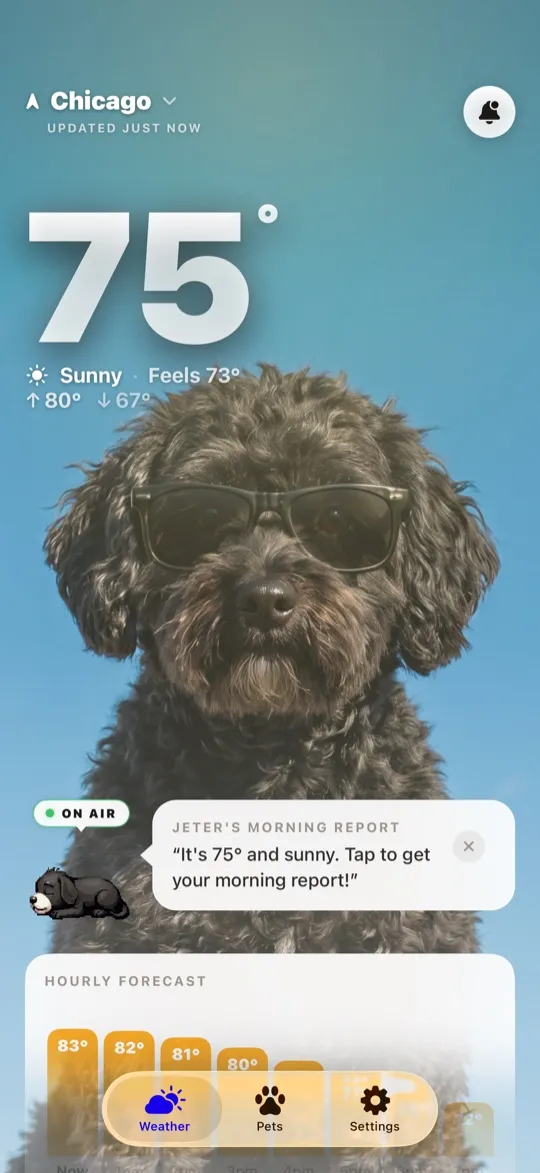
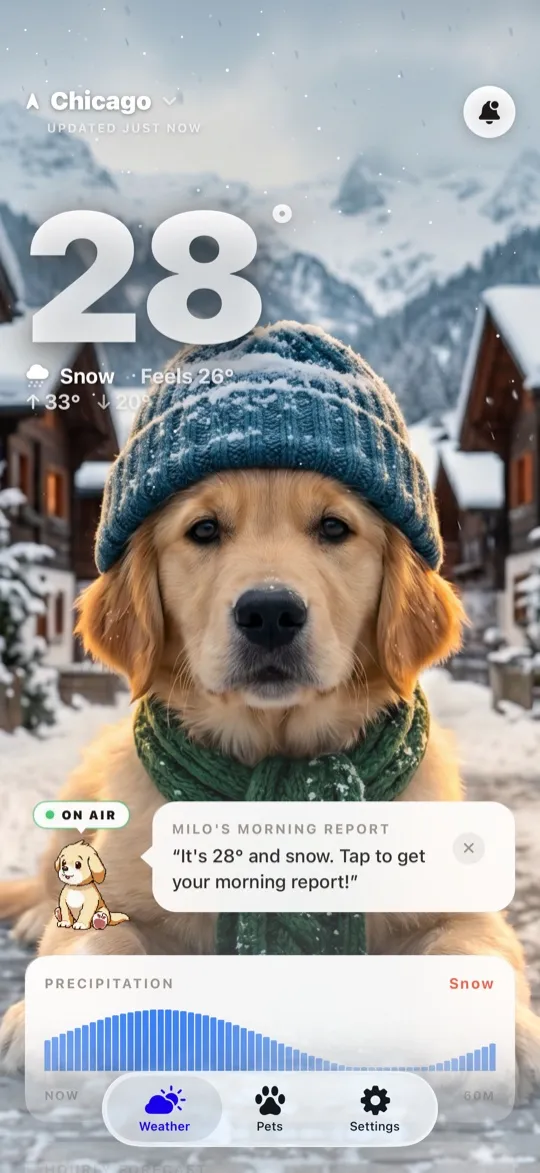
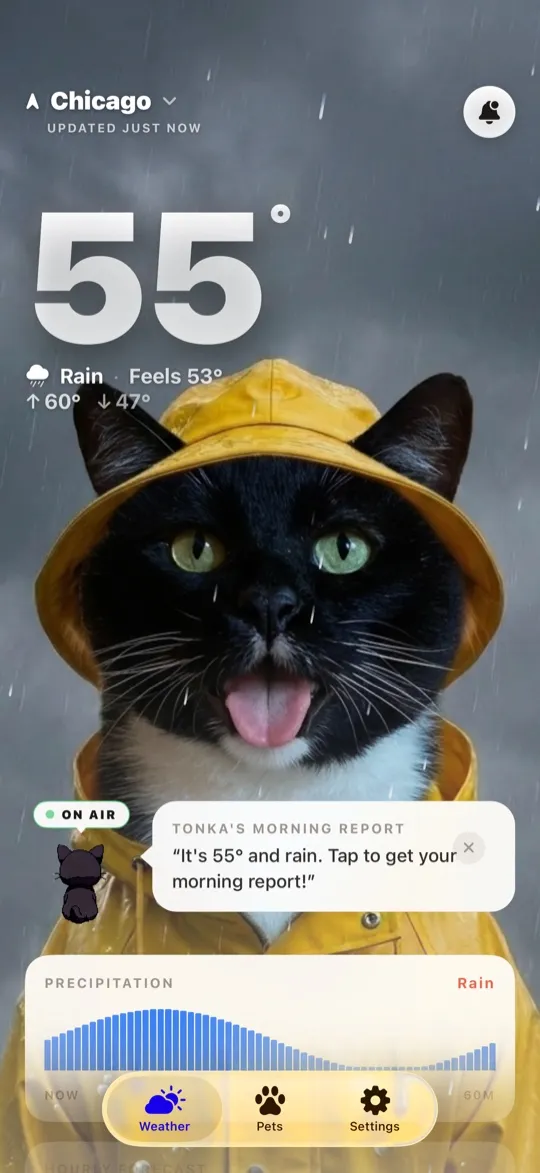
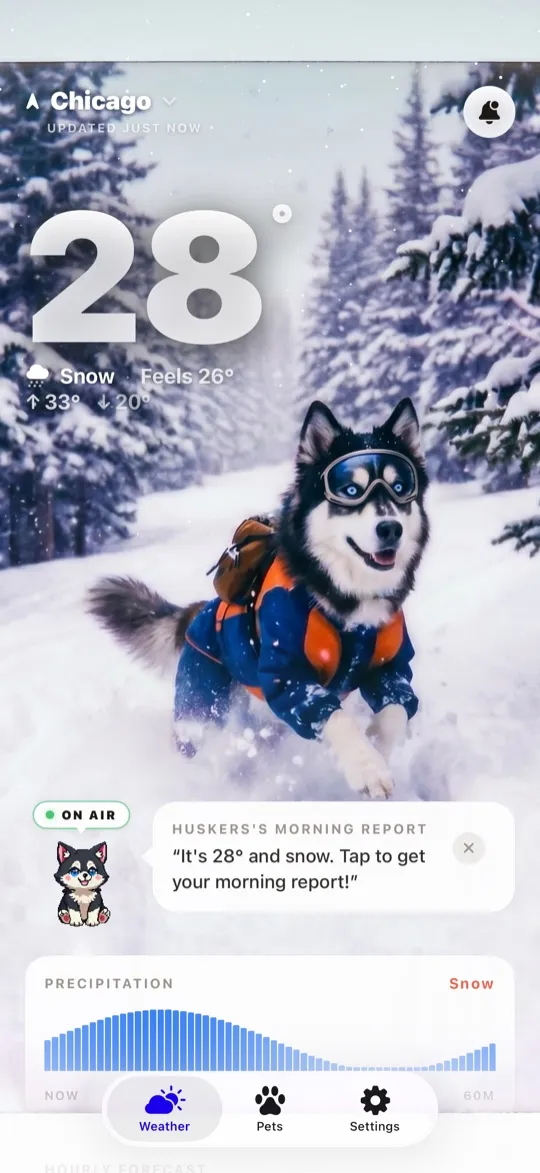
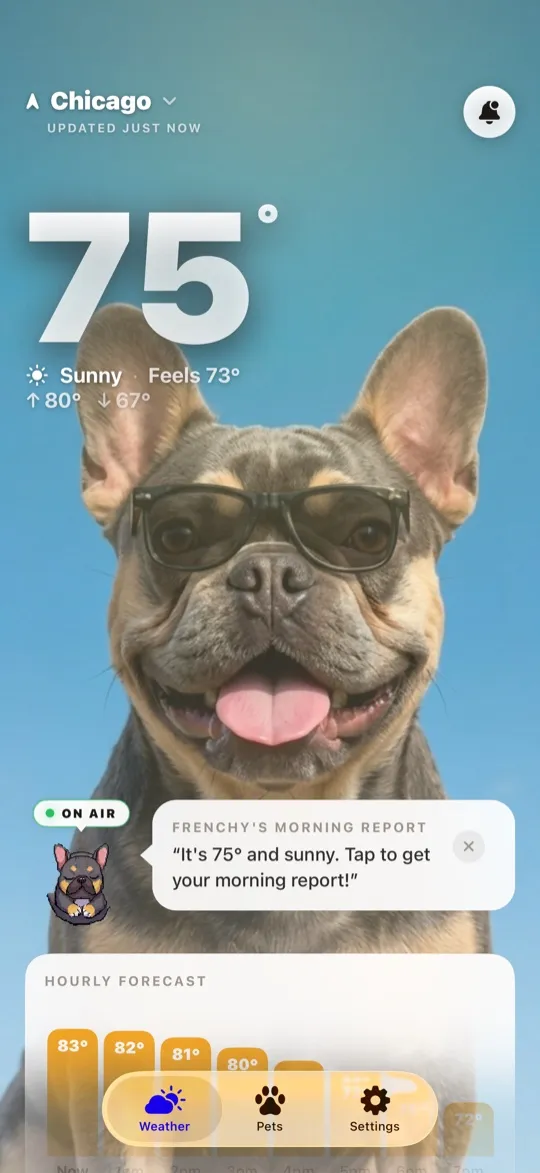
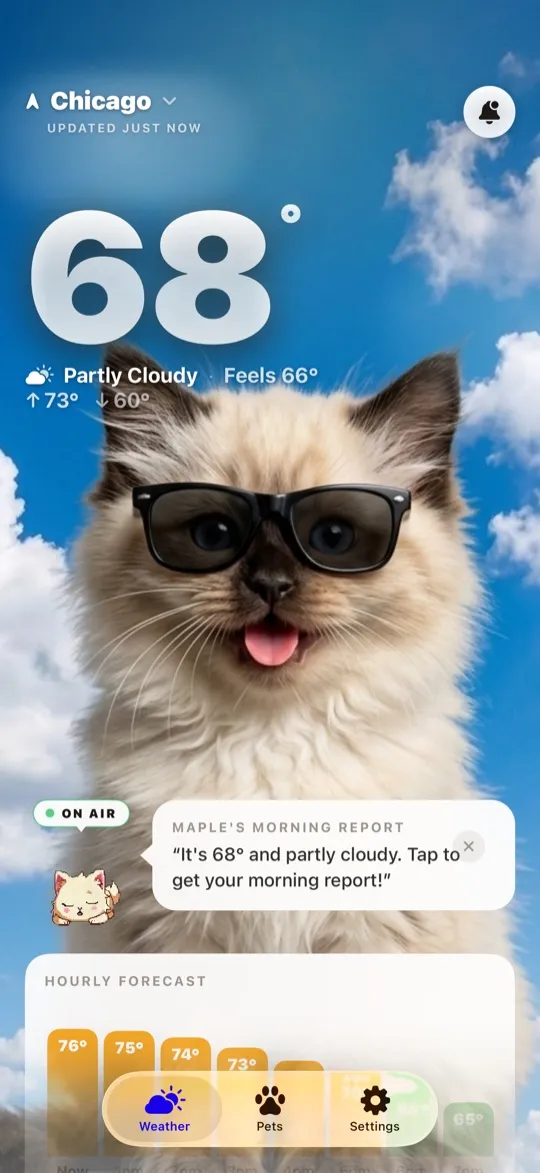
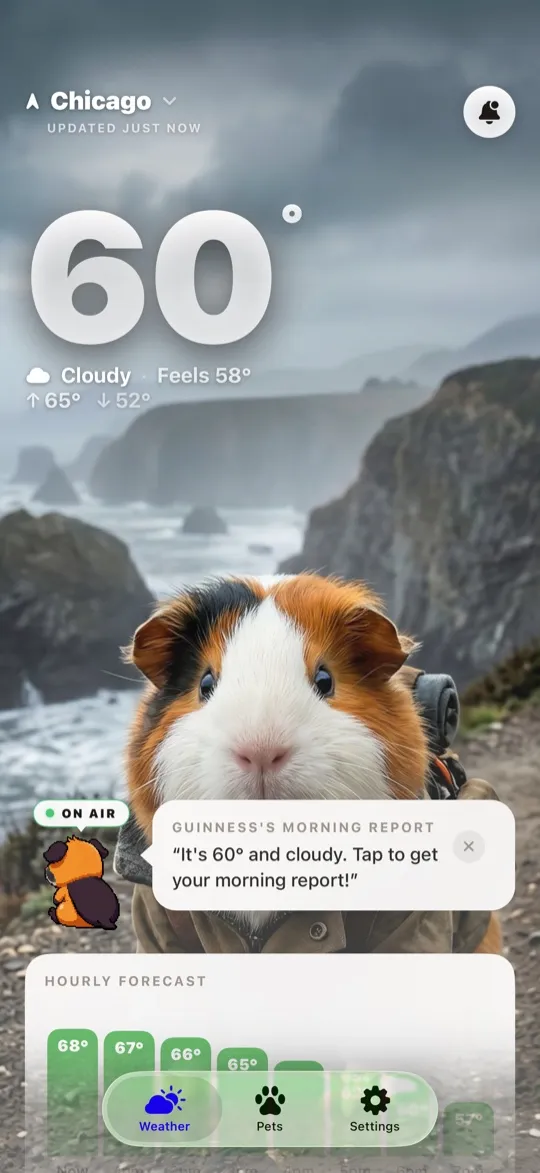
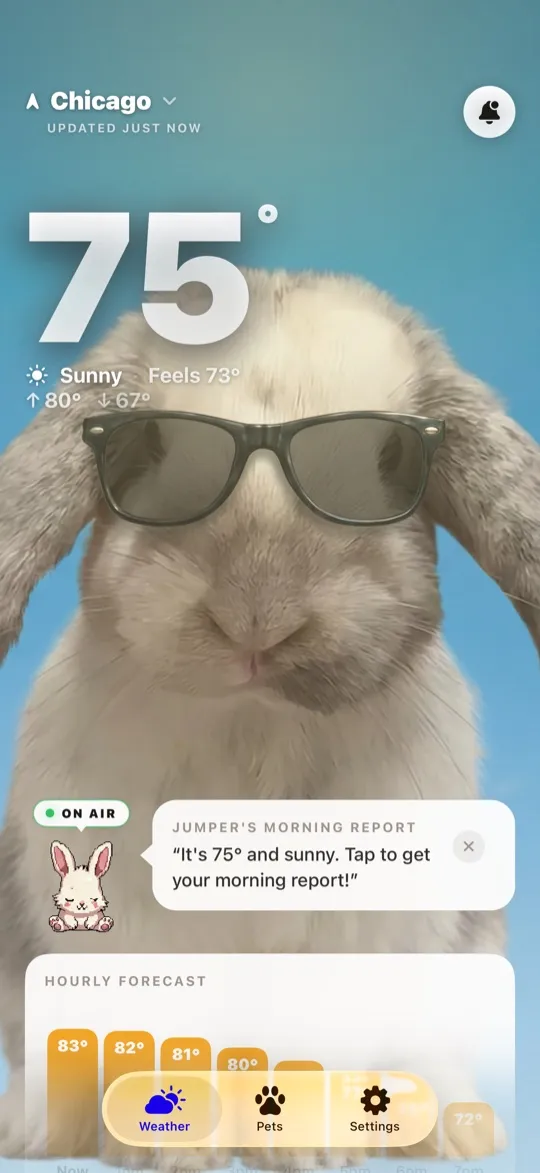
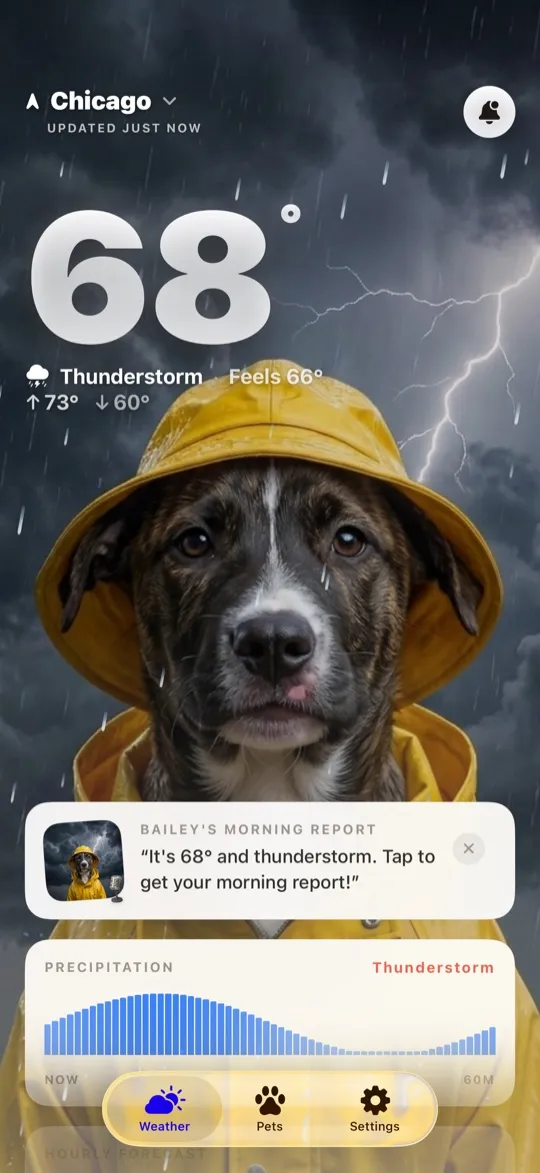
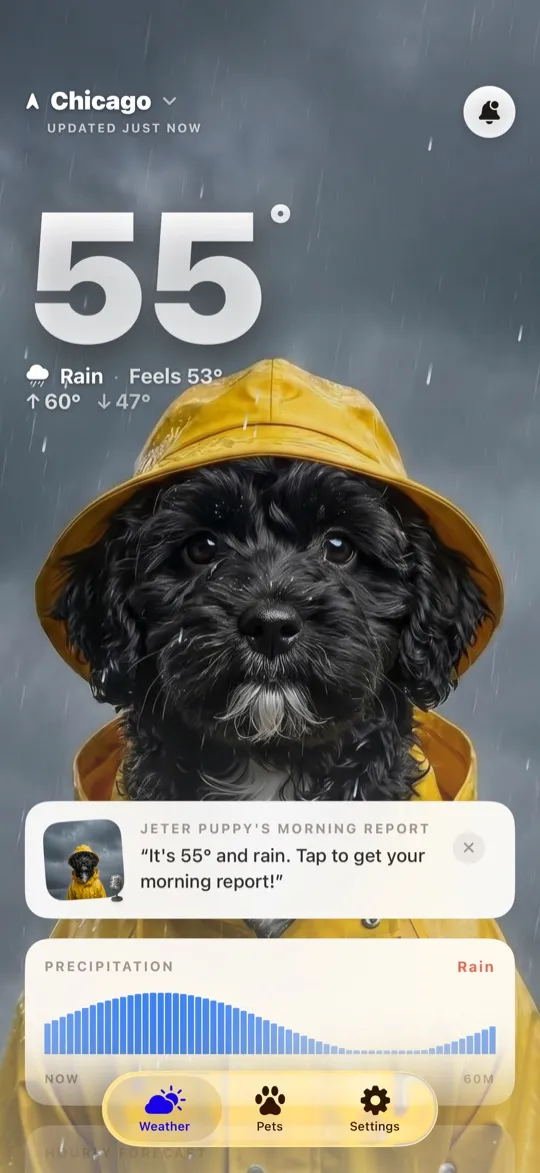
Every tool above works better with lead time: the wrap goes on before the first rumble, the den gets prepped, the potty trip happens early, and medication has time to kick in. That makes a morning forecast habit part of the treatment plan. WeatherPets helps here in the most pleasant way possible: your own pet delivers a morning report, so a storm rolling in after lunch is something you knew about at breakfast, with hours to set everything up while your dog is still relaxed.
The season is manageable
Storm phobia responds to patient, boring, consistent work done ahead of time. Start the sound sessions now, build the den, buy the wrap early, loop in your vet if the panic is severe, and check the forecast each morning. By the time the first real thunderhead builds, you will both have a plan that is already rehearsed.
Your daily forecast, delivered by your own pet.