Antifreeze and Pets: The Winter Poison in Every Driveway
Almost everything written about antifreeze poisoning is written from the clinic, which means it describes what happens after the emergency has already started. The owner-level story is different and more useful, because it has a season attached to it. Veterinary sources put most cases in fall, winter and early spring, when cooling systems get topped up and flushed, and your forecast tells you when that week is coming.
Key takeaways
- It is a seasonal poisoning, not a random one. Merck puts most cases in fall, winter and early spring, when antifreeze is added or cooling systems are flushed.
- The early signs look like drunkenness, and they can start within 30 minutes.
- There is a false recovery at around 12 hours. The animal perks up. Nothing has improved.
- Cats need a far smaller exposure than dogs, and reach kidney failure faster.
- Speed is the entire game: treatment works best before kidney damage, so this is a phone-on-the-way emergency, not a wait-and-see.
Quick answer
Antifreeze based on ethylene glycol is sweet, palatable and lethal in very small amounts. Merck's owner-facing figure is 3 to 4 teaspoons for a dog and 1 to 2 teaspoons for a cat. The danger window opens with the first cold snap of the season rather than with deep winter. If you think your pet has had any contact with it, go to a vet immediately and call on the way. Do not wait for symptoms. Do not wait to be sure.
The Merck Veterinary Manual states the rule that matters in one line: prognosis varies inversely with the amount of time between ingestion and the start of treatment. An antidote exists, and it works before the kidneys are damaged rather than after. Everything else in this article is detail underneath that sentence.
Why the first cold snap is when it happens
Merck is specific about timing: in temperate and cold climates the incidence is seasonal, with most cases occurring in the fall, winter and early spring, when antifreeze is added to radiator fluid or when cooling systems are flushed.
Read that again, because the causal link is not the one people assume. Cold weather does not create antifreeze poisoning. People preparing for cold weather creates it. The dangerous week is the one where the neighborhood tops up its coolant at once, spills a little, and leaves an open container in the garage. That week is set by the forecast.
So when does that week arrive where you live? NOAA's National Centers for Environmental Information put the median first-freeze dates on the 1991-2020 normals at mid-September to early October across the Midwest and Northeast, early September to November in the Northwest, early October in Virginia extending to December further south, and parts of Florida not freezing reliably at all.
Mid-September. Not January. In much of the country the antifreeze season opens while the leaves are still on the trees.
Our own city dataset shows why that catches people out. Using the same normals, here is when the average overnight low first reaches freezing:
| First month with an average low at or below 32°F | How many of our 70 US cities |
|---|---|
| October | 1 |
| November | 9 |
| December | 23 |
| January | 8 |
| Never (average low stays above freezing all year) | 29 |
The gap is the whole point. December is when the average night freezes in most of these cities. Mid-September to October is when the first night freezes. The monthly average lags the actual first freeze by weeks or months, and it is the first freeze that sends people out to the garage.
Note also the 29 cities whose average low never reaches freezing. They still freeze, just occasionally and unpredictably, which is worse: Atlanta gets a hard night in November that nobody prepared for, and the coolant gets topped up in a hurry. The unprepared cities are not always the cold ones.
The practical version: the risk window opens with your first freeze warning or frost advisory of the season, not with the first snow. Our piece on the first cold snap covers why that same week is hard on dogs for entirely separate reasons.
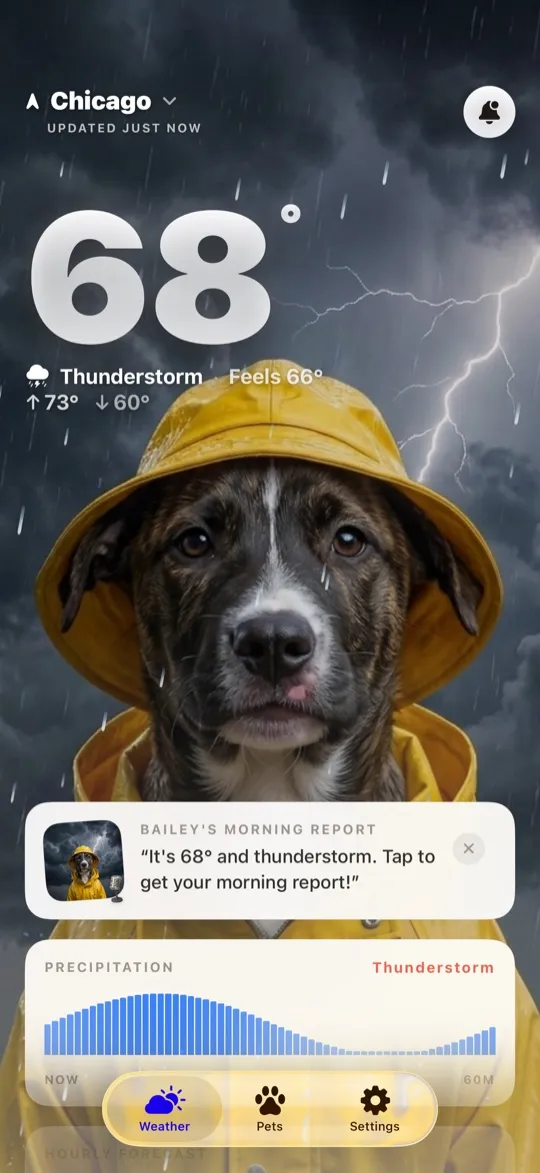
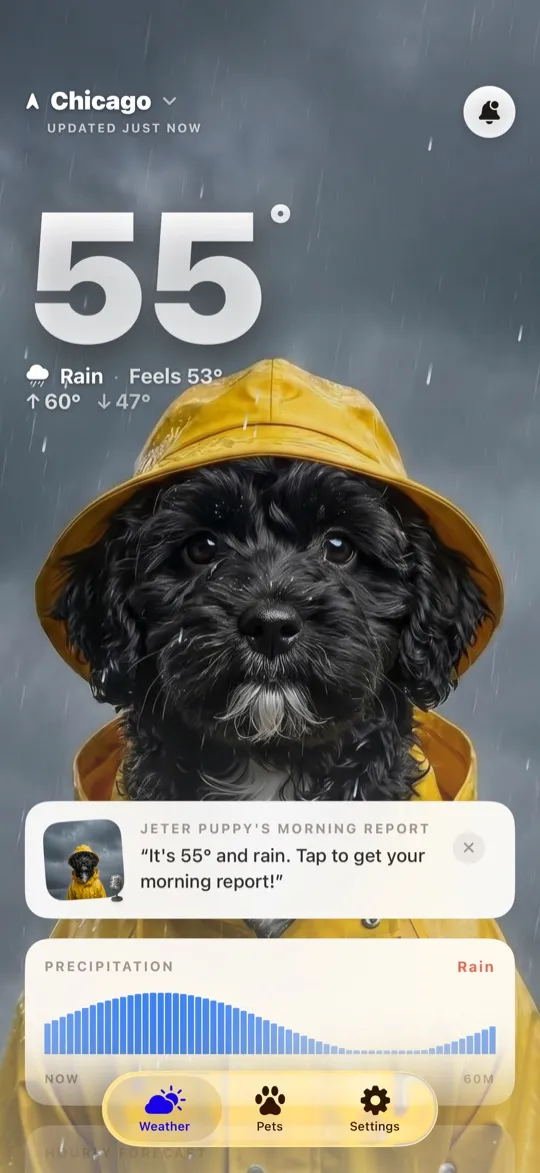
The first freeze is visible several days out, which is enough time to move a container and check under the car. WeatherPets flags the cold coming for your specific pet rather than a generic forecast. See how the Pet Safety Score works, or get it free on the App Store.

Signs in the first hours, and why waiting is fatal
Merck breaks the progression into phases, and the timings are what make this poisoning so dangerous for owners rather than just for animals.
| Time after ingestion | What you would see |
|---|---|
| 30 minutes to 12 hours | Signs that mimic alcohol intoxication: vomiting, wobbliness and loss of coordination, drinking and urinating much more than usual, appearing depressed or dazed |
| Around 12 hours | A brief apparent recovery. The animal seems better |
| 12 to 24 hours (cats) | Kidney failure |
| 36 to 72 hours (dogs) | Kidney failure, with loss of appetite, vomiting, lethargy, and potentially seizures |
The middle row is the one that costs animals their lives. An owner sees a wobbly dog at 8pm, watches it, and by midnight the dog seems fine again and everyone goes to bed relieved. Nothing has been fixed. The body has moved on to the phase that destroys kidneys.
A pet that got better on its own is not evidence that it was nothing. With this poison it is close to the opposite.
Cats and the smaller dose
Cats are worse off on every axis. Merck puts the lethal amount for a cat far below the figure for a dog, so a cat needs a much smaller exposure while also being a much smaller animal. Cats also reach kidney failure inside 12 to 24 hours where dogs take 36 to 72.
They are also more likely to be exposed unobserved. A dog is usually with you; a cat is out, and may walk through a puddle in a parking lot and groom it off hours later with nobody having seen anything. That is where owners get the timing badly wrong, because there is no incident to remember.
If you keep an outdoor or indoor-outdoor cat in winter and you find it unexplainedly wobbly, thirsty and dazed in freezing weather, this belongs on the list of things you mention to the vet by name. It costs nothing to say and it changes what gets tested first.

Propylene glycol products and driveway habits
Two genuine improvements exist, and neither is a solution.
Bittering agents. Antifreeze is sweet, which is why animals drink it voluntarily. The American Veterinary Medical Association reported in 2013 that manufacturers had voluntarily agreed to add denatonium benzoate, a bitter flavoring agent, to antifreeze and engine coolant sold nationwide, following state laws that already required it. Real progress, and it does nothing for the puddle under a car that leaked last winter.
Propylene glycol formulations. The ASPCA notes these have a much wider margin of safety, and Merck agrees, with a caveat worth reading properly: propylene glycol still produces a toxic syndrome similar to ethylene glycol poisoning, it is simply less toxic and the outlook is usually better. It also lacks the sweet taste. Less dangerous, not safe. The ASPCA also lists the less obvious places ethylene glycol turns up: portable basketball hoop bases, some toilets, inks, snow globes and latex paints.
The habits that actually move the risk are dull and cheap:
- Look under the car when you move it. A bright green, orange or pink patch on the driveway is a leak, and it is sweet.
- Hose spills immediately. Absorb, then rinse. A wiped spill is still a licked spill.
- Store containers closed and high up, not on a garage floor where a tipped bottle becomes a puddle.
- Watch the neighbors' driveway too. You control your own garage. Your dog walks past eleven other ones.
Same walk, same season and same mechanism as ice melt and road salt on the same driveway: something on the ground, picked up on paws, groomed off indoors later.
Call the vet: what to say
In an emergency people default to describing feelings rather than facts, and the facts are what shorten the time to treatment. Say these things, in this order:
- "I think my dog has drunk antifreeze." Name the substance first. It changes what happens next at their end before you have finished the sentence.
- Species, rough weight and age. "Twelve kilo terrier, about eight years old."
- When, as precisely as you can. "Within the last hour" or "some time this afternoon, I have been out since two." An honest range beats a confident guess.
- What you saw, not what you concluded. "There is a green puddle by my car and he was sniffing round it" is more useful than "he might have had some."
- Current signs and when they started. Wobbly, vomiting, drinking a lot, dazed. Note the time you first noticed.
- Ask: am I coming now, and should I do anything on the way? Do not induce vomiting unless you are told to.
- If you cannot reach your vet, call the ASPCA Animal Poison Control Center on 888-426-4435. Then go anyway.
Take the container or a photo of the label if one is nearby. Concentration and product type matter, and a photo takes three seconds. The same script works for the other seasonal version of this problem, what to do when a dog eats something in the yard.
The thing worth remembering
Most winter pet hazards give you room to be wrong. Antifreeze does not. The whole risk is compressed into a few hours, the animal appears to recover in the middle of it, and the treatment that works is the one that happens early.
So the standard for acting is deliberately low. Not "I am sure." Just "I am not sure, and it is not worth being sure about." For the wider net, our power outage pet care plan covers the other cold-season failure that arrives faster than people expect.
Frequently asked questions
How much antifreeze is toxic to a dog?
The Merck Veterinary Manual puts it at roughly 3 to 4 teaspoons for a dog and 1 to 2 teaspoons for a cat, and far less again for a small cat. The honest caveat is that the number does not help you: in a real driveway you cannot know how much was licked, so any suspected exposure is an emergency regardless of the estimated amount.
What are the first signs of antifreeze poisoning?
In the first 30 minutes to 12 hours the signs look like drunkenness: vomiting, wobbliness, drinking and urinating far more than usual, seeming depressed or dazed. The cruel part comes next. Merck describes a brief apparent recovery around 12 hours after ingestion, which is when many owners decide the crisis has passed. It has not.
Is there pet-safe antifreeze?
There is safer antifreeze, which is not the same thing. The ASPCA points to products based on propylene glycol rather than ethylene glycol, which has a much wider margin of safety, while still advising that pets be kept away from any automotive chemical. Treat "pet-safe" on a label as a reduction in risk, not a removal of it.
Does antifreeze taste sweet to dogs and cats?
Yes, and that is the whole problem: a palatable poison rather than something an animal has to be tricked into. Manufacturers agreed voluntarily in 2012 to add a bittering agent to consumer antifreeze nationwide, and a number of states require it. A genuine improvement, and not a guarantee, because it does nothing about a puddle that has already leaked from a car.
Why does antifreeze poisoning happen more in winter?
Because that is when the product is handled. Merck notes that most cases occur in fall, winter and early spring, when antifreeze is added to radiator fluid or cooling systems are flushed. The risk is not really the cold; it is the seasonal burst of people opening hoods, and the leaks and spills that come with it.
What should I do if I think my pet drank antifreeze?
Go now, and phone on the way. Do not wait for symptoms, do not wait to be sure, and do not try to make your pet vomit unless a vet on the phone tells you to. Merck is explicit that prognosis varies inversely with the time between ingestion and the start of treatment. If you cannot reach your vet, the ASPCA Animal Poison Control Center is on 888-426-4435.
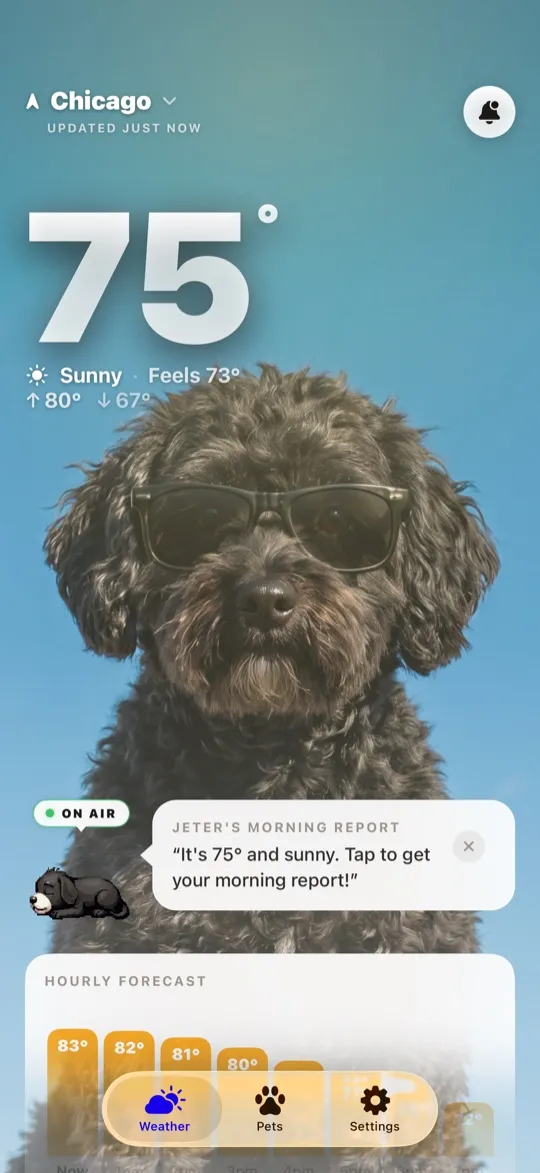
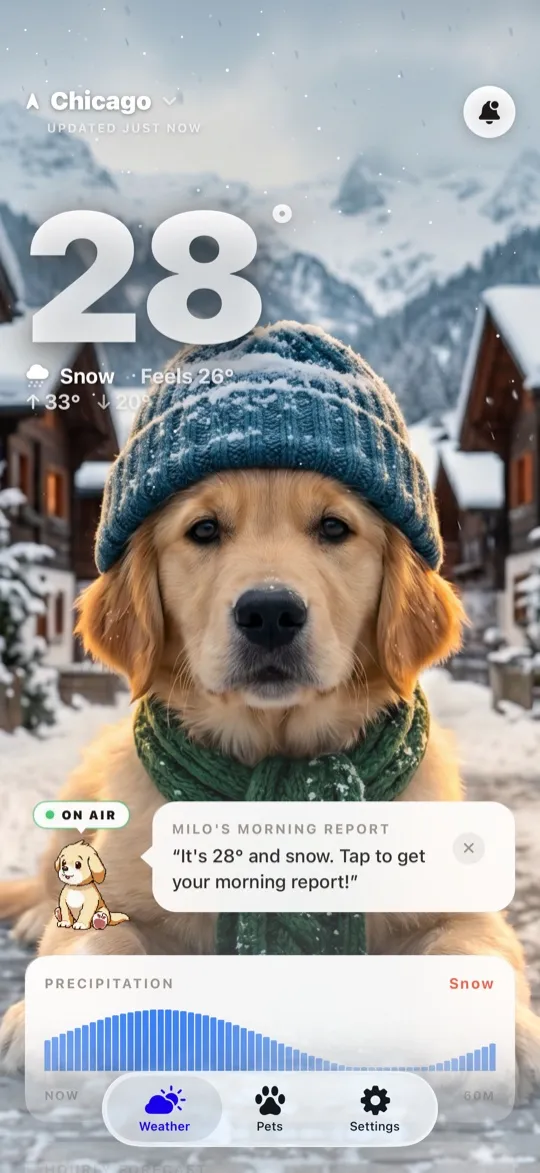
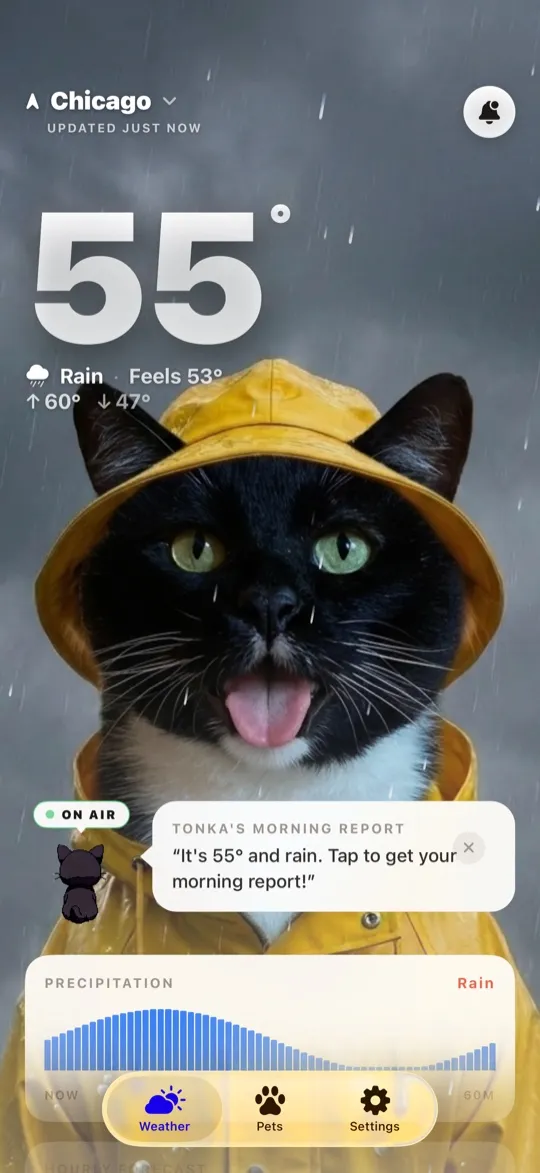
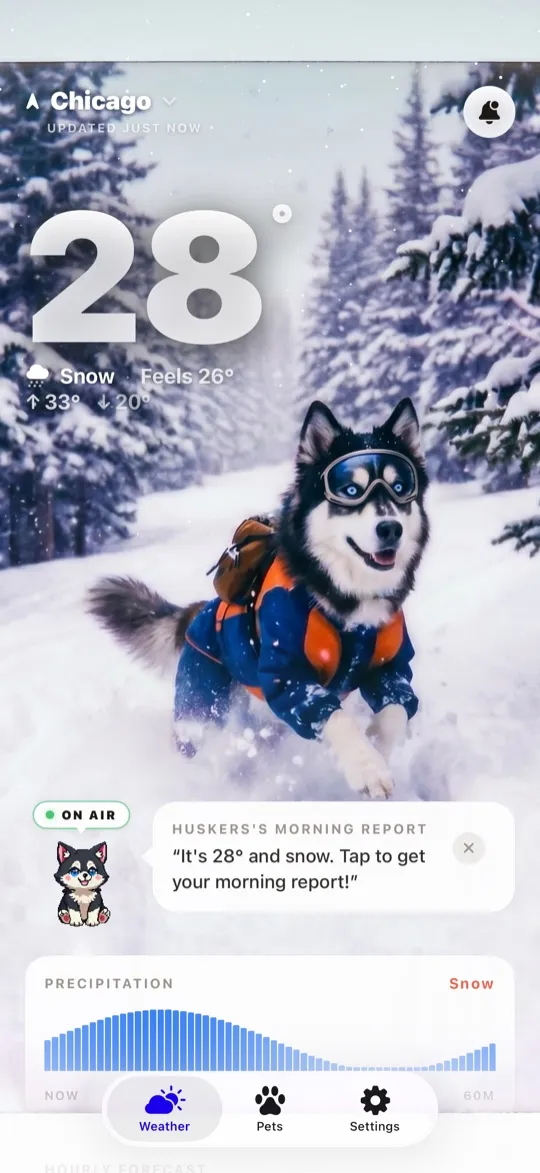
Your daily forecast, delivered by your own pet.

A note on health: This article is general information, not a substitute for professional veterinary advice. If you are worried about a possible antifreeze exposure or any serious or emergency health concern, contact your veterinarian right away. Our guidance draws on trusted veterinary and government sources, including those linked above.
