Daylight Saving and Your Dog's Walk Routine
Daylight saving time ends on Sunday 1 November 2026, and every article about it will tell you to shift your dog's schedule by fifteen minutes a day. Fine advice, as far as it goes. What none of them tell you is the thing that actually changes your week: the hour the clocks take is identical for everyone, and the hour your evening walk goes dark is not.
Key takeaways
- The shift is about 61 minutes, and it is the same everywhere. We checked a dozen cities against Naval Observatory tables. Nobody loses 70 minutes; that number is folklore.
- What differs is where it leaves you. On the first evening of standard time in 2026, sunset is 4:32 p.m. in Spokane and 5:48 p.m. in San Antonio, 76 minutes apart.
- The bleed continues through November, and unequally: Spokane loses another 32 minutes across the month, Miami only 10.
- Shift meals and walks 15 minutes a day for four days rather than all at once.
- Light yourself as well as the dog. Drivers are adjusting to the new dark too.
Quick answer
Daylight saving time in the US ends at 2:00 a.m. on the first Sunday of November, which in 2026 is Sunday 1 November. NIST also notes the exceptions: Hawaii, most of Arizona, American Samoa, Guam, Puerto Rico and the US Virgin Islands do not change their clocks at all.
For your dog: shift meals, walks and bedtime 15 minutes later per day across the four days before, so the hour is absorbed rather than dropped. Then plan for the evening walk to be a dark walk, from that Sunday until roughly March.
What actually changes for the dog (light, not clocks)
Your dog has no idea what a clock is and does not care that the number changed. What it has is a circadian rhythm, an internal daily cycle cued primarily by light and reinforced by routine. As the American Kennel Club puts it, quoting its chief veterinary officer, dogs respond to daylight, waking when the sun rises and sleeping when it is dark.
So nothing about Sunday morning is confusing to your dog. It wakes when it gets light, exactly as it did on Saturday. What confuses it is you: breakfast an hour late by its reckoning, the walk at the wrong point in the day, and a household that suddenly goes quiet an hour early.
The AKC warns that abrupt schedule changes can produce anxiety, digestive upset and house-training accidents in animals that depend on routine for security. That is the actual risk of the time change, and it is entirely a routine problem rather than a light problem. Which is good news, because routine is the one variable you control completely.
The sunset table nobody publishes
Here is where the standard advice goes wrong. It talks about the clock change as though it does different things in different places. It does not. Every sunset time below is taken from the US Naval Observatory's published rise and set tables for the evening before and the evening after the 2026 change.
| City | Sunset Sat 31 Oct | Sunset Sun 1 Nov | Shift | Further lost by 1 Dec |
|---|---|---|---|---|
| Spokane, Washington | 5:33 p.m. | 4:32 p.m. | 61 min | 32 min |
| Boston, Massachusetts | 5:39 p.m. | 4:37 p.m. | 62 min | 24 min |
| Chicago, Illinois | 5:46 p.m. | 4:45 p.m. | 61 min | 25 min |
| Seattle, Washington | 5:53 p.m. | 4:51 p.m. | 62 min | 31 min |
| New York City, New York | 5:53 p.m. | 4:52 p.m. | 61 min | 23 min |
| Denver, Colorado | 5:59 p.m. | 4:58 p.m. | 61 min | 22 min |
| Los Angeles, California | 6:01 p.m. | 5:00 p.m. | 61 min | 16 min |
| Minneapolis, Minnesota | 6:02 p.m. | 5:01 p.m. | 61 min | 28 min |
| Dallas, Texas | 6:37 p.m. | 5:36 p.m. | 61 min | 15 min |
| Miami, Florida | 6:40 p.m. | 5:39 p.m. | 61 min | 10 min |
| Atlanta, Georgia | 6:46 p.m. | 5:45 p.m. | 61 min | 16 min |
| San Antonio, Texas | 6:48 p.m. | 5:48 p.m. | 60 min | 13 min |
Read the fourth column first: about 61 minutes, everywhere. Sixty from the clock, plus or minus a minute of ordinary seasonal shortening, which is why it runs 60 to 62 rather than one number. No city lurches by 70 minutes, and if you have read that, it was invented.
Now read the third column, which is the one that changes your life. On the same Sunday evening, Spokane is dark at 4:32 p.m. and San Antonio is still in daylight at 5:48 p.m. That is a 76 minute spread across the country on one night, and it has nothing to do with daylight saving. It is longitude: how far west you sit inside your own time zone, plus latitude.
And the fifth column is the one people forget entirely. The clock change is a single event; November is a slope. Between 1 November and 1 December, Spokane loses another 32 minutes of evening and Seattle 31. Miami loses 10. If you live in the north, the change is not the bad week. The change is the start of five more weeks of the same thing happening quietly.
The 4-day shift plan
The hour has to go somewhere. Absorb it gradually and your dog barely notices; drop it all on Sunday and you spend a week with an animal who thinks meals are late.
- Wednesday. Everything 15 minutes later than usual: breakfast, walks, dinner, last garden trip, bedtime.
- Thursday. 30 minutes later.
- Friday. 45 minutes later.
- Saturday. A full hour later. On Sunday morning the clocks catch up with you, and the routine is already correct.
Two notes that matter more than the schedule itself. Move everything together, not just meals: a dog reads the sequence of the day, so shifting dinner while leaving the walk alone is more confusing than shifting nothing. And if you have a dog on time-sensitive medication, do not improvise the timing; ask your vet how they want that handled around the change, because it is the one part of the routine that is not yours to move.
If four days of planning is not going to happen, the fallback is fine: change everything on Sunday and hold the new times firmly for a week. Most dogs settle within a few days. It is simply a slightly worse week for both of you.
The evening walk goes dark: visibility gear
The dog is fine in the dark. The problem is that drivers cannot see you, on roads where they were driving in daylight a week ago and have not adjusted their expectations either.
The principle worth holding onto: light the human as well as the dog. Owners reliably kit out the dog and then walk beside it in a dark coat, which means a driver sees a small moving light at knee height and no indication of the person attached to it.
- Something actively lit, not just reflective, on the dog. Reflective material only works once headlights hit it, which on a dark road can be later than you want.
- Something lit on you, ideally high up where headlights find it first.
- A light-coloured or lit leash. The leash is the bit that tells a driver the two moving objects are connected and that neither is about to cross unpredictably.
- Check the batteries when the clocks change. One date, one job, once a year.
- Walk facing traffic where there is no sidewalk, and keep the dog on the side away from the road.
The clock change also lands within a few weeks of the first cold nights in much of the country, so the evening walk gets dark and cold at roughly the same time. The National Weather Service's cold weather safety guidance is the short version of what that second change asks of you.
Our guide to night walk visibility gear goes through what actually gets seen at distance and what merely looks reassuring in a shop.
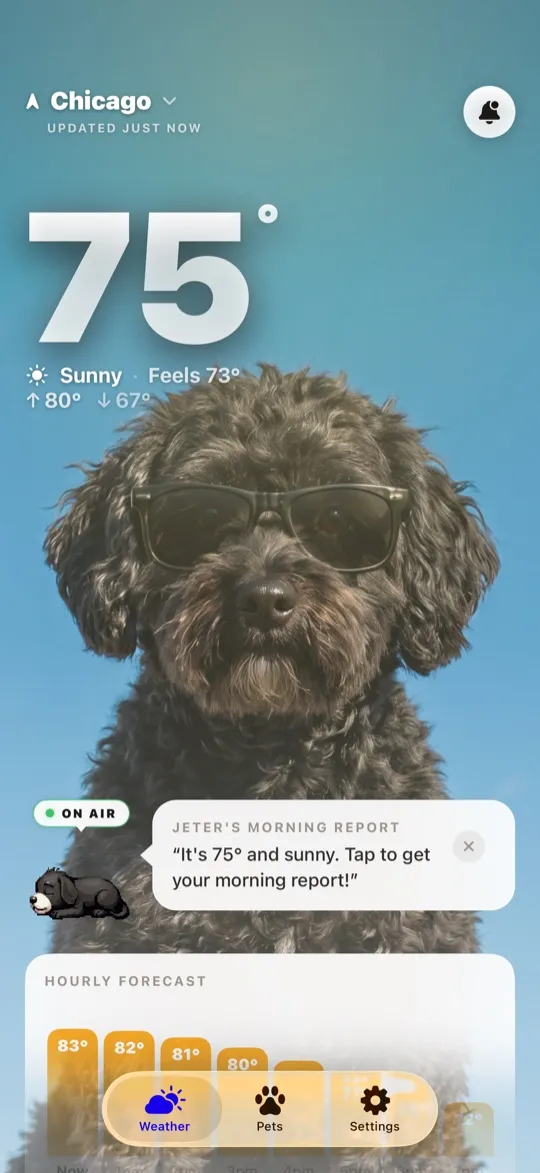
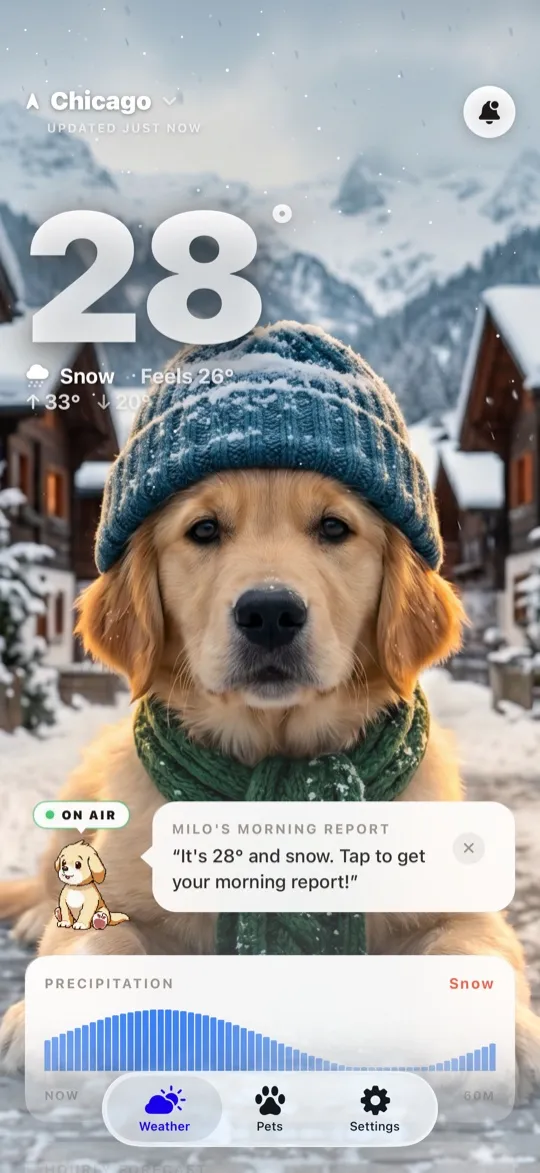
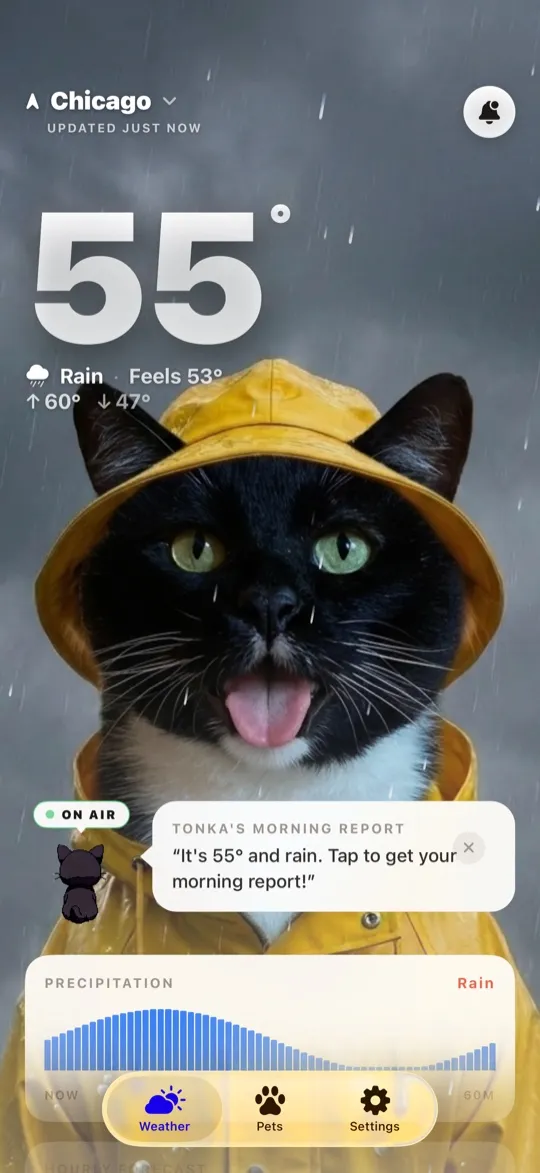
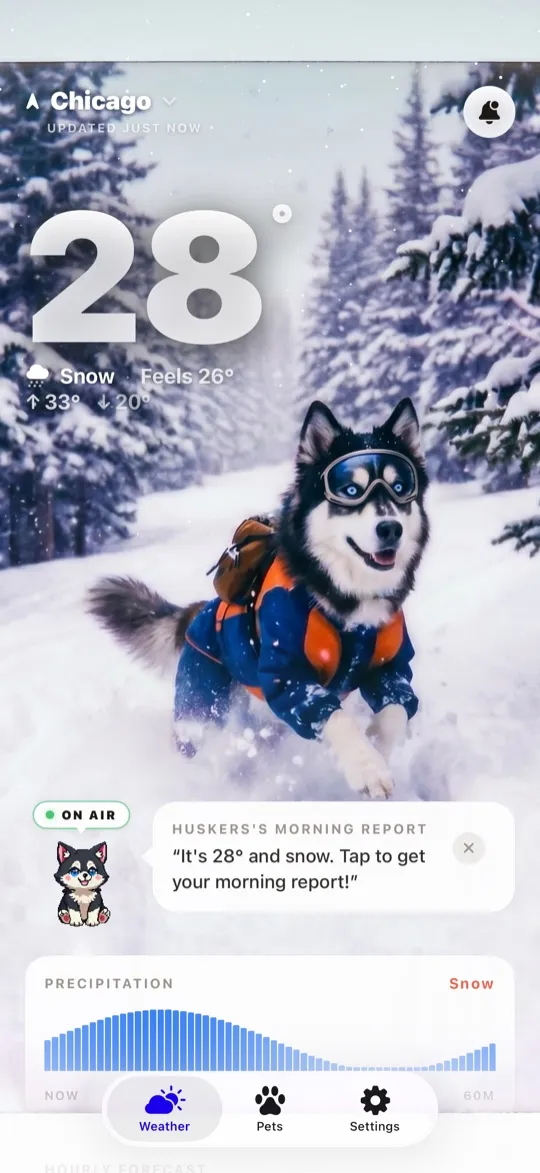
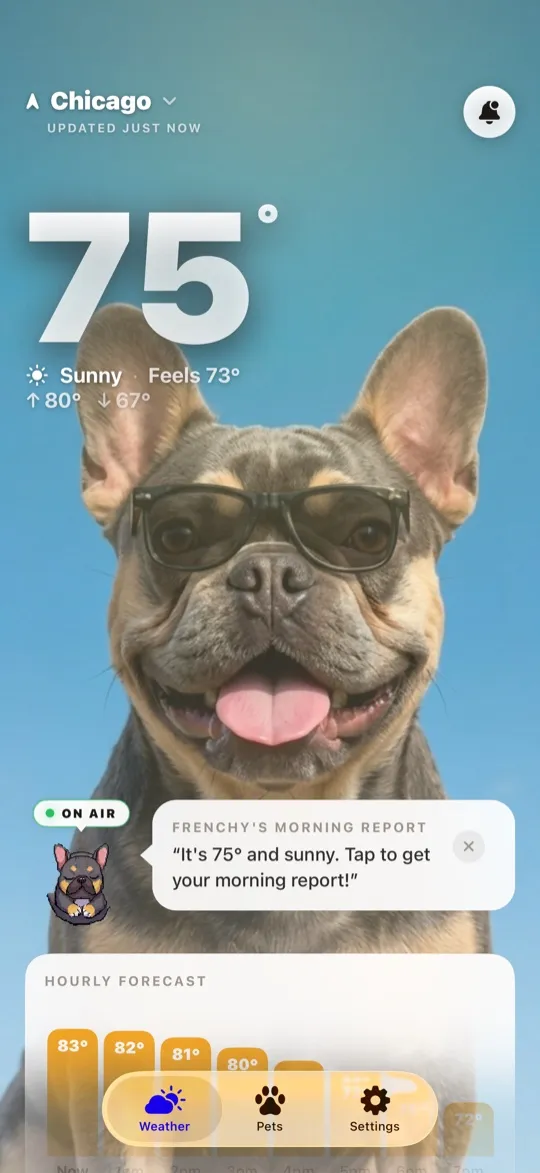
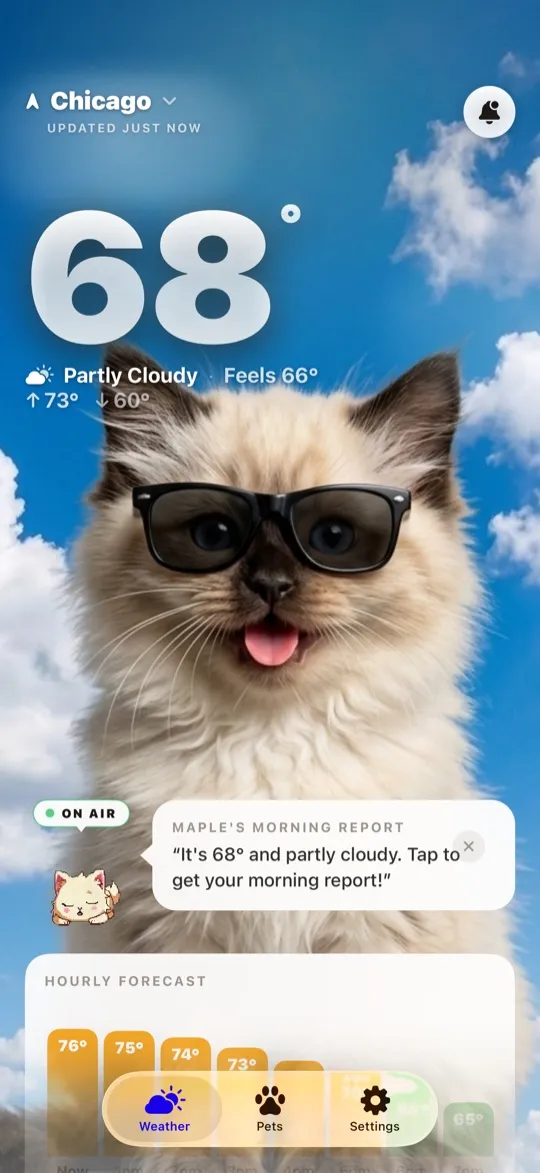
You do not have to look your sunset up: WeatherPets already knows it for your location, and it grades the evening hours against your specific dog rather than a generic forecast, which matters more once the first cold snap arrives a few weeks behind the clock change. See how the Pet Safety Score works, or get it free on the App Store.
Meals and the 5pm stare
The most-reported symptom of the time change is not anxiety. It is a dog sitting in front of you at 5pm with an expression of quiet betrayal.
The mechanism is simple. Dark meant dinner. Dark now arrives an hour earlier by the clock, so the cue fires early and the food does not appear. Your dog is not confused about the time; it is correctly reading a signal that has moved relative to your kitchen.
What works:
- Hold the new mealtime. A week of consistency retrains the association. Feeding early to end the staring teaches the dog that staring produces food, which is a worse and more permanent problem than a fortnight of being looked at.
- Give the evening a different marker. A short training session, a chew, a sniff game at the new pre-dinner hour. You are replacing a light cue with an activity cue, and activity cues survive December.
- Expect the morning to move too. A dog that woke at 6:30 will now want you at 5:30 by the new clock, because sunrise moved too. This one sorts itself out as the mornings continue to get later through November.
- Watch the older dogs. Senior animals and dogs with anxiety take the longest to resettle and benefit most from the gradual version.
If the walk itself needs restructuring rather than just re-timing, our guide to adjusting your walk schedule by weather covers the version of this problem that lasts all winter rather than one week.
The one thing worth doing this week
Look up when the sun actually sets where you live on 1 November, not where it sets in the article you are reading. If that number is before 5 p.m., your evening walk has just become a night walk for the next four months and the gear decision is now, not in December when you have already done it in the dark thirty times.
If it is after 5:30 p.m., you have a few more weeks of daylight walks and a slower slide into them. Either way it is a fifteen second check, and more useful than any amount of advice about clocks.
Frequently asked questions
Do dogs get confused by the time change?
Some do, briefly. Dogs run on circadian rhythms cued by light and by routine, so the clock means nothing to them but your changed behaviour means a lot. The American Kennel Club's chief veterinary officer puts it simply: dogs respond to daylight, waking when the sun rises and sleeping when it is dark. Expect a few days of early breakfast requests and an evening dog who thinks you have forgotten something.
How do I shift my dog's schedule for daylight saving?
Move meals, walks and bedtime about 15 minutes later each day for the four days before the change, so that by Sunday you have absorbed the full hour. The AKC recommends this gradual approach during the week leading up to the change, because abrupt schedule changes can cause anxiety, digestive upset and house-training accidents in animals that depend on routine.
How much earlier does sunset get when the clocks change?
About 61 minutes, essentially everywhere in the country. Sixty of those come from the clock and roughly one from the ordinary seasonal shortening of the day. The idea that some cities lose much more than others is a myth: we checked a dozen US cities against US Naval Observatory tables and every one landed between 60 and 62 minutes.
Is it safe to walk in the dark after the clocks change?
Yes, with equipment. The risk is not the dark itself, it is that you and your dog become hard to see to drivers who have not adjusted to the new evening either. Light both of you rather than just the dog: a lit or reflective collar, something on the leash, and something visible on you. A dog in a black harness on an unlit road is close to invisible until headlights are on top of it.
Why does my dog stare at me at 5pm now?
Because at 5pm it is now dark, and dark used to mean dinner. Your dog is not reading the clock, it is reading the light, and the light has moved an hour relative to your kitchen. Hold the new mealtime for a week rather than negotiating, and the association resets. Feeding early to stop the staring teaches the stare.
Does the change affect all US cities equally?
The change does; the outcome does not. Everyone loses about the same 61 minutes, but where that leaves you depends on your longitude within your time zone. On the first evening of standard time in 2026, US Naval Observatory tables put sunset at 4:32 p.m. in Spokane and 5:48 p.m. in San Antonio, a 76 minute spread on the same night. Hawaii and most of Arizona do not observe daylight saving at all.
Your daily forecast, delivered by your own pet.

A note on health: This article is general information, not a substitute for professional veterinary advice. If you are worried about your dog struggling with the routine change, or with the cold that follows it or any serious or emergency health concern, contact your veterinarian right away. Our guidance draws on trusted veterinary and government sources, including those linked above.
