Walking Your Dog in Fog: What Reflective Gear Misses
The standard advice for walking a dog in poor visibility is so consistent that nobody stops to question it: reflective vest on the dog, reflective something on you, done. On a dark clear night that advice is correct. In fog it is close to backwards, and the reason is a piece of physics worth two minutes of your morning.
Key takeaways
- Reflective gear is the first thing fog takes away. It is not a light source. It borrows a driver's headlights and sends them back, and fog wrecks both halves of that round trip.
- Active light beats passive reflection in fog. A solid, non-flashing LED on the dog and on you makes its own photons instead of waiting for someone else's.
- The National Weather Service issues a Dense Fog Advisory at a quarter mile of visibility or less. Treat that as the line where the route matters more than the gear.
- Fog crashes are uncommon and unusually lethal. Federal highway data counts over 38,700 crashes a year in fog, killing more than 600 people.
- Most autumn fog is a scheduling problem. Radiation fog forms overnight and burns off after sunrise, so moving the walk an hour later is often the whole fix.
Fog is not darkness with extra steps
We have written before about walking your dog in the dark, and almost none of that playbook transfers to fog. Darkness is an absence of light, solved by adding light or reflecting what is already there. Fog is a medium sitting between you and everyone else, and it degrades a reflector specifically.
Here is why. Reflective tape and piping are retroreflective: they bounce light back along the exact path it arrived on instead of scattering it. The USC Viterbi explainer on retroreflection is a good short read on how the corner cubes and glass beads manage it. But there is a condition attached: the light has to make a clean round trip, out to your dog and back to the driver's eyes.
Fog attacks both legs. Droplets absorb and scatter the beam on the way out, then attenuate it again on the way back. Worse, those same droplets throw a large share of the headlight beam straight back at the car, which the driver sees as a luminous white wall in front of the bonnet. The signal weakens exactly as the glare brightens. Visibility is a contrast problem, and fog moves both terms the wrong way at once.
There is a second, more mundane problem. The National Weather Service's fog guidance tells drivers to use low beams, because high beams bounce off the droplets and thicken the veil. That is the right call, and it also means less light is being thrown down the road at your dog's vest to begin with.
| What you can see | Roughly | What to change |
|---|---|---|
| Light mist | You can see the far end of the street | Walk normally, but clip on an active light. Reflective alone is already losing range |
| Dense Fog Advisory | A quarter mile or less, the NWS threshold | Change the route, not just the kit. Separated footpath, short fixed lead, light on the dog and on you |
| Thick fog | Under about 100 yards, you lose parked cars | No roadside walking. Short lead-only toilet trip, then burn the energy indoors |
| Freezing fog | Fog at or below freezing, rime on railings | Add the surface problem. Raised metal and steps ice before the ground does |
The number that should decide your route
The Federal Highway Administration's road weather figures for low visibility put it plainly: more than 38,700 crashes happen in fog each year in the US, killing over 600 people and injuring more than 16,300. Against every other kind of weather crash, fog is a small slice of the total and a much bigger slice of the deaths.
The mechanism FHWA names is the useful part for a dog walker. Low visibility increases speed variance: drivers stop agreeing about how fast is reasonable. One is doing 20 and reading the kerb, the next is doing 45 because the road felt empty. You cannot influence either. You can stop standing between them.
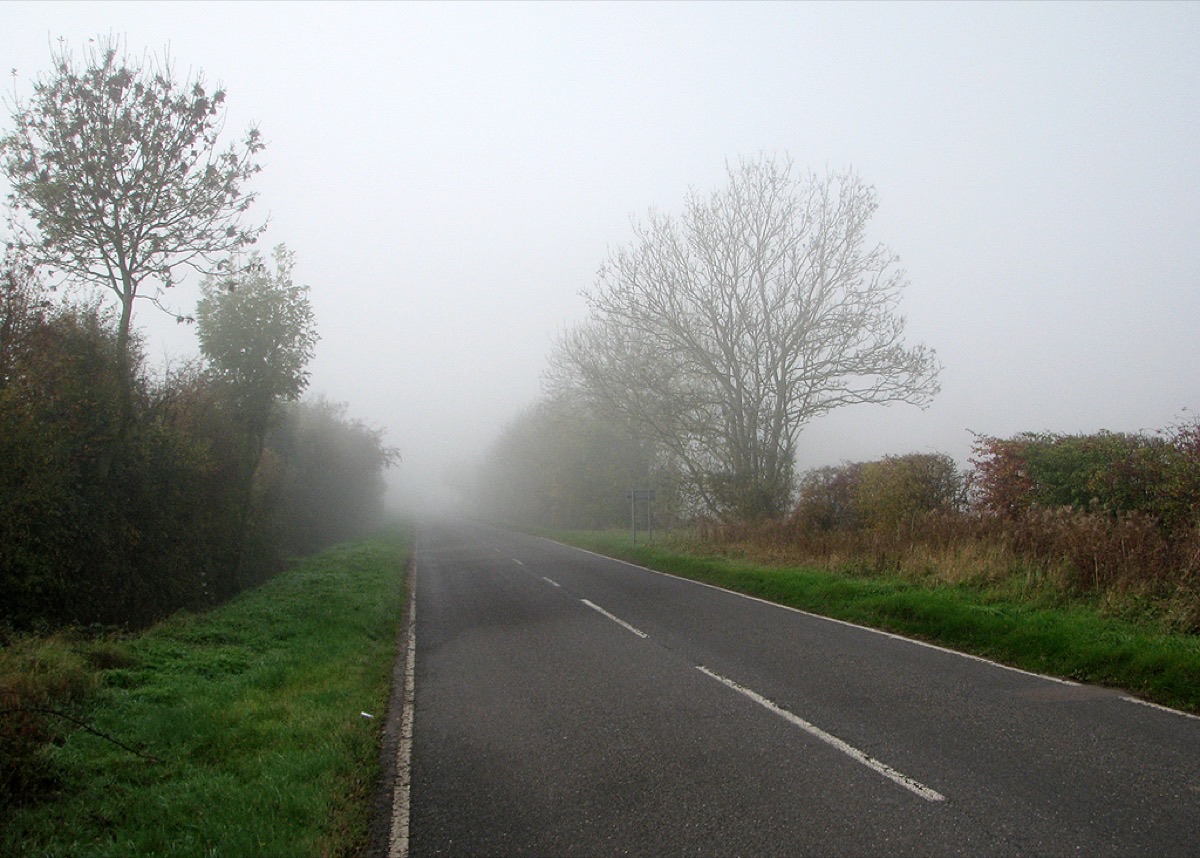
So the highest-value change in fog is not a purchase, it is a route. Take the way round with a footpath separated from the carriageway by a kerb, a verge or a hedge. Cross where drivers are already braking rather than at the convenient mid-block gap, and skip the pretty bend with no pavement entirely. The NWS tells drivers to slow down enough that they can stop within the distance they can see; if the answer to "could a car stop in the space it has?" is no, that is a road your dog should not be beside.
Your dog is fine. Your recall is not.
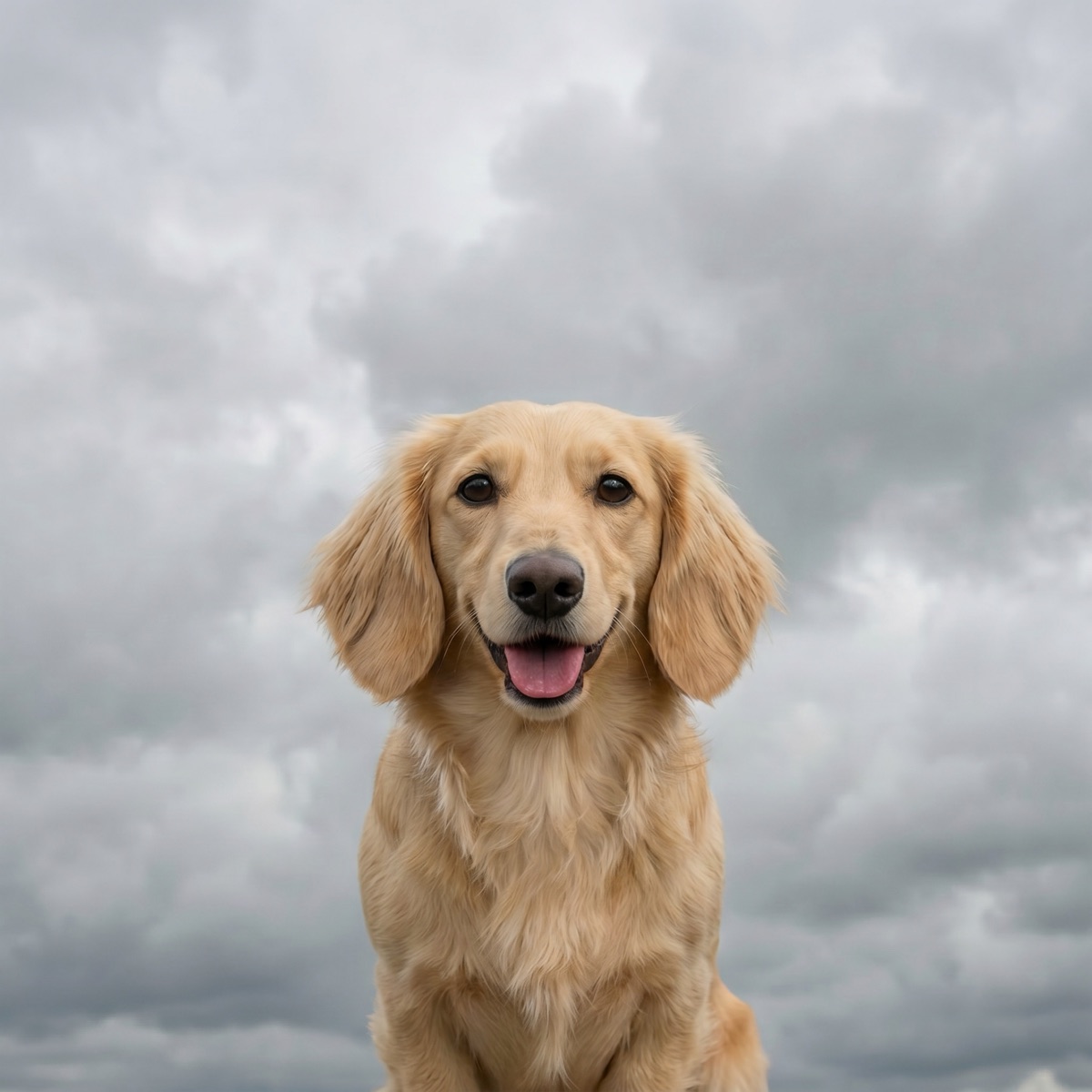
Fog barely registers for a dog. They navigate far more by nose than by eye, and a saturated, still morning is if anything a good scent day. Nothing out there is disorienting them.
What changes is you. A dog thirty yards ahead in a field is an ordinary dog on a clear day and a missing dog in fog, and recall stops being a training question and becomes a guessing one, because you cannot see what you would be calling them away from. The cyclist, the other dog, the ditch, the road at the far end: none of it announces itself any more. So keep the dog on a fixed-length lead near traffic, never a retractable one, and save off-lead work for a fully enclosed space on foggy days.
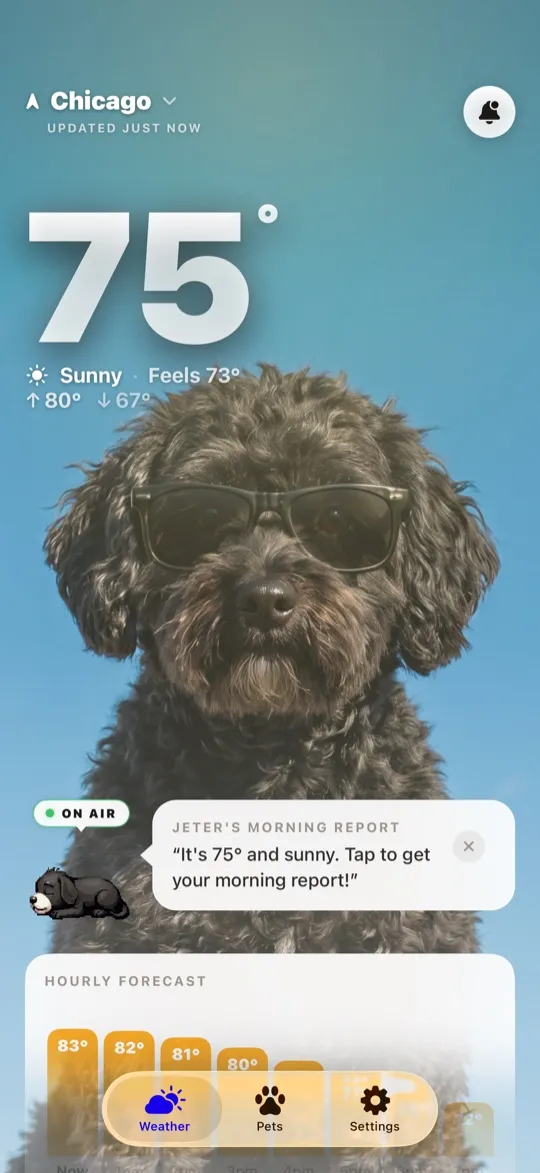
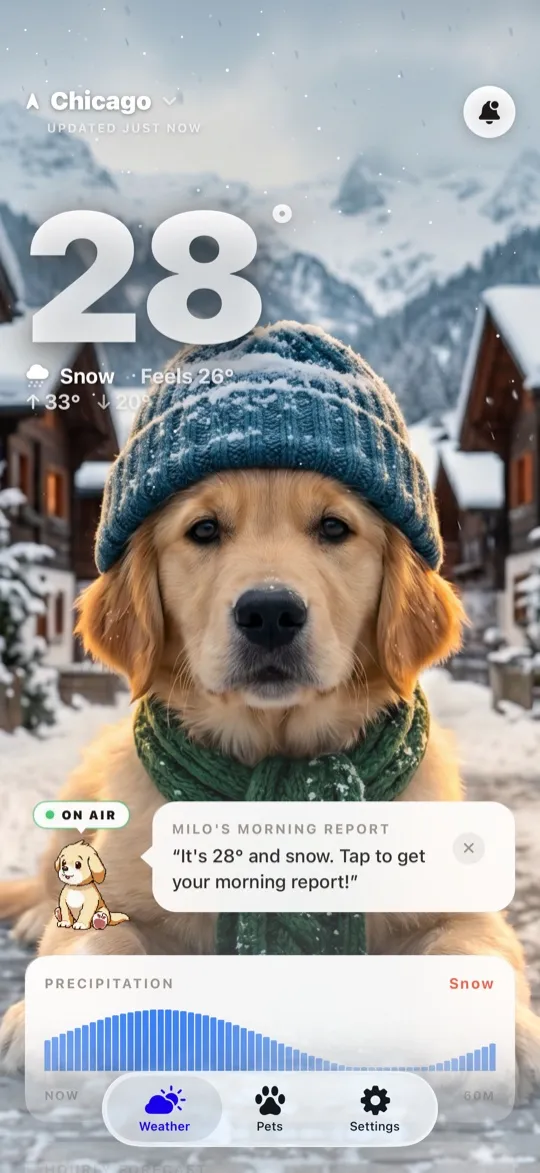
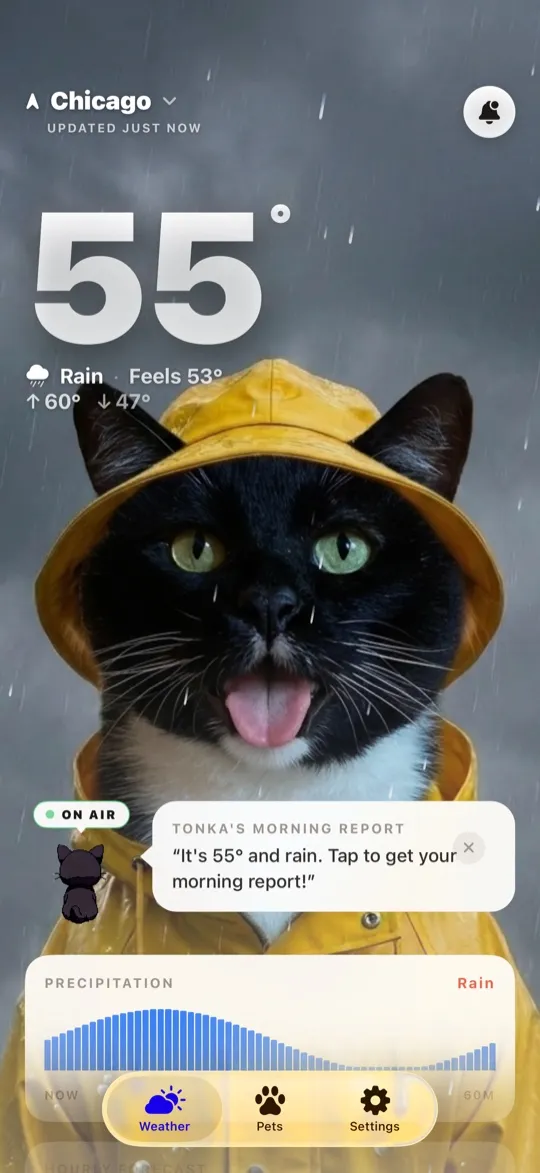
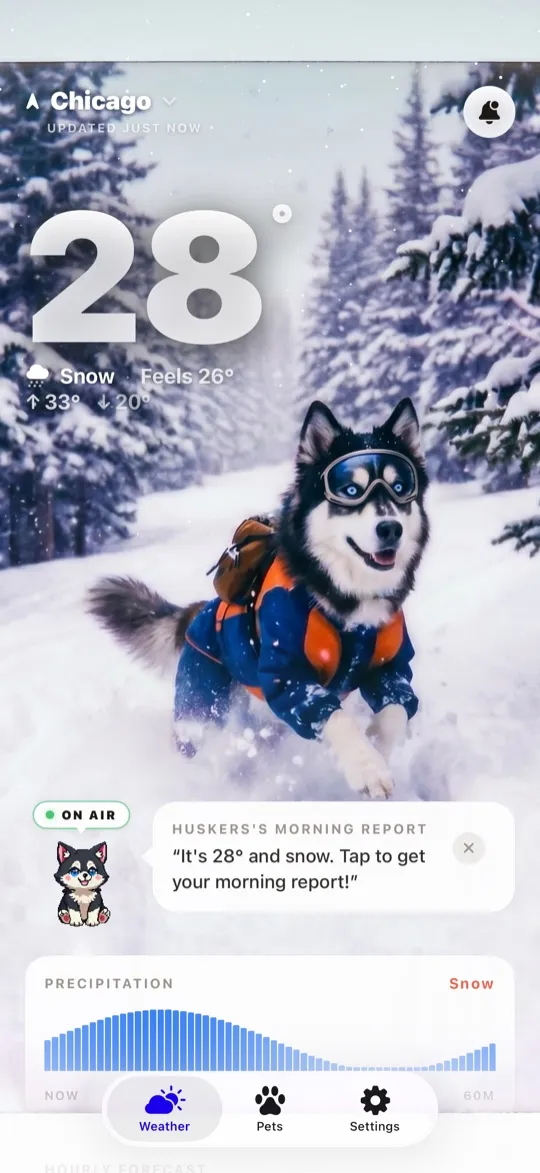
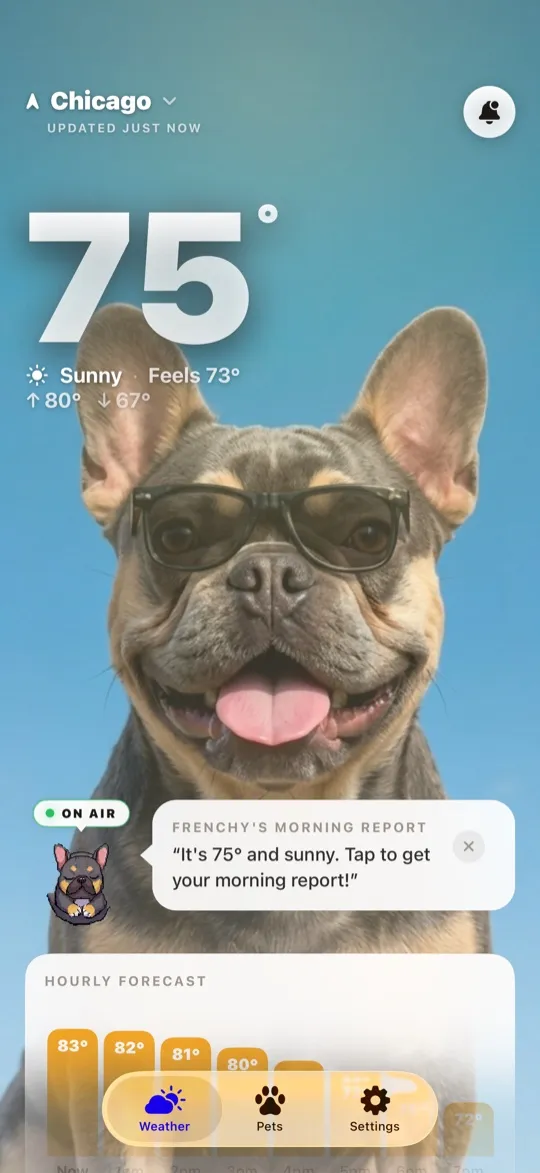
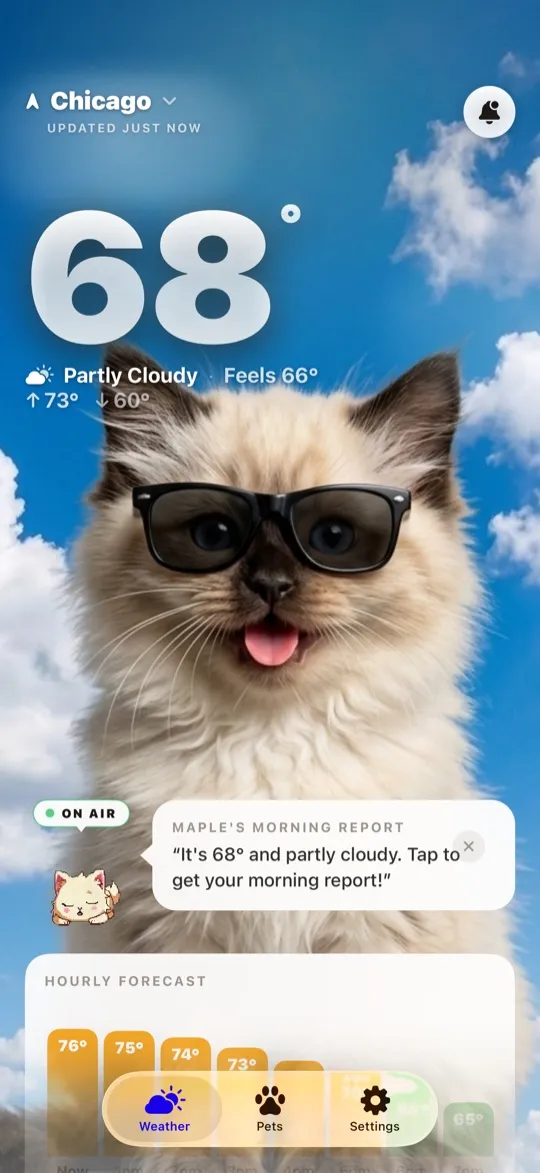
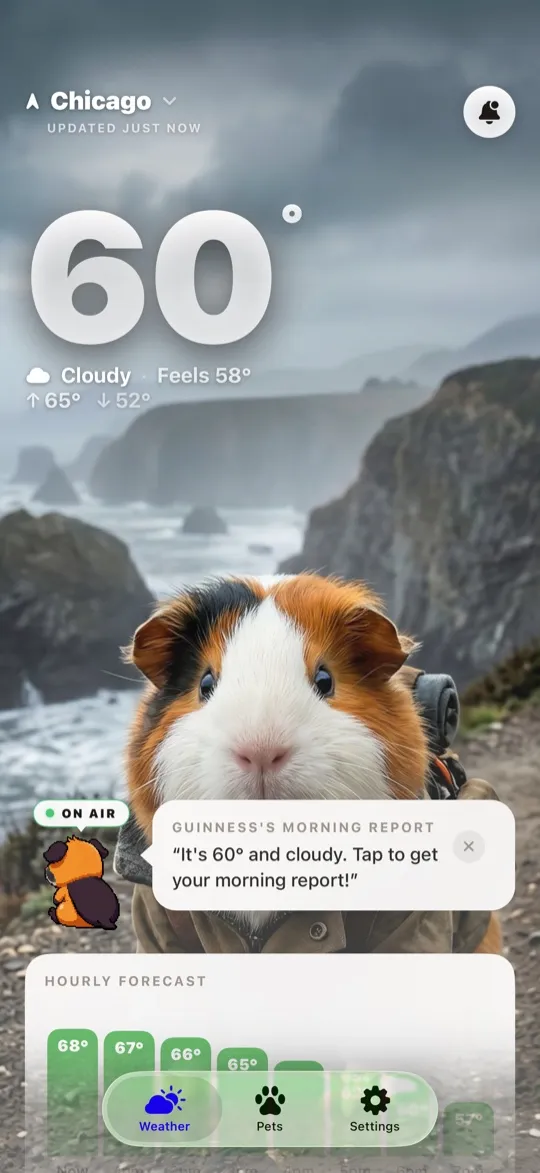
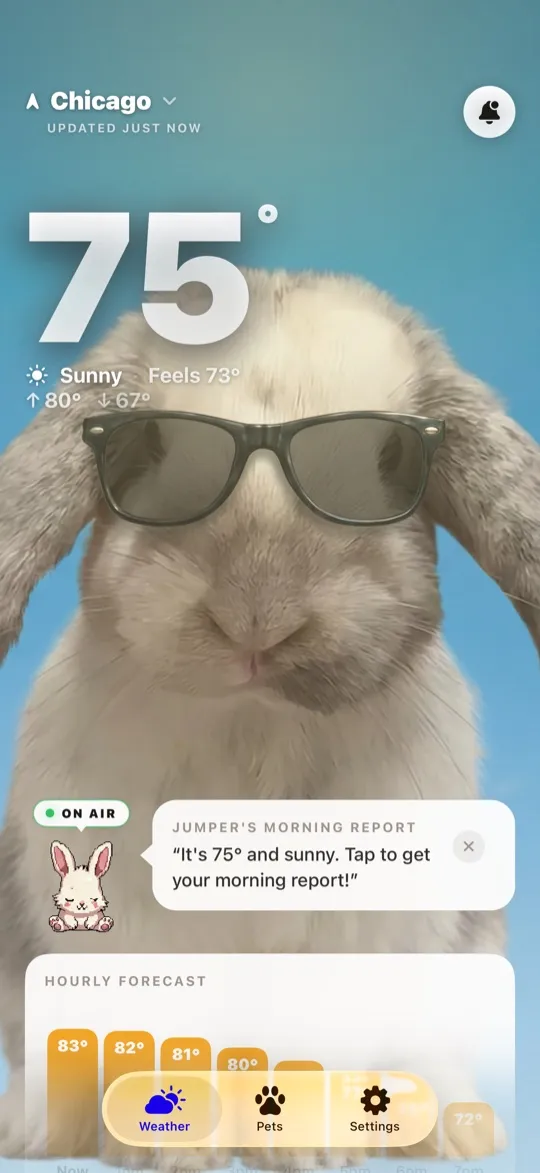
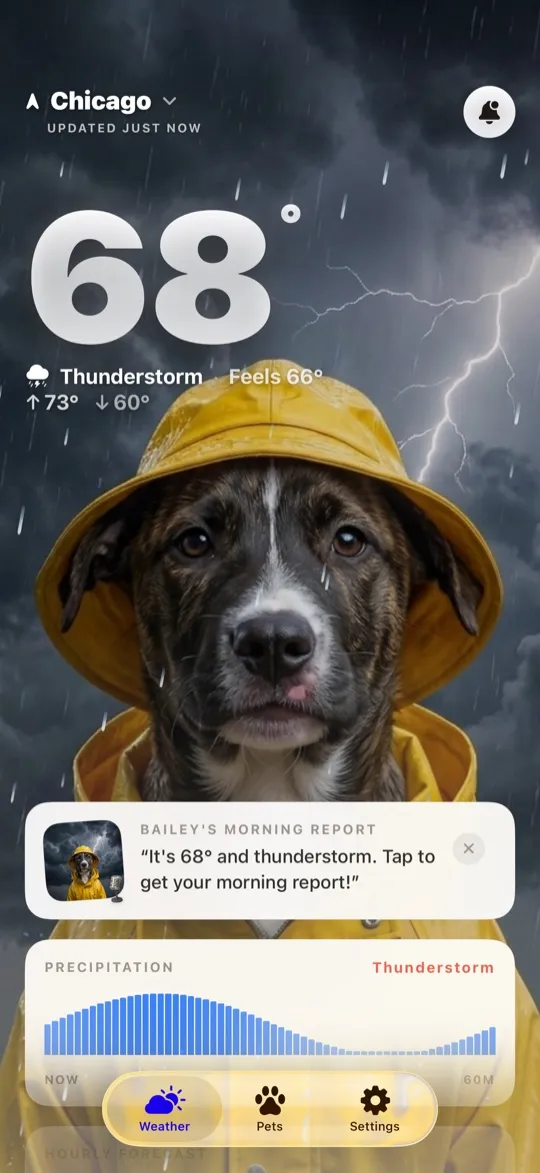
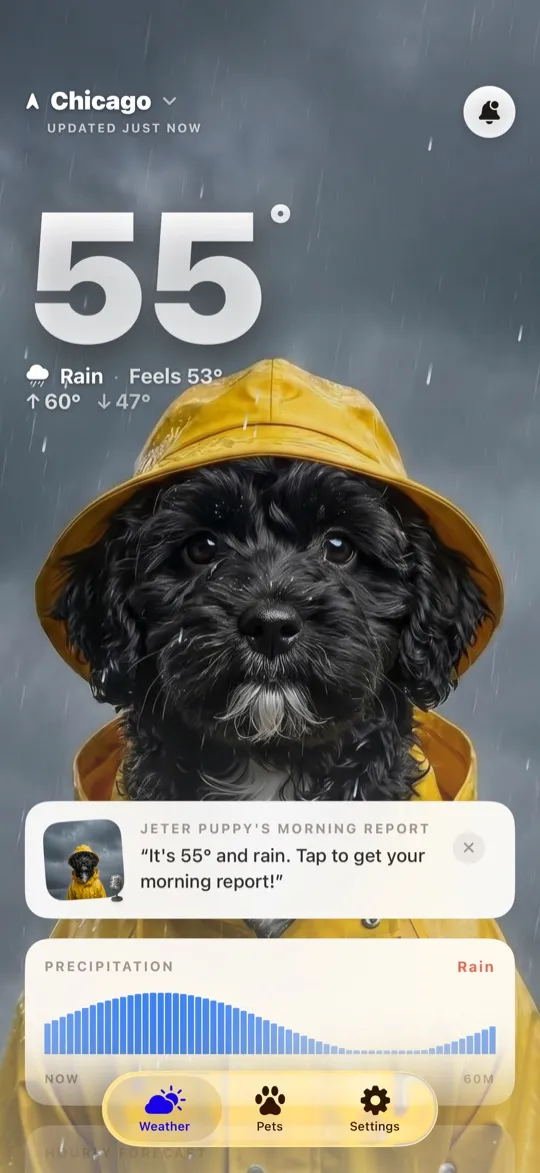
Fog is one of the few conditions that is genuinely easier to plan around than to cope with, because it is usually gone by mid-morning. WeatherPets keeps the day's conditions on your home screen with your own pet delivering them, so you can see the morning is a write-off before you are standing in it. Meet your WeatherPet on the App Store.
What actually works: light you brought yourself
The distinction that matters is passive versus active. Reflective material is passive: it works only when somebody else lights it, at an angle that sends the return back toward them. An LED collar, harness strip or clip-on is active: it emits. It still gets attenuated by fog, but once instead of twice. Reviewers who test the two side by side, including the Whole Dog Journal's high-visibility gear roundup, land in the same place: reflective for clear nights, active light when conditions are poor.
Four things to get right:
- Solid, not flashing. A blinking point of light is easy to notice and hard to place, and drivers need to judge distance and direction. Preventive Vet's guidance on light-up collars says the same.
- Light the dog and light yourself. A dark dog at ankle height is the last thing a driver resolves. If only one of you is lit, the other is a surprise.
- Fluorescent is a daytime tool. It converts invisible short-wavelength daylight into visible light, so it earns its place in daylight fog and does nothing after dark. Reflective is the night tool. Neither replaces an emitter.
- Check the battery before you leave. The usual failure of an LED collar is a flat cell nobody noticed, and fog is the morning you find out.
Fog changes the ground, not just the air
Fog is condensation, and condensation lands on everything. Painted road markings, metal drain covers, boardwalks, decking, tiled steps and smooth stone all pick up a film of water that arrives with no rain to warn you. That is a slip risk for you and a real one for an arthritic or senior dog already picking their footing carefully.
Freezing fog is the version that catches people out. At or below freezing the droplets freeze on contact and build rime on raised surfaces first, so railings, gates, bridges and steps ice up while the pavement still looks merely wet. Our guide to how cold is too cold for your dog covers the temperature side of that morning.
There is a comfort point too, easy to miss because there is no wind to blame it on. Saturated air, a damp coat and a still cold morning are a genuine heat drain on a small, thin-coated or elderly dog at temperatures that would be unremarkable on a dry day. Fog is a reasonable excuse to put the coat on early in the season.
The scheduling fix nobody mentions
Not all fog behaves the same way, and knowing which kind you have tells you whether to wait it out or write the morning off. The NWS lists several; three matter to a dog walker.
- Radiation fog forms overnight when the ground radiates its heat away under clear skies and light winds. It is the classic autumn morning fog, and it usually burns off within a few hours of sunrise. This is the one where you simply move the walk.
- Advection fog forms when warm moist air moves over a colder surface, which is why it is a coastal speciality. It can sit all day and it does not care about your schedule, so plan for a short-walk day rather than a delayed one.
- Valley fog pools where cold air drains downhill, which has a rather nice implication if you live on a slope: walking uphill can genuinely get you out of it.
That is what fog has in common with heat and cold, and it is why we keep coming back to timing rather than gear. Our guide to planning dog walks around the weather is the wider version of the idea, and the safe walking window by month shows how far that window moves across the year.
None of this makes fog a crisis. It makes it a condition with one counterintuitive property: the gear most people reach for is the gear it defeats. Bring your own light, get off the road, and let the morning burn off.
Frequently asked questions
Is it safe to walk a dog in fog?
Usually yes, provided you change the route and not just the gear. Fog itself does not harm a healthy dog; it is water droplets. The risk is traffic, and losing sight of your dog. Take a route with a footpath separated from the road, use a short fixed lead, put an active light on both of you, and cross where drivers are already slowing.
Does reflective gear work in fog?
Much less well than on a clear night, which is the part most visibility advice skips. Reflective material is not a light source. It returns a driver's headlight beam back along the path it arrived on, so that path has to stay clear. Fog weakens the beam on the way out and again on the way back, while the droplets scatter headlight light into a bright veil in front of the driver. The signal drops as the glare rises. Wear reflective gear by all means, but in fog treat it as the backup to an active light.
What visibility is too low to walk a dog?
The National Weather Service issues a Dense Fog Advisory when visibility drops to a quarter mile or less over a wide area, and that is a sensible line for deciding to stay off roads entirely. Below roughly 100 yards, treat it like a garden day: a short toilet trip on a lead and an indoor enrichment session instead of the usual walk. The useful test is simpler than any number. If you cannot see far enough ahead that a car would have room to stop, neither can the driver.
Should my dog be on a leash in fog?
Yes, and on a fixed-length lead rather than a retractable one anywhere near traffic. Fog does not disorient dogs much; they navigate mostly by nose. What changes is you. Recall only works if you can see what you are calling them away from, and a retractable lead lets a dog reach the road before you can react, which is the exact failure fog makes more likely.
Is fog bad for a dog's breathing?
Fog on its own is not, but the weather that makes it can be. Radiation fog forms under a temperature inversion, with warm air sitting on top of cold air near the ground and stopping it mixing upward. That same inversion traps exhaust and wood smoke at street level, which is why a still foggy morning often reads worse for air quality than the clear afternoon behind it. If your dog has an airway or heart condition, check the number rather than assuming calm means clean.
Your daily forecast, delivered by your own pet.

A note on health: This article is general information, not a substitute for professional veterinary advice. If your dog is injured on a walk, is struggling to breathe, or you have any serious or emergency health concern, contact your veterinarian or an emergency animal hospital right away. Our guidance draws on trusted veterinary and government sources, including those linked above.
