Safe Dog Walking Hours: The Window by Month and City
Search for when to walk a dog in summer and every result says the same thing: go early, or go in the evening. Nobody tells you how early. Nobody tells you whether the evening is genuinely as good as the morning, which it is not. And nobody tells you what happens in the month either side of July, which is where most people actually get caught out. So we worked it out properly.
Key takeaways
- Morning and evening are not interchangeable. In our model, 8pm in July runs 8 to 17°F warmer than 8am in the same city. The standard advice treats them as equals.
- The coolest moment of a normal day is sunrise, not midnight and not late evening.
- In 6 of 70 US cities, the July evening never cools back below a Labrador's limit before midnight at all. The evening walk is not late, it is gone.
- Phoenix in August leaves a Labrador about 3.2 safe hours in 24. A Greyhound gets about 17 minutes.
- September is the sleeper month: still restricted in 16 of 70 cities, long after people have mentally filed summer away.
- These are 30-year averages. They describe a normal day, which means a heat wave is worse than everything below.
The advice everyone gives, and what it leaves out
"Walk before 9am or after 7pm" is the most repeated line in hot-weather dog advice, and it is not wrong so much as unfinished. It is one rule for a country that spans Seattle and Phoenix, and it treats the two ends of the day as if they were the same temperature.
We already published a study of which months are off the table by city and breed, using the same NOAA normals. That answered the calendar question. It could not answer the clock question, the one people actually ask at 6am while holding a leash: is now fine, and how long have I got? This is that second study.
What we actually built
Start with the data. The NOAA 1991-2020 US Climate Normals give an average daily high and an average daily low for each month, and our city dataset carries verified normals for 70 US cities. That is 840 city-months, each one a pair of numbers.
A high and a low are not a day, though. To get hours you need the shape in between, and that shape is well understood: the daily minimum lands at sunrise, not midnight, because the ground keeps losing more heat than it gains until the sun has been up long enough to balance the books. The maximum lands in mid-afternoon, for the mirror-image reason. The University of Georgia's climate extension service explains the diurnal cycle if you want the physics.
So we modelled each city-month as a curve: the minimum at sunrise for that latitude, the maximum at 3pm solar time, a sine rise between them and a cosine decay through the night. Then we converted to local clock time using longitude, the equation of time and daylight saving, and asked one question at every minute: is the modelled air temperature at or below this breed's heat limit?
The limits come from the Pet Safety Score, the same per-breed thresholds the app uses, so a Labrador is judged at 88°F, a French Bulldog at 86°F and a Greyhound at 84°F. Add up the minutes that pass, and you get a safe walk window: its length, the time it closes in the morning, and the time it reopens at night.
The finding: the evening is a worse deal than you think
This is the result that changed how we think about the advice.
Take the same clock times in July, 8am and 8pm. Every city runs warmer in the evening, and the gap is wide:
- Denver: 70°F at 8am, 87°F at 8pm. A 17 degree gap.
- Dallas: 82°F at 8am, 96°F at 8pm. A 13.5 degree gap.
- Atlanta: 76°F at 8am, 89°F at 8pm. A 13.4 degree gap.
- Boston: 72°F at 8am, 80°F at 8pm. The narrowest gap we found, and still 8 degrees.
The reason is simple once you see it. Morning air has had the entire night to cool. Evening air is still bleeding off an afternoon of stored heat, and the ground underfoot is shedding it more slowly still, which is a separate problem covered in our pavement temperature model. So "early or late" is not a choice between equals. Early is the reliable half. Late is the half that fails first, and hardest, exactly where you need it most.
The cities where the evening walk does not come back
In six of the 70 cities, an average July day never cools below a Labrador's limit before midnight:
| City | Safe hours (Labrador) | Window closes | Window reopens |
|---|---|---|---|
| Phoenix, AZ | 2.5 h | 6:36 am | 4:09 am |
| Las Vegas, NV | 4.1 h | 7:24 am | 3:16 am |
| Tucson, AZ | 7.8 h | 8:47 am | 12:58 am |
| Dallas, TX | 8.7 h | 10:10 am | 1:31 am |
| Austin, TX | 9.9 h | 10:47 am | 12:55 am |
| San Antonio, TX | 11.0 h | 11:19 am | 12:20 am |
Read the Phoenix row slowly. On a normal July day the window shuts half an hour after sunrise and does not open again until four in the morning. There is no evening walk in Phoenix in July. There is a pre-dawn walk, and then there is the rest of the day.
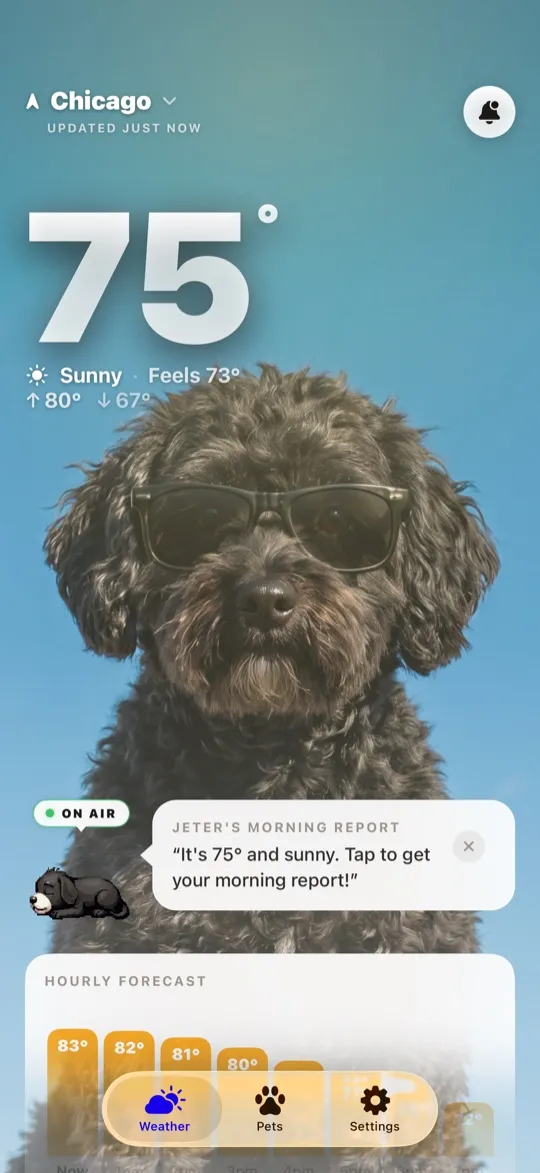
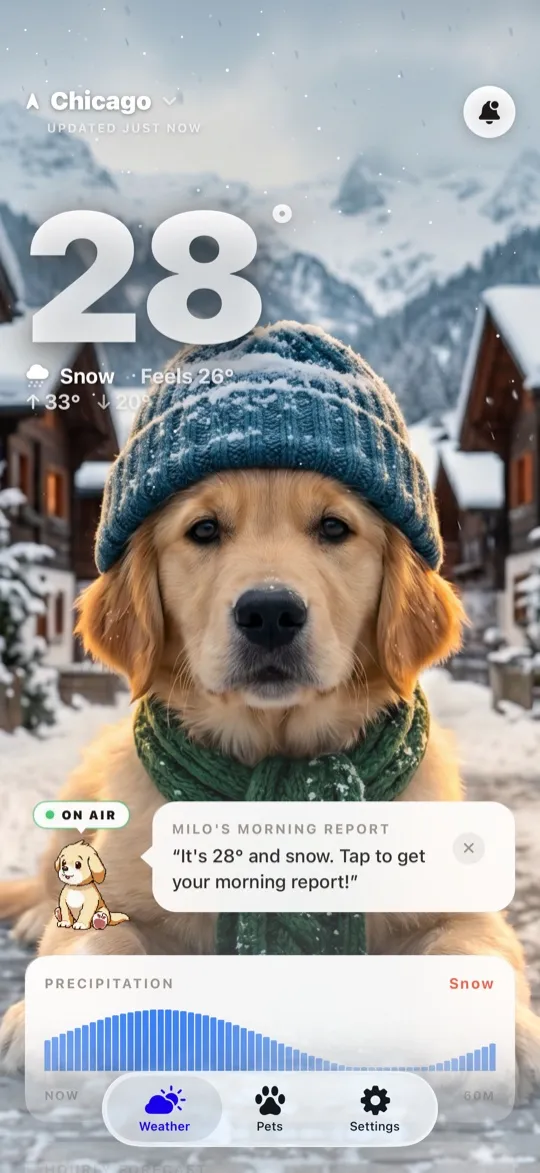
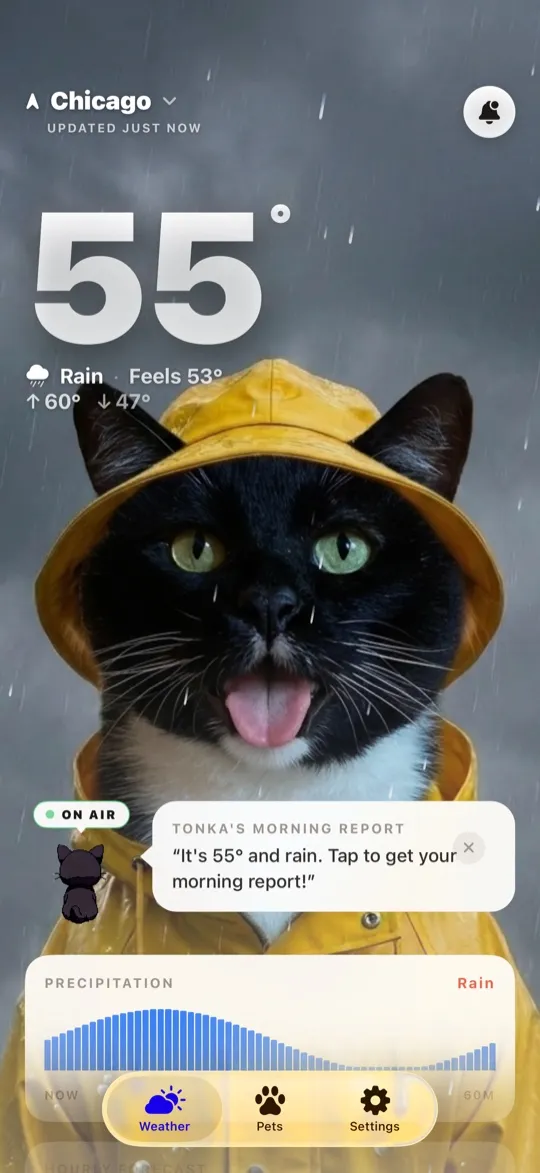
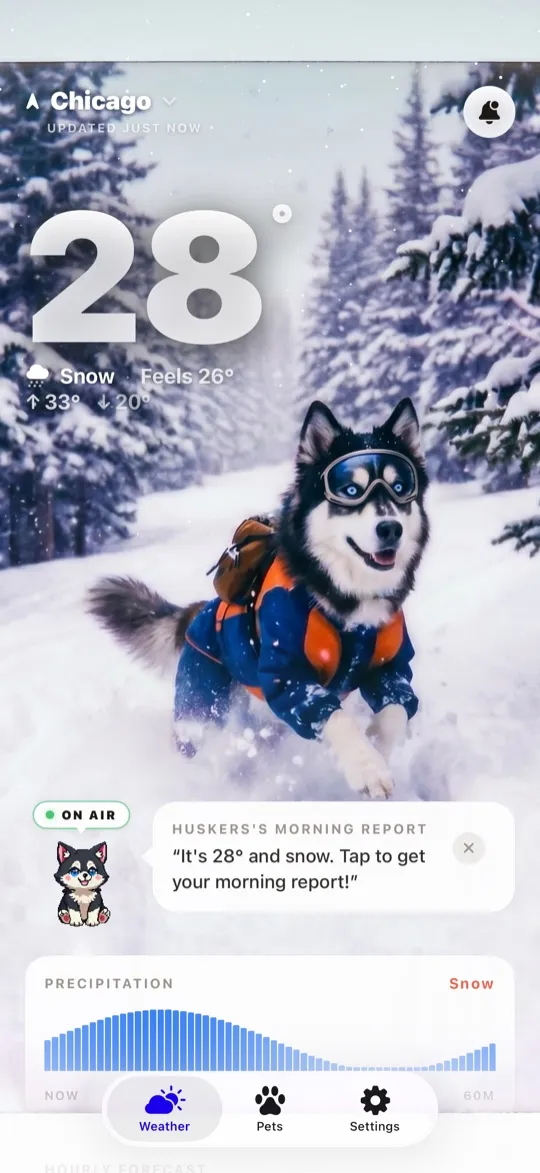
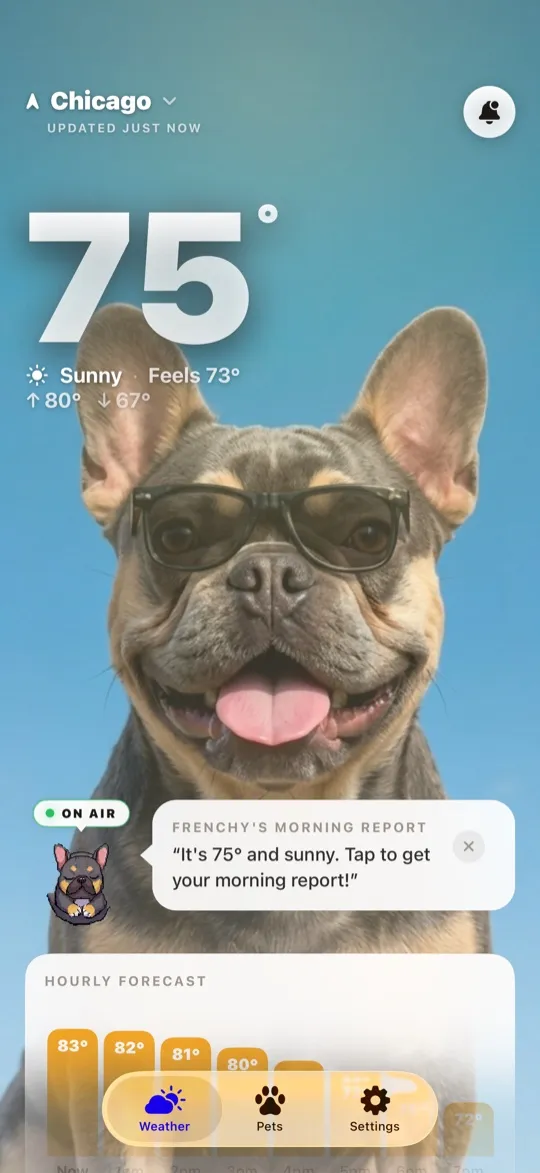
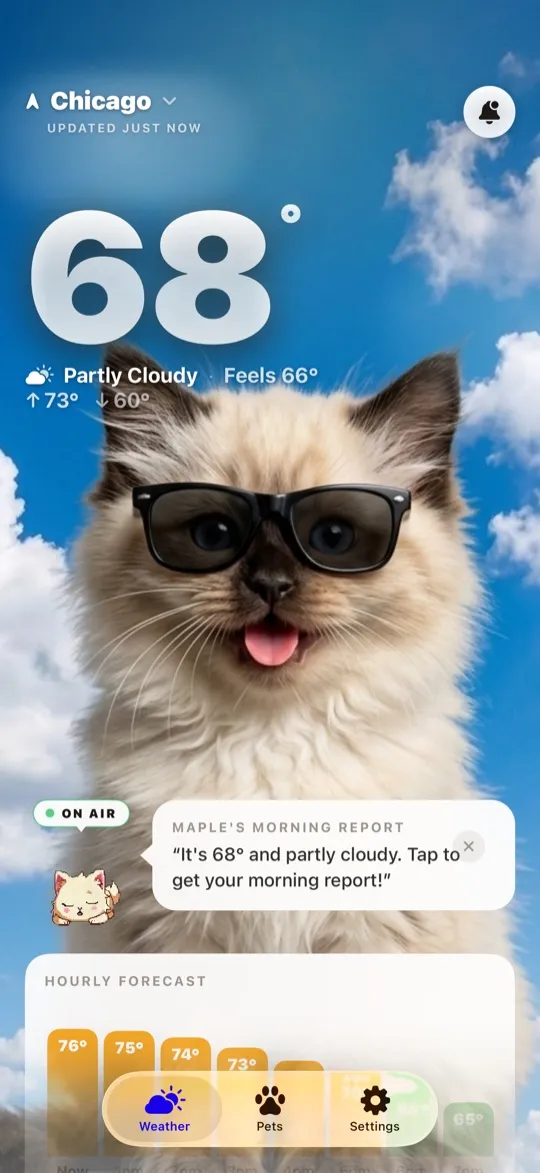
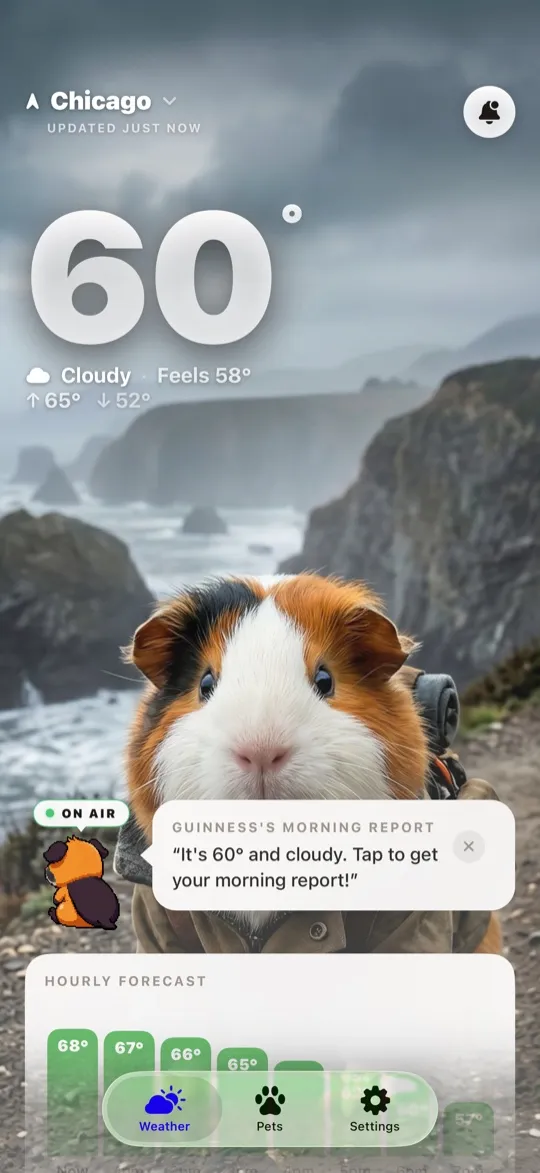
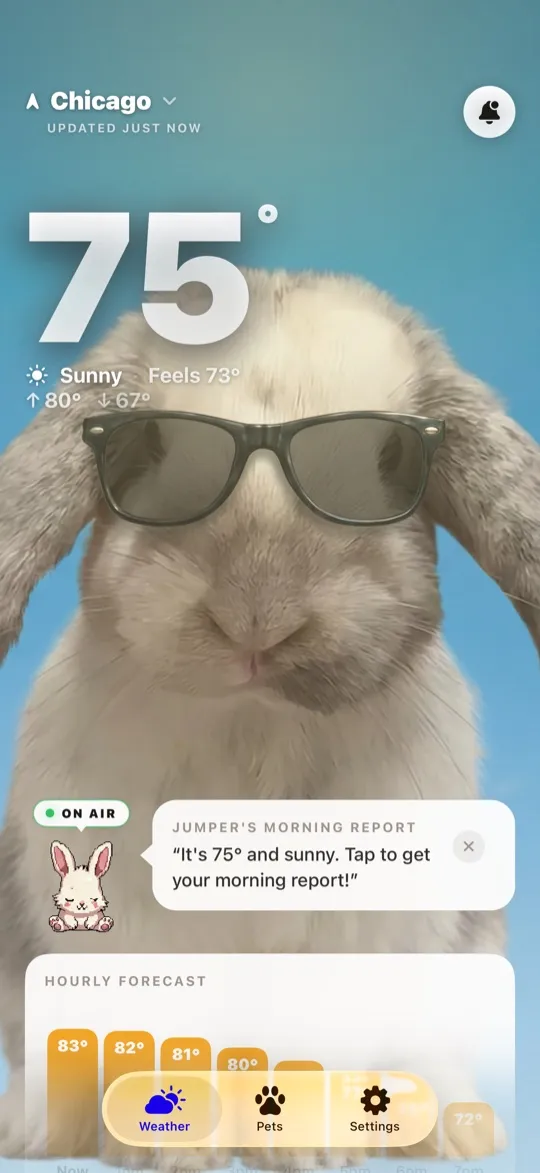
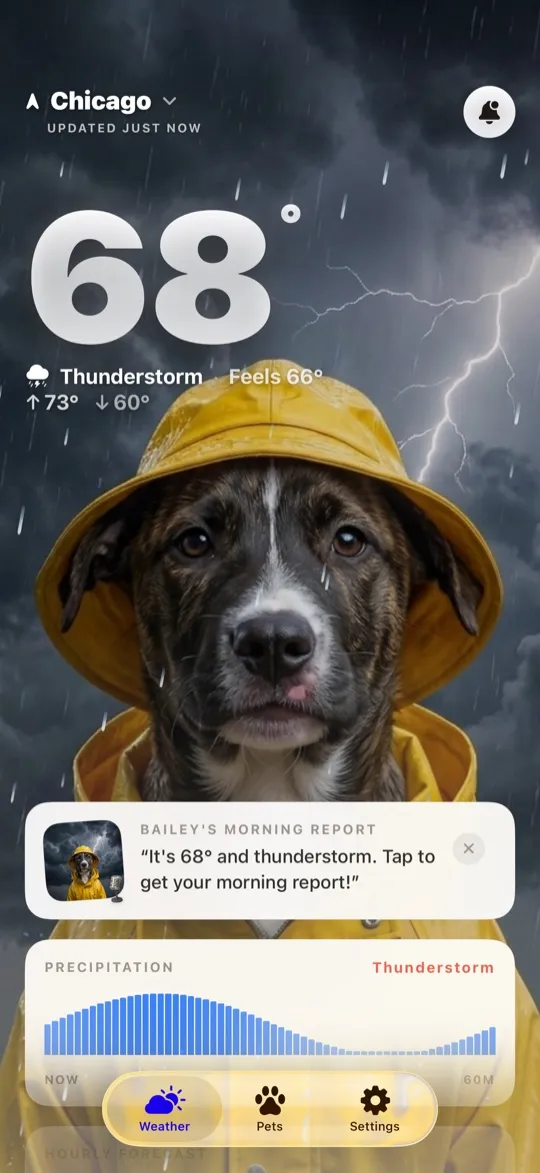
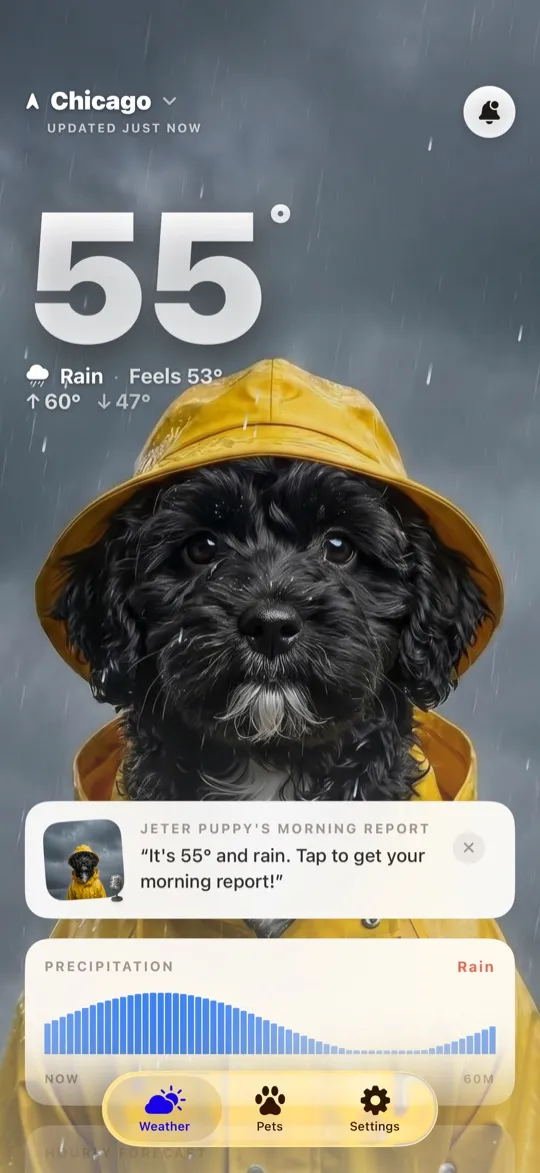
A monthly average tells you what to expect. The day in front of you is the one you actually walk in, and WeatherPets scores it hour by hour for your specific dog, then puts the answer on your home screen and lock screen. Meet your WeatherPet on the App Store.
The window right now, by city and breed
Here is August, the month we are in, across a spread of climates. "No limit" means an average August day never crosses that breed's heat threshold at all.
| City | Avg high | Labrador (88°F) | French Bulldog (86°F) | Greyhound (84°F) |
|---|---|---|---|---|
| Phoenix, AZ | 105.1°F | 3.2 h | 1.7 h | 0.3 h |
| Las Vegas, NV | 102.8°F | 5.2 h | 3.8 h | 2.4 h |
| Austin, TX | 97.8°F | 9.3 h | 7.7 h | 6.2 h |
| Dallas, TX | 97.1°F | 8.7 h | 6.9 h | 5.2 h |
| Houston, TX | 93.5°F | 11.3 h | 9.0 h | 6.9 h |
| Miami, FL | 90.7°F | 14.0 h | 10.6 h | 7.7 h |
| Atlanta, GA | 89.0°F | 18.9 h | 15.0 h | 12.3 h |
| Denver, CO | 87.5°F | No limit | 19.1 h | 16.5 h |
| Los Angeles, CA | 84.0°F | No limit | No limit | No limit |
| Chicago, IL | 82.5°F | No limit | No limit | No limit |
| New York, NY | 83.3°F | No limit | No limit | No limit |
| Seattle, WA | 77.6°F | No limit | No limit | No limit |
Two things jump out. The first is what four degrees of breed limit buys: in Phoenix it is three hours versus seventeen minutes, and in Denver an unrestricted month versus losing five hours a day. If you have wondered why a neighbour walks at a time you cannot, that is usually the answer, and it is why flat-faced breeds need their own thresholds.
The second is that half the list says "no limit". This is a regional problem, not a national one, and advice that treats Seattle and Phoenix as the same country is useless in one of them.
How the window collapses, and when it comes back
The month-to-month shape is not a gentle curve. It is a cliff. Dallas, at a Labrador's limit:
| Month | Avg high | Safe hours | Closes | Reopens |
|---|---|---|---|---|
| May | 84.9°F | 24 h | No limit | No limit |
| June | 92.7°F | 13.0 h | 11:51 am | 10:51 pm |
| July | 96.9°F | 8.7 h | 10:10 am | 1:31 am |
| August | 97.1°F | 8.7 h | 10:24 am | 1:43 am |
| September | 90.0°F | 17.1 h | 1:45 pm | 8:40 pm |
| October | 79.5°F | 24 h | No limit | No limit |
Dallas goes from no restriction at all in May to losing eleven hours in June. Nobody adjusts a routine that fast, which is why late spring catches so many people out.
Across all 70 cities, the count of restricted cities by month runs: 0 from November through April, then 6 in May, 22 in June, 42 in July, 35 in August, 16 in September, and 1 in October.
September is the one worth circling. Sixteen cities are still restricted while the calendar says autumn, the evenings feel civilised, and everyone has quietly gone back to the old walk time. Dallas gets 17 hours back in September, but the hole in the middle of the afternoon is exactly where a school-run walk lands.

Four ways this model is wrong
A number you cannot argue with is a number you should not trust, so here is where ours breaks.
- Normals are averages, and averages hide heat waves. A 30-year mean is a smoothed typical day by construction. Every extreme that actually hurts a dog has been averaged out of it. Treat every window above as the generous case.
- Air temperature is only part of the risk. Humidity blunts panting, sun load matters, and the surface underfoot can run far hotter than the air. Our own safe walking temperature guide covers why the thermometer alone undersells a humid day.
- The curve is idealised. A clear calm night cools faster than the model says, a humid one slower, and a sea breeze or afternoon storm ignores the shape entirely. Cities also hold heat after dark more than their airport weather station suggests, which the EPA documents as the urban heat island effect.
- Breed limits are a starting point, not a diagnosis. Age, weight, coat, fitness and heart or airway conditions all move the line, and the AVMA's guidance on warm weather pet safety is worth reading for the individual factors a breed average cannot capture.
How to actually use this
- Move the long walk to the morning, permanently, from May onward. Not because evening is forbidden but because morning is the only end of the day that behaves predictably.
- Treat the evening as a bonus, and check it rather than assume it. In much of the country it is fine. In the six cities above it does not exist in July, and in the rest it arrives later than it feels like it should.
- Put a reminder in September. The month that catches people is the one where the air still bites but the calendar says otherwise.
And on the days the window is shut, the walk is not the point anyway. Sniffing, training and food puzzles indoors tire a dog out more thoroughly than a hot lap of the block, and the ASPCA's hot weather guidance makes the same call. A skipped walk costs your dog nothing.
Frequently asked questions
What time of day is safest to walk a dog in summer?
The coolest point of a normal day is sunrise, not late evening, because the ground has been losing heat all night and only stops once the sun has been up long enough to balance it. In our model of 70 US cities, 8pm in July runs 8 to 17 degrees Fahrenheit warmer than 8am in the same city. Morning is the reliable half of the standard advice, and evening is the half that fails first in hot climates.
Is an evening walk as safe as an early morning walk?
No, and the gap is larger than most owners expect. Evening air is still shedding the afternoon's heat, while morning air has had all night to cool. Denver in July shows the widest gap in our data at about 17 degrees Fahrenheit between 8am and 8pm, and Dallas and Atlanta both sit above 13. In six of the 70 cities we modelled, the July evening never cooled back below a Labrador's limit before midnight at all.
How many hours a day is it too hot to walk a dog in Phoenix?
On an average August day in Phoenix our model gives a Labrador about 3.2 safe hours out of 24, with the window closing around 7:11am and not reopening until roughly 4:02am the next morning. For a Greyhound, whose heat limit is four degrees lower, the same average day leaves a window of about 17 minutes. These are 30-year averages, so a genuine heat wave is worse than this.
Which months restrict dog walking in the United States?
Across our 70 city dataset and using a Labrador's heat limit, no city is restricted from November through April. Restriction begins in May in 6 cities, rises to 22 in June, peaks at 42 in July, holds at 35 in August, falls to 16 in September and is down to a single city by October. The shoulder months surprise people most, because September still restricts almost a quarter of the cities we measured.
Does this replace checking the actual forecast?
No. These are NOAA 1991-2020 climate normals, which are smoothed 30-year averages, so they describe a typical day and deliberately exclude extremes. A heat wave, a humid stretch, or a clear calm night that cools faster than average will all move the window. Use the monthly picture to plan your routine and the day's actual forecast to decide about the walk in front of you.
Your daily forecast, delivered by your own pet.

A note on health: This article is general information, not a substitute for professional veterinary advice. Breed thresholds are population averages and your own dog's limit may be lower. If your dog shows heavy panting, weakness, vomiting or collapse in the heat, or you have any serious or emergency health concern, contact your veterinarian right away. Our guidance draws on trusted veterinary and government sources, including those linked above.
