Hiking With Your Dog: Distance, Heat and Turnaround
A hike is not a long walk. A walk has an exit at every corner: turn around, home in ten minutes, worst case a grumpy dog. Four miles up a ridge, the exit is four miles back, and your dog cannot tell you they are done. That difference is why trail days go wrong, and why the rules that matter are about turning back rather than setting off.
Key takeaways
- Judge the hike on the temperature when you finish, not when you start. A September morning in Denver gains about 12°F between 8am and 11am in our modelling of the climate normals.
- Distance is a training outcome, not a breed fact. What your dog did last week predicts today far better than how big they are.
- Three turnaround triggers: half your water, half your daylight, or any change in your dog's behaviour. Whichever comes first wins.
- Paw pads adapt to rough ground over weeks, not days. A first big hike on sharp rock is where pads tear.
- Don't let them drink from streams. Leptospirosis, giardia and algae all live in the nice-looking water.
- Check the park's dog rules before you drive. Many national park trails do not allow dogs at all.
The forecast mistake almost everyone makes
People check the weather before a hike. They check it wrong. You look at the app in the kitchen, it says 61 degrees, and that settles it. But 61 degrees is the trailhead at 8am, and you will not be there long. The number that decides how the day goes is the temperature at the summit at 11am, and on the descent at one in the afternoon.
We modelled that gap using the NOAA climate normals behind our city dataset. In September, 8am to 11am gains roughly:
- Denver: 61°F to 73°F, a 12 degree climb
- Boise: 62°F to 74°F, 11 degrees
- Salt Lake City: 65°F to 75°F, 10 degrees
- Phoenix: 86°F to 95°F, 9 degrees on top of a start that was already too warm
The dry mountain west has the steepest morning ramp, which is unfortunate, because that is also where the long trails are. A hike that begins in pleasant air can finish twelve degrees warmer with a tired dog on hot rock. Humidity matters too, since panting is evaporative cooling and damp air blunts it, which is the same physics behind the National Weather Service heat index.
So do the arithmetic the standard advice skips: estimate when you will be back, look at the temperature then, and judge the hike on that. Our guide to what temperature is safe for a dog has the thresholds to compare against.
How far can a dog actually hike?
Every article answers this with a table of miles by breed size, and every one is wrong the same way: it treats distance as a property of the dog rather than of the dog's training.
A conditioned mutt of no particular size will out-hike an unconditioned athlete of the ideal breed, every time. Cornell's veterinary sports medicine and rehabilitation service exists precisely because canine athletes are built by conditioning, not selected by silhouette. So the honest version of the question is a build-up, not a number:
| Where your dog is now | A sensible next hike | What limits them |
|---|---|---|
| Two 20-minute pavement walks a day, nothing else | Under an hour, gentle ground, flat | Paw pads and soft tissue, not stamina |
| An hour a day, mixed surfaces, some off-lead running | 2 to 3 hours with real breaks | Heat and hydration |
| Regular trail time, several times a week, all season | A full day, if the weather agrees | Heat, and your own pace |
| Puppy still growing, or a senior | Short and flat, whatever the fitness | Joints and recovery time |
Two groups need naming. Growing puppies should not do long or steep distance, because repetitive loading on developing joints is a risk you cannot see until much later. And flat-faced dogs are a different conversation: a Bulldog or Pug on a summer trail has a far smaller margin, for the reasons in our piece on why flat-faced breeds overheat faster.
The three turnaround rules
Getting there is optional. Getting back is not. Set the rules before you leave, because at mile four with the view close enough to taste, nobody decides well.
- Half your water is gone. The classic backcountry rule, and it works for dogs because they drink from the supply you carry. Bottles half down, you are at the turn.
- Half your daylight is gone. Finishing a descent in the dark with a tired dog is how ankles and paws get hurt, and dusk arrives early in a canyon.
- Your dog's behaviour changes. This one overrides the other two.
That third rule is the one people talk themselves out of. Dogs do not quit. They will follow you up a mountain well past the point they should have stopped, because what they most want is to be near you. So you have to read them:
- They were leading, and now they are behind you
- They stop in every patch of shade, for longer each time
- They lie down without being asked
- Panting turns hard and noisy, with a wide flat tongue
- They stop taking treats. A dog refusing food is telling you something
Any one of those means the outing is over and the job is a slow, shaded return. Know the warning signs of heatstroke before you need them, because on a trail you are the whole emergency service for the first hour.
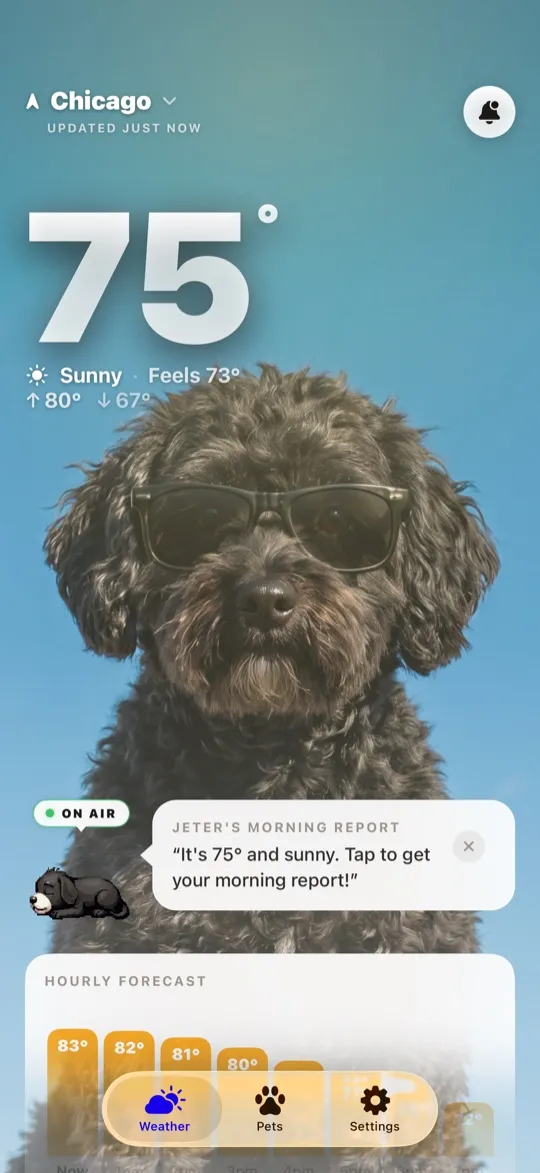
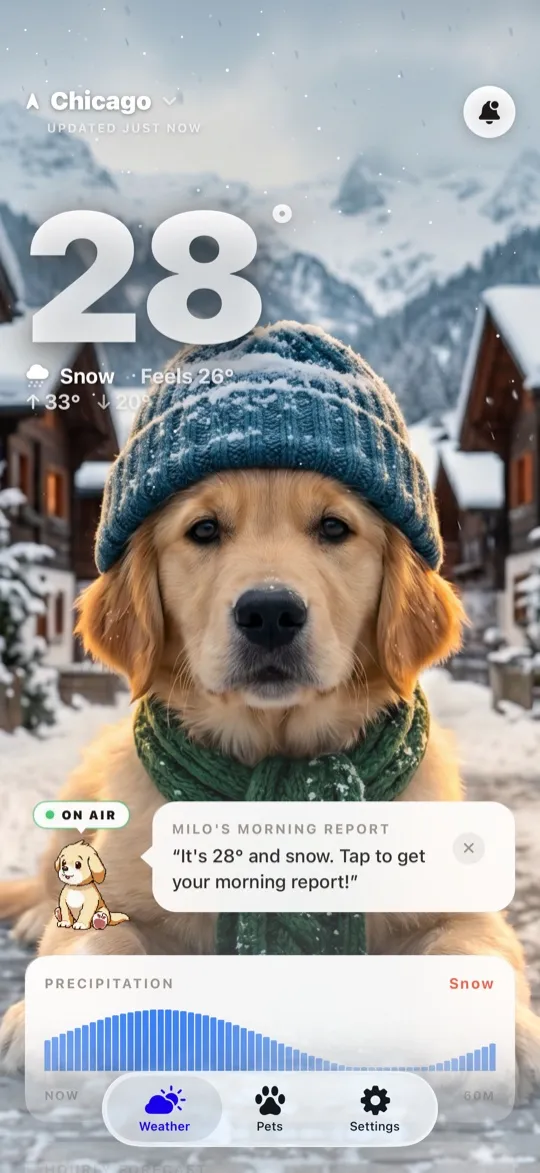
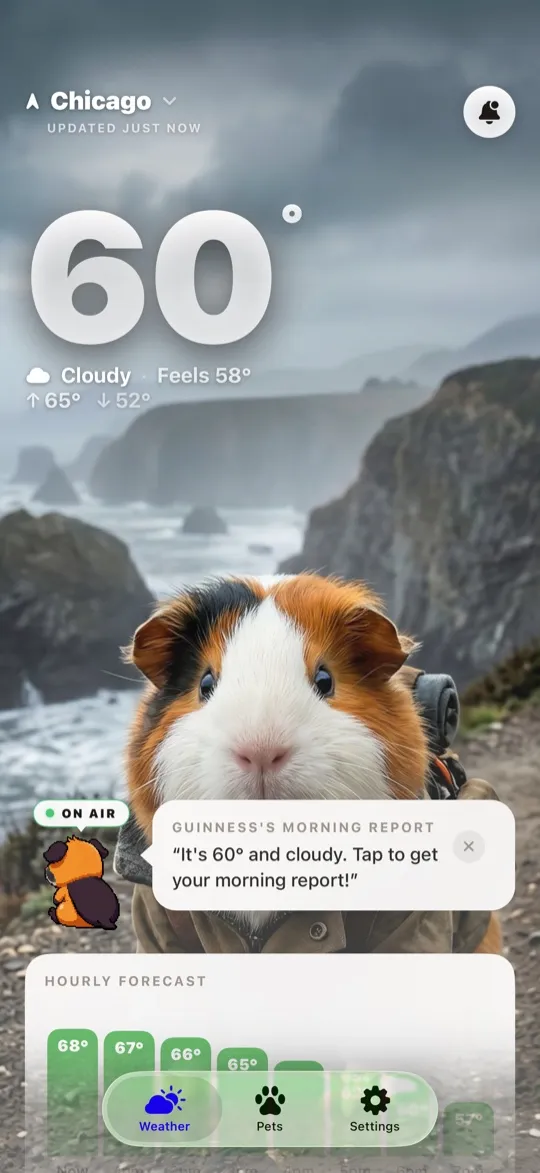
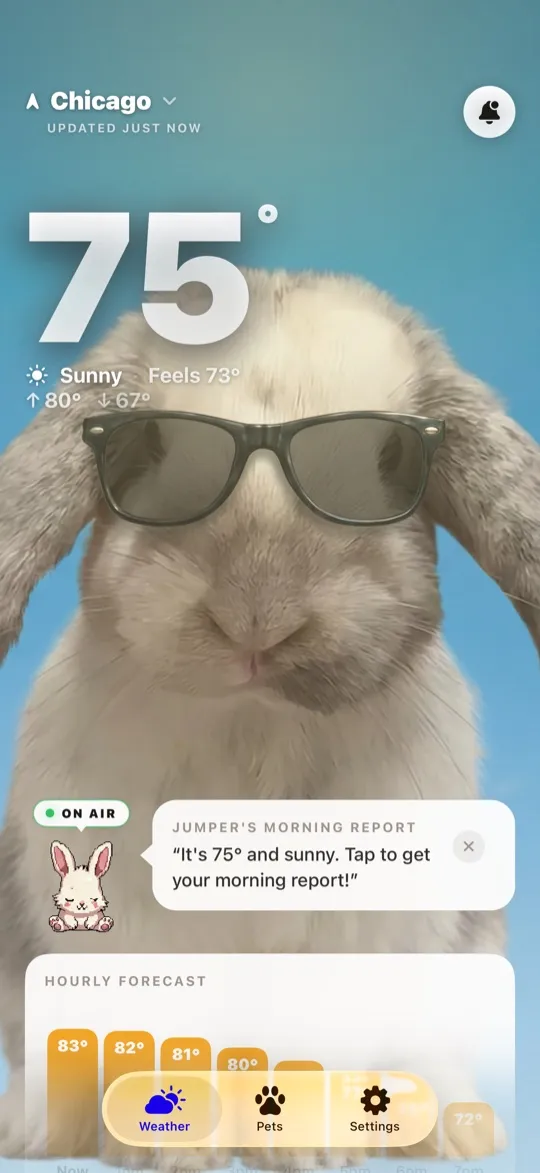
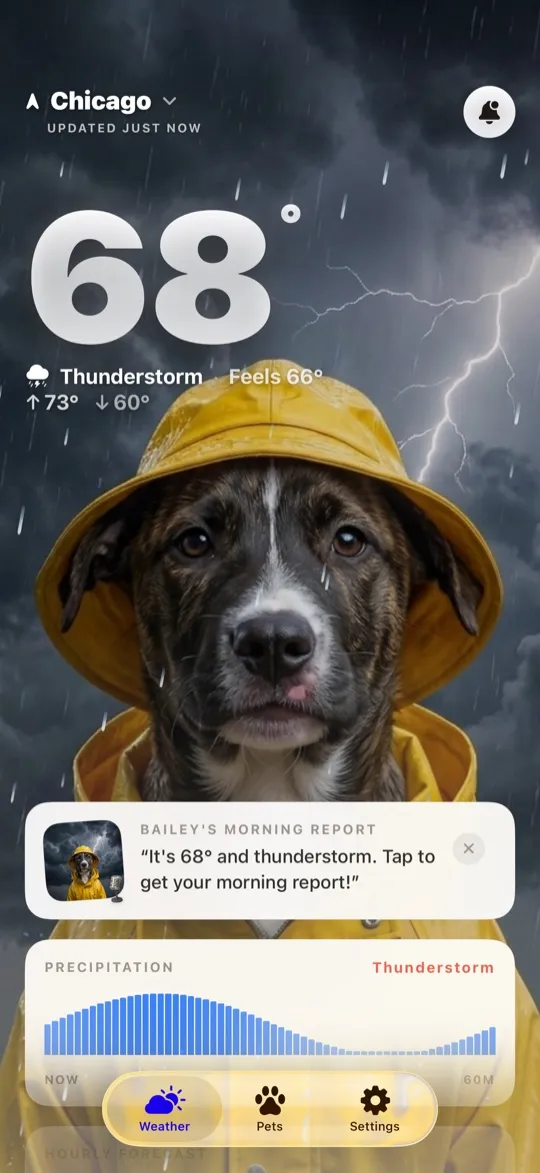
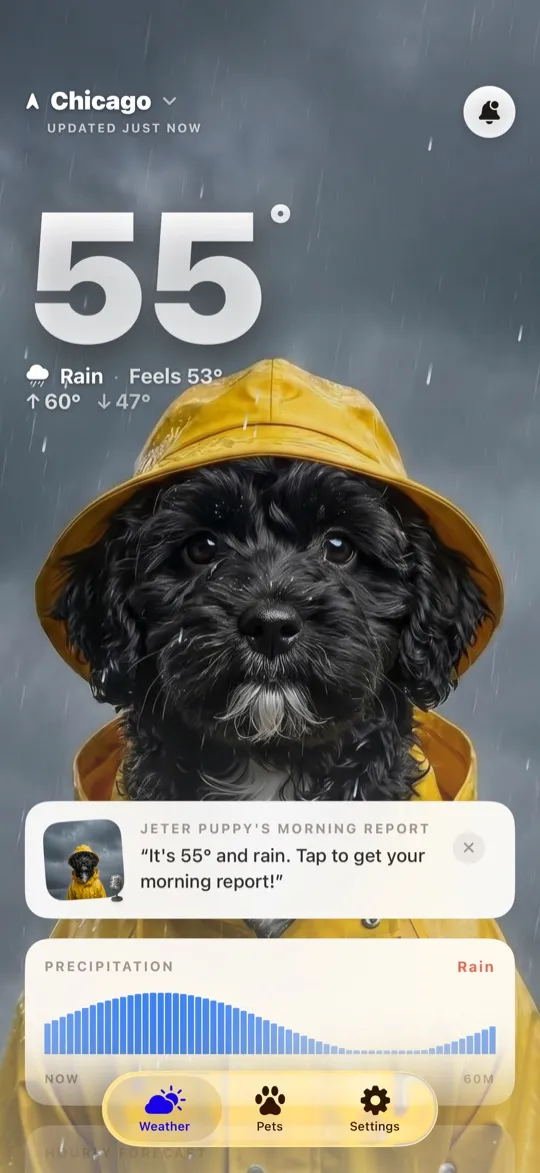
The reason trail days go wrong is almost always that the weather at the end was not the weather at the start. WeatherPets keeps the hour-by-hour forecast and a Live Activity running while you are out, so the temperature at the turnaround is a number you have rather than a guess. Download WeatherPets and pick your pet.
Paws are the thing that ends hikes
Heat gets the attention, but torn pads are the injury that most often turns a hike into a carry. Pads toughen with use, and that adaptation runs on a scale of weeks. Granite, scree and sharp shale abrade far faster than pavement, and the damage is usually not felt until it is done. Soft, pavement-adapted pads doing eight miles of rock on the first warm weekend is the classic case.
- Build up on mixed surfaces in the weeks before a big trail day. Variety toughens pads better than distance on one surface.
- Check pads at every water break. Redness, flattened texture, or a flap starting to lift. Catching it early is the difference between turning back and carrying a 60 pound dog.
- Carry vet wrap and one bootie, even if you never use booties normally. It has saved a lot of long walks out.
- Watch the surface, not the air. Bare rock in sun runs far hotter than the air above it, the same trap we cover in the pavement and paw safety guide.
Water, and why the stream is not it
Carry water for the dog as a separate quantity from your own, and offer it far more often than they ask. Little and often beats a huge drink at the top, which can bring on nausea in a hot dog. Constant access to fresh water sits at the top of the ASPCA's hot weather guidance for exactly this reason.
What you want to avoid is the dog drinking whatever they find, and the reason is not squeamishness. The AVMA notes that leptospirosis spreads through water contaminated with the urine of infected animals, and that slow-moving or stagnant water is the higher-risk kind. Giardia and blue-green algae live in the same appealing puddles. Keep them topped up so the stream is not tempting, and ask your vet whether the leptospirosis vaccine makes sense for where you hike.
Where dogs are actually allowed
This ruins more trips than weather does, because people drive four hours before finding out. The National Park Service is blunt: in most parks, pets are not allowed on trails or in wilderness areas. Where dogs are permitted, the rule is a leash no longer than six feet. The Park Service's B.A.R.K. Ranger programme boils the etiquette down to four points: bag the waste, always leash, respect wildlife, know where you can go.
National forests and many state parks are more permissive, which is where most dog hiking actually happens. Check the specific trail, not the state, because rules change between neighbouring trailheads. And pack the waste out. Dog waste is not deer waste, and it does not belong in a watershed.
The rest of the trail, briefly
- Ticks. Check ears, armpits, groin and between toes at the car, not at home. They stay active far later than people expect, as our piece on tick activity by temperature covers.
- Foxtails. In dry western grass these barbed seeds burrow into noses, ears and paws, and do not come out on their own. See the foxtail guide first.
- Altitude. Dogs get altitude sickness too. Going much higher than home, keep the first outing short.
- Wildlife. A loose dog that chases a deer or corners a snake creates a problem you cannot fix from a mile away.
What to carry
- Water for the dog, counted separately, and a collapsible bowl
- A six-foot leash and a well-fitted harness, not just a collar
- Vet wrap, gauze, tweezers or a tick tool, and one bootie
- High-value food, for energy and as a recall that works near wildlife
- Tags and current microchip registration, because trailheads are where dogs bolt
- Waste bags, and a sealable outer bag for carrying them out
- The nearest emergency vet to the trailhead, saved before you lose signal
Do the boring version first. One short, cool hike that ends with a happy dog buys you the fitness and the information for the ambitious one. The other way round is how people end up carrying a dog down a mountain.
Frequently asked questions
How far can a dog hike in a day?
Far less than most owners assume on the first outing of the season, and far more than that once a dog is conditioned. Distance is a training outcome rather than a breed fact, so the number that matters is how far your dog walked last week, not how big they are. A useful rule borrowed from human training is to raise weekly distance in small steps over several weeks rather than jumping straight to a long trail day, because paw pads, tendons and heat tolerance all adapt on that slower timescale.
How hot is too hot to hike with a dog?
There is no single temperature, because humidity, sun exposure, the surface and the individual dog all move the line. The practical version is that a hike is a multi-hour commitment with no exit, so judge it on the temperature at the time you expect to finish rather than the temperature at the trailhead. In our modelling of US climate normals, a September morning in Denver gains about 12 degrees Fahrenheit between 8am and 11am, so a cool start is routinely a warm finish.
When should you turn back on a hike with a dog?
Turn back at whichever of these comes first: half your water is gone, half your daylight is gone, or your dog changes behaviour. Behaviour is the one to trust most. Lagging behind after leading, seeking every patch of shade, lying down without being asked, or panting with a wide flat tongue all mean the outing is over. A dog will keep following you well past the point where they should have stopped.
Can dogs drink from streams while hiking?
Better not. The American Veterinary Medical Association notes that leptospirosis spreads through water contaminated with infected animal urine, and that slow-moving or stagnant water is the higher-risk kind. Giardia and blue-green algae are separate hazards in the same puddles. Carry water and offer it often enough that your dog is not motivated to go looking, and ask your vet whether the leptospirosis vaccine makes sense for where you hike.
Are dogs allowed on national park trails?
Often not, and this catches people out constantly. The National Park Service is clear that in many parks pets are not permitted on trails or in wilderness areas, and where they are, the standard requirement is a leash no longer than six feet. Rules vary park by park and even trail by trail, so check the specific park before you drive there. National forests and many state parks are usually more permissive, which is where most dog hiking actually happens.
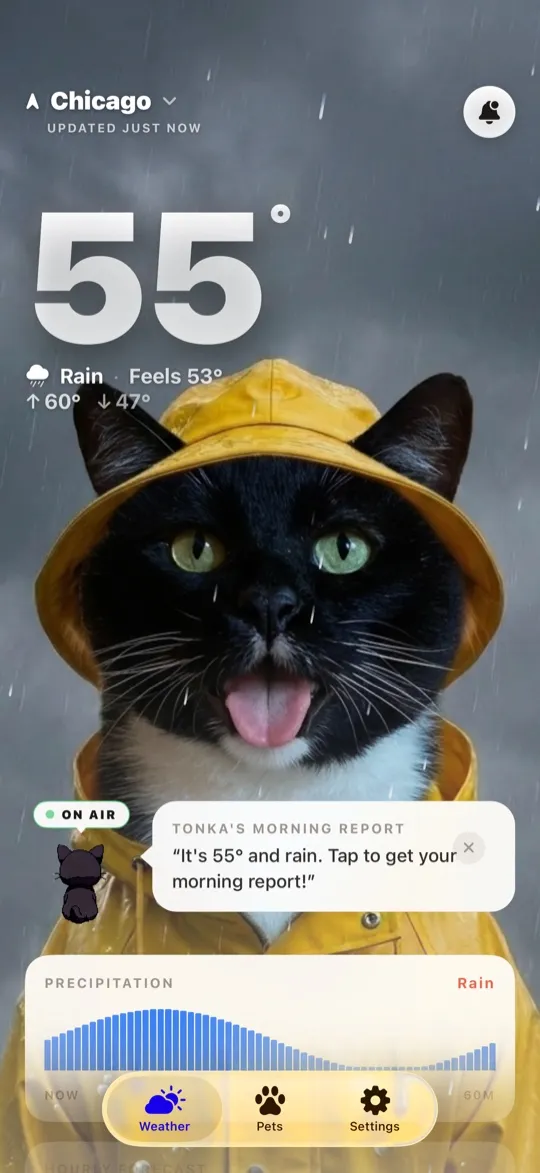
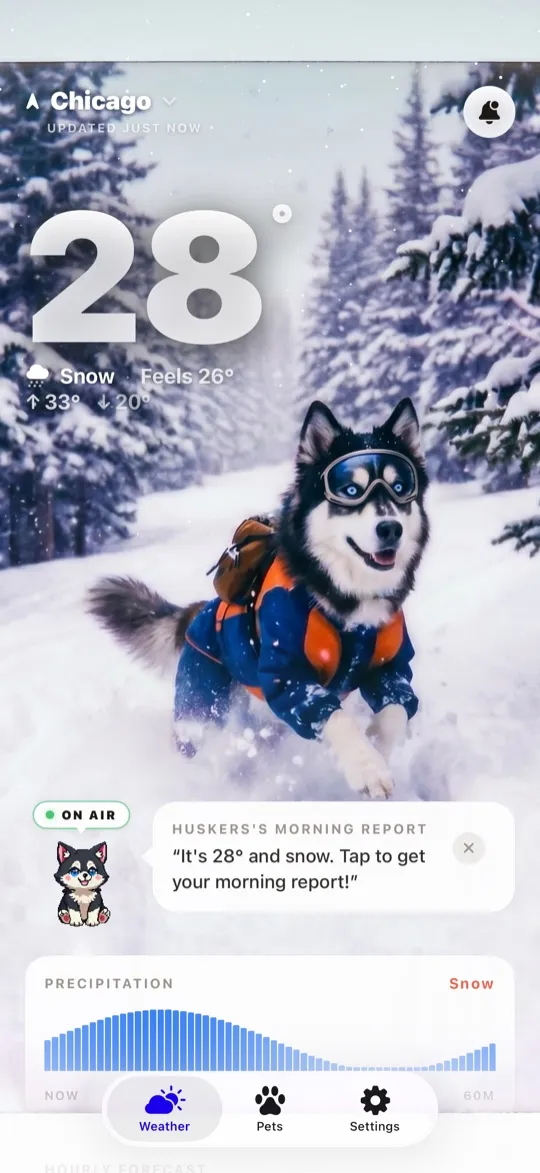
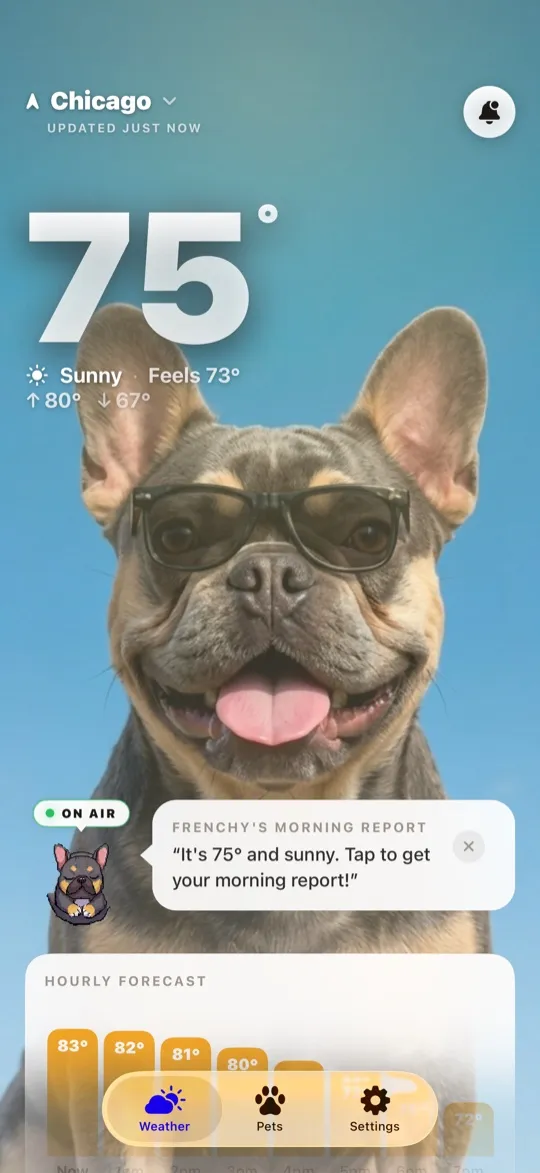
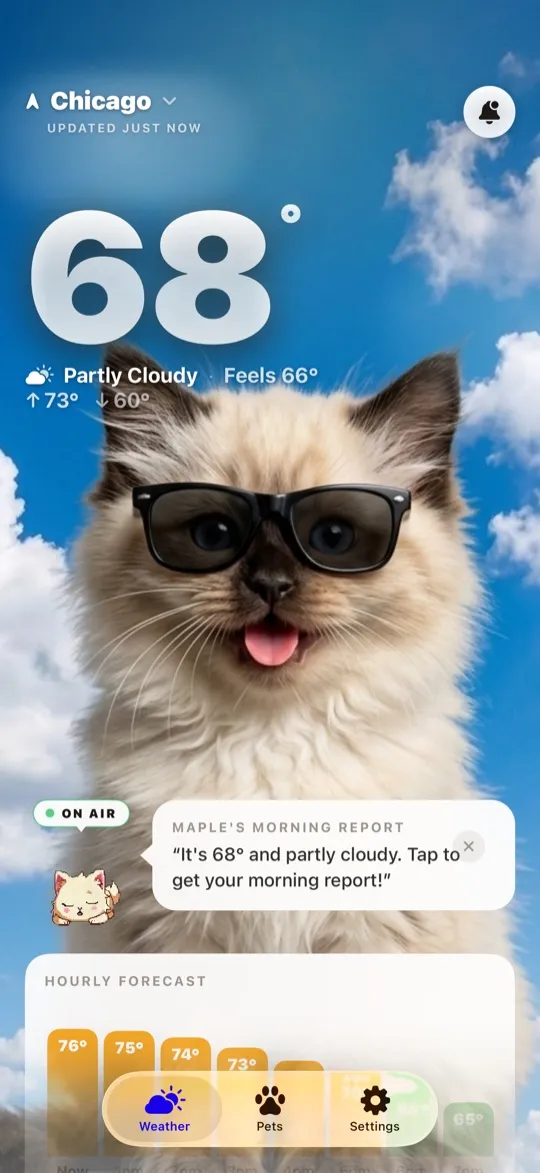
Your daily forecast, delivered by your own pet.

A note on health: This article is general information, not a substitute for professional veterinary advice. Talk to your vet before starting a conditioning programme, about vaccines for where you hike, and about any dog with a heart, airway or joint condition. If your dog collapses, pants uncontrollably, or is injured on the trail, contact a veterinarian right away. Our guidance draws on trusted veterinary and government sources, including those linked above.
