Heartworm Season: The Temperature That Actually Starts It
Heartworm gets sold to owners as a season, which is odd, because the parasite spends part of its life inside an insect that cannot warm itself. What it actually runs on is a thermometer. There is a famous threshold everyone quotes, and then there is the number that genuinely decides whether transmission can happen at all. They are not the same, and the gap between them is about eight degrees.
Key takeaways
- The famous threshold is 57°F, below which heartworm larvae cannot develop inside a mosquito at all.
- But 57°F is not the practical line. Development also has to finish before the mosquito dies, and that pushes the real floor up to a mean daily temperature of about 65°F.
- The model is a degree-day sum: 130 units above 14°C, accumulated within 30 days. We show the arithmetic below.
- It runs on the daily mean, not the afternoon high, which is where most back-of-envelope reasoning goes wrong.
- Knowing all of this is an argument for year-round prevention, not against it. The reasons are at the bottom, and cats are the strongest one.
The number everyone quotes
If you have ever asked why heartworm prevention is a year-round product in Florida and a seasonal habit in Maine, you will have met the 57 degree rule. The Companion Animal Parasite Council states it plainly in its heartworm guidelines: larval development inside the mosquito ceases at temperatures below 57°F, and speeds up as the temperature rises.
That is real biology, and it explains the shape of the map. Heartworm is a parasite that has outsourced part of its lifecycle to an insect that cannot warm itself, so the parasite runs at whatever speed the weather allows.
The trouble is what people do with the number. Fifty-seven degrees sounds low. Most of the United States clears it for a good chunk of the year, so owners conclude that transmission season is enormous, or alternatively that a cool week shuts it down. Both conclusions are wrong, because 57°F is only half the rule.
The half nobody mentions: the mosquito has to live long enough
Development is not a switch, it is an accumulation. Parasitologists model it as a degree-day sum, and the version used in the published risk models is precise. As one modelling paper puts it, a number of growing degree days accumulates each day equal to the degrees by which the average daily temperature exceeds 14°C, and the required threshold of 130 units is only accepted if it is reached within 30 consecutive days.
That second clause is the whole game. Thirty days is roughly the maximum a mosquito lives. If the heat is not sufficient to finish the job inside a month, the mosquito dies with an unfinished parasite in it and nothing is transmitted.
So you can just do the arithmetic. Take a mean daily temperature, subtract 14°C, and see how many days it takes to reach 130.
| Mean daily temperature | Degree days earned per day | Days to reach 130 | Transmission possible? |
|---|---|---|---|
| 14°C / 57°F | 0 | Never | No. This is the hard floor |
| 16°C / 61°F | 2 | 65 days | No. The mosquito dies first |
| 18°C / 64°F | 4 | 32.5 days | No, and only just |
| 18.3°C / 65°F | 4.3 | 30 days | The real threshold |
| 20°C / 68°F | 6 | 21.7 days | Yes |
| 22°C / 72°F | 8 | 16.2 days | Yes |
| 25°C / 77°F | 11 | 11.8 days | Yes |
| 28°C / 82°F | 14 | 9.3 days | Yes, in under 10 days |
Read the top half of that table again. Between 57°F and roughly 65°F, the parasite is technically developing and yet transmission still cannot complete, because the clock runs out. The number that actually gates heartworm season is not 57°F. It is a mean daily temperature of about 65°F.
The bottom half is worth noticing too. Once you get into real summer heat the process collapses to eight or nine days. Heartworm season does not ramp up gently; it goes from impossible to fast over about ten degrees.
The trap: mean, not high
Here is where almost every casual version of this calculation falls apart. The model uses the average daily temperature, not the number on the forecast tile.
A day with a high of 78°F and an overnight low of 52°F has a mean of 65°F. That day is sitting exactly on the threshold, despite an afternoon that felt like proper summer. Meanwhile a humid stretch with highs of 84°F and lows that never drop below 70°F has a mean of 77°F and is finishing the job in under twelve days.
Which means the overnight low is doing more work in this calculation than the daytime high, and it is the number nobody checks. Warm nights are what make heartworm country. It is the same reason the Gulf Coast is the epicentre while places with hot days and cold nights are not.
The FDA describes the mosquito stage as taking 10 to 14 days, adding the crucial qualifier "under the right environmental conditions." The table above is what that qualifier means in numbers.

So can you stop prevention in winter?
This is the question the temperature rule always leads to, and the honest answer is that the model is a description of average outdoor conditions, not a permission slip for your individual pet. CAPC recommends year-round prevention for every dog and every cat regardless of lifestyle, and the reasons are specific rather than defensive.
- Your microclimate is not the weather station. Cities run warmer than their official readings, and a sheltered yard, a compost heap or a warm building wall can hold a pocket of mosquito-friendly air well outside the season.
- Mosquitoes overwinter indoors. Basements, garages and crawl spaces stay comfortably above the threshold all year in most of the country.
- Fluctuating temperatures develop larvae faster than a flat average predicts. The steady-mean model in the table is a simplification, and real weather is not steady.
- Preventives work backwards. A monthly preventive kills the larvae acquired during the preceding month rather than protecting the month ahead, so the dose you skip in November is the one covering October's warm spell.
- The disease has been reported in dogs in all 50 states, and pets travel. So do rehomed and relocated dogs, which is a documented reason the map keeps expanding.
There is also a practical trap in stopping and restarting. Because it takes about six to seven months for larvae to mature into adults, and the earliest a blood test can detect them is around five to six months after the bite, a gap in coverage is invisible for half a year. That is also why dogs need testing before prevention is restarted, and why giving a preventive to a dog that already carries adult worms can be dangerous rather than merely useless. The American Kennel Club's heartworm guide covers the testing side in detail. Talk to your vet before changing anything.
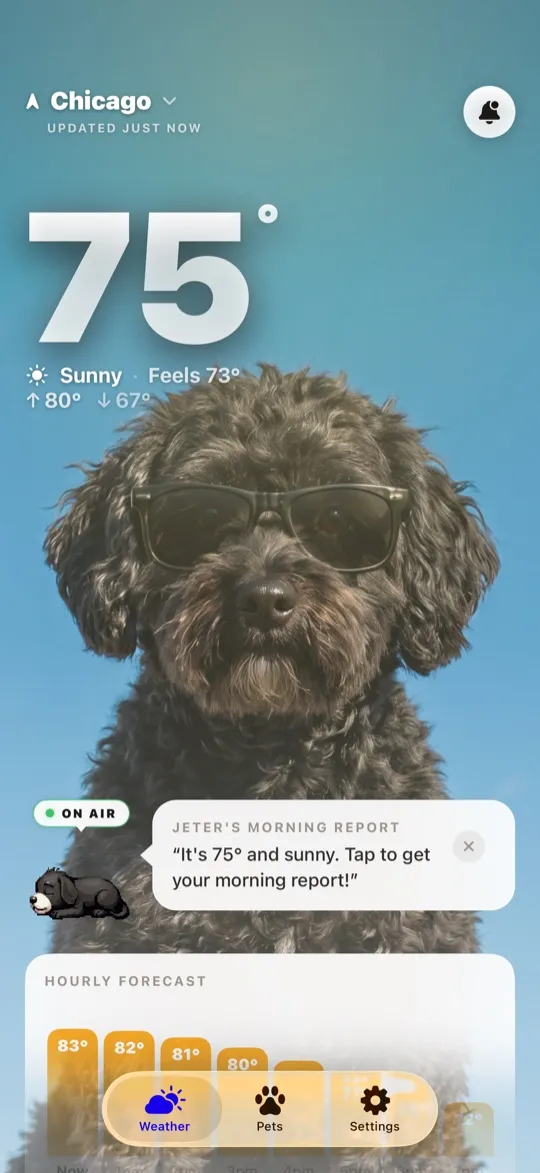
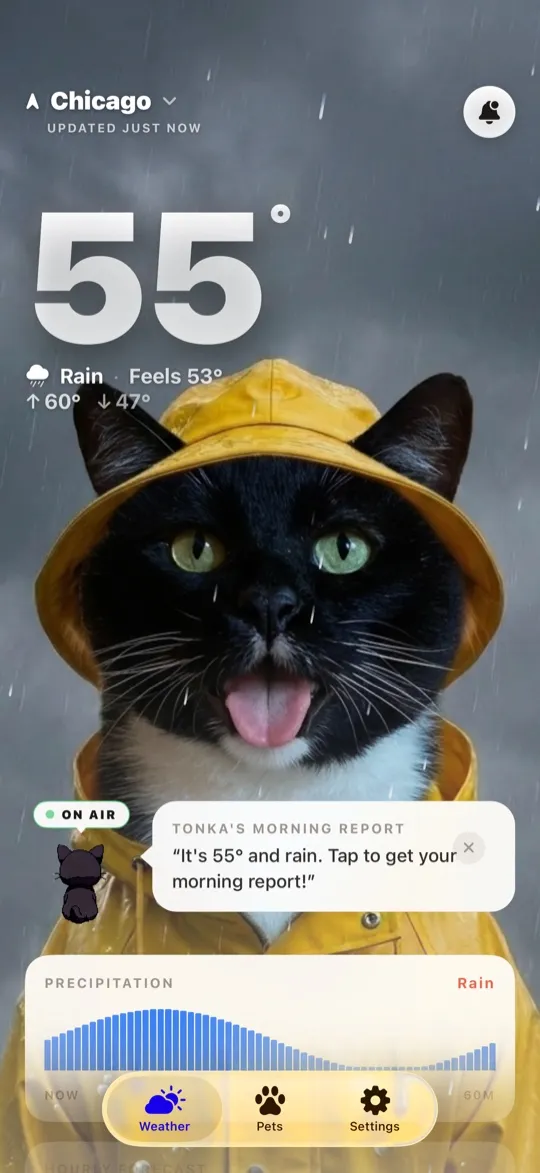
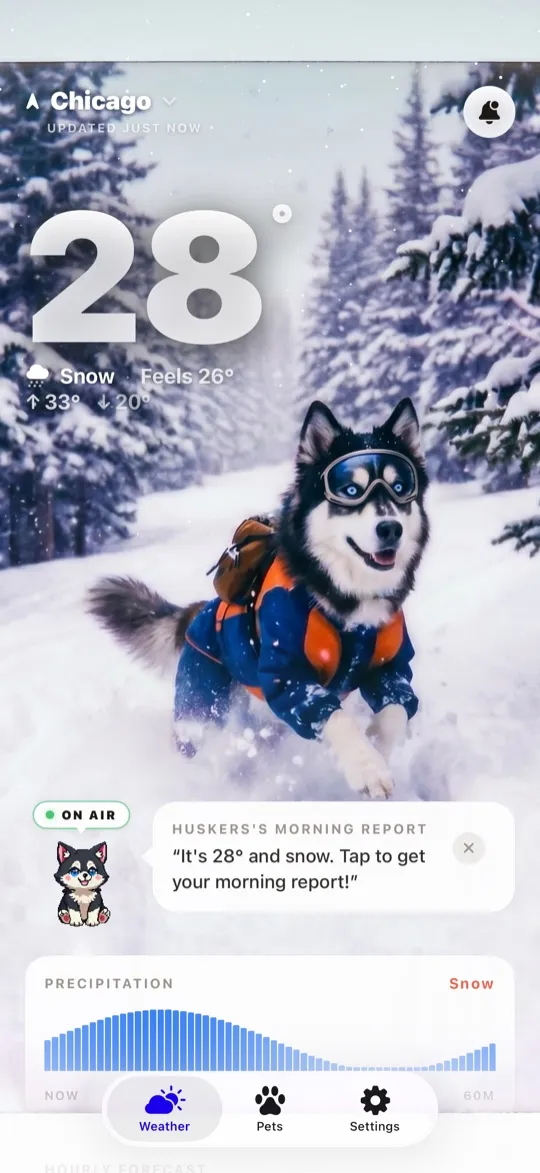
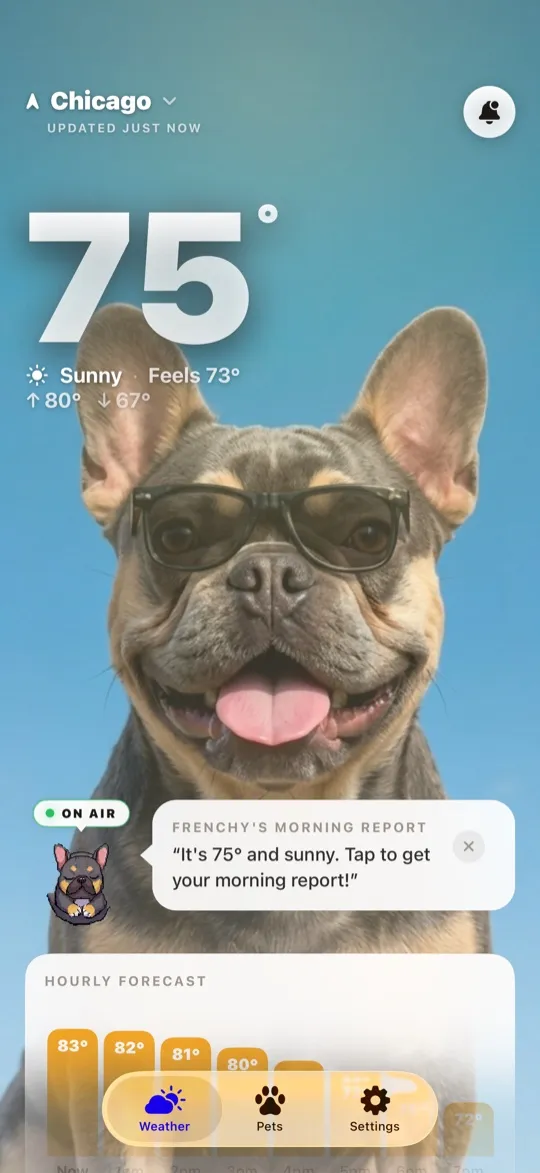
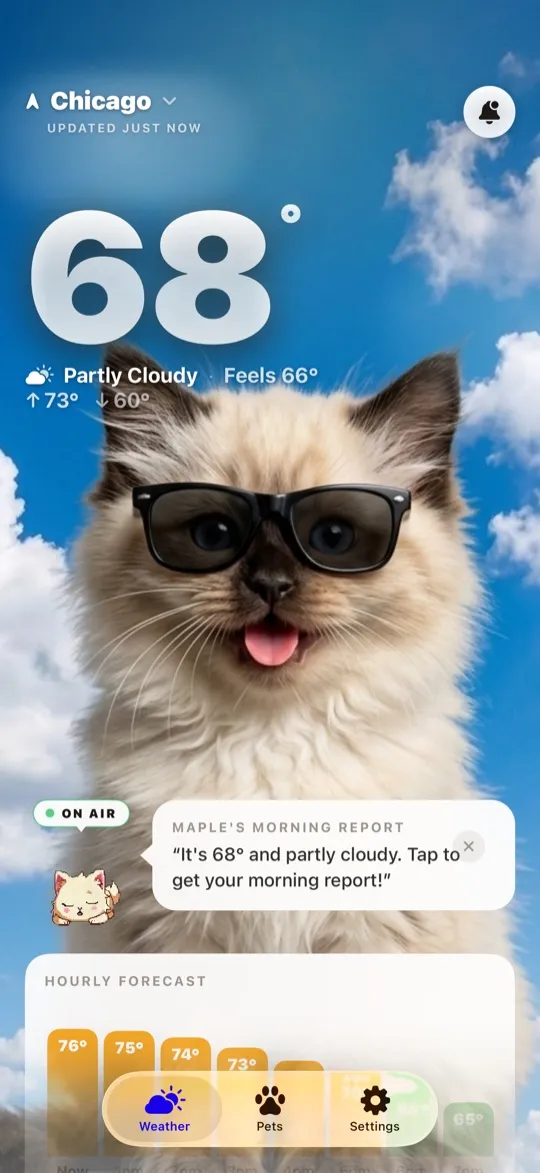
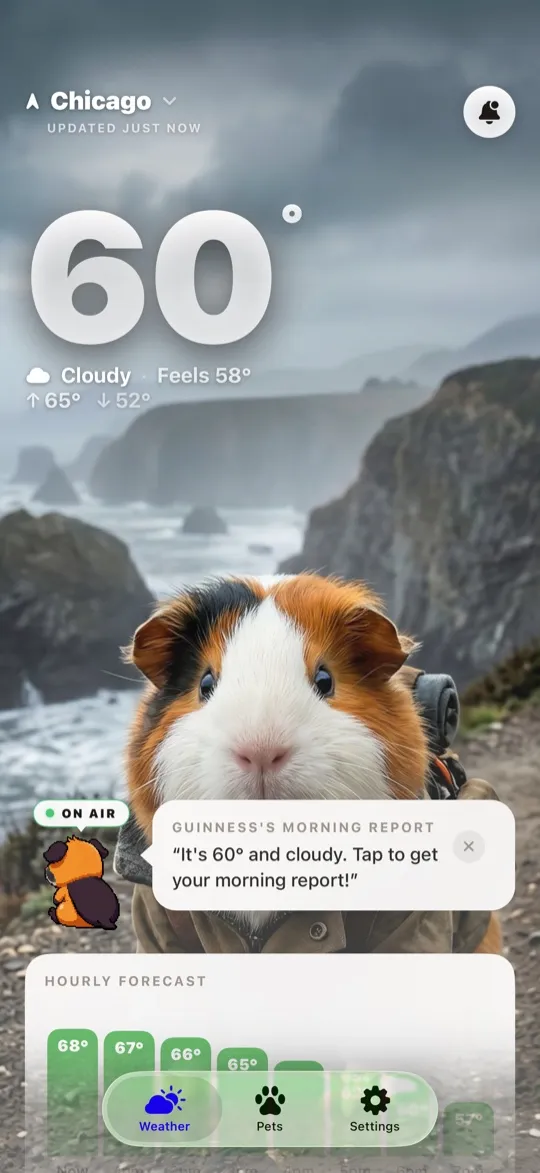
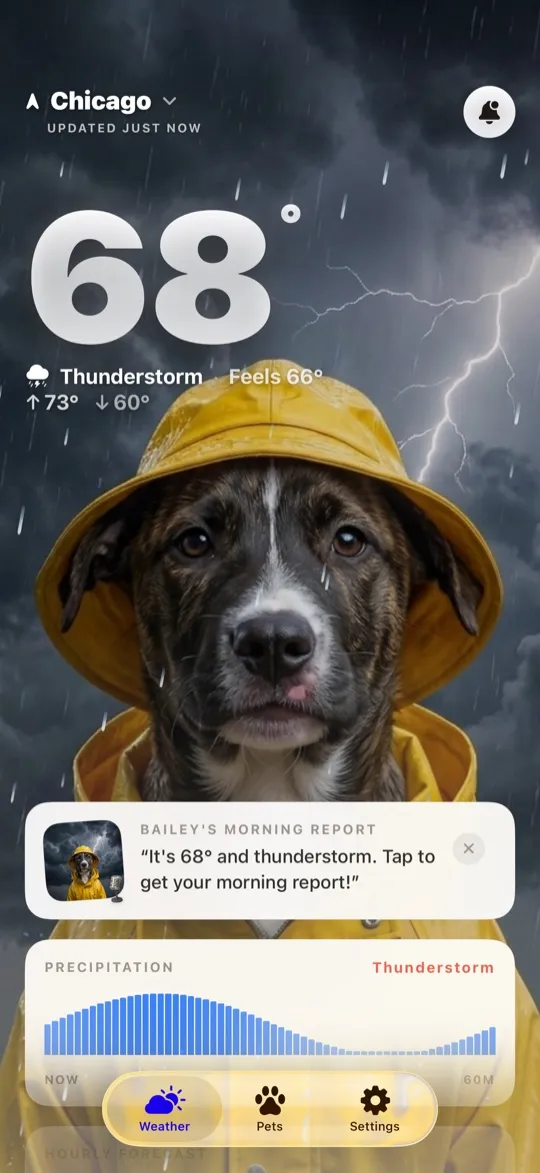
If you want to know whether your own week is above or below that 65 degree mean, the numbers you need are the daily high and the overnight low, which WeatherPets shows you for the next ten days alongside your own pet. Download WeatherPets and pick your pet.
Cats are where this argument ends
Everything above is a dog-shaped discussion, because the dog is the parasite's natural host. Cats change the calculus entirely, and not in the reassuring direction.
Cats are less susceptible, fewer worms reach adulthood, and those that do live only a couple of years rather than five to seven. All of that sounds like good news until you read what a small number of worms does. Cornell's Feline Health Center explains that heartworm associated respiratory disease, or HARD, can be caused by as few as one to three adult worms in the pulmonary arteries, and that much of the damage comes from the cat's own immune response to them. In cats the disease is primarily a lung disease, and the signs (coughing, gagging, rapid difficult breathing, vomiting, lethargy) are routinely mistaken for feline asthma.
Then the decisive part: there is no approved treatment for killing adult heartworms in cats. In dogs, an infection is a serious, expensive, unpleasant problem with a treatment protocol at the end of it. In cats there is no equivalent, which leaves prevention as the only tool available.
And the "my cat is indoors" argument does not survive contact with the previous section either, because mosquitoes get indoors. That is the whole reason CAPC extends the year-round recommendation to indoor cats explicitly.

What to actually do with the number
Use the temperature rule for understanding, not for scheduling. It is genuinely useful for three things:
- Knowing when risk is highest, which is any stretch where the overnight low stays warm, not merely when the afternoons are hot.
- Recognising a late-season risk window. A warm, muggy September with mild nights is a better transmission month than a hot, dry June with cold ones, which is the opposite of most people's intuition.
- Understanding why the map is moving. Warmer nights extend the window at both ends, and CAPC notes infections turning up more often in traditionally low-prevalence states.
What it is not useful for is deciding to skip a month. That decision belongs to your vet, and it depends on your travel, your local prevalence, and which pet is on the other end of it.
Heartworm joins a growing list of pet risks that run on a thermometer rather than a calendar. Our guide to when ticks are active by temperature makes the same argument for a different parasite, and why fall is a peak tick season covers what happens when everyone assumes the risk ended in August.
Frequently asked questions
At what temperature does heartworm transmission stop?
Larval development inside the mosquito ceases below 57 degrees Fahrenheit, which is the figure usually quoted. In practice the threshold is higher, because development must also finish before the mosquito dies. Using the standard degree-day model of 130 units above 14 degrees Celsius within 30 days, a mean daily temperature of roughly 65 degrees Fahrenheit is the real floor for completed transmission.
Is heartworm risk based on the daily high temperature?
No, and this is the most common mistake. The model uses the average daily temperature, which sits between the high and the overnight low. A day with a high of 78 and a low of 52 averages 65, right on the threshold, despite feeling like a summer day. Warm overnight lows do more to build a heartworm season than hot afternoons do.
Can I stop heartworm prevention in the winter?
That is a conversation for your vet, not a calculation you should run yourself. CAPC recommends year-round prevention for all dogs and cats. The reasons include microclimates that stay warmer than the local weather station, mosquitoes overwintering in basements and garages, fluctuating temperatures speeding development beyond what a flat average predicts, and the fact that a monthly preventive covers the month just gone rather than the month ahead.
How long does heartworm take to develop in a mosquito?
The FDA describes it as 10 to 14 days under the right environmental conditions. Those conditions are the key qualifier. At a mean daily temperature around 82 degrees Fahrenheit the degree-day model puts it at roughly 9 days, at 68 degrees it stretches to nearly 22 days, and below about 65 degrees the mosquito typically dies before development finishes.
Do indoor cats need heartworm prevention?
CAPC recommends it for all cats regardless of lifestyle, and studies have found infections in indoor-only cats, because mosquitoes get inside. The stakes are also higher for cats than most owners realise: Cornell notes that as few as one to three adult worms can cause heartworm associated respiratory disease, and there is no approved treatment for killing adult heartworms in cats, leaving prevention as the only available tool.
Your daily forecast, delivered by your own pet.




A note on health: This article is general information, not a substitute for professional veterinary advice. Never start, stop or change a heartworm preventive without talking to your veterinarian, and contact them right away if your pet is coughing, breathing with difficulty, or you have any serious or emergency health concern. Our guidance draws on trusted veterinary and government sources, including those linked above.
