Fall Tick Season: Why Autumn Is Peak Tick Time for Dogs
Somewhere around Labor Day, most dog owners quietly file ticks under "summer problems" and move on to pumpkin-spice everything. The ticks did not get the memo. For the blacklegged tick, the one that carries Lyme disease, autumn is not the off season. It is the main event.
Key takeaways
- Tick season does not end in fall. Adult blacklegged ticks are active from October through May, any day the temperature stays above freezing.
- Fall ticks are mostly adults: bigger than the spring nymphs, easier to spot, and still very capable of transmitting disease.
- Ticks slow down below about 45 degrees Fahrenheit but they do not die. Even a harsh winter kills only around 20 percent of them.
- Leaf piles, leaf litter, and damp yard edges are exactly where fall ticks wait, and exactly where dogs love to stick their noses.
- Keep prevention going year round, and do a hands-on tick check after outdoor time. Removing a tick within 24 to 48 hours prevents most Lyme transmission.
The myth of the tick off season
The logic feels sound: ticks are a hot-weather bug, the weather is cooling, so the danger is fading. The problem is that ticks are not one bug. Different species, and different life stages of the same species, are active at different times of year, and the calendar hand-off lands squarely on fall.
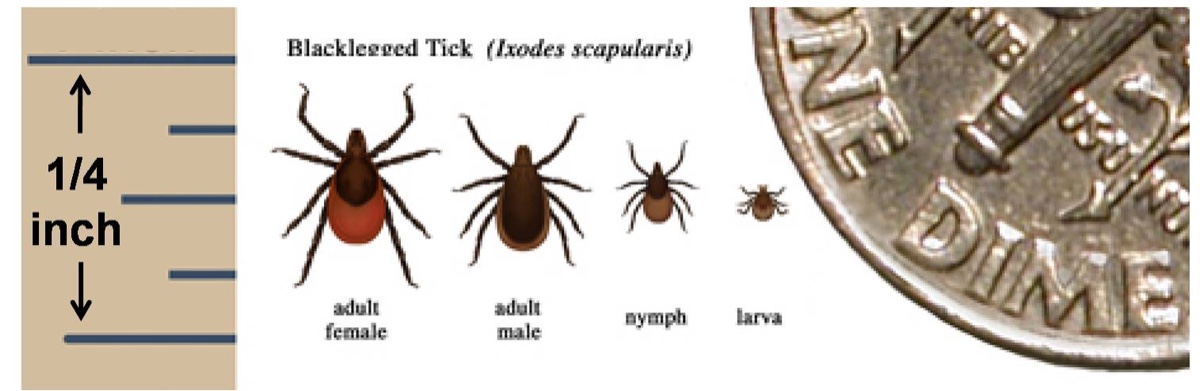
Through spring and summer, the biggest threat is the blacklegged tick nymph: a poppy-seed sized stage that is nearly impossible to spot in fur. By late September, the nymphs are done, and the adults take over. According to the University of Rhode Island's TickEncounter program, adult blacklegged ticks are active from October through May, as long as the daytime temperature remains above freezing.
Read that again: October through May. The tick most associated with Lyme disease begins its busiest questing season right as most owners stop thinking about it. That mismatch between expectation and biology is why fall bites catch so many people off guard.
Why fall belongs to the adult blacklegged tick
The blacklegged tick lives about two years and feeds only three times: once as a larva in late summer, once as a nymph the following spring or summer, and once as an adult. That final feed is the fall one. Adult females need a large blood meal to produce eggs, and they need it before winter truly sets in, so they climb onto knee-high grass and brush and wait for a warm body to walk past. A dog nosing along a field edge is about as good as it gets.
Fall weather actually helps them. Ticks dehydrate easily in hot, dry summer air, which limits how long they can quest each day. Cool, damp October air is comfortable working weather, so adults can stay out on the vegetation for longer stretches. Pest researchers consistently describe October and November as the peak window for adult blacklegged tick activity, and the Companion Animal Parasite Council's 2026 forecast projects tick-borne disease risk continuing to rise and spread into new regions.
There is one genuine piece of good news: adults are much bigger than nymphs. An unfed adult blacklegged tick is about the size of a sesame seed, roughly ten times easier to find in fur than a nymph. Your fall tick checks actually work better than your summer ones. You just have to keep doing them.
Your fall tick calendar
Here is how the season actually unfolds for a dog in most of the northern and central United States. Southern states compress this into "ticks, but slightly fewer": mild winters there mean activity barely pauses at all.
| When | What's active | What it means for your dog |
|---|---|---|
| Late August to September | American dog ticks and lone star ticks winding down; blacklegged larvae finishing; first adult blacklegged ticks appearing | The deceptive lull. Activity dips just enough to make you drop your guard. Keep prevention going. |
| October to November | Adult blacklegged ticks at peak, questing on knee-high vegetation in cool damp weather | The riskiest fall window. Check your dog after every walk through grass, brush, or leaves. |
| December | Adult blacklegged ticks still questing on any above-freezing day | A 40-degree December afternoon is a tick day. Do not let the month fool you. |
| Any winter warm spell | Adults emerge from leaf litter within hours of a thaw | If it is warm enough for a long walk, it is warm enough for a tick check afterward. |
Where fall ticks actually wait
Ticks do not jump or drop from trees. They quest: climbing to the top of grass blades and brush, front legs outstretched, waiting for something warm to brush past. In fall, that puts them in very specific, very dog-friendly places:
- Leaf piles and leaf litter. Moist layered leaves are tick shelter, holding warmth and humidity through cold nights. A dog diving nose-first into a leaf pile is doing a tick's job for it.
- The yard edge. The transition zone where lawn meets woods, tall grass, or stone wall is the single busiest tick habitat on most properties.
- Field paths and trail margins. Knee-high vegetation beside the trail is adult questing height. Dogs that weave along the edges pick up far more ticks than dogs walking the center.
- Anywhere deer travel. Fall is deer breeding season, which moves the blacklegged tick's favorite host, and its ticks, through yards and greenbelts more than any other time of year.
The five-part fall tick defense
None of this requires canceling autumn. It requires about two minutes a day.
- Do not stop prevention. Whatever worked all summer (oral, topical, or collar) should continue through fall and winter. Cornell's Riney Canine Health Center recommends maintaining tick control products year round.
- Check your dog after outdoor time. Run your hands over the whole body with light pressure, feeling for new bumps. Prioritize ears and ear folds, around the eyes and collar, armpits, groin, between the toes, and under the tail. Removing a tick within 24 to 48 hours of attachment prevents most Lyme transmission.
- Manage the leaves. Rake and remove leaf piles from the areas where your dog actually plays, and keep a mowed buffer between lawn and woods. You are removing tick housing before winter move-in day.
- Walk the middle of the trail. On damp, cool mornings, keep your dog out of the knee-high stuff along the edges. Center of the path, center of the lawn.
- Talk to your vet about the Lyme vaccine. If you live in a Lyme-endemic region, ask whether vaccination makes sense for your dog. The AVMA's Lyme disease guidance covers who benefits most. It supplements prevention, it does not replace it.
Watch the temperature, not the calendar
The whole trick to fall tick safety is one number. Per the American Kennel Club, ticks become much less active once temperatures drop below about 45 degrees Fahrenheit, and adult blacklegged ticks keep questing on any day that stays above freezing. So the question is never "is it November?" It is "what is the temperature today?"
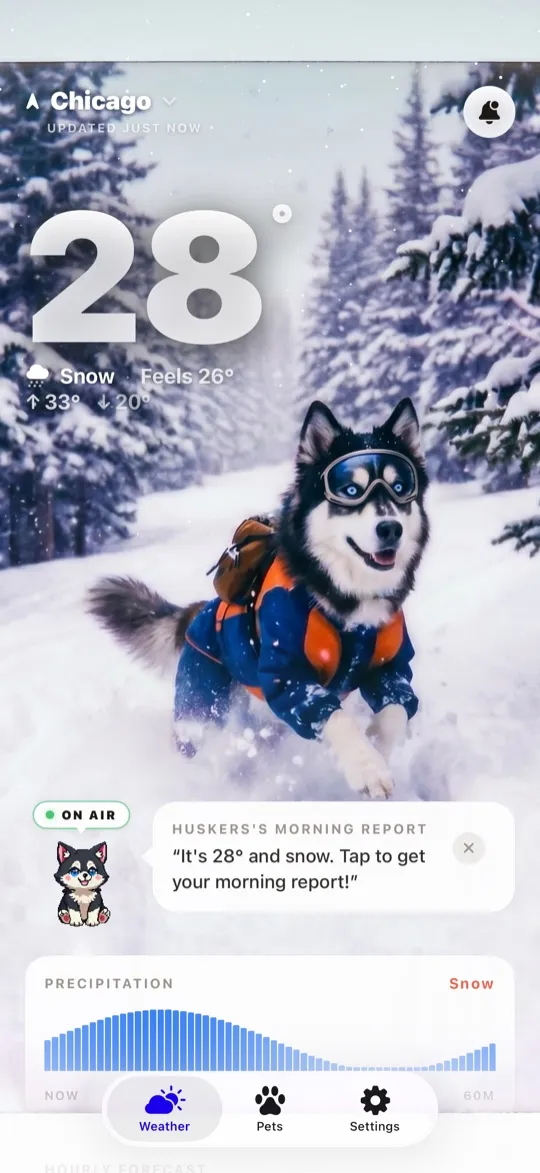
That is a habit WeatherPets makes easy: your pet delivers the morning report with the day's temperature, so you know before the first walk whether it is a tick-check kind of day. Meet your WeatherPet on the App Store.
For the full breakdown of how temperature and humidity drive tick activity across the whole year, we went deep in our guide to when ticks are active by temperature.
If a fall tick got there first
Found one attached? Remove it promptly with fine-tipped tweezers or a tick removal tool: grip as close to the skin as possible and pull straight up with steady pressure, no twisting. Then mark the date on your calendar, because Lyme symptoms in dogs typically do not appear until 2 to 5 months after the bite, according to Cornell. An October tick can become a January limp.
Watch for fever, lameness that shifts between legs, lethargy, swollen joints or lymph nodes, and a dropped appetite. The reassuring part: most dogs exposed to the Lyme bacterium never become ill. But if your dog shows those signs in the months after tick season, mention the bite to your vet and ask about testing. The FDA's overview of ticks and Lyme disease is a solid primer on how transmission works, and the Merck Veterinary Manual covers the other tick species and diseases worth knowing in your region.
When does it finally, actually end?
Honestly? It mostly does not. Sustained hard freezes and snow cover pause tick activity, but the ticks themselves are just sheltering in the leaf litter, and even a severe winter only knocks out around 20 percent of the local population, per research cited by the AKC. In the South, activity barely dips. And with each mild winter, tick ranges expand a little further.
So the honest answer to "when does tick season end?" is: treat it like weather, not like a season. Some days are tick days and some are not, and the temperature tells you which is which. Keep the prevention going, keep the two-minute check in the routine, and enjoy every leaf-crunching walk of it.
Your daily forecast, delivered by your own pet.










Frequently asked questions
Are ticks still active in the fall?
Yes. Fall is peak season for adult blacklegged ticks (deer ticks). Researchers at the University of Rhode Island's TickEncounter program note that adult blacklegged ticks are active from October through May, any time the daytime temperature stays above freezing. Many owners relax after summer, which is exactly when these ticks start questing.
When does tick season end for dogs?
There is no clean end date. Tick activity slows once temperatures drop below roughly 45 degrees Fahrenheit and pauses during sustained freezes, but ticks do not die off. They wait in leaf litter and resume questing on any mild day. In much of the southern United States, tick season is effectively year round.
Are fall ticks more dangerous than summer ticks?
Different, not safer. Fall ticks are mostly adults, which are larger and easier to spot than the poppy-seed nymphs of early summer, but adults have fed on more hosts across their life cycle, and cool damp fall weather keeps them questing for longer stretches of the day. A fall bite carries real disease risk, so checks and prevention still matter.
Should my dog stay on tick prevention through fall and winter?
Yes. Veterinary organizations including the AVMA and Cornell's Riney Canine Health Center recommend year-round tick prevention. A warm week in November or a mild southern winter is all it takes for ticks to resume feeding, and lapses in coverage are when bites happen.
Does a frost kill ticks?
No. A frost sends ticks into shelter under leaf litter and snow, but it does not kill them. Even a hard winter only reduces tick populations by about 20 percent, according to research cited by the American Kennel Club. The first frost is a pause button, not an off switch.
A note on health: This article is general information, not a substitute for professional veterinary advice. If you are worried about a tick bite, possible tick-borne illness, or any serious or emergency health concern, contact your veterinarian right away. Our guidance draws on trusted veterinary sources, including those linked above.
