Dogs in Hot Cars: How Fast a Parked Car Turns Deadly
Every owner who has ever lost a dog to a hot car believed the same thing you might believe right now: it was only going to be a few minutes. The physics do not care about intentions. A parked car is a greenhouse with cupholders, and on a summer day it turns lethal faster than most errands take. Here are the real numbers, and what to do when you see someone else's dog trapped inside one.
The numbers, plainly
According to the AVMA's guidance on pets in vehicles, the temperature inside a parked car can rise almost 20 degrees in just 10 minutes, almost 30 degrees in 20 minutes, and more than 40 degrees within an hour. Run that math on an ordinary day:
- On a 70-degree day, the inside of the car is pushing 89 degrees in 10 minutes and 99 in 20.
- On an 80-degree day, you are near 99 in 10 minutes and around 109 in 20.
- On a 90-degree day, the interior can pass 130 degrees within the hour.
Dogs start suffering heatstroke when their body temperature climbs past roughly 104 degrees, and they cool themselves almost entirely by panting, which stops working when the air they are breathing is hotter than they are. A car that reads 110 inside is not uncomfortable for a dog. It is unsurvivable, and hundreds of pets die this way in the United States every year.
Why the car heats that fast
Sunlight passes through the glass and is absorbed by the dashboard, seats, and steering wheel, which re-radiate it as heat that cannot escape back through the windows. That is the greenhouse effect in miniature, and it is why the color of the car, parking in partial shade, or a mild-sounding forecast do not change the outcome much. Two details surprise people most:
- Cracked windows barely help. Studies cited by the AVMA found that cracking the windows has little effect on the interior temperature climb.
- Mild days are still dangerous. A sunny 70-degree afternoon, the kind that feels perfect through a windshield, still produces a 100-degree car in under half an hour.
The quick-errand myth
The average "quick" grocery run is not five minutes. It is fifteen to twenty by the time you park, walk, wait in line, and walk back, and that assumes nothing goes wrong: no long line, no card reader fight, no bumping into a neighbor. Meanwhile the clock inside the car started the moment the AC shut off. The honest rule has no fine print: if the errand does not welcome dogs, the dog stays home. On summer days that is not strictness, it is the whole plan. Use drive-thrus and curbside pickup when your dog is along, bring a second person who can stay in the running car with the AC on, or save the errand for later.
And remember the flip side of the same physics on the way home: a car that sat parked all afternoon has scorching seats, belt buckles, and floors. Let it cool before loading the dog, especially a flat-faced breed that overheats fastest of all.
If you see a dog in a hot car
- Assess fast. Note the car's make, color, and plate. Is the dog alert, or panting heavily, drooling, dull, or unresponsive? Distress signs mean minutes matter.
- Get the owner paged. Most parking lots belong to a store. Ask the nearest business to page the owner immediately; that is often the fastest resolution of all.
- Call for help. If the owner does not appear quickly or the dog looks distressed, call 911 or local animal control and stay by the car until they arrive. The Humane Society's hot-weather guidance walks through this exact sequence.
- Know your local law before breaking glass. Some states protect good-faith rescuers who follow specific steps (calling authorities first, using minimum force); others do not. Responders on the phone can tell you what is allowed where you are standing.
If the dog is out and showing heat distress, move them to shade or AC, wet them with cool water, and get them to a vet even if they seem to recover. Our guide to heatstroke warning signs covers what happens next.
Make the safe call automatic
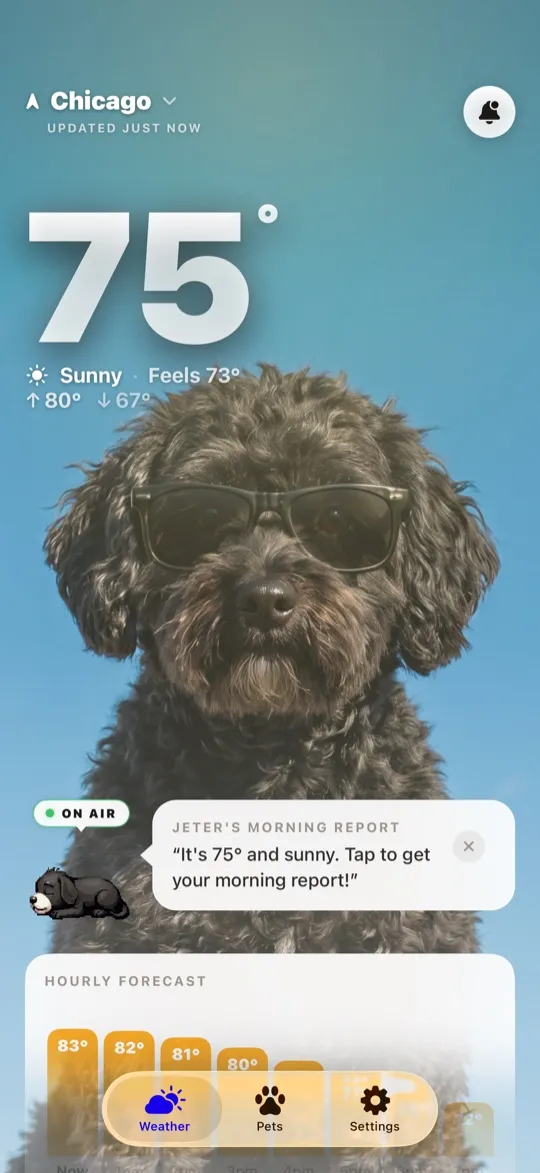
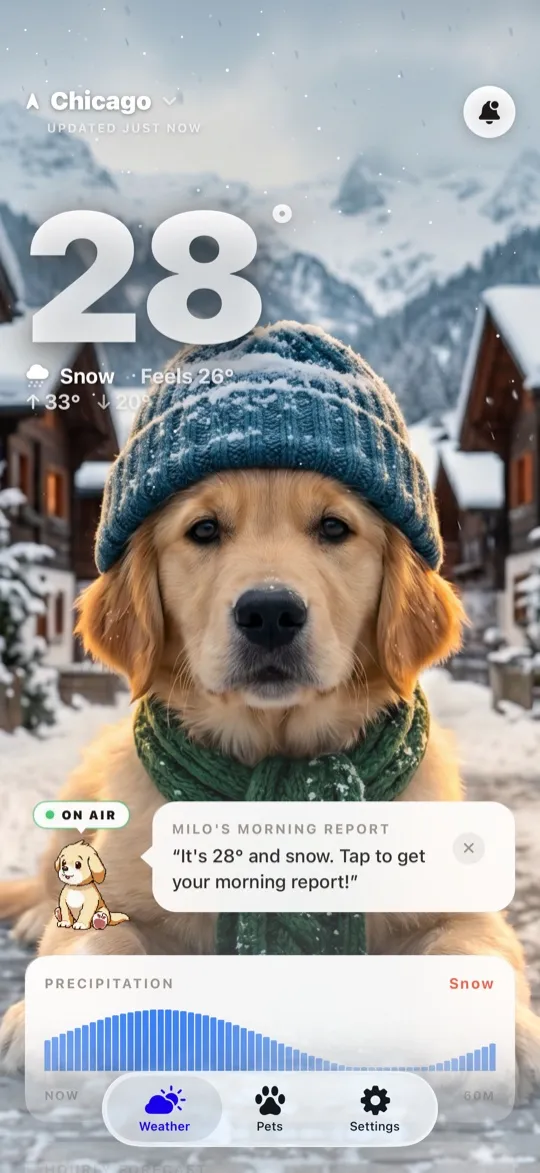
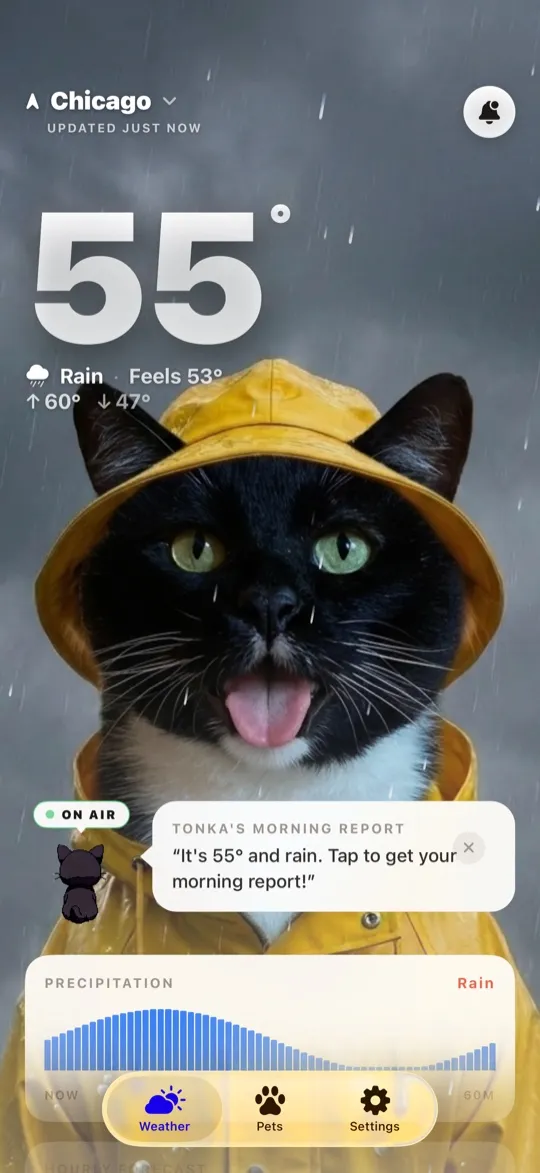
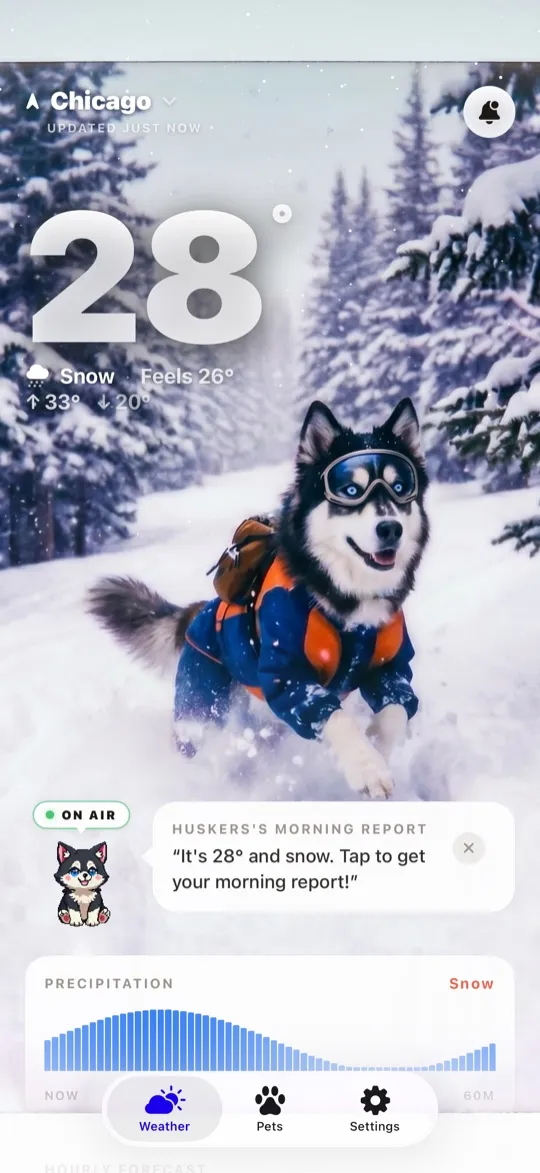
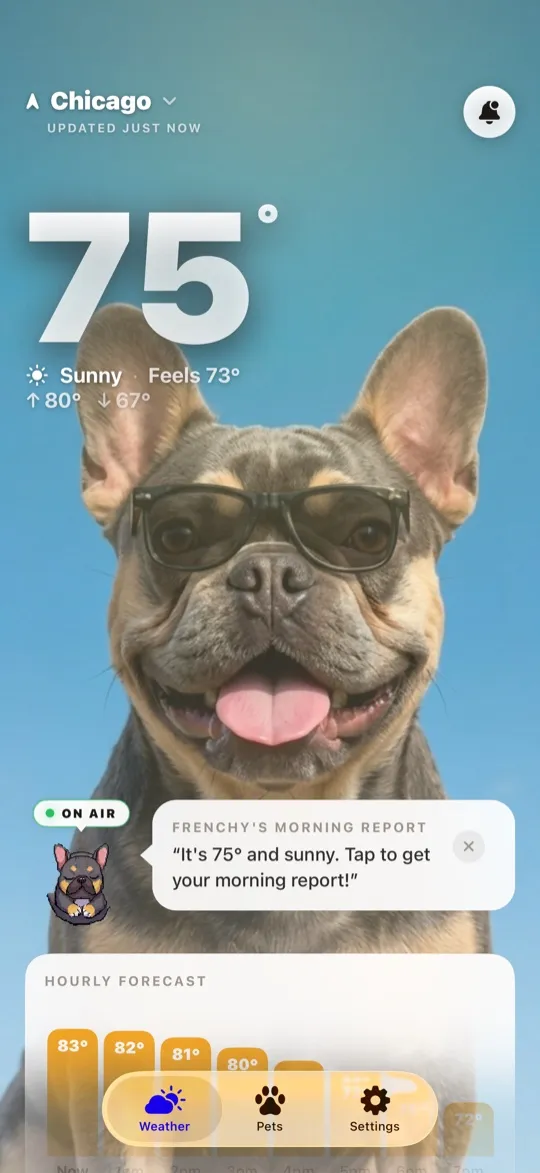
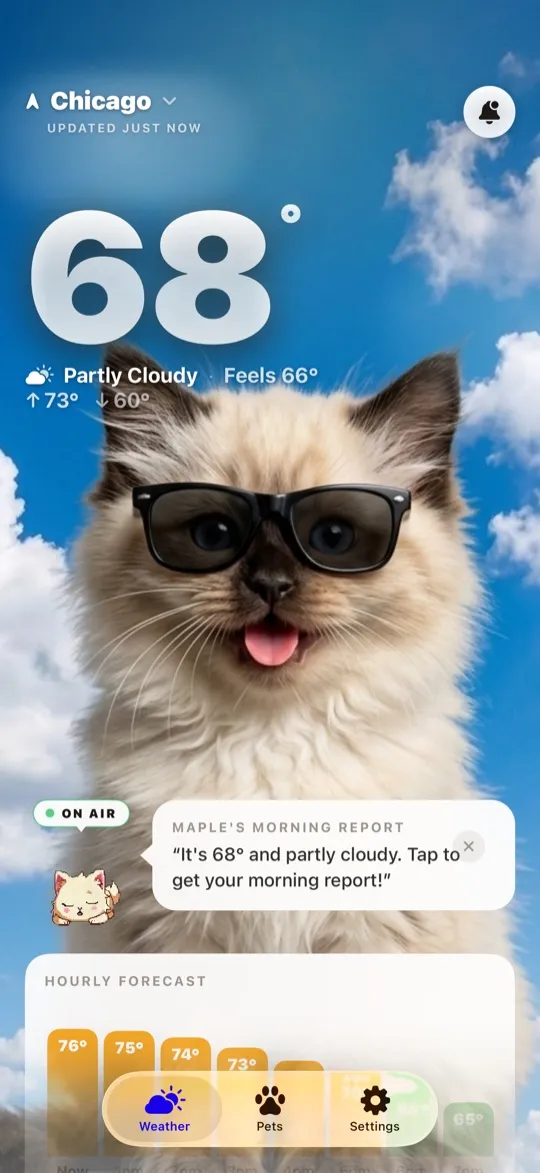
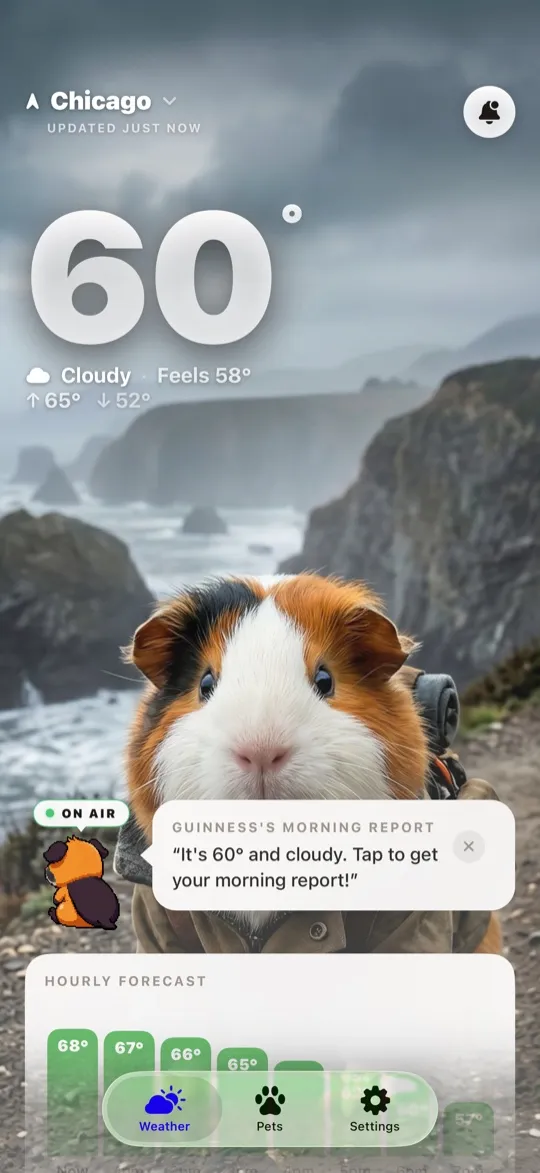
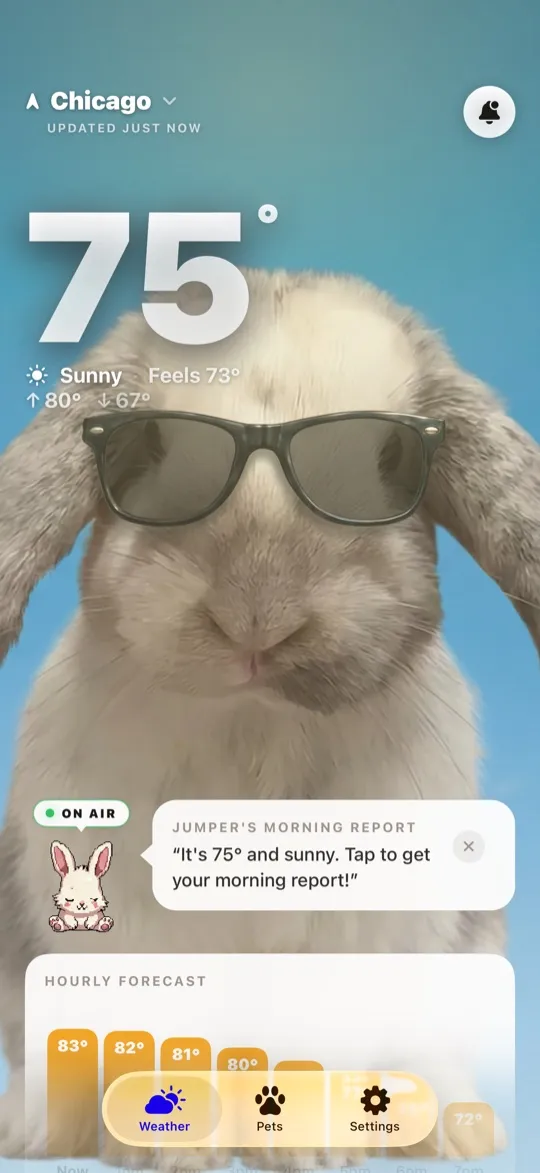
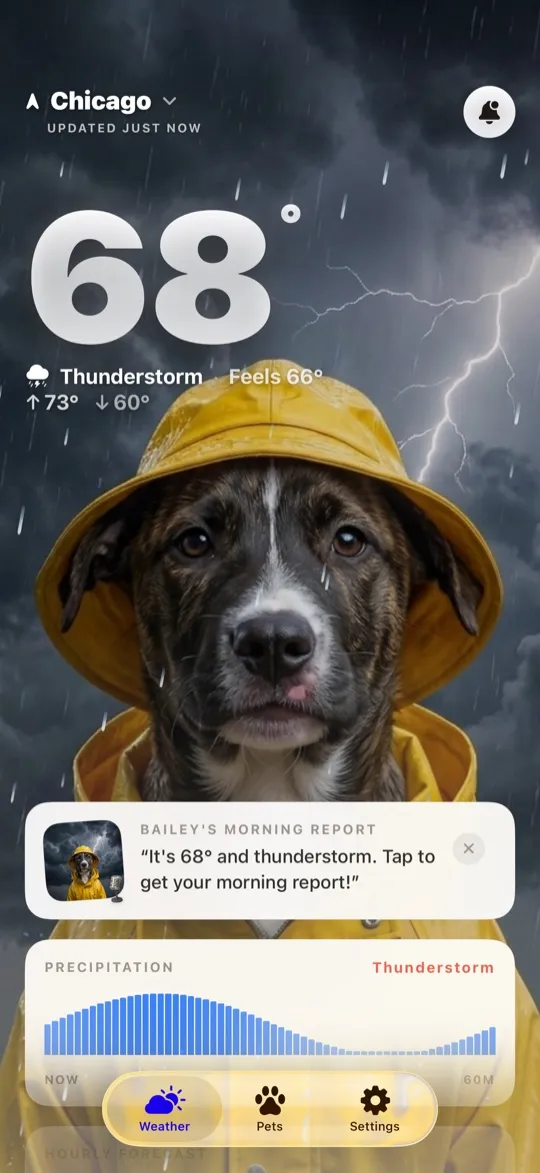
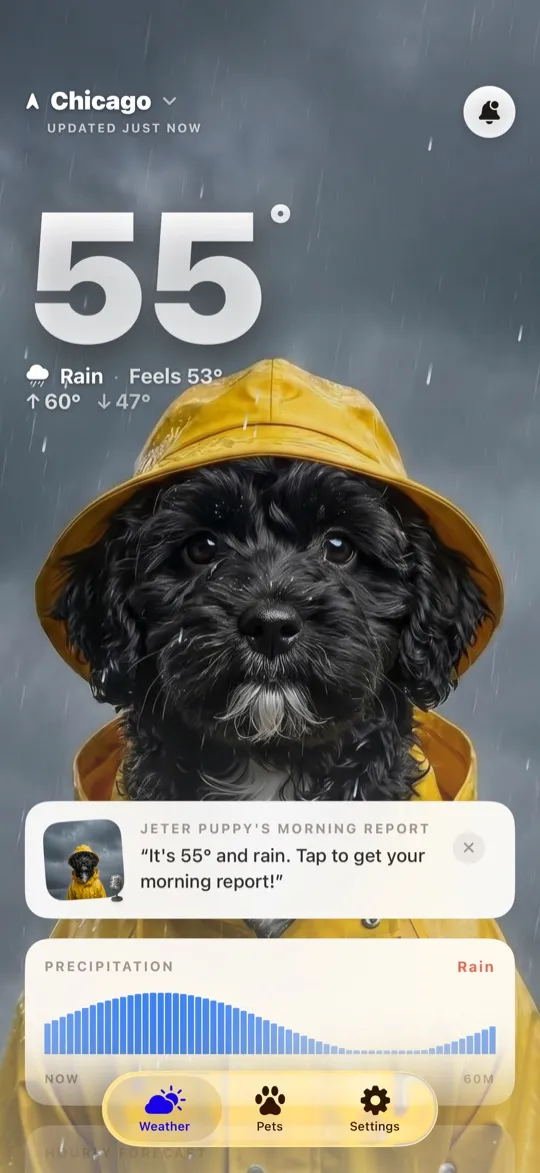
The easiest version of this decision happens before you grab the keys. Check the day's high, and if the dog cannot come inside at every stop, the dog stays home with the AC and a stuffed Kong. WeatherPets makes that morning check effortless: your own pet delivers the forecast, and one glance at the high tells you whether today is a ride-along day or a stay-home day. Your co-pilot will forgive you. Especially if treats are involved.
Your daily forecast, delivered by your own pet.