Pet Memorial Ideas: 15 Joyful Ways to Celebrate Their Life
Most pet memorial advice is written in a funeral voice. Soft focus, sad music, a lot of urns. That is one way to do it, and for some people it is the right way. But plenty of us want something else: a way to keep a very silly animal present in the house without the whole thing feeling like a shrine. These are fifteen ideas that lean happy, sorted so you can find one that matches the effort you actually have in you right now.
Key takeaways
- The best memorial is the one you see every day. Visibility beats expense, every time.
- Do two things early: back up the photos and videos, and ask your vet about a paw print. Everything else can wait years.
- Write down the small stuff now. Faces stay in memory. The noise they made at the door does not.
- Include children on their own terms. The AAP recommends memorial activities but says taking part should always be voluntary.
- Joyful is allowed. Nothing says a memorial has to be solemn, and the happy ones tend to get used.
First, the two things worth doing straight away
Almost nothing on this list is urgent. Two things are, in the narrow sense that they get harder or impossible with time.
Back up the photos and videos. Not to one phone. To a cloud account or a drive, in a folder with their name on it. Phones get lost and stolen and dropped in lakes, and the single most common regret people describe years later is not a memorial they failed to buy, it is footage they failed to save. While you are in there, grab the videos specifically. People take thousands of photos and a handful of videos, and it turns out the videos are the ones that bring the animal back, because they move and make noise.
Ask about a paw print or a fur clipping. Most veterinary practices will do a clay or ink paw print at the time, and many offer it as standard. If you want one, it is worth asking in the moment even if you have no idea what you would do with it, because it cannot be done later.
That is the whole urgent list. Everything below can happen next month, next year, or on the anniversary when you finally feel like it.
The fifteen ideas
1. Put one great photo where you walk past it
Not the album. One picture, printed properly, framed, at eye level somewhere you pass daily. The hallway, the kitchen, the top of the stairs. This is the cheapest thing on the list and it consistently outperforms far grander gestures, because a memorial only works if you encounter it. Pick a photo where they look like themselves rather than the most technically good one.
2. Make a photo book of the ridiculous ones
Not a tasteful retrospective. The blurry ones, the ones where they are mid-sneeze, the one where they are wearing a hat and clearly furious about it. A printed book you can hand to somebody is a very different object from a folder on a hard drive, and this is the version people actually open.
3. Plant something that comes back
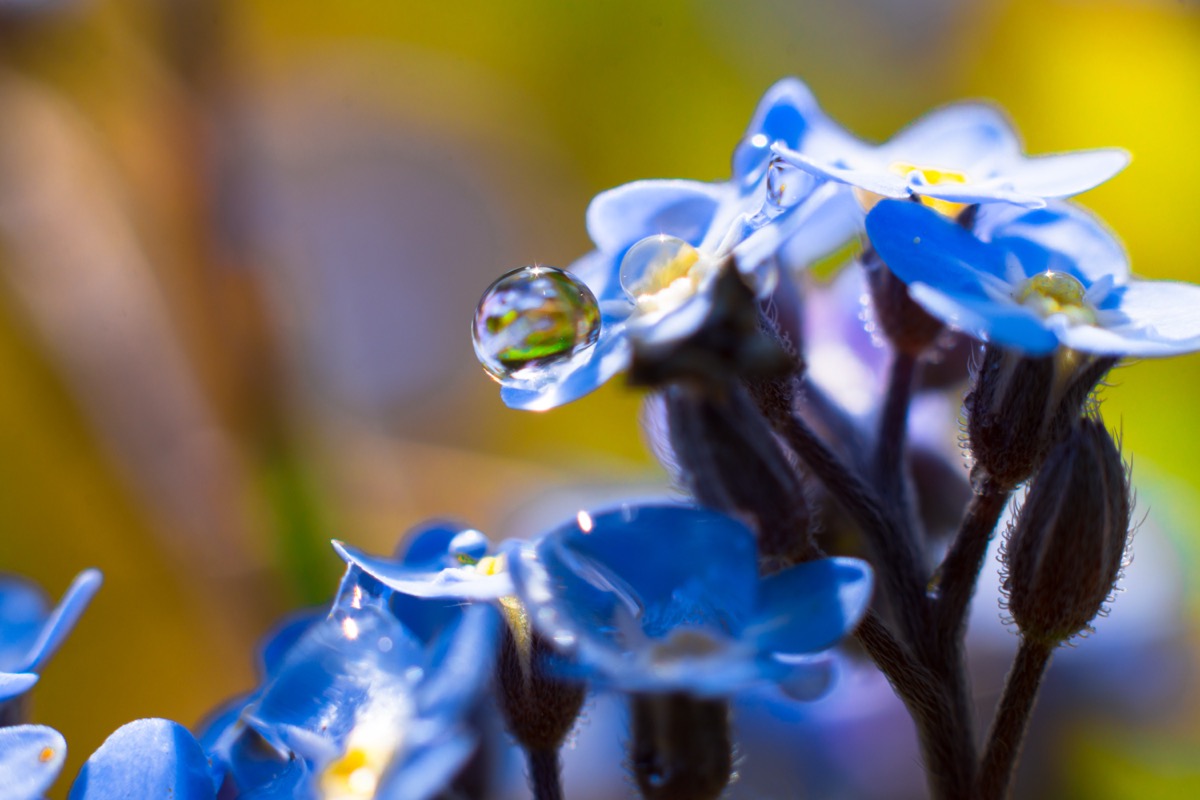
A tree if you have the space, a shrub if you do not, bulbs or forget-me-nots if you have a windowbox. The appeal is the annual return: every spring the thing shows up again without you doing anything, which is a gentler kind of reminder than a date in a calendar. Fruit trees are a lovely choice if you have room, because eventually the memorial feeds you.
4. Donate in their name
A local shelter, a rescue for their breed, a fund at your veterinary practice for owners who cannot afford treatment. If your pet was a rescue this closes a circle rather neatly. Many shelters will send a card acknowledging the gift in your animal's name, which is a nice thing to have on the shelf.
5. Sponsor or foster in their memory
A step beyond a one-off donation. Sponsoring a kennel or fostering short-term puts the memorial into the world in a form that has a heartbeat. It is not for everybody and it is definitely not for the first few months, but for some people it is the thing that finally helps.
6. Commission a piece of art
A watercolour, a line drawing, a lino print, a small oil painting. Independent artists take pet commissions constantly and the range of prices is enormous, from a quick digital sketch to something you would insure. A painting reads as a portrait of somebody who lived, which is a warmer object than a photograph in a black frame.
7. Keep the collar, but display it
A collar in a drawer is a thing you flinch at when you find it. A collar in a shadow box on the wall, with the tag facing out and maybe a photo beside it, is a thing you smile at. Same object, entirely different job. Shadow boxes are inexpensive and this is one of the more satisfying afternoon projects on the list.
8. Write down the details nobody else knows
The American Veterinary Medical Association's guidance on coping with the loss of a pet explicitly recommends preserving memories by writing a tribute or even writing a letter to your pet. It sounds sentimental until you try it, and then it turns out to be the single most useful thing here.
Write the small stuff. Which stair they slept on. The specific noise at the door. The food they stole and the food they refused. How they behaved in the car. What they did in rain. These are the details that fade first and that no photo captures, and a page of them is worth more in a decade than almost any object you could buy.
9. Make a memory box
A shoebox or a proper wooden one. The collar if you are not framing it, the tag, a favourite toy, the paw print, the printed letter from idea eight, a lock of fur, the last vet card. The advantage of a box over a display is that you control when you open it. Some people need that.
10. Cook their birthday dinner
Or mark the day some other way that is not sad. A walk on their route. Their favourite park. The beach they lost their mind at. Anniversaries arrive whether you plan for them or not, and having something to do on the day is much easier than sitting in the house waiting for it to pass.
11. Get a keepsake you will wear or use
A pendant with a paw print, a bracelet with their name, a keyring, a small amount of ashes in a piece of glass. The test is whether it goes into daily circulation or into a jewellery box. Something you wear on your keys beats something beautiful you never take out.
12. Name something after them
A corner of the garden. A walking route. The good armchair. This costs nothing and it works surprisingly well, because it puts them into ordinary conversation rather than reserving them for solemn moments. Families do this naturally and then feel silly about it. It is not silly.
13. Ask other people for their photos
Dog walkers, neighbours, the friend who fed them when you were away, the group chat. Almost everyone who knew your animal has a photo of them that you have never seen, and you have no idea it exists. Asking for them is a genuinely lovely thing to do about six months in, and it produces new material at exactly the point where you thought there was none left.
14. Put them somewhere in the everyday
A phone wallpaper, a lock screen, a mug, a framed print by the kettle, a widget on your home screen. This is the low-effort version of idea one and it is the one most people end up doing, because the phone is the thing you look at forty times a day whether you meant to or not.
15. Give yourself permission to change it later
Not really a memorial, but it belongs on the list. Whatever you choose now, you can change. Ashes can be scattered years later. Photos can come down and go back up. The urge to get it right the first time is what stops a lot of people doing anything at all, and doing nothing is the only option here that has no upside.
Which idea fits where you are right now
| Idea | Effort | Cost | Permanence | Best for |
|---|---|---|---|---|
| Framed photo in the hallway | Low | Low | Lasting | Anyone. Start here. |
| Phone wallpaper or widget | Very low | Free | Changeable | The first hard weeks |
| Writing down the small details | Low | Free | Lasting | Few photos, or fading memory |
| Memory box | Low | Low | Lasting | Wanting control over when you look |
| Collar in a shadow box | Low | Low | Lasting | The collar you keep flinching at |
| Donation in their name | Low | Your choice | One-off | Rescues and shelter dogs |
| Photo book | Medium | Medium | Lasting | A camera roll full of them |
| Planting a tree or bulbs | Medium | Low | Grows | A garden, and a walker |
| Commissioned art | Medium | Medium to high | Lasting | One truly great photo to work from |
| Wearable keepsake | Medium | Medium | Lasting | Wanting them with you, not on a wall |
| Marking their birthday | Medium | Low | Annual | Anniversaries that ambush you |
| Asking others for photos | Medium | Free | One-off | Around six months in |
| Fostering or sponsoring | High | Varies | Ongoing | Later, when you are ready |
| Memorial tattoo | High | Medium | Permanent | Give it a few months first |
| Naming a place after them | Very low | Free | Lasting | Families and households |
Doing this with children
The American Academy of Pediatrics has clear guidance on helping a child cope when a pet dies, and it is worth reading in full if this is your situation. The parts that matter most for memorials:
- Use direct words. Died, not went to sleep or went away. Softer phrasing tends to produce fear of sleeping or of being left, rather than comfort.
- Say clearly that it was not their fault. Children very often quietly assume it was, and will not raise it themselves.
- Let them see you grieve. Hiding it teaches them that this is something to hide.
- Offer memorial activities, do not require them. The AAP names collages, planting a tree and scattering ashes specifically, and is explicit that taking part should be voluntary.
It also notes that age changes everything. Toddlers and preschoolers do not grasp that death is permanent and will ask again and again, which is developmentally normal rather than a sign the message did not land. School-age children can often be prepared in advance if an animal is terminal. Teenagers vary enormously and may want no part of a family ritual, which is fine.
Why the happy version tends to work better
There is a reason we have pushed this list toward celebration rather than solemnity, and it is not just taste.
Research into what actually helps bereaved owners keeps arriving at the same place. A thematic analysis of pet bereavement counselling published in Omega found that the thing that helps most is having the relationship itself validated and understood, rather than being steered toward acceptance. A memorial that celebrates who the animal was does that work. A memorial that only marks that they died does not.
And the grief is real, so it deserves a real response. A 2026 study in PLOS ONE found that 7.5 percent of people who lost a pet met the clinical criteria for prolonged grief disorder, a rate Harvard Health compared to losing a sibling or a partner. If you have felt slightly embarrassed by how hard this has hit, you can put that down.
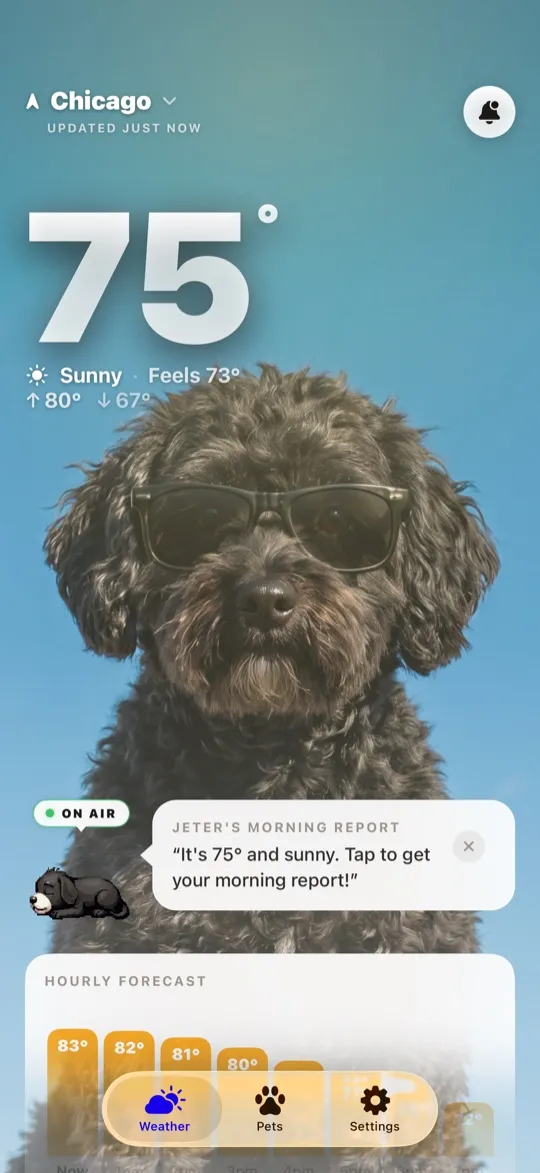
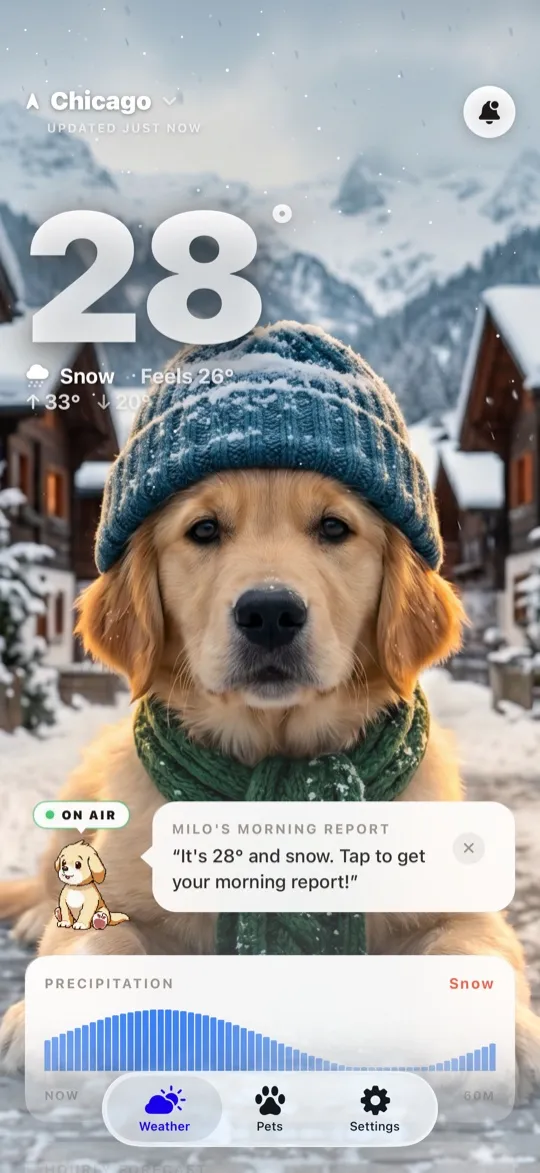
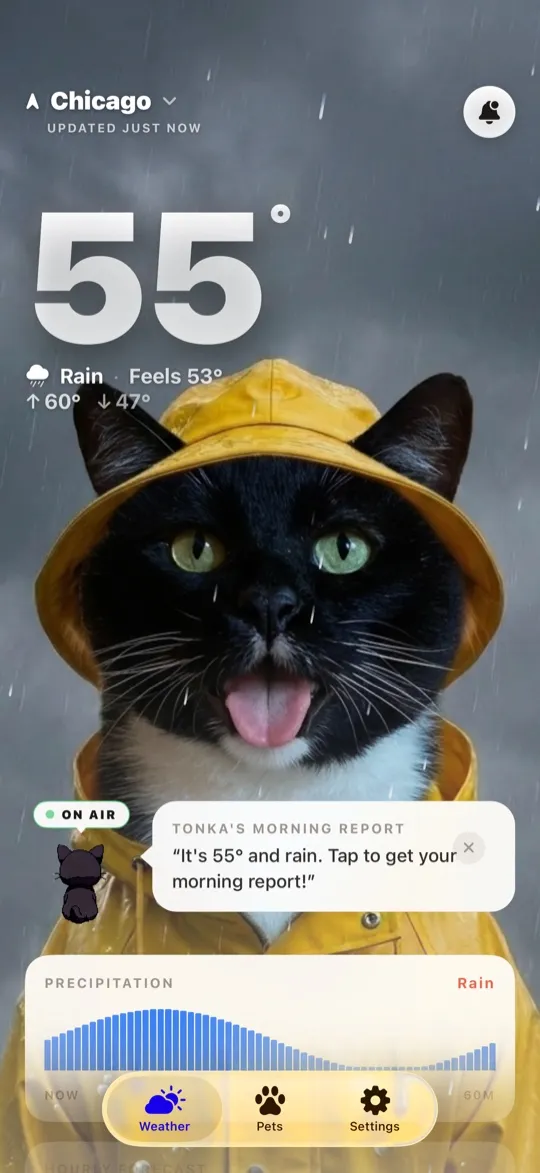
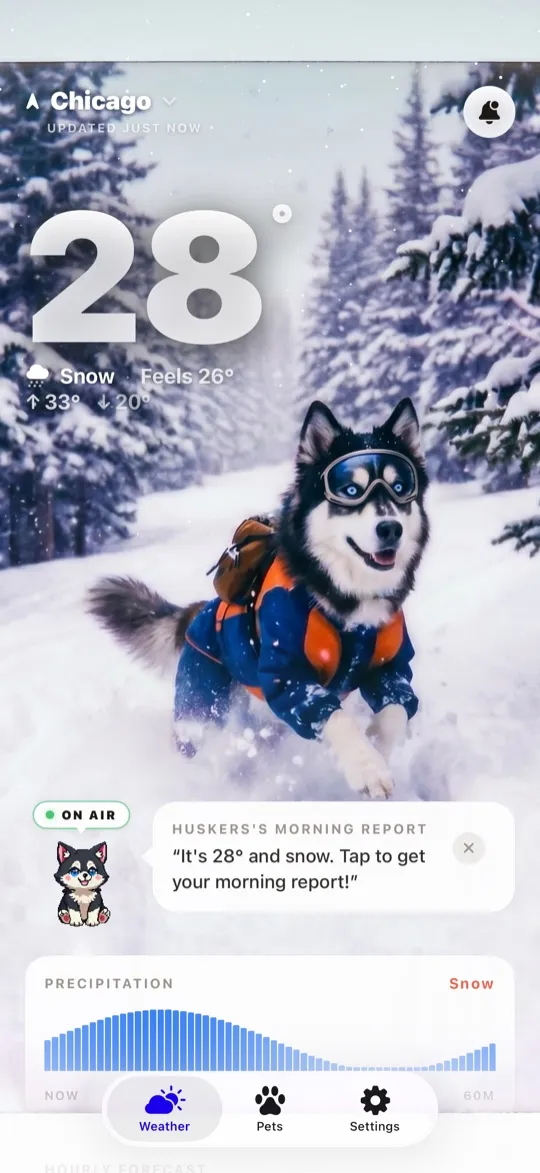
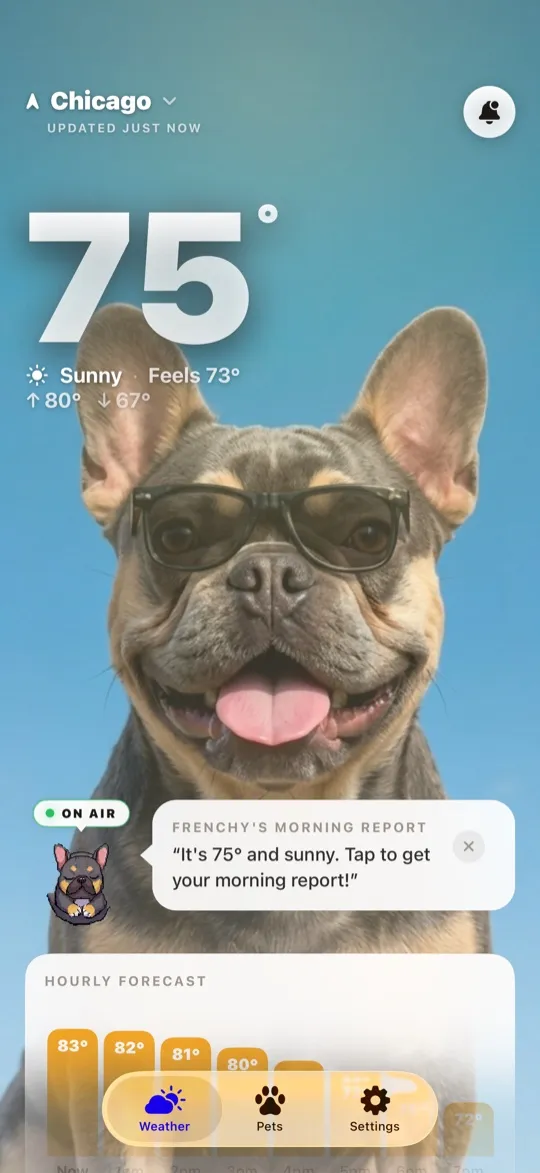
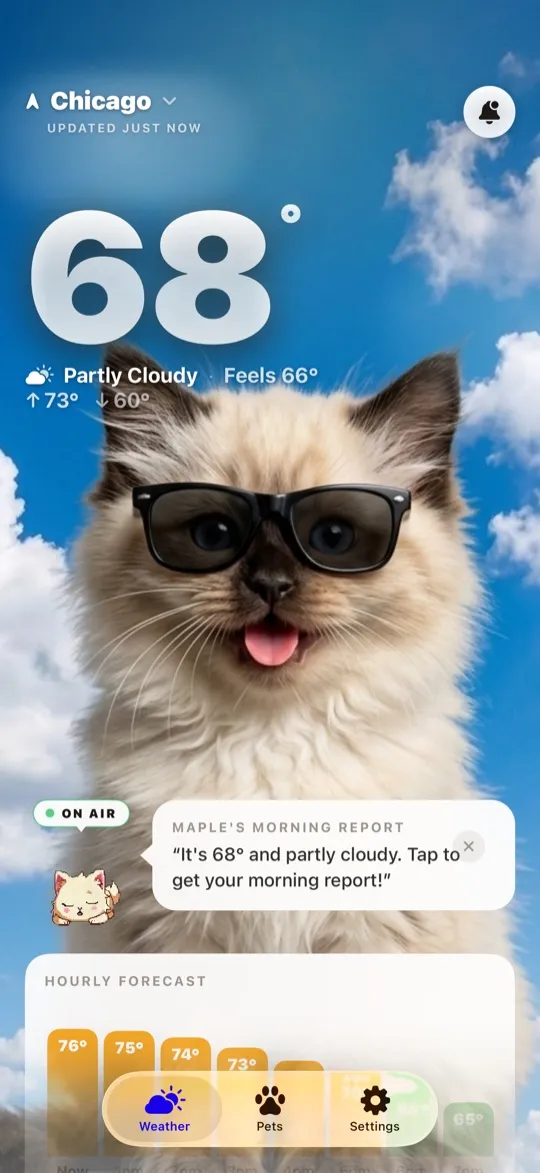
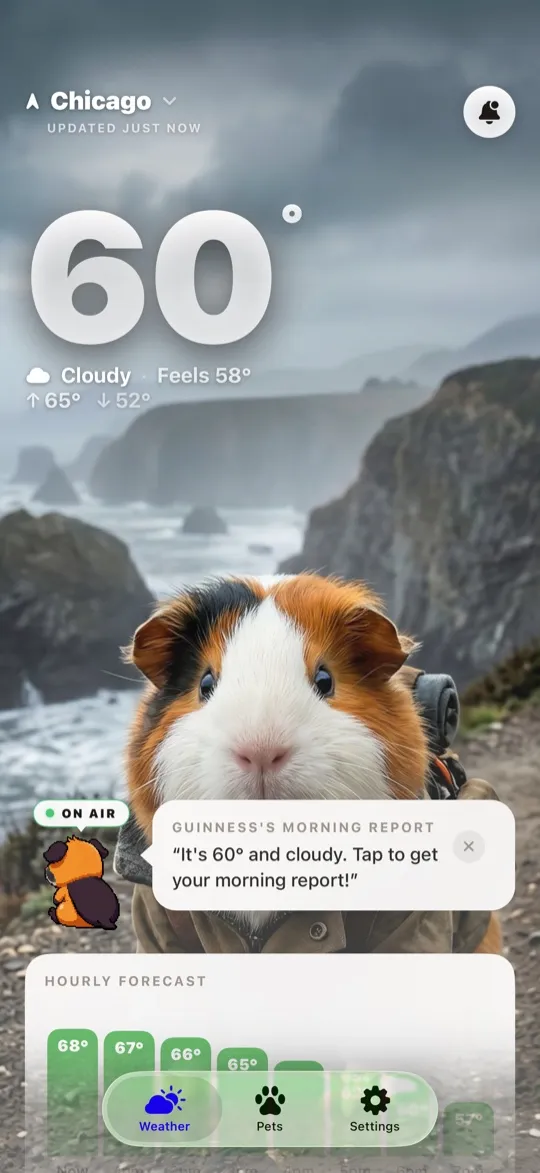
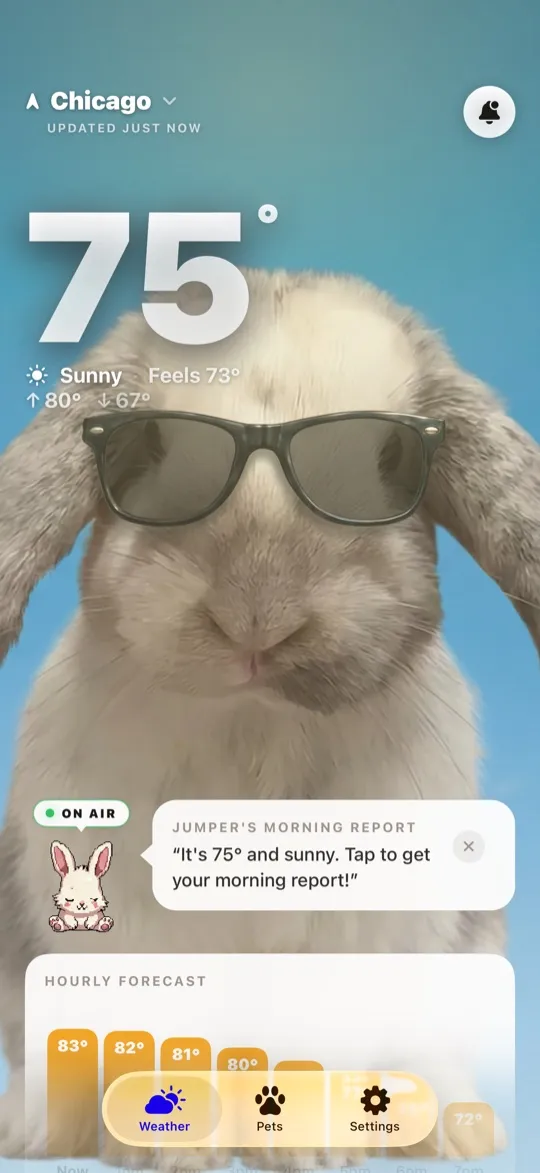
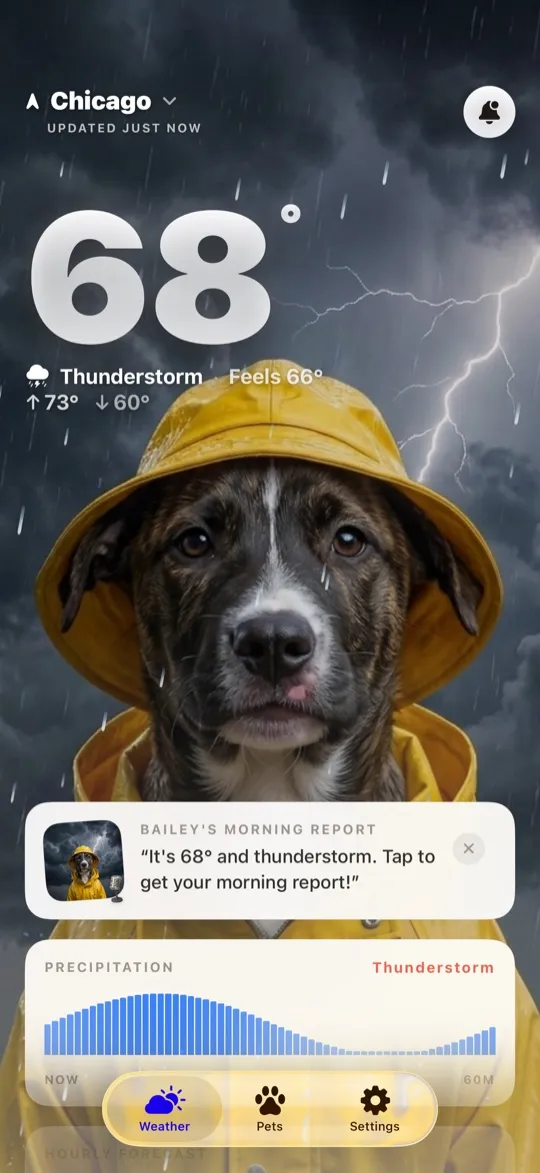
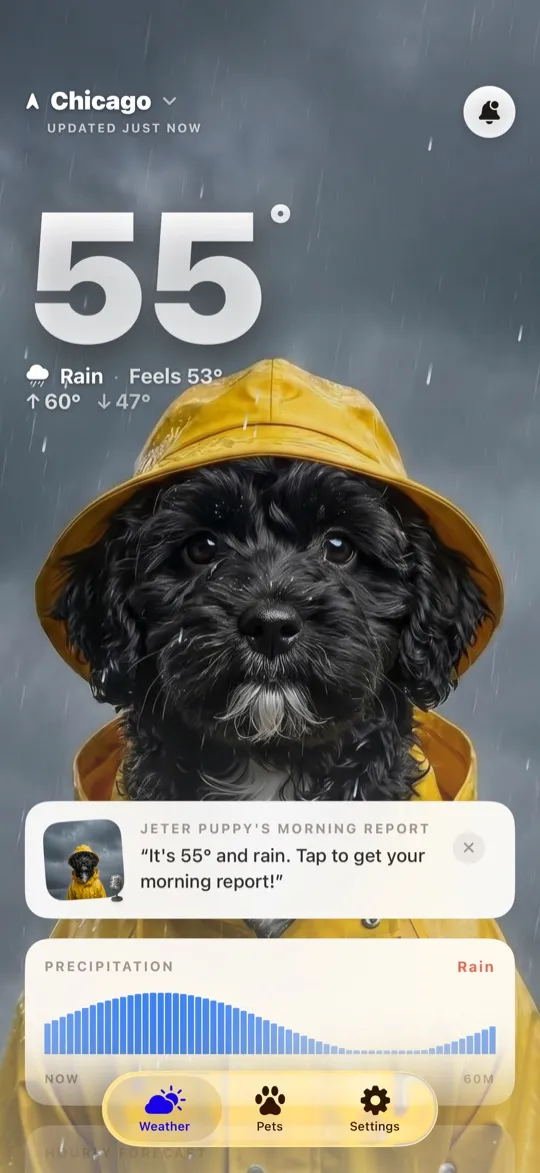
On idea fourteen, the everyday one. Most people reading this still have an animal at home, and that is really who WeatherPets is for: you upload one photo, AI puts your pet into the day's forecast on your home screen, and you get a small daily reason to smile at your phone. The one you lost can be in there as well, in sunshine or snow, having a great time. It is a light thing rather than a memorial product, which is rather the point. Meet your WeatherPet on the App Store.
What to write on it
If you are ordering a plaque, a stone or an engraving, the rule is that specific beats poetic. A name, the years, and one true sentence. "Best seat in the house." "Never once walked to heel." "Barked at the sea, every time." Those age far better than a general sentiment, because in five years they will still make you laugh.
If you would rather borrow something, the traditional choice is a line from the Rainbow Bridge poem, which turns out to have a much better origin story than most people realise. And if the grief is still the loudest part of all this, our guide to pet loss support that is genuinely still running lists the helplines we have checked are open, and names the well-known ones that quietly closed years ago.
Frequently asked questions
What is a good memorial for a pet?
The best one is the one you will actually see. A framed photo in the hallway you walk past every morning does more good over a year than an expensive keepsake in a drawer. Beyond that, pick a memorial that matches how you knew them: a tree if you walked together, a donation to a shelter if they were a rescue, a photo book if your camera roll is full of them.
How soon after a pet dies should I make a memorial?
There is no deadline, and early is not better. Many people find the first days are for getting through, not for making decisions. Two things are worth doing early because they get harder later: back up your photos and videos somewhere safe, and if you want a paw print or fur clipping, ask your vet at the time. Everything else can wait months or years.
How do I help my child remember our pet?
The American Academy of Pediatrics advises using direct words like died rather than put to sleep, telling children clearly that it was not their fault, and letting them see you grieve so they know it is allowed. It specifically names memorial activities such as a collage, planting a tree or scattering ashes as helpful, with one condition: taking part should always be voluntary, never required.
Is it strange to keep my pet's ashes at home?
Not at all, and it is what most people who choose cremation do. There is also no rule that you have to decide quickly. Plenty of people keep ashes for years before scattering them, or keep some and scatter some. If the container that came back from the crematorium feels clinical, moving them into something that suits your home is a small change that helps a surprising amount.
What can I do if I have no ashes, no collar and few photos?
Write instead. The AVMA specifically recommends writing a tribute or a letter to your pet as a way of preserving memories, and it costs nothing. Write down the small things nobody else would know: where they slept, the noise they made at the door, the food they stole. Those details fade faster than faces do, and a page of them is worth more in ten years than most objects.
Should I get another pet, and does it dishonor the one I lost?
It does not, and there is no correct timeline. Some people need a house that is not silent within weeks. Others need a year or more. Both are normal. The only thing worth avoiding is choosing a new animal to be a replacement rather than their own creature, because that is unfair to the newcomer and it tends to make the grief louder rather than quieter.
What do you write on a pet memorial stone or plaque?
Short and specific beats poetic and general. A name, the years, and one true line about them. Something like best seat in the house, or never once walked to heel, will make you smile in five years in a way that a general sentiment will not. If you want something borrowed, a line from the Rainbow Bridge poem is the traditional choice.
Are pet memorial tattoos a good idea?
They work well for people who already have tattoos and know what they want. The usual advice from grief counsellors applies to any permanent decision: give it a few months. Grief narrows your view of what will matter later. A paw print, a name in your own handwriting, or a line drawing from a favourite photo are the designs people report being happiest with years on.
Your daily forecast, delivered by your own pet.

If you are struggling: grief after losing an animal is real grief, and there is help that costs nothing. The Tufts Pet Loss Support Helpline is on 508-839-7966, and the Cornell Pet Loss Support Hotline is on 607-218-7457. Both are staffed by trained volunteers and both note that hours can change. If you are having thoughts of harming yourself, please call or text 988 in the US for the Suicide and Crisis Lifeline, available at any hour. This article is general information and not a substitute for professional mental health care.